Prices from Amazon AU, updated daily.
Disclosure: This article contains affiliate links to amazon.com.au. If you buy through one of these links iFix may earn a small commission at no extra cost to you. It doesn't change which products we recommend, we focus on what survives 16 years of repair-shop reality, not what benchmarks well in marketing copy.
Quick summary3 picks
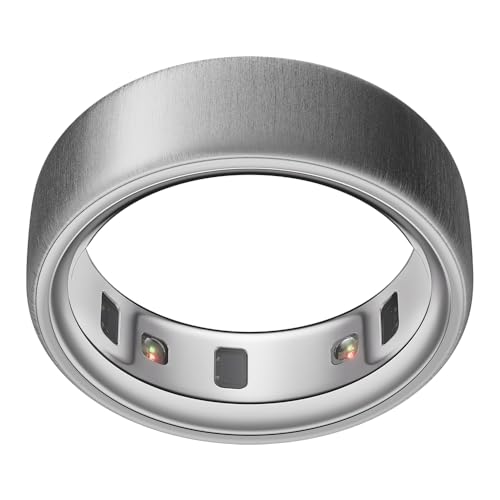
- CheapestOura Ring 4 - Brushed Silver - Size 10… about$317
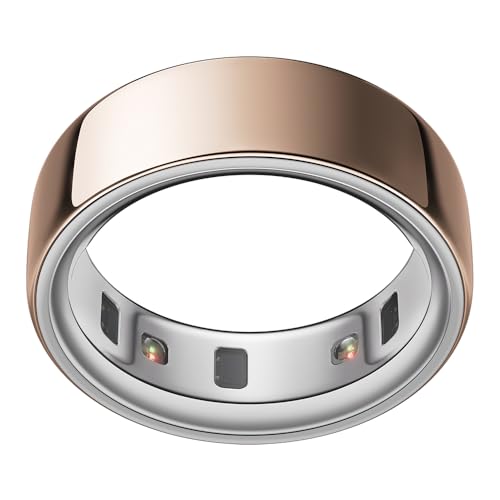
- Oura Ring 4 Rose Gold Size 10 about$359
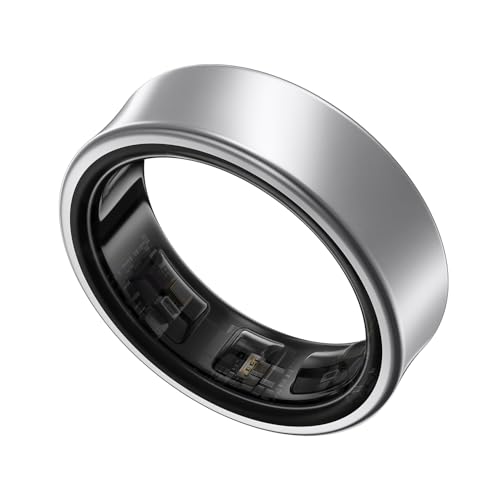
- Most PremiumSamsung Galaxy Ring about$699
Why screenless wearables matter
Three years ago the question was "which smartwatch should I buy." In 2026, the most interesting category in health tech doesn't have a screen at all. The Oura Ring 4, Samsung Galaxy Ring, and Whoop 5.0 all share a deliberate design philosophy: the device collects data continuously, gets out of your way, and surfaces insights only on a phone screen, not on your finger or wrist while you're trying to live your life.
For the kind of metrics that matter for long-term health, sleep architecture, heart rate variability, body temperature trends, recovery patterns, this design wins. Optical sensors on the finger or upper arm produce better signal quality than the wrist, the device doesn't buzz at you, and the battery lasts long enough to capture trends rather than snapshots. The three products in this comparison represent three legitimate philosophies about what continuous health data should be used for.
Specs comparison: the numbers up front
| Product | Price | Best for |
|---|---|---|
| Oura Ring 4 - Brushed Silver - Size 10… | ~$317 | |
| Oura Ring 4 Rose Gold Size 10 | ~$359 | |
| Samsung Galaxy Ring | ~$699 |
Oura Ring 4: the sensor platform leader
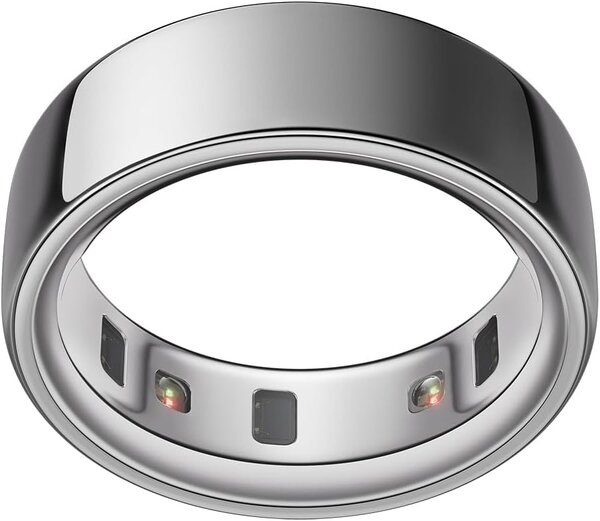
Oura Ring 4: Silver
From AU$317 (Brushed Silver, Size 10, OURA AU, September 2026)
5 finishes available (Silver, Brushed Silver, Stealth, Gold, Rose Gold). Sizes 4–15. Titanium build, 100m water resistance, 5–8 day battery life. Pricing varies by size and finish, up to ~AU$454 for ceramic and larger sizes. Requires Oura Membership for full features.
View Oura Ring 4 on Amazon AUThe Oura Ring 4 launched in October 2024 as the fourth-generation evolution of what is now the most-shipped smart health ring in the world (over 2.5 million units globally, backed by investors including the NBA and Peter Thiel's Founders Fund). Oura's been refining this product since 2013 and it shows.
The Gen 4 represents the biggest sensor upgrade in Oura's history. The new Smart Sensing 2.0 platform uses 10 LEDs across three wavelengths, 6 green at 520 nm, 2 red at 660 nm, and 2 infrared at 940 nm, to produce 18 signal pathways. Compared to the Gen 3's flat array, the recessed sensors on the Gen 4 sit closer to the skin without rubbing, dramatically improving signal fidelity and skin-tone equity (a documented weakness of earlier Oura rings that attracted criticism after independent audits in 2022-2023).
Where Oura wins is the depth of the insights, not the raw sensor count. The platform has been collecting and validating sleep architecture data for over a decade, and the algorithms reflect that. Sleep score, Readiness score, and Activity score are the daily triad most users check. Underneath those, the trends, HRV baseline drift, body temperature deviation from your personal norm, recovery patterns, are where the platform gets genuinely useful for long-term health optimization.
What Oura Ring 4 measures well
- Sleep architecture: a decade of algorithm refinement and the closest agreement with clinical polysomnography of any consumer wearable. This is the metric Oura was built around, and nothing else in this comparison matches it.
- Body temperature trends: NTC infrared thermistor reads skin temperature against your personal baseline, not a population average. Useful weeks before you'd notice illness symptoms or that your cycle phase has shifted. Samsung tracks temp; Oura interprets it.
- Menstrual cycle integration: the strongest implementation in any wearable. Multi-cycle prediction that adapts to your data instead of pretending every cycle is 28 days.
- Cardiovascular Age: new in Gen 4, derived from HRV and resting HR patterns. Converts months of passive tracking into a single comparable benchmark you can actually act on.
- HRV baseline drift: continuous 24/7 sampling, but the value is in the trend interpretation. Oura flags meaningful deviations from your baseline rather than just plotting a line.
- Overnight SpO2: useful for detecting potential sleep-disordered breathing patterns. Not a clinical sleep apnea test, but a sensible screening signal.
What Oura Ring 4 doesn't do
- No blood pressure measurement: and no plans to add it. Would require regulatory clearance Oura hasn't pursued.
- No ECG or AFib detection: if heart-rhythm screening matters, you want Whoop MG or an Apple Watch.
- No sleep apnea diagnosis: overnight SpO2 hints at it, but it's not a diagnostic tool.
- No real-time workout coaching: activity is auto-logged, but Oura is built for recovery, not training. There's no live screen and no haptic feedback.
- No display, no notifications: by design. If you want a buzz on your finger every time someone emails you, this is the wrong category.
The Oura Membership cost reality
This is the part the marketing doesn't emphasise. The Oura Ring 4 hardware is functionally limited without an active Oura Membership. Without it, you see the three top-level daily scores and very little else, no trends, no insights, no breath patterns, no cycle data, no nightly sleep stages. With a typical 2-3 year ring lifespan before battery degradation, you're looking at US$140-$210 in subscription fees on top of the hardware. Many buyers consider this fair given the platform investment; others find it galling on principle. Know what you're signing up for.
Samsung Galaxy Ring: the subscription-free contender
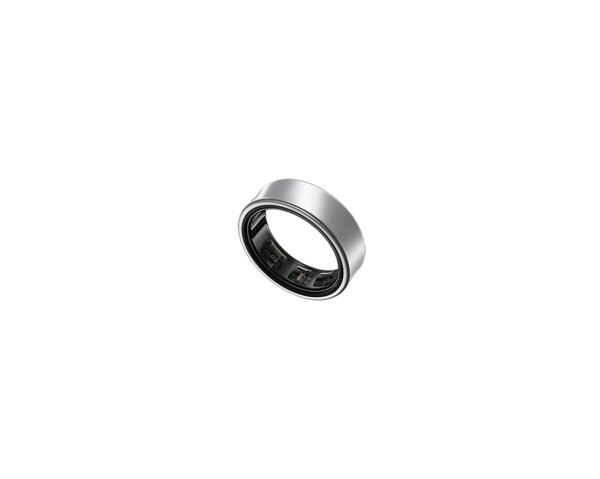
Samsung Galaxy Ring: Titanium Silver
AU$699 (Titanium Silver, Amazon AU, August 2026)
3 finishes available (Titanium Silver, Titanium Black, Titanium Gold). Sizes 5–13. Concave titanium build, 10ATM water resistance, 6–7 day battery life. No subscription, requires a recent Samsung Galaxy phone for full features.
View Samsung Galaxy Ring on Amazon AUSamsung launched the Galaxy Ring in July 2024 with a clear strategic intent: take Oura's playbook and remove the subscription wall. The ring is titanium, water-resistant to 10ATM, available in eight sizes (5-13), and integrates tightly with the Samsung Health app on Galaxy phones. The price at launch was US$399, about US$50 more than the entry-level Oura Ring 4, but you pay zero ongoing fees.
This is the deciding factor for many buyers. If you already live in the Samsung ecosystem and have a recent Galaxy phone (S22 or newer, Fold/Flip 4 or newer), the Galaxy Ring is the most economical way to access continuous health tracking from a major brand. The Energy Score is Samsung's daily-readiness metric, similar in spirit to Oura's Readiness or Whoop's Recovery, and it draws on sleep, activity, sleep heart rate, and recent HRV.
Where the Galaxy Ring genuinely shines is the integration. Double-pinch the ring to dismiss alarms or trigger the Galaxy phone camera shutter. The ring's sleep data feeds Samsung Health's snore detection (which actually requires your Galaxy phone next to your bed to record the audio, a clever hybrid that the ring alone couldn't do). For Samsung users, this kind of cross-device polish is the kind of thing Apple gets right with the Watch and Air Pods.
What Samsung Galaxy Ring measures well
- Sleep tracking with phone-side snore detection: the ring tracks sleep, and your Galaxy phone's microphone records snoring audio overnight. The hybrid produces snore data the ring alone couldn't generate.
- Energy Score: daily readiness pulled from sleep, recent activity, sleep heart rate, and HRV. Comparable in spirit to Oura Readiness or Whoop Recovery.
- Continuous HR and HRV: solid 24/7 sampling, equivalent fidelity to Oura on raw signal capture.
- Cycle tracking with skin temperature: feeds into Samsung Health's cycle predictions. Less refined than Oura, but it's there and it works.
- Gesture controls: double-pinch the ring to dismiss alarms or trigger the Galaxy phone camera shutter. Genuinely useful, not gimmick.
- Native Samsung Health integration: if your other health data already lives in Samsung Health, the ring slots in without you having to bridge apps.
What Samsung Galaxy Ring doesn't do
- Doesn't work with iPhone: full stop. Samsung Health is Android-only and locks out iOS.
- Strips down on non-Samsung Android: it works, but you lose gestures, snore detection, and most of the polish. It's a Samsung product, not an Android product.
- No blood pressure, no ECG: same gap as Oura. The Galaxy Watch handles those; the ring doesn't.
- Shallower analytics than Oura: the data is there, but the interpretation layer is younger and less opinionated. Good if you want the raw numbers, weaker if you want guidance.
- No real-time coaching or workout view: passive tracker only, same as Oura.
The catch: Samsung lock-in
The Galaxy Ring does not officially work with iOS. Full stop. On non-Samsung Android phones, you get the Samsung Health app and a stripped-down experience, but the gesture features, snore detection, and most of the polish disappears. Samsung positions this as deliberate ecosystem integration, but if you're an iPhone user or you don't already use Samsung Health, the Oura Ring 4 is the more sensible cross-platform option even with its subscription.
Note on Samsung Galaxy Ring 2: Multiple credible reports from Korean industry sources (notably ETNews and SamMobile) confirmed in May 2026 that the Galaxy Ring 2 launch has been pushed back to early 2027 rather than late 2026, likely launching alongside the Galaxy S27 series. Rumoured improvements include 9-10 day battery life, possibly via solid-state battery technology, improved cardiovascular sensors, and a new Brain Health feature powered by Galaxy AI. There's also an ongoing patent dispute with Oura that's slowing things down. The current Galaxy Ring will be the available product for most of 2026, if you're considering one, prices have softened from the launch US$399.
Whoop 5.0: the athlete's platform
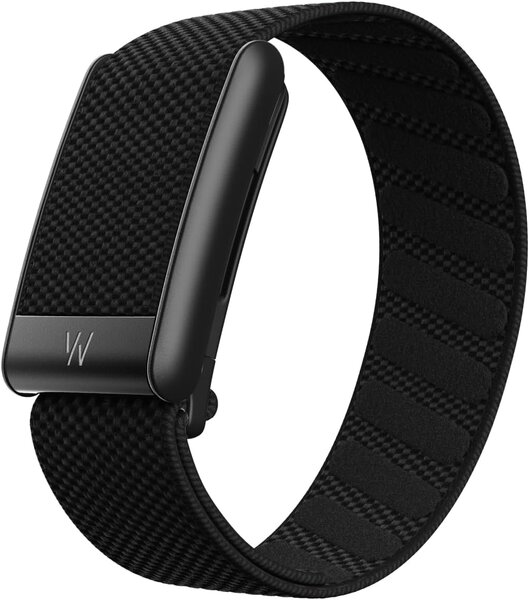
WHOOP Peak: 12-Month Membership Bundle
AU$399 (Peak bundle, includes 12 months of Whoop membership)
Whoop 5.0 device, Wireless PowerPack (charges on the wrist), Onyx SuperKnit band. Healthspan, Stress Monitor, Health Monitor, Daily Outlook. 14+ days battery life, every-second HR sampling. Requires active membership.
View WHOOP Peak on Amazon AUWhoop is the outlier in this comparison and deliberately so. It's not a ring, it's not a watch, it's a screenless band that you wear on your wrist, your bicep, your ankle, or tucked into specialized Whoop apparel. The Whoop 5.0 launched May 2025, 7% smaller than its predecessor, captures data points every second with 10× the power efficiency of the Whoop 4.0, and ships with 14+ days of battery life, three times what either ring delivers.
The Whoop philosophy is also different. Where Oura is about long-term health trends and Samsung is about daily ecosystem features, Whoop is about training optimization. The Strain score quantifies the cumulative cardiovascular load on your body each day. The Recovery score quantifies whether you've recovered enough to handle today's planned training. The Sleep coach tells you what time you need to be in bed to be recovered for tomorrow's targets. It's coaching, not measurement.
The hardware is included with every Whoop subscription. There are three tiers in 2026:
- Whoop One, US$199/year: Whoop 5.0 device, basic wired charger, Jet Black CoreKnit band. All core training metrics including Strain, Recovery, Sleep coaching, HRV, RHR, and Healthspan.
- Whoop Peak, US$239/year: Whoop 5.0 device, Wireless PowerPack (charges on the wrist while you wear it), Onyx SuperKnit band, Healthspan, Stress Monitor, Health Monitor, Daily Outlook.
- Whoop Life, US$359/year: Whoop MG device (different hardware tier with medical-grade ECG capability), Wireless PowerPack, Titanium SuperKnit Luxe band. FDA-cleared ECG for AFib detection.
What Whoop 5.0 measures well
- Strain and Recovery: the platform's signature pairing. Strain quantifies daily cardiovascular load; Recovery tells you whether you're ready for tomorrow's session. Nothing else in this comparison does coaching at this depth.
- Every-second sampling: the 5.0 captures HR data every second with 10× the power efficiency of the 4.0. Higher resolution than either ring, which sample at lower intervals to preserve battery.
- Sleep need calculation: Whoop tells you what time you need to be in bed to be recovered for tomorrow's targets. Oura tells you how you slept; Whoop tells you what to do about it tonight.
- Multi-location wear: the bicep band especially improves HR accuracy during lifting and HIIT, where wrist and finger optical sensors both struggle.
- WHOOP Age & Pace of Aging: Healthspan tracking calculated weekly. Long-term physiological trend visible in a single number.
- Daily Outlook: AI-driven coaching based on the full data history. Closer to a personal trainer than a tracker.
- Stress Monitor with breathwork prompts: physiological stress flagged in real time with actionable interventions, not just a chart you look at later.
- 14+ day battery life: double either ring. Recharge via the wireless PowerPack while wearing it, no downtime.
What Whoop is less good at
- No display, no notifications: same as the rings. If you want a watch, buy a watch.
- No built-in GPS: relies on your phone for distance and route. Fine for indoor training, less ideal for unaccompanied outdoor sport.
- Subscription is mandatory: let the membership lapse and the hardware stops working. There's no offline mode.
- Blood pressure feature is in regulatory limbo: the FDA issued Whoop a warning letter in July 2025 about unauthorised medical device marketing on the MG tier. The feature exists but its future is uncertain.
- 2025 upgrade-fee reversal: Whoop briefly tried to charge US$49–$79 for 4.0→ 5.0/MG hardware upgrades despite earlier "free upgrade" marketing. They reversed within 48 hours after backlash. Worth knowing as a brand-trust data point.
Who should buy what, decision framework
Buy the Oura Ring 4 if:
- Sleep and recovery insights are your top priority
- You're female and want first-class menstrual cycle integration
- You're an iPhone user (the Galaxy Ring is off the table)
- You want a refined, mature platform with a decade of algorithm development behind it
- You'll happily pay US$70/year for the insight depth
- You want passive long-term health trend tracking, not coaching
Skip the Oura Ring 4 if:
- You hate recurring subscriptions on principle, there's no way around the Oura Membership
- You need ECG, blood pressure, or any clinical-grade rhythm screening
- You train hard and want real-time coaching during workouts, not retrospective recovery scoring
- You'd rather have one device that does notifications, GPS, and training too, in which case you want a smartwatch
- You won't act on the data, an unused Oura is the most expensive paperweight in this comparison
Buy the Samsung Galaxy Ring if:
- You use a Samsung Galaxy phone as your daily driver
- You hate subscriptions on principle
- You want sleep tracking, daily readiness, and HRV trends without ongoing fees
- You don't need ECG, blood pressure, or training-load coaching
- You want native integration with Samsung Health (which already aggregates your other data)
- You like the idea of double-pinch gesture controls and camera shutter triggering
Skip the Samsung Galaxy Ring if:
- You use an iPhone, it simply doesn't work
- You don't already live in the Samsung ecosystem, you'll lose most of what makes this ring distinctive
- You want the most refined sleep and recovery analytics on the market, that's Oura's job
- You're an athlete chasing training-load coaching, that's Whoop's job
- You're worried about long-term software support, Galaxy Ring 2 has slipped to 2027 and Samsung's wearable platform churn history is uneven
Buy Whoop 5.0 if:
- You train seriously, endurance, CrossFit, HYROX, strength, or competitive sport
- You want strain-and-recovery coaching, not just measurement
- You'd rather have 14-day battery life than the elegance of a ring
- You're willing to commit to a US$199-$359/year subscription
- You want to wear it on your bicep during workouts for better HR accuracy
- You value AI-driven daily coaching and Healthspan/WHOOP Age tracking
Skip Whoop 5.0 if:
- You don't actually train, Whoop's value collapses without a regular training stimulus to coach against
- You hate ongoing subscriptions, and the idea that "no payment = no device" feels like rented hardware
- You want a ring, this isn't one, and the band form factor is a deliberate trade-off
- You're a data-hoarder who wants raw export, Whoop's API access is limited compared to Oura's
- You're sensitive to brand-trust issues, the 2025 upgrade-fee episode and the FDA blood-pressure warning are real signals about how the company makes decisions
Buy none of these and stick with what you have if:
- Your Apple Watch or Garmin already covers your needs and the marginal gain isn't worth the spend
- You haven't yet built a habit of acting on the data, measurement without action is expensive theatre
- You're considering one because of a wellness influencer rather than a specific health question you want answered
The repair-shop perspective
From 16 years inside an electronics repair workshop, here's what we don't see across the bench: smart rings sent in for repair. Neither Oura nor Samsung consider these field-serviceable, the titanium shell is sealed, the battery is bonded internally, and the sensor array isn't separable from the controller. Once the lithium-ion battery degrades below ~70% capacity (typically 2-3 years of daily wear), the device is at end-of-life. The same is true of Whoop's hardware, though their subscription model includes a lifetime warranty that effectively replaces degraded devices at no cost.
This means the smart-ring purchase decision is a 2-3 year decision, not a 5-7 year one like a smartwatch. Factor that into the total cost of ownership. The Oura Ring 4 over 3 years costs roughly US$349-499 hardware + US$210 subscription = US$560-700. The Samsung Galaxy Ring is US$399 once, no recurring cost. The Whoop 5.0 over 3 years is US$597-1,077 in subscription fees, but with no hardware aging anxiety.
Also worth noting: all three brands use lithium-ion batteries with similar chemistry. Long-term storage tips apply universally, try not to leave any of them on the charger for days at a time, keep them at 25-80% state of charge when storing for more than a week, and avoid prolonged exposure to ambient temperatures below -10°C or above 60°C. Saunas at typical AU temperatures (~80-100°C) push the upper limit; multiple manufacturers note short-duration sauna use is fine but long sessions accelerate battery degradation.
The honest verdict
If we had to pick one for the typical buyer in 2026: the Oura Ring 4 is the most refined product. The decade of platform development shows, the sensor upgrade in Gen 4 is genuine, and the sleep and recovery insights are class-leading. Yes, the subscription is annoying. It's also probably worth paying.
If you're the kind of person who reads through this entire article weighing trade-offs, you probably also hate subscription creep, in which case the Samsung Galaxy Ring is the smart contrarian buy, provided you use a Samsung phone. Wait for Galaxy Ring 2 (now 2027) if you can; the current Galaxy Ring will keep dropping in price between now and then.
And if you're chasing performance, training to optimise something measurable, or you'd rather have a band than a ring: Whoop 5.0 is the platform built for you. It costs more long-term, but for athletes who actually act on the data, it pays its way.
All three are excellent at what they do. None of them are the right answer for everyone. The mistake is buying any of them as a status symbol rather than as a tool you'll actually use to change something about your life.
Frequently asked questions
Which smart ring is most accurate for sleep tracking in 2026?
The Oura Ring 4 leads independent sleep tracking validation studies in 2026, with its Smart Sensing 2.0 platform using 10 LEDs across three wavelengths to produce 18 signal pathways. The Samsung Galaxy Ring is close on raw sleep score accuracy but lags Oura on sleep-stage detection. Whoop 5.0, worn on the wrist or bicep, samples every second and produces excellent recovery data but is positioned for athletic performance rather than pure sleep optimization.
Do you need a subscription to use a smart ring?
It depends on the brand. Oura Ring 4 requires the Oura Membership (around US$5.99/month or US$69.99/year) to unlock anything beyond basic daily scores, without it, the ring is severely limited. Samsung Galaxy Ring has no subscription, all features work as long as you have a compatible Samsung Galaxy phone. Whoop 5.0 requires an active membership (One $199/year, Peak $239/year, Life $359/year), the hardware is included in the subscription, not sold separately.
Can I wear a smart ring in the shower or swimming?
Yes for all three. The Oura Ring 4 and Samsung Galaxy Ring are both water-resistant to 100 metres (suitable for showering, swimming, and snorkelling, but not scuba diving). Whoop 5.0 carries an IP68 rating with swim-safe certification to 10 metres for up to 2 hours. Long-term hot tub or sauna exposure can degrade the battery on any of them, manufacturers recommend keeping ambient temperatures below 60°C.
Which smart ring has the longest battery life?
Whoop 5.0 wins by a wide margin with 14+ days of battery life, more than double either ring. The Samsung Galaxy Ring delivers 6-7 days in real-world use. The Oura Ring 4 delivers 5-8 days depending on ring size (larger rings have larger batteries) and which sensors are enabled. If uninterrupted continuous tracking is your priority, Whoop is the clear pick.
Does the Oura Ring or Samsung Galaxy Ring measure blood pressure?
No, neither offers blood pressure measurement as of 2026. Blood pressure measurement from optical sensors is technically difficult and requires regulatory clearance (FDA or CE) that ring manufacturers haven't achieved. Whoop attempted a Blood Pressure Insights feature with the MG hardware tier, but received an FDA warning letter in July 2025 about marketing unauthorized medical device claims. Samsung Galaxy Ring 2 (delayed to 2027) is rumoured to include cuffless BP, but it's not shipping yet.
Can I use a Samsung Galaxy Ring with an iPhone?
No. The Samsung Galaxy Ring requires the Samsung Health app, which is Android-only and tightly integrated with Samsung Galaxy phones. You can use it on non-Samsung Android phones with limited functionality, but iPhone users should pick the Oura Ring 4 or Whoop 5.0, both of which support iOS fully.
Is a smart ring better than a smartwatch for fitness tracking?
For passive health and recovery tracking, sleep, HRV, body temperature, baseline metrics, a smart ring or Whoop band is generally more comfortable and more accurate for 24/7 wear because finger arteries deliver stronger optical signals than the wrist. For active workout tracking with on-device displays, GPS, and real-time heart rate, a smartwatch remains better. Many serious athletes pair both: a Whoop or Oura for recovery, a Garmin or Apple Watch for workouts.
Are smart rings repairable?
Generally no. The Oura Ring 4 and Samsung Galaxy Ring are sealed titanium units with no user-serviceable parts. The lithium-ion battery is the lifespan-limiting component and typically degrades to 70% capacity after 2-3 years of daily wear. Once the battery falls below useful capacity, you replace the whole ring. Whoop's hardware is included with the subscription so battery degradation triggers a free replacement under their lifetime warranty.
About this guide
This comparison was researched and written by Ben Nash, founder of iFix Electronics in Erina NSW. iFix has been repairing consumer electronics on the NSW Central Coast since 2009, including teardown experience with smart wearables across the major brands. We don't repair smart rings (nobody does, they're sealed disposables) but we do see the consumer-electronics market from the inside, and we recommend gear we'd actually buy ourselves rather than what produces the highest affiliate commission.
Specs and feature claims in this article are sourced from manufacturer documentation as of May 2026. Subscription pricing and product availability vary by region and change over time, always verify current prices on the retailer's site before purchase.
Got a phone, laptop or PC that needs sorting?
We’re in Erina, NSW, same-day diagnosis on most jobs.