Prices from Amazon AU, updated daily. Swipe or use the arrows for more.
Disclosure: This article contains affiliate links to amazon.com.au. If you buy through one of these links iFix may earn a small commission at no extra cost to you. It doesn't change which products we recommend. We focus on what actually lasts, based on 16 years of repair-shop experience.
Quick summary9 picks
- Entry PickSmart Watch for Women with Bluetooth Calling about$29.99
- NX19 Women Smart Watch about$51.28
- Xiaomi Smart Band 10 about$66.5035" screen, 280mAh.
- Redmi Watch 5 Lite about$89.50AMOLED, 470mAh.
- Xiaomi Smart Band 10 Pro about$106.5374" screen, AMOLED.
- Redmi Watch 6 about$1322.07in screen, AMOLED.
- Amazfit Active 2 SmartWatch about$199.00
- Amazfit Active Max Smart Watch about$23925-day battery, Offline maps, 4GB onboard.
- Most PremiumGarmin vívoactive 5 about$474.84AMOLED.
Why this matters now
Self-tracking has moved firmly into the mainstream over the last two years. Resting heart rate, sleep duration, step count, weight trend: the kind of baseline data people used to see only at annual check-ups now lives on their wrist and updates in real time. The behavioural-change benefit is well established. People who track their daily steps walk more, people who watch their resting heart rate trend notice earlier when they're stressed or under-recovered, and the act of measurement itself encourages healthier habits over time.
The smartwatch and fitness-tracker market in 2026 isn't about gadgets. It's about whether the device gives you reliable, repeatable measurements that show trends over weeks and months. The cheap end of the market is dominated by no-name brands with mixed reliability and questionable sensor accuracy. The brand-name end is dominated by Apple Watch, Samsung Galaxy Watch, Garmin, Amazfit and Xiaomi. We're focused on the Amazfit, Xiaomi and Garmin budget-to-mid-tier picks because they hit the price-per-reliability sweet spot for the typical buyer and are widely stocked by Australian retail on Amazon AU.
Cost-of-living context applies here too. With real wage growth at 0.3% and discretionary spending under pressure, paying $700 for an Apple Watch Series 10 to get features most users never touch is hard to justify. The sub-$400 bracket covers most of what people actually use a smartwatch for.
The nine picks, ranked from cheapest to most premium
Prices accurate at time of writing (13 October 2026). The Amazon AU buybox shifts week to week, so treat the figures as a guide. All nine are current, AU-stocked models sold through Australian retail on Amazon AU, and each is ranked by its Amazon AU best-seller position in its category rather than by our personal preference.
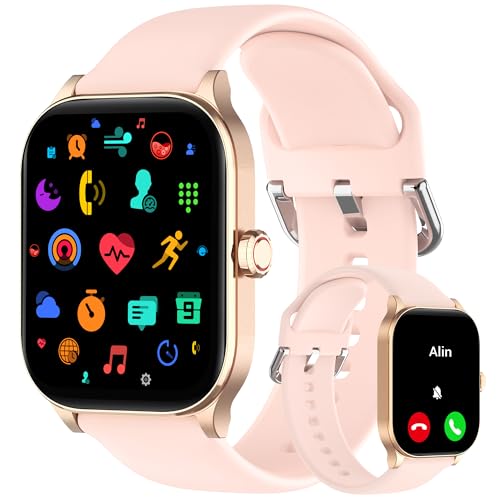
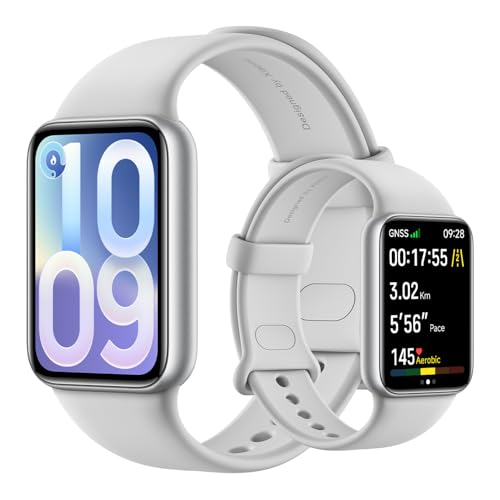
Smart Watch for Women with Bluetooth Calling
Amazon AU best-seller rank #60 in Smartwatches • ASIN B0GS1FVYT6 • $29.99
At $29.99 this is the cheapest watch in the guide, sold by XGUO-AU on Amazon AU. It is a no-name brand, so it earns its place as a starter watch rather than as a pick for sensor accuracy. The listing states Bluetooth calling from the wrist, notifications, 24/7 heart rate, blood oxygen (SpO2) and sleep-stage tracking, a mood and stress reminder feature, 100+ sports modes and an IP68 rating.
The listing also states built-in GPS with offline maps, and a magnetic charger that takes 1.5 to 2 hours for 7+ days of use. At this price, treat the GPS and health readings as rough trend indicators rather than measurements you would act on, and expect less app polish and support than the Xiaomi and Amazfit picks below. It is listed as compatible with Android 5.0 and iOS 9.0 or newer.
Best for: A first smartwatch, or a spare watch where price matters more than brand support.
Battery: 7+ days (listing) • Charging: 1.5 to 2 hours, magnetic • Calls: Bluetooth • Health: Heart rate, SpO2, sleep stages, stress reminders • Sports modes: 100+ • Water: IP68 • Compatibility: Android 5.0+, iOS 9.0+ • Sold by: XGUO-AU
View on Amazon AU
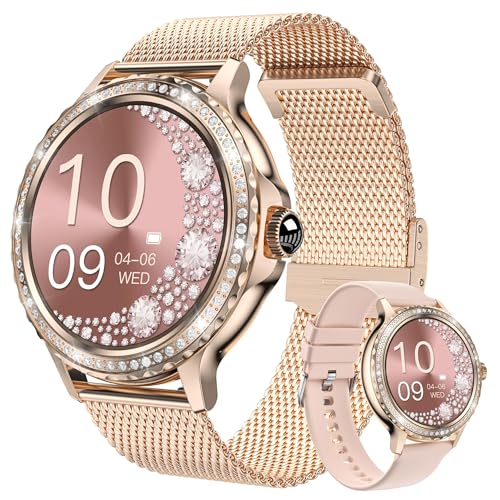
NX19 Women Smart Watch
Amazon AU best-seller rank #383 in Smartwatches • ASIN B0CDNW1SKG • $51.72
The NX19 is a $51.72 watch sold by Oumij-AU on Amazon AU under the Pomya brand. The listing describes a metal casing with composite materials, a 1.3-inch colour touch screen at 360 x 360 resolution, and waterproof, shockproof and antimagnetic protection for daily use. It states Bluetooth calling with stored contacts and call records, music control, sleep and body-data monitoring, and a list of sports modes.
The listing is blunt about one limit: it says the watch cannot be worn for swimming, so treat the waterproofing as splash and rain protection. Extras listed include weather, an alarm clock, camera control, a timer and sedentary reminders, and it is listed as compatible with Android 5.0 and iOS 10.0 or higher. No battery figure is given in the listing, and as a no-name brand the app and support experience will be basic.
Best for: A basic metal-cased watch with calling, for someone who wants a smaller 1.3-inch face.
Display: 1.3-inch colour touch, 360 x 360 • Build: Metal casing, composite materials • Calls: Bluetooth, contacts, call log • Water: Splash and rain only, not for swimming • Health: Sleep and body-data monitoring • Compatibility: Android 5.0+, iOS 10.0+ • Sold by: Oumij-AU
View on Amazon AU
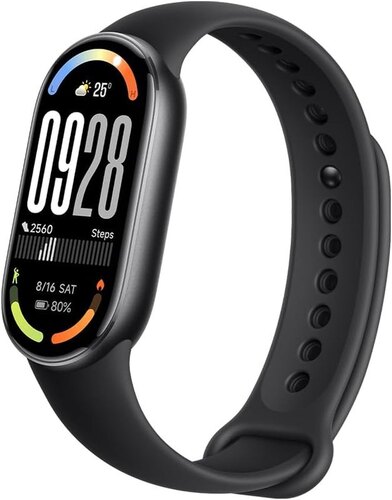
Xiaomi Smart Band 10
Amazon AU best-seller rank #1 in Activity Trackers • ASIN B0DYF82545 • $66.50
The Smart Band 10 is the cheaper sibling of the Band 10 Pro further down, and at the time of writing it sits at #1 in Amazon AU's Activity Trackers chart, sold by Amazon AU at $66.50. The listing describes a 1.72-inch AMOLED screen with up to 1500 nits peak brightness, up to 21 days of battery with a recharge in around an hour, and a 5ATM water rating that suits pool use.
On the health side the listing states continuous heart rate tracking, swimming heart rate analysis, improved sleep reports and 150+ sports modes, in an aluminium alloy frame with swappable straps. It is a band rather than a full smartwatch, so it is the pick for people who mainly want steps, heart rate and sleep, a long battery and a low price. Step up to the Pro if you want the larger display and built-in GPS described in its entry below.
Best for: First-time buyers and anyone who wants steps, heart rate and sleep tracking with a three-week battery.
Battery: Up to 21 days • Charging: Around 1 hour • Display: 1.72-inch AMOLED • Water: 5ATM • Sports modes: 150+ • Health: Heart rate, swimming heart rate, sleep reports • Sold by: Amazon AU
View on Amazon AU
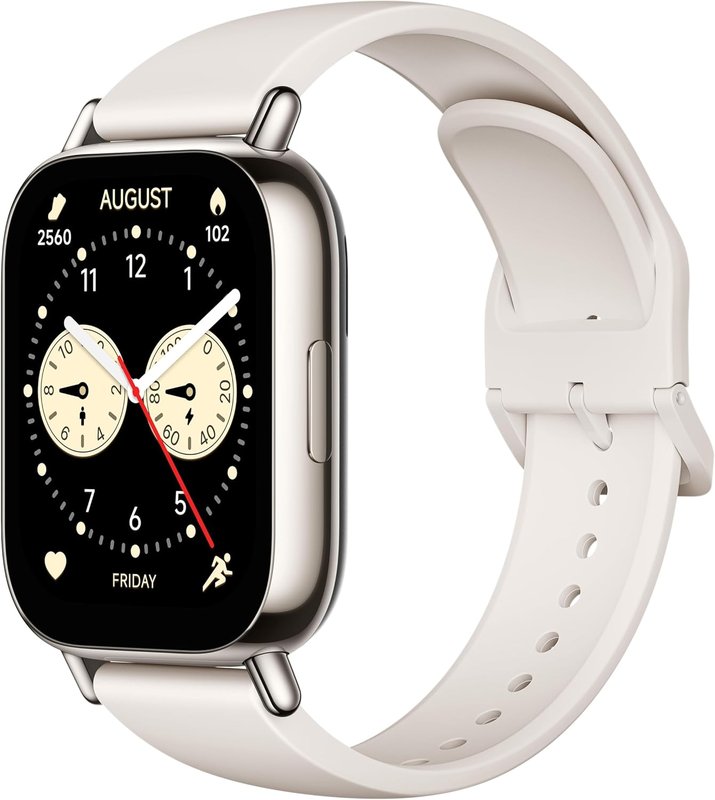
Redmi Watch 5 Lite
Amazon AU best-seller rank #1,357 in Wearable Technology • ASIN B0DFHG6YZ7 • $89.50
The Redmi Watch 5 Lite is Xiaomi's budget watch, $89.50 from Amazon AU. The listing describes a 1.96-inch AMOLED display at 332 PPI with an always-on option, a 470mAh battery rated for 18 days of typical use (12 days heavy, 7 days with the always-on display), and a built-in five-system GNSS chip for tracking outdoor exercise without a phone.
It also states Bluetooth calling with dual-mic noise reduction, 150+ workout modes and 5ATM water resistance that covers pool swimming and shallow water. Its sales rank is far lower than the Redmi Watch 6, so it is the one to look at when the budget stops short of that model but you still want GNSS and a proper AMOLED watch face.
Best for: Buyers who want GNSS tracking, calling and an AMOLED face for under $100.
Battery: 18 days typical, 7 days always-on • Display: 1.96-inch AMOLED • GPS: Built-in five-system GNSS • Calls: Bluetooth, dual-mic • Workout modes: 150+ • Water: 5ATM • Sold by: Amazon AU
View on Amazon AU
Xiaomi Smart Band 10 Pro
Amazon AU best-seller rank #4 in Activity Trackers • ASIN B0GQ3FLTL5 • $106.53
The headline value pick. The Smart Band 10 Pro is a slim fitness band that punches well above its price: a bright 1.74-inch AMOLED display in a 9.7mm body, 24/7 heart rate, blood oxygen, sleep and HRV tracking, 150+ sport modes and water resistance to 5 ATM. The stand-out is built-in multi-system GNSS GPS, which is rare at this price and means you can record a run or ride without carrying your phone.
What you trade away in features you gain in battery life and price. It runs up to about 21 days on a charge, versus 2 to 3 days on most full smartwatches, and there is no on-wrist calling or contactless payment. The Mi Fitness app is straightforward and the band pairs with both Android and iPhone. It is the no-drama pick: it does the core tracking job well and stays out of your way.
Best for: First-time buyers, anyone who mainly wants step count, heart rate, sleep and GPS in the slimmest possible package, people who hate charging things often, and gifts. Pair with the Mi Fitness app on iOS or Android.
Battery: Up to 21 days • GPS: Built-in (5-system) • Heart rate: 24/7 optical • Water: 5 ATM • Calls: No • Music: Control only • Payments: No
View on Amazon AU
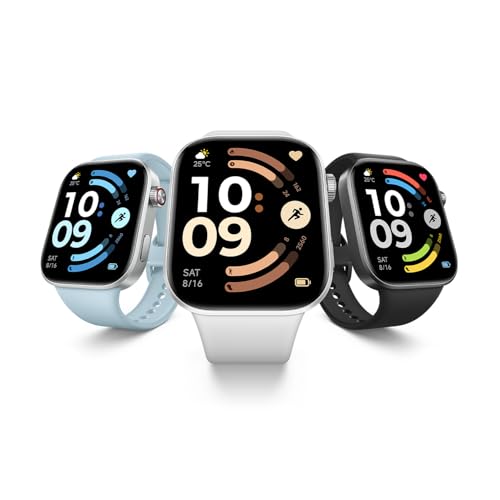
Redmi Watch 6
Amazon AU best-seller rank #13 in Smartwatches • ASIN B0GQL9JZS7 • $132.00
The value champion, and currently one of the best-selling smartwatches on Amazon AU. The Redmi Watch 6 gives you a proper 2.07-inch AMOLED watch face rather than a fitness-band strip, with 2mm bezels, a 9.9mm aluminium alloy body, built-in dual L1 five-system GNSS for outdoor tracking and 150+ sports modes. For $132 it does most of what watches costing twice as much do.
Battery is the headline: the listing rates it at up to 24 days from a 550mAh cell, about three and a half weeks between charges. The trade-off versus the pricier picks below is the depth of the long-term data ecosystem and the finish of the materials. The listing does not state a water-resistance rating or calling support, so check both on the product page before you buy if either matters to you. If you want the most watch for the least money, this is it.
Best for: Buyers who want a full watch face and built-in GNSS tracking on a tight budget, and people who value a three-week-plus battery.
Display: 2.07" AMOLED • Battery: Up to 24 days • GNSS: Dual L1, 5-system • Body: Aluminium alloy, 9.9mm • Sport modes: 150+
View on Amazon AU
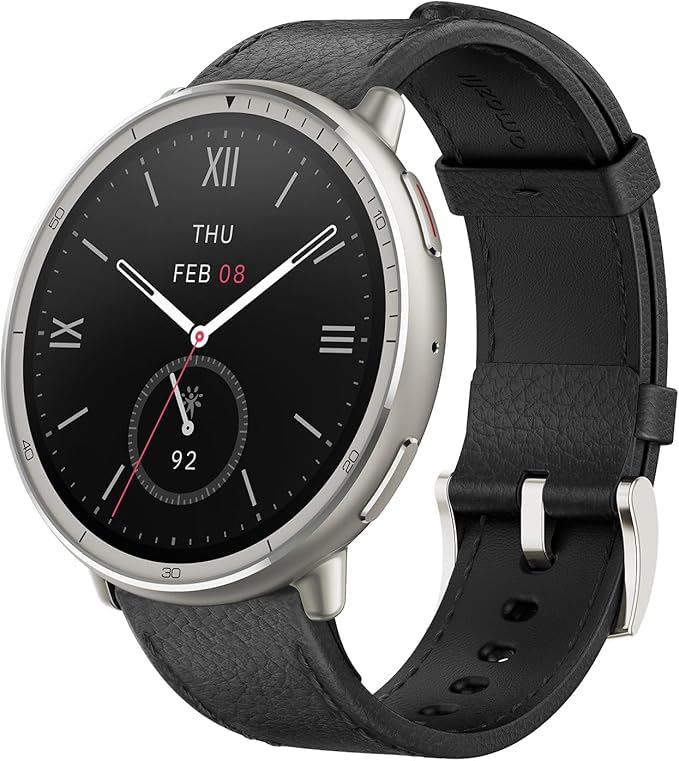
Amazfit Active 2
Amazon AU best-seller rank #52 in Smartwatches • ASIN B0F8B6WQ1C • $199.00
The Active 2 is the natural step up from the Redmi Watch 6 and the guide's sweet spot if you want a watch that will last. The headline upgrade is the 44mm sapphire-glass front, which is dramatically harder than the tempered glass on cheaper watches and shrugs off keys, benches and doorframes. You also get built-in GPS with free maps and turn directions, BioTracker heart rate, blood oxygen and sleep tracking, 160+ sport modes and Bluetooth calling.
Battery is a realistic 10 days, and the metal bezel and build feel a clear class above the plastic budget picks. The step up from the Redmi Watch 6 mainly buys you materials and refinement rather than a longer feature list, so it is the pick if you want something that both tracks well and holds up physically for years. Setting up a home workspace to go with it? See our monitors guide.
Best for: Active users who want built-in GPS and a screen that resists scratches, buyers who keep a watch for several years, and anyone who found the budget picks a bit too plasticky. Pair with the Zepp app on iOS or Android.
Battery: Up to 10 days • GPS: Built-in with maps • Glass: Sapphire • Calls: Yes (Bluetooth) • Sport modes: 160+ • Water: 5 ATM
View on Amazon AU
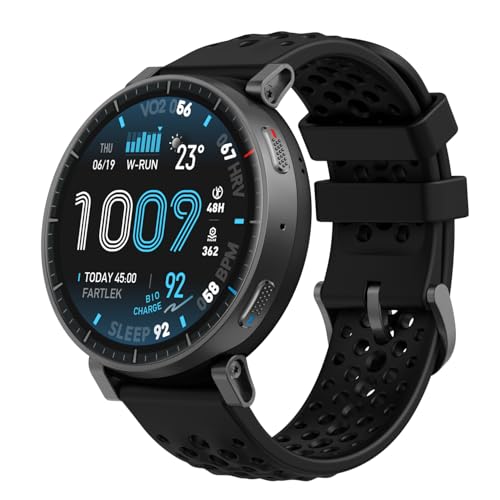
Amazfit Active Max Smart Watch
Amazon AU best-seller rank #104 in Smartwatches • ASIN B0G4F6ZCSV • $239.00
The Active Max is the training pick in this guide. It has a 1.5-inch AMOLED screen, free downloadable offline maps with turn-by-turn directions (terrain and ski maps included), positioning across five satellite systems, and Zepp Coach plans for 3K, 5K, 10K, half and full marathon distances. The 4GB of onboard storage holds your maps and your music, so a long run does not need the phone in your pocket.
The headline is battery: up to 25 days between charges, against 10 days on the Active 2. You also get 170+ workout modes, Bluetooth calls through the built-in speaker and mic, and 5 ATM water resistance. One catch: hands-free message replies through Zepp Flow need an Android phone connected. If you mostly want everyday tracking and a harder-wearing screen, the Active 2 covers it for less. Pair with the Zepp app, which mirrors notifications from your phone.
Best for: Runners who want offline maps and structured running plans, anyone who wants a very long battery between charges, and buyers who want maps and music stored on the watch. Works with Android and iOS via Zepp.
Battery: Up to 25 days • Display: 1.5-inch AMOLED • GPS: 5 satellite systems • Maps: Offline, downloadable • Storage: 4GB onboard • Calls: Yes (Bluetooth) • Water: 5 ATM
View on Amazon AU
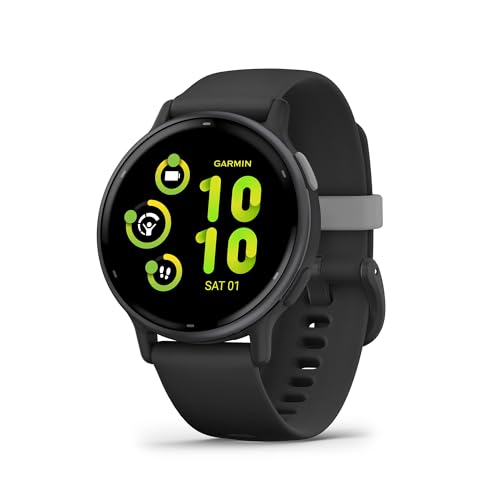
Garmin vívoactive® 5
Amazon AU best-seller rank #2 in Smartwatches • ASIN B0CG6NR413 • $474.84
The vívoactive 5 is the top of this guide and sits at #2 in Amazon AU's Smartwatches chart at time of writing. It is the answer for serious health monitoring without paying Apple Watch Ultra money. The listing describes a bright, colourful AMOLED display and a GPS health and fitness smartwatch with up to 11 days of battery in smartwatch mode, plus more than 30 built-in indoor and GPS sports apps covering walking, running, cycling, HIIT, swimming and golf.
The step up from the Amazfit watches is mostly the ecosystem. Garmin's Body Battery energy monitoring draws on sleep, naps, stress and workouts, and the listing adds a sleep score with personalised sleep coaching and HRV status. Garmin states the data is a close estimation of the metrics tracked rather than a medical reading. A wheelchair mode that tracks pushes instead of steps is also listed, which is rare at this price. It is the pick if you take training and long-term health trends seriously and want the deepest tools to work with.
Best for: Buyers who want the most complete health data and the strongest ecosystem, dedicated trainers, and anyone tracking sleep, recovery or cycle trends closely. If you would not use the deeper Garmin tools, save your money and get one of the Amazfit watches above. Pair with Garmin Connect on iOS or Android.
Battery: Up to 11 days in smartwatch mode • GPS: Built-in • Display: AMOLED • Health: Body Battery, sleep score and coaching, HRV status • Sports apps: 30+ indoor and GPS • Accessibility: Wheelchair mode
View on Amazon AUSide-by-side comparison
| Product | Price | Best for |
|---|---|---|
| Smart Watch for Women with Bluetooth Calling | ~$29.99 | Starter watch on the smallest budget |
| NX19 Women Smart Watch | ~$51.28 | Basic metal-cased watch with calling |
| Xiaomi Smart Band 10 | ~$66.50 | Steps, heart rate and sleep on a budget |
| Redmi Watch 5 Lite | ~$89.50 | GNSS and AMOLED under $100 |
| Xiaomi Smart Band 10 Pro | ~$106.53 | Slim band with built-in GPS |
| Redmi Watch 6 | ~$132 | Most watch for the least money |
| Amazfit Active 2 SmartWatch | ~$199.00 | GPS and a scratch-resistant sapphire screen |
| Amazfit Active Max Smart Watch | ~$239 | Runners who want offline maps |
| Garmin vívoactive 5 | ~$474.84 | Deepest health data and ecosystem |
What we see fail at the bench
Sixteen years repairing electronics, plenty of smartwatches and fitness trackers through the workshop, and a handful of failure modes that show up consistently.
Battery degradation is the number one reason these devices get replaced. Smartwatch batteries are tiny (200 to 400mAh) and charge daily, which accelerates wear. The rough pattern we see across brands: quality watches like the Amazfit, Xiaomi and Garmin picks here hold usable capacity for 2 to 3 years, while cheap no-name brands (the sub-$70 picks elsewhere on Amazon) often lose 30 to 50% of capacity within 9 to 12 months. Larger always-on AMOLED watches worked hard with GPS every day sit at the shorter end of that range. Battery replacement isn't economic on most smartwatches, because the device is sealed, replacement parts are scarce, and labour costs more than buying a new unit. Plan to replace your smartwatch every 2 to 3 years and budget accordingly.
Strap latch and pin failures are universal across brands. Silicone bands attach via spring-bar pins. The pins eventually wear through the strap holes, the strap separates, and the watch falls off the wrist. We see this happen on Amazfit, Garmin, Xiaomi, Apple Watch, Samsung Galaxy Watch and no-name brands alike, because the failure mode is the same. Most brands offer replacement straps, and third-party bands run about $20 to $30, so it is an easy and cheap fix. The fabric and metal strap options have different failure modes: fabric frays at 18 to 24 months, and metal links work loose at the pin joints. Budget for a strap replacement at least once during the device's life.
Cracked or scratched screens on cheap brands. Glass quality is one of the clearest ways price shows up. The Amazfit Active 2 here uses sapphire glass, which is one of the hardest surfaces you can put on a watch and shrugs off keys, watchbands and doorframes. The Garmin Vivoactive 5 uses Corning Gorilla Glass 3, and the budget Band 10 Pro uses tempered glass, which is still real glass and holds up far better than the acrylic or plastic "glass" on sub-$70 no-name watches that scratches in weeks and looks awful by month 6. We see cracked-screen calls mostly on the cheap brands and on any watch that has taken a direct hit on a corner, because even sapphire and Gorilla Glass resist scratches but are not shatter-proof.
Optical heart-rate sensor accuracy degrades over time. The little green LEDs on the back of the watch (photoplethysmography sensors) accumulate gunk, from sweat residue, sunscreen and skin oils, that interferes with light transmission. Heart rate readings become noisy or intermittently wrong around 12 to 18 months on heavily used devices. The fix is mechanical: clean the back of the watch with a microfibre cloth weekly. We see a steady stream of calls where the customer thinks the watch is "broken" but it's actually just a dirty sensor surface.
"Sync stopped working" calls are usually the phone, not the watch. Bluetooth sync failures between the watch and its companion app (Zepp for Amazfit, Mi Fitness for Xiaomi, Garmin Connect for Garmin) are the most common support call we get on these devices. About 80% of the time the fix is on the phone side: force-close the app, toggle Bluetooth off and on, restart the phone, then re-pair the watch. The watch hardware is rarely the problem. Background app refresh on iOS and battery optimisation on Android both interfere with the app's ability to hold a stable connection. The other 20% is a genuine watch firmware issue, fixed by a factory reset and re-pairing.
Water resistance failures: a 5 ATM rating doesn't mean what people think. "Water resistant to 5 ATM" (roughly 50 metres) is a static-pressure rating, not a dynamic-pressure rating. Diving or swimming with rapid arm movement creates pressure spikes that exceed the rated depth. Hot showers create steam that gets past the seals over time. Chlorinated pool water degrades the rubber seals faster than fresh water. We see watches that "stopped working after the pool" where the rating was technically met but the cumulative seal degradation crossed the line. If you swim regularly with any of these watches, expect water-related failure around 18 to 24 months, sooner if it's chlorinated water. Saltwater is even harder on seals.
Sensor accuracy varies significantly by price point. The cheaper end of the smartwatch market often advertises advanced health features (blood pressure, body temperature, stress, even "ECG") at headline prices. A $70 watch and a $500 watch may both display the same metric, but the underlying measurement quality and sensor calibration are rarely equivalent. Proper medical ECG needs a genuine second-contact electrode setup and regulatory clearance, whereas many cheap devices advertise "ECG" using single-point optical sensing, which is a different technology with different accuracy characteristics. None of the affordable picks here claim medical ECG, and that honesty is a point in their favour. If a specific health metric matters to you, the brand-name picks in this guide use more proven sensor technology than the no-name alternatives, and that's the strongest reason to step up.
What these devices can and can't tell you
This section matters because the marketing on smartwatches consistently oversells the medical relevance of the data. Here's the honest read after years of conversations with customers who showed up at the bench with a wearable's graph thinking it meant something it didn't:
Things smartwatches measure well enough to be useful:
- Step count and activity level: within about 5% of pedometer accuracy. Useful for behavioural nudges.
- Resting heart rate: within roughly 3 to 5 BPM of medical equipment. Useful for spotting trends, since a rising resting rate can indicate illness, overtraining or poor sleep.
- Sleep duration and basic phases: reasonable approximations. Useful for spotting trends, not for medical diagnosis.
- Cardiovascular fitness trends: useful for tracking improvement over weeks and months of consistent training.
Things smartwatches measure but only roughly:
- Sleep stages (REM, deep, light): rough approximations using heart rate variability and movement. Not as accurate as a sleep lab.
- Calorie burn: rough estimates based on heart rate and activity. Often 15 to 30% off compared to indirect calorimetry.
- SpO2 (blood oxygen): spot-check accuracy varies. Good enough to flag a problem, not good enough for diagnosis.
- Stress (via HRV): reflects autonomic nervous system activity, which correlates loosely with subjective stress. Useful for trend awareness, not absolute measurement.
Things smartwatches can't reliably measure:
- Blood pressure: wrist-based blood pressure on consumer smartwatches is still an evolving technology. For readings that match clinical guidelines, a traditional upper-arm cuff monitor remains the standard.
- Core body temperature: wrist skin temperature is heavily affected by ambient air, sleeves and circulation patterns. Not a thermometer substitute.
- Heart attack or stroke risk: none of these watches are screening tools for cardiovascular events. If something feels wrong, that is a see-a-doctor situation, not a wrist-reading one.
- Hydration status: no consumer wrist device measures hydration reliably.
The pattern: smartwatches are excellent for tracking trends and motivating behaviour change. They're not medical devices. If something feels wrong with your body, the watch's opinion is a useful data point but not a diagnosis.
Decision tree
- I just want my step count, heart rate and sleep in the slimmest package: Xiaomi Smart Band 10 Pro ($108). Longest battery in the guide, built-in GPS, no features you won't use.
- I want the most watch for the least money: Redmi Watch 6 ($132). A big 2.07-inch AMOLED watch face, built-in GNSS tracking and a 24-day battery, and one of the best-selling smartwatches on Amazon AU.
- I want built-in GPS and a screen that won't scratch: Amazfit Active 2 ($199). Sapphire glass and a metal build that holds up for years.
- I run and want offline maps, structured running plans and a long battery: Amazfit Active Max ($239). The serious training pick.
- I want the most complete health data and the deepest ecosystem: Garmin Vivoactive 5 ($359). Body Battery, sleep coaching and Garmin Connect.
- I'm unsure between the Band 10 Pro and the Redmi Watch 6: the Redmi Watch 6 if you want a proper watch face and a thin aluminium body. The Band 10 Pro if you want the slimmest band.
- I'm unsure between the Redmi Watch 6 and the Active 2: the Active 2 if you keep a watch for years and want the scratch-proof sapphire screen and metal build. The Redmi Watch 6 if the budget is tight and the price matters more than the glass.
- I'm unsure between the Active Max and the Garmin: the Active Max if you mainly want a great running watch at a lower price. The Garmin Vivoactive 5 if you want the deeper health data and the stronger long-term ecosystem, and the extra spend is worth it to you.
So what should you actually buy?
For most Australian buyers shopping smartwatches in 2026:
- The pragmatic default: Redmi Watch 6 ($132). A 2.07-inch AMOLED screen, built-in GNSS and a 24-day battery: the sweet spot of features per dollar, and a top seller on Amazon AU.
- If you want minimum drama and maximum battery: Xiaomi Smart Band 10 Pro ($108). A slim band with built-in GPS and up to 21 days per charge.
- If you want a watch that lasts physically: Amazfit Active 2 ($199). Sapphire glass and a metal build a clear class above the budget picks.
- If you run seriously: Amazfit Active Max ($239). Offline maps, running plans and a 25-day battery.
- If you want the deepest health data and ecosystem: Garmin Vivoactive 5 ($359). The top-tier pick.
The biggest mistake we see at the bench isn't which smartwatch someone bought, but treating the data as medical advice rather than wellness trend tracking. A smartwatch is a behavioural-change device. If it makes you walk more, sleep more consistently, or notice when your resting heart rate is climbing, it's done its job. If it makes you anxious about every spike in your sleep score or every off heart-rate reading, you're using it wrong. Set it up, wear it, look at the trends weekly rather than daily, and ignore the absolute numbers.
For more context on building out a healthy work-from-home setup that complements a smartwatch, see our mini PCs guide and the monitors guide. Ergonomic posture and proper screen distance contribute more to long-term health than any wearable can measure.
On the Central Coast and need help pairing a smartwatch with an Android or iOS device, or you've got one that won't sync, won't charge, or has a screen issue? Book in with iFix Electronics in Erina using the button below. We can diagnose connection issues, battery health, sensor calibration, and help you set up data exports if you want to move out of one ecosystem into another.
Need help setting up or diagnosing a smartwatch?
If you'd like a hand pairing a smartwatch to your phone, troubleshooting a sync issue, or diagnosing why a watch won't charge or hold a connection, we're happy to help on the Central Coast.