Prices from Amazon AU, updated daily. Swipe or use the arrows for more.
Disclosure: This article contains affiliate links to amazon.com.au. If you buy through one of these links iFix may earn a small commission at no extra cost to you. It doesn't change which products we recommend. We focus on what actually lasts based on 16 years of repair-shop experience.
Quick summary5 picks
- Entry PickFisher Price Kids Cubby House about$299
- Backyard Discovery Sweetwater All Cedar… about$499
- Lifespan Kids Teddy Cubby House with Floor about$598.34
- Backyard Discovery Mystic Cedar Wooden Kids… about$799
- Most PremiumBackyard Discovery Aspen All Cedar Wood… about$849
Cedar, treated timber or plastic
Cubby houses on Amazon AU come in three materials, and the material decides most of what you'll be doing to it for the next five years. Three of the five picks are Backyard Discovery cedar cubbies, sold by Backyard Discovery Australia, the brand's local storefront. One is a Lifespan Kids cubby in treated timber, sold by Amazon AU, and the last is a Fisher-Price cubby, also sold by Amazon AU, whose listing doesn't actually name what it's made from.
Cedar's appeal is that it handles damp weather and resists rot without much help, and all three Backyard Discovery listings lean on that. It's also a soft timber, so it dents and scratches, and the stain on it fades in Australian sun faster than the photos suggest. Treated timber, like the Lifespan Teddy's, is protected against insects, rot and fungal decay by the treatment, according to its listing, and it usually needs paint or stain kept up on the outside to stop it splitting and greying.
Moulded plastic cubbies are a different thing to own. There's nothing to rot or stain, they wipe clean and they're light enough to move around the yard, but UV is hard on plastic, and after a few summers in full sun the colour fades and the walls go brittle around the clips and hinges. At about 13kg in Amazon's item data, the Fisher-Price is almost certainly plastic, but its listing only says sturdy construction, so check the photos before you order.
I've kept the picks to ground-level cubbies between $299 and $849. Raised cubbies on stilts with slides and ladders are a bigger build, with footings and fall heights to think about, and the ones on Amazon AU sit well above that range. Indoor play tents, sandpits with roofs and climbing sets are left out too. If the slide is really what your kids want, a cubby is the wrong starting place, and a play centre is a separate buy with its own checks.
Size, footprint and where it goes
Measure the spot before you look at photos, because cubby listings are hard to compare on size. Amazon's item data puts the Sweetwater at about 107cm wide, 117cm long and 140cm high, the Mystic at about 132cm square and 171cm high, and the Aspen at about 200 by 124cm with its snack bar attached, also 171cm high. The Fisher-Price lists about 104cm square and 178cm high, and the Lifespan Teddy's listing gives no assembled size at all, so that one needs checking with the maker.
Leave a clear strip around the cubby, a metre or so if you can, so a door can swing, a child can run past without catching a corner and you can get in with a brush and a tin of stain later. Keep it off the fence line, because a cubby hard against a fence traps leaves and moisture on that side, and a back wall nobody can reach is usually the wall that rots first. Overhanging trees drop sap, leaves and the odd branch on the roof.
Height matters more than people expect. A 140cm cubby suits toddlers and young kids, and most adults will be bent double to get inside it, while a 171cm cubby lets a parent duck in to fix something without crawling. Sun is the other thing to plan for, because a cubby in full afternoon sun gets hot inside and fades faster. A spot with afternoon shade, or one of the shade options in our outdoor umbrella and gazebo guide, helps with both.
Timber, stain and what the weather does to it
All three Backyard Discovery cubbies arrive pre-stained: light brown with black trim on the Sweetwater, light brown and slate with white trim on the Mystic, and light brown with white trim on the Aspen. Each listing warns that stain saturation and colour may vary, which is normal for stained timber and worth knowing if you're matching a fence or a deck. A factory stain is a starting coat rather than a finish for life, and in Australian sun I'd expect it to want a fresh coat within a couple of years.
Rot starts where water sits. The bottom of each wall panel, the joins at the roof and the floor where it meets the ground are where moisture stays longest, and cedar's natural resistance slows rot rather than stopping it. Keep the base off wet soil, keep the roof clear of leaves and check the bottom edges of the panels every autumn for soft spots you can push a fingernail into. Catching soft timber early usually means a sand and a recoat, not a new panel.
Treated timber behaves a little differently. The Lifespan Teddy's listing says its timber is treated against insects, rot and fungal decay and finished in a matte stain, and that treatment protects the wood inside while the outside still weathers like any other board. If you cut or drill it to add a shelf or a hook, seal the cut end with exterior paint or stain, because a raw cut is where water gets in. Our steel vs timber garden bed guide covers the same question for beds.
Splinters come from weathered, dry timber more than from new boards. Run a hand over the door edges, window frames and anything a child grips every few months, and give rough spots a light sand before they lift. Don't pressure wash a stained cubby, because a hard jet strips the stain and raises the grain, which is how a smooth panel turns furry and rough in one afternoon. Keep the pressure washer for the driveway, and use a soft brush, soapy water and a gentle hose.
Assembly and the first weekend
Every pick arrives flat-packed, and a timber cubby is a two-adult job, mostly because wall panels and roof sections need holding square while the other person drives screws. The three Backyard Discovery listings say the pieces are pre-cut, pre-drilled and pre-stained, which saves a lot of measuring. Amazon's item data puts the Sweetwater at about 35kg and the Mystic at about 50kg, so check how far the courier will carry it and plan to unpack the boxes close to where the cubby will stand.
Lay every panel and bag of screws out on a tarp before you start, and count them against the parts list. A missing bracket is far easier to chase up with the seller on day one than halfway through the roof. A cordless drill with the clutch set low saves soft cedar from stripped screw holes, which is the assembly mistake I hear about most, and the first screw into each pre-drilled hole is best started by hand for a couple of turns so it finds the hole straight.
Give yourself most of a day for the bigger cedar cubbies and a few hours for the Sweetwater or the Fisher-Price. Once it's built, go round and nip up every screw a week later, because timber settles and screws loosen as the panels take up moisture. Keep the instructions and the parts list in a zip bag somewhere you'll find them again, because they're what you'll need when a hinge or a window piece needs replacing in a couple of years and the model has changed.
Ground, levelling and anchoring
A cubby is only as square as the ground under it. On a slope or soft lawn the frame twists, doors stop closing and windows bind, and that twist is what loosens screws and splits panels over time. Level the spot first. Pavers bedded on crusher dust, a few treated sleepers or a small timber deck give a flat, firm base that also keeps the floor off wet grass, and in my experience they're worth an afternoon even on a yard that looks level.
Wind is the other force to plan for, especially on the coast. A cubby has big flat walls and a light floor, and a strong gust can push or tip a lighter one, so anchor it to the base or the ground with brackets or ground anchors suited to your soil. None of the five listings sets out an anchoring kit, so ask the seller what the cubby was designed to be fixed down with before you buy, and allow for the brackets in what you spend.
Plastic cubbies need anchoring more than timber ones, because they're so much lighter. At about 13kg in Amazon's item data, the Fisher-Price can shift in a gust that wouldn't move a 50kg cedar cubby, and a cubby that tumbles across the yard in a storm usually cracks its walls or its clips on the way. Sandbags in the corners work for a weekend, but pegs or straps into the ground are the proper fix if it's staying out on the lawn for the summer.
Doors, windows and small hands
Doors are where kids and cubbies meet hardest. The Mystic and the Aspen have hinged Dutch doors with a knob and latch, and the Sweetwater has a hinged half door. Hinges on a kids' door get swung on, hung off and slammed far more than any house door, so check their screws every month or so, and fix a stripped hole with a slightly longer screw or a glued dowel. A door that sags drags on the floor and pulls its own hinge screws out faster.
Fingers are what I'd watch most on any hinged door. The gap on the hinge side closes like a pair of pliers, and a door caught by the wind can shut faster than a child can pull a hand back. A simple door stop or a hook to hold the door open on windy days helps a lot, and so does showing kids where not to put their hands. Check what any window inserts are made of before assembly, and if there are any, make sure they're acrylic or polycarbonate rather than glass.
Toy accessories wear fastest of anything in the box. The cedar cubbies come with play kitchens, cookware and utensils, and depending on the model a letterbox, a doorbell and toy lights, and the small plastic pieces tend to end up in the garden and the mower. Bring the loose kitchen bits inside over winter and keep the spare screws for the play kitchen, because the sink and cooktop panels take more weight from leaning toddlers than they look designed for.
Tablets, toys and batteries in the cubby
This is the part an electronics workshop actually sees. A cubby becomes a second home for tablets, walkie talkies, torches, speakers and baby monitors, and none of those is built for a timber box that's cold and damp overnight. The Mystic lists toy wall lights and a doorbell, the Aspen lists decorative lights and the Sweetwater has a working doorbell, and none of the listings says what powers them, so check for batteries before they go up on the wall.
Condensation is the quiet one. A cubby warms up during the day and cools at night, and moisture settles on anything left inside, including a tablet on the floor or a speaker on the shelf. Over a few weeks that's enough to corrode charging ports and battery contacts. A device that's been left out overnight and now won't charge properly, or has a crackly speaker, is showing the same early signs we describe in our water damage explainer.
The fix is a habit more than a gadget. Make it a rule that screens and anything with a battery come inside by dinner time, pull batteries out of toy doorbells and lights over winter, and never run an indoor extension lead out to a cubby, because outdoor power is a job for a licensed electrician. If a tablet or phone does spend a wet night out there, switch it off, don't charge it, and bring it to our Erina workshop before the corrosion spreads.
Warranties, standards and the yearly check
Most cubbies last about as long as the yearly check-over they get. Once a year, ideally before summer, go round every screw and bracket, look at the bottom edges of the panels and the roof joins for soft timber, and re-stain anything that's gone grey or furry. On a plastic cubby, look for cracks around the clips and hinges and white chalky patches where UV has started breaking the surface down, which is usually the first sign it's getting brittle.
Warranty is worth reading before you buy. The Mystic and the Sweetwater both list a 5-year guarantee, and the Aspen, Lifespan Teddy and Fisher-Price listings don't state a warranty at all. Keep the order email and a photo of the parts list, and register the cubby with the maker if they offer it, because a warranty claim on a split panel usually needs proof of purchase and the model number. All five picks show a part or model number on their listings.
On standards, the Lifespan Teddy states it complies with AS/NZS ISO 8124, the Australian and New Zealand toy safety standard. The Mystic and the Sweetwater say they're engineered to meet or exceed EN-71, the European toy standard, the Aspen adds ASTM, and the Fisher-Price listing doesn't mention a standard. A standard covers the cubby as it's supplied, so the base, the anchoring and the yearly check are still up to you, the same as the kart in our kids go kart guide.
The 5 picks, $299 to $849
Prices are Amazon AU at time of writing (2026-11-13) and move week to week. Ranks are Amazon AU category sales ranks, checked the same day, with the overall Amazon AU rank alongside because the five picks sit in three different categories.

Backyard Discovery Mystic Cedar Wooden Kids Cubby House with Play Kitchen and Dutch Door
ASIN B0G1TJ7N14 • $799 • Sold by Backyard Discovery Australia on Amazon AU
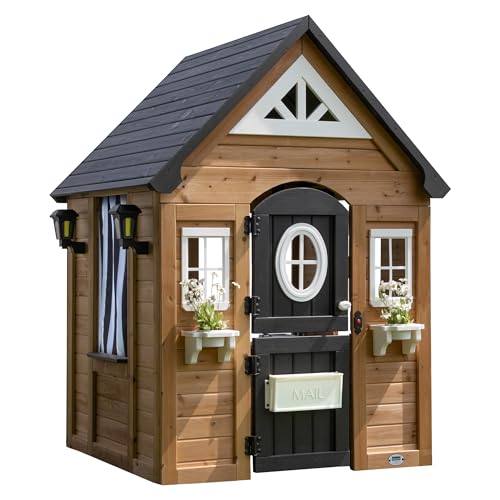
The Backyard Discovery Mystic is the best-ranked cubby of the five picks, and it's the one I'd start with for most families with a bit of yard. Amazon AU lists it at $799 from Backyard Discovery Australia, the brand's local storefront, and it ranks #1,977 in Amazon AU's Sport & Outdoor Toys category and #5,285 overall on the site, well ahead of the other four on overall rank. It's 100% cedar, pre-cut, pre-drilled and pre-stained in light brown and slate with white trim, and Amazon's item data puts it at about 132cm square, 171cm high and roughly 50kg. The part number on the listing is 2503021COM, which is worth noting for any warranty claim.
Inside, there's a kitchenette with a toy sink, a cooktop and cookware, and the listing adds a mounted letterbox, toy wall lights and a doorbell. The front is a hinged Dutch door with a knob and latch, so the top half can open on its own, and broad windows with ornamental curtains let you see in from the house. Window pots sit under the front windows, with the flowers not included. The 171cm height means a parent can duck inside to tighten a screw without crawling, which matters more over five years than any of the accessories. The listing says it's engineered to meet or exceed EN-71 and is designed for residential use only.
The Mystic and the Sweetwater are the two picks that state a warranty, a 5-year guarantee each, so keep the order email somewhere safe. The listing doesn't say what powers the toy lights and doorbell, so check for batteries when you unpack and take them out over winter. At about 50kg it's a two-person carry and a two-adult build, and it wants a level paver or sleeper base and some ground anchors before the kids move in. Plan to re-stain the outside within a couple of summers. For a ground-level cedar cubby with room for a parent to get inside, it's my pick.
Honest caveats: The listing doesn't state an age range, an anchoring kit or what powers the toy lights and doorbell. Stain colour may vary from the photos, which the listing says itself. At about 50kg in Amazon's item data it's the heaviest pick with a stated weight, so plan for two people at delivery and assembly.
Best for: Families who want a full-height cedar cubby with a play kitchen, a Dutch door and a 5-year guarantee.
Price: $799 (Backyard Discovery Australia) • Material: 100% cedar, pre-stained • Size: About 132 x 132 x 171cm (item data) • Weight: About 50kg (item data) • Door: Hinged Dutch door, knob and latch • Extras: Kitchenette, letterbox, toy lights, doorbell • Warranty: 5-year guarantee • Standard: EN-71 (stated) • Rank: #1,977 in Sport & Outdoor Toys (Amazon AU), #5,285 overall
View on Amazon AU
Backyard Discovery Sweetwater All Cedar Wood Playhouse with Half Door and Play Kitchen
ASIN B07ZB14C1R • $499 • Sold by Backyard Discovery Australia on Amazon AU
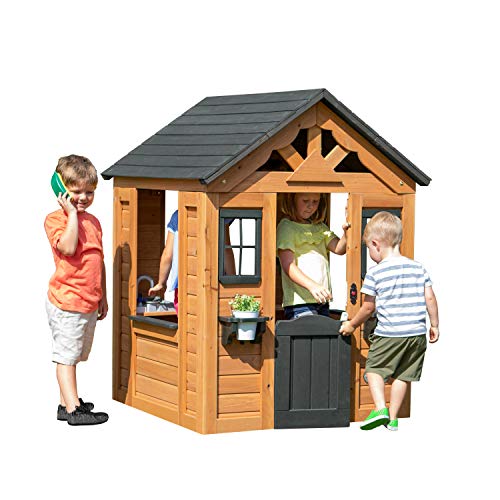
The Backyard Discovery Sweetwater is the smallest and lowest-priced cedar cubby of the five picks, and it suits toddlers and smaller yards best. Amazon AU lists it at $499 from Backyard Discovery Australia, and it ranks #132 in Amazon AU's Kids' Play Tents category and #58,511 overall on the site. It's 100% cedar, pre-cut, pre-drilled and pre-stained light brown with black trim. Amazon's item data gives its size as about 107cm wide, 117cm long and 140cm high, and puts it at around 35kg. The part number is 2001312, and Amazon shows a 2019 release date, so it's a long-running design rather than a new one, and spare parts should be easier to find.
There's a lot of cubby for the size. It has a play kitchen with a toy sink, stove, cookware and utensils, a cordless toy phone and a working doorbell, plus a hinged half door and a roomy side window the listing pitches as a snack bar. Plant pot holders sit under the front windows, with the pots and plants not included. At 140cm tall it's sized for small kids rather than parents, and most adults will be on their knees inside, which is fine for play and a bit awkward for maintenance. The listing says it's engineered to meet or exceed EN-71, and it carries a 5-year guarantee like the Mystic.
Backyard Discovery also sells a white Sweetwater as a separate listing, and I've stuck with this stained one because the white listing quotes its box sizes in inches and pounds. The listing doesn't say what powers the working doorbell, so check when you unpack and pull any battery out over winter. At about 35kg it's light enough to need anchoring on an exposed site, and the small footprint makes a paver base an easy afternoon job. Re-coat the stain every couple of years. For a first cedar cubby for a toddler, it's the one I'd buy.
Honest caveats: At 140cm tall, adults can't stand inside, so maintenance happens on your knees. The listing doesn't state an age range, a floor or an anchoring kit. At about 35kg in Amazon's item data it's well under the Mystic's 50kg, so anchor it on a windy site.
Best for: Toddlers and smaller yards that want a cedar cubby with a play kitchen and a 5-year guarantee.
Price: $499 (Backyard Discovery Australia) • Material: 100% cedar, pre-stained • Size: About 107 x 117 x 140cm (item data) • Weight: About 35kg (item data) • Door: Hinged half door • Extras: Play kitchen, toy phone, working doorbell • Warranty: 5-year guarantee • Standard: EN-71 (stated) • Rank: #132 in Kids' Play Tents (Amazon AU), #58,511 overall
View on Amazon AU
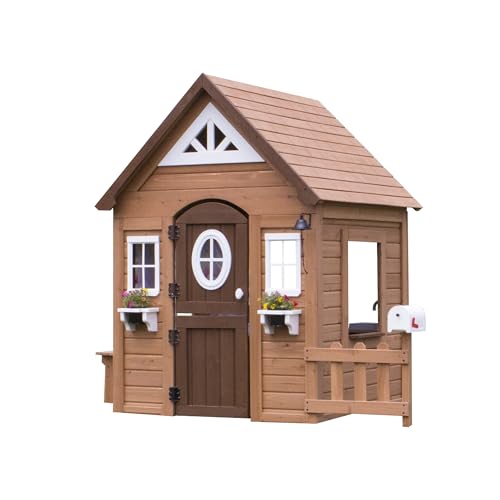
Backyard Discovery Aspen All Cedar Wood Cubby House with Snack Bar Station, Mailbox and Fence
ASIN B0DQQSQ7CC • $849 • Sold by Backyard Discovery Australia on Amazon AU
The Backyard Discovery Aspen has the biggest footprint of the picks that state a size, because its snack bar station is built onto the side. Amazon AU lists it at $849 from Backyard Discovery Australia, and it ranks #7,573 in Amazon AU's Sport & Outdoor Toys category and #28,943 overall, the second-best overall rank of the five behind the Mystic. It's 100% cedar, pre-cut, pre-drilled and pre-stained in a natural light brown with white trim. Amazon's item data puts it at about 200cm long, 124cm wide and 171cm high, so measure that 2m length against your spot before you order. The part number is 2403031, and the listing doesn't state a weight.
The snack bar station is a side serving table with a bench attached, and it's the feature that sets the Aspen apart from the Mystic. Inside there's a kitchenette with a cutting board, a plastic knife and a basket of sliceable fruit and veggies, and the listing adds a mailbox, a fence, decorative lights, a dinner bell and window curtains with rods and mounts. The front is a hinged Dutch door with a knob and latch. It's the same 171cm height as the Mystic, so a parent can get inside, and the listing says it's engineered to meet or exceed EN-71 and ASTM standards. With a fence and a bench outside, it works as a little play area rather than just a box.
The listing doesn't state a warranty, unlike the Mystic and the Sweetwater, so ask Backyard Discovery Australia before you order if that matters to you. The attached bench and fence add more joins and more timber at ground level, which is where rot starts, so a raised paver base and a yearly check of the bench legs are worth the effort. Check what powers the decorative lights when it arrives, and keep them dry. If you have the room and want an outdoor table built in, it's the one to get.
Honest caveats: No warranty and no weight are stated on the listing. The attached bench and fence add ground-level timber that needs checking for rot every year. At about 2m long in Amazon's item data, it needs a bigger level base than the other cedar picks.
Best for: Families with room for a 2m cubby who want a built-in snack bar, bench and fence.
Price: $849 (Backyard Discovery Australia) • Material: 100% cedar, pre-stained • Size: About 200 x 124 x 171cm (item data) • Door: Hinged Dutch door, knob and latch • Extras: Snack bar with bench, kitchenette, mailbox, fence, lights • Warranty: Not stated on the listing • Standard: EN-71 and ASTM (stated) • Rank: #7,573 in Sport & Outdoor Toys (Amazon AU), #28,943 overall
View on Amazon AU
Lifespan Kids Teddy Cubby House with Floor, White
ASIN B0B7XFF84S • $598.34 • Ships from Amazon AU
The Lifespan Kids Teddy is the treated timber cubby of the five picks, and it's the one with a stated Australian standard. Amazon AU lists it at $598 and sells it itself, and it ranks #640 in Amazon AU's Kids' Play Tents category, #1,418 in Trampolines & Accessories and #253,591 overall on the site. The listing says the timber is treated against insects, rot and fungal decay and finished in a matte stain, and the title says it comes with a floor, which none of the Backyard Discovery listings mention. The model code is LKCH-TEDV2WH-A, the white version. Its overall rank is the lowest of the five, which I read as fewer sales rather than a worse cubby.
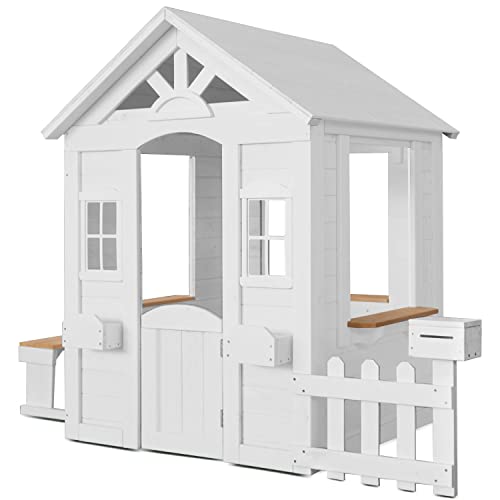
Outside, there's a white picket fence with a mailbox, two mini planter boxes and a pre-painted window frame, and the listing adds a snack bench so kids can sit and eat together. It states compliance with AS/NZS ISO 8124, the Australian and New Zealand toy safety standard, which is the most useful line on any of the five listings for an Australian buyer. The listing doesn't give an assembled size, a weight or a height, and the size Amazon shows, 45 by 70 by 12cm, is clearly a box rather than the cubby. A floor helps keep damp grass off the play space, though I'd still raise it on pavers so the floor itself stays dry.
Treated timber still needs its outside kept up, so plan on a coat of exterior paint or stain every couple of years, and seal any cut ends if you add hooks or shelves. The listing doesn't state a warranty or an anchoring kit, so check the maker's site or ask the seller before you order. White shows dirt and mould spots sooner than a stained finish, so a soft brush and soapy water every few months keeps it looking right. For a timber cubby that states the Australian toy standard, it's my pick.
Honest caveats: No assembled size, height, weight or warranty is stated on the listing, and the size Amazon shows is a box size, so check the real footprint with the maker. Its overall rank is the lowest of the five. White paint shows dirt and weathering sooner than a stained finish.
Best for: Buyers who want a treated timber cubby with a floor and a stated AS/NZS ISO 8124 compliance.
Price: $598 (Amazon AU) • Material: Treated timber, matte stain • Floor: Included (per title) • Extras: Picket fence, mailbox, planters, snack bench • Standard: AS/NZS ISO 8124 (stated) • Size: Not stated on the listing • Model: LKCH-TEDV2WH-A • Rank: #640 in Kids' Play Tents (Amazon AU), #253,591 overall
View on Amazon AU
Fisher-Price Kids Cubby House
ASIN B0CB85ZG9J • $299 • Ships from Amazon AU
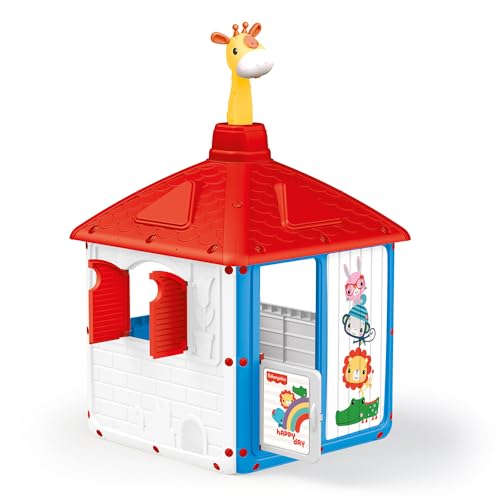
The Fisher-Price Kids Cubby House is the lowest-priced pick, and as far as I can tell it's the one pick of the five that isn't timber. Amazon AU lists it at $299 and sells it itself, and it ranks #393 in Amazon AU's Kids' Play Tents category and #187,134 overall on the site. The listing is thin: four lines saying Fisher-Price branding, large open windows, bright and colourful, and sturdy construction. It doesn't name the material, and at about 13kg in Amazon's item data it's almost certainly moulded plastic, so check the photos to be sure. Amazon's item data also lists about 104cm square and 178cm high, which I'd confirm in the photos too. The part number is 1850.
A light cubby has real upsides. It can move around the yard when the lawn needs mowing, it can go under the patio in a storm, and there's no stain to keep up or timber to rot. Large open windows make it easy to see in from the house, and bright colours suit toddlers more than a timber cottage does. Plastic cubbies of this kind usually go together faster than a cedar one, with less drilling. The trade-off is UV, because a plastic cubby left in full sun for a few summers fades and can go brittle around the clips, and it's the one most likely to move in a strong wind.
The listing doesn't state an age range, a warranty, a floor or a standard, so ask Amazon AU before you order if any of those matter to you. Peg or strap it down if it lives on an open lawn, and park it in afternoon shade to slow the fading. Hose it down and let it dry with the door open. Check the clips and joins each spring, because a cracked clip is the usual first failure on plastic play gear, and a replacement part is easier to get while the model is still sold. For a first cubby for a toddler that can move around the yard, it does the job.
Honest caveats: The listing doesn't name the material, the age range, a warranty or any standard. At about 13kg in Amazon's item data it's light enough to move in a strong gust, so it needs pegging or strapping down on an open lawn. Plastic fades and can go brittle in full sun.
Best for: Toddlers and families who want a light cubby that moves around the yard, at the lowest price of the five.
Price: $299 (Amazon AU) • Material: Not stated on the listing • Size: About 104 x 104 x 178cm (item data) • Weight: About 13kg (item data) • Windows: Large open windows • Warranty: Not stated on the listing • Part number: 1850 • Rank: #393 in Kids' Play Tents (Amazon AU), #187,134 overall
View on Amazon AUSide-by-side comparison
What we see fail in the workshop: electronics in the cubby
Cubbies themselves don't come into an electronics workshop, but what kids take into them does. Tablets, walkie talkies, torches, speakers and baby monitors spend whole afternoons and sometimes whole nights in a timber box that's warm in the day and damp by morning. The faults are the same ones we see from phones left in a car or a bathroom, and nearly all of them come back to moisture and batteries.
Condensation in charging ports
A tablet left on a cubby floor overnight sits in some of the coldest, dampest air in the yard. By morning there can be a film of moisture on the screen and inside the charging port, and plugging it in while the port is damp is what drives corrosion along the pins. The first signs are a cable that only charges at an angle, or a device that says it's charging and doesn't gain any percentage. Dry it switched off with the port facing down before you charge it, and bring it in if it doesn't recover.
Battery toys and doorbells left over winter
Toy doorbells, lights and walkie talkies with alkaline batteries left in them over a damp winter leak, and the white crust that grows on the contacts eats the springs and the small circuit board behind them. A cleaned contact sometimes works again, and a corroded track often doesn't. Rechargeable cells left flat over winter have the same problem from a different direction. Pull every battery out of cubby toys when the weather turns and keep them in a zip bag inside, and you'll usually have a working doorbell again in spring.
Extension leads and outdoor power
Every so often a cubby gets a string of fairy lights, a fan or a speaker charger run out to it on an indoor extension lead, and that's the setup I'd talk anyone out of. Indoor leads and powerboards aren't built for dew, rain or being stepped on in the grass, and a wet plug or a pinched cable is a shock and fire risk. If you want light in the cubby, solar-charged lights are the simple answer, and a proper outdoor power point is a job for a licensed electrician, not a weekend project.
Decision tree: which one should you actually buy?
- Want a full-height cedar cubby a parent can get inside? → The Backyard Discovery Mystic at $799 is 171cm high, has a hinged Dutch door and a play kitchen, lists a 5-year guarantee and is the best-ranked of the five picks.
- Buying a first cedar cubby for a toddler in a smaller yard? → The Backyard Discovery Sweetwater at $499 is about 107 by 117cm and 140cm high, with a play kitchen, a working doorbell and a 5-year guarantee.
- Want a cubby with a table and bench built on? → The Backyard Discovery Aspen at $849 has a snack bar station with a bench, a fence and a mailbox, and it needs about 2m of level ground.
- Want a stated Australian toy standard and a floor? → The Lifespan Kids Teddy at $598 states AS/NZS ISO 8124, uses treated timber and comes with a floor, according to its title.
- Want something light you can move around the yard? → The Fisher-Price Kids Cubby House at $299 is about 13kg in Amazon's item data, so it moves easily, but peg it down on an open lawn.
- Tablet or phone spent a wet night in the cubby? → Switch it off and don't charge it. Bring it into our Erina workshop and we'll check the port and board for corrosion and tell you what it needs before you spend anything.
Frequently asked questions
What is the best timber for a cubby house?
Cedar and treated timber are the two you'll see most on Amazon AU. Cedar handles damp weather and resists rot naturally, which is why the three Backyard Discovery picks use it, but it's soft, so it dents and its stain fades in strong sun. Treated timber, like the Lifespan Kids Teddy's, is protected against insects, rot and fungal decay by the treatment, according to its listing. Both need an exterior stain or paint kept up on the outside every couple of years, and both last longer kept off wet ground.
How long does a cubby house take to put together?
Plan on most of a day for a big cedar cubby like the Mystic or the Aspen, with two adults, and a few hours for the smaller Sweetwater or a plastic cubby. The Backyard Discovery listings say the pieces come pre-cut, pre-drilled and pre-stained, which saves measuring but not the lifting. Lay out every part and count it against the parts list first, use a drill with the clutch set low so the soft timber doesn't strip, and go back a week later to tighten every screw once the timber settles.
Does a cubby house need a base?
It's worth it. A cubby on soft or sloping ground twists, and that twist jams doors, binds windows and loosens screws over time. Pavers bedded on crusher dust, a few treated sleepers or a small timber deck give a level, firm base that also keeps the floor off wet grass, which slows rot along the bottom of the panels. Level the base before the cubby goes on it, because packing up a finished cubby later is a fiddly job that rarely stays square for long.
Should a cubby house be anchored?
Yes, especially on the coast or on an open lawn. A cubby has big flat walls and a light floor, so a strong gust can push or tip a lighter one, and a plastic cubby at around 13kg can move in wind that wouldn't shift a 50kg cedar cubby. None of the five listings sets out an anchoring kit, so ask the seller what it was designed to be fixed down with, and use brackets into the base or ground anchors suited to your soil.
What safety standard should a cubby house meet in Australia?
The Australian and New Zealand toy safety standard is AS/NZS ISO 8124, and of the five picks the Lifespan Kids Teddy states it complies. The Backyard Discovery Mystic and Sweetwater say they're engineered to meet or exceed EN-71, the European toy standard, and the Aspen adds ASTM, while the Fisher-Price listing doesn't mention a standard. A standard covers the cubby as it's supplied, so a level base, anchoring, hinge checks and a yearly look at the timber are still up to you.
Can you leave a tablet or toys in a cubby house overnight?
I wouldn't. A cubby warms during the day and cools at night, and moisture settles on anything left inside, including tablets, speakers and walkie talkies. Over a few weeks that's enough to corrode charging ports and battery contacts. Bring screens and anything with a battery inside by dinner time, take the batteries out of toy doorbells and lights over winter, and if a device does get damp, switch it off and don't charge it until it's been checked.
Related buying guides
Tablet left out in the cubby overnight?
Tablets and phones that spend a night in a damp cubby often seem fine in the morning and then stop charging, flicker or crackle a week later, once corrosion gets going on the port and the board. Bring it into our Erina workshop, and we'll open it up, check for corrosion and tell you what it needs and what it costs before you spend anything.
Visit our Erina workshop Book Online