Prices from Amazon AU, updated daily. Swipe or use the arrows for more.
Disclosure: This article contains affiliate links to amazon.com.au. If you buy through one of these links iFix may earn a small commission at no extra cost to you. It doesn't change which products we recommend. We focus on what actually lasts based on 16 years of repair-shop experience.
Quick summary8 picks
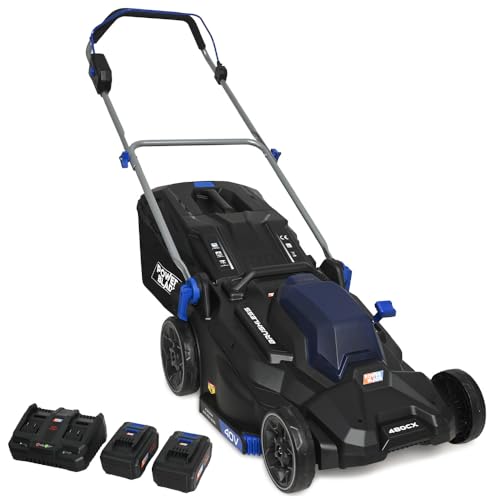
- Entry PickPowerBlade 480CX 40V 17-Inch Cordless Lawn… about$369
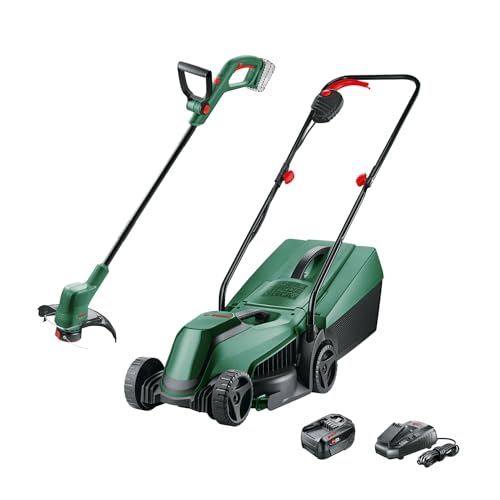
- Bosch 18V Cordless Mower and Grass Cutter… about$395
- Bosch Home & Garden 18V Cordless Brushless… about$399
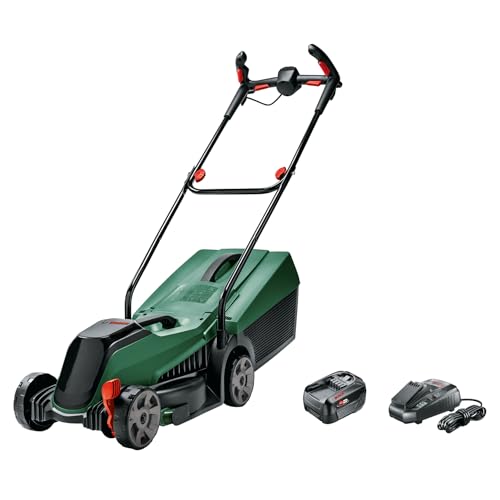
- Bosch 18V Cordless Lawn Mower Rotak 18V-34… about$410
- STANLEY FATMAX V20 | 2x18V 51cm Brushless… about$499
- Greenworks 40V Cordless and Brushless Lawn… about$549
- Hyundai Power 42cm Cordless Lawn Mower Self… about$56316.5" screen.
- Most PremiumBosch 2x18V Cordless Lawn Mower Rotak… about$640
Why the battery matters more than the mower
The mower you buy this spring is really a decision about which battery you're going to own for the next ten years. Every cordless brand locks its packs to its own tools, so once you've got two 4Ah batteries and a charger on the shed wall, the line trimmer, blower and hedge cutter you buy later will almost certainly come from the same family. That's the part most people don't think about in the shop aisle, and it's usually the part that costs the most to undo once you've got three or four tools on the one pack.
Bosch sits in the Power for All alliance, which its listing says covers more than ten brands and over 150 products on the one 18V pack. Stanley FatMax V20 is its own 18V system. Greenworks and Hyundai Power both run 40V packs that only fit their own tools. None of these is wrong, but they're different bets, and I'd count the tools you already own before I counted cutting widths. If your drill already runs on one of these packs, that's generally the platform I'd stay on, because a second battery for the mower then doubles as a spare for everything else.
I've kept this guide to battery mowers sold with at least one battery and a charger in the box, between roughly $400 and $1,200 on Amazon AU, and I've left the skin-only listings out because a bare mower with no pack isn't comparable on price. If you're weighing up a robot instead, our robot mower guide covers the boundary-wire and wire-free options. Everything below is a walk-behind you push yourself, or in one case one that drives itself up the slope for you.
How big a lawn each deck really suits
Cutting width is the number on every box, and it's the easiest one to get wrong. A 34cm deck on a 300 square metre block means a lot of passes, and every pass is battery you're spending on walking back and forth rather than cutting. A 51cm deck covers half as much ground again on each pass, but it's heavier, harder to turn in a narrow side passage and it pulls more current through thick grass. The right width depends more on the shape of your yard than its size, so picture the tightest corner you mow before you look at the biggest number.
As a rough guide from what I see people buy, a 34cm deck suits a courtyard or townhouse lawn, something in the 42 to 46cm range suits most quarter-acre suburban blocks, and a 51cm deck makes sense when the lawn is open and mostly rectangular. Greenworks is the only brand here that puts an area figure on its listing, quoting up to 650 square metres from its 4Ah pack. I'd treat any area number as a best case on short, dry grass rather than a promise, and knock a third off it for the first cut of spring.
Height range matters too, especially on the Central Coast where buffalo and kikuyu lawns get left longer through summer. The Bosch 34 runs 25 to 65mm, the Bosch 43 goes from 30 to 75mm and the Greenworks spans 19 to 76mm over seven positions. If you like to leave buffalo long in the heat, check the top height before anything else, because a mower that tops out low will scalp the lawn every time the ground dips, and scalped patches are where the weeds get their start.
Volts, amp-hours and what runtime really means
Battery mowers get sold on volts, but runtime comes from watt-hours, which is volts multiplied by amp-hours. One 18V 4Ah pack holds about 72Wh. Two of them in the Bosch 18V2-43 or the Stanley give you around 144Wh, and a single 40V 4Ah pack in the Greenworks or Hyundai holds about 160Wh. Those numbers are close enough that real-world runtime will mostly come down to grass length, deck width and how wet the lawn is on the day, rather than the brand on the side of the deck.
The twin-pack mowers run both 18V batteries in series to make 36V, which is why they need both packs fitted before they'll start. That's fine until one pack starts to age faster than the other, and then the weaker pack sets the runtime for the pair. It's the same reason I tell people to buy matching packs and rotate them as a set, rather than pairing a new 5Ah with a tired 2Ah that's spent three years in the drill case. Mixed pairs are one of the more common reasons a twin-pack mower suddenly cuts out halfway through the back lawn.
Charging cost is tiny. At the Australian average tariff of roughly 33c per kWh, refilling a 160Wh pack from flat costs around 5 to 6c once you allow for charger losses, so running cost comes down to how long the battery lasts before it needs replacing. A replacement 4Ah pack usually costs a fair slice of what the whole kit did, which is why the storage and charging advice later in this guide is worth more to you over ten years than any spec printed on the box.
Brushless motors and what still wears out
Every mower in this guide uses a brushless motor, which is good news. A brushed motor wears its carbon brushes down against the commutator, and when they're gone the motor stops. A brushless one swaps those for electronic switching on a small controller board, so nothing inside the motor wears by design apart from the bearings. The trade is that the controller now does that job, and a controller that cooks itself in hot, damp clippings is one of the faults I see most often on cordless garden tools of every brand.
Decks are mostly polymer on battery mowers because weight is runtime. The Hyundai is the exception here with a steel deck, which shrugs off knocks but will rust at the edges if you leave wet clippings caked under it over winter. Plastic decks don't rust, but they crack where the wheel axles mount if the mower gets dropped off a step or slides off a ute tray. Neither is clearly better, and it mostly comes down to how rough you are with it and whether you'll hose the deck out after a wet cut.
Look at how the blade attaches too. Most of these use a single bolt through the blade into a hub on the motor shaft, and the hub is often designed to slip if you hit something solid, which protects the motor. Greenworks calls its version impact motor protection. Hit a tree root hard enough and you'll still bend a blade, but a bent blade is a part you can replace yourself on a Saturday morning, while a bent motor shaft usually means the mower's finished and the battery is all that's worth keeping.
Mulching, catching and side discharge
All five mowers here can catch clippings and all five can mulch, either with a mulch plug in the box (both Bosch models), a mulching kit (the Hyundai) or a 3-in-1 deck (the Stanley and Greenworks). Mulching chops the clippings fine and drops them back into the lawn, which saves emptying the catcher, but it works the motor harder and drains the battery faster. On long or wet grass I'd catch instead, and save mulching for the regular weekly cut when the clippings are short and dry enough to fall through.
Catcher size decides how often you stop. The Bosch 43 and the Greenworks both carry 50 litres, the Stanley has a 40 litre fabric basket and the Bosch 34 a 35 litre box. Fabric baskets breathe better, which keeps the airflow up as they fill, but the fabric wears through at the seams after a few seasons in the sun. Hard boxes last longer but clog sooner on damp grass, so the mower starts leaving clumps behind well before the box looks full. Either way, empty it before it's packed solid.
Side discharge only shows up on the Stanley, and it's handy for the first cut of spring when the lawn has got away from you. Greenworks lists rear discharge instead. If your lawn regularly goes three weeks between cuts, a discharge option saves a lot of stopping and starting, but on a lawn you keep on top of, a catcher and a mulch plug cover nearly everything you'll need. I wouldn't pay extra for a discharge chute unless you know you'll use it every spring and after every holiday.
Self-propelled or push
The Hyundai is the only self-propelled mower in this guide, and on a sloping block that's a real advantage. A self-propelled drive adds a second motor and a small gearbox on the rear axle, which is more to go wrong but saves your legs on hills. It also costs battery. Hyundai quotes 20 to 60 minutes of mowing per charge depending on load, and the low end of that range is roughly what I'd expect uphill in thick grass with the drive engaged the whole time.
The push mowers in this group are light enough that most people manage fine on flat ground. Greenworks lists 21kg without the battery and Hyundai says 19.9kg for its self-propelled model. Stanley says under 26kg, and its listing data puts the mower at about 21kg, so the real number with packs fitted sits somewhere in between. Bosch doesn't state a weight on either listing, which I'd check on the box before buying if you've got steps to carry it down or a high ute tray to lift it into.
If your yard has a steep bank, I'd lean towards the self-propelled Hyundai or keep a push mower and accept a slower cut on the slope. With any walk-behind mower, the usual advice is to mow across the face of a slope rather than up and down it, so the mower can't run back onto your feet, and to skip anything too steep to stand on comfortably. Wear closed shoes, and pull the key or the battery before you tip the mower to clear a jammed blade.
Batteries in an Australian shed
Lithium packs hate heat more than anything else, and a tin shed in January can sit well above 40 degrees all afternoon. Heat speeds up the chemistry that wears a cell out, so a pack stored hot and fully charged ages much faster than one kept cool at partial charge. If you can, bring the batteries inside or keep them in the coolest corner of the garage and leave the mower itself in the shed. It's the single biggest thing you can do to stretch a pack from four summers to seven.
Don't charge a pack straight after a long mow while it's still warm. Give it half an hour to cool first, then put it on the charger. Over winter, when the mower sits for months, leave the packs at roughly half charge rather than full, and check them every couple of months. A pack that sits completely flat for a whole winter can drop below the voltage its management board will accept, and then the charger refuses it, which looks exactly like a dead battery even when the cells are fine.
Only charge packs on the charger built for them. A no-name charger from a market stall might fit the rails, but it won't talk to the battery's management board the same way, and that's where swollen packs and melted terminals tend to come from. We've written more about this in our guide to bad chargers, and the same physics applies to a 40V mower pack as it does to a phone. Keep the charger off the shed floor too, where water pools after a storm.
How I picked these five
Every pick is sold new by Amazon AU itself, so returns and warranty go through Amazon's local process rather than an overseas seller. I checked each listing's model number, what's actually in the box and the sales rank on the day I wrote this. I left out a well-priced Senix 36V kit because its model code ends in EU, which can mean a European plug on the charger, and I'd rather not guess on a mains plug that'll be sitting in a damp shed.
I also skipped skin-only mowers, petrol mowers, robots and corded electrics, plus anything sold by a marketplace seller with no Australian presence. Where a listing contradicts itself, like the Stanley page quoting a leaf blower's airflow figures in its feature list, I've said so in the pick rather than repeat the number. Ranks are Amazon AU category ranks, and two of the five didn't have one published on the day I checked, which I've noted in their specs instead of guessing.
If you're kitting out the shed more broadly, our cordless drill kit picks are worth a look before you lock in a battery platform, because the drill usually ends up being the tool you use most. And if your existing mower has a battery or charger that's misbehaving, our Erina workshop can test the pack before you spend money on a whole new kit, since a tired pack is far less to replace than a mower.
The 5 picks, $410 to $640
Prices are Amazon AU at time of writing (20 October 2026) and move week to week. Ranks are Amazon AU category sales ranks, checked the same day.

Bosch Rotak 18V-34 Cordless Lawn Mower with 4.0Ah Battery
ASIN B0H1QGDWWG • $410.00 • Ships from Amazon AU
The Bosch Rotak 18V-34 is the best-selling mower in this guide, ranked #49 in Amazon AU's Lawn Mowers, Parts & Accessories category, and at $410 from Amazon AU it's the one I'd point most people with a small lawn towards. It's a 34cm deck with a brushless motor, a cutting height from 25 to 65mm and a 35 litre grass box. The kit comes with one 4.0Ah 18V battery and a mulch plug. It runs on Bosch's 18V Power for All pack, which the listing says fits more than 150 tools across over ten brands. That's the widest shared battery system in this guide by a long way. If you already own a green Bosch drill, the pack will most likely swap straight across.
The handles fold with a double switch and the mower stores standing on its end, which matters in a small shed or a garage you also park in. A 34cm deck is narrow, and that's the point here: it gets through side gates and around garden beds that a 46cm deck won't, and it's light work on a townhouse lawn. One 4Ah pack holds about 72Wh, which is a sensible amount for a small block cut every week or so. On a longer lawn you'd want a second battery, and Power for All packs are easy to find. The Bosch model number is 0615A500GH, which is worth writing down for spare blades later. The listing doesn't state a weight, but a 34cm machine is about as small as walk-behind mowers get.
The title says a fast charger is included, but the listing's items-included line names only the mower, mulch plug and battery, so I'd confirm the charger on the listing before ordering. The 65mm top height is the lowest in this guide, which won't suit buffalo you like to keep long through summer. Treat it as a mower for small, regularly cut lawns, not a big block. For a courtyard or a small front lawn, it's the one I'd buy, and it's what most people are buying. Spare blades and extra Power for All packs are easy to track down, which helps it keep going for years.
Honest caveats: The items-included line lists the mower, mulch plug and one 4.0Ah battery but not the charger the title mentions, so confirm it on the listing. Top cutting height is 65mm, the lowest here. No weight or runtime figure is stated on the listing.
Best for: A small, regularly mown lawn, especially if you already own Bosch 18V tools.
Type: Push, brushless, 18V • Deck: 34cm • Cutting height: 25 to 65mm • Catcher: 35L box, mulch plug included • Battery: 1 x 18V 4.0Ah (Power for All) • Model: 0615A500GH • Seller: Amazon AU • Rank: #49 in Lawn Mowers, Parts & Accessories (Amazon AU)
View on Amazon AU
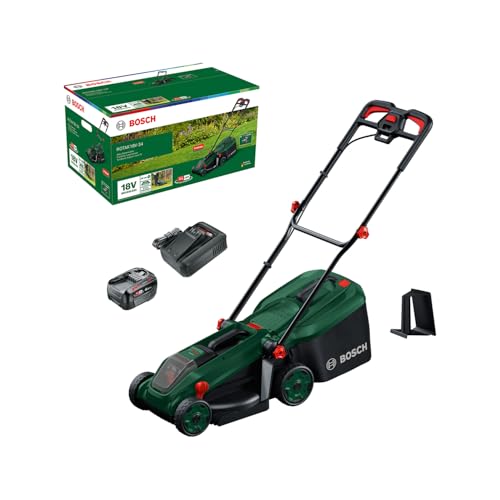
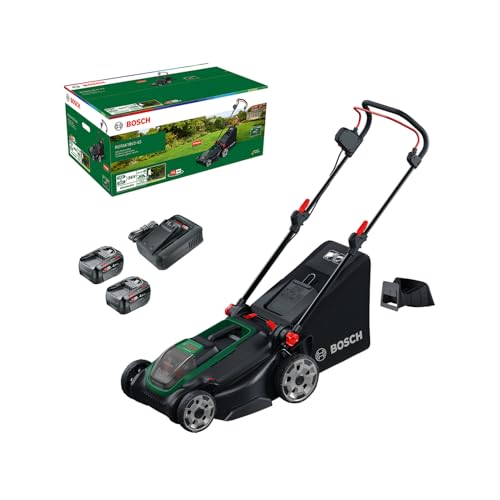
Bosch Rotak 18V2-43 Cordless Lawn Mower with 2 x 4.0Ah Batteries
ASIN B0H1QLLN7H • $640.05 • Ships from Amazon AU
The Bosch Rotak 18V2-43 is the bigger sibling, ranked #60 in Amazon AU's Lawn Mowers, Parts & Accessories category and $640 from Amazon AU, and it's the one I'd buy for a typical quarter-acre block. It runs two 18V 4.0Ah packs together for 36V, drives a 43cm blade with a brushless motor and cuts from 30 to 75mm. The grass bag holds 50 litres, and a magnetically held deflector guard lets you lift the bag off one-handed to empty it. Both batteries and a mulch plug are listed in the box. It's the same Power for All platform as the smaller Rotak, so packs swap between the two. That also means two batteries for your other Bosch tools.
Two 72Wh packs give it roughly 144Wh to work with, which is about double the smaller Rotak and close to the 40V mowers further down. The 75mm top height suits buffalo and kikuyu left longer through summer, and the 43cm deck is a good middle ground between coverage and getting through a side gate. Listing dimensions work out to about 87 x 52 x 38cm, so measure your shed shelf or corner before you order, even though it stores standing on its end. The Bosch model number is 0615A500GJ. Like the 34, it folds with a double switch. The listing doesn't state a weight, which is the one figure I'd want before carrying it down steps.
Both packs have to be fitted to run, so the mower is only as good as the weaker battery, and I'd keep the pair together rather than borrowing one for the drill. The title mentions a fast charger, but it's a single charger for two packs, so a full refill takes longer than one battery would. No weight or area figure is on the listing. For most suburban lawns, this is the mower in the guide I'd buy first. It's also the best fit if you'd like one battery family to cover the mower, trimmer and drill, since the Power for All range is the widest here by a long way.
Honest caveats: Both 18V packs must be fitted to run, so one tired battery limits the pair. One charger for two packs means a slower full refill after a long mow. The listing gives no weight, runtime or lawn area figure, so check the box before you carry it down steps.
Best for: A typical suburban lawn where you want coverage, a 75mm top height and a shared 18V battery platform.
Type: Push, brushless, 2 x 18V (36V) • Deck: 43cm • Cutting height: 30 to 75mm • Catcher: 50L bag, mulch plug included • Battery: 2 x 18V 4.0Ah (Power for All) • Size: About 87 x 52 x 38cm (listing data) • Model: 0615A500GJ • Seller: Amazon AU • Rank: #60 in Lawn Mowers, Parts & Accessories (Amazon AU)
View on Amazon AU
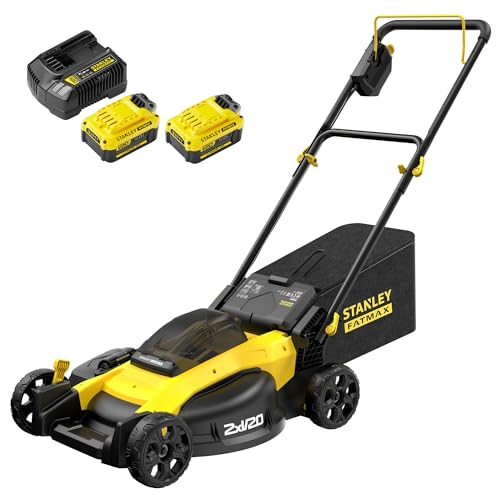
STANLEY FATMAX V20 2x18V 51cm Brushless Mower Kit with 2 x 4.0Ah Batteries
ASIN B0D1K5433N • $499.00 • Ships from Amazon AU
The Stanley FatMax V20 kit has the widest deck in this guide at 51cm, and at $499 from Amazon AU it's the most cutting width per dollar on the page. It's ranked #590 in Amazon AU's Lawn Mowers, Parts & Accessories category, so it sells far less than the Bosch pair. It runs two 18V V20 packs together, and the kit includes two 4.0Ah batteries and a 2A charger. The brushless motor drives a 3-in-1 deck that mulches, bags into a 40 litre heavy-duty fabric basket, or discharges out the side. It's the only mower here with side discharge. The handle is a folding steel bar in the style of a petrol mower, with a soft grip and a carry handle.
A 51cm deck covers a lot of ground on an open, rectangular lawn, and that's where this one makes sense. The listing calls out a 28cm deck height for an ultra-low profile, which helps under shrubs and outdoor furniture. Stanley says it's under 26kg, and the listing data puts it at about 21kg, so expect it to feel heavier than the Bosch machines. It folds and stores upright. V20 is Stanley's own 18V system, so the packs only fit Stanley FatMax V20 tools. The Stanley model number is SFMCMW2651M-XE, which is the code to quote for parts and warranty. The fabric basket breathes well as it fills, but expect the seams to wear after a few summers in the sun.
The feature list quotes 17 cubic metres per minute and 180km/h of airflow, which are leaf blower figures copied onto the wrong listing, so I'd ignore them. The listing doesn't state a cutting height range, and that's the spec I'd want before buying for long buffalo. A 2A charger refills a 4Ah pack in roughly two hours by simple arithmetic, so charging both takes a while. For a big, flat, open lawn, it's the widest cut here. The wide deck is harder to turn in narrow side passages, so it suits open yards better than tight ones.
Honest caveats: The listing quotes blower airflow figures that don't apply to a mower and gives no cutting height range. The 2A charger is slow for two 4Ah packs. It sells far less than the Bosch models and its V20 packs only fit Stanley tools.
Best for: A large, open, mostly flat lawn where deck width matters more than turning in tight spaces.
Type: Push, brushless, 2 x 18V • Deck: 51cm • Modes: Mulch, 40L fabric bag, side discharge • Battery: 2 x 18V 4.0Ah (FatMax V20) • Charger: 2A • Weight: Under 26kg (listing claim) • Model: SFMCMW2651M-XE • Seller: Amazon AU • Rank: #590 in Lawn Mowers, Parts & Accessories (Amazon AU)
View on Amazon AU
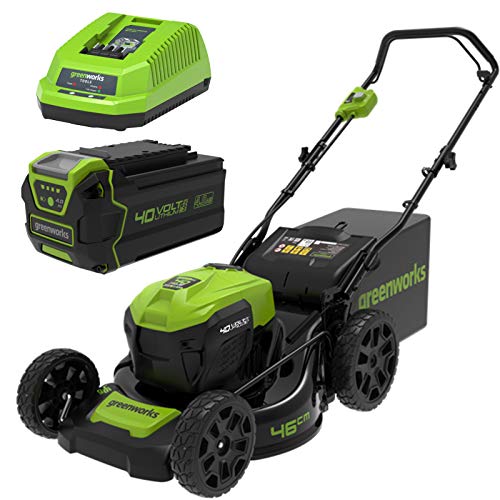
Greenworks 40V Cordless Brushless Lawn Mower 46cm with 4Ah Battery
ASIN B086RDJ3ZP • $549.00 • Ships from Amazon AU
The Greenworks 40V is a 46cm brushless mower sold by Amazon AU for $549, and it's the most fully specified listing in this guide. It comes with one 40V 4Ah battery and a fast charger, so you're working with about 160Wh in a single pack. Greenworks quotes a mowing area of up to 650 square metres from that 4Ah pack, or 325 from a 2Ah. It has seven cutting heights from 19 to 76mm, the widest range here, and a 50 litre grass box. The deck is 3-in-1, so it mulches, catches or discharges out the rear. The model code is 2510107AU-Kit, and the AU in it is what I like to see on a mains-charged product.
Greenworks lists the mower at 21kg without the battery, which is a useful number because most listings don't give one. The steel blade sits on what Greenworks calls impact motor protection, designed to protect the motor when the blade hits something solid. There's a security starter key, so kids can't start it just by pressing the bar, and the handle folds for storage. One 40V pack instead of two 18V packs means one battery to look after rather than a matched pair. It only fits Greenworks 40V tools, so check that range covers the trimmer and blower you'll want later. The listing first appeared in 2021, so it's a proven model rather than a new release.
Amazon AU didn't publish a sales rank for this listing when I checked, so I can't tell you how well it sells against the Bosch pair. The 650 square metre figure is a best case on short, dry grass, so I'd plan on less, particularly on the first cut of spring. A single pack means no swap mid-mow unless you buy a second battery, and Greenworks 40V packs only fit Greenworks 40V tools. For anyone who wants the widest height range and only one battery to look after, it's the pick I'd go for, and the AU model code makes it an easy choice on the charger side.
Honest caveats: No Amazon AU sales rank was published on the day I checked. The 650 square metre area claim is a best case. One battery in the kit means no swap mid-mow, and Greenworks 40V packs only fit Greenworks 40V tools.
Best for: A mid-sized lawn where you want the widest cutting height range and one battery to look after.
Type: Push, brushless, 40V • Deck: 46cm • Cutting height: 19 to 76mm, 7 positions • Catcher: 50L box, mulch and rear discharge • Battery: 1 x 40V 4Ah, fast charger • Weight: 21kg without battery (listing) • Model: 2510107AU-Kit • Seller: Amazon AU • Rank: Not published by Amazon AU (checked 20 October 2026)
View on Amazon AU
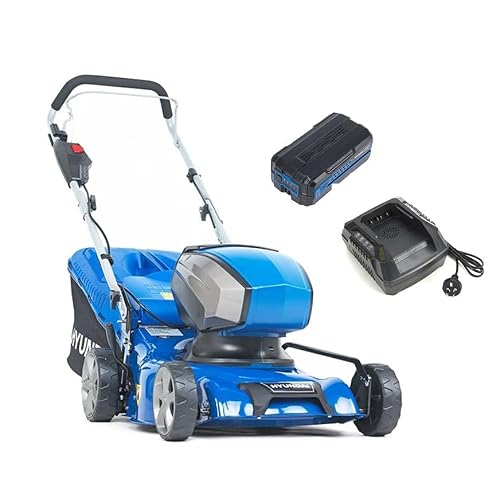
Hyundai Power 42cm Self-Propelled Cordless Lawn Mower, 40V 4Ah Kit
ASIN B0C4B9Q1QQ • $562.99 • Ships from Amazon AU
The Hyundai Power 42cm is the only self-propelled mower in this guide, and at $563 from Amazon AU it's the one I'd look at first for a sloping block. The drive pushes the mower for you, which makes a real difference on a bank or a long uphill run. It's a 420mm cut with six cutting heights, a heavy-duty steel deck and a mulching kit in the box. The kit includes a 40V 4Ah battery and charger, which is about 160Wh of storage. Starting is a key, a push button and then the operator lever pulled back, so it won't start by accident. Hyundai lists the weight at 19.9kg, the lightest figure on the page.
Hyundai quotes an 80 minute charge time and around 20 to 60 minutes of mowing per charge depending on load. That's a wide range, and with the drive running uphill in thick grass you'll be at the low end of it. The handles fold and it stores upright, like the others here. A steel deck takes knocks that would crack a plastic one, but it needs hosing out after a wet cut or it'll rust along the edges. The listing calls it extremely quiet, which battery mowers generally are next to a petrol one. The model code is HY42-E40P-STARTER, and the listing dates from 2023. Keep the deck clean underneath and it'll stay smooth for years.
Amazon AU didn't publish a sales rank for it when I checked, so I can't say how it sells against the others. The listing doesn't give a cutting height range in millimetres, only that there are six positions, so check that before buying for buffalo you keep long. A self-propelled drive is a second motor and gearbox to wear out, and it costs runtime, so on a big sloping block I'd budget for a second 40V pack. The Hyundai Power 40V range is smaller than Bosch's, so check it covers the trimmer you'll want. For a sloping yard, it's still the one I'd choose.
Honest caveats: No Amazon AU sales rank was published on the day I checked. The listing gives six cutting heights but no millimetre range. Runtime drops toward the 20 minute end with the drive engaged on slopes, and the steel deck needs cleaning to stop rust.
Best for: A sloping or hilly lawn where a self-propelled drive saves real effort.
Type: Self-propelled, 40V • Deck: 42cm steel • Cutting height: 6 positions (mm range not stated) • Battery: 1 x 40V 4Ah, charger included • Charge time: About 80 minutes (listing) • Runtime: About 20 to 60 minutes (listing) • Weight: 19.9kg (listing claim) • Seller: Amazon AU • Rank: Not published by Amazon AU (checked 20 October 2026)
View on Amazon AUSide-by-side comparison
What we see fail in the workshop: cordless mowers
Cordless mowers fail in different ways from petrol ones. There's no carby to gum up and no pull cord to snap, but there's a battery, a controller board and a charger, and those are the parts that come in. Most of these faults give some warning first, and catching them early often means a battery or a part rather than a whole new mower.
Batteries the charger won't accept
The most common complaint is a pack that flashes an error on the charger and won't take a charge. Nine times out of ten it's been left flat over winter, and the cell voltage has drifted below what the management board will accept, so the charger refuses it as a safety measure. Sometimes one cell group has failed and the pack really is finished. Sometimes it's a damaged terminal. A pack that's swollen, cracked or smells sweet should go straight to a battery recycler, not back on the charger. Store packs half charged and somewhere cool, and you'll see far fewer of these.
Controllers cooked by clippings and water
A brushless mower relies on a small controller board to run the motor, and that board lives close to the deck where damp clippings and grass dust collect. When cooling vents clog, the board runs hot and eventually fails, and when someone hoses the top of the mower, water finds its way past seals onto the electronics. The symptom is usually a mower that starts and then cuts out, or won't start at all with a good battery. Brush the vents clear after each cut, never hose the top deck, and clean underneath with the battery out and the mower on its side, motor housing up.
Bent blades and worn safety switches
Blade strikes on rocks, tree roots and garden edging bend blades and sometimes knock the hub out of balance, which shows up as vibration that gets worse over time. A balanced, sharp blade cuts cleaner and draws less current, so it also helps runtime. The other common fault is the safety switch on the handle bar, which can wear or get bent until the mower cuts in and out as you move your hands. Both are usually simple part swaps. Keep a spare blade with the model number written on it, and don't keep mowing with a mower that shakes.
Decision tree: which one should you actually buy?
- Small courtyard or townhouse lawn? → The Bosch Rotak 18V-34 at $410: a 34cm deck, one 4Ah pack and a battery that fits a huge range of other tools.
- Typical quarter-acre suburban block? → The Bosch Rotak 18V2-43 at $640: 43cm deck, 75mm top height, 50 litre bag and two batteries in the box.
- Big, open, flat lawn? → The Stanley FatMax V20 at $499 has the widest deck here at 51cm, plus side discharge for the first cut of spring.
- Want one battery and the widest height range? → The Greenworks 40V at $549 cuts from 19 to 76mm over seven positions on a single 40V 4Ah pack.
- Sloping block or a steep bank? → The self-propelled Hyundai Power 42cm at $563 drives itself, though runtime drops on the uphill runs.
- Mower battery won't charge or cuts out mid-mow? → Stop charging it, especially if it's swollen or warm, and bring the pack and charger to our Erina workshop so we can tell you whether it's the battery, the charger or the mower before you spend anything.
Frequently asked questions
Are cordless lawn mowers as good as petrol mowers?
For most suburban lawns, yes. A modern brushless battery mower on a 36V or 40V system cuts a regular lawn as well as a small petrol mower, starts with a button, needs no fuel or oil changes and makes far less noise. Where petrol still wins is very large blocks, long overgrown grass and heavy commercial use, where runtime and raw power matter more. If your lawn takes under an hour to mow and you keep on top of it, a battery mower is the easier machine to own.
How long does a cordless mower battery last before it needs replacing?
It depends mostly on how the pack is stored and charged rather than the brand. A lithium pack kept cool, stored at around half charge over winter and charged on its own charger can last many seasons. One that bakes in a hot shed at full charge, or sits completely flat for months, ages far faster. Capacity fades gradually, so you'll usually notice the mower doing less of the lawn per charge before it stops altogether. Matching packs and rotating them as a set helps twin-battery mowers last longer.
Is 18V or 40V better for a lawn mower?
Voltage alone doesn't decide it. What matters is watt-hours, which is volts multiplied by amp-hours, plus the deck size and motor. Two 18V 4Ah packs running together hold about 144Wh, while one 40V 4Ah pack holds about 160Wh, so they're close in practice. The bigger decision is the battery platform, because the packs only fit that brand's tools. If you already own 18V tools from one brand, staying on that platform is usually worth more than a few extra volts.
What size cordless mower do I need for my lawn?
As a rough guide, a 34cm deck suits a courtyard or small townhouse lawn, a 42 to 46cm deck suits most quarter-acre suburban blocks, and a 51cm deck makes sense on large, open, mostly rectangular lawns. Narrow side passages, garden beds and tight corners push you towards a smaller deck, while a big open area rewards a wider one. Runtime matters too, because a wide deck pulls more current, so a large lawn may also need a second battery.
Can I hose down a cordless lawn mower?
Don't hose the top of the mower, because water can get past seals into the motor controller and battery contacts. Take the battery out first, then tip the mower on its side with the motor housing facing up and brush or scrape the clippings out from under the deck. A damp cloth is fine on the top surfaces. Brush the cooling vents clear after each cut, and let the mower dry before you store it. A lot of the controller faults we see start with water.
Should I buy a self-propelled cordless mower?
If your block has slopes or a long uphill run, a self-propelled mower saves real effort. The drive adds a second motor and gearbox, which is more to maintain and uses more battery, so runtime per charge drops when the drive is engaged. On flat, smaller lawns a push mower is lighter, simpler and usually runs longer per charge. With any walk-behind mower, mow across the face of a slope rather than up and down it, and skip anything too steep to stand on comfortably.
Related buying guides
Mower battery or charger playing up? Get it tested first
Most cordless mowers that stop working have a battery the charger won't accept, a failed charger or a controller that's got wet or hot. Bring the pack, charger and mower to our Erina workshop and we'll test them and tell you which part has failed, and whether it's worth fixing, before you spend anything on a new kit.
Visit our Erina workshop Book Online