Prices from Amazon AU, updated daily. Swipe or use the arrows for more.
Disclosure: This article contains affiliate links to amazon.com.au. If you buy through one of these links iFix may earn a small commission at no extra cost to you. It doesn't change which products we recommend. We focus on what actually lasts based on 16 years of repair-shop experience.
Quick summary8 picks
- Entry PickHusqvarna Automower Aspire R4 Robotic Mower about$999
- MOVA 600 Robotic Lawn Mower about$1,606.79
- MOVA 1000 Robotic Lawn Mower about$1,397
- Dreame A1 Pro Robotic Lawn Mower about$2,999
- Husqvarna Automower 305 Robotic Mower - Up… about$1,792.27
- Mammotion YUKA mini 700 Robot Lawn Mower about$1,699
- Mammotion YUKA mini 2 1000 Robot Lawn Mower about$2,299
- Most PremiumMammotion YUKA 2000 Robot Lawn Mower about$2,124.15
Order one before the spring flush
It's late August, and if your lawn looks half dead right now, that's the season doing you a favour. Kikuyu and couch mostly sit still through a Central Coast winter, then from about mid September they start putting on serious growth, and by November people are mowing twice a week or paying someone to. A robot mower doesn't work like your push mower. It goes out most days and takes a few millimetres off the top, so the clippings vanish back into the lawn and the grass never gets long enough to bog anything down. That routine only works if the machine is already set up when the growth arrives. Buy one in November and it has to fight a jungle from day one, which is the worst possible introduction. The robots also cope better with the shoulder seasons than people do: they'll happily do a short run between rain bands on a Thursday morning while you're at work, which is exactly the window a fortnightly mowing habit misses.
The other reason to sort it now is mapping. Every mower on this page has to learn your yard before it can work, either by having a wire laid around the edge or by building its own map with lasers or satellites, and that job is far easier while the grass is short and the beds are bare. The category has moved a long way from the dumb bump-and-turn units of ten years ago, the ones that worked like the early robot vacuums in my robot vacuum guide. The eight robots here run $999 to $2,499, all reviewed below, all sold new through Amazon AU or Australian storefronts, and they split into three camps by how they find the edge of your lawn. I've grouped the trade-offs below the same way I'd explain them over the counter: edges first, then slopes, then the consumables and the battery, because that order matches how the costs actually arrive.
Boundary wire, LiDAR or RTK: how they know where the lawn ends
The old method is a boundary wire, and the Husqvarna 305 in this list still uses one. You peg or bury a loop of wire around the lawn, the charging dock pushes a small signal through it, and the mower treats that wire as an electric fence. It's crude and it works, including under dense tree cover and beside tall walls where camera and satellite systems can struggle. The cost is the install: an afternoon on your knees with pegs, and the wire becomes a permanent buried part of your garden. Every aerator, edger and mattock in the shed is now a threat to it, and a cut wire means the mower sits in its dock sulking until you find the break. Pricing the wire repair kit at purchase time is worth it too, because you'll want one on the shelf the first time the edger finds the loop.
The wire-free camps do it with sensors instead. The MOVA 600 and Dreame A1 Pro carry spinning LiDAR units that scan the yard as a 3D point cloud and build a map, the same basic idea as the laser towers on premium robot vacuums, just weatherproofed. The Mammotion machines use RTK, which is corrected satellite positioning good to a few centimetres, backed up by AI cameras that can tell grass from paving. Each method has a blind spot. LiDAR wants line of sight and gets confused by hedges that move in the wind, and RTK wants open sky, so a yard under heavy tree canopy pushes the odds back toward the humble wire.
Slope ratings, and what 45 per cent actually means
Every listing quotes a slope figure, and it's worth decoding because the numbers sound scarier than they are. The ratings are in per cent grade, not degrees: 45 per cent is about 24 degrees, which the MOVA and the Mammotion YUKA 2000 both quote, the Husqvarna 305 claims 40 per cent, and the YUKA mini 700 claims 50 per cent. For reference, a slope you'd hesitate to push a full mower up sideways is usually somewhere past 15 degrees, so on paper these machines out-climb most humans. Paper is the operative word. Those figures come from dry test lawns, and the thing that actually stops a mower on a Central Coast block is wet couch on a dew-soaked morning, where rubber wheels spin and the machine slides. Degrees and per cent get mixed up constantly in this category, so when you compare against another brand's spec sheet, check which unit they're quoting before deciding one machine out-climbs another.
In practice I'd treat every quoted slope rating as a dry-weather maximum and mentally knock a third off it for winter mornings. If your block has one genuinely steep bank, the smarter move is usually to fence it off in the app as a no-go zone and hit it with a whipper snipper once a month, rather than buying the biggest slope number on the shelf and watching it toboggan into the retaining wall. Traction aids matter more than motor grunt here: the Dreame's listing makes a point of its off-road wheels for rough terrain, and on any of these machines, keeping the wheel treads clear of caked clippings does more for climbing than anything in the settings menu.
Blades are the consumable, so price them first
A robot mower doesn't cut like a petrol mower. Instead of one heavy blade swinging at full power, most of these run a spinning disc carrying small pivoting razor blades that shave the grass. The blades are light, simple to make and completely sacrificial: they dull, they chip on gumnuts and stones, and the makers expect you to swap them somewhere between every one and three months in the growing season. This is the printer-ink part of the deal. The mower is the printer, the blade packs are the cartridges, and you should price a year of blades for your chosen machine before you order it, because that number varies a lot more between brands than the sticker price does. A few brands run heavier star blades instead, which shrug off small sticks better but cut less cleanly, so the razor-disc design on the machines here is a deliberate choice, not a cost cut.
The disc design also explains the one habit you need to build: walk the lawn before the first few runs. A razor blade disc will happily eat a phone charging cable left on the grass, a dog toy, or the irrigation flag the landscaper forgot, and every one of those encounters costs blades at best and a jammed spindle at worst. The YUKA 2000 runs a dual-disc setup with a 12.59 inch cut width and can do one to three extra passes along edges, which is clever, but it also means twice the blade count to maintain. None of the listings here quote blade pack pricing, so check the current cost on each maker's spares page, the same way you'd check filter prices before buying anything in my air purifier picks.
Batteries, docks and getting power outside safely
Every one of these is a lithium-ion pack on wheels that lives outdoors, which is a hard life for a battery. The dock does the charging, so your job is placement: somewhere shaded and flat, because a pack that spends every summer afternoon cooking at 50 degrees on the western fence line will age in dog years no matter whose name is on the shell. The listings back the outdoor rating in different ways, the YUKA mini quotes IPX6 and the Husqvarna is built to live outside all season, but water resistance protects the electronics, not the chemistry. Shade is a service item you install once and it pays back every summer after that.
Powering the dock deserves five minutes of thought. These docks want a proper outdoor power point on an RCD-protected circuit, installed by a sparky, with the low-voltage lead from there to the dock. What they don't want is an extension lead running out a laundry window through a powerboard, which is a trick I see far too often and which turns the first decent storm into a corrosion event. If you want to know what that looks like from the inside, I've written up what water actually does to electronics, and a mower dock connector is no different to a phone charge port, just bigger. Corroded dock pins are one of the most common failures on older wire-guided units, so keep the contacts clean and dry. While the sparky is out there, have them quote a weatherproof enclosure for the plug as well, because the moulded lid boxes cost little and remove the most exposed join in the whole chain.
Apps, RTK signal and the anti-theft question
The picks here are app-managed, and honestly the app is half the product now. Zones, schedules, no-go areas, cutting heights, edge passes: it all lives on your phone. The Mammotion app manages up to 15 zones on the YUKA mini and 20 on the YUKA 2000, the Dreame app handles multi-zone maps with forbidden areas, and MOVA's app runs dual maps for a split front and back yard. The catch with app-first hardware is the same one I bang on about with every connected gadget: the mower in your shed is only as good as the company's willingness to keep its servers running. Buy from brands with a real Australian presence and parts supply, because an orphaned robot mower is an expensive lawn ornament. It's the same calculation I make before recommending any camera or doorbell that leans on a phone app, and it's why the established names carry weight here beyond the spec sheet.
Connectivity matters for the RTK machines specifically. The YUKA 2000's listing notes its enhanced RTK link runs through home Wi-Fi or 4G with coverage up to 3 kilometres, which means your Wi-Fi actually has to reach the yard, a problem I already covered from the indoor side in the security camera guide. Theft is the other question everyone asks. These machines mostly answer it with PIN locks, lift alarms and GPS: the Husqvarna has PIN protection and lift sensors, and the Mammotions offer GPS tracking with ownership authentication, so a stolen unit is a brick that phones home. It won't stop an opportunist picking it up, but it makes it nearly worthless to sell.
What I'd check before spending north of a thousand dollars
Measure the lawn honestly, because coverage ratings are the one spec you shouldn't buy headroom on backwards. The 600 and 700 square metre machines here suit most suburban blocks with room to spare; the 2,000 square metre Dreame and YUKA 2000 are acreage tools. Then walk the yard and count the pinch points. Gates matter: a mower can't open one, so a fenced front and back either means two maps, which the MOVA handles, or carrying the thing through weekly. Check narrow side passages against the machine's width, look for trip hazards like exposed roots and low irrigation heads, and if you've got a trampoline, know that the space under it becomes the one shaggy rectangle on the block unless the clearance is there.
Think about pets and kids too, not as a scare line but as a settings job. Obstacle avoidance on the vision and LiDAR machines is aimed at exactly this, MOVA and Dreame both call out pets in their listings, and the sane approach is to schedule mowing for hours when the yard is empty anyway. Finally, buy through a channel that gives you AU warranty service, and keep the box for the first month. If something does go wrong out of warranty down the track, board-level repair on these is the same discipline as everything else that comes through our Erina workshop: a controller PCB with corrosion on it doesn't care if it came out of a phone or a mower. Keep the receipts and serial numbers photographed somewhere findable too, because warranty claims on outdoor gear go smoother when the paperwork is one search away.
The 8 picks, $999 to $2,499
Prices are Amazon AU at time of writing (13 October 2026) and move week to week. Ranks are Amazon AU category sales ranks, checked the same day.

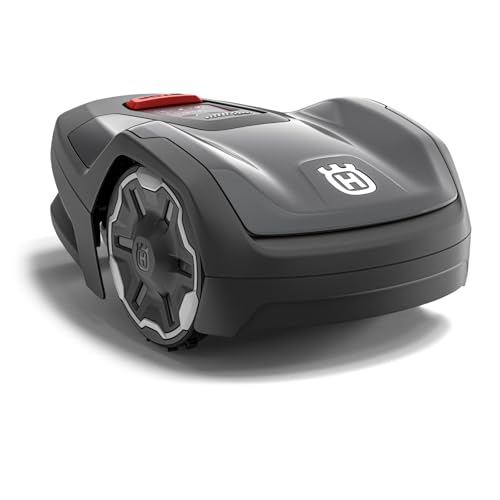
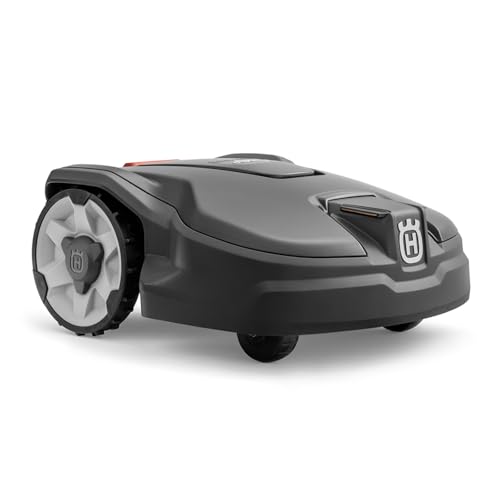
Husqvarna Automower Aspire R4 Robotic Mower, 400 m², Install Kit
ASIN B0DKJSYG4B • $999 • Ships from Amazon AU
The Automower Aspire R4 is the lowest-cost machine on this page at $999, and it's Husqvarna's boundary-wire route into robot mowing. It sits at number 360 in Amazon AU's mower category at time of writing and is sold and shipped by Amazon AU. It's rated for lawns up to 400 square metres and comes with an installation kit: the listing names a 150 metre boundary cable, 300 hooks, four connectors, five connection terminals and the charging station. That is the wire-loop system described earlier in a smaller, less costly box, with the same trade: an afternoon laying the loop in exchange for a boundary that doesn't care about trees, fog or satellite coverage.
What the listing gives you is the practical stuff. Control is through the Automower Connect app over Wi-Fi, or by voice with Alexa, Google Home and IFTTT. A weather timer automatically adjusts mowing time to lawn growth, so it mows less in a slow July and more in the October flush while protecting the battery and the lawn. It's light and compact, with hooks and foldable or removable parts that make it easy to store in a small shed or a car. For a small, simple lawn that's most of what you need.
Where it stops is the spec sheet. The listing doesn't state a slope rating, cutting width, cutting height, noise level, battery size or runtime, so for a lawn with a bank or an awkward shape, check those on Husqvarna's site before ordering. At 400 square metres it suits a small suburban lawn; if yours is bigger, the Automower 305 above covers 600 and the wire-free machines go much further. Check that the 150 metre cable in the box is enough for your lawn's perimeter before you order.
Honest caveats: The wire is the weakness: edgers, aerators and garden forks will eventually find it, and a cut loop stops the mower until you trace and repair the break. The listing doesn't state slope rating, cutting width or height, noise or battery details. Rated coverage is 400 m² only.
Best for: Small lawns up to 400 m² where the lowest price and a proven wire loop matter more than wire-free convenience.
Coverage: Up to 400 m² • Boundary: Wire loop, 150 m cable and install kit included • Control: Automower Connect app (Wi-Fi), voice control • Assistants: Alexa, Google Home, IFTTT • Scheduling: Weather timer adjusts mowing time to growth • Storage: Compact, foldable or removable parts • Price: $999 at time of writing • Rank: #360 in Lawn Mowers, Parts & Accessories (Amazon AU)
View on Amazon AU
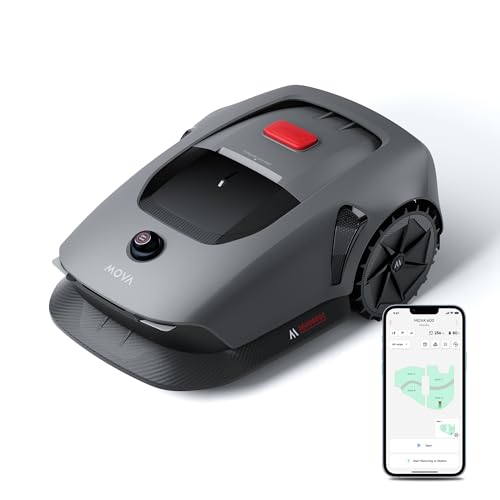
MOVA 600 Robotic Lawn Mower, LiDAR Wire-Free, 600 m²
ASIN B0FN3VZJLP • $1,606.79 • Ships from Amazon AU
The MOVA 600 is the reason this guide exists now rather than next year: a proper LiDAR-navigated, wire-free robot mower at $1,799, sitting at number 20 in Amazon AU's mower category at time of writing. The headline tech is what MOVA calls UltraView, a 3D LiDAR unit that scans up to 30 metres with a 360 by 59 degree field of view and centimetre-level precision. You drive it around once by remote from the app to set virtual boundaries, it builds a live 3D map as it moves, and from then on it navigates the yard itself. No wire, no RTK base station on a pole, no waiting for satellite fix, which makes it one of the easiest setup paths on this page.
The engineering trade-offs are sensible for the money. Because LiDAR is an active laser sensor, the listing claims it works in low light and bright light alike, which stacks up: it's painting the yard with its own light source rather than relying on cameras. Obstacle avoidance uses the same point cloud data to spot and dodge yard objects and pets inside the boundary. The slope rating is 45 per cent, about 24 degrees, which on paper covers nearly any suburban block, with my usual caveat that wet grass takes a big bite out of every traction figure. From a service point of view the win is structural: no buried wire means no wire breaks, which removes the single most common fault I hear about on older robot mowers.
The app is the control surface for everything: mowing direction, efficiency settings, schedules, and a dual-map function that handles a separated front and back yard, something the wire-guided competition needs a second loop for. At 600 square metres of rated coverage it suits the standard suburban block with lawn front and back. If your yard is bigger, step up to the Dreame; if it's steep, look at the YUKA mini. For a standard block this is the pick I'd start at, because it's the simplest route into the newest navigation approach, from a seller shipping as Amazon AU. It's no longer the lowest-cost way into wire-free: the Dreame below is about $300 less and covers far more ground.
Honest caveats: The listing doesn't state cutting width, cutting height range or noise output, so check those on the current listing before ordering. LiDAR needs line of sight, and dense overhanging shrubs that move in the wind can read as obstacles. App account required, and boundaries live in the app, not in hardware.
Best for: Standard suburban blocks up to 600 m² where you want wire-free LiDAR navigation with no wire to lay.
Coverage: Up to 600 m² • Navigation: UltraView 3D LiDAR, wire free • Detection: 30 m range, 360° × 59° view • Slope: Up to 45% (24°) • Obstacle avoidance: LiDAR point cloud, pets and yard objects • Maps: Dual-map support in app • Price: $1,799 at time of writing • Rank: #20 in Lawn Mowers, Parts & Accessories (Amazon AU)
View on Amazon AU
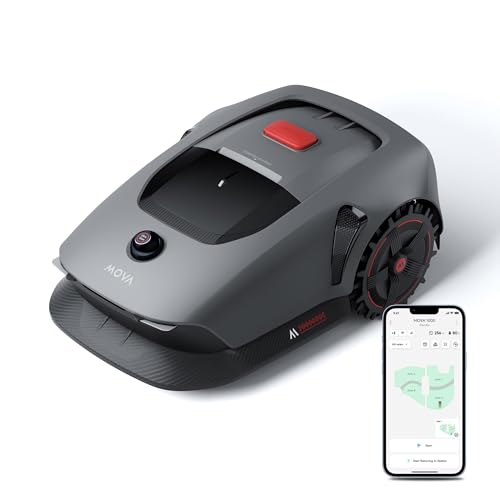
MOVA 1000 Robotic Lawn Mower, LiDAR Wire-Free, 1,000 m²
ASIN B0FN3XK7BY • $1,397 • Ships from Amazon AU
The MOVA 1000 is the bigger sibling of the MOVA 600: the same UltraView LiDAR, wire-free approach, rated for up to 1,000 square metres, at $1,999. It sits at number 72 in Amazon AU's mower category at time of writing and is sold and shipped by Amazon AU. The listing describes a 3D LiDAR unit that detects up to 30 metres with a 360 by 59 degree view, and setup follows the 600: drive it around once by remote to set virtual boundaries, then it builds a real-time 3D map and navigates from there, with no wire and no RTK base station.
What the extra money buys over the 600 is mostly area and traction. The listing claims mowing in low light and bright light and on slopes up to 45 per cent (24 degrees), and pitches the off-road wheels for grip on slopes and flat ground while keeping lawn damage down. Obstacle avoidance uses the same point cloud to dodge yard objects and pets, and the MOVAhome app handles mowing direction, efficiency and schedules, with a dual-map function for disconnected areas such as a separate front and back yard. The title also lists U-shaped cutting and fast charging, though the listing text gives no figures for either.
It suits a larger suburban block where you want wire-free mapping and more room than the 600 allows, without stepping up to the 2,000 square metre machines. The usual LiDAR caveats apply, and so do the usual slope ones: treat 45 per cent as a dry-weather figure.
Honest caveats: The listing doesn't state cutting width, cutting height range, battery size or charge time. LiDAR needs line of sight, and dense shrubs that move in the wind can read as obstacles. App account required, and boundaries live in the app, not in hardware. At $1,999 it costs $200 more than the MOVA 600 for 400 extra square metres of rated coverage.
Best for: Larger suburban blocks up to 1,000 m² where you want wire-free LiDAR mapping and slopes to 45 per cent.
Coverage: Up to 1,000 m² • Navigation: UltraView 3D LiDAR, wire free • Detection: 30 m range, 360° × 59° view • Slope: Up to 45% (24°) • Wheels: Off-road tread • Obstacle avoidance: LiDAR point cloud, pets and yard objects • Maps: Dual-map support in app • Price: $1,999 at time of writing • Rank: #72 in Lawn Mowers, Parts & Accessories (Amazon AU)
View on Amazon AU
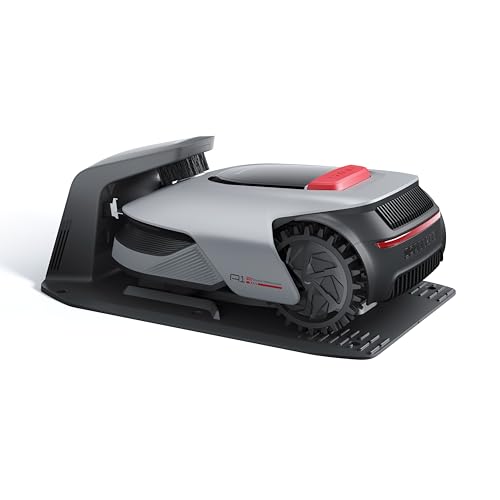
Dreame A1 Pro Robotic Lawn Mower, LiDAR, 2,000 m²
ASIN B0F7WYLJ73 • $2,999 • Ships from Amazon AU
The Dreame A1 Pro is the same navigation philosophy as the MOVA, LiDAR-based and wire-free, scaled up to cover lawns to 2,000 square metres for $1,497. Dreame calls its system OmniSense: the mower maps the lawn without cables or a separate RTK terminal, and you carve that map into zones from the Dreamehome app, with scheduled or real-time mowing tasks, forbidden areas, and temporary zones for the patch you're reseeding. It sits at number 379 in Amazon AU's mower category at time of writing, sold and shipped by Amazon AU, and for anyone with a bigger block it's the value position among the big-lawn machines: it costs about $300 less than the MOVA and is rated for more than three times the coverage.
Two listed details matter more than the coverage number. First, the 65 minute charge time, paired with auto recharge and resume: on a big lawn the mower will drain mid-job, trundle back to the dock, top up and carry on from where it stopped, and a fast charge cycle is the difference between finishing today and finishing tomorrow. The listing quotes a full 2,000 square metres maintained inside 24 hours. Second, the off-road wheels, which the listing pitches for harsh terrain and bad weather. That's marketing language, but the mechanism is real: on the bigger, rougher blocks this machine is aimed at, traction is usually what fails first, not cutting power, and wheel design is most of traction.
Cutting is a U-shaped trajectory, up and back in overlapping lanes like a person who takes their lawn seriously, rather than the drunken bounce of the old random-path units, and the listing claims consistent results across different grass types and heights. Obstacle avoidance runs on 3D point cloud data, same principle as the MOVA. It suits large suburban and semi-rural blocks where laying a couple of hundred metres of boundary wire would be a genuine weekend of labour, and where the mower doing lanes matters because the area is too big to forgive inefficient coverage.
Honest caveats: No slope rating is stated on the listing, which is an odd omission at this size of block, so ask the seller or check Dreame's site before committing a steep yard to it. Cutting width and height range aren't stated either. Like all LiDAR units it wants line of sight to its surroundings.
Best for: Big blocks up to 2,000 m² where wire installation is impractical and coverage speed matters.
Coverage: Up to 2,000 m² • Navigation: OmniSense 3D LiDAR, wire free • Charge time: 65 minutes • Auto recharge: Yes, resumes where it stopped • Path: U-shaped lanes, multi-zone • Wheels: Off-road tread • Price: $1,497 at time of writing • Rank: #379 in Lawn Mowers, Parts & Accessories (Amazon AU)
View on Amazon AU
Husqvarna Automower 305 Robotic Mower, 600 m², Install Kit
ASIN B0FSRPGR1H • $1,792.27 • Ships from Amazon AU
The Automower 305 is the boundary-wire veteran of this list, from the company that has been building robot mowers longer than anyone, at $1,792 with the full install kit of boundary wire, connectors, pegs and charging station in the box. It covers lawns to 600 square metres, handles slopes to 40 per cent, and squeezes through narrow passages that give some vision-guided machines pause. Navigation is GPS-assisted on top of the wire loop, with automatic scheduling that adjusts mowing frequency to seasonal growth, so it mows more in the October flush and less in July. It ranks number 360 in the category, well behind the vision-guided newcomers, and that gap is the story of this market right now.
So why would you pick the old method on purpose? Coverage certainty. A wire loop doesn't care about tree canopy, satellite visibility, fog on a camera lens or a hedge waving in the wind. The dock energises the wire, the mower reads the field, and the boundary works identically at midnight in a storm as it does at noon. If your lawn wraps under heavy established trees or runs beside high walls, the environments where LiDAR and RTK are weakest, the wire is still the engineering-correct answer, not the nostalgic one. Husqvarna backs it with the practical stuff: 59 decibels quoted operation, which is quiet enough for a dawn run, weatherproofing for all-season outdoor life, and lift and collision sensors.
Security is PIN-code based, with alarms tied to the lift sensors, and the whole package has the feel of a mature product platform rather than a first-generation gadget: parts, dealers and servicing exist in Australia in a way the newer brands are still building out. It suits the buyer with a complicated, shaded or walled 600 square metre lawn who values a boundary that can't be confused, and who'd rather spend an afternoon pegging wire once than troubleshoot navigation quirks later. Budget the install honestly: it's a few hours of methodical work, or a job a local dealer will do for a fee.
Honest caveats: The wire is the weakness: aerators, edgers and garden forks will eventually find it, and a cut loop stops the mower until you trace and repair the break. Rated coverage is 600 m² only, and at $1,792 you're paying vision-mower money for wire-era navigation. No cutting width is stated on the listing.
Best for: Shaded, walled or complex 600 m² yards where wire-loop certainty beats camera and satellite cleverness.
Coverage: Up to 600 m² • Boundary: Wire loop, full install kit included • Slope: Up to 40% • Noise: 59 dB(A) quoted • Navigation: GPS-assisted, seasonal auto scheduling • Safety: Collision and lift sensors, PIN lock • Price: $1,792 at time of writing • Rank: #360 in Lawn Mowers, Parts & Accessories (Amazon AU)
View on Amazon AU
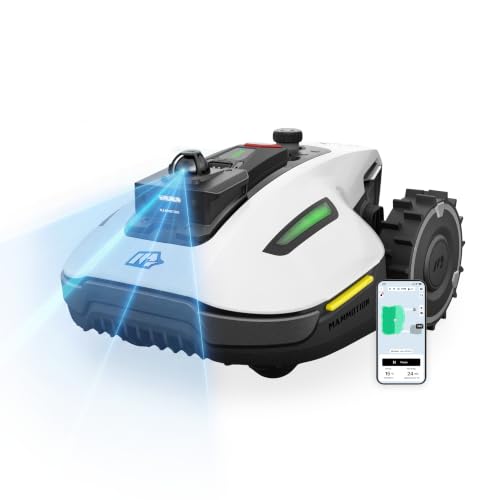
Mammotion YUKA mini 700 Robot Lawn Mower, NetRTK + AI Vision
ASIN B0F1F76KVF • $1,699 • Sold by Mammotion AU on Amazon AU
The YUKA mini 700 is Mammotion's entry point, $2,299 through the Mammotion AU storefront, and it leads with the two numbers that define it: 700 square metres of coverage and a 50 per cent slope rating, the steepest claim on this page. Navigation combines NetRTK corrected satellite positioning with what Mammotion calls UltraSense AI vision, cameras that read the ground itself, telling grass from paving and holding a boundary line even when the satellite signal drops out. Setup is the party trick: the listing claims it maps the yard by itself from the app in under ten minutes, no driving it around the perimeter, no wire, which is one of the fastest commissioning stories on this page.
The spec sheet reads like someone actually mows lawns. Cutting height adjusts from 20 to 60 millimetres, which covers everything from a scalped couch look to leaving buffalo long in winter, on a floating cutting disc that follows ground contours. It claims to clear vertical obstacles up to 3.5 centimetres, so pavers and mowing strips don't become walls. It manages up to 15 zones with pathways between them and custom no-go areas. And at a listed 10.6 kilograms with an IPX6 rating, it's light enough to carry through a gate with one hand, which sounds trivial until you own a mower and a fenced front yard. The vision system doubles as obstacle avoidance, with over 200 object types recognised per the listing.
Anti-theft is the most complete story in this price band: GPS tracking, app notifications and ownership authentication, meaning the machine is cryptographically tied to your account and useless to a thief even if the tracker is defeated. It suits the sloped Central Coast block that rules out most of the category on gradient alone, and the buyer who wants RTK accuracy in the lightest package here. Between the slope figure, the vision backup for patchy satellite reception, and the sub-11 kilogram weight, it's the lightest machine on this page and the steepest climber on paper. At $2,299 it now costs the same as the YUKA mini 2 1000 in the quick summary, which is listed for 1000 square metres and adds 360 degree LiDAR, so look at that one first unless the slope rating or the weight is what you're buying on.
Honest caveats: RTK positioning wants reasonable sky view, and while the AI vision covers signal dropouts, a yard fully under canopy blunts its main advantage. The 700 m² rating rules out large blocks. Sold by Mammotion's AU storefront rather than Amazon directly, so warranty service runs through Mammotion.
Best for: Steep or split-level yards up to 700 m² where the 50 per cent slope rating is the deciding spec.
Coverage: 700 m² • Navigation: NetRTK + UltraSense AI vision • Slope: Up to 50% • Cutting height: 20 to 60 mm, floating disc • Zones: Up to 15 in app • Weight: 10.6 kg, IPX6 rated • Anti-theft: GPS tracking, ownership authentication • Price: $2,299 at time of writing • Rank: #91 in Lawn Mowers, Parts & Accessories (Amazon AU)
View on Amazon AU
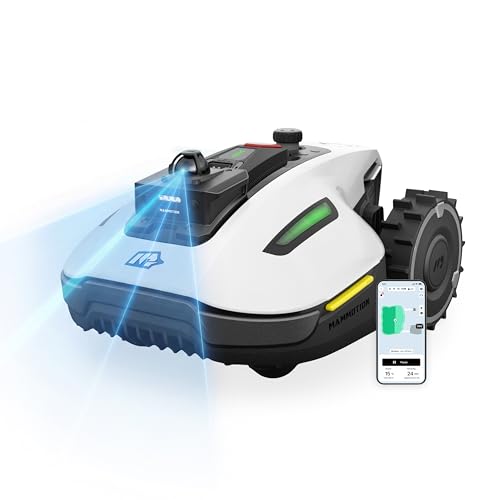
Mammotion YUKA mini 2 1000 Robot Lawn Mower, 360° LiDAR + AI Vision, 1000 m²
ASIN B0GXW2GQBY • $2,299 • Sold by Mammotion AU on Amazon AU
The YUKA mini 2 1000 is Mammotion's 2026 upgrade of its mini line, listed for 1000 square metres at $2,299 through the Mammotion AU storefront, and it sits at number 91 in Amazon AU's mower category at time of writing. The listing describes navigation by a 360 by 45 degree LiDAR, with a detection range of up to 60 metres in diameter and plus or minus 2 centimetre precision, fused with AI vision that recognises more than 300 types of obstacle, from toys and flowerpots to stones. It says the system holds up in low light, grass cover and light fog, and it says nothing about RTK satellite positioning.
Setup and day-to-day handling are where it differs most from the others here. DropMow mode needs no mapping at all: place it down, press Mow&Start and it mows in an N-shaped pattern from a temporary map that isn't saved, which suits a one-off job. For normal use you can set schedules for up to 10 non-continuous mowing zones, add virtual walls, no-go zones and no-stop zones, and it navigates pathways as narrow as 55 centimetres. After mowing it does an extra pass along the boundaries, and the listing says it detects cliffs, steps and pool edges for anti-fall protection.
On the hardware side the listing gives slopes up to 45 per cent (24 degrees), five pivoting razor blades on a 190 millimetre cut width, and a cutting height adjustable from 20 to 60 millimetres. The battery is 6.1Ah, with up to 1600 square metres of mowing a day claimed, a custom charge limit (the listing's example is 80 per cent) and off-peak charging so it only powers up in off-peak hours. The 190 millimetre cut is narrow next to the YUKA 2000's 12.59 inch dual-disc width, so expect more passes on a big lawn.
At $2,299 it now costs the same as the YUKA mini 700 and $200 less than the YUKA 2000. If you want LiDAR and AI vision on a block between 700 and 1,000 square metres, it's the likelier fit than the mini 700, unless the 50 per cent slope rating or the lighter weight is what you're buying on.
Honest caveats: The 190 mm cut width is the narrowest stated on this page, so expect more passes. The listing doesn't state weight, noise or an IP rating. Sold by Mammotion's AU storefront rather than Amazon directly, so warranty service runs through Mammotion.
Best for: Blocks up to 1,000 m² where LiDAR with AI vision, a no-map DropMow mode and 45 per cent slope handling suit the yard.
Coverage: Listed for 1000 m², up to 1600 m² per day • Navigation: 360° × 45° LiDAR + AI vision • Detection: Up to 60 m diameter, ±2 cm • Slope: Up to 45% (24°) • Cut: 190 mm, five pivoting razor blades • Cutting height: 20 to 60 mm • Zones: Up to 10 non-continuous • Battery: 6.1Ah, custom charge limit, off-peak charging • Obstacles: 300+ types recognised • Price: $2,299 at time of writing • Rank: #91 in Lawn Mowers, Parts & Accessories (Amazon AU)
View on Amazon AU
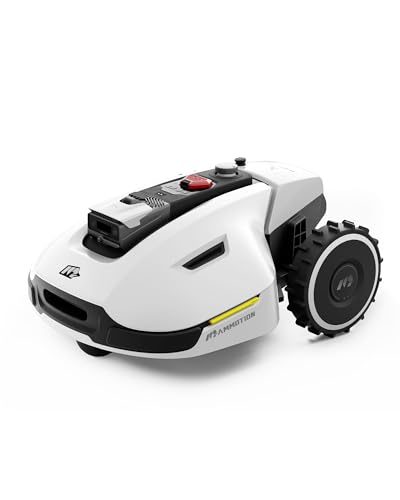
Mammotion YUKA 2000 Robot Lawn Mower, RTK + Vision, 2,000 m²
ASIN B0D78ZS4H1 • $2,124.15 • Sold by Mammotion AU on Amazon AU
The YUKA 2000 is the premium pick, rated for 2,000 to 2,400 square metres, and it pairs RTK satellite positioning with dual 3D vision cameras so that positioning holds up independent of lighting and signal conditions, centimetre-accurate even in yards the listing describes as more than half obstacles. The enhanced RTK link connects through home Wi-Fi or 4G with quoted coverage to 3 kilometres, and slopes are rated to 45 per cent. Where the other machines here carry one cutting disc, this runs a dual-disc, floating-height system with a 12.59 inch combined cut width, dynamic height adjustment from 1.2 to 4 inches, and programmable edge passes, one to three extra laps that each edge closer to the boundary.
The obstacle stack is the deepest here: an AI binocular vision camera plus a rear RGB camera give 3D object recognition across a 116 degree field of view, with more than 100 object types recognised, and a 270 degree U-shaped physical bumper as the last line of defence when something hard gets close anyway. Zone management goes to 20 areas, each with its own schedule, cutting mode and height, connected by channels that can thread narrow passages between buildings. Per charge it covers up to 500 square metres, then docks and resumes. The oddball feature is the sweeper: with Mammotion's kit fitted, YUKA collects leaves, twigs and clippings as it works and empties itself at a spot you nominate, genuinely useful in an autumn yard full of deciduous trees.
This is the machine for acreage-adjacent blocks, big lawns broken into multiple areas, or anyone who wants the edge-pass feature doing the string-trimmer's job. The dual-disc cutting width means fewer laps to cover the same ground, and the vision-plus-RTK redundancy means it keeps its position under conditions that strand single-system machines. At $2,499 through Mammotion's AU storefront it's serious money, but it replaces the most mowing labour per week of anything on this page, and that's the honest arithmetic that justifies the category at all. For a big block mowed weekly, the labour maths works out in its favour quickly.
Honest caveats: The sweeper kit is sold separately, so the self-emptying feature on the listing is an extra purchase. Dual discs mean double the blade consumables at every change. It's rated 500 m² per charge, so the biggest lawns run across multiple charge cycles. Warranty runs through the Mammotion AU storefront.
Best for: Large multi-zone blocks up to 2,400 m² where edge passes and cutting width replace the most manual labour.
Coverage: 2,000 to 2,400 m² • Navigation: RTK + dual 3D vision • Slope: Up to 45% (24°) • Cut width: 12.59 in, dual disc • Cutting height: 1.2 to 4.0 in, dynamic • Zones: Up to 20, per-zone schedules • Per charge: Up to 500 m² • Sweeper: Self-emptying, kit sold separately • Rank: #435 in Lawn Mowers, Parts & Accessories (Amazon AU)
View on Amazon AUSide-by-side comparison
| Product | Price | Best for |
|---|---|---|
| Husqvarna Automower Aspire R4 Robotic Mower | ~$999 | A wire-guided lawn up to 400 m² on the lowest budget, with the install kit, app and voice control included. |
| MOVA 600 Robotic Lawn Mower | ~$1,606.79 | Standard suburban blocks up to 600 m² where you want wire-free LiDAR navigation with no wire to lay. |
| MOVA 1000 Robotic Lawn Mower | ~$1,397 | Wire-free LiDAR mapping on blocks up to 1,000 m², with slopes to 45 per cent. |
| Dreame A1 Pro Robotic Lawn Mower | ~$2,999 | Big blocks up to 2,000 m² where wire installation is impractical and coverage speed matters. |
| Husqvarna Automower 305 Robotic Mower - Up… | ~$1,792.27 | Shaded, walled or complex 600 m² yards where wire-loop certainty beats camera and satellite cleverness. |
| Mammotion YUKA mini 700 Robot Lawn Mower | ~$1,699 | Steep or split-level yards up to 700 m² where the 50 per cent slope rating is the deciding spec. |
| Mammotion YUKA mini 2 1000 Robot Lawn Mower | ~$2,299 | A 1000 m² lawn that suits LiDAR plus AI vision, a no-map DropMow mode and 45 per cent slopes. |
| Mammotion YUKA 2000 Robot Lawn Mower | ~$2,124.15 | Large multi-zone blocks up to 2,400 m² where edge passes and cutting width replace the most manual labour. |
What we see fail at the bench: robot mowers
Robot mowers are new enough that the failure data is still building, but the components aren't new at all: lithium packs, brushless motors, a controller PCB and connectors, all living outside in the weather. That combination fails in predictable ways, and most of them are preventable with placement and habits rather than money. Here's what shows up, on these and on their robot vacuum cousins, and what it teaches.
Corroded charging contacts and dock connectors
The dock contact is a spring-loaded metal pad that lives outside, gets rained on, and carries charging current several times a day. Give it a year of coastal air and you get green oxide, rising contact resistance, then heat, then a mower that reports charging errors or docks all night without filling the pack. The fix is a service habit, not a part: clean the contacts with isopropyl and a fibreglass pen every couple of months, keep the dock under cover if you can, and treat any blackened pin as a warning, because heat damage spreads into the dock PCB behind it.
Seized blade spindles and worn disc bearings
Grass sap is glue. It packs into the gap around the blade disc spindle, dries hard, and adds drag the motor has to fight every run, which shows up first as shorter runtimes and eventually as a stalled disc or a cooked motor driver stage on the controller board. Stones and toys accelerate it by bending blades and adding vibration that hammers the bearings. Flip the machine monthly, clear the packed clippings from around the disc, replace bent blades in pairs so the disc stays balanced, and the spindle will mostly outlive the battery.
Batteries murdered by storage, not by mowing
Lithium packs in seasonal machines die in the off season. The killer pattern is a mower parked in the shed at flat charge after the last autumn mow, self-discharging over winter until the pack drops below its protection cutoff, at which point the electronics refuse to charge it at all come spring. Store the machine at roughly half charge, top it up once mid-winter, and keep it out of the shed's temperature extremes. That single habit determines whether the pack lasts three seasons or eight, same chemistry rules as every battery through this workshop.
Decision tree: which one should you actually buy?
- Small lawn, tight budget and happy to peg a wire? → The Husqvarna Automower Aspire R4 at $999. The install kit is in the box, it's rated to 400 m², and it's the lowest-cost machine on this page.
- Standard suburban block, lawn front and back, want the least setup fuss? → The MOVA 600. LiDAR mapping with no wire to lay, and dual-map support handles the split yard.
- Between 600 and 1,000 m² and want wire-free? → The MOVA 1000 at $1,999 keeps the LiDAR mapping of the 600 with a 1,000 m² rating, or the Mammotion YUKA mini 2 1000 at $2,299 if you'd rather have LiDAR plus AI vision and a no-map DropMow mode.
- Big block, 1,000 m² or more of actual grass? → The Dreame A1 Pro covers up to 2,000 m² with fast 65 minute recharges and resume, or the Mammotion YUKA 2000 if you want edge passes, dual-disc cut width and per-zone schedules on top.
- Steep block that rules most mowers out? → The Mammotion YUKA mini 700 carries the strongest slope rating here at 50 per cent, with a floating disc that follows the contours. Fence off anything steeper than that in the app and string-trim it monthly.
- Heavy tree cover or high walls around the lawn? → That's the environment where cameras and satellites struggle, so take the Husqvarna Automower 305 at $1,792. The boundary wire doesn't care about canopy, and the install kit is in the box.
- Leaves everywhere every autumn? → The YUKA 2000 is the only pick that sweeps: with the separate kit fitted it collects leaves and clippings and empties itself where you tell it to.
- Already own a robot mower that won't charge, won't dock or cuts out mid-lawn? → Don't bin it, the usual suspects are corroded dock contacts, a packed blade spindle or a protection-locked battery, all diagnosable. Bring it past the workshop in Erina and we'll tell you whether it's a $30 fix or a real fault before you spend anything.
Frequently asked questions
Do robot mowers work on Australian lawns like kikuyu and buffalo?
Yes, with a caveat about expectations. These machines are designed around little-and-often cutting, and warm-season runners like kikuyu and couch respond well to that, because frequent light trims keep the runners dense instead of letting them go leggy. Buffalo's thicker blades are fine too. What robot mowers don't do well is recovery mowing: if the lawn has gone to seed at ankle height, knock it down with a conventional mower first, then let the robot maintain it. Set the cutting height near the top of the range for buffalo and lower for couch, and drop it gradually rather than scalping in one change.
How long do the blades last and are they expensive to replace?
Most wire-free mowers in this band use small pivoting razor blades on a spinning disc, and makers typically suggest replacing them every one to three months in the growing season, more often if your lawn hides gumnuts, bark or stones. None of the listings on this page state blade pricing, so check the maker's spares page for a blade pack price and multiply out a year's worth before you buy. It's rarely a fortune, but it's a real running cost, and a machine with two cutting discs uses blades twice as fast as a single-disc unit.
Will a robot mower handle a steep bank?
Check the slope rating and then discount it. The picks here quote between 40 and 50 per cent grade, which is 22 to 27 degrees, measured in dry test conditions with clean wheel treads. Wet grass, dew and caked clippings all cut real-world climbing ability well below the sticker figure. If a bank makes you nervous pushing a normal mower across it, the honest play is marking it as a no-go zone in the app and trimming it by hand occasionally, rather than trusting a quoted maximum on the one part of the yard where a slide ends in a retaining wall.
What happens if the boundary wire gets cut?
On a wire-guided machine like the Husqvarna, a cut loop breaks the boundary signal and the mower stops and stays docked until it's repaired. Finding the break is the annoying part: you walk the loop checking the usual suspects, anywhere you've recently edged, aerated or dug. The repair itself is simple, splice the ends with the gel-filled connectors sold for the purpose, and normal service resumes. It's worth photographing the wire route during installation so future-you knows where not to dig. Wire-free machines avoid this failure entirely, which is a big part of why they've taken over the sales charts.
Are robot mowers safe around kids and pets?
The safety hardware is real: lift and tilt sensors stop the blades the moment the machine leaves the ground, physical bumpers trigger stop-and-turn, and the vision and LiDAR machines here actively detect and avoid pets and people. The blades are also small and shrouded under the deck, unlike the exposed blade of a conventional mower. That said, the sensible protocol costs nothing: schedule mowing for school hours or overnight, and treat the mower like any powered tool rather than a toy the kids can chase. Every pick on this page supports no-go zones and scheduling, so the machine can simply never run while the yard is occupied.
Do I need to bring the mower inside over winter?
Coastal NSW winters won't hurt the machine itself, these are weatherproofed for outdoor life and the Husqvarna is explicitly rated for all-season operation. The battery is the component that cares. If growth slows to the point the mower is idle for weeks, store it around half charge somewhere that avoids temperature extremes, and give it a top-up mid-winter so the pack never sits flat. Flat storage is the single biggest battery killer we see in seasonal equipment. The dock can stay outside, but a quick clean of the charging contacts before spring saves the most common start-of-season fault.
Related buying guides
Robot mower playing up? Diagnose before you replace
Most "dead" robot mowers that reach us have a corroded dock contact, a packed blade spindle or a battery that sat flat too long, and all three cost far less to fix than to ignore. Bring yours in to Erina and we'll test the pack, the charging path and the drive stages, then tell you straight whether it's worth fixing before you spend anything on a replacement.
Visit our Erina workshop Book Online