Prices from Amazon AU, updated daily. Swipe or use the arrows for more.
Disclosure: This article contains affiliate links to amazon.com.au. If you buy through one of these links iFix may earn a small commission at no extra cost to you. It doesn't change which products we recommend. We focus on what actually lasts based on 16 years of repair-shop experience.
Quick summary8 picks
- Entry PickPARGRILL Pellet Grill & Smoker about$800
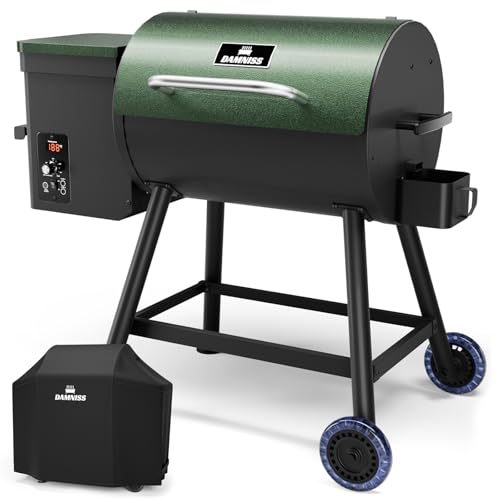
- Electric Pellet Grill & Smoker about$1,025
- Traeger Grills Pro 22 Wood Pellet Grill &… about$1,090
- Traeger Grills Woodridge Wood Pellet Grill… about$1,252
- Traeger Pro Series 575 Pellet Grill about$1,575
- Traeger Grills TFB97JLH Woodridge Pro… about$1,796
- Z GRILLS Wood Pellet Grill and Smoker with… about$1,823
- Most PremiumZ GRILLS Wood Pellet Grill Smoker with PID… about$2,029
How a pellet grill actually works
A pellet grill is a fan-forced oven that happens to burn wood. A small electric motor turns an auger, the auger drops hardwood pellets into a steel firepot, a hot rod lights them, and a fan pushes air through the fire and around the cooking chamber. A temperature probe inside the barrel reports back to a controller, and the controller decides how fast to run the auger. Once you see it that way, it's pretty obvious why the electronics matter as much as the steel does.
It's also why people who've cooked on charcoal for years are sometimes a bit underwhelmed the first time. You don't get the same heavy smoke from a pellet grill running at 230°C, because a clean, hot pellet fire doesn't make much of it. The good stuff happens down low, around 80 to 110°C, where the fire smoulders and the controller keeps it there for ten or twelve hours without you touching a vent. That's the job these grills do better than anything else in the backyard.
The trade-off is that you've bought an appliance, not a lump of steel. A kettle barbecue can sit out in the rain for fifteen years and still work. A pellet grill has a controller board, a geared motor, a fan, an igniter and a wiring loom, all living outdoors next to a fire and a grease tray. Most of what I'll say in this guide comes back to keeping those parts dry, clean and fed with decent pellets, because that's what decides whether a $1,000 grill lasts two summers or ten.
PID controllers and why temperatures swing
Older and entry pellet grills used a time-cycle controller: the auger runs for a set number of seconds, pauses, then runs again, and the probe only nudges the timing. They work, but the barrel temperature tends to wander 10 to 20 degrees either side of what you set, more on a windy day. A PID controller does the maths properly. It looks at how far off target the barrel is, how long it's been off and how fast it's changing, then feeds pellets and runs the fan to suit.
Of the five here, the PARGRILL and the Z Grills both say PID on the listing. Traeger says the Pro 22's Digital Pro Controller holds within plus or minus 15°F (about 8°C), and the Pro 575 runs Traeger's D2 direct-drive controller with a brushless motor. The Woodridge lists app control but doesn't name its controller type. None of that makes a simpler controller bad. It just means you'll babysit it a bit more on a cold or gusty night, and you'll want a wind break on an exposed deck.
The part people forget is the probe the controller reads. It's a thin sensor on the inside wall of the barrel, and when it gets a crust of grease and smoke on it, it reads slowly. The controller then overshoots, undershoots and hunts, and the owner blames the board. Before you decide a controller is faulty, wipe that probe with warm soapy water on a cloth and run the grill empty for half an hour. Most of the time the swings settle straight away and you've saved yourself a new board.
Cooking area and hopper size on a long cook
Every listing quotes cooking area in square inches because the brands are American. The Pro 22 and the Z Grills both claim 572 square inches, which is about 3,690 cm², and Traeger says that fits 24 burgers or five racks of ribs. The Pro 575 is 575 square inches, near enough the same. The Woodridge jumps to 860 square inches (about 5,550 cm²) once you count its upper rack. PARGRILL is the only one that quotes metric: roughly 3,013 cm² in total, with 2,252 cm² on the main rack.
I'd be a bit sceptical of the total figure on any of them. Upper racks sit high in the barrel where the heat is different, and a brisket or a pork shoulder needs the main grate, not the warming rack. For a family of four with the odd crowd over, the main grate on a 22-size grill is plenty. If you regularly do two briskets at once, or ribs and a shoulder together for a party, that's when the bigger Woodridge starts to earn its space on the deck.
Hopper size matters more than people expect on an overnight cook. Traeger lists an 18 lb hopper on the Pro 22, about 8.2 kg, and Z Grills says 10 lb of pellets lasts around eight hours on its smoke setting. Those figures suggest a full hopper covers a long, low cook, but cold nights, wind and opening the lid all burn more. I'd always top up before bed rather than trust the maths, because a hopper that runs empty at 3am means a flame-out and a cold brisket in the morning.
Power points, extension leads and rain
Every grill here needs mains power. The igniter does the heavy lifting for the first few minutes, glowing red to light the pellets, and after that the auger motor, the fan and the controller sip power for the rest of the cook. That makes the electricity cost small next to the pellets. It also means the grill needs a safe outdoor power supply for twelve hours at a time, often overnight, and usually with dew or a passing shower rolling through the backyard.
Plug into a weatherproof outdoor outlet on an RCD-protected circuit. If you must use an extension lead, use a heavy-duty outdoor one, fully unrolled, with the joint off the ground and out of the drip line, because a cord reel left coiled can heat up under load. Check the plug and the box for the RCM mark when it arrives too, the same mark I tell people to look for on phone chargers and power bricks. The Traeger and Z Grills listings don't state the plug type, so confirm it's an Australian three-pin plug before the return window closes.
If you camp or cook away from a socket, a pellet grill can run off a decent battery. The igniter is the hard part, so the battery needs an inverter that handles that start-up load as well as the hours of low draw afterwards. Our guide to portable power stations for blackouts and camping covers the capacity maths. The same thinking applies here: size the battery for the start and for the hours, not for the number printed on the box.
Pellets, moisture and the jammed auger
Wood pellets are compressed sawdust held together by the wood's own lignin, and they hate water. Leave a bag open in a humid garage, or a hopper full over a wet week, and the pellets swell, soften and turn back into sawdust. That mush packs into the auger tube like wet cement. The auger motor then stalls against it, and depending on the grill it shears a pin, strips its gearbox or just cooks its windings trying to push through.
The fix is boring and it works. Empty the hopper after a cook if rain's coming, store pellets in a sealed bucket or bin, and buy bags you'll use within a season. Most hoppers have a clean-out door or chute for exactly this reason. If the auger's already jammed, unplug the grill first, then open up the firepot end and dig the swollen pellets out by hand before you try the motor again, because forcing a jammed auger is how a small job becomes a big one.
Pellet quality matters more than the badge on the grill. Bags with a lot of fines, the dust at the bottom, burn unevenly and make more ash, and ash in the firepot causes most flame-outs. Tip the dust off if a bag's dusty, vacuum the firepot every few cooks, and don't put heating pellets meant for wood heaters in a cooking grill. Food-grade hardwood pellets are what the controllers are tuned for, and they're the only thing I'd put in a grill you're cooking dinner on.
WiFi apps: worth having or one more thing to fail?
The Pro 575 and the Woodridge both list WiFIRE, which lets you watch the barrel and probe temperatures and change the setpoint from the Traeger app. On a twelve-hour cook that's useful. You can see a stall coming, adjust from the couch and get an alert if the temperature falls away because the hopper's empty. The Pro 22 has a meat probe and a digital controller but doesn't list app control, and neither do the PARGRILL or the Z Grills.
The catch is that the WiFi board is one more piece of electronics living outdoors next to heat. It also needs your home WiFi to reach the backyard, and plenty of homes have the router at the far end of the house. Check the signal where the grill will sit with your phone before paying extra for an app model. If it's patchy, a node from one of the mesh WiFi systems we've tested near the back door usually sorts it out.
Apps also depend on the company keeping its servers and firmware going. Traeger has been running its app for years, which counts for something, but no listing promises how long app support lasts. The good news is that the grill still works from its own controller if the app ever stops, so I treat WiFi as a nice extra rather than the reason to buy one model over another. A grill that drops off the network every hour is more annoying than one that never had WiFi at all.
Pellet, gas, charcoal or an electric woodfire smoker
A gas barbecue heats up faster and sears harder, and it doesn't need power, so for weeknight sausages and steaks it's still the easier tool. Charcoal gives you the strongest smoke flavour and the most control if you like managing a fire. A pellet grill sits in between: more smoke than gas, far less effort than charcoal, and the most consistent low-and-slow results of the three, because a controller is doing the fire management for you while you get on with the day.
I've left out the Ninja Woodfire Pro XL even though it's one of the top-selling outdoor smokers on Amazon AU. It's a good electric grill that burns half a cup of pellets for flavour, but it has no hopper or auger and it's a tabletop unit. It suits a balcony more than a whole brisket. Searing is the other gap with pellet grills, which mostly top out around 230 to 260°C. The Z Grills is the exception here, with a fire access door it says allows direct flame searing to about 400°C.
Size and weight count too. The listing weights run from about 37 kg for the Z Grills to about 62 kg for the Woodridge, so none of these are portable, and the Z Grills measures about 119 by 53 by 124 cm. Measure the spot on your deck with the lid open and leave clearance from walls and eaves, because the chimney and barrel get hot enough to mark paint and timber. Keep a clear path to the outdoor power point as well, so the lead isn't stretched across a walkway.
How I picked these five
I searched Amazon AU for pellet grills between $600 and $2,000, kept only new stock from Amazon AU or Australian storefront sellers, and dropped anything shipped by overseas sellers. A US-voltage controller and a warranty claim posted overseas aren't things you want on a $1,500 appliance, and that ruled out several Pit Boss and Z Grills listings sold from the US. One pick, the PARGRILL, comes from a marketplace seller without an Australian store name, and I've said so on its card.
The lead pick is the Traeger Pro 22 because it answers the question most people are asking, which is what pellet grill to buy first. It's sold by Amazon AU, it was ranked #14 in the Outdoor Smokers category on the day I checked, and the Pro 22 layout has been around long enough that parts and pellets are easy to find. The Pro 575 and Woodridge are the upgrades, the Z Grills is the alternative brand with a longer warranty, and the PARGRILL is the entry point.
Specs on each card come only from the listing. Where a listing quotes Fahrenheit, pounds or square inches I've converted to metric and rounded. Where a listing leaves something out, like hopper size on the Pro 575, plug type on the Traegers, or a sales rank on the Woodridge and Z Grills, I've said it's not stated rather than guess. If a controller or igniter does fail outside warranty, our Erina workshop can test the board and tell you whether it's worth fixing.
The 5 picks, $800 to $1,823
Prices are Amazon AU at time of writing (21 October 2026) and move week to week. Ranks are Amazon AU category sales ranks, checked the same day.

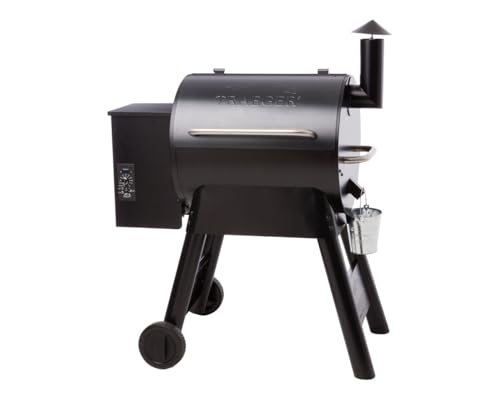
Traeger Pro 22 Wood Pellet Grill and Smoker
ASIN B0GL218ZM3 • $1,090.00 • Ships from Amazon AU
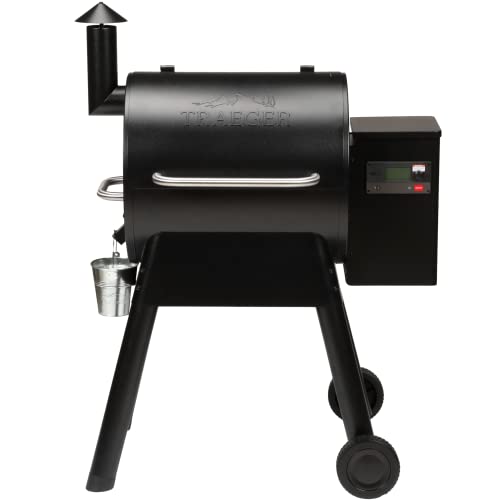
The Pro 22 is the grill a lot of Australian pellet owners started on, and it's still the one I'd point a first-timer towards. It's sold and shipped by Amazon AU at $1,090 at time of writing, and it was ranked #14 in Amazon AU's Outdoor Smokers category when I checked. The listing quotes 572 square inches of cooking space, about 3,690 cm², across the main grate and a raised rack. Traeger says that's room for 24 burgers, five racks of ribs or four whole chickens. The temperature range is 180 to 450°F, which works out to roughly 82 to 232°C. Traeger claims the Digital Pro Controller holds within plus or minus 15°F, about 8°C, of the setpoint. A meat probe is included and reads out on the controller.
Build is powder-coated steel with porcelain-coated grates, on a sawhorse-style frame with big wheels and a lift bar on the side. The listing weight is about 46 kg, so it'll roll across pavers but you won't be lifting it into a ute on your own. The hopper holds 18 lb, about 8.2 kg of pellets, which covers most overnight cooks if you start full. There's no WiFi or app control listed on this model, and I don't see that as a problem for a first grill. You set the dial, the controller does the work and you check the probe readout on the grill. The model number on the listing is TFB57PUBA, which is worth writing down for parts later. Fewer electronics also means fewer things to go wrong in a wet winter.
What I like most is that the Pro 22 layout has been around a long time. Augers, igniters, fans and controllers for it are common parts, and that's what keeps a pellet grill running past its warranty. The weak spot is the same as every grill here: water in the controller and swollen pellets in the auger. Keep it under a fitted cover when it's not running and empty the hopper before a wet week. Wipe the temperature probe inside the barrel every few cooks. If you want to watch a long cook from inside the house, step up to the Pro 575. For most backyards this is the one I'd buy.
Honest caveats: No WiFi or app control is listed, so long cooks mean walking out to check. The plus or minus 15°F claim is Traeger's own figure, and wind and cold will widen it. The listing doesn't state the plug type, so check for an Australian plug and the RCM mark on delivery. Searing tops out around 232°C.
Best for: A first pellet grill for a family backyard that gets used most weekends.
Cooking area: 572 sq in (about 3,690 cm²) • Temperature: 82 to 232°C (180 to 450°F) • Controller: Digital Pro, ±15°F claimed • Hopper: 18 lb (about 8.2 kg) • Probe: Meat probe included • Weight: About 46 kg (listing) • Model: TFB57PUBA • Seller: Amazon AU • Rank: #14 in Outdoor Smokers (Amazon AU)
View on Amazon AU
Traeger Pro Series 575 Pellet Grill with WiFIRE
ASIN B07NNV6F2S • $1,575.00 • Ships from Amazon AU
The Pro 575 is the Pro 22's bigger brother with the electronics upgraded, and the price shows it at $1,575 at time of writing. It's sold by Amazon AU and was ranked #21 in Amazon AU's Outdoor Smokers category on the day I checked. Cooking area is 575 square inches, about 3,710 cm², so you're paying for the controller and the app rather than more grate. Traeger lists its D2 direct-drive drivetrain with a brushless motor driving the auger. The top temperature goes to 500°F, about 260°C, which gives you a bit more room for searing than the Pro 22. WiFIRE lets you watch and adjust the grill from the Traeger app. A meat probe is built in and reports to the app as well.
The app is the reason to buy this one. On a twelve-hour brisket you can see the barrel temperature, the probe temperature and how the cook is tracking from your phone, and you can change the setpoint without walking outside. It's also how you find out the hopper is running low before the fire goes out. The listing weight is about 58 kg and it stands about 135 cm tall, so it's a solid, heavy unit on its wheels. Hopper capacity isn't stated on this listing, so check the manual if overnight cooks matter to you. The model number listed is TFB57GLEC. The colour on this listing is bronze rather than black, which hides grease marks a little better.
Brushless motors don't have brushes to wear down, and that removes one of the slower failures we see on older auger motors. The trade-off is that the D2 controller and WiFi board are more complex boards to replace if water gets in. Treat the controller panel like a phone: cover it when the grill's off and never hose it down. Your WiFi needs to reach the grill, so test the signal out the back with your phone first. If the app isn't something you'd use, the Pro 22 does the same cooking for less money. If you want to manage overnight cooks from bed, this is the pick.
Honest caveats: Hopper capacity isn't stated on the listing. The app needs a solid WiFi signal at the grill, and app features depend on Traeger keeping its servers running. Plug type isn't stated, so check for an Australian plug and the RCM mark on arrival. At about 58 kg it's heavy to move up steps.
Best for: Long overnight cooks you want to watch and adjust from your phone.
Cooking area: 575 sq in (about 3,710 cm²) • Max temperature: About 260°C (500°F) • Controller: D2 direct drive, brushless motor • App: WiFIRE (Traeger app) • Probe: Meat probe included • Weight: About 58 kg (listing) • Model: TFB57GLEC • Seller: Amazon AU • Rank: #21 in Outdoor Smokers (Amazon AU)
View on Amazon AU
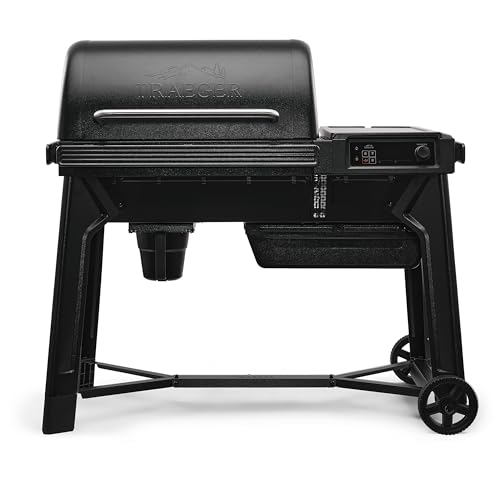
Traeger Woodridge Wood Pellet Grill and Smoker
ASIN B0DQTBRS3M • $1,251.69 • Ships from Amazon AU
The Woodridge is Traeger's newer range, first listed on Amazon AU in January 2025, and it's the biggest grill here. It's $1,252 at time of writing, sold by Amazon AU, and the listing claims 860 square inches of total cooking area, about 5,550 cm². Traeger says that fits six chickens, eight racks of ribs or six pork butts. The range is 180 to 500°F, roughly 82 to 260°C, controlled and monitored through the Traeger app over WiFi. A meat probe is listed in the title. It's a 6-in-1 grill like the rest, which in plain terms means it smokes, grills, bakes and roasts. Oddly for a bigger grill, it was priced below the Pro 575 on the day I checked.
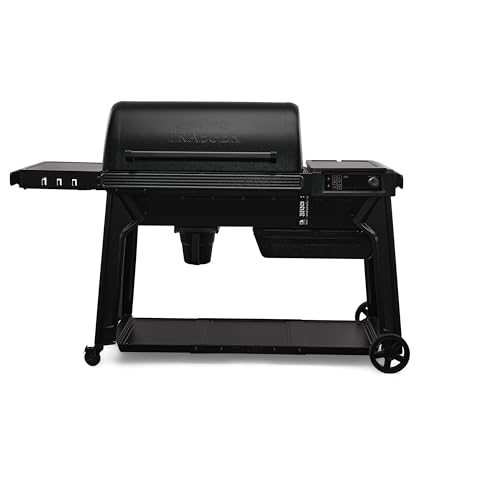
Two features matter to me more than the size. The EZ-Clean Grease and Ash Keg collects ash and grease in one place under the barrel, which makes firepot and grease cleaning much less of a chore, and regular cleaning is what prevents flame-outs and grease fires. The P.A.L. Pop-And-Lock rail takes Traeger shelves, hooks and bins, sold separately. The listing weight is about 62 kg and it's about 127 cm wide, so measure your deck before you order. The model number listed is TFB86MLH. Amazon AU doesn't publish a sales rank for this listing, so it's here on specs and seller, not on sales. The controller type isn't named on the listing beyond app control.
This is the pick for people who cook for a crowd or do two big cuts at once. The extra barrel volume takes more pellets to heat, so expect to use more fuel than a 22-size grill on the same cook. Big barrels are also slower to come up to temperature on a cold morning, which is normal and not a fault. Keep the ash keg emptied and the probe wiped and it should behave for years. If you're mostly cooking for four, the Pro 22 is plenty and easier to move around. If your weekends involve a lot of mouths, this is the one.
Honest caveats: No Amazon AU sales rank is published for this listing, so I can't tell you how it's selling. The controller type isn't named. Plug type isn't stated, so check for an Australian plug and the RCM mark on delivery. The 860 sq in figure includes the upper rack, and pellet use is higher than a 22-size grill.
Best for: Families who regularly cook for a crowd or run two big cuts at once.
Cooking area: 860 sq in total (about 5,550 cm²) • Temperature: 82 to 260°C (180 to 500°F) • App: WiFIRE (Traeger app) • Cleaning: EZ-Clean Grease and Ash Keg • Accessories: P.A.L. Pop-And-Lock rail • Weight: About 62 kg (listing) • Model: TFB86MLH • Seller: Amazon AU • Rank: Not published by Amazon AU (checked 21 October 2026)
View on Amazon AU
Z Grills ZPG-600D Wood Pellet Grill and Smoker with PID Controller
ASIN B09PY5MZKZ • $1,822.73 • Sold by ARISOY AU-STORE on Amazon AU
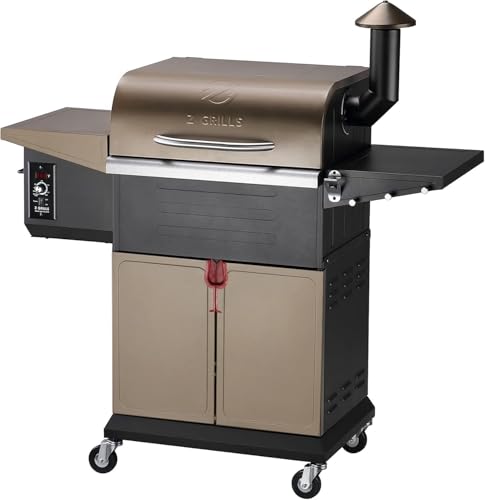
Z Grills is the main alternative to Traeger in Australia, and the ZPG-600D has the feature the Traegers don't: a fire access door for direct flame searing. It's $1,823 at time of writing from ARISOY AU-STORE, an Australian storefront seller on Amazon AU. Cooking area is 572 square inches, about 3,690 cm², the same as the Pro 22. The PID controller holds 180 to 450°F, about 82 to 232°C, for normal cooking. Open the searing door and the listing says you get direct flame up to 750°F, around 400°C. Z Grills quotes 10 lb of pellets lasting about 8 hours on the smoke setting. That's a useful real-world figure that most brands don't bother to publish.
The warranty is the other reason to look at it. The listing states a 3-year warranty, longer than the cover most brands quote, and mentions phone and online support from Z Grills. The listing weight is about 37 kg and it measures about 119 by 53 by 124 cm, so it's lighter than the Traegers for a similar cooking area. The model number is ZPG-600D. There's no WiFi or app listed and no meat probe mentioned, so allow for a separate wireless probe if you want to track internal temperature. PID control on a grill this size should keep low-and-slow temperatures steady without much fiddling. The searing door is the part I'd use most, because reverse-searing a steak on a pellet grill usually means finishing it somewhere else.
The price is the catch. When I checked, it cost more than the Pro 575, which brings app control and a meat probe, so you're paying for the searing door and the warranty. Prices from storefront sellers move around a lot, so compare it again on the day you buy. The searing door also opens a direct path for grease to the flame, so keep the drip tray and the area around the firepot clean. Amazon AU doesn't publish a sales rank for this listing. Check the plug when it arrives, because the listing doesn't state the type. If searing on the same grill matters most, this is the pick.
Honest caveats: Priced above the Traeger Pro 575 at time of writing, without WiFi or a listed meat probe. No Amazon AU sales rank is published. It's sold by a storefront seller rather than Amazon AU, so warranty claims go through Z Grills and the seller. Plug type isn't stated on the listing.
Best for: Owners who want low-and-slow smoking and a proper steak sear on one grill.
Cooking area: 572 sq in (about 3,690 cm²) • Temperature: 82 to 232°C, PID controlled • Searing: Direct flame to about 400°C (750°F) via access door • Pellet use: 10 lb (about 4.5 kg) lasts about 8 hrs on smoke (listing) • Warranty: 3 years (listing) • Size: About 119 x 53 x 124 cm • Weight: About 37 kg (listing) • Seller: ARISOY AU-STORE • Rank: Not published by Amazon AU (checked 21 October 2026)
View on Amazon AU
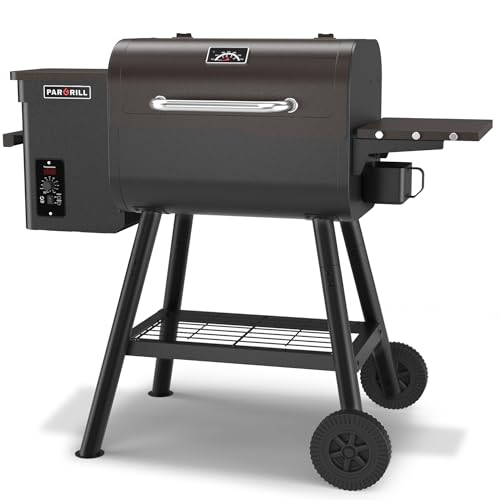
PARGRILL Pellet Grill and Smoker with PID Control
ASIN B0FZRF1JVX • $799.99 • Sold by WORKPRO on Amazon AU
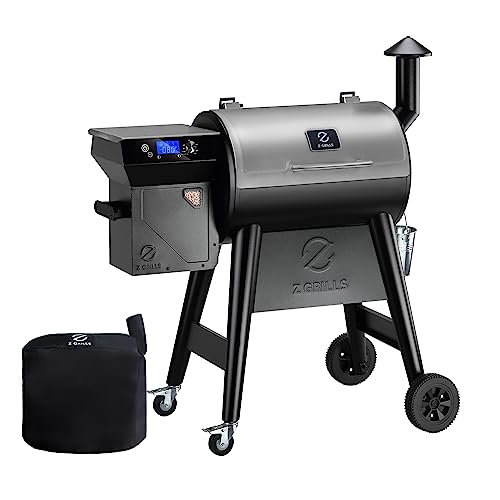
The PARGRILL is the entry point to proper pellet cooking at $800 at time of writing, and it's selling well: #8 in Amazon AU's Outdoor Smokers category on the day I checked. It's the only listing here that quotes metric specs, which I appreciate. The PID controller runs from 70 to 210°C, a bit lower at both ends than the Traegers. Cooking space is about 3,013 cm², made up of a 2,252 cm² main rack and a 761 cm² warming rack. PARGRILL says that fits ten burgers, four racks of ribs or two whole chickens. It has automatic ignition and the same 8-in-1 cooking claims as the bigger names. The listing also states a 2-year warranty, which is decent cover at this price.
Build is powder-coated steel with enamel-coated grates, a grease management system, a side prep shelf and wheels. The listing doesn't state an assembled weight or the hopper capacity, so check those on the current listing before you order. The model number is PA25007BC. The seller is WORKPRO, a marketplace seller without an Australian store name, which is the one compromise in this list. The listing also carries a note asking owners to clean out the ash after every use to stop clogging. That's good advice for every pellet grill, and I like that they put it right at the top. A firepot full of ash is the most common reason a pellet grill won't light or goes out mid-cook.
The 210°C ceiling means this is a smoker that grills, not a grill that smokes. It's well suited to ribs, pulled pork and chicken, and less so to steak. There's no WiFi and no meat probe listed, so a separate wireless probe is worth adding. Warranty claims go through a marketplace seller, so keep your order details and photograph the serial plate when it arrives. Check the plug and the RCM mark on delivery too. If you want to find out whether low-and-slow cooking is for you before spending Traeger money, start here.
Honest caveats: Sold by a marketplace seller without an Australian store name. No hopper capacity, assembled weight, WiFi or meat probe on the listing. The top temperature of 210°C limits searing. Plug type isn't stated, so check for an Australian plug and the RCM mark on arrival.
Best for: Trying low-and-slow pellet smoking without spending Traeger money.
Temperature: 70 to 210°C, PID controlled • Cooking area: About 3,013 cm² (2,252 main + 761 warming) • Ignition: Automatic • Grates: Enamel-coated • Warranty: 2 years (listing) • Model: PA25007BC • Seller: WORKPRO (marketplace) • Rank: #8 in Outdoor Smokers (Amazon AU)
View on Amazon AUSide-by-side comparison
What we see fail in the workshop: pellet grills
Pellet grills don't usually die all at once. They get harder to light, the temperature starts wandering, or the auger makes a grinding noise for a few cooks before it stops. Almost every fault traces back to one of three things: water getting into the electronics, pellets that have absorbed moisture, or ash and grease left to build up. Here's what each looks like and how to head it off.
Controllers with water in them
The controller is a circuit board behind a small panel on the hopper, and most of them aren't sealed against driving rain. Water gets in around the knob or display, sits on the board and corrodes the tracks, and the first sign is usually a display that flickers or a grill that won't hold temperature. Unplug it and let it dry fully before trying again. Corrosion damage looks the same as it does on a water-damaged phone board: green crust on the pins. A fitted cover and a dry spot under the eaves prevent nearly all of it.
Augers jammed with swollen pellets
A grinding or clicking noise from the hopper, then a fire that goes out, is the classic jammed auger. Damp pellets swell into sawdust paste and pack the auger tube, and the motor stalls against it. Keep running it and the motor overheats or the gearbox strips. Unplug the grill, empty the hopper, remove the auger cover if your model has one and clear the tube by hand. Store pellets sealed, keep the hopper lid shut between cooks, and empty the hopper before a wet spell. It's the simplest protection there is for an expensive motor.
Igniters and fans that give up
The hot rod igniter works hard every time you start the grill and eventually burns out, usually after a few seasons. The symptom is a grill that feeds pellets but never lights, so the firepot fills up with unburnt fuel. Don't keep restarting it, because that overfills the firepot and can cause a flare when it does catch. The combustion fan is the other wear item: a fan with tired bearings gets noisy, then slow, and the fire starts smouldering instead of burning cleanly. Both are common parts on the popular models.
Decision tree: which one should you actually buy?
- First pellet grill for a family backyard? → The Traeger Pro 22 at $1,090. Sold by Amazon AU, enough grate for a family, and a layout that's been around long enough for parts to be easy to find.
- Want to watch an overnight cook from your phone? → The Traeger Pro 575 at $1,575. WiFIRE app control, a built-in meat probe and a brushless D2 drivetrain.
- Regularly cooking for a crowd? → The Traeger Woodridge at $1,252. 860 square inches of total cooking area, app control and the grease and ash keg that makes cleaning easier.
- Want a proper steak sear on the same grill? → The Z Grills ZPG-600D at $1,823. Its fire access door allows direct flame searing to about 400°C, and it carries a 3-year warranty.
- Just want to try low-and-slow before spending big? → The PARGRILL at $800. PID control to 210°C and a 2-year warranty, with the trade-off of a marketplace seller.
- Controller dead, display flickering or grill won't light? → Unplug it, let it dry and check the probe and firepot first. If it's still faulty, bring the controller to the Erina workshop and we'll test the board before you buy a new one.
Frequently asked questions
Is a pellet grill worth it over a gas barbecue?
It depends on what you cook. If most of your barbecuing is weeknight sausages and steaks, a gas barbecue heats faster and sears harder without needing power. If you want ribs, brisket, pulled pork or a roast cooked low and slow without managing a fire, a pellet grill does that better than anything else in the backyard, because the controller feeds the fire for you. Plenty of people end up with both: gas for quick meals and a pellet grill for weekends.
How much power does a pellet grill use?
Most of the draw comes in the first few minutes, when the hot rod igniter is lighting the pellets. After that the auger motor, combustion fan and controller use very little, so the electricity cost of a long cook is small next to the cost of the pellets. The bigger issue is safety: the grill needs an outdoor power point on an RCD-protected circuit, and any extension lead should be a heavy-duty outdoor lead, fully unrolled, with the joint kept off the ground.
Why does my pellet grill temperature keep swinging?
The most common cause is a dirty temperature probe inside the barrel. A crust of grease and smoke makes it read slowly, so the controller overshoots and undershoots. Wipe it with warm soapy water and run the grill empty for half an hour. Other causes are wind, a lid that's opened often, ash build-up in the firepot and damp pellets. Time-cycle controllers also swing more than PID controllers by design, so some movement is normal on simpler grills.
How do I stop the auger jamming?
Keep pellets dry. Store bags sealed in a bin or bucket, empty the hopper after a cook if rain is coming, and use bags within a season. Damp pellets swell into sawdust paste that packs the auger tube, and the motor stalls against it. If it does jam, unplug the grill, empty the hopper and clear the tube by hand before running the motor again. Forcing a jammed auger is how a cleaning job turns into a motor or gearbox replacement.
Can I leave a pellet grill outside?
Yes, under a fitted cover, but the electronics are the weak point. The controller, igniter, fan and auger motor all live outdoors next to the fire, and water in the controller is the most common fault I see on these. A spot under the eaves or a pergola helps a lot. Empty the hopper before a wet week so the pellets don't swell, and never hose the grill down, because water goes straight into the controller and the firepot wiring.
Do I need WiFi on a pellet grill?
No. WiFi lets you watch the barrel and probe temperatures and change the setpoint from your phone, which is handy on a twelve-hour cook, but every grill here cooks just as well from its own controller. If you do buy an app model like the Traeger Pro 575 or Woodridge, check your home WiFi signal where the grill will sit first. A grill that keeps dropping off the network is more annoying than one without WiFi at all.
Related buying guides
Pellet grill controller playing up? Get it tested
Most pellet grill faults come down to water in the controller board, a burnt-out igniter or an auger motor that's been fighting damp pellets. Bring the controller or the whole grill to our Erina workshop and we'll test the board, the igniter and the motor, then tell you what's actually wrong and whether a repair makes sense before you spend anything on a replacement.
Visit our Erina workshop Book Online