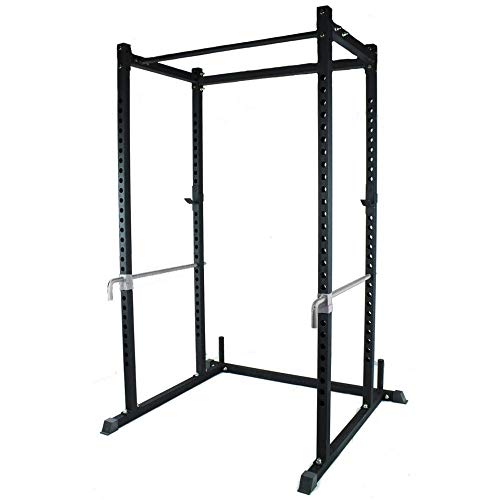
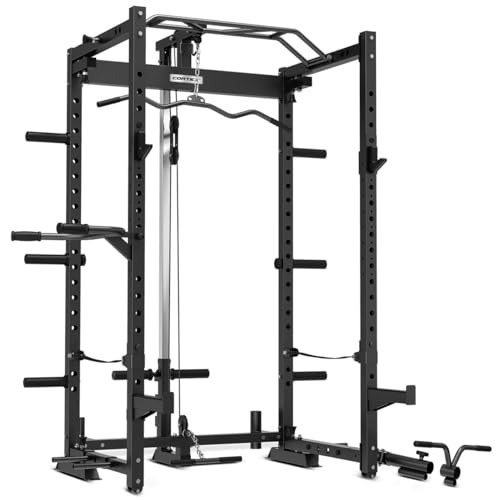
Prices from Amazon AU, updated daily. Swipe or use the arrows for more.
Disclosure: This article contains affiliate links to amazon.com.au. If you buy through one of these links iFix may earn a small commission at no extra cost to you. It doesn't change which products we recommend. We focus on what actually lasts based on 16 years of repair-shop experience.
Quick summary6 picks
- Entry PickVEVOR Power Cage Rack Multifunctional… about$3872" screen.
- Costway 900 kg Power Cage w/ Cable… about$442
- Best FitnessBest Fitness Power Rack about$469119W.
- Powerline Half Power Rack about$5052" screen.
- Power Rack Squat Deadlift HD Lift Cage about$599
- Most PremiumCORTEX PR-4 Space Saver Folding Squat Power… about$899
Why a repair shop is writing about power racks
A power rack has no circuit board in it, but I look at one the way I look at anything that has to hold a load for years: what's it made of, how is it joined, what does the listing actually promise and what's left out. A rack is welded or bolted steel tube with holes in it, and the parts that matter are the steel, the hooks that hold the bar, the safety bars that catch it and how it sits on the floor.
The five picks run from $387 to $899 at time of writing: the Costway full cage with a cable crossover, the VEVOR power cage, the Best Fitness power rack, the Powerline half rack and the CORTEX PR-4 folding rack. Four are sold by Australian storefronts that passed our AU retail check and one by Amazon AU. Two of them, the Best Fitness and the Powerline, are Body-Solid products, going by the brand field on each listing.
I've left out racks whose listings print load ratings in pounds alone or whose sellers didn't pass our check, and I've dropped the Goplus cage because its part number and feature text match the Costway cage almost word for word. Where a listing leaves out a load rating, a hole spacing or how it fixes to the wall, I've said so.
If the phone you film your lifts on has had a fall off the uprights, that's our side of things, and our Erina workshop can tell you what it needs before you spend anything on it.
Full cage, half rack or folding rack
A full cage, or power cage, has four uprights with the lifting space inside them, so the safety bars run front to back on both sides and catch the bar wherever you fail. It's the most forgiving shape for training alone, and it's what the Costway, VEVOR and Best Fitness picks are. The trade-off is floor space: a full cage needs room to walk into it with a bar, plus room either side for loading plates.
A half rack has two main uprights with the lift happening in front of them, and safety arms that stick out forward. The Powerline is a half rack, and its listing says space-saving with J-cups and safety spotter arms included. Half racks take up less depth and feel more open, but the arms only catch a bar that comes down roughly where they're set, so setting them properly matters more.
A folding rack mounts flat against a wall and swings out when you train. The CORTEX PR-4 listing calls it a foldable, space-saving design that takes standard 6 foot and Olympic 7 foot barbells and has band pegs. It's the answer for a single garage where the car still has to fit, but it's only as strong as what it's fixed to, which I'll come back to.
Cable attachments are the other split. The Costway adds a dual-track pulley system on the back of the cage for pulldowns and rows. That's handy, but it's more moving parts, and if cables are your main interest, our functional trainers guide covers machines built around them.
Steel, tube size and what load ratings mean
Most home racks use 2 by 2 inch square tube, about 5 by 5cm, and four of the five picks state it: the Costway says 5 by 5cm steel tubes, the VEVOR a 2 by 2 inch frame with 1.5mm wall thickness, the Best Fitness 14 gauge 2 by 2 steel and the Powerline 2 by 2 inch heavy gauge steel. The CORTEX listing doesn't state its tube size.
Wall thickness is the number that separates a solid rack from a wobbly one. A gauge number goes the opposite way to what you'd expect, so a lower gauge is thicker steel, and 14 gauge works out to roughly 1.9mm. The VEVOR's stated 1.5mm is thinner than that. Thinner tube is lighter and costs less to make, and it's fine for moderate loads, but it flexes more under a heavy bar racked hard.
Load ratings are where listings get loose. The Costway states a 900kg static weight capacity, and static means sitting still, not a bar dropped onto the safeties from a missed squat. The Best Fitness states 227kg capacity. The VEVOR, Powerline and CORTEX listings don't state a capacity at all. A dynamic load, a bar coming down fast, hits far harder than its own weight, so treat any static figure as a ceiling, not a working number.
Welds and bolts tell you as much as the rating. Look at the photos for clean, continuous welds on the base and the top crossmembers, and plan to check every bolt after the first week of training and every few months after, since a bolted rack loosens as it settles.
J-hooks, safeties and hole spacing
The J-hooks, or J-cups, are what the bar sits on between sets, and the safety bars or spotter arms are what catch it if you can't finish a rep. Every one of the five picks except the CORTEX names both on its listing, and the CORTEX listing doesn't mention either, so check what's in its box before you count on safeties.
Hole spacing decides how precisely you can set them. The Best Fitness states 23 positions spread 7.6cm apart, the Powerline states 2 inch hole spacing, about 5cm, the Costway names 27 adjustable positions and the VEVOR 26 levels of height adjustment on the front uprights. Closer spacing lets you set the safeties just under the bottom of your bench press or squat, rather than a few centimetres too high or too low.
Set the safeties so the bar sits on them a little below your lowest point, then test with an empty bar before you load it. On a bench press that usually means just above your chest at the bottom, and on a squat just below where the bar sits when you're at depth. Safeties set too low don't help, and set too high they get in the way of a full rep.
Steel-on-steel J-hooks chew up a bar's knurling and paint over time. Some racks line the hooks with plastic or rubber, but none of these five listings mention a liner, so a strip of UHMW or a set of lined replacement hooks is a common first upgrade.
Ceiling height, footprint and pull-ups
Measure the ceiling before anything else. The Best Fitness lists 211cm tall, the Costway's listing height works out to about 210cm and the VEVOR's part code gives 2,120mm. A lot of Australian rooms have ceilings around 2.4 metres, but garages, granny flats and older homes can be lower, and a rack that fits under the ceiling can still leave no room to do a pull-up from the top bar.
For pull-ups you need room for your head above the bar, so take the rack height, add the height of your head above your hands at the top of a rep, and compare that to the ceiling. If the numbers don't work, you'll be doing them with bent knees on a lower bar, which is fine, but it's better to know before the rack arrives.
Footprint is the other measurement. The Costway states a cage base of 135 by 112cm, the VEVOR 1500 by 1200mm, and the Best Fitness 119 by 114cm. Add at least a metre either side for loading a 7 foot Olympic bar and walking around it, and more behind the Costway for the cable station.
Floor matters too. A concrete garage slab is ideal, but bare concrete chips under dropped plates, so a layer of rubber gym flooring under the rack protects both the slab and the rack's feet. On a suspended timber floor, a loaded rack is a lot of weight on a small area, so check the floor before you put one in a spare room.
Anchoring and the folding rack's wall
A full cage with a good wide base usually stays put under normal training, and a lot of people never bolt one down. It moves when you do pull-ups that swing, rack a bar hard from the outside, or use the cable station on the Costway, so bolting it to a slab, or at least loading the plate storage, steadies it. None of the five listings describes anchor bolts in the box, so plan to buy concrete anchors that suit your slab.
Half racks move more than cages because the load is in front of the uprights. The Powerline listing says it can be expanded with attachments, and weight on its storage horns helps keep it planted. If you're doing heavy work in a half rack, bolting it down is the sensible step.
A folding wall rack is a different story, because the wall is part of the structure. It has to go into solid masonry or into timber studs with the right fixings, never into plasterboard alone. The CORTEX listing doesn't describe its mounting, so check CORTEX's instructions for fixing type and stud spacing before you buy, and if your garage wall is a thin brick veneer or an old fibro sheet, get advice first.
Whatever you buy, check every bolt and fixing after the first week, then every few months. A rack that has started to creak, wobble or shift on the floor is telling you something has loosened.
Rust, paint and coastal garages
Most home racks live in garages, and on the coast that means humid, salty air. The Best Fitness states a powder coat paint finish and the VEVOR says rust-resistant carbon steel. Powder coat is tough, but wherever it chips, on the J-hook holes, the base where plates land and the pull-up bar where hands grip, bare steel starts rusting within weeks in a damp garage.
Touch up chips with a bit of matching paint as they appear, and wipe chalk and sweat off the uprights after training, since both hold moisture against the steel. A bit of light oil on bare steel parts like pins and the inside of hooks stops surface rust spreading. Keep the garage door open on dry days now and then to let the damp out.
Gym electronics suffer from the same air. A speaker, phone or set of earbuds left in a humid garage gym corrodes at the charging port the same way the steel rusts. Our portable Bluetooth speakers guide covers what holds up, and our water damage explainer covers what moisture does to the inside of a phone.
Bars and plates rust before the rack does, so a barbell stored on the rack in a damp garage needs a wipe and a brush now and then too.
Choosing between the five
If you want the most rack for the money and you've got the floor space, the Costway cage is where I'd start. It returns the best category rank of the five, it's a full cage with safety bars and J-hooks, and it adds a cable station, a dip station, a landmine and band pegs. Its 900kg figure is static, so read it as generous rather than literal.
The Best Fitness power rack is the plain, well-specified cage, with 14 gauge steel, 7.6cm hole spacing, full-length safeties and a stated 227kg capacity. The VEVOR is the lower-priced cage with a lot of attachments, but thinner 1.5mm wall steel and no stated capacity.
The Powerline half rack suits a smaller room and states a 10 year frame warranty, the only stated warranty of the five, though its listing gives no capacity or dimensions. The CORTEX PR-4 is the one for a garage that still has to fit a car, as long as your wall can take it and you check what's in the box.
Whichever you pick, measure the ceiling, set the safeties every session and check the bolts. If you're weighing a rack against an all-in-one stack machine, our home multi gyms guide covers the other route.
The 5 picks, $387 to $899
Prices are Amazon AU at time of writing (2026-11-23) and move week to week. Ranks are Amazon AU category ranks in Strength Training Power Cages and Weightlifting Racks and Cages, checked the same day, with overall ranks in the write-up.

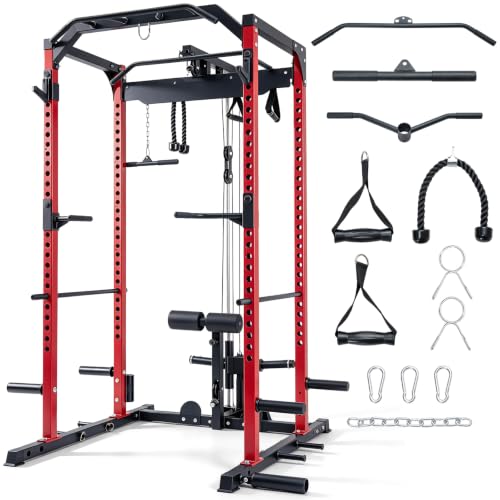
Costway Power Cage with Cable Crossover System and Leg Hold-down
ASIN B0HMK297R7 • $441.96 • Sold by COSTWAY-AU on Amazon AU
The Costway power cage with a cable crossover system, model CCWER38987PS+, costs $442 at time of writing, sold by COSTWAY-AU, an Australian storefront that passed our AU retail check, and returns #1 in Strength Training Power Cages and #2,939 overall on Amazon AU when I checked, the best category and overall rank of the five. It's a full four-post cage with a pull-up bar, dip bars, an adjustable leg hold-down, band pegs and a landmine, plus a dual-track pulley station on the back. The listing weight works out to about 70kg, and the listing states a 900kg static weight capacity on 5 by 5cm steel tubes. It's the heaviest of the three full cages by listing weight.
The listing names solid safety bars and J-hooks with 27 adjustable positions, and a 1:1 pulley ratio on 7-strand steel cables, so the plate you load is the weight you pull. The box includes a lat pulldown bar, a cable bar, a T-bar row handle, a tricep rope, two handles, snap hooks, spring clips and a chain, and the cage base is stated at 135 by 112cm. Barbell and plates aren't included. A Goplus cage under a different listing carries a matching part number and the same feature text, which is why it isn't a separate pick here. No warranty is stated on the listing, so keep the order details.
This is the one for a garage with room to walk around a cage, where one frame covering squats, bench, pull-ups, dips and cable rows makes more sense than three machines. Check the cables and pulleys every few months for fraying and flat spots, keep the bolts tight, and give it a solid floor, since a loaded cable station pulls on the frame differently to a bar on the hooks. Keep the cable station's pins and snap hooks in a tray rather than on the floor, where they get kicked under the rack, and wipe the cables down when you check them. It's a lot of rack for a home gym, so measure twice, including the space behind it for the pulley weights.
Honest caveats: The 900kg figure is static capacity, not a rating for a bar dropped onto the safeties. No warranty is stated. The cable station adds cables and pulleys that wear and need checking. Plates and barbell aren't included. It needs floor space behind it for the cable station as well as either side.
Best for: A full cage plus cable station in one frame, with room to spare.
Type: Full cage with cable crossover • Steel: 5 x 5cm tube (stated) • Capacity: 900kg static (stated) • Positions: 27 for J-hooks and safeties • Base: 135 x 112cm (stated) • Cables: 7-strand steel, 1:1 ratio • Model: CCWER38987PS+ • Seller: COSTWAY-AU • Rank: #1 in Strength Training Power Cages (Amazon AU)
View on Amazon AU
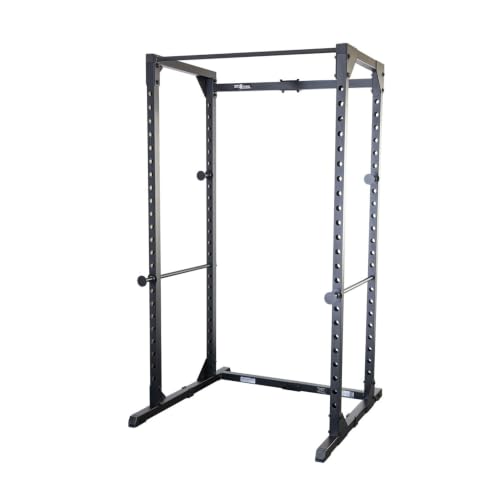
Best Fitness Power Rack BFPR100, Red
ASIN B00HAUU3KU • $469.42 • Sold by Best Fitness Australia on Amazon AU
The Best Fitness power rack, model BFPR100 in red, costs $469 at time of writing, sold by Best Fitness Australia, an Australian storefront that passed our AU retail check, and returns #10 in Strength Training Power Cages and #68,879 overall on Amazon AU when I checked. The listing's brand field is Body-Solid, which makes the Best Fitness line. It's a plain four-post cage with no cable station or extras, and the listing states a 14 gauge 2 by 2 inch steel mainframe, a 227kg capacity and dimensions of 119 wide by 114 long by 211cm high. The listing weight works out to about 50kg. Best Fitness Australia also sells the Powerline half rack.
The listing names 23 positions spread 7.6cm apart, two adjustable lift-offs, its name for J-hooks, and full-length safety bars included, with a durable powder coat paint finish. It's the most compact full cage of the three, by stated footprint, and the only one of the five with a stated capacity that isn't described as static, which makes the 227kg figure a more useful number to plan around. At 211cm tall it should clear most standard ceilings, but measure yours for pull-ups. No warranty is stated on the listing, so keep the order details. Its 7.6cm spacing is the second-closest stated spacing of the five, after the Powerline's 5cm.
This is the one for a lifter who wants a simple, well-specified cage to squat and bench in, without paying for attachments they won't use. Keep the powder coat touched up where the lift-offs chip it, wipe chalk off the uprights after training, and check the bolts after the first week, since a new rack settles as it's loaded. A plain cage is also the easiest to add to later, with a bench, a dip attachment or lined J-hooks, and the red finish shows rust and chips early, which is no bad thing when you're keeping on top of them. Rubber flooring under the feet protects the paint where it meets the slab.
Honest caveats: No pull-up bar, dip bars or cable station are named on the listing. No warranty is stated. The 227kg capacity is lower than some marketing figures elsewhere, but it's stated plainly. The red finish is the only colour on this listing. Plates and barbell aren't included.
Best for: A plain, well-specified cage for squats and bench.
Type: Full power cage • Steel: 14 gauge 2 x 2in (stated) • Capacity: 227kg (stated) • Positions: 23, spaced 7.6cm • Size: 119 W x 114 L x 211 H cm • Safeties: Full-length bars, 2 lift-offs • Model: BFPR100 • Seller: Best Fitness Australia • Rank: #10 in Strength Training Power Cages (Amazon AU)
View on Amazon AU
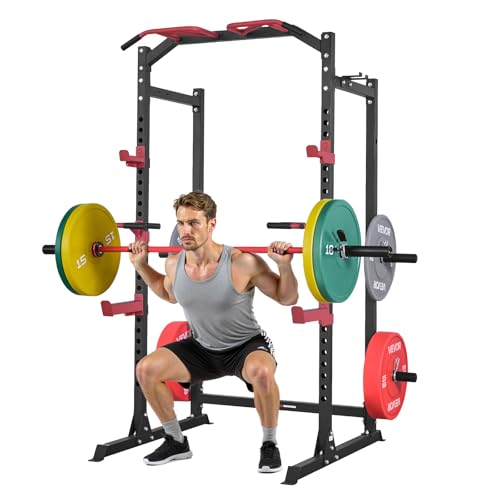
VEVOR Power Cage Rack with J-Hooks and Attachments
ASIN B0G7F8LY7M • $386.90 • Sold by VEVOR Store AU on Amazon AU
The VEVOR power cage costs $387 at time of writing, sold by VEVOR Store AU, an Australian storefront that passed our AU retail check, and returns #4 in Strength Training Power Cages and #19,095 overall on Amazon AU when I checked. It's the lowest priced of the five picks. It's a four-post cage in rust-resistant carbon steel, and the listing states a reinforced 2 by 2 inch main frame with 1.5mm wall thickness. The model field gives its size as 1500 by 1200 by 2120mm, and the listing weight works out to about 46kg, the lightest of the three full cages. VEVOR's Australian storefront sells it.
The listing names wide pull-up bars, dip stands, two J-hooks, two safety bars, a barbell storage hook, four 1-inch plate storage holders, four 2-inch sleeves and four 2-inch clamps, and 26 levels of height adjustment on the front uprights. That's a lot of attachments for the price. What it doesn't state is a load capacity of any kind, and its 1.5mm wall is thinner than the 14 gauge steel on the Best Fitness, so it's better suited to moderate loads than heavy work. Some feature lines make claims about fitness benefits, which I've left out. No warranty is stated. The model field is the only place the metric size appears, so use that when you measure.
This is the one for someone starting out who wants a full cage with pull-up and dip options without spending much, and who isn't putting big numbers on the bar yet. Load the plate storage to steady it, keep the bolts tight, and touch up chips around the J-hook holes before rust gets a start. If you do outgrow it, the frame is still useful for pull-ups, dips and lighter work, so it isn't wasted. Check the bolts more often than you would on a heavier cage, since thinner tube loosens fixings sooner, and set the safeties on every session rather than leaving them where they were last time.
Honest caveats: No load capacity is stated on the listing. The 1.5mm wall thickness is thinner than the other stated frames. No warranty is stated. Dimensions and weight are given in inches and pounds, with millimetres only in the model field. Some feature text is sales copy about fitness rather than a spec.
Best for: Starting out with a full cage and plenty of attachments.
Type: Full power cage • Steel: 2 x 2in, 1.5mm wall (stated) • Capacity: Not stated on the listing • Adjustment: 26 levels on the front uprights • Size: 1500 x 1200 x 2120mm (model field) • Extras: Pull-up bars, dips, plate sleeves • Seller: VEVOR Store AU • Rank: #4 in Strength Training Power Cages (Amazon AU)
View on Amazon AU
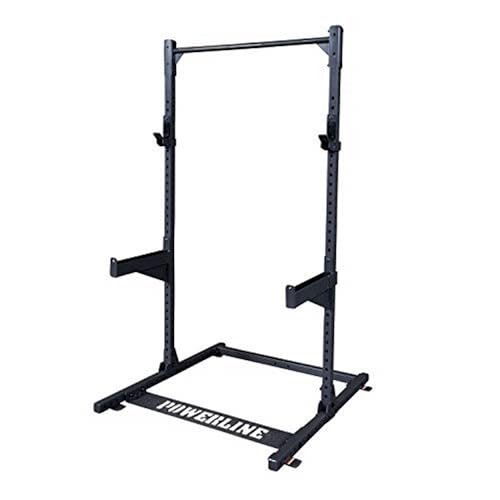
Powerline Half Power Rack PPR500, Black
ASIN B07NSNLMXF • $504.72 • Sold by Best Fitness Australia on Amazon AU
The Powerline half power rack, part PPR500 with model PPR500X, costs $505 at time of writing, sold by Best Fitness Australia, an Australian storefront that passed our AU retail check, and returns #62 in Weightlifting Racks and Cages and #153,409 overall on Amazon AU when I checked. The listing's brand field is Body-Solid, the maker of the Powerline range. It's a half rack, two main uprights with the lift in front, and the listing describes a space-saving design with a 2 by 2 inch heavy gauge steel frame. The warranty field states 10 years on the frame, the only stated warranty of the five. Best Fitness Australia also sells the BFPR100 cage.
The listing names J-cups and safety spotter arms included, 2 inch hole spacing, about 5cm, for both, and a frame you can customise and expand with attachments. That's a short listing. It doesn't state a load capacity, dimensions, a weight or whether it has a pull-up bar, so check Body-Solid's own spec sheet for those before you measure your room. The 2 inch hole spacing is the closest stated spacing of the five, which lets you set the spotter arms precisely, and that matters more on a half rack, where the arms only catch a bar that comes down roughly where they're set. A short listing isn't a bad sign on its own, but it does mean doing the homework yourself.
This is the one for a smaller room or a lifter who likes the open feel of a half rack, and for anyone who wants the frame warranty. Bolt it down or load the storage if you're lifting heavy, set the spotter arms every session, and keep the frame warranty paperwork with the order details. A half rack in front of a wall also leaves room behind it for plate storage, which keeps a small room tidy. Check the bolts after the first week and every few months after, and keep the spotter arms clean of chalk so their pins slide in and lock properly. It's the one I'd pick for a spare room where a full cage would feel cramped.
Honest caveats: The listing doesn't state a load capacity, dimensions, weight or whether a pull-up bar is included. A half rack's spotter arms only catch a bar where they're set. It's sold by the same storefront as the Best Fitness rack. Attachments are sold separately.
Best for: Smaller rooms and lifters who want a 10 year frame warranty.
Type: Half rack • Steel: 2 x 2in heavy gauge (stated) • Hole spacing: 2in, about 5cm (stated) • Safeties: J-cups and spotter arms included • Capacity: Not stated on the listing • Warranty: 10 years frame (listing) • Model: PPR500X • Seller: Best Fitness Australia • Rank: #62 in Weightlifting Racks & Cages (Amazon AU)
View on Amazon AU
CORTEX PR-4 Space Saver Folding Squat Power Rack
ASIN B0CT2JPDSC • $899.00 • Ships from Amazon AU
The CORTEX PR-4 folding squat power rack costs $899 at time of writing, sold by Amazon AU, and returns #20 in Weightlifting Racks and Cages and #67,925 overall on Amazon AU when I checked. It's the highest priced of the five and the only folding rack among them. Amazon AU sells it directly, which makes a return straightforward if a part is missing or damaged. The listing describes a foldable, space-saving design, compatibility with standard 6 foot and Olympic 7 foot barbells, and band pegs for resistance bands. The listing weight works out to about 105kg, which may be the shipped box rather than the rack itself. It's the only one of the five sold by Amazon AU directly.
That's the whole listing. It doesn't state tube size, load capacity, hole spacing, dimensions, a warranty, or whether J-hooks and safeties are in the box, and it doesn't say how the rack fixes to the wall. For a folding rack that's the detail that matters most, because the wall is part of the structure, so check CORTEX's own information for fixing type, stud spacing and what's included before you order. Taking a 6 foot bar is a nice touch, since a lot of garage gyms start with a shorter bar that won't sit across a full-width rack. A folding rack also needs space in front of the wall to swing out, so measure that as well as the ceiling.
This is the one for a single garage that still has to fit a car, where a rack that folds flat is the only way to have one at all. Fix it into solid masonry or timber studs with the right anchors, never plasterboard alone, and check every fixing after the first week of training and every few months after. Fold it away after every session so the car or the bikes have their space back, check the hinge pins for wear, and keep a note of which anchors you used in case you ever need to refit it. If the wall is a thin brick veneer or old fibro sheet, get advice from a builder before drilling, and use the fixings CORTEX specifies rather than whatever is in the shed.
Honest caveats: The listing states no tube size, capacity, hole spacing, dimensions, warranty or safeties, and doesn't describe its wall fixing. It's only as strong as the wall it's mounted to. It's the highest priced of the five. The listed weight may be the shipped box.
Best for: A single garage that still has to fit the car.
Type: Folding squat rack • Bars: 6ft standard and 7ft Olympic • Band pegs: Yes (stated) • Capacity: Not stated on the listing • Fixing: Not described on the listing • Safeties: Not stated on the listing • Seller: Amazon AU • Rank: #20 in Weightlifting Racks & Cages (Amazon AU)
View on Amazon AUSide-by-side comparison
What we see fail in the workshop: power racks
Racks don't come into the workshop, but the way steel gear wears is familiar from the equipment that does: fixings that loosen, cables that fray, coatings that chip and let rust in. The three faults below cover most racks that start to creak or wobble, and each one has a quick habit that pushes it back by years. A spanner, a rag and a tin of touch-up paint cover most of it.
Bolts and wall fixings that loosen
A bolted rack settles as it's loaded, and every rack a bar or a hard pull-up hits works its bolts a little looser. A rack that has started to creak, rock on the floor or shift when you rack a bar has usually lost tension on a few bolts at the base or the top crossmembers. On a folding wall rack the same thing happens to the wall fixings, and that's the more serious failure. Check every bolt with a spanner after the first week, then every few months, and re-check wall fixings any time the rack feels different.
Cables, pulleys and pins
On a rack with a cable station like the Costway, the cables and pulleys are the parts that wear. A cable that rubs on a pulley edge or runs over a flat-spotted pulley frays, and a frayed cable can let go under load. Check the full length of each cable every few months for broken strands, kinks or flattened sections, and replace one at the first sign of fraying. Pulleys should spin freely and quietly. Pins and snap hooks wear too, so replace one that has bent or no longer clips closed.
Chipped paint and rust
Powder coat is tough until it chips, and it chips in the same places on every rack: around the J-hook and safety holes, on the base where plates land and on the pull-up bar where hands grip. In a humid coastal garage, bare steel starts rusting within weeks. Touch up chips with matching paint as they appear, wipe chalk and sweat off after training, and put a light film of oil on bare pins and hook surfaces. Rust on a rack is mostly cosmetic early on, but left alone it gets into the holes and makes pins stick.
Decision tree: which one should you actually buy?
- Want a full cage with cables and room to spare? → The Costway power cage, with safety bars, J-hooks, dips, a landmine and a rear cable station.
- Want a plain, well-specified cage for squats and bench? → The Best Fitness BFPR100, with 14 gauge steel, 7.6cm hole spacing and a stated 227kg capacity.
- Starting out and want a full cage with pull-up and dip options? → The VEVOR power cage, keeping to moderate loads since no capacity is stated.
- Smaller room, or want a long frame warranty? → The Powerline PPR500 half rack, with 2 inch hole spacing and a 10 year frame warranty.
- Garage that still has to fit the car? → The CORTEX PR-4 folding rack, after checking its wall fixing and what's in the box.
- Phone took a fall off the rack while filming a set? → Bring it into our Erina workshop and we'll check the screen and the board and tell you what it needs before you spend anything.
Frequently asked questions
What's the difference between a power rack and a squat rack?
A power rack or power cage has four uprights and you lift inside it, with safety bars on both sides that catch the bar wherever you fail. A squat rack or half rack has two main uprights with the lift in front, and safety arms that stick out forward. Cages are more forgiving for training alone; half racks take less depth and feel more open. Folding racks mount to a wall and swing out when you train.
How high does my ceiling need to be for a power rack?
Measure before you buy. The racks here that state a height come in around 210 to 212cm, and many Australian rooms have ceilings around 2.4 metres, but garages and older homes can be lower. For pull-ups from the top bar you need room for your head above the bar, so add that to the rack height and compare. If it doesn't fit, you can still do pull-ups on a lower bar with bent knees.
Do I need to bolt a power rack to the floor?
A full cage with a wide base often stays put without bolting, especially with plates loaded on its storage. It's worth anchoring if it shifts during pull-ups, when you rack a bar hard, or if you use a cable station. Half racks move more and are worth bolting for heavy work. Folding racks must be fixed into solid masonry or timber studs, never plasterboard alone. None of these listings describe anchors in the box, so buy concrete anchors that suit your slab.
What does a 900kg rack rating actually mean?
A figure like the Costway's 900kg is a static capacity, meaning weight sitting still on the hooks or safeties. A bar dropped onto the safeties from a missed rep hits far harder than its own weight, so a static figure is a ceiling rather than a working number. Of these listings, the Best Fitness states 227kg without calling it static, and three don't state a capacity at all. Steel thickness and clean welds tell you as much as the number.
What gauge steel should a home power rack use?
Most home racks use 2 by 2 inch tube, about 5 by 5cm. A lower gauge number means thicker steel, so 14 gauge, about 1.9mm, is thicker than 16 gauge. Of these picks, the Best Fitness states 14 gauge, the VEVOR states 1.5mm wall thickness, and the Costway and Powerline give tube size without a wall thickness. Thicker steel flexes less under a heavy bar and holds bolts and pins more securely over years of use.
How do I stop a power rack rusting in the garage?
Touch up paint chips as soon as they appear, especially around the J-hook holes, the base where plates land and the pull-up bar. Wipe chalk and sweat off the uprights after training, since both hold moisture against the steel. Put a light film of oil on bare pins and hook surfaces. In a humid coastal garage, airing it out on dry days helps, and rubber flooring under the rack keeps the feet off a damp slab.
Related buying guides
Phone took a fall in the gym?
Garage gyms are hard on phones: one balanced on the uprights to film a set, earbuds full of sweat, a speaker in the damp. If yours has a cracked screen, won't charge or sounds muffled, bring it into our Erina workshop and we'll tell you what it needs before you spend anything.
Visit our Erina workshop Book Online