Prices from Amazon AU, updated daily. Swipe or use the arrows for more.
Disclosure: This article contains affiliate links to amazon.com.au. If you buy through one of these links iFix may earn a small commission at no extra cost to you. It doesn't change which products we recommend. We focus on what actually lasts based on 16 years of repair-shop experience.
Quick summary8 picks
- Entry PickWELLFIT Walking Pad 12% Auto Incline about$499.99
- Lifespan Fitness WalkingPad M2 Treadmill about$639
- WalkingPad C2 Compact Folding Treadmill about$699
- Lifespan Fitness Pursuit 4 Treadmill about$699
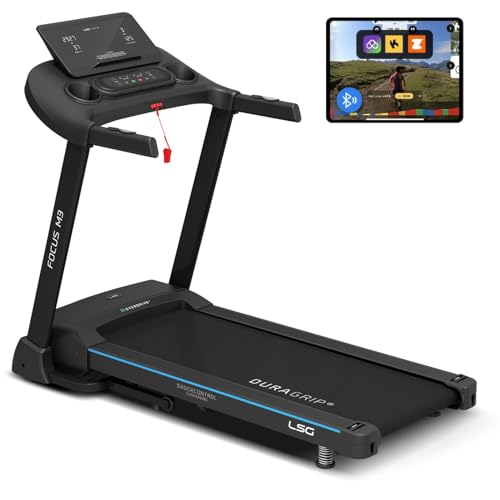
- LSG Focus M3 Treadmill with EverDrive® H4… about$748.04
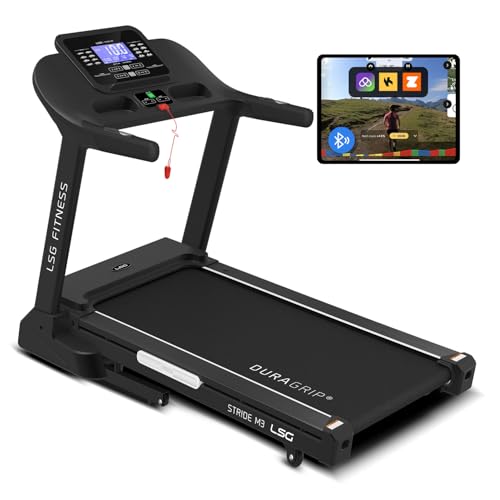
- LSG Stride M3 Treadmill with 4.0 CHP… about$852.67
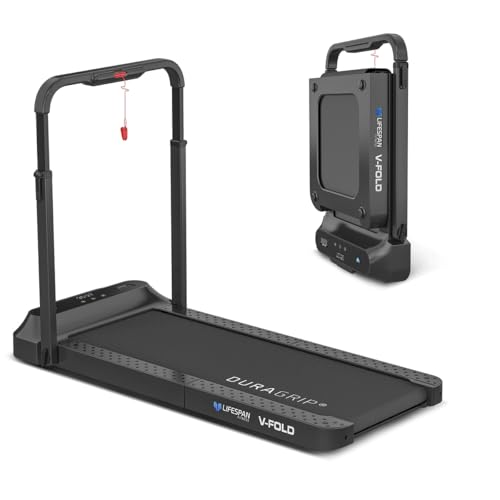
- Lifespan Fitness V-Fold Treadmill with… about$999
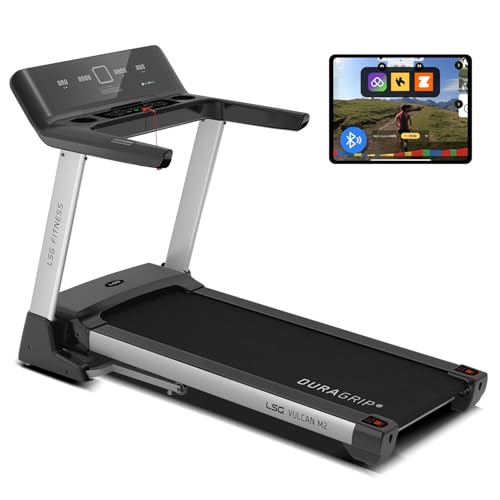
- Most PremiumLSG Vulcan M2 Treadmill with 4.0 CHP… about$1,042.05
Walking pad or treadmill: what you're actually buying
A walking pad is a treadmill with the handrails, console and most of the motor taken away. It's a low, flat deck with a belt, a small motor at the front and a remote or a small display, and it's built to slide under a standing desk or a couch when you're done. Top speed is usually a brisk walk or a slow jog. A full treadmill has a console, a bigger motor, a longer belt and usually incline, and it's built for running. They look like the same product on Amazon, they're priced in overlapping bands, and people buy the wrong one all the time.
The question that sorts it is what you're going to do on it. If it's walking at a desk for an hour or two a day while you answer emails, a walking pad is the right shape: quiet, low and easy to put away. If anyone in the house wants to run, even occasionally, buy a full treadmill with a proper motor and a longer belt, because running on a short walking-pad deck overloads the motor and you'll be stepping off the front. A couple of the picks here sit in between, with incline or a fold, and that's mostly where the extra money goes.
I've picked these the way I'd judge any motor-driven appliance: what the motor is rated for, how the belt and deck are built, what the listing actually tells you, and who's selling it in Australia if the control board fails in month thirteen. If you're setting up a walking desk, our guide to standing desks picked on their motors covers the other half of the setup, and the two are worth planning together.
Motor ratings and what CHP means
Treadmill motors are rated in horsepower, and the number on the box is often the peak, not what the motor can hold all day. Continuous horsepower (CHP) is the honest figure: what it'll sustain under load without overheating. Lifespan quotes the Pursuit 4 at 2.0 CHP with a brushless motor, which is a useful number. Plenty of walking pads quote a single HP figure without saying whether it's peak or continuous, and some, like the WELLFIT here, only describe the motor as small-commercial without giving a figure at all.
Why it matters: a walking-pad motor works hardest at low speed under a heavy load, which is exactly how it's used at a desk. A heavier person walking slowly for two hours puts more heat into a small motor and its controller than a lighter person jogging for twenty minutes. Motors that are underrated for that cook their windings or, more often, the motor controller board that drives them. Brushless motors usually run cooler and have no brushes to wear, which is why I'd pay a bit more for one when the listing confirms it.
If the listing doesn't state the motor rating, look it up on the manufacturer's Australian page or in the manual before you buy, along with the maximum user weight and the duty cycle (how long it's meant to run continuously). A walking pad rated for an hour of continuous use isn't going to enjoy a full eight-hour workday. None of these listings state a duty cycle, so that's a question for the seller, and it's the one I'd ask first if the plan is to walk through most of your working day.
Belt size, weight limits and your stride
Belt size is the spec people skip and then regret. The WELLFIT lists a 40 x 100cm belt and the Lifespan Pursuit 4 a 1150 x 440mm belt, while the WalkingPad and Lifespan V-Fold listings here don't give belt dimensions at all. For walking at a desk, around 40cm wide and 100cm long is workable for most adults. For running you want more length, because your stride gets longer as you speed up and a short deck means you're constantly correcting your position instead of just running.
Weight limits are the other number to read carefully. WELLFIT rates its walking pad to 160kg, which is high for this style and usually points to a sturdier frame. The other listings don't state a maximum user weight, so check the brand's page before you order, especially if anyone in the house is near the top of a typical limit. Being over the limit doesn't just risk the frame. It loads the belt, rollers and motor beyond what they're built for, and that's where early wear and controller faults start.
Cushioning matters on a deck you'll stand on for hours, partly because a deck with a bit of give is easier on the belt and rollers as well as more comfortable underfoot. Lifespan lists ShockControl cushioning on both of its treadmills here (the Basic version on the Pursuit 4), and the WalkingPad listings mention a comfortable walking platform without detail. Walking pads have no handrails, so if anyone using it wants something to hold, look at a full treadmill with fixed handrails and check the listing photos before you buy.
Folding, storage and your floor
Folding is the main reason people buy a walking pad, so check how it folds. The WalkingPad C2 uses a 180° fold, folding in half so it takes up less floor space, and Lifespan's V-Fold is built around a lightweight aluminium alloy frame. The WELLFIT folds flat to slide under a bed, sofa or desk. A folding hinge is another wear point, so when you're comparing, look for a positive lock on the hinge and check it every few weeks. A fold that doesn't lock fully will move under load and pull the belt off line.
Weight is the catch. Even compact walking pads are heavy enough that dragging them across a timber floor leaves marks, and full treadmills are generally a two-person lift. Most have small transport wheels at one end. Put a rubber treadmill mat underneath. It protects the floor, stops the unit creeping, cuts vibration through to the room below, and keeps carpet fibre and dust out of the motor bay, which is one of the less obvious reasons motors and boards fail early.
The floor itself matters too. Thick carpet under a walking pad blocks airflow to the motor compartment and lets the frame twist slightly, which drags the belt off track. A hard floor or a firm mat is better. If it's going in an upstairs apartment, a mat helps with noise transfer as well (more on that below). And don't park it in a damp garage, because rust on the roller bearings and corrosion on the control board come from humidity as much as from use, and coastal air speeds both up.
Power, powerboards and running cost
A treadmill motor pulls a surge when it starts and when you step on at speed, and the controller board sees every bit of it. Most treadmill manuals say to plug straight into a wall socket rather than a powerboard or an extension lead, and I'd follow that. A worn powerboard with loose contacts heats up under a motor load, and a voltage dip at the wrong moment can upset the controller. If you want surge protection elsewhere in the room, our surge powerboard guide explains what's worth having, but for a treadmill the wall socket comes first.
Check the plug and the lead when it arrives. Everything here is sold by Amazon AU or the brand's Australian store, so it should come with an Australian plug and RCM marking, but look anyway. Don't run the power lead under the deck or across a walkway where it gets trodden on, and don't let it get pinched in the folding hinge. A damaged lead under a vibrating treadmill is a real fire risk, and it's the kind of thing nobody notices until it smells hot.
Running cost is modest. None of these listings state a power draw, so here's the arithmetic with my assumption stated: if a walking pad draws around 300W at an easy walking pace, an hour costs about 10c at the AU average tariff of roughly 33c/kWh. Two hours a day across a working week is about $1. A full treadmill at running speed with incline draws more, so double that as a rough guide. Either way, the power bill isn't the thing to worry about. The belt and the board are, and our power savings guide covers where the real household kilowatts go.
Noise, neighbours and the standing desk
Every walking pad listing says quiet, and the WELLFIT says ultra-quiet, but none of them give a decibel figure, so treat it as a claim. Most of the noise you'll hear isn't the motor. It's your footfall on the deck and the belt running over the rollers, and in an apartment it's the vibration through the floor that bothers the people below. A rubber mat, decent shoes and a slower pace do more for noise than the motor ever will. If you're on calls while walking, a headset with a good microphone helps more than people expect.
For a walking desk, set the desk height with the walking pad in place, not before. You'll be several centimetres taller standing on the deck, and a desk set for standing on the floor will be too low. Get the screen up to eye height and keep the keyboard at elbow height. A monitor arm makes that easier, and a laptop on a stand works if you're only on it an hour at a time. Keep drinks off the desk edge above the deck, because a spill into the motor bay is a quick way to kill a control board.
Speed control is the other day-to-day thing. The walking pads here use a remote, buttons or an app, and the WalkingPad listings mention adaptive speed control without explaining it. On WalkingPad models that usually means a mode where the belt speeds up or slows down depending on where you stand on the deck, which is handy hands-free but can catch you out at a desk if you lean forward to type. Check the manual and know how to switch it to manual before you start working on it.
Belts, lubrication and the control board
The belt runs over a deck board, and the friction between the two is controlled by lubricant. When that lubricant dries out, friction goes up, the motor pulls more current to keep the belt moving, and the controller and motor run hotter. That's the slow way most treadmills die. Check the manual for the lubrication interval and the type of silicone lubricant it wants, buy a bottle when you buy the treadmill, and set a reminder. It's a two-minute job that most owners never do.
Belt tracking is the other one. A belt that wanders to one side rubs the frame, frays its edge and eventually tears. Most walking pads have two adjusting bolts at the back roller, and a quarter turn at a time is all it takes. Belt tension matters too: too loose and it slips under your foot, too tight and it loads the roller bearings and the motor. If you hear a rhythmic squeak or a grinding sound from the rollers, stop and look before it gets worse, because a seized roller bearing takes the belt with it.
When a walking pad does die, it's usually the control board, not the motor. Error codes at start-up, a belt that stutters, or a unit that powers on but won't move are mostly the board, a loose motor connector or the safety key sensor. Those are often repairable, and it's worth having one looked at before you assume the whole thing is scrap. Motor controllers are electronics like anything else, and our Erina workshop can usually tell you within a short look whether the board is worth fixing.
How I picked these five
I started with what Amazon AU sells between $400 and $1,500 and kept listings sold new by Amazon AU or a brand's own Australian store. Four of the five are sold and shipped by Amazon AU, and the WELLFIT comes from WELLFIT AU. I left out marketplace sellers with no Australian storefront, imports and anything renewed. I also left out a double-fold running treadmill whose listing data showed a UK size variant, because I couldn't confirm the plug from the listing.
The lead pick is the WELLFIT Walking Pad at $500 because it's what most people searching for a walking pad buy: it ranks #5 in Amazon AU's Treadmills category, it has 12% auto incline and a 160kg rating, and it's the most fully described listing of the walking pads. The Lifespan WalkingPad M2 at $639 and the WalkingPad C2 at $699 are the slim, fold-away options from Amazon AU. The Lifespan Pursuit 4 at $699 is the pick if anyone wants to run, and the Lifespan V-Fold at $999 is the lightweight folding treadmill.
Where the listings were thin, and a few of these are very thin, I've said so rather than filling the gaps. Before you buy any of them, check the motor rating, belt size, maximum user weight and warranty on the brand's Australian page. Lifespan publishes its warranty terms on the Pursuit 4 listing (5 years on the motor and frame, 12 months on parts), and that's the standard I'd hold the others to. In a house with kids, also check how the safety key works and keep it out of reach, because a moving belt and small fingers are a bad mix.
The 5 picks, $500 to $999
Prices are Amazon AU at time of writing (18 October 2026) and move week to week. Ranks are Amazon AU category sales ranks, checked the same day.

WELLFIT Walking Pad with 12% Auto Incline, Folding
ASIN B0CQXPSCLC • $499.99 • Sold by WELLFIT AU on Amazon AU
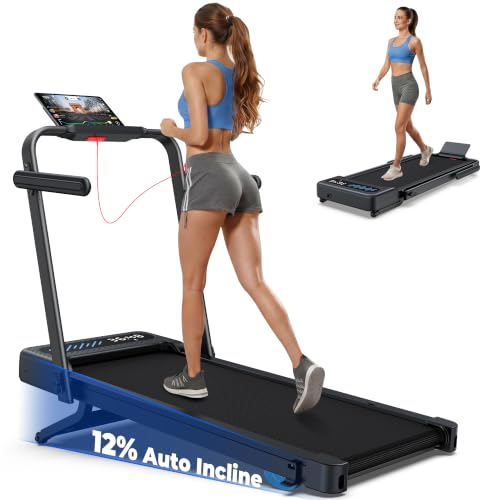
The WELLFIT Walking Pad is the best-selling walking pad on Amazon AU right now, ranking #5 in the Treadmills category, and at $500 from WELLFIT AU it's the one I'd start with for a walking desk. The headline feature is automatic incline up to 12%, which is unusual on a walking pad and lets you change how hard the walk feels without speeding up, handy when you're typing. The belt is listed at 40 x 100cm, wide enough for a natural walking stride, and the frame is rated for users up to 160kg, which is high for this style of machine and usually means a stiffer frame. The listing describes the motor as small-commercial but doesn't give a horsepower figure.
It folds flat and slides under a bed, sofa or desk, and the listing pitches it at home offices and apartments. WELLFIT describes the motor as ultra-quiet without giving a decibel figure, so I'd treat that as a claim and put a rubber mat underneath anyway. The listing says it suits walking, jogging and light running, which I'd read as brisk walking and the odd slow jog rather than training runs, because a walking-pad deck at this length isn't built for a full running stride. The warranty in the listing data is 12 months from the manufacturer, and the model number is TM037PRO, which is worth writing down for parts and support later.
Incline adds a lift motor and a second set of moving parts under the deck, so it's one more thing to fail than a flat walking pad, and the incline mechanism is worth keeping free of dust and fluff. The 12-month warranty is shorter than Lifespan's terms on the Pursuit 4, so register it and keep the receipt. Check the top speed and the continuous run time on WELLFIT's page before you buy, because neither is stated on the listing. Even so, incline, a 160kg rating and the most detailed listing of the walking pads here make it the sensible first choice for most desks.
Honest caveats: No motor horsepower, top speed, power draw or continuous run time on the listing, and the quiet claim has no decibel figure. Incline adds a lift mechanism that can wear. The warranty is 12 months, shorter than Lifespan's. The listing makes fitness claims I haven't repeated, so judge it on the hardware.
Best for: A walking desk where you want incline, a high weight rating and a deck that folds flat.
Type: Folding walking pad • Incline: Automatic, up to 12% • Belt: 40 x 100cm • Max user weight: 160kg • Motor: Small-commercial, rating not stated • Warranty: 12 months (manufacturer) • Model: TM037PRO • Seller: WELLFIT AU • Rank: #5 in Treadmills (Amazon AU)
View on Amazon AU
Lifespan Fitness WalkingPad M2 Walking Pad
ASIN B09QLTN6HC • $639.00 • Ships from Amazon AU
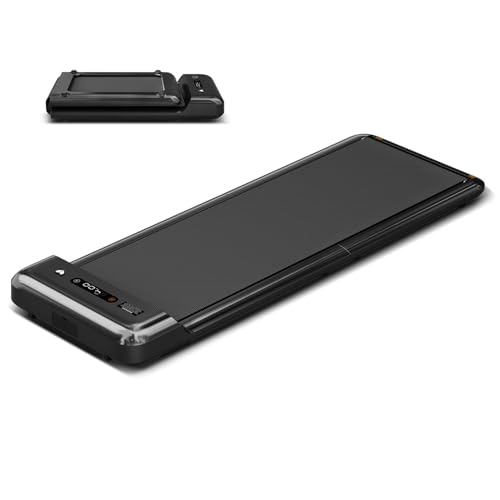
The WalkingPad M2 is sold here under the Lifespan Fitness name, and the listing carries both the Lifespan and WalkingPad brands. It's sold and shipped by Amazon AU at $639, so the warranty claim and any return go through Amazon's Australian store. It's a slim, minimal walking pad: a flat deck with a bright LED panel built into it, made with what the listing calls IML manufacturing (in-mould labelling, a way of printing the graphics into the plastic so they don't wear off). It ranks #59 in Amazon AU's Treadmills category and #10 in Home Gym Systems at the time of writing, which suggests it's been a steady seller for a while rather than a brand-new listing chasing reviews.
The honest problem with this listing is how little it says. The bullet points cover durability, a lightweight structure, a comfortable walking platform and a 'safe and silent design', and that's about it. There's no motor rating, no belt size, no top speed, no maximum user weight and no warranty term in the listing data. The model number is LFTM-WPADM2, which is what you'll want when you look it up on Lifespan's Australian site, and you should, because those are exactly the numbers that decide whether it suits a full workday at your desk. Being sold by Amazon AU does make a return simple if it turns out not to suit you.
Where it makes sense is a small apartment or home office where a low, slim deck with no handrails is the whole point, and where you'll walk at an easy pace for an hour or two at a time. It costs more than the WELLFIT without the incline or the published weight rating, so I'd only choose it over that one if you prefer the slimmer WalkingPad design or want Lifespan's local support. Ask Lifespan about the continuous run time in particular. Look up the specs first and buy it with your eyes open.
Honest caveats: Very thin listing: motor rating, belt size, top speed, maximum user weight, power draw and warranty aren't stated. No incline and no handrails. Look up model LFTM-WPADM2 on Lifespan's Australian site before you buy and compare it against the WELLFIT's published figures.
Best for: Small spaces that want a slim, low walking pad from an Australian distributor.
Type: Walking pad • Display: LED panel in the deck • Motor: Not stated on the listing • Belt size: Not stated on the listing • Max user weight: Not stated on the listing • Model: LFTM-WPADM2 • Seller: Amazon AU • Rank: #59 in Treadmills (Amazon AU)
View on Amazon AU
WalkingPad C2 Compact Folding Walking Pad
ASIN B09D7JGHLD • $699.00 • Ships from Amazon AU
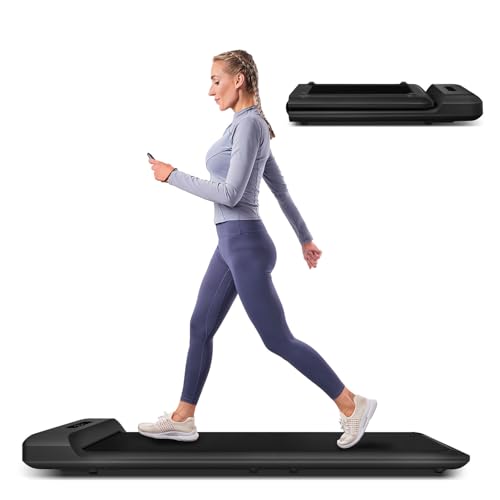
The C2 is WalkingPad's folding walking pad, sold and shipped by Amazon AU at $699, and its party trick is the 180° fold. The deck folds in half, so it takes up much less floor space when it's put away and stands or slides into a cupboard, under a bed or behind a door. For a small apartment where the walking pad has to disappear every evening, that's the feature that matters. The listing describes it as 'slimmer than slim', which is marketing, but the folded footprint is real and it's the reason to pick this over a flat walking pad of a similar size. It ranks #128 in Amazon AU's Treadmills category at the time of writing.
Like the M2, the listing is thin. You get the fold, a slim design, adaptive speed control, a comfortable walking platform and a 'safe and silent design', with no motor rating, belt size, top speed or weight limit in the listing data. The model number is KWTM-C2BK. Adaptive speed control isn't explained on the listing; on WalkingPad models it usually refers to a mode where the belt speeds up or slows down depending on where you stand, which some people love and others switch off on day one. Find out how to set it to manual before you put it under a desk where you'll be leaning toward a keyboard.
The fold is also the part I'd watch over time. A folding hinge on a walking deck takes a load with every step, and a hinge that's starting to loosen will creak, flex and pull the belt off track. Check the hinge lock every few weeks, keep fluff out of the fold, and don't fold it while the belt or deck is wet from a freshly mopped floor. Do that and the C2 is a tidy, sensible machine for small spaces, as long as you've confirmed the specs suit you. It's the one I'd pick for a studio or a shared living room.
Honest caveats: Thin listing: no motor rating, belt size, top speed, user weight limit or warranty term stated. The folding hinge is an extra wear point. Adaptive speed control isn't explained on the listing, so learn how to switch to manual. It's the same price as the Lifespan Pursuit 4, which is a far more capable machine if you have room.
Best for: Studios and shared living rooms where the walking pad has to fold away every day.
Type: Folding walking pad • Fold: 180°, folds in half • Speed control: Adaptive speed control (per listing) • Motor: Not stated on the listing • Belt size: Not stated on the listing • Model: KWTM-C2BK • Seller: Amazon AU • Rank: #128 in Treadmills (Amazon AU)
View on Amazon AU
Lifespan Fitness Pursuit 4 Treadmill, 2.0 CHP Brushless
ASIN B0FMFKHVK4 • $699.00 • Ships from Amazon AU
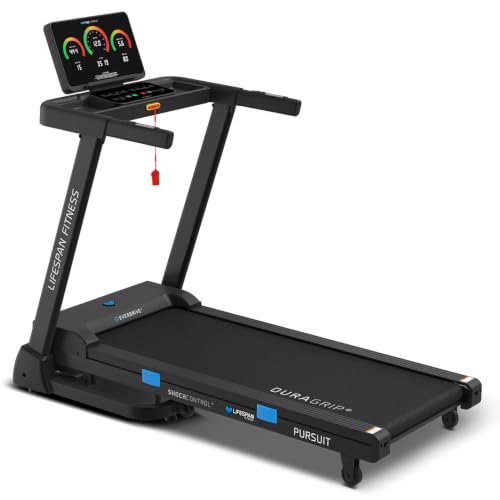
The Pursuit 4 is the pick if anyone in the house wants to run. It's a full treadmill rather than a walking pad, sold by Amazon AU at $699, and it's the best-documented listing here. Speed runs from 0.8 to 14km/h, the motor is listed as a 2.0 CHP EverDrive H2X brushless unit, and the incline has 15 automatic levels up to a maximum of 6.3°. The running surface is a DuraGrip AS belt at 1150 x 440mm, longer and wider than the walking pads, so there's room for a running stride. Cushioning is Lifespan's ShockControl Basic system. It ranks #44 in Amazon AU's Treadmills category at the time of writing.
The motor spec is what I like most. A continuous rating tells you what it'll hold through long sessions, which is the honest number, and brushless motors run cooler and have no carbon brushes to wear out. That matters for the motor controller too, because a cooler motor pulling steadier current is easier on the board that drives it. The warranty terms are on the listing as well: 5 years on the motor, 5 years on the frame and 12 months on parts. That's the kind of warranty that tells you the brand expects the motor and frame to last, and parts cover is where the board and belt sit, so register it on day one.
The trade-off is size. It's a full-size treadmill with a 1150mm running surface, so it won't slide under a desk and it needs a clear run behind it for safety. Check the folded and unfolded dimensions and the maximum user weight on Lifespan's site against your room before you order, because they aren't in the listing text. If it's purely for walking at a desk, a walking pad suits better. If it's for running or incline walking, the Pursuit 4 gives you far more machine for the same money as the C2. Plug it straight into a wall socket, as with any treadmill.
Honest caveats: Not a walking pad: it's a full-size treadmill that won't fit under a desk. Dimensions and maximum user weight aren't in the listing text, so check them on Lifespan's site. Parts warranty is 12 months, so the board and belt are only covered for the first year. ShockControl here is the Basic version.
Best for: Households where someone wants to run or walk on an incline, with room for a full treadmill.
Type: Full treadmill • Speed: 0.8 to 14km/h • Motor: 2.0 CHP EverDrive H2X brushless • Incline: 15 auto levels, max 6.3° • Belt: 1150 x 440mm DuraGrip AS • Cushioning: ShockControl Basic • Warranty: 5 years motor and frame, 12 months parts • Seller: Amazon AU • Rank: #44 in Treadmills (Amazon AU)
View on Amazon AU
Lifespan Fitness V-Fold Treadmill with SmartStride
ASIN B09FNTKMLR • $999.00 • Ships from Amazon AU
The V-Fold with SmartStride is Lifespan's lightweight folding treadmill, sold by Amazon AU at $999, and it's built for people who want something more than a walking pad but still need it to fold away. The frame is aluminium alloy, which the listing credits with its strength and capacity while keeping weight down, and it has Lifespan's ShockControl cushioning system. The listing also names adaptive speed control and describes the design as sleek and thin. SmartStride is in the product name, but the listing doesn't explain what it does, so ask Lifespan before you count on it. It ranks #136 in Amazon AU's Treadmills category and #37 in Home Gym Systems at the time of writing.
Here's the problem at $999: the listing doesn't give a motor rating, top speed, belt size, incline, maximum user weight or warranty term. For the most expensive pick on this list, that's a lot to take on trust from a listing alone, and it's why it's last rather than first. Lifespan is an Australian brand with published warranty terms on other models, including the Pursuit 4's 5 years on motor and frame, so the information exists. Get it from Lifespan's Australian site before you order, and compare the motor and belt figures against the Pursuit 4, which costs $300 less. If the V-Fold's numbers don't beat it, buy the Pursuit 4 instead. The listing photos are worth a close look too.
Where the V-Fold makes sense is a home where the treadmill has to fold away every day and lightness matters, an upstairs room, say, or a household where one person needs to move it alone. An aluminium frame doesn't rust the way a painted steel frame can in a humid garage, which is worth something on the coast. Treat the fold as a wear point like any other, check the lock regularly, and keep the deck lubricated as the manual says. Buying it from Amazon AU keeps a return simple if the specs disappoint.
Honest caveats: Thin listing for the price: motor rating, speed range, belt size, incline, user weight limit and warranty aren't stated. SmartStride isn't explained. The Pursuit 4 costs $300 less and publishes its specs, so compare before you buy. The fold adds a hinge to maintain.
Best for: Homes that need a light, folding treadmill one person can move and store.
Type: Folding treadmill • Frame: Aluminium alloy • Cushioning: ShockControl system • Speed control: Adaptive (per listing) • Motor: Not stated on the listing • Warranty: Not stated on the listing • Seller: Amazon AU • Rank: #136 in Treadmills (Amazon AU)
View on Amazon AUSide-by-side comparison
What we see fail in the workshop: walking pads and treadmills
Walking pads and treadmills are motor controllers with a belt on top, and most of the failures come from heat, friction and power rather than the motor wearing out. These are the three faults I'd want every owner to know about, because each one gives you a warning first and each one costs less to sort out early than after it's taken something else with it.
Control boards that cook
The motor controller board switches a lot of current, and it lives in a small, hot compartment at the front of the deck. Dry belt lubricant, an overloaded motor, dust and carpet fibre blocking the vents, and a powerboard with a bad contact all push more heat or more electrical stress into it. The first signs are error codes at start-up, a belt that surges or stutters, or a unit that resets mid-walk. Often it's a single failed component or a burnt connector rather than the whole board, so get it checked before you buy a replacement deck.
Belts that track off and fray
A belt that wanders rubs the side rail, frays its edge and eventually splits. Folding hinges that have loosened, an unlevel floor and thick carpet all twist the frame enough to pull the belt off line. The fix is usually a quarter turn on the rear roller bolts and a firmer surface underneath. A belt that's already frayed or glazed underneath needs replacing, and a dry belt also loads the motor and board, so lubricate it as the manual says when you adjust it, not months later. Run it slowly for a minute after any adjustment and watch the belt settle centrally before you walk on it properly.
Power leads, plugs and the safety key
The power lead runs near moving parts, and on folding models it can get pinched in the hinge or crushed under the deck. A damaged lead under a vibrating treadmill heats at the damage point. Check it every few weeks. Units that power on but won't start are very often the safety key or its magnetic sensor, which gets knocked out of place or loses its magnet. It's a small part, so look there before you assume the motor or board has gone, and keep the key away from kids.
Decision tree: which one should you actually buy?
- Walking at a standing desk for an hour or two a day? → The WELLFIT Walking Pad at $500: 12% incline, a 40 x 100cm belt and a 160kg rating.
- Tiny apartment and it has to fold away every night? → The WalkingPad C2 at $699 folds in half, from Amazon AU.
- Want the slimmest, simplest deck from an Australian distributor? → The Lifespan WalkingPad M2 at $639, once you've checked the specs on Lifespan's site.
- Anyone in the house wants to run? → The Lifespan Pursuit 4 at $699, with a 2.0 CHP brushless motor, 14km/h top speed and a 5-year motor warranty.
- Need a full treadmill that one person can fold and move? → The Lifespan V-Fold at $999, but compare its specs against the Pursuit 4 before you pay the extra.
- Yours shows error codes, stutters or won't start? → Check the safety key and the power lead, then bring it to our Erina workshop and we'll tell you whether the board is worth fixing before you spend anything.
Frequently asked questions
Can I run on a walking pad?
Most walking pads are built for walking and the odd slow jog, not running. The deck is short, so a running stride carries you toward the front edge, and the small motor and controller are working well past what they're designed for. Some listings mention light running, but I'd read that as a brief jog at most. If anyone in the house wants to run regularly, buy a full treadmill with a continuous horsepower rating and a longer belt, like the Lifespan Pursuit 4 with its 1150mm running surface.
Can I plug a walking pad into a powerboard?
Most treadmill manuals say not to, and I agree. The motor draws a surge at start-up and every time you step on at speed, and a worn powerboard or extension lead with loose contacts can heat up under that load. A voltage dip can also upset the controller board. Plug it straight into a wall socket, keep the lead out from under the deck and away from the folding hinge, and check the plug and lead for damage every few weeks.
How much does a walking pad cost to run?
Not much. None of these listings state a power draw, so this uses an assumption: if a walking pad draws about 300W at an easy walking pace, an hour costs roughly 10c at the AU average tariff of about 33c per kWh. Two hours a day across a working week comes to about a dollar. A full treadmill at running speed with incline draws more, so roughly double that as a guide. Belt lubricant and a replacement belt every few years will cost you more than the power.
How often should I lubricate the belt?
Follow the manual for your model, because intervals vary with use and belt type, and use the silicone lubricant it specifies rather than household oils or sprays. As a rule of thumb, a walking pad used for a couple of hours every workday needs checking far more often than one used twice a week. A dry belt raises friction, which makes the motor pull more current and pushes heat into the controller board. That's one of the most common reasons treadmills fail early, and it's easily avoided.
Will a walking pad annoy the neighbours below?
It can. The motor is rarely the problem. Footfall and vibration through the floor are what carry, especially in older apartments with timber floors. A dense rubber treadmill mat, a slower pace and soft-soled shoes make the biggest difference. Avoid walking early in the morning or late at night until you know how much carries downstairs. None of the listings here give a decibel figure, so treat every quiet claim as marketing until you've tried it in your own space.
What usually breaks on a walking pad?
Mostly the control board, the belt and the bits around them. Boards fail from heat, dust and power problems, belts fray when they track off to one side, and folding hinges loosen and pull the belt off line. Safety key sensors and damaged power leads cause a lot of 'won't start' faults too. Motors themselves are generally the last thing to go. Many of these faults are repairable, so it's worth having a dead unit checked before you replace it.
Related buying guides
Walking pad stuttering or dead? Get the board checked first
Most walking pads and treadmills that stop working have a control board fault, a loose motor connector, a damaged lead or a safety key sensor problem, not a dead motor. Bring yours to our Erina workshop and we'll check the board, wiring and safety circuit, then tell you what it needs and what it'll cost before you spend anything on a new one.
Visit our Erina workshop Book Online