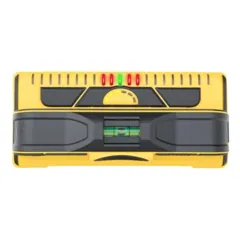
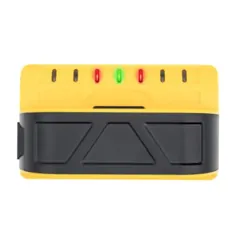
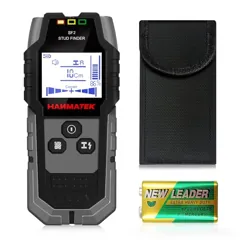
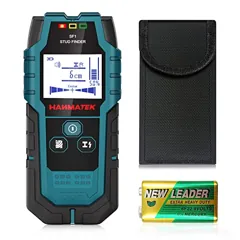
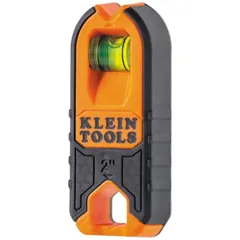
Franklin Sensors ProSensor MAX 13-Sensor Stud Finder
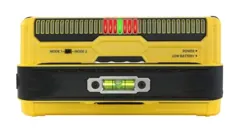
Two Scan Modes13 sensors and a second deep scan mode for thick walls, plaster and OSB, quoted up to 6.4 cm, with a built-in level.
Buying guide · Erina NSW
Multi-sensor stud finders that show the whole stud,
Wall scanners with live AC wire detection,
Magnetic finders that need no batteries.
By Ben Nash·16 years·★ 4.9 across 152 Google reviews
Multi-sensor and live wire models from $40

13 sensors and a second deep scan mode for thick walls, plaster and OSB, quoted up to 6.4 cm, with a built-in level.

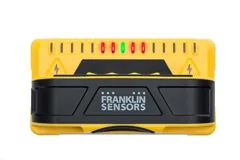
13 sensors light up the whole stud, with a live wire detector, a bubble level and a pencil caddy. Deep scan is always on, up to 4.3 cm.

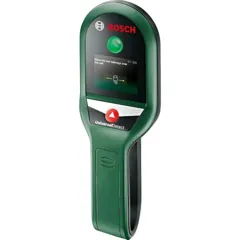
Finds wood studs, live cables and metal at three depth settings, with a colour touchscreen that walks you through each scan.

A 9-sensor ProSensor with a live wire detector, showing single and double studs at up to 3.8 cm through plasterboard.

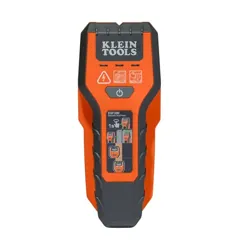
Six scan modes for wood and metal studs, ferrous and copper metal and live AC wires, with an LCD, a beep and a built-in battery.

The compact ProSensor: 7 sensors show the whole stud through plasterboard up to 3.8 cm, with no calibration.

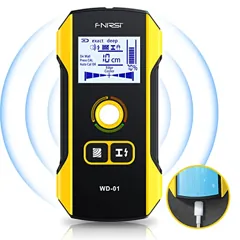
Five modes, from 20 mm exact and 38 mm deep stud scans to AC wires at 50 mm and ferrous metal at 12 cm, with an LCD readout.

Scans for wood, ferrous and non-ferrous metal and AC cable, with a large LCD and self-calibration from the metal button.
Price labels compare today's Amazon AU price with the lowest iFix has tracked for that listing since we started checking it, not an all-time low. A label appears after 14 days of history. Prices change through the day, and Amazon's checkout price is the one that counts. See every tracked price drop.
Keep scrolling for 6 stud finders under $40⌄Electronic, magnetic and metal scanners

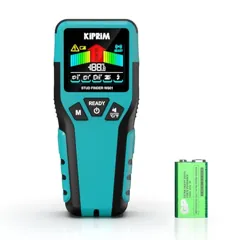
Finds wood, metal and live AC wires in one pass with no mode switching, and lights up the stud width and edges.

A rare-earth magnet finds the screws in wood studs and metal studs, with a bubble vial and notches for marking.

A 5-in-1 scanner for wood, metal and live AC wires, with three depth modes, an LCD and a beep warning.

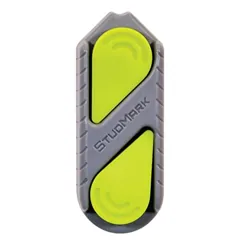
A magnetic finder that sticks to the screw in the stud, plus two removable magnet markers to mark up to 3 studs.

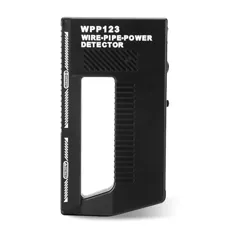
A handheld metal detector for pipes, rebar, screws and AC power lines, with adjustable sensitivity and a stronger alert as you get closer.

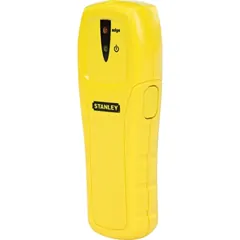
A basic electronic stud sensor that finds wood and metal studs up to 19 mm deep, with a 3-stage LED readout.
Price labels compare today's Amazon AU price with the lowest iFix has tracked for that listing since we started checking it, not an all-time low. A label appears after 14 days of history. Prices change through the day, and Amazon's checkout price is the one that counts. See every tracked price drop.
We earn a small commission when you buy through these Amazon links. It doesn't change the price you pay or which products we pick.
A stud finder tells you where the frame is before you drill. Many also flag live AC wires, but treat that as a warning, not a clearance: turn the power off at the switchboard before drilling near a power point or switch.
Many here have an AC mode, but it flags live wires (the FNIRSI listing says live, unshielded wires) and can miss cable that is switched off or shielded. Use it as a warning, turn the circuit off at the switchboard before drilling near power points, and leave any wiring work to a licensed electrician.
Electronic finders sense the stud through the wall and many also scan for metal and AC wires. Magnetic finders like the StudMark only find the screws or nails in a stud, but need no batteries and are very simple to use.
Most listings here are written for plasterboard, plaster, wood and OSB walls. Through brick or concrete, use the metal mode to find rebar and pipes, and expect wood-stud modes not to apply.
The usual cause is calibrating over a stud, nail or wire. HANMATEK says to calibrate on a clear patch of wall. Franklin’s ProSensor models need no calibration, so you can start anywhere.
It depends on the model and mode. The ProSensor MAX quotes up to 6.4 cm in its deep mode, the M210 up to 4.3 cm and the Stanley S50 up to 19 mm. Deeper modes help with double layers of plasterboard.
For a wall-mounted TV you want the bracket screwed into the frame, not just the plasterboard. A stud finder shows where the studs are, and its wire mode adds a check for cables before you drill.