Prices from Amazon AU, updated daily. Swipe or use the arrows for more.
Disclosure: This article contains affiliate links to amazon.com.au. If you buy through one of these links iFix may earn a small commission at no extra cost to you. It doesn't change which products we recommend. We focus on what actually lasts based on 16 years of repair-shop experience.
Quick summary6 picks
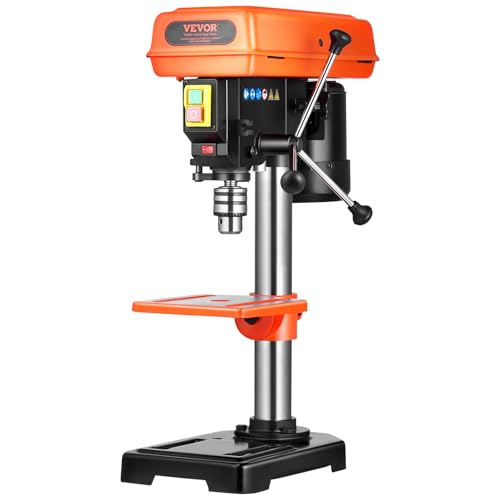
- Entry PickVEVOR 203.2mm Benchtop Drill Press about$170.90500W.
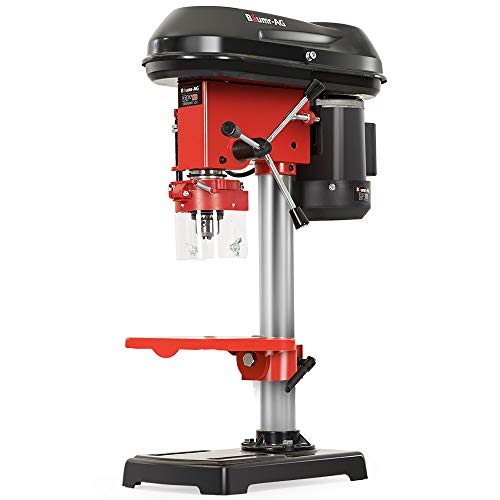
- Baumr-AG DP13II 420W Variable Speed… about$179420W.
- Baumr-AG DP15 600W 10 Inch Bench Drill Press about$26910" screen, 600W.
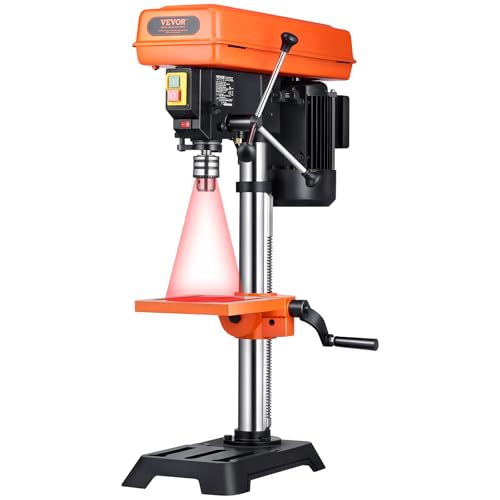
- VEVOR 254 mm Benchtop Drill Press about$296.90550W.
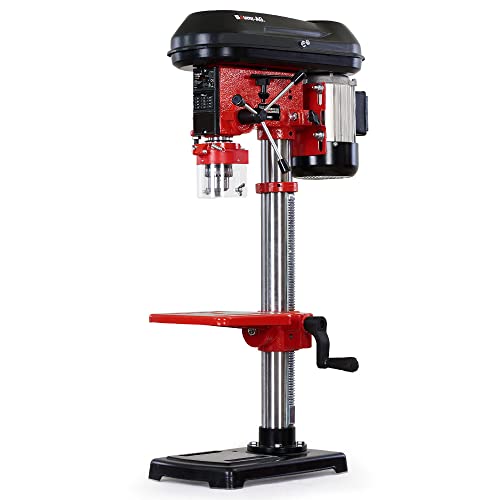
- Baumr-AG DP17 600W 12-Inch Pedestal Drill… about$30912" screen, 600W.
- Most PremiumBosch Home & Garden 710 Watt Electric Bench… about$386.82
What a drill press does that a hand drill can't
A drill press holds the drill dead square to the table and lowers it on a lever, so every hole goes in straight, to the same depth, at the speed you've set. That's the whole reason to own one. A hand drill relies on your wrist, and even a steady hand wanders a degree or two, which is enough to ruin a dowel joint, a hinge hole or a hole through steel that has to line up with a bolt on the other side.
It's also safer and easier on the bit for metal work. You clamp the job to the table, set a slow speed and feed the bit down with steady pressure, so the bit cuts instead of skating and snapping. For anyone drilling brackets, flat bar, angle iron or thick timber, a drill press turns a fiddly job into a routine one, and bits last longer because they aren't being rocked side to side.
It doesn't replace a cordless drill. You can't take a drill press to the job, and anything bigger than the table or taller than the gap under the chuck won't fit. Think of it as a second tool for the shed, the one you use when the hole has to be right. Most people who buy one end up wondering how they managed without it, mostly because they stop redrilling holes that came out on an angle.
The four picks here are all bench or pedestal machines for home workshops, sold by Amazon AU, from $179 to $387. They aren't trade machines and they're not built for drilling all day, every day. For brackets, jigs, furniture, the odd steel job and repairs around the house and farm, they're the right size, and they plug into a normal 10A power point.
Runout, the spec that decides hole accuracy
Runout is how far the tip of the bit wobbles off true as it spins. A little runout makes holes slightly oversize and rough, and a lot makes small bits snap and holes wander. It comes from the chuck, the arbor that holds the chuck, the spindle bearings and how well they've all been machined. It's the spec that matters most for accuracy, and none of the four listings here give a runout figure at all.
That's normal for home drill presses on Amazon AU, so you have to check it yourself when the machine arrives. Fit a straight, new bit or a short length of drill rod, spin it by hand and watch the tip against something fixed. Better still, borrow a dial indicator and measure it. If the wobble is obvious to the eye, the chuck may not be seated on its taper properly, and that's often fixable before you assume the spindle's bad.
The chuck on most of these presses is pushed onto a tapered arbor and held by friction. Clean both tapers with a rag before you fit the chuck, then seat it with a firm tap from a soft mallet or a block of timber. Dirt or a burr on the taper is the most common cause of bad runout on a new press, and it costs nothing to fix. A chuck that's knocked or dropped can also lose its accuracy, so treat it gently.
Chuck size and quill travel
Chuck size tells you the largest straight shank bit the chuck will grip. The Bosch PBD 40 and the Baumr-AG DP13II list 13mm chucks, and the Baumr-AG DP15 and DP17 list 16mm chucks. Most home drilling happens well under 13mm, and larger holes are usually cut with reduced-shank bits, hole saws or spade bits that fit a 13mm chuck anyway. A 16mm chuck mostly matters if you drill big holes in steel.
Quill travel is how far the chuck moves down when you pull the lever, and it decides how deep you can drill in one pass. The DP17 lists 80mm, the DP15 60mm and the DP13II 50mm. The Bosch listing doesn't state quill travel at all, which is a gap on a listing from a big brand. For drilling through thick timber or deep into a post, more travel saves raising the table halfway through and losing your alignment.
Swing is the third size to check. It's twice the distance from the centre of the chuck to the column, so it tells you how far from an edge you can drill. The DP17 lists a 12 inch swing and the DP15 a 10 inch swing, while the DP13II and Bosch listings don't state one. For most home jobs it doesn't matter much, but it's worth knowing before you try to drill the middle of a wide panel.
Belts, pulleys and speed changes
Most drill presses change speed by moving a belt between stepped pulleys under the top cover. It's simple, inexpensive to make and easy to fix, but it's a fiddle, so plenty of people leave the belt on one speed and drill everything too fast. That's the main reason bits burn out and holes in steel come out ragged. Big bits and metal need slow speeds, small bits and timber need fast ones, and the chart inside the cover tells you which.
The three Baumr-AG presses list 12 or 9 speed settings, which is the pulley-and-belt arrangement. The Bosch PBD 40 title says speed selection and digital display instead, which points to electronic speed control rather than moving belts, though the listing doesn't spell out how it works. If you change speed often, that's the main thing the Bosch's higher price buys.
Belts stretch and glaze over time, and a slipping belt shows up as the chuck slowing down or stalling under load while the motor keeps humming. Check the belt tension every so often, keep oil and grease off the belt, and replace it when it's cracked or shiny. On most presses there's a tension lever or a motor mount that slides, and it's a five minute job with the machine unplugged.
Motors, power points and running cost
The motors here are listed from 420W on the DP13II to 710W on the Bosch, so all of them sit well inside the 2,400W limit of a standard 10A Australian power point. Plug the press straight into the wall or a heavy-duty lead fully unrolled, and don't share a powerboard with a compressor or a heater. A thin, coiled extension lead drops the voltage and makes the motor run hot, especially when it's labouring through steel.
The Baumr-AG listings call their 600W motors brushless, and the DP13II's listing doesn't say. The Bosch listing doesn't describe its motor beyond the 710W rating. None of the four state duty cycle or motor protection, which is normal for home machines. If the motor gets too hot to keep your hand on, stop and let it cool, because that's how windings and switches fail.
Power use is tiny. If you assume the 710W Bosch runs flat out for a full hour, that's 0.71kWh, or about 23c at the AU average tariff of roughly 33c per kWh. Most home drilling sessions are a few minutes of motor time, so the power cost is a few cents. Bits, a decent vice and a set of clamps are the real running costs, and they matter far more to how well the press works.
Setting it up so it stays accurate
A drill press is top-heavy, and a bench machine that isn't bolted down can tip if you pull the lever hard on a big hole. Bolt the base to a solid stand or a heavy bench, or at least clamp it, and check the work table is square to the chuck with a square and a straight bit before you start. The Baumr-AG listings describe mountable bases, and the DP17 is sold as a pedestal machine, so plan where it'll live before it arrives.
Clamp the job every time. A bit that grabs in steel or sheet metal will spin the work around in an instant, and that's how hands get cut. A drill press vice for small parts and a pair of clamps for larger pieces are worth buying with the press. The Bosch listing includes a parallel guide and a clamp in the box, which is a handy start for repeat holes in timber.
Set the depth stop for repeat holes, use a sacrificial block of timber under the job so you're not drilling into the table, and use cutting fluid on steel. Tie back long hair and loose sleeves and keep gloves away from the spinning chuck, because a glove that catches pulls the hand in with it. Wear safety glasses, because swarf flies. Most of that is habit after the first week.
What wears out and how to make it last
The parts that wear on a home drill press are mostly the low-cost ones: the belt, the chuck key, the return spring on the quill and the switch. Keep the column and table lightly oiled so they don't rust in a damp shed, wipe swarf off after each job, and blow dust out of the motor vents now and then with the press unplugged. Fine metal dust in a motor is never a good thing.
The spindle bearings are the parts that decide how long the press stays accurate. If you hear a rumble or feel play when you wiggle the chuck sideways with the quill lowered, the bearings or the quill fit are wearing. On a press like these, bearings are usually a common size and not expensive, but replacing them is a careful job. Treat the press gently, use the right speed and don't hammer the chuck, and the bearings generally last a long time in home use.
Switches fail too. Most of these use a no-volt release switch, which turns the press off if the power drops and stops it starting again by itself when power comes back. That's a good safety feature, and the Baumr-AG listings call theirs dust protected. A switch that sticks, needs several presses or cuts out under load is worn or full of dust, and it's a part worth replacing early rather than putting up with.
How I picked these four
I searched Amazon AU for bench and pedestal drill presses between about $100 and $600, kept new listings sold by Amazon AU, and sorted by rank in the Drill Presses category. I left out magnetic drills, which are a different tool for steel fabrication, drill stands that hold a hand drill, and mini rotary tool stands. I also read each listing's model code and speed count against its title, and dropped a pedestal listing whose title and features gave different speed counts.
Three of the four are Baumr-AG, an Australian tool brand sold by Amazon AU, and the fourth is the Bosch PBD 40. The Bosch is #2 in Drill Presses at time of writing, the best rank of the four, and the Baumr-AG DP17 is close behind at #3. The DP15 and DP13II rank lower but cover the smaller bench sizes and the lowest price here. A few close contenders are in the extras below the picks.
Prices run from $179 to $387 at time of writing, and I've stuck to what each listing states. Several of them leave out runout, quill travel or swing, and I've said so on the cards rather than guessing. If you're also kitting out the shed with a mitre saw or a welder, the same rules apply: check the plug, clamp the work and keep the dust out of the motor. If a press motor or switch fails, electronics repairs on the Central Coast and our Erina workshop can tell you whether it's worth fixing.
The 4 picks, $179 to $387
Prices are Amazon AU at time of writing (2026-11-06) and move week to week. Ranks are Amazon AU category sales ranks, checked the same day.

Bosch PBD 40 710W Bench Drill Press, 13mm Chuck, Digital Display
ASIN B07J3D5YDT • $386.82 • Ships from Amazon AU
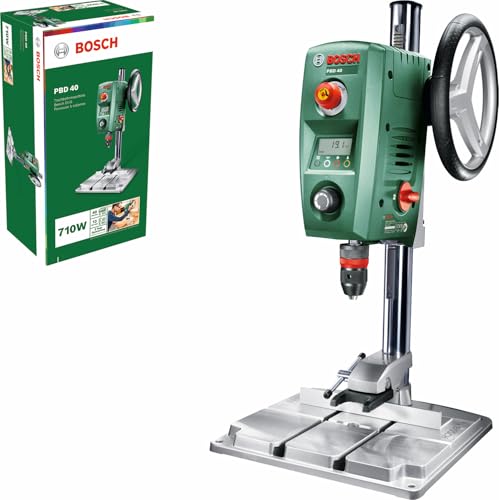
The Bosch PBD 40 is #2 in Amazon AU's Drill Presses category at time of writing, the best rank of the four picks. It's $387, sold and shipped by Amazon AU. The part number and model are both 0603B07040, the Bosch code for this model. It's a 710W bench drill press with a 13mm chuck, and the title lists a digital display and speed selection. A parallel guide and a clamp are included, according to the title. The listing gives an AU Plug size, which confirms it's the Australian version. It ranks #4,500 across the whole Amazon AU site, the best overall figure here. The listing colour is Bosch's usual green.
The listing is thin on detail for a Bosch, so a lot of the specs people look for aren't there. Quill travel, swing, speed range and table size aren't stated, and the features mostly list the country of origin and a soft grip. The title's speed selection and digital display point to electronic speed control rather than moving belts between pulleys, which is the main reason to pay more for it. It weighs about 13.2kg, according to the listing data. The warranty is listed as two years, plus another year if you register it online with MyBosch. That's the longest warranty stated on any pick here, and it's worth registering.
Look up quill travel and swing in Bosch's own manual before you buy if deep holes matter to you. Clean the chuck taper before fitting it, and check runout with a straight bit when it arrives. Bolt or clamp it down, because a light press can tip on a big hole. Keep swarf out of the display and controls. Register it for the extra year straight away. Keep the parallel guide and clamp with the press, because they make repeat holes in timber much quicker. For easy speed changes and the best rank here, it's the press I'd buy.
Honest caveats: Honest caveats: the listing doesn't state quill travel, swing, speed range or table size. It's the dearest pick. Its 13mm chuck is smaller than the 16mm Baumr-AG chucks. Runout isn't stated. At about 13.2kg it needs bolting or clamping down.
Best for: Someone who changes speeds often and wants a big-brand press with a three year warranty.
Motor: 710W • Chuck: 13mm • Speed control: Speed selection with digital display • Included: Parallel guide and clamp • Quill travel: Not stated on the listing • Plug: AU plug (listing size field) • Warranty: 2 years, plus 1 year with MyBosch registration • Seller: Amazon AU • Rank: #2 in Drill Presses (Amazon AU)
View on Amazon AU
Baumr-AG DP17 600W 12-Inch Pedestal Drill Press, 16mm Chuck
ASIN B0B686X5LZ • $309 • Ships from Amazon AU
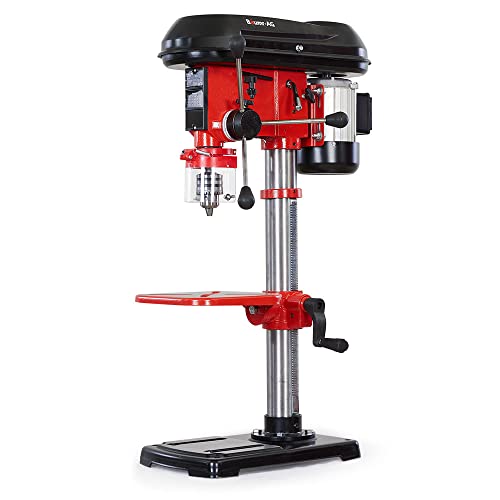
The Baumr-AG DP17 is #3 in Amazon AU's Drill Presses category at time of writing and ranks #14,797 across the whole site. It's $309, sold and shipped by Amazon AU. The part number and model are both DP17, matching the title. It's a 12 inch swing drill press with a 600W motor that the listing calls brushless, and 12 speed settings. It has a 16mm chuck with a removable guard and 80mm of quill travel, the most stated on any pick here. It's $78 less than the Bosch at time of writing, and it gives you the bigger chuck and the deepest stated travel. It's the best-ranked of the three Baumr-AG machines here.
The work table adjusts in height and tilts to 45 degrees, and the spindle feeds down on a rack and pinion with a depth measure. The switches are no-volt release types that the listing calls dust protected, and the handle is the usual three-spoke design. The title calls it a pedestal drill press, but the features describe a sturdy mountable base rather than a floor stand, so check the listing images for the column height before you plan the space. It weighs about 34kg, according to the listing data, which makes it the heaviest pick here. Warranty isn't stated on the listing. Box contents beyond the press aren't listed, so don't count on a vice or bits.
Plan on bolting it down, because 34kg on a long column is top-heavy. Clean the chuck taper before fitting it and check runout when it arrives. Change the belt for slow speeds on steel and big bits. Keep the column and table oiled in a damp shed. Look up the warranty on Baumr-AG's site. Lower the table rather than extending the quill to the limit for long work, because the quill's stiffest when it's not fully out. Check the belt tension after the first few hours, because new belts settle. Use a sacrificial block of timber under every job so the table stays clean. For deep holes and a 16mm chuck at a fair price, it's the one I'd buy.
Honest caveats: Honest caveats: warranty isn't stated. Runout isn't stated. The title says pedestal while the features describe a mountable base, so check the column height. Speed changes mean moving the belt. At about 34kg it needs two people and a solid mounting.
Best for: Deeper holes and bigger bits, with the most stated quill travel and a 16mm chuck.
Motor: 600W, listed as brushless • Chuck: 16mm, removable guard • Quill travel: 80mm • Swing: 12 inch • Speeds: 12 settings • Table: Height adjustable, tilts to 45 degrees • Weight: About 34kg • Seller: Amazon AU • Rank: #3 in Drill Presses (Amazon AU)
View on Amazon AU
Baumr-AG DP15 600W 10-Inch Bench Drill Press, 16mm Chuck
ASIN B0B6893VHQ • $269 • Ships from Amazon AU
The Baumr-AG DP15 is #14 in Amazon AU's Drill Presses category at time of writing and ranks #58,018 across the whole site. It's $269, sold and shipped by Amazon AU. The part number and model are both DP15, matching the title. It's the 10 inch swing bench version of the DP17, with the same 600W motor that the listing calls brushless and the same 12 speed settings. It keeps the 16mm chuck with a removable guard, but quill travel drops to 60mm. It's $40 less than the DP17 and a better fit for a smaller shed or a bench along the wall. Box contents beyond the press aren't listed on the page.
The table adjusts in height and tilts to 45 degrees, and the spindle feeds on a rack and pinion with a depth measure. It has the same dust protected no-volt release switches and three-spoke handle as the DP17, and a mountable base. It weighs about 22kg, according to the listing data, so it's still a solid machine but one person can usually lift it onto a bench. Runout, table size and warranty aren't stated on the listing. If you drill mostly timber and smaller steel parts, 60mm of travel covers most jobs. The 16mm chuck is the main step up over the DP13II, along with the three extra speed settings.
Bolt it to the bench, and check the table's square to the chuck before the first job. Clean the chuck taper and check runout with a straight bit. Use the slow belt settings on steel and keep cutting fluid handy. Wipe the swarf off and oil the column after each session. Look up the warranty on Baumr-AG's site. Check the belt tension after the first few hours, because new belts settle and start to slip. Keep the chuck key on a string or a magnet near the press, and never leave it in the chuck. Use a sacrificial block under the job so you don't drill into the table. For a mid-size bench press with a 16mm chuck, it's the one I'd buy.
Honest caveats: Honest caveats: runout, table size and warranty aren't stated. Quill travel is 60mm, less than the DP17. Speed changes mean moving the belt. Its rank is well below the DP17, so fewer people buy it. At about 22kg it still needs bolting down.
Best for: A smaller shed that wants the 16mm chuck and 12 speeds without the DP17's size.
Motor: 600W, listed as brushless • Chuck: 16mm, removable guard • Quill travel: 60mm • Swing: 10 inch • Speeds: 12 settings • Table: Height adjustable, tilts to 45 degrees • Weight: About 22kg • Seller: Amazon AU • Rank: #14 in Drill Presses (Amazon AU)
View on Amazon AU
Baumr-AG DP13II 420W Variable Speed Benchtop Drill Press, 13mm Chuck
ASIN B07V4PMPTN • $179 • Ships from Amazon AU
The Baumr-AG DP13II is #26 in Amazon AU's Drill Presses category at time of writing and ranks #106,187 across the whole site. It's $179, sold and shipped by Amazon AU, the lowest price of the four. Its model code is V219-DRLDPRBMRBD13, which is Baumr-AG's own stock code rather than a model name. It's a compact benchtop press with a 420W motor, 9 speed settings and a 13mm chuck. Quill travel is 50mm, the least of the picks. The listing says it suits wood, metal, plastic and stone. It's less than half the Bosch's price, so it suits someone buying their first press. Box contents beyond the press aren't listed on the page.
The table adjusts in height and tilts to 45 degrees, and the spindle feeds on a rack and pinion with a three-spoke handle. It has a length-adjustable chuck guard and dust protected no-volt release switches. It weighs about 12kg, according to the listing data, the lightest pick here, so it's easy to move and store. Swing, runout and warranty aren't stated, and the listed dimensions look like a data error, so check the size on the listing images. The listing doesn't say whether the motor is brushless. The 420W motor and 13mm chuck are fine for timber and light steel, but it's not the press for big holes in thick steel.
At about 12kg it'll tip easily, so bolt or clamp it down. Clean the chuck taper and check runout when it arrives. Use the slowest belt settings for anything over about 8mm in steel. Keep the belt tensioned and the column oiled. Look up the warranty on Baumr-AG's site. Keep the chuck key near the press and never leave it in the chuck when you switch on. Use a sacrificial block under the job so you don't drill into the table. If you outgrow it, the DP15 is the next step up with the 16mm chuck. For a first drill press for timber and light jobs, it's the one I'd buy.
Honest caveats: Honest caveats: swing, runout and warranty aren't stated, and the listed dimensions look wrong. Quill travel is the shortest here at 50mm. The 420W motor is the smallest. It's light enough to tip, so it must be bolted or clamped. Speed changes mean moving the belt.
Best for: A first drill press for timber and light steel at the lowest price here.
Motor: 420W • Chuck: 13mm, length-adjustable guard • Quill travel: 50mm • Swing: Not stated on the listing • Speeds: 9 settings • Table: Height adjustable, tilts to 45 degrees • Weight: About 12kg • Seller: Amazon AU • Rank: #26 in Drill Presses (Amazon AU)
View on Amazon AUSide-by-side comparison
| Product | Price | Best for |
|---|---|---|
| VEVOR 203.2mm Benchtop Drill Press | ~$170.90 | |
| Baumr-AG DP13II 420W Variable Speed… | ~$179 | |
| Baumr-AG DP15 600W 10 Inch Bench Drill Press | ~$269 | |
| VEVOR 254 mm Benchtop Drill Press | ~$296.90 | |
| Baumr-AG DP17 600W 12-Inch Pedestal Drill… | ~$309 | |
| Bosch Home & Garden 710 Watt Electric Bench… | ~$386.82 |
What we see fail in the workshop: drill presses
Drill presses are simple machines, and most of the faults that come up are mechanical rather than electrical. A few come up again and again, and nearly all of them start with how the press was set up or looked after. These are the three I'd check first before deciding a press is worn out, and most cost very little to fix.
Wobble, oversize holes and a chuck that falls out
A wobbling bit, holes that come out oversize or a chuck that drops out under load usually trace back to the chuck taper. Dirt, oil or a burr on the arbor or inside the chuck stops it seating properly. Clean both tapers, check for burrs, refit the chuck and seat it with a firm tap. If the wobble stays and you can feel side play with the quill lowered, the spindle bearings or quill fit are wearing, and that's a bigger job. Don't keep using a press with play in the spindle, because it wears faster once it starts.
Slipping belts and stalling
A chuck that slows down or stops under load while the motor keeps running is nearly always the belt. Belts stretch, glaze and pick up oil, and a loose one slips the moment you push a big bit into steel. Check the tension, clean or replace the belt, and make sure you're on a slow enough speed for the job. If the motor itself slows or hums without turning, that's a motor or capacitor problem instead, and it's worth getting checked. A slipping belt is a five minute fix, while a motor fault usually isn't.
Switches and motors
Dust and swarf get into switches and motor vents, and a no-volt release switch that sticks or cuts out is a common fault on older presses. Thin extension leads and shared powerboards also make motors run hot and wear switches faster. Blow the dust out regularly with the press unplugged and use a proper lead. A motor that smells hot, trips the power or won't start needs looking at before it's used again, because those faults tend to get worse quickly. Don't bypass a faulty switch just to keep working on a job.
Decision tree: which one should you actually buy?
- You want easy speed changes and the longest warranty? → The Bosch PBD 40 at $387 has speed selection, a digital display and a two year warranty plus one more with registration.
- You drill deep holes or use big bits in steel? → The Baumr-AG DP17 at $309 has a 16mm chuck and 80mm of quill travel, the most here.
- You want the 16mm chuck in a smaller bench machine? → The Baumr-AG DP15 at $269 has the same chuck and speeds with a 10 inch swing.
- You want a first press for timber and light jobs? → The Baumr-AG DP13II at $179 is the lightest and lowest-priced pick, with a 13mm chuck.
- You need to drill thick steel plate on site? → A magnetic drill is the right tool for that, not a bench drill press.
- Your press motor won't start, hums or trips the power? → Bring it into our Erina workshop. We'll check it and tell you if it's worth fixing before you spend anything.
Frequently asked questions
Is a drill press worth it for a home workshop?
It is if you regularly need holes that are square, the same depth or through steel. A drill press holds the bit dead square and lowers it on a lever, so holes line up and bits last longer because they aren't rocked side to side. It won't replace a cordless drill for work away from the shed. For furniture, jigs, brackets and steel repair work, most people find it pays for itself in fewer ruined parts.
What size chuck does a drill press need?
For most home work, a 13mm chuck is enough, because most holes are well under that and larger holes are usually cut with reduced-shank bits, hole saws or spade bits that fit a 13mm chuck. A 16mm chuck, like the one on the Baumr-AG DP15 and DP17, matters mainly if you drill big holes in steel with straight shank bits. Check the chuck runs true before worrying about its size.
What is runout on a drill press?
Runout is how far the bit wobbles off true as it spins. It makes holes oversize and rough, and it snaps small bits. It comes from the chuck, the taper that holds it and the spindle bearings. None of the listings here state a runout figure, so check it when the press arrives with a straight bit or a dial indicator. Cleaning the chuck taper and reseating the chuck fixes most runout on a new press.
What speed should I use on a drill press?
Slow for big bits and metal, fast for small bits and timber. Most presses have a speed chart inside the belt cover. As a rough guide, the bigger the hole and the harder the material, the slower the speed should be. Too fast in steel burns the bit and leaves a ragged hole, and too slow in timber can tear the grain. Use cutting fluid on steel and clamp the job every time.
Do I need to bolt a drill press down?
Yes, or at least clamp it firmly. Drill presses are top-heavy, and a bench machine can tip when you pull hard on the lever with a big bit, especially the lighter ones like the Baumr-AG DP13II at about 12kg and the Bosch PBD 40 at about 13kg. Bolt the base to a solid stand or a heavy bench. Pedestal machines like the DP17 need to be secured as well, because a tall column is easy to knock over.
Can I plug a drill press into a normal power point?
Yes. All four picks here list motors from 420W to 710W, which is well inside the 2,400W limit of a standard 10A Australian power point. Plug it into the wall or a heavy-duty extension lead fully unrolled, and don't share a powerboard with a compressor or heater. Thin or coiled leads drop the voltage and make the motor run hotter, which wears switches and windings faster. A 15A plug isn't needed for any of these.
Related buying guides
Drill press humming, stalling or tripping the power?
Most drill press faults we see come down to worn switches, slipping belts, tired motor capacitors or dust in the motor. Bring it into our Erina workshop and we'll check it over and tell you what it'll cost and whether it's worth fixing before you spend anything.
Visit our Erina workshop Book Online