
Prices from Amazon AU, updated daily. Swipe or use the arrows for more.
Disclosure: This article contains affiliate links to amazon.com.au. If you buy through one of these links iFix may earn a small commission at no extra cost to you. It doesn't change which products we recommend. We focus on what actually lasts based on 16 years of repair-shop experience.
Quick summary6 picks
- Entry PickFuri Pro Chef's Knife 23cm Stainless Steel… about$59
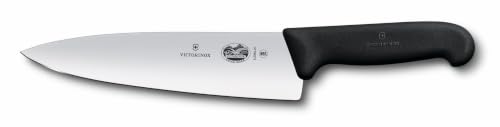
- Victorinox Fibrox Extra Wide Blade Cooks… about$63.10
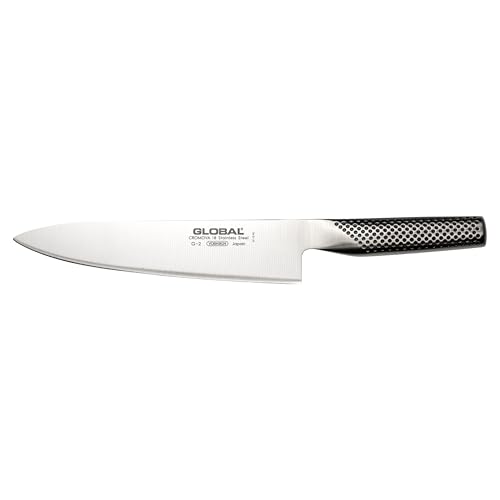
- Global Classic Cooks Knife G-2 about$85.95
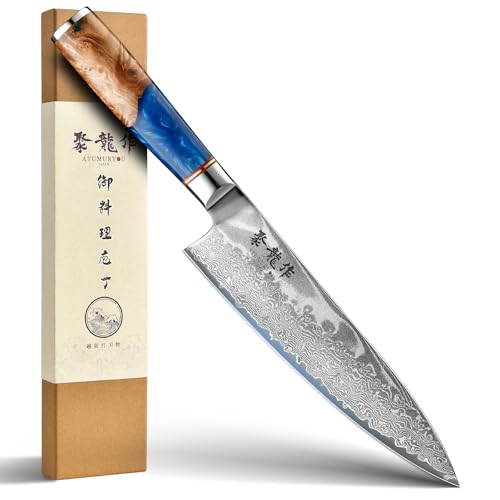
- 20 cm Japanese Chef Knife about$94.99
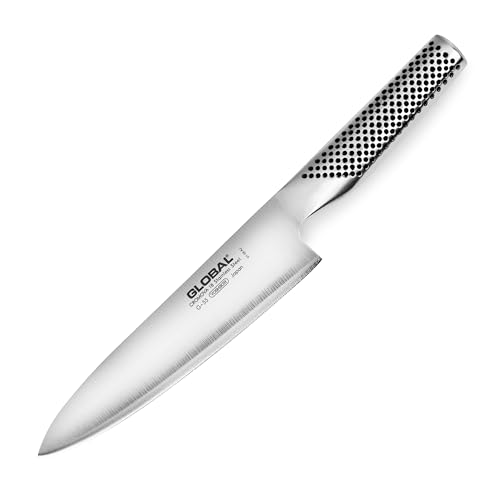
- Global G-55 Classic Cooks Knife about$98.95
- Most PremiumWüsthof Classic Chef’s Knife 20 cm about$179.99
Why a repair shop is writing about chef knives
A repair workshop runs on blades. We use scalpels to lift adhesive, hobby knives to cut tape and thin steel tools to open devices, and we go through them fast enough to have firm opinions on steel, edges and handles. The same three things wear out a scalpel that wear out a chef knife: the wrong cutting surface, the wrong cleaning, and an edge that's left to dull until it's forced through the work.
So this guide picks on the things that decide how a chef knife cuts in its first week and in its fifth year: the steel and the hardness the listing states, the edge angle where it's given, how the handle is built and what the warranty covers. I've said plainly where a listing leaves something out, because a lot of knife listings on Amazon AU lean on words like razor sharp and say little about the steel.
The five picks run from $59 to $179.99 at time of writing, sold by Amazon AU and one Australian storefront that passed my retail check. I've left out knife sets and blocks, which belong in their own guide, a second colour of the Wusthof, and a top-ranked Japanese-style gyuto whose title and features name two different woods for the handle. One Wusthof model was also left out because its single-knife listing describes a knife block set.
A sharp knife matters around electronics too. Most of us now cook with a phone or tablet propped near the board showing the recipe, and a knife that slips or a wet hand reaching for the screen is how those end up cut, splashed or knocked onto the tiles. If that happens, our Erina workshop can look at the screen and the board, but a stand well away from the chopping board avoids most of it.
German vs Japanese steel
The short version: German-style knives use a slightly softer, tougher stainless steel with a thicker blade and a wider edge angle, so they shrug off rough use and are easy to keep sharp. Japanese-style knives use harder steel with a thinner blade and a finer edge, so they cut more cleanly and stay sharp longer, but they chip more easily if they hit bone, a frozen block or a stone board.
Hardness is measured on the Rockwell C scale, written HRC. Of the five picks, the Wusthof Classic lists 58 HRC, the Furi Pro lists 55 to 57 HRC, and the VG-10 Damascus gyuto lists 62 HRC. The Global and Victorinox listings don't give a figure. Harder steel holds an edge longer but is more brittle, so a 62 HRC edge rewards careful use and punishes a twist in a pumpkin.
Steel names help too. The Furi lists X50CrMoV15, a common stainless knife steel used by many German makers, though the Furi listing calls it Japanese stainless. The Global lists its own CROMOVA 18 molybdenum and vanadium stainless, and the Damascus gyuto lists a VG-10 core with 67 layers of cladding. The Wusthof says high-carbon stainless and the Victorinox doesn't name its steel at all.
None of this makes one style better. A cook who chops pumpkin, breaks down chickens and uses the knife for everything will be happier with a tougher German-style blade. A cook who mostly slices vegetables, fish and herbs on a timber board will enjoy the cleaner cut of a harder Japanese-style blade, as long as it's looked after.
Edge angle and edge retention
The edge angle is how steeply the two sides of the edge meet. A narrower angle cuts more easily but is more delicate; a wider one is sturdier but feels less sharp. Only one of the five listings states its angle: the Furi Pro is sharpened to 26 degrees in total, 13 degrees per side, which is on the fine side for a German-style steel.
Edge retention is how long the edge stays sharp in use, and every knife listing claims it's excellent. The honest predictors are the hardness, the steel and how the knife is used. Harder steel generally holds an edge longer, a thinner edge feels sharper for longer, and the cutting board matters more than either. A good knife on a glass board dulls in a week.
The Victorinox listing says its edge rarely needs sharpening, and the Global listing says its edge retains its sharpness exceptionally well. Treat both as marketing. Every knife needs honing and sharpening, and the useful question is how easy it is to bring back. Softer German-style steel takes a pull-through or a honing steel well; harder Japanese steel is happier on a whetstone.
A simple test tells you when an edge has gone. Slice a sheet of paper held in the air, or rest the edge on a tomato skin. A sharp edge bites straight in; a dull one slides or tears. Do that every week or two and you'll catch a dull edge before you start forcing the knife, which is when it slips.
Handles, bolsters and how they fail
Handles fail in a few predictable ways. Timber handles dry out and crack if they're soaked or put through the dishwasher. Riveted synthetic handles can open a gap between the scales and the tang, where food and water collect. One-piece plastic handles last well but can split near the blade after years of heat. Metal handles don't crack but get slippery when wet.
Of the five picks, the Wusthof has a triple-riveted synthetic handle on a full-tang blade, the Victorinox has a one-piece non-slip handle, and the Global has a stainless steel handle, dimpled for grip. The Furi has a reverse-wedge handle, and the Damascus gyuto has a stabilised wood and resin handle, which resists water far better than plain timber but still shouldn't be soaked.
The Wusthof also has a full bolster with a finger guard, a thick band of steel where the blade meets the handle. It adds weight and protects fingers, but it also stops a sharpener reaching the heel of the edge, so over years of sharpening the heel stands proud and the blade stops meeting the board along its full length. That's normal for a bolstered knife and fixable by a sharpening service.
Grip matters more than looks. Try holding a knife in a pinch grip, with your thumb and finger on the blade just ahead of the handle, which is how most cooks get the most control. A handle that suits your hand in that grip will feel better after an hour of prep than a prettier one that doesn't.
Boards, dishwashers and what dulls a knife
The cutting board is the biggest factor in how long an edge lasts. Timber and good plastic boards give slightly under the edge; glass, stone, marble and ceramic boards don't, and they roll or chip an edge within days. If your board clinks when the knife hits it, it's the wrong board. A thick timber or polyethylene board is kindest.
Dishwashers are the other knife killer. The heat and detergent dull the edge, the spray knocks the blade into other cutlery, and timber handles dry and crack. Even the Global, with its one-piece steel body, is better washed by hand. Wash and dry a chef knife straight after use, and never leave it soaking in a sink where someone can reach in and find it.
Storage matters as well. A loose knife in a drawer knocks its edge against other utensils every time the drawer opens. A magnetic strip, a block or a simple blade guard protects the edge and the hand reaching into the drawer. Keep the strip away from a microwave or a phone charging pad, since a strong magnet and electronics don't mix well.
Cut on a board that sits flat and doesn't slide. A damp cloth under a board stops it moving, which keeps the knife going where you aim it. Clear the board with the spine of the knife rather than the edge, because scraping food sideways with the edge rolls it faster than cutting does.
Honing, sharpening and keeping it keen
Honing and sharpening are different jobs. Honing realigns an edge that has rolled over in use, and it takes a few strokes on a honing rod before or after cooking. Sharpening removes steel to make a new edge, and it's needed every few months for a home cook, depending on how much the knife is used and on what board.
For German-style knives like the Wusthof, Victorinox and Furi, a quality pull-through sharpener set to the right angle does a good job, and our knife sharpener guide covers the angles. Harder Japanese steel like the VG-10 gyuto and the Global is better on a whetstone, and our whetstone guide covers grits and technique.
Match the sharpener to the edge. A pull-through sharpener set for a 20-degree German edge will grind a finer Japanese edge wider, which makes it sturdier but loses some of what you paid for. If you own both styles, a whetstone handles both, or a professional sharpening service can reset either once a year.
Warranties and what they cover
Two of the five listings state a warranty. The Furi Pro carries a 25-year guarantee against defects, and the Global lists a lifetime warranty against defects and breakage, recorded as a limited lifetime warranty in its product data. The Wusthof, Victorinox and Damascus gyuto listings don't state one on Amazon AU, though the makers' own sites may.
Knife warranties cover manufacturing faults: a handle that comes loose, a blade that cracks from a flaw in the steel, rust that appears under normal care. They don't cover chips from bone or frozen food, a tip snapped prying a lid, dishwasher damage or an edge worn by a glass board. Keep the proof of purchase with the box.
A long warranty from a brand with Australian distribution is worth more than a long one from a seller you can't find in three years. Furi is an Australian brand, and the Furi, Global, Wusthof and Victorinox picks are sold by Amazon AU itself, which makes a return straightforward. The Damascus gyuto comes from a marketplace storefront, so keep its listing and order details.
Register a warranty where the maker offers it, and photograph the receipt. A blade that cracks or a handle that separates under normal use is exactly what these warranties are for, and makers tend to handle claims faster when the purchase date and seller are clear.
One good knife or a set
Most home cooks do nearly all their prep with one chef knife, a small paring knife and a serrated bread knife. One good chef knife used every day is a better buy than a block of eight average knives, most of which sit unused. Start with the chef knife and add the others as you find you need them.
Length is the main choice. Four of the five picks are 20cm, which suits most hands and boards. The Furi Pro is 23cm, which gives more reach for pumpkins, watermelons and big boards, but feels long on a small board or in a small hand. If you're not sure, 20cm is the safe size.
Whatever you choose, plan for a way to keep it sharp from the start, and a board that won't fight it. A good knife with a sharpener and a timber board will outperform a premium knife on a glass board, and the stainless steel pans in our stainless cookware guide are the natural partner for a knife that gets used every night.
If you're buying a knife as a gift, the Damascus gyuto's listing says it comes in a gift box, and any of the five makes a better present with a honing rod or a sharpener wrapped in with it, since a knife that goes dull in the first month ends up in the drawer.
The 5 picks, $59 to $179.99
Prices are Amazon AU at time of writing (2026-11-19) and move week to week. Ranks are Amazon AU category sales ranks, checked the same day. One knife sits in a different category, so each card also gives the overall Amazon AU rank for a fairer comparison.

Furi Pro Chef's Knife, 23cm
ASIN B01MF4HBVY • $59 • Ships from Amazon AU
The Furi Pro is the most fully specified listing of the five picks and the best-ranked when I checked: #3 in Chef's Knives on Amazon AU and #110 overall. It lists an X50CrMoV15 stainless blade hardened to 55 to 57 HRC and hand-sharpened to 26 degrees in total, 13 degrees per side, which is a fine edge for a German-standard steel. It's also the one pick with a stated guarantee period, 25 years against defects. It's sold by Amazon AU under part number WI-41349, and Furi is an Australian brand. That guarantee is the clearest of the five, with a stated period and a stated scope, and it's the lowest-priced of the five picks at time of writing.
The blade is 23cm, the longest of the five picks, with a 13cm handle. The reverse-wedge handle is wider toward the blade and narrower at the back, which locks into the hand, and the listing says it protects the fingers while letting you use the edge right back to the heel. That full-length edge is a practical advantage over a bolstered knife, because a sharpener can reach the whole edge for its entire life. The listing calls X50CrMoV15 Japanese stainless, though it's a steel many German makers use. The extra 3cm of blade over the 20cm picks gives more length for slicing a roast in one stroke, which is the large cutting work the listing pitches it for.
This is the one I'd buy for most home cooks. The steel is forgiving, the edge is finer than most German-style knives, and the 25-year guarantee comes from a brand with Australian distribution. The 23cm length suits big boards and big vegetables; if your board is small, check the length against it first. Hone it weekly, sharpen it on a pull-through set to around 13 degrees a side, and wash it by hand. If the 23cm length feels like too much, the Victorinox is the 20cm alternative at a similar price.
Honest caveats: At 23cm it's long for a small board or a small hand. The listing describes X50CrMoV15 as Japanese steel when it's a German-standard steel. 55 to 57 HRC holds an edge less long than harder steels. The listing doesn't name the handle material. Its 26-degree edge needs a matching sharpener.
Best for: Most home cooks who want one forgiving, well-specified knife with a long guarantee.
Blade: 23cm, X50CrMoV15 stainless • Hardness stated: 55 to 57 HRC • Edge angle: 26 degrees total, 13 per side • Handle: Reverse-wedge, 13cm • Guarantee: 25 years against defects • Part number: WI-41349 • Overall rank: #110 on Amazon AU • Seller: Amazon AU • Rank: #3 in Chef's Knives (Amazon AU)
View on Amazon AU
Victorinox Fibrox Extra Wide Blade Cook's Knife, 20cm, 5.2063.20
ASIN B000IAZC4Q • $63.10 • Ships from Amazon AU
The Victorinox Fibrox is the knife you'll find in a lot of commercial kitchens, and its listing keeps things simple: an extra-wide 20cm blade, a non-slip ergonomic handle, and an edge the listing says rarely needs sharpening, which is marketing. Victorinox calls this shape a cook's carving knife, and in practice it's the chef's knife of the Fibrox range. It ranked #30 in Kitchen Knives on Amazon AU and #901 overall when I checked, sold by Amazon AU under part number 5.2063.20. Amazon AU sells it directly, and its overall rank is the second-best of the five picks, behind the Furi. Victorinox is the Swiss maker of the army knife.
The handle is the point of this knife. It's a one-piece non-slip grip that stays secure with wet or greasy hands, which is why professional kitchens use it, and it has no rivets or seams to open up or collect food. The extra-wide blade gives knuckle clearance over the board and works as a scoop for chopped vegetables. The listing doesn't name the steel or its hardness, and it doesn't state a warranty on Amazon AU, so you're trusting the Victorinox name rather than the spec sheet. The extra width also gives more steel to rest a guiding knuckle against, which helps when you're learning to chop quickly and evenly with confidence.
This is the one for a cook who wants a no-fuss knife that can take a beating and won't slip, or a second knife for a share house or a holiday place. It's light, it takes an edge quickly on a pull-through sharpener, and it doesn't mind a knock. It isn't pretty and it doesn't feel premium. Wash it by hand anyway, and give it a few strokes on a honing rod before each cook. At this price it's also an easy knife to replace if it goes missing from a share house drawer.
Honest caveats: The listing doesn't name the steel or hardness. No warranty is stated on Amazon AU. It's listed as a carving knife in a different category from the others. The plain plastic handle looks utilitarian. The edge claim is marketing, not a spec.
Best for: A no-fuss, non-slip knife that takes rough use, or a second knife.
Blade: 20cm, extra wide (steel not named) • Hardness stated: Not stated • Handle: One-piece non-slip • Warranty: Not stated on Amazon AU • Part number: 5.2063.20 • Overall rank: #901 on Amazon AU • Seller: Amazon AU • Rank: #30 in Kitchen Knives (Amazon AU)
View on Amazon AU
Global Classic G-2 Cook's Knife, 20cm
ASIN B00005OL44 • $85.95 • Ships from Amazon AU
The Global G-2 is the knife that many Australian cooks picture when they hear Japanese-style, and it's one of the best-known chef knives in Australia. Its 20cm blade and handle are both stainless steel, the handle shaped and dimpled for grip, and the listing describes a lightweight, precisely balanced knife. The blade is Global's CROMOVA 18, a molybdenum and vanadium stainless steel. It ranked #6 in Chef's Knives on Amazon AU and #1,337 overall when I checked, sold by Amazon AU, and it's made in Japan. Amazon AU sells it directly, so a return starts with Amazon rather than a marketplace seller. The G-2 is the model most people mean when they talk about a Global.
Global lists a lifetime warranty against defects and breakage, recorded in its product data as a limited lifetime warranty, which with the Furi's 25 years makes two of the five picks with a stated warranty. The one-piece steel body has no seams or rivets for food to collect in, and nothing to crack or work loose. The listing doesn't give a hardness or edge angle. The dimpled steel handle gives a good grip when dry, but it gets slippery with wet or oily hands, so dry your hands before fine work. Being one piece of steel, it's also the easiest of the five to keep clean, since there's nowhere for food to hide between handle and blade.
This is the one for a cook who wants a light, nimble Japanese-style knife from a brand with a long track record in Australia. It suits slicing vegetables, fish and herbs on a timber board, and it's light enough for a long prep session. Keep it off bones and frozen food, and keep it out of the dishwasher. Sharpen it on a whetstone rather than a pull-through set for German knives, so the finer edge is kept. A ceramic honing rod suits its hard edge better than a steel one. Check the tip for bends if it's been dropped.
Honest caveats: The steel handle gets slippery when wet or oily. No hardness or edge angle is stated. The thin, hard edge chips on bone or frozen food. It needs a whetstone or a Japanese-angle sharpener. The light weight doesn't suit cooks who like a heavy knife.
Best for: Light, precise Japanese-style slicing of vegetables, fish and herbs.
Blade: 20cm, CROMOVA 18 stainless • Hardness stated: Not stated • Handle: Stainless steel, dimpled • Construction: One-piece steel • Warranty: Lifetime against defects and breakage (limited) • Made in: Japan • Overall rank: #1,337 on Amazon AU • Seller: Amazon AU • Rank: #6 in Chef's Knives (Amazon AU)
View on Amazon AU
Atumuryou 20cm VG-10 Damascus Japanese Chef Knife, Ocean-Blue Handle
ASIN B0H288X9L5 • $94.99 • Sold by QuanlanDirect on Amazon AU
The Atumuryou gyuto lists the hardest steel of the five picks: a VG-10 core at 62 HRC, wrapped in 67 layers of Damascus cladding that gives the rippled pattern on the blade. VG-10 is a well-known Japanese stainless knife steel that takes a very fine edge and holds it well. The listing says the edge is hand-sharpened. It ranked #23 in Chef's Knives on Amazon AU and #5,268 overall when I checked, sold by QuanlanDirect, an Australian storefront that passed my retail check, under model AT8101B-AU. The -AU at the end of the model code marks the Australian listing of this knife. It's the one pick sold by a marketplace storefront rather than by Amazon AU.
The handle is stabilised wood and resin in an ocean-blue swirl, which resists water much better than plain timber, and the listing describes it as slip-resistant and well balanced. The Damascus layers are mostly cosmetic: the cutting is done by the VG-10 core, and the cladding protects it and adds the look. The listing calls the cladding rust-proof, but treat that as stain resistance rather than a promise, and dry the blade after washing. It doesn't state an edge angle or a warranty period. Stabilised wood is timber soaked with resin under pressure, which fills its pores so water can't get in, and the blue resin swirl means no two handles look quite the same. It's still worth drying the handle after washing.
This is the one for a cook who wants a hard Japanese edge and a knife that looks the part, at a mid-range price. At 62 HRC it will stay sharp longer than the German-style picks, but it's more brittle, so keep it off bones, frozen food and pumpkin skin, and never twist it in a cut. Sharpen it on a whetstone only, and store it on a magnetic strip or in a guard, never loose in a drawer. Hone it gently with a ceramic rod, and check the edge for chips under a light.
Honest caveats: Sold by a marketplace storefront rather than a known knife brand. No edge angle or warranty period is stated. 62 HRC chips more easily than softer steels. The rust-proof claim is marketing. It needs a whetstone to keep its edge.
Best for: A hard Japanese edge and Damascus looks for careful slicing.
Blade: 20cm, VG-10 core, 67-layer Damascus • Hardness stated: 62 HRC • Handle: Stabilised wood and resin • Edge: Hand-sharpened (angle not stated) • Warranty: Not stated • Model: AT8101B-AU • Overall rank: #5,268 on Amazon AU • Seller: QuanlanDirect • Rank: #23 in Chef's Knives (Amazon AU)
View on Amazon AU
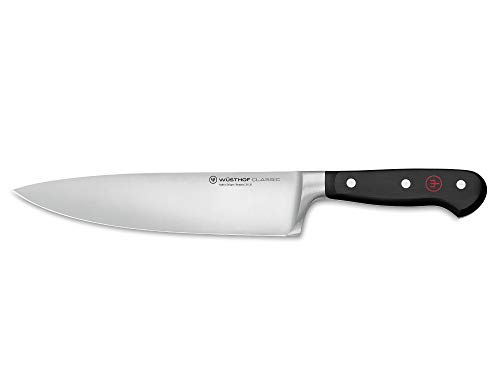
Wusthof Classic Chef's Knife, 20cm, 1040100120
ASIN B085V653KM • $179.99 • Ships from Amazon AU
The Wusthof Classic is the highest-priced of the five picks and the most traditional German chef knife of them. It's forged from a single piece of high-carbon stainless steel hardened to 58 HRC, with a full bolster and finger guard where the blade meets the handle, and a triple-riveted synthetic handle that the listing says resists fading, heat and impact. It's made in Solingen, Germany. It ranked #10 in Chef's Knives on Amazon AU and #2,115 overall when I checked, sold by Amazon AU under part number 1040100120. Amazon AU sells it directly, so a return starts with Amazon. Wusthof is a family company that has made knives in Solingen for generations.
The forged blade and full bolster make it feel solid in the hand, as forged German knives of this style usually do, and that heft helps it push through pumpkin, onions and chicken joints without much effort. The 58 HRC steel is tough enough to take rough use and hard enough to hold an edge well for a German-style knife. The bolster does stop a sharpener reaching the heel of the edge, so after years of sharpening the heel will need taking down by a sharpening service. The listing doesn't state an edge angle or a warranty. The triple rivets go right through a full tang, the steel that runs the length of the handle, which is why riveted German handles rarely snap. It also puts the knife's balance near the bolster.
This is the one for a cook who wants a solid, forged German knife that will take daily use for decades. The riveted handle is secure and the bolster keeps fingers off the edge, which suits less confident cooks. Hone it before every cook, sharpen it on a German-angle pull-through or a whetstone, and wash and dry it by hand. Check the rivets now and then for any gap opening around the handle scales. It also suits a household where more than one person cooks, because it forgives rough handling better than the harder Japanese-style picks.
Honest caveats: The highest-priced of the five at time of writing. No warranty or edge angle is stated on the listing. The full bolster makes sharpening the heel harder over the years. It's heavier than the Japanese-style picks. It's also listed in other handle colours under a shared rank.
Best for: A forged German knife for daily heavy prep that will last decades.
Blade: 20cm, forged high-carbon stainless • Hardness stated: 58 HRC • Bolster: Full, with finger guard • Handle: Triple-riveted synthetic • Made in: Solingen, Germany • Part number: 1040100120 • Overall rank: #2,115 on Amazon AU, listing shared • Seller: Amazon AU • Rank: #10 in Chef's Knives (Amazon AU), listing shared
View on Amazon AUSide-by-side comparison
| Product | Price | Best for |
|---|---|---|
| Furi Pro Chef's Knife 23cm Stainless Steel… | ~$59 | |
| Victorinox Fibrox Extra Wide Blade Cooks… | ~$63.10 | |
| Global Classic Cooks Knife G-2 | ~$85.95 | |
| 20 cm Japanese Chef Knife | ~$94.99 | |
| Global G-55 Classic Cooks Knife | ~$98.95 | |
| Wüsthof Classic Chef’s Knife 20 cm | ~$179.99 |
What we see fail in the workshop: blades
We use precision blades every day in the workshop, and we see the same three things wear them out that wear out a chef knife at home. None of them is a fault in the steel, and all three are easy to avoid once you know what to look for on the edge and the handle. Each one shows up well before the knife is ruined.
Edges rolled and chipped by hard surfaces
An edge that meets glass, stone or ceramic folds over or chips within days. In the workshop it's a blade dragged across a glass panel; at home it's a glass or marble board. A rolled edge can be honed back straight, while a chipped one needs sharpening past the chip. Use a timber or plastic board, keep harder Japanese steel off bones and frozen food, and look along the edge under a light now and then for bright spots. A phone camera zoomed in on the edge shows a chip clearly.
Handles loosened by heat and water
Heat and water are what loosen handles. A dishwasher cycle or a long soak dries timber until it cracks and opens gaps around rivets where water and food sit. We see the same on tools left near a heat gun. Wash and dry by hand straight after use, never soak a knife, and oil a timber handle now and then. If a handle has worked loose, stop using the knife and check the warranty before you glue it. A synthetic, steel or stabilised handle copes with water better than plain timber, but none of them likes the dishwasher.
Rust spots from being left wet
Stainless steel stains if it's left wet, especially with salt or acid on it. Small brown spots near the edge are the first sign, and on a hard, thin edge they can pit the steel. Dry the knife straight after washing, wipe off tomato, citrus and salty food before it sits, and remove spots with a little bicarbonate paste and a soft cloth. A knife that's dried after every use rarely stains at all. Never store a knife damp in a sheath or block, where moisture sits against the steel for days.
Decision tree: which one should you actually buy?
- Want one forgiving knife with a long guarantee? → The Furi Pro lists its steel, hardness and edge angle, and carries a 25-year guarantee.
- Want a non-slip knife that takes rough use? → The Victorinox Fibrox has a non-slip grip that stays secure with wet hands.
- Want a light Japanese-style knife from a known brand? → The Global G-2 is one-piece stainless steel with a lifetime warranty against defects.
- Want the hardest edge and a Damascus look? → The Atumuryou gyuto lists a VG-10 core at 62 HRC, so keep it off bones and frozen food.
- Want a forged German knife for heavy prep? → The Wusthof Classic is forged, 58 HRC, with a full bolster and a riveted handle.
- Recipe phone or tablet got cut or splashed? → Dry it and turn it off, then bring it into our Erina workshop and we'll tell you what it needs before you spend anything.
Frequently asked questions
Is a German or Japanese chef knife better?
Neither is better overall. German-style knives use slightly softer, tougher steel with a thicker blade, so they handle rough use and are easy to sharpen. Japanese-style knives use harder steel with a thinner, finer edge, so they cut more cleanly and stay sharp longer but chip more easily on bone or frozen food. Of the five picks, the Wusthof lists 58 HRC and the VG-10 gyuto 62 HRC, which shows the difference in hardness.
What size chef knife should I buy?
A 20cm chef knife suits most hands, boards and jobs, and four of the five picks are that length. A 23cm knife like the Furi Pro gives more reach for pumpkins, watermelons and big boards, but feels long on a small board or in a small hand. Shorter knives around 16cm feel nimble but run out of blade on a big onion. If you're unsure, start with 20cm and add a paring knife for small jobs.
Can I put a chef knife in the dishwasher?
It's best not to. Dishwasher heat and detergent dull the edge, the spray knocks the blade into other cutlery, and timber handles dry out and crack. Most knife warranties also exclude dishwasher damage. Even a one-piece steel knife like the Global is better washed by hand. Wash and dry a chef knife straight after use, and don't leave it soaking in the sink, where someone can reach in and find it.
How often should I sharpen a chef knife?
Hone it often and sharpen it occasionally. A few strokes on a honing rod before or after each cook realigns the edge, and a proper sharpening every few months is enough for most home cooks. The board matters as much as the schedule: a knife used on timber or plastic stays sharp far longer than one used on glass or stone. Match the sharpener's angle to the knife, since Japanese edges are finer than German ones.
What does HRC mean on a knife listing?
HRC is the Rockwell C hardness scale. Higher numbers mean harder steel that holds an edge longer but is more brittle and harder to sharpen. Most German-style knives sit in the mid to high 50s and Japanese-style knives around 60 and up. Of the five picks, the Furi lists 55 to 57, the Wusthof 58 and the VG-10 gyuto 62, while the Global and Victorinox listings don't give a figure.
Is a Damascus knife worth it?
The Damascus pattern is mostly cosmetic. On a knife like the Atumuryou gyuto, the cutting is done by a hard VG-10 core, and the 67 layers of Damascus cladding protect it and give the rippled look. What you're really paying for is the core steel, the heat treatment and the grind. A plain blade of the same core steel cuts the same. Buy a Damascus knife because you like how it looks, as long as the core steel is named.
Related buying guides
Recipe phone or tablet cut or splashed?
Phones and tablets propped near the chopping board get cut, splashed and knocked onto the tiles. If a screen is cracked, a phone has had water or food in its port, or a tablet won't charge, dry it, turn it off and bring it into our Erina workshop. We'll check the screen and the board and tell you what it needs before you spend anything.
Visit our Erina workshop Book Online