Prices from Amazon AU, updated daily. Swipe or use the arrows for more.
Disclosure: This article contains affiliate links to amazon.com.au. If you buy through one of these links iFix may earn a small commission at no extra cost to you. It doesn't change which products we recommend. We focus on what actually lasts based on 16 years of repair-shop experience.
Quick summary8 picks
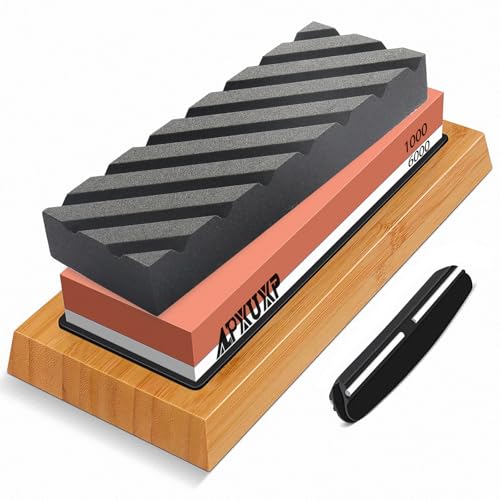
- Entry PickKnife Sharpening Stone Set 1000/6000-Grit… about$28.99
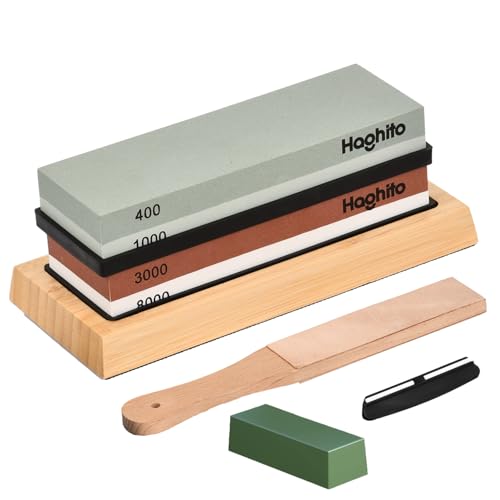
- Knife Sharpening Stone Set about$29.73
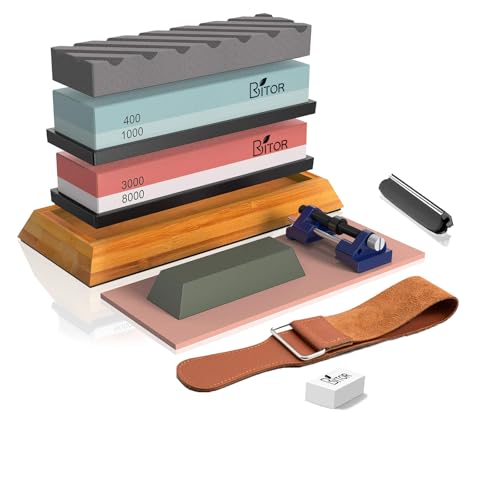
- BRITOR Knife Sharpening Stone Kit about$42.49
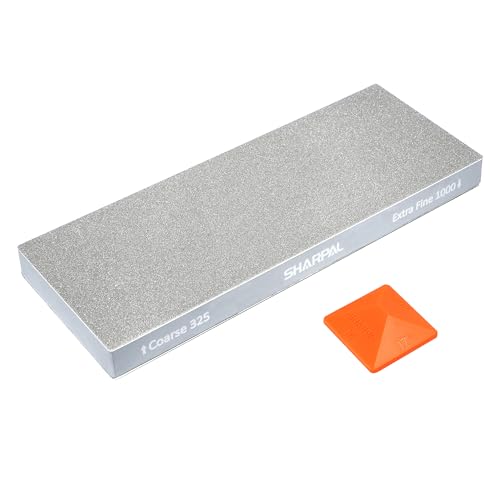
- SHARPAL 168H Large 8" x 3" Dual-Grit… about$62.898" screen.
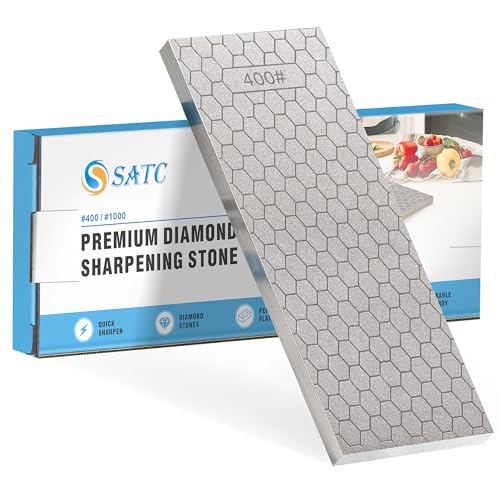
- S SATC Diamond Sharpening Stone 2 Side Grit… about$66
- SHARPAL 162N 8 in. x 3 in. Double-Sided… about$93.49
- SHARPAL 163N 8 in. x 3 in. Double-Sided… about$93.498" screen.
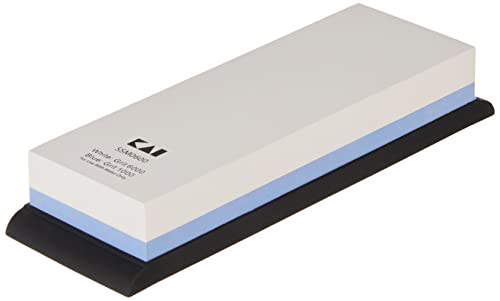
- Most PremiumShun Cutlery Combination Whetstone about$105
Why a repair shop is writing about whetstones
A repair workshop runs on sharp edges as much as screwdrivers. We cut adhesive under phone screens with fine blades, scrape glue and flux off boards, trim tape and open battery packs, and a dull blade slips. A slipping blade is how a ribbon cable gets nicked or a finger gets cut. So we keep a set of stones in the workshop for our own scrapers, hobby blades and kitchen knives, and the same rules apply to all of them.
This guide covers whetstones: flat water stones you soak, and diamond plates you use dry. I've left out pull-through and electric sharpeners, ceramic water sharpeners and honing rods, which our knife sharpener guide already covers. A stone takes longer to learn than a pull-through, but it's the one tool that can bring back almost any edge without grinding away more steel than it needs.
The five picks run from $29.73 to $93.49 at time of writing, from three brands: three Sharpal diamond plates sold by SHARPAL PTY LTD, a BRITOR water stone kit sold by BRITOR-AU, and a Haghito water stone set sold by Haghito AU. All three sellers passed my retail check. Sharpal's listing says it's a California company with an Australian branch, and its stones are sized in inches, which is normal for sharpening stones and doesn't affect how they fit anything.
I read every listing for grit, stone type, size, what's in the box and whether it needs soaking or flattening. Listings for sharpening stones are short on hard detail and long on claims about edges, so where a listing leaves something out, like the size of a water stone, I say so on its card rather than guess.
Water stones or diamond plates
Water stones are blocks of abrasive grit bonded together, usually aluminium oxide, which BRITOR's listing calls corundum. You soak them in water for about ten minutes, and as you sharpen, the surface slowly wears away and releases fresh grit. That slow wear is what makes them cut well and feel smooth, and it's also their drawback: the middle of the stone wears faster than the edges, and a dished stone puts a curve on your edge.
Diamond plates are a steel plate with industrial diamond grit plated onto the surface. Sharpal's listings describe monocrystalline diamond electroplated onto steel, used dry with no water or oil, and flat to within 0.05mm. They don't dish, so they never need flattening, and diamond cuts the very hard steels in some modern knives faster than a water stone does. The trade-off is that the finest grit on these plates stops at 1,200, well short of the 8,000 on the water stone kits.
For most kitchens, a water stone kit is the lower-cost way to learn, because it gives a coarse, a medium and a fine grit in one box with a flattening stone and an angle guide. A diamond plate suits someone who sharpens often, sharpens hard steels or tools, or simply doesn't want to soak and flatten anything. Plenty of people end up owning both: a diamond plate for repairs and a fine water stone for the last polish.
What the grit numbers mean
Grit numbers on stones run the opposite way from what you'd expect: a lower number is coarser and removes steel faster, and a higher number is finer and polishes. Around 200 to 400 is for repairing chips and reshaping a badly damaged edge. Around 600 to 1,000 is the everyday sharpening grit. Around 3,000 to 8,000 is for refining and polishing an edge that's already sharp. You don't need every grit to get a good edge.
Sharpal's listings give a micron size alongside the grit, which is more useful than the number alone: 325 grit is listed as 45 micron, 1,000 grit as 15 micron and 1,200 grit as 12 micron. Water stone grits and diamond grits aren't directly comparable, because diamond cuts faster and more aggressively at the same number, so a 1,200 diamond plate leaves a working edge rather than a mirror polish.
For a typical kitchen knife that's dull but not damaged, a 1,000 grit side does most of the work and a 3,000 or higher side finishes it. Reach for 400 or lower only when there's a chip, a rolled edge or a tip that's been snapped off. Starting on the coarsest side every time just wears your knife away faster.
Of the five picks, the two water stone kits both pair 400/1000 with 3000/8000. The Sharpal 162N pairs 325 with 1,200, the 168H pairs 325 with 1,000, and the 163N pairs extra coarse 220 with 600, which makes it the repair plate of the five.
Flattening, soaking and stone care
A water stone that isn't flat can't sharpen a straight edge. Every water stone dishes with use, faster on the coarse side, and the fix is a flattening stone: you rub the whetstone on it, wet, until the pencil grid you've drawn on the surface is gone. The BRITOR kit includes a flattening stone, and its listing also mentions a black carbon correction stone. The Haghito listing doesn't list a flattening stone at all, so allow for one if you buy it.
Soak water stones for about ten minutes before use, as both kit listings say, until bubbles stop coming out. Keep them wet while you work, with a splash from a cup when the surface starts to dry. Don't leave them sitting in water for days, and never let them freeze in a shed over winter, because water trapped inside can crack the stone.
After sharpening, rinse the slurry off, let the stones dry fully in the air before they go back in a box, and keep them away from the stove. Diamond plates need far less: brush the steel filings off under running water, dry the plate fully so the steel under the diamond doesn't rust, and store it flat. Sharpal's 163N listing says its plate is stainless and won't rust like carbon steel.
Never use a stone dry that's made to be used wet. A dry water stone glazes over with steel, cuts poorly and wears unevenly, and the heat can soften the very edge of a thin blade.
Angles, guides and keeping it steady
The angle you hold the blade at is what matters most on a stone, more than the grit. Most Western kitchen knives are sharpened at about 20 degrees a side, many Japanese knives at about 15, and outdoor knives and tools often at 25. Holding the same angle on every stroke is the skill, and an angle guide makes learning it far easier.
All five picks come with an angle guide. The three Sharpal plates include a guide with four set angles, 14, 17, 20 and 25 degrees, and the two water stone kits include a clip-on guide. Use the guide for the first few sessions and you'll start to feel the angle without it. If you don't know what angle your knife was made at, 20 degrees a side is a safe start for most kitchen knives.
The stone has to stay still. Both water stone kits include a non-slip bamboo base with silicone holders, the Sharpal 162N and 163N come with a storage box whose non-slip rubber pad doubles as a base, and the 168H with a non-slip pad. Work on a flat, stable surface at hip height, like a kitchen counter or a solid workbench, with a damp tea towel underneath if the base still slides. Our workbench picks cover a steadier surface for tools.
Keep your fingers on the flat of the blade, behind the edge, and push away from yourself. Most cuts from sharpening happen when the stone moves or when someone tests the edge with a thumb.
Why pull-through sharpeners chew up good knives
Pull-through sharpeners are quick, and for an everyday knife that cost little, they're fine. The problem is what they do to a good one. Most use hard carbide or ceramic wheels set in a V, and every pull takes steel off at a fixed angle whether the knife needs it or not. Over a year or two that wears a dip into the edge where it's pulled most, usually near the heel, and a knife with a dip won't meet the chopping board along its whole length.
Carbide slots in particular rip steel off rather than grinding it, which leaves a ragged edge that feels sharp for a few days and then folds over. They also can't follow a curved tip or a Japanese blade made at 15 degrees. If you've got a knife that's been through a pull-through for years and now has a wavy edge or a hollow near the handle, a coarse stone, used patiently, is how you bring the profile back.
That's not a reason to throw a pull-through away. Plenty of households keep one for the everyday knives and a stone for the good ones. But if a knife cost more than about $100, or it's a Japanese knife, sharpen it on a stone and keep it away from the V slots.
Workshop blades, scissors and tools
Stones aren't just for kitchen knives. In the workshop we use a fine stone on scrapers, plastic opening tools that have gone rough at the tip and the hobby blades we keep for cutting adhesive, and a coarse diamond plate on chisels and plane irons. A slipping, dull blade is the most common way a phone's internal cables or a laptop's keyboard ribbon get nicked during a repair.
Diamond plates are the better choice for tools, because tools are often harder steel and wider than a kitchen knife, and a dished water stone rounds over a chisel's flat back. The Sharpal 162N listing says it sharpens high speed steel, carbide and ceramic, and the 8 x 3 inch plates give enough width for a wide chisel. The water stone kits list scissors, chisels and pocket knives as well as kitchen knives.
Serrated bread knives and ceramic knives are different. The Haghito listing says its stones aren't for serrated or ceramic blades, and that's good advice for every water stone here. Serrated blades need a tapered rod for each scallop, and ceramic knives are best sent to someone with a diamond wheel.
How often to sharpen, and checking a stone on arrival
A kitchen knife used every day needs a stone every one to three months, and a few strokes on a honing rod between times keeps the edge straight. Sharpen when the knife slides off a tomato skin or crushes an onion rather than slicing it, not on a timetable. The less steel you take off each time, the longer the knife lasts.
Unpack a new stone the day it arrives. Check it isn't cracked or chipped at the corners, that a water stone kit has every piece its listing promises, and that a diamond plate's surface is even with no bare patches. Draw a pencil grid on a water stone and rub it lightly on the flattening stone to see how flat it shipped; most need a quick flatten before the first use.
If the phone you use to watch a sharpening video has a cracked screen or a charge port that's stopped taking a cable, bring it into our Erina phone repair workshop and we'll check it and tell you what it needs before you spend anything. Our stainless cookware guide covers the pans those knives end up working over.
The 5 picks, $29.73 to $93.49
Prices are Amazon AU at time of writing (2026-11-17) and move week to week. Ranks are Amazon AU sales ranks in the Whetstones or Sharpening Stones categories, checked the same day, with the overall Amazon AU rank alongside. The Sharpal 162N and 163N share one rank across several Sharpal listings, so read that as the range's rank.

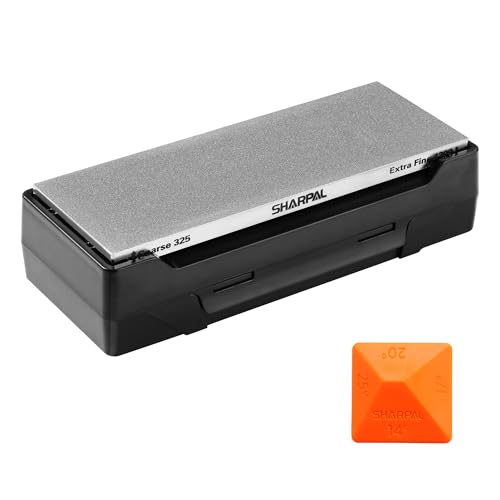
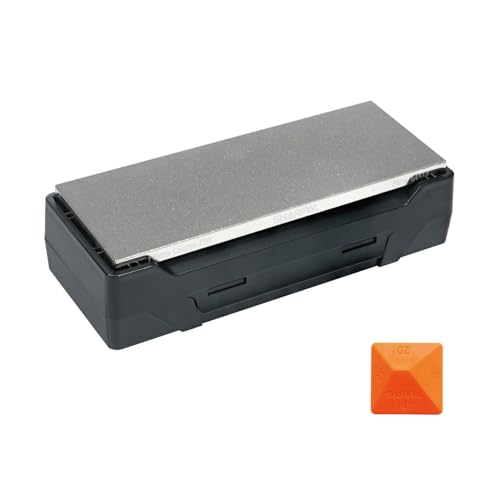
SHARPAL 162N Double-Sided Diamond Sharpening Stone, 325/1200 Grit, 8 x 3 in
ASIN B07GRWN1PV • $93.49 • Sold by SHARPAL PTY LTD on Amazon AU
The Sharpal 162N is the stone I'd buy first for most people, because it does the everyday sharpening and the repairs on one plate, never needs soaking or flattening, and handles hard steels and workshop tools as well as kitchen knives. It's listed at $93.49, sold by SHARPAL PTY LTD, and ranks #1 in Amazon AU's Whetstones category and #600 overall, the best-ranked of the five. That rank is shared with the Sharpal 163N and other Sharpal plates, so read it as the range's rank. Its part number is 162N. SHARPAL PTY LTD is the brand's Australian company and passed my retail check, so warranty questions go to the maker rather than a reseller.
The listing describes an 8 x 3 inch steel plate with monocrystalline diamond electroplated on both sides: a coarse 325 grit side, listed as 45 micron, for setting an edge, and an extra fine 1,200 grit side, listed as 12 micron, for honing. It's used dry with no water or oil. It lists a storage box whose non-slip rubber pad works as a base, an angle guide with 14, 17, 20 and 25 degree settings, and a three year commitment from Sharpal. It also flattens water stones, so if you add a fine water stone later for polishing, this plate keeps it true without buying a separate flattening stone. Working dry means it can live in a kitchen drawer and come out for two minutes before dinner, with no soaking to plan around.
Use the 1,200 side for routine sharpening and the 325 side only for a chip or a dull, neglected edge. Brush the filings off under the tap afterwards and dry the plate fully before it goes back in its case. Keep the pressure light, especially on the coarse side, and let the diamond do the cutting, because pressing hard wears the plating faster. Use the angle guide for the first few sessions. Store it in its case, flat, so nothing knocks the face, and give it a scrub with a soft brush if it starts to feel slow.
Honest caveats: It stops at 1,200 grit, so it leaves a working edge rather than a polish. It's the highest-priced of the five, level with the 163N, and its rank is shared across Sharpal plates. The listing doesn't say whether the steel base is stainless.
Best for: One plate for everyday sharpening and repairs, with no soaking, no flattening and no mess.
Price: $93.49 (SHARPAL PTY LTD) • Type: Diamond plate, used dry • Grits: 325 / 1,200 • Microns: 45 / 12 (listing) • Size: 8 x 3 in • Includes: Case with non-slip base, angle guide • Angle guide: 14, 17, 20, 25 degrees • Part number: 162N • Rank: #1 in Whetstones, #600 overall on Amazon AU, listing shared
View on Amazon AU
BRITOR Knife Sharpening Stone Kit, 400/1000 and 3000/8000 Grit, Flattening Stone
ASIN B08NV8G5MC • $42.49 • Sold by BRITOR-AU on Amazon AU
The BRITOR kit is the water stone pick, and the one I'd buy for someone learning to sharpen kitchen knives properly, because it puts four grits, a flattening stone and a strop in one box. It's listed at $42.49, sold by BRITOR-AU, and ranks #8 in Amazon AU's Whetstones category and #3,303 overall. Its part number is 2525. Of the two water stone kits, it's the one whose listing includes a flattening stone, which is the piece that keeps a water stone working for years. BRITOR-AU is the brand's Australian storefront and passed my retail check.
The listing describes a 400/1000 grit water stone and a 3000/8000 grit water stone in corundum, which is aluminium oxide, a non-slip bamboo base, two silicone bases, a flattening stone, an angle guide, a honing guide, a leather razor strop, a leather honing strop, polishing compound and a black carbon correction stone. It says to soak the stones for about ten minutes before use, with no oil needed. It lists kitchen knives, scissors, chisels and pocket knives as blades it suits. Four grits means one kit takes a knife from a chipped edge to a polished one, and the leather strops and compound give a final finish that the diamond plates here can't match. The bamboo base holds both stones, so you can swap from 1,000 to 3,000 without lifting anything.
Draw a pencil grid on each stone and flatten it before the first session, then every few sessions after. Let the stones dry fully in the air before they go back in the box, and keep them out of a shed that freezes. Keep a cup of water beside the base and splash the stone when it starts to dry. Wipe the bamboo base dry after each session, because timber left wet swells and cracks. Check the box against the contents list the day it arrives, since a missing flattening stone is the piece that matters most.
Honest caveats: The listing doesn't state the stones' size, so check it suits your longest knife. Water stones need soaking and flattening, which takes more care than a diamond plate. A second BRITOR listing sells a near-identical kit, so check the contents list when ordering.
Best for: Learning to sharpen kitchen knives on water stones, with every grit and a flattening stone in one box.
Price: $42.49 (BRITOR-AU) • Type: Water stone kit • Grits: 400/1000, 3000/8000 • Material: Corundum (aluminium oxide) • Flattening stone: Included • Extras: Strops, compound, angle guide, bamboo base • Soak: About 10 minutes • Part number: 2525 • Rank: #8 in Whetstones, #3,303 overall on Amazon AU
View on Amazon AU
SHARPAL 168H Dual-Grit Diamond Sharpening Stone, 325/1000 Grit, 8 x 3 in
ASIN B0F9Y73NXL • $62.89 • Sold by SHARPAL PTY LTD on Amazon AU
The Sharpal 168H is the pick for someone who wants a full-size diamond plate for less than the 162N. It's listed at $62.89, sold by SHARPAL PTY LTD, and ranks #6 in Amazon AU's Sharpening Stones category and #1,594 overall. Its part number is 168H. It's the same 8 x 3 inch size as the 162N with the same 325 grit coarse side, and the difference is the fine side, which is listed at 1,000 grit rather than 1,200. For most kitchen knives that difference is small, and the plate does the same job of repairs, everyday sharpening and flattening water stones. It's sold by SHARPAL PTY LTD, the brand's Australian company, which passed my retail check.
The listing describes monocrystalline diamond on both sides, a coarse 325 grit side listed as 45 micron and an extra fine 1,000 grit side listed as 15 micron, and gives the size in millimetres too, at 201 x 75mm. It states flatness to within 0.05mm and says the plate needs no lapping and works dry. It lists a four-angle guide at 14, 17, 20 and 25 degrees and a non-slip pad, and names hard knife steels such as M390 and Elmax among those it sharpens. Of the three Sharpal picks, it's the one whose listing gives its size in millimetres as well as inches, and its flatness and micron figures make it the most fully specified of the five picks, which is useful when comparing it with the 162N.
The 1,000 grit side leaves an edge a touch coarser than the 162N's, which many cooks prefer for slicing tomatoes and onions. Rinse and dry the plate after use, and store it flat rather than standing on its edge, where a fall chips the corner. Lay the non-slip pad on a flat counter before every session, since a plate that shifts mid-stroke changes the angle. A soft brush and warm water clears the filings. Keep it away from the cutlery drawer, where other metal can scratch its face.
Honest caveats: The listing mentions a non-slip pad but not a storage case, so plan where it lives. Its fine side stops at 1,000 grit. The listing doesn't say whether the steel base is stainless, so dry it fully after every use.
Best for: A full-size diamond plate for kitchen knives and tools, at a lower price than the 162N.
Price: $62.89 (SHARPAL PTY LTD) • Type: Diamond plate, used dry • Grits: 325 / 1,000 • Microns: 45 / 15 (listing) • Size: 201 x 75mm (8 x 3 in) • Flatness: Within 0.05mm (listing) • Angle guide: 14, 17, 20, 25 degrees • Part number: 168H • Rank: #6 in Sharpening Stones, #1,594 overall on Amazon AU
View on Amazon AU
SHARPAL 163N Double-Sided Diamond Sharpening Stone, 220/600 Grit, Stainless
ASIN B0GX5TM1Q8 • $93.49 • Sold by SHARPAL PTY LTD on Amazon AU
The Sharpal 163N is the repair pick, for knives with chips, snapped tips or a wavy edge left by years in a pull-through, and for chisels and tools. It's listed at $93.49, sold by SHARPAL PTY LTD, level with the 162N as the highest-priced of the five, and ranks #1 in Amazon AU's Whetstones category and #600 overall. That rank is shared with the 162N and other Sharpal plates, so read it as the range's rank. Its part number is 163N. It's sold by SHARPAL PTY LTD, which passed my retail check. Its stainless base is the one Sharpal listing here that says so, which matters for anyone storing it in a damp shed.
The listing describes an 8 x 3 inch plate of monocrystalline diamond on rust-resistant stainless steel, with an extra coarse 220 grit side for edge repair and reshaping and a 600 grit side for a clean working edge. It works dry, never needs soaking or flattening, and states flatness to within 0.002 inch. It lists a storage box whose non-slip rubber pad works as a base, an angle guide at 14, 17, 20 and 25 degrees, and a three year commitment from Sharpal. Extra coarse 220 grit takes steel off fast enough to bring back a snapped tip or grind out a chip in minutes rather than an hour, and it's the plate I'd use on chisels and plane irons, which are wide and hard. It also flattens a dished water stone quickly.
Use the 220 side only for real damage, then move to 600 to refine. Finish on a fine water stone or the 162N's 1,200 side if you want a smoother edge, and dry the plate after use even though it's stainless. Keep it apart from your finishing stones so grit doesn't carry over. Use light pressure and check the edge often, because 220 grit can take off more steel than you meant to in a few strokes. Mark the edge bevel with a felt pen so you can see where the stone is cutting. Rinse and dry it after use.
Honest caveats: Its finest side is 600 grit, so it isn't a finishing stone on its own. It's the highest-priced pick, level with the 162N. Its rank is shared across Sharpal plates, and 220 grit removes steel quickly in the wrong hands.
Best for: Repairing chipped or wavy edges and sharpening chisels and tools, on a stainless plate that won't rust.
Price: $93.49 (SHARPAL PTY LTD) • Type: Diamond plate, used dry • Grits: 220 / 600 • Base: Stainless steel (listing) • Size: 8 x 3 in • Includes: Case with non-slip base, angle guide • Angle guide: 14, 17, 20, 25 degrees • Part number: 163N • Rank: #1 in Whetstones, #600 overall on Amazon AU, listing shared
View on Amazon AU
Haghito Knife Sharpening Stone Set, 400/1000 and 3000/8000 Grit, Bamboo Base
ASIN B0F3XS4DM2 • $29.73 • Sold by Haghito AU on Amazon AU
The Haghito set is the value pick and the lowest-priced of the five, for someone who wants to try a water stone before spending more. It's listed at $29.73, sold by Haghito AU, and ranks #9 in Amazon AU's Whetstones category and #3,557 overall, the lowest-ranked of the picks. The listing gives no part number, only the word whetstone in its model field. It carries the same four grits as the BRITOR kit, without the flattening stone. Haghito AU is a smaller seller than the others here, and the listing is shorter on detail, which is the trade for the low price. Haghito AU passed my retail check.
The listing describes a 400/1000 grit stone and a 3000/8000 grit stone in corundum, a non-slip bamboo base with silicone holders, an angle guide, a leather strop, polishing compound and an instruction guide. It says to soak the stones in water with no oil needed. It lists kitchen, hunting, pocket and Japanese knives and cleavers as blades it suits, and says plainly that it isn't for serrated or ceramic blades. It doesn't list a flattening stone. Of the five picks, it's the listing that says plainly which blades it isn't for, and its instruction guide helps a first-timer. The bamboo base and silicone holders keep the stones from sliding, which is the thing beginners struggle with most.
Buy a flattening stone or a coarse diamond plate to go with it, because a water stone without one dishes within months. Soak for about ten minutes, keep it wet while you work, and let it dry fully before boxing it. Pair it with a flattening stone from the start, and draw a pencil grid on each stone so you can see when it needs flattening. Keep both stones in their holders on the base to dry, and keep the compound in a zip bag so it doesn't dry out.
Honest caveats: The listing doesn't include a flattening stone, so add the cost of one. It gives no part number or stone size, and it's the lowest-ranked of the five picks. Like any water stone, it needs soaking and regular flattening to stay true.
Best for: Trying water stones on kitchen knives for the least outlay, with a flattening stone bought alongside.
Price: $29.73 (Haghito AU) • Type: Water stone set • Grits: 400/1000, 3000/8000 • Material: Corundum • Flattening stone: Not included • Extras: Strop, compound, angle guide, bamboo base • Not for: Serrated or ceramic blades (listing) • Part number: Not stated • Rank: #9 in Whetstones, #3,557 overall on Amazon AU
View on Amazon AUSide-by-side comparison
What we see fail in the workshop: stones and edges
Stones themselves rarely break. The faults are a stone that's gone out of flat, a blade that's been overheated or chewed up, and a stone stored wet. All three are easy to avoid once you know what to look for.
A dished stone rounding the edge
A water stone used for months without flattening wears a hollow down the middle, and every stroke then puts a curve on the edge, so the knife rocks on the board and misses at the heel. Draw a pencil grid on the stone, rub it wet on the flattening stone until the grid is gone, and do it every few sessions. A diamond plate can flatten a water stone too, which is one reason people own both.
Steel clogged into a dry stone
A water stone used dry, or a diamond plate never rinsed, fills with steel filings and goes shiny and slow. The fix for a water stone is a wet flatten, which exposes fresh grit. For a diamond plate, scrub it under running water with a soft brush and a drop of dishwashing liquid, then dry it fully. Never use a wire brush on a diamond plate, which strips the diamond.
Stones cracked by water and frost
A water stone left sitting in water for days, or stored wet in a shed over winter, can crack as trapped water freezes and expands, and some soften and crumble at the corners. Soak only for the session, rinse, dry in the air for a day, then box it. A cracked stone can sometimes still be used if the crack doesn't reach the working face, but a stone in pieces is done.
Decision tree: which one should you actually buy?
- One stone for everything, no mess? → The Sharpal 162N at $93.49 is a 325/1,200 diamond plate used dry, with a case, base and four-angle guide.
- Learning on water stones? → The BRITOR kit at $42.49 has 400/1000 and 3000/8000 stones, a flattening stone, strops and an angle guide.
- Diamond plate for less? → The Sharpal 168H at $62.89 is the same 8 x 3 inch size with 325/1,000 grit and a four-angle guide.
- Chipped or wavy knives, or chisels? → The Sharpal 163N at $93.49 is an extra coarse 220/600 diamond plate on rust-resistant stainless steel.
- Trying a stone for the least outlay? → The Haghito set at $29.73 has four grits and a bamboo base, but add a flattening stone to it.
- Phone screen cracked? → A cracked screen, a battery that won't last or a charge port that won't connect can come into our Erina workshop, and we'll tell you what it needs before you spend anything.
Frequently asked questions
What grit whetstone do I need for kitchen knives?
A 1,000 grit side does most everyday sharpening on a dull kitchen knife, and a 3,000 or higher side finishes it. Use 400 or lower only for chips, a rolled edge or a broken tip. A dual-grit stone like 1000/6000, or a kit with 400/1000 and 3000/8000 like the BRITOR and Haghito picks, covers nearly everything. Diamond plates cut faster at the same number, so a 1,200 diamond side leaves a working edge, not a polish.
Do I need to soak a whetstone?
Water stones, yes: both water stone kits here say to soak them for about ten minutes, until bubbles stop, and to keep them wet while you sharpen. Don't leave them in water for days. Diamond plates are used dry, with no soaking, water or oil, as all three Sharpal listings say. Some stones called splash and go only need a splash on the surface, so check what yours says before you soak it.
How do I flatten a whetstone?
Draw a pencil grid across the wet stone, then rub it on a flattening stone, a coarse diamond plate or wet sandpaper on glass, in figure eights, until every pencil line is gone. Do it every few sessions, and always after heavy work on the coarse side. The BRITOR kit includes a flattening stone; the Haghito set doesn't. Diamond plates don't dish, so they never need flattening, and a coarse one like the Sharpal 163N flattens a water stone quickly.
Is a diamond stone better than a water stone?
Each is better at something. Diamond plates stay flat, work dry, cut hard steels and tools fast and suit people who sharpen often. Water stones give a finer polish, at up to 8,000 grit on the kits here, cost less to start and feel smoother, but they need soaking and flattening. Many people own a diamond plate for repairs and flattening and a fine water stone for finishing. If you only buy one, buy for how often you sharpen.
What angle should I sharpen a kitchen knife at?
About 20 degrees a side suits most Western kitchen knives, about 15 degrees most Japanese knives, and 25 degrees outdoor knives and tools. If you don't know how your knife was made, 20 degrees is a safe start. All five picks include an angle guide, and the Sharpal plates' guide has set angles at 14, 17, 20 and 25 degrees. Holding the same angle on every stroke matters more than the exact number.
Can I sharpen serrated or ceramic knives on a whetstone?
Not well. Serrated blades need a tapered rod worked into each scallop, and a flat stone only touches the points. Ceramic knives are harder than water stone grit and chip easily, so they're best sharpened on a diamond wheel by someone who does it often. The Haghito listing says plainly its stones aren't for serrated or ceramic blades, and that applies to the water stones here. Send those knives to a professional sharpener.
Related buying guides
Phone screen cracked in the kitchen?
A phone knocked off the counter, a screen cracked against a pan or a charge port full of flour is a common way to start the week. Bring it into our Erina workshop and we'll check it and tell you what it needs before you spend anything.
Visit our Erina workshop Book Online