Prices from Amazon AU, updated daily. Swipe or use the arrows for more.
Disclosure: This article contains affiliate links to amazon.com.au. If you buy through one of these links iFix may earn a small commission at no extra cost to you. It doesn't change which products we recommend. We focus on what actually lasts based on 16 years of repair-shop experience.
Quick summary8 picks
- Entry PickColeman Daintree Chest Hard Cooler 28L about$67
- Coleman Daintree Wheeled Hard Cooler 38L about$95
- Coleman Daintree Chest Hard Cooler 44L about$97
- Willow Journey Wheelie Cooler 55 Litre… about$107
- Coleman Daintree Wheeled Hard Cooler 57L about$114
- Costway 50 L Insulated Hard Cooler about$153
- Coleman Pro 24L Hard Cooler about$172
- Most PremiumColeman Snap 'N Go Collapsible Cooler about$187
Why a repair shop is writing about eskies
An esky isn't electronics, but summer at our end of the counter is a long run of things that met an esky: phones that went for a swim in the meltwater, a Bluetooth speaker that sat in the bottom of one all afternoon, a car fridge that someone bought to replace an esky and then flattened the car battery with on the first night. So I've ended up with opinions on the boring box that does most of the cold work at a beach day or a camping weekend.
This guide sticks to hard eskies and hard coolers. Soft cooler bags are fine for a lunch or a few cans, but they're a different job, and a 12V compressor car fridge is a different budget and a different set of problems. The question here is simpler: which hard box keeps ice the longest for the money, which one survives being dragged across a car park, and how big you actually need for two or three days.
The picks below all come from Amazon AU listings checked on the day I wrote this, and I've only used what those listings say. Where a listing doesn't give a figure, I've said so rather than filling it in. That matters more for eskies than most gear, because a lot of the numbers people quote about ice retention come from the box, the brochure or a mate, and very few listings give them at all.
What an ice retention claim actually means
Of the five picks, only one listing puts a number on how long ice lasts. The Coleman Snap 'N Go 42L listing says ice stays cold for up to two days and quotes ice retention of up to 55 hours. The three Daintree listings and the Willow listing give no ice figure at all. That doesn't mean they're worse, it just means you're buying on the shape of the box and the insulation description rather than a claimed hour count.
Even where there's a number, read it as a best case, and some listings now quote figures of 150 hours and more, which I'd read the same way. Ice retention figures are usually measured with the esky pre-chilled, packed full of ice, kept out of direct sun and hardly opened. A real weekend looks nothing like that: the esky sits in a hot car, gets opened every twenty minutes for a drink, and has warm food and cans packed in straight from the shop. In my experience you'll get maybe half the quoted figure on a hot coastal weekend, sometimes less, and more if you look after it.
The things that actually decide how long the ice lasts are mostly physics, not branding. Thicker walls and lid, a tight lid seal, how full the box is (air space warms fast), how often it's opened, whether it sits in the sun, and whether the contents went in cold. A plain, thin-walled box packed well and kept in the shade will often beat a dearer one left on a hot ute tray with the lid opened all day, which is why I spend as much of this guide on packing as on picks.
So when you compare listings, I'd weigh the things you can see and check for yourself, the lid seal, the hinge, the drain and the handles, more heavily than a claimed hour count. An hour figure on one box and no figure on another isn't a fair fight anyway, because the box without a number hasn't necessarily done worse, it just hasn't said.
What size esky you need for a weekend
Size is where most people go wrong, and usually they go too big rather than too small. An esky is only efficient when it's full, so a 57L box with a dozen cans and a bag of ice rattling around in it loses its cold faster than a 28L box packed tight. Bigger also means heavier, and a full big esky is heavy in a way that surprises people: ice and drinks weigh close to a kilo a litre, so a full 44L box is a two-person lift.
As a rough guide, I reckon a 15 to 28L chest suits a day trip for two, a 38 to 44L box suits a couple or a small family for a weekend, and 50L and up is for a family weekend or a two-esky setup where one carries drinks and one carries food. The Daintree listings also give a can count, which is a handy way to picture it: 38 cans for the 28L, 59 for the 38L and 63 for the 44L. The Snap 'N Go 42L says 76 cans without ice.
Those can counts are for an esky with no ice in it, so knock off around a third to half for the ice you'll actually carry. If you're mostly carrying drinks, two smaller eskies usually beat one big one, because the drinks esky gets opened constantly and the food esky can stay shut and cold. Before you buy, measure the boot or the ute tray with whatever else has to go in it, because the size that fits on paper often doesn't fit once the tent, the chairs and the bags are loaded, and a big esky wedged in at an angle is how lids get cracked.
Wheels, hinges, handles and drains: what breaks
The insulation in a hard esky rarely fails. What breaks is the hardware around it, and that's what I'd look at first. Hinges are the big one: a moulded plastic hinge pin takes the whole weight of the lid every time someone flips it open and lets it slam back, and once one side cracks the lid no longer sits square on the seal, so the ice goes faster. Sitting on the lid, which the Daintree 44L listing openly encourages with its seat-style lid, loads the hinges and the lid skin too, so sit near the middle rather than on an edge.
Wheels and axles are the next failure. Wheeled eskies are a great idea on a flat path and a bad one on soft sand, where the small wheels dig in and people end up dragging the box by its handle at an angle that twists the axle. A locking telescopic handle like the one on the Daintree 57L helps on paths, but on the beach two people on the side handles is easier on the esky and on your back.
Drains matter more than people think. A drain plug lets you tip the meltwater out without lifting a full box, and a plug that's tethered or screwed in is less likely to end up in the sand. The Daintree 44L and 57L listings both mention a rustproof, leak-resistant drain; the 28L Daintree listing doesn't mention a drain at all, so I'd assume it doesn't have one until the box in front of you says otherwise. Check the plug seal before every trip, because a slow drip in the car boot is how a lot of eskies end up on the wrong side of a carpet.
How to pack an esky so the ice lasts
The simplest upgrade to any esky costs nothing: pre-chill it. Bring it inside the night before, put a bag of ice or a few frozen bottles in it to pull the heat out of the walls, then tip that out and pack it properly in the morning. A box that starts at shed temperature in summer spends its first few hours just cooling itself.
Block ice lasts much longer than cubes because there's less surface area for the same weight, and frozen water bottles do the same job without leaving a pool of water through the food. I usually go ice on the bottom, cold food and meat in sealed containers on top of that, drinks on top, and another layer of ice or frozen bottles over the lot, since cold sinks and the top of the box warms first. Fill gaps with more ice or a towel so there's no trapped air.
Keep the esky in the shade, off hot sand and off a hot car floor, and cover it with a towel or a picnic blanket if it has to sit out. Limit openings by keeping drinks in a separate esky. The meltwater question splits people: cold water still keeps things cold, so I leave it in while it's helping and drain it when it's starting to soak into packaging or when I'm about to add fresh ice. And never put warm leftovers straight back in, because they melt more ice than anything else you'll load.
At the end of the trip, empty it, wash it out with warm soapy water, rinse it and leave it open to dry fully before you put the lid on for storage. An esky stored damp with the lid shut is how they end up smelling, and a smelly liner is the other common reason people replace a perfectly good box. Store it with the lid slightly open, out of the sun, so the seal doesn't take a set and the plastic doesn't go brittle.
Esky or 12V car fridge?
If you're camping for more than three or four days, or anywhere you can't buy ice, a compressor car fridge starts to make sense, and our car fridge guide covers those. They hold a set temperature without ice and you get all the inside space back. The catch is power. A fridge running off the car battery overnight with no proper dual-battery setup is the classic way to wake up to a car that won't start, which is why a lot of people pair one with a portable power station and a solar panel.
For a weekend, a beach day or a backyard party, an esky is simpler, lighter, quieter and has nothing to go flat or fail. It doesn't need a charger, a fuse or a car running. Plenty of people end up with both, using the fridge for food and an esky for drinks so the fridge isn't being opened every ten minutes, and I reckon that's the best setup if you camp often. If you only go away a few times a year, a good hard esky packed well does most of what you need for a lot less money.
Phones, speakers and esky meltwater
The esky problem that actually lands on our counter is electronics in the meltwater. People drop a phone into the esky lid while they grab a drink, or keep the car keys in the dry corner, and an hour later it's sitting in a centimetre of cold water. Water resistance ratings come from lab tests in still, fresh water for a set time, and a phone that's been dunked, chilled and then brought out into a hot humid day can pull condensation inside, so a rating isn't a promise. Our page on whether your phone is really waterproof goes through what the numbers mean.
Keep phones, key fobs and portable speakers out of the esky and off its lid, and if something does go in, take the case off, turn it off, dry the outside and don't put it on charge until it's had time to dry properly. Charging a wet phone is the step that does the real damage, because current through moisture is what corrodes the board. Water damage explained covers what happens inside. If it's gone quiet, won't charge or the screen has lines, bring it into the Erina shop and we'll look at it before you spend anything.
The 5 picks, $67 to $187
Prices are Amazon AU at time of writing (2026-11-23) and move week to week. Ranks are Amazon AU category sales ranks, checked the same day; the three Coleman Daintree listings share one rank, and so do the Snap 'N Go sizes.

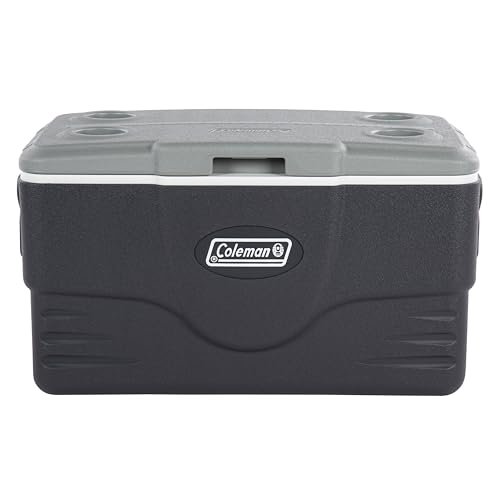
Coleman Daintree Chest Hard Cooler 44L
ASIN B0CPMF3NDV • $97.00 • Ships from Amazon AU
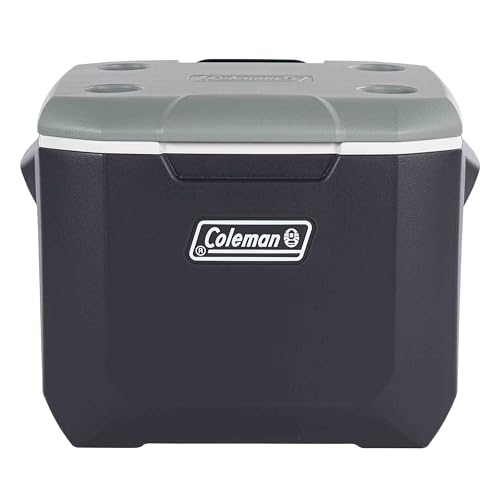
The Coleman Daintree 44L chest costs $97 at time of writing, sold by Amazon AU, and the listing returns #2 in Camping Coolers and #62 overall on Amazon AU when I checked. That rank is shared across the Daintree listings, so it tells you the range sells well rather than which size does. The listing gives a 63-can or 44L capacity, which I reckon is the right size for a couple or a small family on a weekend, and it's the size I'd point most people to first. It's sold and shipped by Amazon AU, which makes returns simpler if it turns up with a cracked corner or a hinge that doesn't sit right, something I'd check the day it arrives rather than the morning of the trip.
It has the hardware I care about on an esky this size: a leak-resistant, rustproof drain with a plug, no-crush carry handles, four moulded cup holders and a lid the listing describes as a have-a-seat lid. The insulation is listed as Thermozone and free of CFCs, HFCs and HCFCs, which is about the refrigerant-style blowing agents in the foam rather than a performance claim. The smooth top is easy to wipe down after a day at the beach. The four cup holders sit in the lid, so they're handy at a picnic table, but they're also where water pools in the rain, so tip the lid clear before you open it. The seat-style lid means it can double as a stool at camp, which is a real use for a box this size, as long as you sit near the middle.
What it doesn't give is an ice retention figure, so I can't tell you how long it holds ice compared with the Snap 'N Go, and I won't guess. Pack it full, pre-chill it and keep it shaded and it'll do a weekend for most people. The listing weight works out to about 5.5kg empty, which is light enough for one person, but full of ice and drinks it's a two-person carry, so use both handles rather than swinging it by one. Pre-chill it the night before and it'll repay the effort.
Honest caveats: No ice retention figure is stated on the listing. It has no wheels, so a full box is a two-person lift. The dimensions printed in the listing data repeat across every Daintree size, so I'd treat them as copied and measure your car boot against the box itself. Warranty is listed only as a limited manufacturer warranty.
Best for: A couple or small family who want one esky for a weekend away.
Capacity: 44L (63 cans) • Drain: Rustproof drain with plug • Wheels: No • Lid: Seat-style lid, 4 cup holders • Weight: About 5.5kg empty (listing) • Ice retention: Not stated • Seller: Amazon AU • Rank: #2 in Camping Coolers (Amazon AU)
View on Amazon AU
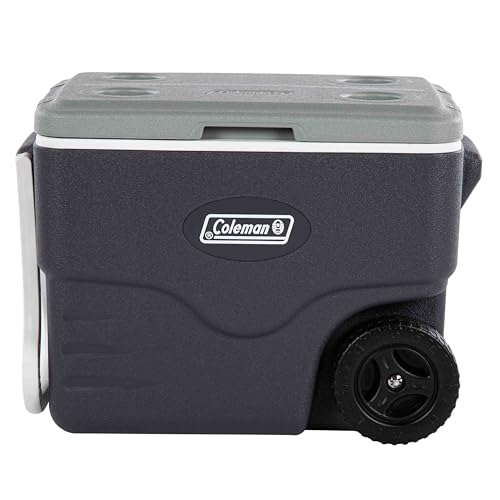
Coleman Daintree Wheeled Hard Cooler 57L
ASIN B0CPN47XY2 • $114.00 • Ships from Amazon AU
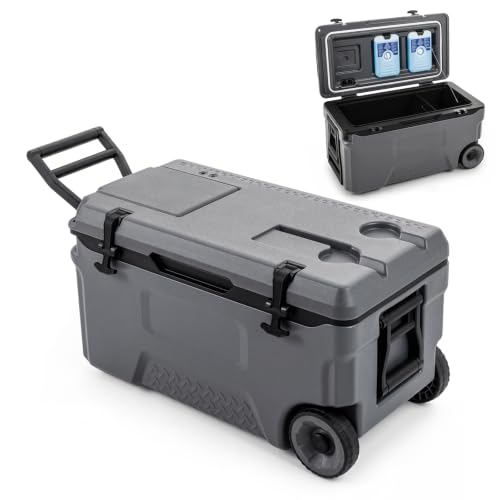
The Daintree 57L wheeled cooler costs $114 at time of writing, sold by Amazon AU, sharing the range's #2 in Camping Coolers and #62 overall rank. It's the one I'd pick for a family weekend or for anyone carrying an esky from the car to a campsite or a park more than a few metres, because a 57L box full of ice and drinks is too heavy to carry far by hand. The listing doesn't give a can count for this size. It's the biggest box in this guide, so it's also the one most likely to be underfilled, and an underfilled esky warms faster, so think honestly about how much you'll put in it before you go this big.
The listing names heavy-duty wheels, a locking telescopic handle that stays extended so you can push or pull it, moulded lifting handles and cup holders moulded into the lid. It also has a rust-proof, leak-resistant drain, which matters on a box this big because you really don't want to lift and tip a full 57L esky to empty the meltwater. The listing weight works out to about 6.4kg empty. Being sold and shipped by Amazon AU makes a return simpler if a wheel or the handle arrives damaged, and I'd test the handle lock and roll it across the floor when it lands. Like the rest of the Daintree listings, there's nothing on the lid seal or how the hinge is made, so open and close the lid a few times when it arrives to check it sits square.
Wheels are the part I'd watch. They're great on a footpath or a caravan park road and much less useful on soft sand, where they dig in and the handle ends up twisting the axle, so on the beach I'd still carry it with two people on the side handles. Keep sand out of the wheel hubs and rinse them with fresh water after a beach trip, since grit and salt are what wear wheel bores out. Like the rest of the Daintree range there's no ice retention figure on the listing. Store it with the handle down.
Honest caveats: No ice retention figure or can count is stated on the listing. Small wheels are no help on soft sand. At 57L it's only efficient when it's full, so a couple with a few drinks would do better with the 44L. Warranty is listed only as a limited manufacturer warranty.
Best for: A family weekend where the esky has to travel from the car on paths.
Capacity: 57L • Drain: Rust-proof, leak-resistant • Wheels: Yes, locking telescopic handle • Lid: Cup holders moulded in • Weight: About 6.4kg empty (listing) • Ice retention: Not stated • Seller: Amazon AU • Rank: #2 in Camping Coolers (Amazon AU)
View on Amazon AU
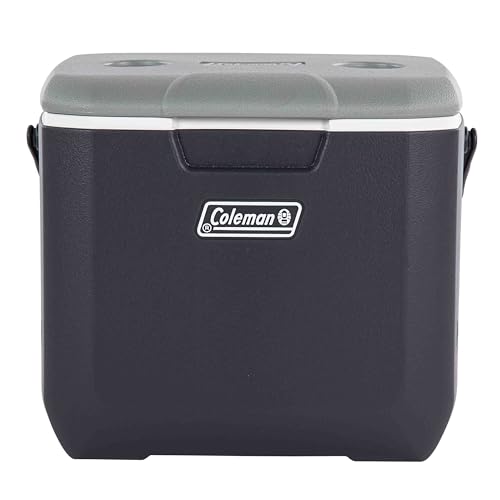
Coleman Daintree Chest Hard Cooler 28L
ASIN B0CPMRV635 • $67.00 • Ships from Amazon AU
The Daintree 28L chest costs $67 at time of writing, sold by Amazon AU, with the shared Daintree rank of #2 in Camping Coolers and #62 overall. The listing gives a 38-can or 28L capacity, which is the size I'd pick for a day at the beach for two, a fishing trip, or as the dedicated drinks esky next to a bigger food esky. It's also the size that fits behind a seat or in a small hatchback boot without taking it over. Being sold and shipped by Amazon AU makes returns simple if it arrives with a split corner or a hinge that doesn't sit square, which is worth checking on the day it turns up rather than the morning you leave.
It's a simpler box than the 44L. The listing names a smooth, easy-to-clean top, a single comfortable carry handle, a hinged lid and the same Thermozone insulation described as free of CFCs, HFCs and HCFCs. The listing weight works out to about 3kg empty, so it's an easy one-person carry even when it's full, which is exactly what you want from a drinks esky that gets moved around all day. For a drinks esky that gets opened all day, small and light is the right trade, because a smaller box packed tight holds its cold better than a big box half full. It's also an easy one to bring inside the night before and pre-chill with a few frozen bottles, and the hinged lid means there's no loose lid to lose at the boat ramp.
The thing it's missing is a drain. The 28L listing doesn't mention one, while the 44L and 57L listings both do, so I'd plan on tipping it out by hand. On a box this size that's no real hardship. The single centre handle also means the lid hinge and the handle carry everything when it's full, so lift it gently rather than swinging it, and don't stand on it. Treat it gently and it'll last for years.
Honest caveats: No drain is mentioned on the listing, unlike the bigger Daintree boxes. There's no ice retention figure. A single carry handle puts all the weight in one spot. At 28L it's a day or drinks esky, not a weekend food esky for a family. Warranty is listed only as a limited manufacturer warranty.
Best for: Day trips for two, or a second esky that only carries drinks.
Capacity: 28L (38 cans) • Drain: Not mentioned • Wheels: No • Lid: Hinged lid • Weight: About 3kg empty (listing) • Ice retention: Not stated • Seller: Amazon AU • Rank: #2 in Camping Coolers (Amazon AU)
View on Amazon AU
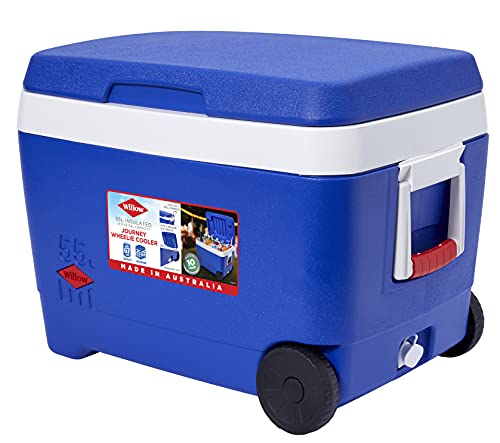
Willow 55L Wheelie Cooler
ASIN B09163M7KQ • $107.16 • Ships from Amazon AU
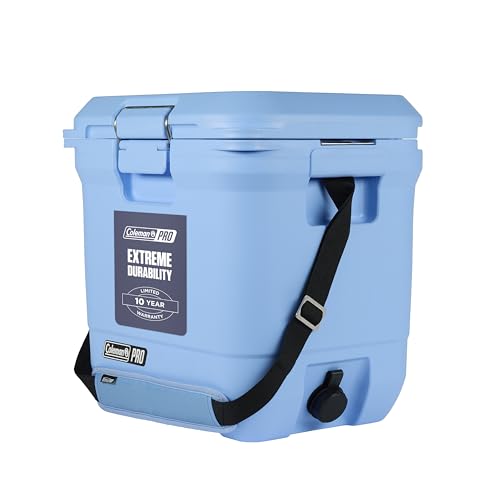
The Willow 55L wheelie cooler costs about $107 at time of writing, sold by Amazon AU, and returns #22 in Camping Coolers and #5,066 overall on Amazon AU when I checked. It's here mainly because almost every hard esky that sells well on Amazon AU is a Coleman, and this is the strongest-selling hard cooler from another brand that passed my checks. It's a big, blue wheeled box at a similar price to the Daintree 57L. That doesn't make it a bad esky, it means there's much less evidence either way, so I've ranked it below the Coleman boxes, which tell you more about what you're getting.
The trouble is the listing tells you very little. Beyond the 55 litre capacity and the wheels in the title, the feature list is general copy about keeping food and drinks cool, barbecues, picnics and a sturdy build, with nothing on insulation, the drain, the handle, the hinges or the weight. The manufacturer section of the listing data says no warranty, and the part number is 302900-001. I've written it up on what's there and not filled in the gaps. It's sold and shipped by Amazon AU, so if it arrives with a damaged wheel or a lid that doesn't sit square, a return is straightforward. That's the main reason I'd be comfortable buying it with so little on the listing, because you can look it over properly when it lands and send it back if anything isn't right.
If you're choosing between this and the Daintree 57L, the Coleman listing gives you a named drain, a locking telescopic handle and moulded lifting handles, and this one gives you none of that on paper. I'd only go the Willow if you've seen one in a shop and like the handle and wheels, or if the price gap opens up in its favour. Check the drain plug and hinge before the first trip, and keep the box out of the sun. Pre-chill it before every trip too.
Honest caveats: The listing gives almost no specifications: no drain, handle, insulation, weight or ice retention details. The listing data shows no warranty. Its sales rank is much lower than the Coleman range. For a near-identical size and price, the Daintree 57L listing states more of what matters.
Best for: Buyers who want a large wheeled esky from a brand other than Coleman.
Capacity: 55L • Drain: Not stated • Wheels: Yes • Colour: Blue • Weight: Not stated • Warranty: None listed • Seller: Amazon AU • Rank: #22 in Camping Coolers (Amazon AU)
View on Amazon AU
Coleman Snap 'N Go Collapsible Cooler 42L
ASIN B0FVF17J9F • $187.00 • Ships from Amazon AU
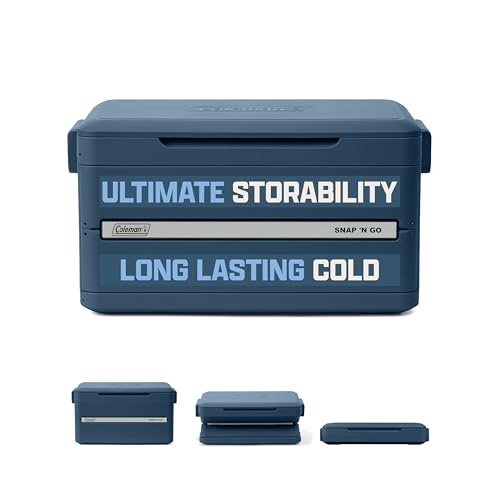
The Coleman Snap 'N Go collapsible cooler in the 42L size costs $187 at time of writing, sold by Amazon AU, and returns #1 in Amazon AU's Car Refrigerators category and #117 overall, a rank it shares with the 33L and 52L sizes. It's the dearest pick here and the only one built to fold away: the listing says it collapses to one-third of its open size and sets up in under 10 seconds, which is the whole point if you're short on storage at home or in a caravan. Collapsible coolers used to mean soft bags with a frame, so a folding box that claims two days of ice is a real change, and it's why I've included it despite the price.
It's also the only pick with ice figures on the listing. It says it keeps ice cold for up to two days, with ice retention of up to 55 hours, thanks to a fully insulated lid and body. The listing gives 76 cans without ice and a waterproof, removable liner for cleaning. The title and the warranty field both say three years, the longest warranty stated on any of the five picks. The listing weight works out to about 7.4kg. It also has the longest stated warranty, which matters more on a box with moving parts than on a solid one, so keep the receipt. The removable liner is a good idea on any esky, because the liner is the part that holds smells and stains, and being able to wash it and dry it apart from the shell keeps the box fresher between trips.
The trade-off with anything that folds is the joints. A collapsible box has seams, catches and a liner that a solid moulded esky doesn't, and those are the parts I'd expect to wear first, so set it up and fold it down the way the instructions show rather than forcing it. Read the 55 hour figure as a best case with a pre-chilled, full, shaded box. Dry the liner fully before folding it away, or it'll smell by the next trip. Fold it carefully every single time.
Honest caveats: It costs the most here. A folding box has catches, seams and a removable liner that can wear in ways a moulded esky can't. The 55 hour ice figure is a best-case number. It's heavier empty than the Daintree 57L on the listing weights. Its rank sits in Car Refrigerators and is shared across three sizes.
Best for: Anyone who needs the esky to fold away between trips.
Capacity: 42L (76 cans without ice) • Ice retention: Up to 55 hours (listing) • Folds: To one-third of open size • Liner: Removable, waterproof • Weight: About 7.4kg (listing) • Warranty: 3 years (listing) • Seller: Amazon AU • Rank: #1 in Car Refrigerators (Amazon AU)
View on Amazon AUSide-by-side comparison
What we see fail in the workshop: eskies and the gear around them
Eskies themselves don't come in for repair, but the summer things that come in with esky stories do, and the esky faults that send people shopping for a new one are almost always the same few parts. None of them are the insulation, and most of them can be avoided with a bit of care. Here's what I'd check before a trip and at the end of each summer.
Cracked hinges and lids that won't seal
The most common reason a hard esky gets replaced is a cracked hinge pin. Lids get flipped right back and dropped, kids stand on them and adults sit on the edge, and the plastic pin or the hinge boss cracks. Once one side lets go, the lid sits crooked on the seal and the ice goes noticeably faster. Open the lid gently, don't let it hang off a fully opened hinge, and if you sit on it, sit near the middle. Check the hinges at the end of each season while it's empty and easy to look at.
Wheels, axles and lost drain plugs
Wheeled eskies mostly fail at the axle or the wheel bore, and the cause is nearly always sand and salt. Grit gets into the hub, the wheel stops turning, and people drag it, which flat-spots the wheel and bends the axle. Rinse the wheels with fresh water after the beach and let them dry. Drain plugs are the other small part that disappears, usually into sand or the bottom of the boot, and a missing plug turns a good esky into a leaking one. Keep a spare if your box takes a standard plug.
Phones, keys and speakers in the meltwater
This is the one that actually lands on our counter. A phone left on the esky lid slides in, a car key fob ends up in the meltwater, or a speaker sits in the bottom of the box. Cold water, then a hot day, is a good recipe for condensation inside. Turn the device off, take the case off, dry the outside and leave it off the charger until it's properly dry, since charging while wet is what does the lasting damage. If it still isn't right, have it looked at before you buy a new one.
Decision tree: which one should you actually buy?
- Weekend away for two or a small family? → The Coleman Daintree 44L chest at $97 is the size I'd start with, and it has a drain and two carry handles.
- Esky has to travel from the car on paths? → The Daintree 57L wheeled at $114 has a locking telescopic handle and a rust-proof drain; carry it with two people on sand.
- Day trip, fishing or a drinks-only esky? → The Daintree 28L chest at $67 is light and easy to carry; it has no drain mentioned on the listing.
- Need it to fold away between trips? → The Coleman Snap 'N Go 42L at $187 folds to a third of its size and is the only one of the five picks with an ice retention figure on its listing.
- Want a big wheeled esky that isn't a Coleman? → The Willow 55L wheelie at about $107, knowing its listing states very little beyond size and wheels.
- Phone or speaker ended up in the meltwater? → Turn it off, keep it off the charger and bring it into our Erina workshop; we'll tell you what it needs before you spend anything.
Frequently asked questions
How long does ice really last in an esky?
It depends on the box, how full it is, how often it's opened and whether it sits in the sun. Of the five picks, only the Coleman Snap 'N Go listing quotes a figure, up to 55 hours for the 42L, and that's a best case with a pre-chilled, full, shaded box. On a hot coastal weekend with the lid opened often, I'd plan on getting maybe half of any quoted figure. Pre-chilling, block ice, a full box and shade make more difference than most people expect.
What size esky do I need for a weekend camping trip?
For a couple or a small family, a 38 to 44L esky usually covers a weekend, and the Daintree 44L is the one I'd start with. A bigger family might want 50L or more, or two eskies, one for food and one for drinks, so the food box stays shut. Remember that an esky is only efficient when it's full, so buying much bigger than you need costs you ice, not just money and boot space.
Should I drain the water from my esky?
Meltwater is still cold, so while it's helping keep things cold you can leave it in, especially around drinks. Drain it when it starts soaking into food packaging, when you're about to add fresh ice, or when the box is getting too heavy to move. Keep meat and food in sealed containers so the water doesn't matter as much. A drain plug makes this easy without lifting the box, and the Daintree 44L and 57L listings both mention one.
Is block ice better than ice cubes?
Yes, in my experience block ice lasts noticeably longer than cubes, because there's much less surface area for the same weight of ice, so it melts more slowly. Frozen water bottles do the same job without flooding the box, and you can drink them as they thaw. A good approach is block ice or frozen bottles on the bottom and along the sides, and a layer of cubes on top to fill gaps and cool drinks quickly, so the box stays full and cold.
Is an esky or a 12V car fridge better for camping?
For a weekend or a day trip, an esky is simpler, lighter and has nothing to go flat. For longer trips or places where you can't buy ice, a compressor car fridge holds a set temperature without ice, but it needs a proper power setup, such as a dual battery system or a portable power station, or it can flatten your starting battery overnight. Plenty of people use both, keeping food in the fridge and drinks in an esky.
Are collapsible coolers as good as hard eskies?
The Coleman Snap 'N Go listing claims up to 55 hours of ice retention for the 42L size, which is a strong claim, and it's the only pick here with a figure, so on paper it holds up. The trade-off is durability: a folding box has catches, seams and a removable liner that a solid moulded esky doesn't, and those are the parts most likely to wear. If you have the storage space, a solid hard esky has fewer parts to go wrong.
Related buying guides
Phone took a dip in the esky?
Esky meltwater, then a hot afternoon, is hard on phones, key fobs and speakers, and charging a wet device is what does the lasting damage. If something has gone quiet, won't charge or has lines on the screen after a day out, bring it into our Erina workshop and we'll tell you what it needs before you spend anything.
Visit our Erina workshop Book Online