Prices from Amazon AU, updated daily. Swipe or use the arrows for more.
Disclosure: This article contains affiliate links to amazon.com.au. If you buy through one of these links iFix may earn a small commission at no extra cost to you. It doesn't change which products we recommend. We focus on what actually lasts based on 16 years of repair-shop experience.
Quick summary7 picks
- YOPOWER 30L Car Fridge Freezer about$229.90
- Adventure Kings Escape 40 Portable Camping… about$255.16
- Glacio 50L Portable Fridge Freezer with… about$239.95
- Companion 30L Single Zone Fridge/Freezer about$379.00
- Most PremiumKings Escape 90 Dual Zone Camping… about$559.16
- Koolatron 40L Portable Car Refrigerator… about$449.99
- Koolatron 50L Portable Car Refrigerator… about$464.84
Why the boot fridge suddenly matters
The drive holiday is back. Putting a family of four on a plane costs what it costs, and loading the same four into a car doesn't, even with fuel prices doing what they've been doing. The catch is that a road trip runs on food, and highway servo food at highway prices claws back a decent chunk of whatever the car saved you. The old answer was an esky and a bag of ice. Ice melts, the cheese ends up floating in grey water, and by day three you're buying two bags a day at five or six dollars each. A compressor fridge fixes that problem once. It holds a set temperature no matter how warm the boot gets, and the running cost is measured in cents per day, not dollars.
The market has sorted itself into two camps, and only one of them deserves your money. There are real compressor fridges, which are small versions of the one in your kitchen, and there are thermoelectric coolers, which are a fan bolted to a Peltier plate. They sit on the same shelf at overlapping prices and the box art looks nearly identical. The seven picks below are all compressor units between $165 and $560, sold new through Amazon AU by either Amazon itself or Australian storefronts. Before the picks, spend a few minutes on the electrics, because a car fridge is the one appliance in this whole run of guides that can strand you: get the battery side wrong and the fridge works perfectly while your car doesn't start.
Compressor or thermoelectric: only one is a fridge
A thermoelectric cooler pumps heat across a semiconductor plate, and the physics caps how far it can pull below the air around it, usually somewhere around 15 to 20 degrees. On a 35°C afternoon the inside of that box sits in the high teens, which isn't holding meat or dairy safe, it's just delaying the warm. A compressor fridge works like the one at home: refrigerant, a small motor, an evaporator plate and a thermostat that holds whatever you set regardless of the weather outside. Every pick below holds fridge temperatures in a hot boot, and most of them will pull well below zero if you want a freezer instead. The power story is just as lopsided, because a Peltier plate draws its full current every second it's switched on, while a compressor cycles: it works hard on pulldown, then idles along holding temperature.
The confusing part is that both get sold under the same 'car fridge' label. Telling them apart takes about ten seconds once you know what to look for. Check the listing for the word compressor, for a temperature range that goes below zero, and for a stated daily power figure in watt hours or kilowatt hours. A thermoelectric cooler can't honestly claim any of the three, so its listing usually talks about 'cooling below ambient' instead, which is the tell. If you're spending under about $150 on something sold as a fridge, I'd assume it's a cooler until the listing proves otherwise.
Battery protection: the spec that decides if your car starts
Every pick in this guide lists some form of battery protection, and it's the spec I'd rank above capacity, above pulldown speed, above everything. A 12V fridge left running with the engine off is a slow, steady drain on whatever battery feeds it. The protection circuit watches the supply voltage and shuts the compressor down when it sags to a preset floor. Most of these use a three-stage system: a high setting that cuts out early, a low setting that lets the battery run down much further, and a middle ground. High is the setting for anything connected to the battery that starts your car, because it pulls the pin while there's still comfortably enough charge to crank. Low exists for deep-cycle batteries that are built to be run down and recharged.
That's the theory. The practical version is simpler: don't run a fridge overnight from your starter battery, even on the high cutoff, because the cutoff is a guess about your battery's health made by a fridge. Run it from a second battery, or from a portable power station, and let the car's battery do its one job. Cutoff circuits also read the voltage at the fridge, not at the battery, and a long thin cable run reads lower than the battery really is, so thin extension leads make the fridge give up early. And whatever you run it from, a jump starter in the glovebox turns the worst case into a five-minute delay instead of a ruined morning.
What one costs to run, in real numbers
The Glacio 50L listing states about 1.32kWh of use per 24 hours, and that's a useful worst-case anchor for the whole class. At home on 240V, at the average tariff of roughly 33c/kWh, that's around 44 cents a day, which is why leaving one running in the garage as a drinks fridge is no big deal. In the car it's a different sum. 1.32kWh over a day at a nominal 12 volts works out to roughly 110 amp hours, and a typical starter battery holds 60 to 80 amp hours with only the top slice safely usable. That one line of arithmetic is the entire case for battery cutoffs, second batteries and power stations, and it's why the fridge that 'killed the battery overnight' gets blamed for doing exactly what its spec sheet said it would.
You can shrink the number in practice. Pre-chill the fridge on mains power at home the night before, because pulldown is the expensive part and mains power is the time to pay for it. Load it with cold food, since every warm can you drop in is work the compressor has to do from the battery. Park it in shade with air around the compressor housing, because the hotter the air at the condenser, the longer each cycle runs. None of this is complicated, it's the same logic as not leaving the kitchen fridge door open, just with a battery paying the bill instead of the meter.
Sockets, wiring and where the fridge rides
Where the fridge plugs in matters nearly as much as what it plugs into. Plenty of wagons and utes have a 12V socket in the cargo area, and that's the one to use, because it usually sits on a shorter cable run than the dash socket and the fridge lead doesn't have to snake through the cabin. Find out whether that socket stays live with the ignition off, because carmakers split roughly evenly on this and the difference defines your whole setup. A socket that dies with the key means the fridge stops every time you park for a swim, which is annoying but safe. One that stays live means the fridge keeps running on the starter battery, and the cutoff circuit becomes the only thing standing between you and a no-start. For a fridge that lives in the car permanently, a dedicated socket wired on decent cable with an inline fuse is a small job for an auto electrician, and it removes the most common cause of flaky fridge behaviour in one hit.
Strap the fridge down properly while you're at it. A loaded 30 litre unit is a serious mass, and under hard braking an unsecured one becomes a projectile aimed at the back of someone's seat. Most cargo areas have tie-down points, and most fridges have handles a strap will loop through, so there's no excuse. Leave clear air at the vented side after strapping. And if the car sits in the driveway for weeks between trips with a second battery aboard, a battery maintainer keeps both batteries from sulphating while they wait, which costs a lot less than replacing them every second summer.
Litres and cans: what the sizes really hold
Manufacturers quote litres, but cans are easier to picture. Companion's listing says its 30L holds up to 40 cans, and Koolatron's says its 50L holds 72. As a rough rule, 30L handles a couple for a long weekend with drinks and fresh food, 40 to 50L covers a family for several days, and the 90 class exists for long trips or big families. Bigger costs you twice, though: more boot space gone, and more insulated volume to hold cold, so don't buy litres you won't fill. A half-empty big fridge runs longer cycles than a full small one, because food holds cold and air doesn't.
Dual zone is the other capacity question. The Kings Escape 90 below splits into two compartments with independent control, so you can hold frozen meat at minus something in one side and drinks and vegetables at fridge temperature in the other. A single-zone fridge makes you choose one mode for the whole box, and that's fine for most trips, you just plan around it. The honest advice is that dual zone earns its keep on week-plus trips and gets used as one big fridge the rest of the year.
Lids, seals, covers and airflow
The parts that decide how a fridge is doing in year three are the boring ones. The lid seal takes a compression set eventually, and once it stops sealing properly the compressor runs longer cycles to hold the same temperature, which you notice as a battery that drains quicker than it used to. Hinges and latches take the abuse of being loaded and slammed in a boot. Reversible lids, which the Companion and the Kings Escape 90 both list, are worth having just so you can orient the opening to suit the boot instead of fighting it. The Kings Escape 90 ships with a fitted 600D fabric cover, and a cover does real work: it adds insulation, and it keeps knocks and UV off the cabinet while leaving mesh panels for airflow. The Escape 40 bundle below comes with a tie down kit instead, so budget for a cover separately if you want one.
Airflow is the part people get wrong. The compressor and condenser need to dump heat somewhere, and a fridge packed tight against soft bags on all sides is running with a blanket on. Leave a hand's width of air at the vented side. Transit angle matters too, compressor fridges tolerate a slope but not lying flat, and the Glacio 50L listing puts its anti-shock stability figure at 40 degrees and the Koolatron 40L listing says 30. The failure mode when this stuff is ignored is heat plus vibration plus condensation working on the electronics, which is the same slow corrosion we chase on boards at the workshop bench in Erina every week, just wearing a different badge.
How I picked the seven
Same gates as every guide in this series. Condition New, listings on Amazon AU from Amazon itself or Australian storefronts, no grey imports, and a sales rank in the fridge categories high enough to show real people are buying the thing, not just clicking it. The band ran up to $1,200 and the seven that made it land between $165 and $560, because above that price the extra money buys brand names and marginal litres rather than different engineering. I dropped every thermoelectric cooler for the reasons above, dropped the 90 and 100 litre double-door units that are really office fridges wearing camping paint, and marked down any listing that doesn't state a battery protection feature, because that omission usually isn't an accident, which is why the YOPOWER card flags it.
One honesty note on sellers. Two picks come from 4WD Supacentre's Amazon storefront, which is the retailer behind the Adventure Kings brand, the YOPOWER comes from the brand's own storefront, and the Glacio comes from an AU marketplace seller better known for furniture. That's Amazon AU retail in 2026, the brands sell through storefronts. I've stuck to listings where the seller, the price and the sales rank all held up on the day, and if you'd rather pay more for the words 'sold by Amazon AU' on the invoice, the Companion and both Koolatrons are exactly that.
The 7 picks, $165 to $560
Prices are Amazon AU as of 10 October 2026 and move week to week. Ranks are Amazon AU category sales ranks, checked the same day.

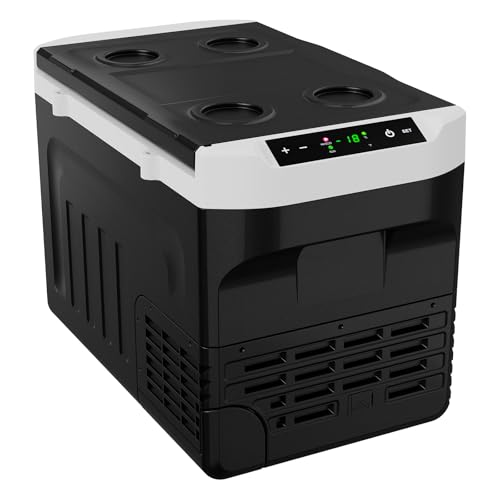
YOPOWER 30L Car Fridge Freezer Compressor Cooler 12/24V
ASIN B0FVXT8Q8S • $229.90 • Sold by YOPOWER on Amazon AU
The YOPOWER is the compact compressor pick in this guide, and the market has noticed: number 85 in Amazon AU's Car Refrigerators category at $229.90, sold by YOPOWER itself on Amazon AU. The listing covers the fundamentals. It runs from 12V or 24V in the car and from 240V mains at home, the title states a range of -20°C to 20°C, and it has ECO and MAX cooling modes. The two figures I'd plan around are both on the listing: MAX mode is stated to take the cabinet from room temperature to 0°C in 20 minutes, and ECO mode is stated to use less than 0.5kWh a day. Read the second as a best case in mild weather rather than a promise, and keep the 1.32kWh figure from the running-cost section in mind for a hot day. For a first fridge, or a second one to live in the shed, this is a sensible place to start.
The practical details are modest but sensible. There are two sturdy handles rather than wheels, and the listing's item weight works out to about 12.8kg empty, so a full 30 litres is a two-hand carry worth planning for. Noise is stated at 45dB, which suits a car, a caravan or a van you're sleeping in, and the listing describes an anti-shock design for bumpy roads, though it doesn't give an angle. It comes from a brand with its own Amazon AU storefront rather than a furniture label, and the listing shows a one-year warranty. None of that is exotic engineering, but a stated pulldown time and a stated ECO draw are the kind of numbers half the listings in this category leave out.
What the listing doesn't give you is any mention of battery protection. The feature list says nothing about a low-voltage cutoff, so don't assume there is one. If you'll run it from a starter battery, that matters, because a fridge draining the battery flat is the failure the battery-cutoff sections above are about. Pair it with a separate cutoff, run it from a second battery or a power station, or step up to the Companion or the Koolatron, which both state a battery monitor. The feature list also mentions 'dual-zone storage' without explaining it, so check the listing photos before counting on two separate temperatures.
Honest caveats: The feature list doesn't state battery protection or a cutoff voltage, and there are no wheels. Compressor make isn't stated. The 0.5kWh figure applies to ECO mode only. The seller is the brand's own Amazon storefront, so returns and any warranty claim go through Amazon and the seller.
Best for: First compressor fridge for a couple, or a shed drinks fridge, with the pulldown time and ECO draw stated on the listing.
Capacity: 30L • Power: 12V/24V DC, 240V AC • Temp range: -20°C to 20°C (stated in title) • Pulldown: Room temperature to 0°C in 20 min, MAX mode (stated) • Stated draw: Under 0.5kWh per day, ECO mode • Noise: 45dB (stated) • Portability: Two handles, about 12.8kg • Battery protection: Not stated • Sold by: YOPOWER (Amazon AU storefront) • Rank: #85 in Car Refrigerators (Amazon AU)
View on Amazon AU
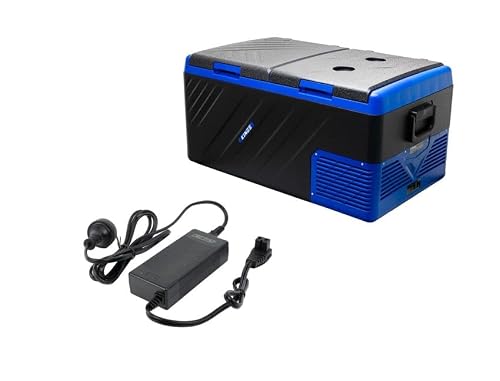
Adventure Kings Escape 40 Portable Fridge/Freezer with Tie Down Kit
ASIN B0C6CX8Z7B • $164.96 • Sold by 4WD SUPACENTRE on Amazon AU
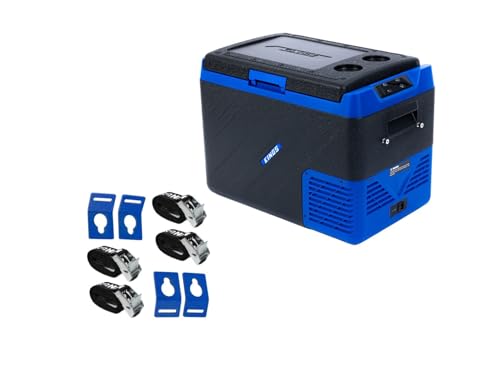
Adventure Kings is 4WD Supacentre's house brand, and the Escape 40 is their mid-sized fridge sold through the company's own Amazon AU storefront at $164.96 with a tie down kit in the box. The listing pitches it as the sweet spot between compact and useful, and the claim that you can nearly fit two cartons inside is the kind of capacity description I trust more than a litre figure, because someone measured it with the thing people actually load. It's a genuine compressor unit, the listing is explicit about that, running from 12V or 24V in the vehicle, with a temperature range from +20°C all the way down to -20°C set through a digital LED display that's readable in daylight.
The tie down kit is the part of this bundle worth thinking about. Kings describes it as four powder-coated steel brackets and four cam-buckle straps, which is the difference between a fridge that stays where you put it and one that shifts into the back of the seats on a dirt road. An unrestrained fridge also takes every knock through its hinges and latches, and those are the parts that give up first on any cabinet that lives in a boot. Brackets and straps bought separately cost real money, so having them in the box shifts the value equation at this price. Between the YOPOWER and this, you're choosing between a stated pulldown time and power draw on one hand, and a recognised camping brand with the mounting hardware already sorted on the other.
The catch to plan around is mains power. The listing states 12V and 24V operation, with 240V available only through an optional adapter that isn't in the box. If your routine involves pre-chilling on mains the night before a trip, which it should, that adapter becomes a required extra rather than an option, so price it into the comparison. In the car, none of this matters and the fridge is complete as delivered. Kings sells the adapter through its own channels, so it's an easy add at checkout rather than a hunt, just not a free one.
Honest caveats: 240V AC operation needs an optional adapter that isn't included, so pre-chilling at home means buying it. This bundle pairs the fridge with the tie down kit rather than the insulated cover, so a cover is a separate purchase. Capacity in litres isn't stated plainly on the listing, the 40 is the model name.
Best for: A family weekender who wants a known camping brand, the mounting hardware in the box and room for a proper food shop.
Model: Kings Escape 40 • Type: Compressor fridge/freezer • Temp range: +20°C to -20°C • Power: 12V/24V DC (240V via optional adapter) • Display: Digital LED with controls • In the box: Tie down kit, four steel brackets and four cam-buckle straps • Sold by: 4WD Supacentre (Amazon AU storefront)
View on Amazon AU
Glacio 50L Portable Fridge Freezer with Wheels 12/24V
ASIN B0FM7CXRK1 • $239.95 • Sold by Artiss Furnishings on Amazon AU
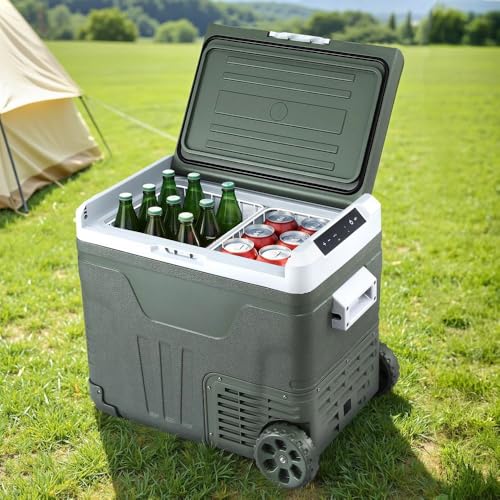
The Glacio 50L is the lowest-cost way into 50 litres in this guide, at $239.95 and number 32 in Amazon AU's Car Refrigerators category, sold by Artiss Furnishings on Amazon AU. The listing is thorough on the basics. It plugs into 12V, 24V or 240V power, has ECO and MAX cooling modes, and adjusts down to -20°C. It states about 1.32kWh per 24 hours of use, which is the figure I used for the running-cost arithmetic earlier, and it puts noise below 45dB.
The practical side is wheels and a pull rod. The listing describes off-road wheels and an anti-shock design within 40 degrees, so a loaded 50 litres can be towed from car to campsite instead of carried. Battery protection is stated as a three-stage system on DC power that cuts off charging once the voltage setting is reached. The wording is thin on how the cutoff behaves, so confirm the setting before running it from a starter battery.
This is sold under a label rather than a named brand: the listing's brand field says Generic, and the seller is an AU marketplace storefront better known for furniture. At $239.95 you're buying litres and a stated spec sheet, not a name. It costs about $10 more than the YOPOWER 30L for 20 more litres, which is the argument for it if you'll fill the space.
Honest caveats: Brand is listed as Generic and the seller is a marketplace storefront, so support runs through Amazon's returns process. Weight and compressor make aren't stated on the listing. Stated noise is below 45dB, against the Koolatron's under 40dB.
Best for: A family or group trip fridge on a tight budget, where the 50 litres and the wheels matter more than the badge.
Capacity: 50L • Power: 12V/24V DC, 240V AC • Temp range: Down to -20°C (stated) • Stated draw: About 1.32kWh per 24h • Modes: ECO and MAX cooling • Battery protection: 3-stage on DC (stated) • Portability: Pull rod, off-road wheels • Noise: Below 45dB (stated) • Sold by: Artiss Furnishings (AU marketplace) • Rank: #32 in Car Refrigerators (Amazon AU)
View on Amazon AU
Companion 30L Single Zone Fridge/Freezer
ASIN B0H1MXN9HJ • $379.00 • Ships from Amazon AU
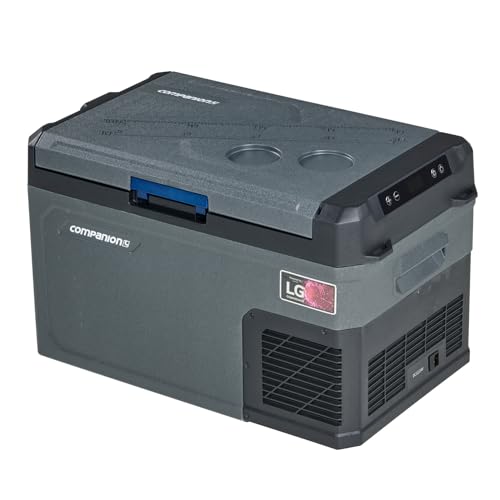
Companion is an established Australian camping equipment brand, this unit is sold directly by Amazon AU, and those two facts are most of what the extra money over the YOPOWER buys. The listing names the compressor: a dual-speed LG unit, which is a real manufacturer part in a category where most listings won't tell you what's doing the actual work. It's a 30 litre single zone box that runs as either a fridge or a freezer, swapping between modes through digital temperature controls, and the listing rates the capacity at up to 40 cans, which is the honest way to describe what 30 litres means when you're standing at the boot deciding what stays home.
The battery side is covered the way it should be, with a built-in 3-stage battery monitor that the listing frames explicitly as protecting the vehicle's power system from being drained. Power input is flexible across 12V and 24V DC and 240V AC, so it pre-chills at home without an extra purchase, runs in a truck as happily as a car, and can live indoors between trips as a spare fridge. The reversible hinged lid is a small spec that earns its place the first time you set the fridge up in a tight boot and realise the lid can open toward whichever side your setup needs. That flexibility is most of the argument for it as a one-fridge household solution.
What the listing doesn't state matters for the comparison: there's no temperature range in degrees, no daily power draw figure, and no weight. In my experience the brands with a retail presence behind them are the safer bet when a claim is missing rather than exaggerated, and a named LG compressor is a better sign than a precise number from a label nobody answers the phone for. But if you buy on stated specs alone, the $230 YOPOWER out-discloses this $379 unit on pulldown time and daily power draw, and that's worth knowing. For most buyers the brand answer and the numbers answer land on different picks, which is exactly why both are in this guide.
Honest caveats: Single zone means fridge or freezer, never both at once. The listing states no temperature range in degrees, no daily power draw and no weight, so you're trusting the brand where the YOPOWER gives numbers. At $379 it's about $150 more than the YOPOWER for the same 30 litres.
Best for: Someone who wants an established brand and Amazon AU as the seller, with a named compressor doing the work.
Capacity: 30L, up to 40 cans • Compressor: Dual-speed LG (stated) • Zones: Single, fridge or freezer mode • Power: 12V/24V DC, 240V AC • Battery protection: 3-stage battery monitor • Lid: Reversible hinged • Sold by: Amazon AU • Rank: #130 in Car Refrigerators (Amazon AU)
View on Amazon AU
Adventure Kings Escape 90 Dual Zone Fridge/Freezer with Cover
ASIN B0D35HZMJK • $559.16 • Sold by 4WD SUPACENTRE on Amazon AU
The Escape 90 is the big-trip option: a dual zone cabinet that runs a freezer compartment and a fridge compartment at the same time with independent control over each. That's the layout that changes how you provision a long trip, because frozen meat bought before you left stays frozen for the week while the drinks and vegetables side holds fridge temperature next to it. Kings pitches it at people running the fridge from a vehicle, a power pack or a deep-cycle battery, and at $559 through 4WD Supacentre's Amazon storefront with the fitted insulated cover included, it's the least money on this list that buys a genuine two-zone setup. The cover alone would cost real money bought separately.
The electrics are handled with more transparency than most listings manage. There's a digital voltage indicator built into the display, so you can watch what the fridge is seeing from the battery in real time rather than guessing, and a 3-stage voltage cutoff with selectable levels for starter versus deep-cycle supplies. The lids rotate 180 degrees so the openings can face whichever way your setup demands, the walls are described as extra-thick insulation, and there are two cup holders moulded into the top, which sounds like a gimmick until the fridge is doubling as the camp bench, which it will. The included cover is a 600D insulated arrangement and helps the compressor's duty cycle as much as it protects the cabinet's paint.
Think hard about the size before clicking. A 90-class dual zone is a two-person lift when loaded and it owns a serious share of a wagon's boot, so it suits utes, four-wheel drives and vans more than hatchbacks. Run it from a second battery or a power station as the listing itself suggests, because a cabinet this size holding two zones is a bigger overnight draw than the 30 litre singles. If the size question is genuinely open, measure the boot with the tape, not the eye, because the returns process on a fridge this big is nobody's idea of fun.
Honest caveats: Capacity in litres isn't stated plainly on the listing, the 90 is the model name. 240V AC isn't mentioned, stated operation is 12V and 24V. It's physically large and heavy when loaded, and two zones mean more insulated volume to keep cold, so budget battery capacity accordingly.
Best for: Week-plus family trips where frozen food and a working fridge have to coexist, run from a second battery or power station.
Model: Kings Escape 90 Dual Zone • Zones: 2, independently controlled • Power: 12V/24V DC • Voltage readout: Digital indicator on display • Battery protection: 3-stage voltage cutoff • Lids: Rotate 180°, two cup holders • Cover: Insulated 600D cover included • Sold by: 4WD Supacentre (Amazon AU storefront) • Rank: #323 in Car Refrigerators (Amazon AU)
View on Amazon AU
Koolatron 40L Portable Car Refrigerator Freezer with Bluetooth
ASIN B08KTT5XV1 • $449.99 • Ships from Amazon AU
The Koolatron 40L is the smaller sibling of the 50L below, sold and shipped by Amazon AU at $449.99 and ranked 134 in Car Refrigerators. It follows the same spec-sheet approach. The listing states a temperature range of -22°C to 10°C, a pulldown from 32°C to -6°C in under 30 minutes, noise under 40 decibels, and a 40 litre cabinet rated at 44 cans.
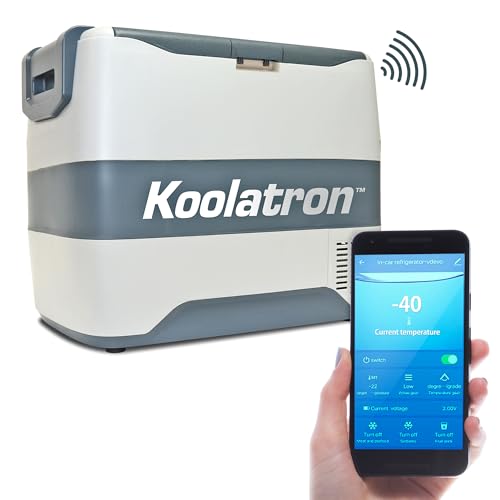
The interior and controls match the bigger unit: an LED light, a wire basket, a removable divider and a leak-proof drain channel, plus Bluetooth control through the free SmartKool app alongside the physical panel. Battery protection is stated as built-in low voltage detection with three power levels, and the shockproof design is rated for running on an incline up to 30 degrees. Both 12V DC and 220V AC cords are included.
The price is the issue. At $449.99 it costs about $15 less than the 50L ($464.84) for ten fewer litres, so unless the smaller footprint matters, the 50L is the better value. If you only need the 30 litre class, the Companion and the YOPOWER both cost less.
Honest caveats: The included AC cord is listed as 220 volt, so confirm the plug and voltage suit AU mains before relying on it indoors. Single zone, so it's fridge or freezer, not both. No 24V operation is mentioned on the listing.
Best for: Someone who wants Koolatron's stated figures and app control in a smaller 40 litre box, with Amazon AU as the seller.
Capacity: 40L, 44 cans • Temp range: -22°C to 10°C • Pulldown: 32°C to -6°C in under 30 min (stated) • Noise: Under 40dB (stated) • Power: 12V DC, AC cord included • Control: Panel + SmartKool Bluetooth app • Interior: LED light, basket, divider, drain • Battery protection: Low-voltage detection, 3 levels • Sold by: Amazon AU • Rank: #134 in Car Refrigerators (Amazon AU)
View on Amazon AU
Koolatron 50L Portable Car Refrigerator Freezer with Bluetooth
ASIN B08KTTBTNT • $464.84 • Ships from Amazon AU
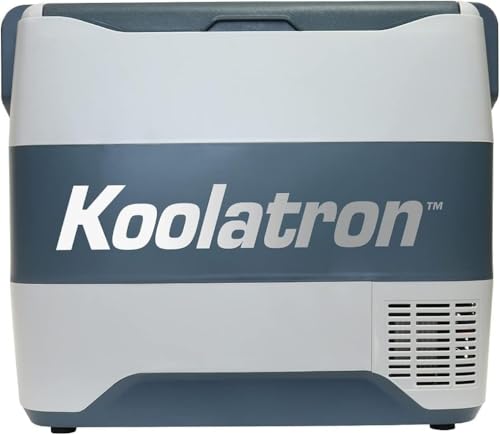
The Koolatron is the specification sheet of this group. The listing states a temperature range of -22°C to 10°C and a pulldown from 32°C to -6°C in under 30 minutes, which is the figure that matters when you've forgotten to pre-chill and you're loading a warm fridge an hour before leaving. It states noise under 40 decibels, relevant if the fridge sleeps in the tent or the van with you. And it's a proper 50 litres, rated on the listing at 72 cans, with the interior details that bigger boxes need and entry units skip: an LED light so you're not phone-torching dinner, a wire basket and removable divider for organisation, and a leak-proof drain channel for cleaning out the inevitable spill.
Control is the party trick. There's a standard digital panel on the cabinet, plus Bluetooth and a free SmartKool app for Android and iOS, so you can check and set the temperature from the driver's seat or the camp chair without opening anything. I'd call app control on a fridge a nice-to-have rather than a reason to buy, and apps age worse than compressors do, but the physical panel means the fridge stays fully usable if the app is ever abandoned. Battery protection is stated as built-in low voltage detection with three power levels, the same protective idea as the others here, and the shockproof design is rated for running on an incline.
It's sold and shipped by Amazon AU at $464.84, which makes it the simplest ownership story at the top end of this guide. Ranked 134 in Car Refrigerators, it's the choice when you want the stated numbers, the fast pulldown and a 50 litre single zone, and you'd rather pay for disclosure than hope for it. The extra $94 for the Kings 90 buys the second zone instead of the app, and that's the real fork in the road at the top of this guide: two temperatures at once, or one temperature with every number on the label stated and a single seller handling any claim. I lean toward stated numbers, but it's a fair fight.
Honest caveats: The included AC cord is listed as 220 volt, an odd wording for Australia, so confirm the plug and voltage suit AU mains before relying on it indoors. Single zone, so it's fridge or freezer, not both. No 24V operation is mentioned on the listing, which matters for truck use.
Best for: The buyer who wants stated figures for everything, sub-30-minute pulldown and a 50 litre single zone.
Capacity: 50L, 72 cans • Temp range: -22°C to 10°C • Pulldown: 32°C to -6°C in under 30 min (stated) • Noise: Under 40dB (stated) • Power: 12V DC, AC cord included • Control: Panel + SmartKool Bluetooth app • Interior: LED light, basket, divider, drain • Battery protection: Low-voltage detection, 3 levels • Rank: #134 in Car Refrigerators (Amazon AU)
View on Amazon AUSide-by-side comparison
| Product | Price | Best for |
|---|---|---|
| YOPOWER 30L Car Fridge Freezer | ~$229.90 | |
| Adventure Kings Escape 40 Portable Camping… | ~$255.16 | |
| Glacio 50L Portable Fridge Freezer with… | ~$239.95 | |
| Companion 30L Single Zone Fridge/Freezer | ~$379.00 | |
| Kings Escape 90 Dual Zone Camping… | ~$559.16 | |
| Koolatron 40L Portable Car Refrigerator… | ~$449.99 | |
| Koolatron 50L Portable Car Refrigerator… | ~$464.84 |
What we see fail at the bench: car fridges
A car fridge lives the hardest life of any appliance you own. It bakes in a boot, gets rattled down corrugated roads, breathes damp coastal air and runs from a supply that sags and spikes with the vehicle. The compressors themselves mostly soldier on. What arrives at the bench is everything wrapped around them: plugs, boards and seals, usually in that order.
Cigarette plugs and voltage drop
The 12V accessory plug is a terrible connector for a fridge and it causes most of the 'faulty fridge' complaints we hear. A compressor pulling meaningful current through a sprung pin and a thin socket makes heat, heat loosens the contact, and the connection gets worse every trip until the fridge browns out or the plug housing melts. Long thin extension leads make it worse, because the voltage the fridge sees drops with every metre, and the cutoff circuit reads that sag as a dying battery and shuts down early. If a fridge is a permanent fixture in your vehicle, have a proper socket wired on decent cable. Half the fridges people think are broken are just badly fed.
Control boards living in damp air
The electronics in these cabinets sit in a box that gets hot all day, cools all night and lives near the coast for holidays, which is a condensation machine. Moisture settles on the control board, corrosion creeps across tracks and connector pins, and one day the display is dead or the buttons stop responding while the compressor itself is fine. It's the same slow failure we chase across phone and laptop boards every week, and it's repairable at component level far more often than a whole-fridge replacement quote suggests. Storing the fridge with the lid cracked open in a dry spot between trips slows it down considerably.
Lid seals, hinges and the slow warm leak
Seals fail quietly. The rubber takes a compression set after a couple of years of the lid being slammed and latched, the seal stops closing the gap, and warm air leaks in constantly. Nothing announces the fault, the fridge just runs longer cycles to hold the same temperature, your battery drains noticeably faster, and eventually someone blames the compressor or the battery. Check the seal with a piece of paper closed in the lid: if it slides out without resistance at any point around the rim, you've found the leak. Hinges and latches on the entry-level units are the other quiet casualty, and a lid that no longer clamps firmly has the same effect as a torn seal.
Decision tree: which one should you actually buy?
- First fridge, mostly weekends, want a stated pulldown time and power draw? → The YOPOWER 30L at $230. MAX mode is stated to reach 0°C in 20 minutes and ECO mode to use under 0.5kWh a day, but battery protection isn't stated, so add a separate cutoff if it runs from the starter battery.
- Family weekends, want a camping brand with the mounting hardware sorted? → The Kings Escape 40 at $165. Tie down kit included, -20°C capable, just budget for the optional 240V adapter if you'll pre-chill at home.
- Need 50 litres on the tightest budget? → The Glacio 50L at $240. Wheels and a pull rod, 3-stage battery protection stated, and a marketplace label rather than a named brand.
- Want an established brand, sold by Amazon AU, with a named compressor? → The Companion 30L at $379. Dual-speed LG compressor, 3-stage battery monitor and mains capability out of the box.
- Week-long trips where frozen meat and cold drinks both have to survive? → The Kings Escape 90 Dual Zone at $559, run from a second battery or a power station. Two zones, voltage readout, cover included.
- Want Koolatron's stated numbers in a smaller box? → The Koolatron 40L at $450, though the 50L costs only about $15 more.
- Want stated numbers for pulldown, noise and capacity, and the simplest warranty path? → The Koolatron 50L at $465, sold by Amazon AU. -22°C to 10°C range, pulldown from 32°C to -6°C in under 30 minutes, app control on top of a physical panel.
- Already own a fridge that runs but won't get cold, or has a dead display? → Don't bin it. Dead displays and corroded control boards are usually board-level fixes, and plug or wiring faults masquerade as fridge faults constantly. Bring it in to our Erina workshop and we'll tell you what's actually wrong before you spend anything on a replacement.
Frequently asked questions
Can I run a 12V fridge overnight from my car's starter battery?
You can, and the battery protection is designed to stop the worst outcome, but I wouldn't make a habit of it. A fridge drawing the Glacio 50L's stated 1.32kWh a day is the equivalent of about 110 amp hours over a full day, and a typical starter battery holds 60 to 80 amp hours with only the top portion safely usable before cranking suffers. The high cutoff setting pulls the pin early to protect starting, which also means the fridge stops fridging at some point in the night. A deep-cycle second battery or a portable power station is the proper answer for engine-off running, with the starter battery kept for its one job.
What's the difference between a compressor fridge and a thermoelectric cooler?
A compressor fridge is a small version of your kitchen fridge: refrigerant, a motor and a thermostat holding a set temperature regardless of the weather, with most units able to run below zero as freezers. A thermoelectric cooler pushes heat across a Peltier plate and can only pull a limited amount below the surrounding air temperature, typically 15 to 20 degrees, so on a hot day the contents sit far above safe food temperatures. Thermoelectrics also draw their full current continuously while compressors cycle on and off. The listing tells you which you're looking at: the word compressor, a below-zero temperature range and a stated daily power figure all point to the real thing.
What does three-stage battery protection actually do?
It watches the voltage of whatever is feeding the fridge and shuts the compressor off when the voltage falls to a preset floor, with three selectable floors. The high setting cuts out early and is meant for starter batteries, leaving enough charge to crank the engine. The low setting lets the supply run down much further and is meant for deep-cycle batteries that tolerate it. One caution: the circuit measures voltage at the fridge, not at the battery, so a long or thin cable run that drops voltage under load can trigger the cutoff early. If your fridge gives up sooner than the battery state suggests it should, suspect the wiring before the battery.
How much does a 12V fridge cost to run per day?
Using the stated figure on the Glacio 50L listing as a guide, about 1.32kWh per 24 hours for a 50 litre unit, while the YOPOWER 30L states under 0.5kWh a day in ECO mode as a best case. On mains power at home, at the average Australian tariff of roughly 33c/kWh, that's around 44 cents a day, so leaving one running in the garage costs a few dollars a week. The daily figure rises in hot weather, when the fridge is opened often, or when warm food is loaded, because pulldown work costs far more than holding temperature. Pre-chilling on mains before a trip, loading cold food and keeping air around the condenser all pull the number down in practice.
Can I use a car fridge at home on 240V all the time?
Mostly yes, and plenty of people run one permanently as a garage drinks fridge. Check what the listing actually provides first: the YOPOWER, Glacio, Companion and Koolatron all include mains capability, while the Kings Escape 40 needs an optional adapter and the Escape 90's listing only states 12V and 24V operation. Give it the same ventilation clearance you'd give it in a boot, since the condenser still needs to dump heat, and expect it to be a little louder than a built-in fridge in a quiet room. The running cost at around 44 cents a day on the Glacio 50L's stated figure is modest for what you get.
Is a dual zone fridge worth it?
For week-plus trips, usually yes. Two independently controlled compartments let you keep meat frozen for days while drinks and fresh food sit at fridge temperature beside it, which changes how much you can provision before leaving and how little you need to buy on the road. For weekends, a single zone set as a fridge does the job, and it costs less and takes up less of the boot. The honest pattern I'd plan for is that a dual zone earns its keep a few trips a year and runs as one big fridge the rest of the time, so buy it for the trips you actually take rather than the ones you imagine.
Related buying guides
12V gear lives a hard life
Heat, vibration and damp air work on everything wired into a car: fridges with dead displays, chargers that stopped charging, dash cams that reboot on corrugations. Most of it is board-level repairable for far less than replacement. Bring it in to the workshop in Erina and we'll diagnose what's actually wrong, and tell you honestly if fixing it isn't worth your money, before you spend anything.
Visit our Erina workshop Book Online