Prices from Amazon AU, updated daily. Swipe or use the arrows for more.
Disclosure: This article contains affiliate links to amazon.com.au. If you buy through one of these links iFix may earn a small commission at no extra cost to you. It doesn't change which products we recommend. We focus on what actually lasts based on 16 years of repair-shop experience.
Quick summary6 picks
- Entry PickWindow Vacuum Squeegee Cordless about$69.992200mAh.
- Bosch Home & Garden 3.6V Cordless Window &… about$79
- Kärcher WV2 Plus Cordless Window Vacuum &… about$84
- Kärcher WV1 Plus Cordless Window Vacuum &… about$89.99
- Kärcher WV5 Plus Cordless Window Vacuum &… about$108.50
- Most PremiumKärcher WV7 Signature Line Window Vacuum &… about$173.99
Why a repair shop is writing about window vacuums
A window vacuum is a squeegee with a small suction motor, a dirty-water tank and a lithium battery in the handle. You spray the glass, wipe it with the microfibre pad, then draw the vac down the pane and it lifts the water off before it runs down onto the sill. That battery, the charging port and the motor sitting beside a tank of dirty water are exactly the parts we work on every week.
The faults are predictable. Batteries that were stored flat for a winter and won't take a charge, charging ports with soap scum in them, and motors that sucked up water past a full tank. Most of that comes down to how the vac is emptied, dried and stored, which is why this guide spends as much time on care as on the picks.
The five picks run from $70 to $174 at time of writing: three Karcher models, a Bosch and a no-name FYKEY. Four are sold by Amazon AU and the FYKEY by an AU marketplace storefront. I've read every listing and said plainly where one leaves out a runtime, a charge time or a warranty. I left out window cleaning robots, which are a different tool.
If the phone you were holding when the shower screen got the treatment ends up with water in its charging port, bring it into our Erina workshop and we'll tell you what it needs before you spend anything on it.
Area per charge: the number that decides it
Window vacuums are sold on runtime, but the useful figure is the area of glass each charge clears. Karcher states both. The WV2 Plus states about 75 square metres on a 35 minute charge, the WV5 Plus about 105 square metres on its 35 minute charge, and the WV7 about 300 square metres on a 100 minute charge. That's a big step between the WV5 and the WV7.
For a sense of scale, a standard sliding door panel is around 2 square metres a side, and a shower screen about the same. A small apartment with a few windows cleaned inside and out sits well inside 75 square metres. A family house with large glass doors, a pool fence and windows on two levels can need the WV7's figure, or a second battery.
Bosch states its GlassVAC differently, in windows rather than area: a sibling Bosch listing of the same GlassVAC Solo Plus says up to 35 windows per charge, with an LED battery display. The FYKEY states a 2,200mAh battery but no runtime or area, which leaves you guessing how far one charge goes.
These figures are the maker's, measured on clean glass with a full charge. Real windows with grime, flyscreens to work around and stops to empty the tank take longer, and batteries lose capacity with age. Treat a stated area as a ceiling and plan to use about two thirds of it, then you won't be caught halfway across the back doors.
Swap batteries and charge time
A built-in battery means the job stops when the battery does. The Karcher WV5 Plus is the one of the five whose listing states a removable battery: it lifts out, so a second battery can be swapped in mid-job. Its listing states a 185 minute charge, which is why the swap matters. Without one, a house full of glass becomes a job over two days.
The WV7 gets around the problem with size instead: a 100 minute runtime and a quick charger in the box. The WV2 Plus and the Bosch listings don't state a removable battery, and they suit smaller jobs, a bathroom and a few windows, where a single charge is plenty. The FYKEY states a built-in battery and doesn't state a charge time.
Charging is where these tools meet our workshop. The Bosch GlassVAC charges by Micro USB, per its sibling listing's scope of supply, which is convenient but means a socket that sits close to the water. Wipe the vac dry before plugging it in, and never charge it with water in the tank. Soap residue in a charging port is a fault we see on phones as often as on cleaning tools.
Lithium batteries last longest when they're kept between part charge and full, not run flat and left. If the vac lives in a cupboard between seasons, charge it before you put it away and top it up every few months. One left flat all winter may refuse to charge in spring, and that usually means a new battery or a new vac.
Blade width, nozzles and tanks
The blade is the rubber lip that does the work, and its width decides how many strokes a pane takes. The Karcher picks and the FYKEY state 280mm, and the Bosch states 266mm. On a big pane, wider means fewer strokes and fewer overlap lines. On small panes, lattice windows and around a car's curved glass, a narrow nozzle fits where a wide one won't.
The Karcher WV7 is the pick that ships with two nozzles in the box, a 280mm head for big panes and a 170mm narrow head for lattice windows and car glass. The Bosch GlassVAC Solo Plus set adds a small suction head in its sibling bundle listing, but the pick listing states only the 266mm head with a spray applicator and microfibre cloth.
Tank size decides how often you stop. The WV2 Plus and WV5 Plus state a 100mL tank, and the WV7 and the FYKEY state 150mL. A shower screen fills a small tank surprisingly fast, because you're lifting off the soapy water as well as the rinse. Empty it before it's full; a vac tipped on its side with a full tank can pull water into the motor.
The WV2 Plus listing describes the tank as coming off in one piece and emptying down the sink, then clicking back on. Rinse it as well as emptying it, since dirty water left in the tank grows a film and smells. If you're also mopping floors after the windows, our steam mops guide covers the floor end of the job.
How to clean glass without streaks
Streaks come from three things: too much detergent, a dirty or nicked blade, and working in direct sun. Use the spray bottle with plain water and a few drops of the maker's window vac concentrate, or a drop of dishwashing liquid, not a household glass spray, which foams and leaves a film. Karcher's listings recommend adding its window vac detergent to the water for a streak-free finish.
Spray and scrub with the microfibre pad first, to lift the grime. Then draw the vac down the pane from top to bottom in overlapping strokes, keeping the blade flat against the glass and moving at a steady pace. The Karcher listings name built-in edge cleaning for a clean finish along the frame, which is where most streaks collect.
Work on the shady side of the house. Sun dries the water before the vac lifts it, and that's where the streaks come from. On outside glass, rinse off dust and bird mess before washing, because grit dragged under a rubber blade scratches it. The WV7 ships with a dirt scraper and an outdoor microfibre cloth for exactly that kind of grime.
After each job, rinse the blade under the tap and wipe it dry. A blade with dried soap on it streaks, and one with a nick in it leaves a line on every stroke. Karcher's listings state that replacement blades, cloths and detergent are available, which matters more than it sounds, since the blade is the part that wears.
Beyond windows: showers, mirrors and condensation
Most window vacs earn their place in the bathroom rather than on the windows. Drawing the water off a glass shower screen after every shower stops the mineral spots and soap film that build up into the white haze that takes a scrubbing to remove. Four of the five listings name shower screens or glass doors alongside windows, and the Bosch sibling listing names showers.
Winter condensation is the other everyday job. On cold mornings, water collects on the inside of single-glazed windows and runs onto the sills, where it causes mould and swollen timber. The Karcher WV2 Plus listing names clearing condensation off a winter window, and a quick pass with any of the five lifts it into the tank before it reaches the sill.
Mirrors and tiles are on the Karcher and FYKEY lists too, and the FYKEY names car windscreens and kitchen countertops. A window vac isn't a general wet vacuum, though. It's built for a thin film of water on a smooth surface. Spilled drinks, puddles on the floor and anything with crumbs in it belong to a different tool.
For floors and spills, our handheld vacuums guide covers small cordless vacs. And if windows are a chore you'd rather hand over altogether, our window cleaning robots guide covers the robots that climb the glass on their own, along with what fails on them.
Looking after the battery and motor
The motor in a window vac sits behind a float or a baffle that stops water reaching it, but that protection has limits. Tipping the vac upside down, laying it on its side with water in the tank, or using it past the full line can push water into the motor housing. If it suddenly sounds rough or loses suction, switch it off, empty the tank and let it dry fully before trying again.
Store it dry and upright. Empty and rinse the tank, rinse the blade, wipe the body and stand it up somewhere it can air out, not in a sealed box while it's still damp. Damp electronics in a closed cupboard corrode slowly, and that's a common way a charging port or battery contact fails after a year or two.
Charge it at room temperature, not in a hot garage or a car in summer. Lithium cells age faster in heat, and a battery kept charged in a hot shed loses capacity in a season. If the battery swells, gets hot while charging or the vac won't hold a charge at all, stop using it, because a damaged lithium cell shouldn't be charged again.
For the dirtier outside work, our pressure washers guide covers the job a window vac can't do: blasting dirt off paths, decks and the frames around the glass before the vac takes the water off the panes.
Choosing between the five
For most homes, the Karcher WV2 Plus is the one to buy: a 280mm blade, about 75 square metres per stated charge, 0.6kg, a 100mL tank, built-in edge cleaning and a two-year warranty with AU service agents, per the listing. It's sold by Amazon AU, and it's enough for a bathroom every day and a house of windows over a weekend.
The Bosch GlassVAC is the best-ranked of the five, #2 in its Amazon AU category and #140 overall when I checked, with a 266mm blade, a spray applicator in the box and a warranty field that states two years plus one more by registering online. It suits apartments and bathroom glass, where a slightly narrower blade is no handicap.
For a big house, the WV5 Plus adds a removable battery for swapping and about 105 square metres per charge, and the WV7 states about 300 square metres per 100 minute charge, two nozzles, an outdoor cloth, a scraper and a storage box. The FYKEY is the lowest-priced pick with a 280mm blade and 150mL tank, but its listing is thin and its rank weak.
Whichever you choose, the habits decide how long it lasts: empty the tank before it's full, rinse and dry the blade, store it upright and dry, and charge it before it goes in the cupboard for the winter. A blade costs little to replace, and a battery left flat costs the whole vac.
The 5 picks, $70 to $174
Prices are Amazon AU at time of writing (2026-11-21) and move week to week. Ranks are Amazon AU category ranks checked the same day, with each vac's overall Amazon AU rank on its card for a wider comparison. The three Karcher picks' listings return one shared rank.

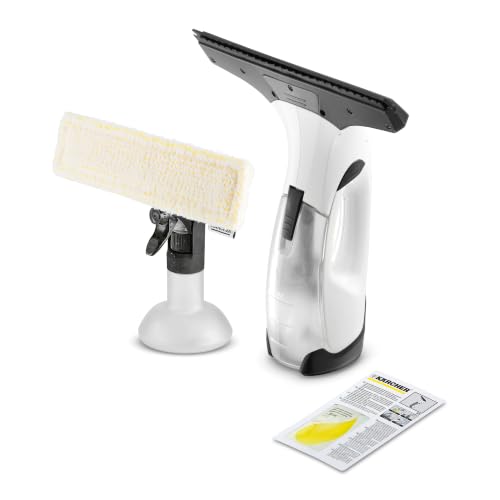
Karcher WV2 Plus Cordless Window Vacuum
ASIN B0CXQ1KKV1 • $84 • Ships from Amazon AU
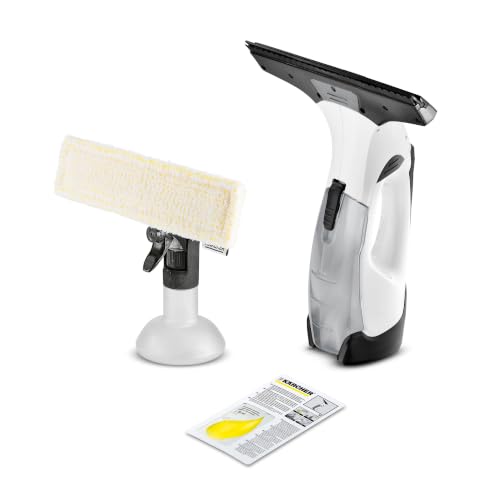
The Karcher WV2 Plus, part number 1.633-653.0, costs $84 at time of writing, sold by Amazon AU, and returns #28 in Cleaning Tools and #934 overall on Amazon AU when I checked, a rank shared with the WV5 Plus and WV7 listings. It's a cordless window vac with a 280mm suction nozzle that states about 75 square metres of glass on a 35 minute charge, with edge cleaning built in for the frame. Amazon AU sells it directly, so a fault on arrival is an Amazon return rather than a marketplace dispute. Karcher states its figures plainly, area as well as runtime, which is what makes the three Karcher picks easy to compare against each other.
The listing names windows, glass, shower screens, bathtubs, mirrors, tiles and glass tables, and clearing condensation off a winter window. It weighs a stated 0.6kg with a low noise level, and the charge LED sits where you can see it as you work. The 100mL tank comes off to empty down the sink. In the box are the vac, a spray bottle with a microfibre cover and the charger. Its warranty is two years, with spare parts and authorised service agents across Australia, per the listing. A replaceable blade and AU parts supply are the reason it can outlast a no-name vac, since the blade is the part that wears first.
This is the one I'd buy for most homes, because it covers a bathroom daily and a weekend of windows, and the AU service network and spare blades mean it can be kept going rather than thrown out. Rinse the blade and tank after each job, as the listing suggests, and charge it before it goes back in the cupboard. A light vac at 0.6kg is also the easiest of the five to use on high panes and the top of a shower screen without the arm tiring, so it gets used more often.
Honest caveats: The battery isn't stated as removable, so the job stops when it runs down. The 100mL tank fills fast on a shower screen. The listing doesn't state a charge time. The rank is shared across three Karcher listings. No narrow nozzle is in the box for small panes or car glass.
Best for: Most homes: a bathroom daily and windows on the weekend.
Blade: 280mm • Area per charge: About 75 m² (stated) • Runtime: 35 minutes (stated) • Tank: 100mL • Weight: 0.6kg (stated) • Warranty: 2 years (stated) • Model: 1.633-653.0 • Seller: Amazon AU • Rank: #28 in Cleaning Tools (Amazon AU, listing shared with WV5 Plus and WV7)
View on Amazon AU
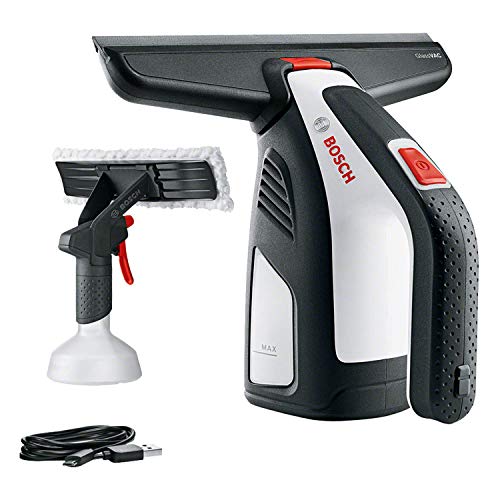
Bosch GlassVAC Solo Plus Cordless Window Vacuum
ASIN B07K142VYD • $79 • Ships from Amazon AU
The Bosch GlassVAC Solo Plus, model 06008B7200, is the best-ranked of the five picks, #2 in Upright Vacuums on Amazon AU and #140 overall when I checked, at $79, sold by Amazon AU. It's a 3.6V cordless window and glass vac with a 266mm blade, a spray applicator and a microfibre cloth, per the title, and the listing credits its streak-free wiping to Bosch's blade know-how from the automotive sector. Amazon AU sells it directly, so a fault on arrival is an Amazon return. Bosch also sells the same GlassVAC in other bundles on Amazon AU, with extra cloths or a small head, so compare what's in the box rather than paying more for the same vac.
The pick listing itself is thin: product type, package quantity, country of origin China and the blade line. Its warranty field is the strongest of the five, stating two years plus one more year by registering online at MyBosch. A sibling Bosch listing of the same GlassVAC Solo Plus adds the detail this one leaves out: up to 35 windows per charge, an LED battery display and a Micro USB charger in the box. The listing states no tank size or charge time. Its overall rank of #140 is far ahead of the three Karcher listings' shared #934, so it's the one most Australian buyers have picked. Micro USB means any phone charger with the right cable will top it up, though the socket needs to be dry first.
This is the one for an apartment or a bathroom, where the 266mm blade fits smaller panes well and the sales rank says plenty of Australian homes already use one. Wipe the Micro USB port dry before every charge. Register it with MyBosch soon after purchase to get the extra year, and keep the receipt with the manual. Store it upright and dry, and charge it before a long break, since the listing doesn't state a removable battery.
Honest caveats: The pick listing gives almost no detail; the windows-per-charge and Micro USB figures come from a sibling listing. No tank size or charge time is stated. The 266mm blade is narrower than the other four picks'. The battery isn't stated as removable, so plan on one charge per job.
Best for: Apartments and bathroom glass, with the longest stated warranty.
Blade: 266mm • Voltage: 3.6V • Per charge: Up to 35 windows (sibling listing) • Charging: Micro USB (sibling listing) • Warranty: 2 years + 1 with registration (stated) • Model: 06008B7200 • Overall rank: #140 on Amazon AU • Seller: Amazon AU • Rank: #2 in Upright Vacuums (Amazon AU)
View on Amazon AU
Karcher WV5 Plus Cordless Window Vacuum
ASIN B0CXQ1CHKP • $108.50 • Ships from Amazon AU
The Karcher WV5 Plus, part number 1.633-706.0, costs $108.50 at time of writing, sold by Amazon AU, and returns the same #28 in Cleaning Tools and #934 overall as the WV2 Plus and WV7, a shared listing rank. It's the one of the five whose listing states a removable battery: it lifts out, so a second battery swaps in mid-job and the work runs on instead of stopping for the stated 185 minute charge. Amazon AU sells it directly, so a fault on arrival is an Amazon return. Its feature list is the same family as the WV2 Plus, so the extra money buys the area figure and the removable battery rather than a different design.
It states about 105 square metres of glass on a 35 minute charge, more than the WV2 Plus on the same runtime, with a 280mm nozzle and edge cleaning built in. The handle carries a battery level indicator and it runs quietly, per the listing. The 100mL tank rinses under the tap. In the box are the vac with its battery fitted, a spray bottle with a microfibre cover and the charger. The warranty is two years with AU service agents, per the listing. A removable battery has a second benefit: when the cells wear out after a few years, the battery can be replaced on its own, rather than the whole vac going in the bin as it would with a built-in pack. Its 100mL tank is the same size as the WV2 Plus.
This is the one for a house full of glass, bought with a second battery, so the windows get done in one afternoon rather than two, without the WV7's price. Buy the second battery from an AU seller of genuine Karcher parts rather than a no-name pack, since a mismatched lithium pack is a risk in a tool that sits beside water. Charge the spare before storage too, and keep both out of a hot shed.
Honest caveats: The 185 minute charge is long without a second battery, which isn't in the box. The tank is 100mL. The rank is shared across three Karcher listings. Higher priced than the WV2 Plus, and the second battery adds to that.
Best for: A house full of glass, with a second battery for swapping.
Blade: 280mm • Area per charge: About 105 m² (stated) • Runtime: 35 minutes (stated) • Charge time: 185 minutes (stated) • Battery: Removable, swappable • Tank: 100mL • Warranty: 2 years (stated) • Seller: Amazon AU • Rank: #28 in Cleaning Tools (Amazon AU, listing shared with WV2 Plus and WV7)
View on Amazon AU
Karcher WV7 Signature Line Window Vacuum
ASIN B0FD33CL7X • $173.99 • Ships from Amazon AU
The Karcher WV7 Signature Line, part number 1.633-781.0, is the highest-priced of the five picks, at $173.99, sold by Amazon AU, and returns the same shared #28 in Cleaning Tools and #934 overall as the other two Karcher listings. It states about 300 square metres of glass on a 100 minute charge, the biggest stated figure among the five, with a quick charger in the box. Amazon AU sells it directly, so a fault on arrival is an Amazon return. Karcher's own warranty and service network apply, as with the other two Karcher picks, which matters on the most expensive tool of the five.
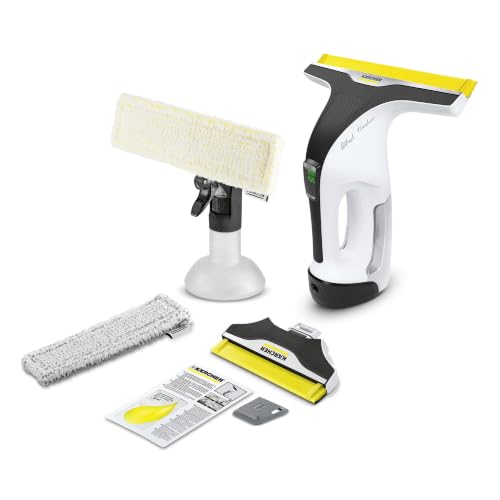
It's also the one of the five with two nozzles: a 280mm head for big panes and a 170mm narrow head for lattice windows and car glass. For outside glass it adds a microfibre outdoor wiping cloth and a dirt scraper, and the whole kit goes back assembled into a storage box. The tank is 150mL, the squeegee blade detaches from the nozzle for rinsing, and the warranty is two years with AU service agents, per the listing. It doesn't state a charge time. The 150mL tank is half as big again as the WV2 Plus and WV5 Plus tanks, which means fewer trips to the sink on a big job. The storage box keeps the blade off the cupboard floor, which protects the rubber lip between uses.
This is the one for a big house cleaned inside and out, or for glass that gets real outdoor grime, where the scraper, the narrow nozzle and the runtime all earn the higher price. Rinse the detachable blade after each job and pack the kit back into its box dry. Use the scraper on outside glass before the vac, not after, so grit isn't dragged under the blade, and keep the narrow nozzle for the small panes where the wide head leaves wet corners.
Honest caveats: The highest-priced of the five picks. The listing doesn't state a charge time or a weight. The battery isn't stated as removable. The rank is shared across three Karcher listings. The storage box takes more cupboard space than a bare vac.
Best for: Big houses, inside and out, with two nozzles and a storage box.
Blades: 280mm and 170mm • Area per charge: About 300 m² (stated) • Runtime: 100 minutes (stated) • Tank: 150mL • Extras: Outdoor cloth, scraper, storage box • Charger: Quick charger • Warranty: 2 years (stated) • Seller: Amazon AU • Rank: #28 in Cleaning Tools (Amazon AU, listing shared with WV2 Plus and WV5 Plus)
View on Amazon AU
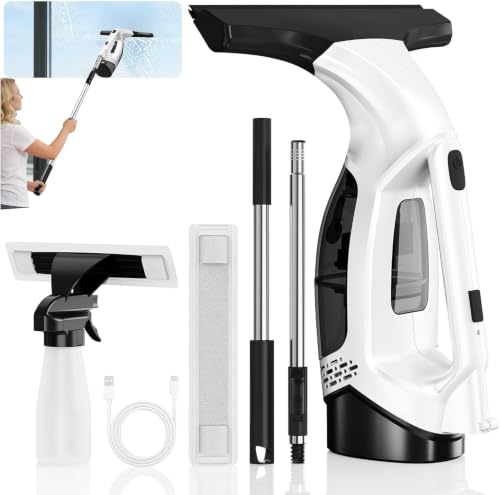
FYKEY Cordless Window Vacuum Squeegee WindowV01
ASIN B0HKNH8YML • $69.99 • Sold by Helen-AU on Amazon AU
The FYKEY cordless window vacuum, model WindowV01, is the lowest-priced of the five picks, at $69.99, sold by Helen-AU, an Australian marketplace storefront that passed our AU retail check. It ranks #542 in Vacuum Cleaners and #146,188 overall on Amazon AU when I checked, far behind the others, so it has little sales history. Its brand field says FYKEY while its feature text calls it ZRHI, a sign of a generic tool sold under more than one name. Helen-AU passed our AU retail check, but returns go to the seller rather than Amazon AU, so read the seller's return terms before ordering. Its 280mm head and 150mL tank match the Karcher WV7's on paper.
What it does state is clear enough: a 280mm suction head, 2,000Pa of suction, a 2,200mAh built-in rechargeable battery and a transparent 150mL tank that detaches to empty. It names windows, mirrors, bathroom glass doors, tiles, kitchen countertops and car windscreens. The listing doesn't state a runtime, an area per charge, a charge time, the charging connector or a warranty term, and its colour field reads Set b. Suction in pascals isn't a figure the other four state, so it can't be compared against them. Without a stated runtime, the 2,200mAh figure alone doesn't say how much glass a charge covers. Two sets are sold under the same title at different prices, so check which set you're buying and what's in it.
This is the one for someone who wants to try a window vac on the shower screen at the lowest price, accepting a thin listing and no stated warranty. With no stated charge time or connector, charge it fully on arrival and time the first run so you know what one charge does. Dry the body and port before every charge, and store it upright, since a no-name pack with no warranty is the one you least want to replace early.
Honest caveats: No runtime, area per charge, charge time, charging connector or warranty is stated. The brand and feature names don't match. It has a very weak sales rank and is sold by a marketplace seller rather than Amazon AU, with no AU service network named.
Best for: Trying a window vac on a shower screen at the lowest price.
Blade: 280mm • Suction: 2,000Pa (stated) • Battery: 2,200mAh built in • Tank: 150mL • Runtime: Not stated on the listing • Warranty: Not stated on the listing • Overall rank: #146,188 on Amazon AU • Seller: Helen-AU • Rank: #542 in Vacuum Cleaners (Amazon AU)
View on Amazon AUSide-by-side comparison
What we see go wrong: window vacuums
A window vacuum is a small battery-powered motor working beside a tank of soapy water, so the faults we see are the ones that come from water meeting electronics and lithium cells being stored badly. These are the three that end most of them, and each has a habit that prevents it.
Batteries stored flat for a season
Window vacs get used hard in spring and then sit in a cupboard for months. A lithium battery left flat for that long can drop below the voltage its charger will start from, and the vac shows no light when it's plugged in. Charge it fully before you put it away, top it up every few months, and keep it out of a hot garage. A vac that won't take a charge after storage usually needs a new battery, and on a built-in pack that often means a new vac.
Water past the tank and into the motor
The tank has a float or baffle that keeps water from the motor, but tipping the vac on its side, holding it upside down on a high window or running it past the full line can push water through. The first sign is a rough motor note or a sudden drop in suction. Switch it off, empty the tank, and let it dry upright for a day before trying again. Emptying the tank before it's full prevents almost all of it.
Soap in the charging port
Charging sockets on cleaning tools sit close to the spray and the tank, and soapy water dries into a crust on the contacts. The vac then charges slowly, intermittently or not at all, which looks like a dead battery. Wipe the body and the port dry before every charge, never charge it wet, and look into the socket with a torch if charging starts to play up. It's the same fault we clear from phone charging ports every week.
Decision tree: which one should you actually buy?
- Want one window vac for most homes? → The Karcher WV2 Plus, with a 280mm blade and about 75 m² per stated charge.
- Apartment or bathroom glass, with a long warranty? → The Bosch GlassVAC, the best-ranked of the five, with 2 years plus 1 on registration.
- A house full of glass in one afternoon? → The Karcher WV5 Plus, whose battery lifts out to swap for a second one.
- Big house, inside and out? → The Karcher WV7, about 300 m² per stated charge, with two nozzles and a scraper.
- Just want to try one on the shower screen? → The FYKEY is the lowest-priced, with a thin listing and no stated warranty.
- Phone took a splash while you cleaned? → Bring it into our Erina workshop. We'll check it and tell you what it needs before you spend anything.
Frequently asked questions
Are window vacuums worth it?
For glass shower screens and big windows, yes. A window vac lifts the water off before it runs down onto the sill, so there are no drips to wipe and fewer streaks than a squeegee and towel. Its best everyday job is drawing the water off a shower screen after each shower, which stops the mineral haze building up. For a few small windows a good squeegee does the job for less money, and it needs no battery to look after.
How do I stop my window vac leaving streaks?
Use less detergent: water with a few drops of window vac concentrate or dishwashing liquid, not a foaming glass spray. Scrub with the microfibre pad first, then draw the vac top to bottom in overlapping strokes with the blade flat on the glass. Work out of direct sun, so the water doesn't dry before the vac lifts it. Rinse the blade after each job, and replace it if it's nicked, since a damaged blade leaves a line every stroke.
How long does a window vac battery last per charge?
It depends on the model. Karcher states about 75 square metres for the WV2 Plus and about 105 for the WV5 Plus, each on a 35 minute charge, and about 300 square metres on a 100 minute charge for the WV7. A sibling Bosch listing states up to 35 windows for the GlassVAC. Real windows with grime and tank stops take longer, so plan on about two thirds of the stated figure, and expect a little less each year as the cells age.
Can I use a window vac on a shower screen?
Yes, and it's the job most of them do best. Four of the five pick listings name shower screens or glass doors, and the Bosch sibling listing names showers. Drawing the water off after each shower stops soap film and mineral spots building up into a white haze. Empty the tank more often than on windows, since a shower screen carries more water, and rinse the tank after use so soap residue doesn't sit in it and start to smell.
Why won't my window vac charge?
The two usual causes are a battery left flat in storage and soap or water in the charging port. A lithium battery stored flat for months can fall too low for its charger to start, so the light never comes on. A crusted port looks the same. Dry the port, look into it with a torch, and try the charger on a known-good outlet. If it still won't charge, the battery has probably failed, and on a built-in pack that's often the end of the vac.
Do window vacuums work on outside windows?
Yes, with a rinse first. Outside glass carries dust, grit and bird mess that a rubber blade can drag across the pane and scratch, so hose or wipe it off before you wash. Work on the shady side. The Karcher WV7 includes a dirt scraper and an outdoor microfibre cloth for that kind of grime. For high windows, Karcher sells a WV extension pole set separately, listed for its WV1 to WV6 models, which beats leaning off a ladder with a vac in one hand.
Related buying guides
Window vac or phone won't charge?
If a cordless cleaning tool or a phone won't take a charge after a splash, don't keep plugging it in. Dry it, unplug it and leave it. Bring it into our Erina workshop and we'll look at the port and the battery and tell you what it needs before you spend anything.
Visit our Erina workshop Book Online