Prices from Amazon AU, updated daily. Swipe or use the arrows for more.
Disclosure: This article contains affiliate links to amazon.com.au. If you buy through one of these links iFix may earn a small commission at no extra cost to you. It doesn't change which products we recommend. We focus on what actually lasts based on 16 years of repair-shop experience.
Quick summary8 picks
- CheapestPhilips 3300 Series Fully Automatic… about$749
- Philips Fully Automatic Espresso Machine 4400 about$875
- KitchenAid KF2 Fully Automatic Espresso… about$899
- Philips Fully Automatic Espresso Machine 5500 about$994
- De'Longhi Magnifica Evo about$999
- De'Longhi Rivelia Fully Automatic Coffee… about$1,099
- De'Longhi Eletta Explore Perfetto Coffee… about$1,245
- Most PremiumDe'Longhi Magnifica Plus Fully Automatic… about$1,2501450W.
What a bean-to-cup machine actually does
A bean-to-cup machine grinds, doses, tamps, brews and dumps the puck by itself, all inside the box, and that's the whole reason people pay $900 or more for one. You pour beans in the top, water in the tank, and press a button. A semi-automatic espresso machine, the kind with a portafilter you lock in by hand, leaves all of those steps to you, and that's covered in our prosumer espresso machine guide.
The trade-off is control. A good semi-auto with a separate grinder will make a better shot in skilled hands, but most people don't want to learn to dial in a grinder every time they open a new bag of beans. A bean-to-cup machine makes a consistent, decent coffee every morning for whoever's in the kitchen, including the person who's never touched an espresso machine before, and that's worth a lot in a busy house.
The other trade-off is what's inside. Everything the barista does by hand is done here by a brew unit, a grinder motor, a pump, a heating block, a flow meter and a control board, all packed into a small case. More parts means more to wear out, and some of those parts are buried behind panels. That doesn't make these machines unreliable, but it does mean how you look after them matters more than how you look after a kettle, and that's mostly what this guide is about.
The brew unit is the heart of it
The brew unit is the bit that takes the ground coffee, compresses it, pushes hot water through and then drops the used puck into the bin. On most De'Longhi and Philips machines it slides out from behind a side door, and that's the single most important design feature I'd look for. A removable brew unit can be rinsed under the tap every week or two, and that keeps coffee oils and fines from building up into a sticky paste that eventually jams it.
When we open a machine that's stopped brewing, a gummed-up brew unit is usually the first thing we find. The symptoms come on slowly: weaker coffee, wet pucks, a grinding noise as the unit cycles, and finally an error light. Nine times out of ten the fix is a proper clean and a light grease of the seals with food-safe lubricant, not a new part.
Machines where the brew unit is fixed and cleaned by an automatic rinse cycle aren't bad, but you're relying on that cycle to do a job a person can do better. If you buy one of those, run the cleaning programme as often as the manual asks and don't skip the cleaning tablets. Either way, rinsing the drip tray and emptying the grounds bin daily is what stops mould growing on the wet coffee, which is the smell most people blame on the machine itself. Leave the side door open for an hour after rinsing so the unit and the chamber behind it dry out.
Grinders, burrs and the beans to avoid
Every machine in this list has a built-in burr grinder, and it's a good one for the job, but it's not invincible. The burrs are hardened steel or ceramic and they last for years with normal beans. What shortens their life is grit, the odd small stone that slips through roasting, and very dark, oily beans.
Oily beans are the bigger problem in practice. Dark roasts that look shiny in the bag leave oil on the burrs and in the chute, and over time that oil turns into a tacky coating that slows the beans feeding down and clogs the grind path. The machine then under-doses, the coffee gets weaker and you turn the grind finer to compensate, which makes the clog worse. I'd stick to medium roasts in an automatic machine, and if you love a dark roast, choose one that looks dry rather than glossy.
Never put flavoured beans or anything other than plain roasted coffee in the hopper, and never pour pre-ground coffee into the bean hopper by mistake; it'll pack the grinder solid. If a machine has a bypass chute for pre-ground coffee, use that. Adjust the grind setting only while the grinder's running, which is what most manuals ask for, because turning it while stopped can jam the burrs against a bean. Buy beans in amounts you'll use within three or four weeks of the roast date, and keep the bag sealed between refills rather than overfilling the hopper, where beans sit exposed to air and warmth from the machine.
Scale is what quietly kills them
Limescale is the slow killer of every coffee machine that heats water, and automatic machines are especially sensitive because the water passes through narrow pipes, a flow meter and a heating block before it reaches the coffee. Scale builds up as a hard white crust that narrows those passages, and the machine responds with slower flow, lower temperature and eventually a pump that strains against a blockage.
How fast it happens depends on your water. Hardness varies a lot between suburbs and towns in Australia, so I wouldn't assume yours is soft without checking. Some machines come with a test strip; if yours does, use it and set the hardness in the menu, because that's what tells the machine when to ask for a descale.
Descale when the machine asks, using the descaler the manufacturer recommends, and don't stop the cycle halfway. Vinegar is a bad idea: it can attack seals and some metals inside, and it leaves a smell that takes many rinses to clear. A water filter in the tank, like Philips' AquaClean or the filters De'Longhi sells, reduces how often you need to descale, but it doesn't remove the need entirely unless the manufacturer specifically says so for that filter. Change filters on schedule, because an exhausted filter does nothing. If you already use a filter jug at home, filling the tank from it helps too.
Milk systems: carafe, LatteGo or a steam wand
How the machine handles milk is the biggest practical difference between these picks, and it's the one I'd decide on first. There are three types here. A manual steam wand, like on the Magnifica Evo, is a pipe that blows steam into a jug you hold; it's the simplest and the easiest to keep clean, but you're texturing the milk yourself. An automatic carafe, like De'Longhi's LatteCrema, sucks milk from a jug and froths it into your cup at the press of a button. Philips' LatteGo is a two-part frother with no tubes at all, which you pull apart and rinse.
Milk is where the hygiene problems live. Milk residue left in a tube or a carafe goes sour and can block the small air inlet that makes the foam, so the machine starts spitting hot milk without froth. With a carafe system, run the clean cycle after every use, and wash the carafe parts properly at least every day you've used milk. Dishwasher-safe parts make that easier, which is why I've noted it on each pick.
If anyone in the house uses plant milk, check the listing mentions it. Oat and soy milks behave differently when frothed, and some automatic systems handle them better than others. Barista-style plant milks usually froth better than the regular versions, because they're made with that in mind. Whatever milk you use, keep it cold until the drink starts: warm milk sitting in a carafe on the counter froths poorly and spoils faster.
Power, benches and what to check before you plug it in
These machines draw a lot of power for short bursts while they heat and brew, so plug them straight into a wall socket rather than a powerboard shared with a kettle, toaster or air fryer. A standard Australian 10A socket tops out around 2,400W, and a coffee machine and kettle running at once on one board can get close to that. If you do have to use a board, use a good surge-protected one; our surge powerboard guide explains what to look for.
Look for the RCM mark on the plate or the box, which tells you the machine has been certified for sale in Australia. Every pick here is sold by Amazon AU, so you're getting the Australian version with an Australian plug and warranty, but it's still worth checking when the box arrives.
Measure the space too. Bean-to-cup machines are deep, and you need room above for the bean hopper lid and room at the side for the brew unit door. A machine squeezed under a cupboard gets its water tank and beans filled less carefully, and spills are the start of a lot of the electrical faults we see. Steam also rises from the wand and the vents, and over time it'll mark the underside of a cupboard and get into anything electronic stored up there.
What it costs to run each year
The machine is only part of the cost. Over a year you'll spend money on beans, descaler, cleaning tablets, water filters if you use them, and the occasional milk-system part. Beans are by far the biggest of those, and they're also where a bean-to-cup machine earns its keep, because fresh beans bought in a 1 kg bag usually work out far less per cup than pods or café coffee. Cleaning tablets and descaler together usually cost less over a year than a single service visit.
Electricity is a small cost by comparison, because the machine only heats for short bursts. As a rough example, if a machine draws 1,450W while heating and spends about ten minutes a day doing that, that's around 0.24 kWh a day. At an assumed tariff of 33c per kWh, it's roughly 8c a day, or about $29 a year. Leaving it on standby all day adds to that, so use the auto-off setting.
The cost that catches people out is maintenance they skipped. A machine that's never been descaled or had its brew unit cleaned can need a service that costs a decent share of what the machine did, while a five-minute weekly routine avoids most of it. If yours does need work, our Erina workshop can check it and tell you whether the repair is worth it before you spend anything.
Which features are worth paying more for
The difference between a $900 machine and a $1,250 machine in this list is mostly convenience, not coffee quality. The base espresso from all five will be similar with the same beans, because they're all built around the same idea: a burr grinder feeding an automatic brew unit. What you pay extra for is the milk system, the screen, the number of drinks on the menu, and extras like a second bean hopper.
An automatic milk system is the upgrade I'd pay for if you mostly drink lattes or flat whites, because getting good foam from a steam wand takes practice that not everyone wants to put in. User profiles are handy in a house where two or three people want different drinks. Iced coffee settings are a newer feature that mostly adjusts the strength and volume for pouring over ice.
What I wouldn't pay extra for is a long list of drink recipes you'll never use, or app connectivity on its own. Most people settle on two or three drinks within a month, and an app adds another thing to update. If you're still deciding between this kind of machine and a pod or semi-auto, our espresso machines under $500 guide covers the smaller semi-automatics, which suit people who want to learn the craft.
The 5 picks, $875 to $1,245
Prices are Amazon AU at time of writing (15 October 2026) and move week to week. Ranks are Amazon AU category sales ranks, checked the same day.

De'Longhi Magnifica Evo Fully Automatic Coffee Machine, Silver and Black
ASIN B09RTKRXQC • $999.00 • Ships from Amazon AU
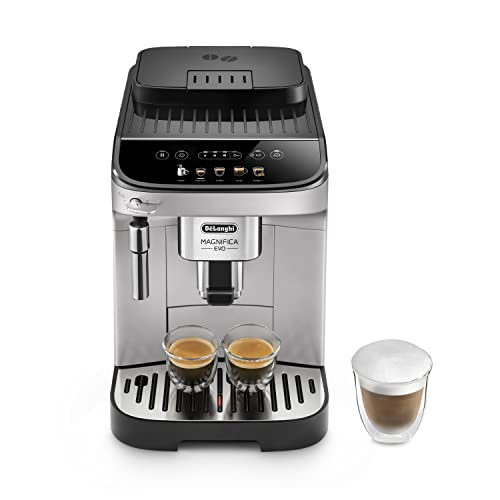
The Magnifica Evo is the bean-to-cup machine I'd point most people to, and the numbers back that up: it's ranked #4 in Amazon AU's Bean-to-Cup Coffee Machines category at $999. It's a simple machine on purpose, with four one-touch drinks on a coloured control panel (Espresso, Coffee, Long and Doppio+) and a traditional steam wand for milk. That simplicity is exactly why I like it. There's less in it to go wrong than in the machines with automatic carafes and big touchscreens, and what's there is easy to get to. It's also the one I'd recommend to someone replacing a pod machine, because the learning curve is short and the running cost per cup drops straight away.
It can brew two espressos at once, which matters more than it sounds in a house where two people want coffee before work. The listing says the removable components are dishwasher safe and the machine is designed to simplify cleaning, and in practice the Magnifica line is one we see a lot of because so many were sold, which also means parts and know-how are easy to find. The steam wand lets you texture milk for a flat white or cappuccino, but you're doing the frothing yourself, so expect a few weeks of practice before it looks like a café's. Spend those weeks with full-cream milk first; it's the most forgiving to learn on.
If you drink mostly black coffee, or you're happy to learn the wand, there's no reason to spend more. It's a well-proven machine with a simple layout, and that's what I'd want from something that'll run every morning for years. The machines further down this list add convenience rather than better espresso. I'd put the money saved toward a year of good beans and a proper descaler instead. When we see Magnifica machines come in, it's nearly always for a dirty brew unit or a scaled water path rather than anything electronic, and both of those come down to the weekly and monthly habits in this guide. Rinse the brew unit every week, descale when it asks, and it should run for a long time.
Honest caveats: Milk is manual, so there's no one-touch latte or cappuccino, and the wand takes practice. The listing doesn't state a bean hopper size, water tank size or wattage, so check De'Longhi's spec sheet if counter space or capacity matters. There's no screen, so drink customisation is limited to the buttons on the panel.
Best for: Most households, especially black coffee drinkers or anyone happy to froth milk by hand.
Drinks: 4 one-touch: Espresso, Coffee, Long, Doppio+ • Milk: Manual steam wand • Two cups at once: Yes, 2 espressos • Controls: Coloured button panel • Cleaning: Removable dishwasher-safe parts • Seller: Amazon AU • Rank: #4 in Bean-to-Cup Coffee Machines (Amazon AU)
View on Amazon AU
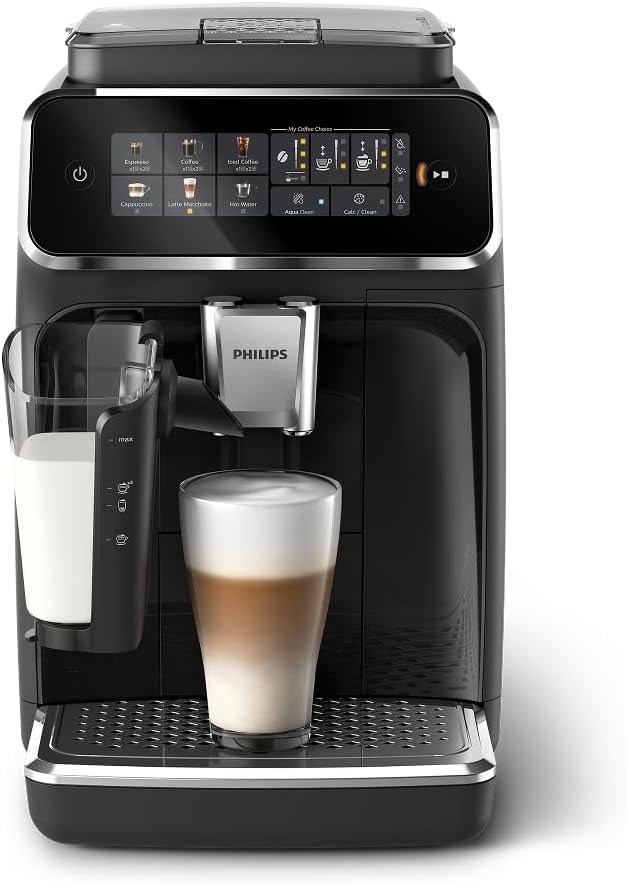
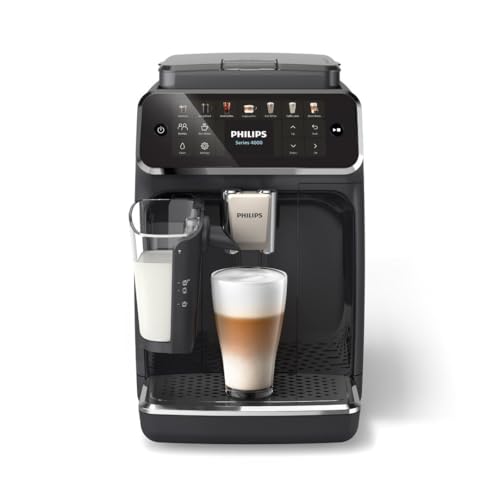
Philips 4400 Series Fully Automatic Espresso Machine with LatteGo, Black
ASIN B0DZPB5SYX • $874.99 • Ships from Amazon AU
The Philips 4400 is the machine I'd pick for someone who wants one-touch milk drinks without the cleaning hassle of a tube-fed carafe. At $875 it's the lowest-priced machine in this list, and it's ranked #10 in Amazon AU's Espresso & Cappuccino Machines category. The LatteGo milk system is the reason to buy it: it's two parts with no tubes, and the listing says it pulls apart and rinses in under 10 seconds. That's the part of most automatic machines that people stop cleaning properly, so making it easy is worth a lot. It's also the most popular Philips in this band on Amazon AU, so you won't be the first person to hit any quirk it has, and answers are easy to find.
The menu covers 12 hot and iced drinks, including espresso, long black, cappuccino, latte, flat white and ristretto, and the listing says LatteGo works with plant-based milks too. Philips' Silent Brew is quoted as 40% quieter than earlier models, which is welcome in an open-plan house at 6am. The AquaClean filter is the other standout: the listing says it lets you brew up to 5,000 cups without descaling, provided you change the filter when the machine asks. The quieter brewing matters more than the spec sheet suggests in a small house or an apartment, where a grinder at full tilt can wake a light sleeper in the next room. The 12 recipes include iced versions of espresso and latte, which is handy through a Central Coast summer, and the menu is laid out so you're not scrolling to find a flat white.
I'd still follow the filter schedule closely, because the 5,000-cup figure depends on the filter being changed on time. Philips machines use a removable brew group that slides out from the side, which makes the weekly rinse easy. Overall, it's the best value in this guide for milk drinkers. If you skip a filter change, the machine falls back to needing regular descaling like any other, so treat the filter as part of the running cost rather than an optional extra. The brew group should be rinsed under the tap once a week and left to dry before it goes back in, and the manual asks for a light grease every so often. Do that and the LatteGo rinse after each milk drink, and it'll look after you.
Honest caveats: The 5,000-cup no-descale figure only holds if you replace the AquaClean filter when prompted, and filters are an ongoing cost. LatteGo froths straight into the cup, so you can't make a jug of milk for several drinks. The listing doesn't state a wattage, tank size or hopper size.
Best for: Milk-drink households that want one-touch lattes with the easiest milk system to clean.
Drinks: 12 hot and iced recipes • Milk: LatteGo, 2 parts, no tubes • Noise: 40% quieter than earlier models (listing) • Water filter: AquaClean, up to 5,000 cups without descaling • Plant milk: Supported (listing) • Seller: Amazon AU • Rank: #10 in Espresso & Cappuccino Machines (Amazon AU)
View on Amazon AU
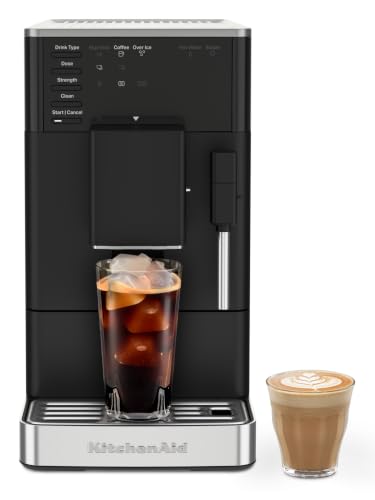
KitchenAid KF2 Fully Automatic Espresso Machine with Iced Coffee, Matte Black
ASIN B09SGBQ3QF • $899.00 • Ships from Amazon AU
The KitchenAid KF2 is the pick for a small kitchen. The listing says it does the same job in a 25% smaller footprint, and at $899 it sits right between the Philips and the De'Longhi Magnifica Evo on price. It's ranked #119 in Amazon AU's Espresso & Cappuccino Machines category, well behind the others, which mostly reflects how much better known the De'Longhi and Philips lines are in Australia rather than anything wrong with it. It's matte black and noticeably narrower than the De'Longhi and Philips machines, so it fits under the overhead cupboards that make bigger machines awkward to fill. If your bench is already crowded with a kettle, toaster and air fryer, the size difference is worth more than any extra recipes.
The grinder side is where KitchenAid has put its effort. QuietGrind is described on the listing as Quiet Mark certified noise insulation, and IntelliGrind adjusts to the bean type automatically, which helps if you change beans often and don't want to fiddle with grind settings. Milk is handled by a pannarello-style auto steam wand, which pulls air into the milk as it steams and makes it easier to get decent foam than with a plain wand. There's an iced coffee setting as well, and the listing says the machine handles as much of the routine care as possible. Iced settings are useful in summer. Being able to drop the strength for iced drinks stops them tasting watery once the ice melts.
The trade-off is a smaller service network. KitchenAid's coffee machines aren't as common in Australian workshops as De'Longhi or Philips, so I'd register the warranty on day one and keep the paperwork handy. If something does go wrong outside warranty, parts can take longer to arrive than for the bigger brands, and that's worth weighing against the smaller size. The listing doesn't say whether the brew unit is removable for rinsing, so check the manual before you buy if that's important to you. Run the automatic care cycles on schedule, descale when it asks, and avoid oily beans, and it should give you years of use like any of the others.
Honest caveats: Parts and service for KitchenAid coffee machines are less common in Australia than for De'Longhi or Philips. The pannarello wand still needs a jug and some technique. The listing doesn't state the hopper size, tank size, wattage or whether the brew unit is removable, so check KitchenAid's manual.
Best for: Small kitchens that want a quieter grinder and a wand that's easier to learn on.
Footprint: 25% smaller (listing) • Grinder: QuietGrind, IntelliGrind auto-adjust • Milk: Pannarello auto steam wand • Iced coffee: Yes • Care: Automatic routine care (listing) • Seller: Amazon AU • Rank: #119 in Espresso & Cappuccino Machines (Amazon AU)
View on Amazon AU
De'Longhi Rivelia Fully Automatic Coffee Machine with LatteCrema Cool, Arctic White (EXAM44057W)
ASIN B0H8RKSX8V • $1,099.00 • Ships from Amazon AU
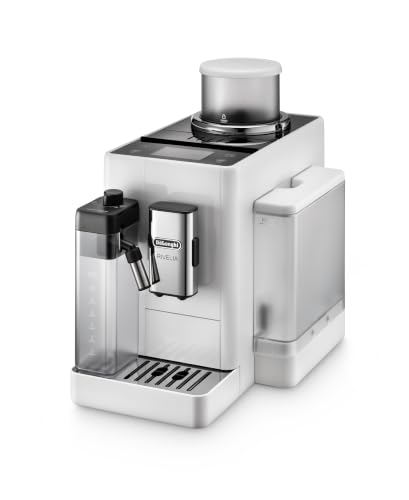
The Rivelia is the machine for a house where people drink different coffee. Its Bean Switch System uses two switchable bean hoppers, so you can keep a decaf or a different roast loaded alongside your main beans without emptying the hopper every time. At $1,099 it's ranked #28 in Amazon AU's Espresso & Cappuccino Machines category, and it's the most flexible machine in this list for a household with mixed tastes. It's newer than the Magnifica Evo and the Eletta Explore, so there's less of a repair history on it, but it's built by the same company and shares a lot of the same approach to the brew unit and milk system. For a house where one person drinks decaf after lunch and another wants a strong roast in the morning, it saves a lot of tipping beans in and out.
Bean Adapt Technology suggests the grind, dose and temperature for whatever beans you load, which takes some of the guesswork out of a new bag. The menu has 22 hot and iced recipes with four user profiles and saved routines, controlled from a 3.5-inch display that shows tips as you go. Milk is handled by two LatteCrema carafes, one for hot drinks and one for cold, so iced lattes don't need a separate step. The listing doesn't say what's dishwasher safe, so check the manual before you assume. Saved routines mean each person's usual drink is one tap away. The cold carafe is the bit that makes iced lattes properly frothy rather than just cold milk poured over coffee.
The extra features are also extra parts. Two carafes means two to clean properly, and a screen and more recipes add to what can go wrong. In my experience the touchscreen machines are reliable if they're kept dry, so wipe up spills around the controls straight away. Keep the second hopper's beans fresh too; beans left sitting in a hopper you rarely use go stale within a couple of weeks, and stale beans give flat, sour coffee no matter how good the machine is. If you find one hopper sits mostly unused, buy smaller bags for it. As with the others, rinse the brew unit weekly and run the carafe clean cycle after every milk drink, and the Rivelia should hold up as well as the Magnifica it's descended from.
Honest caveats: Two milk carafes double the cleaning, and carafe tubes need flushing after every use. The listing doesn't state a wattage, tank size or which parts are dishwasher safe. More features and a screen mean more parts that can fail compared with the Magnifica Evo.
Best for: Households with mixed tastes who want two bean hoppers, user profiles and hot and cold milk drinks.
Bean hoppers: 2, switchable (Bean Switch) • Drinks: 22 hot and iced recipes • Profiles: 4 user profiles • Milk: 2 LatteCrema carafes, hot and cold • Display: 3.5-inch • Seller: Amazon AU • Rank: #28 in Espresso & Cappuccino Machines (Amazon AU)
View on Amazon AU
De'Longhi Eletta Explore Perfetto Fully Automatic Coffee Machine, Black
ASIN B0B434BW7D • $1,244.74 • Ships from Amazon AU
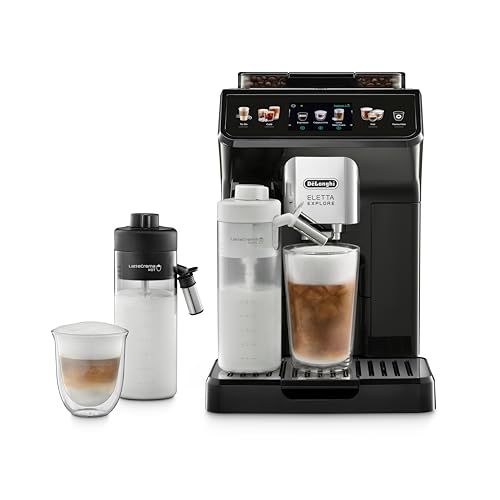
The Eletta Explore is the most expensive machine here at $1,245, and it's ranked #46 in Amazon AU's Coffee Makers category. It's built around the LatteCrema Hot and Cool system, so you can make hot milk drinks and cold foam drinks from the same carafe setup, and a touch panel with coloured icons lets you choose short, medium or long and adjust the strength. For a house that drinks a lot of iced coffee in summer, it's the most complete option in this list. It's also the machine I'd look at if you already know you'll drink mostly milk coffee, because the carafe does all of the frothing for you.
The To-Go function is the feature I'd actually use: it makes your drink with one button in a travel mug, and the listing says it fits mugs up to 16 cm tall. That's handy for anyone who takes coffee in the car to work. The listing also lists automatic descaling, cleaning and rinsing programmes, and says the drip tray, bean container, milk carafe (except the lid) and milk tube are dishwasher safe, which is a real help with a carafe system. The integrated grinder and brew unit handle the grind, dose and brew from one touch. Being able to put the carafe in the dishwasher takes away most of the excuse for skipping the daily wash.
I'd only buy it over the Rivelia if the To-Go function and cold foam matter to you. Otherwise, the Magnifica Evo or Philips 4400 make the same quality espresso for less. If you go for it, flush the carafe tube after every milk drink even though the parts are dishwasher safe, because the tube is where milk residue sits between washes. The Eletta range has been around for years in different versions, so service know-how is easy to find, and the brew unit is the same removable style as the Magnifica, so the weekly rinse is just as quick. Descale on schedule and keep oily beans out of it, and the extra spend should last.
Honest caveats: It's the most expensive pick and most of the extra is convenience, not better espresso. The carafe tube still needs flushing after each use even though the parts are dishwasher safe. The listing doesn't state the wattage, water tank size or bean hopper capacity.
Best for: Iced coffee and travel-mug drinkers who want hot and cold milk drinks from one machine.
Milk: LatteCrema Hot and Cool carafe • Controls: Coloured touch panel • To-Go: Fits mugs up to 16 cm • Cleaning: Auto descale, clean and rinse programmes • Dishwasher safe: Drip tray, container, carafe (not lid), milk tube • Seller: Amazon AU • Rank: #46 in Coffee Makers (Amazon AU)
View on Amazon AUSide-by-side comparison
What we see fail in the workshop: coffee machines
Automatic coffee machines usually come in for one of three reasons, and they're nearly all down to coffee oil, milk or scale rather than an electronic fault. The good news is that each of them is mostly preventable with a few minutes a week, and the early symptoms are easy to spot if you know what to listen and look for.
Jammed or leaking brew units
The brew unit compresses coffee and pushes hot water through it hundreds of times a month, and the seals and moving parts slowly pick up a coating of coffee oil and fines. When it gets bad enough, the unit sticks partway through a cycle, the pucks come out wet, or water leaks into the drip tray instead of the cup. The usual fix is a proper strip, clean and re-grease of the seals with food-safe lubricant. Rinsing the unit weekly avoids most of it. Let it dry before you slide it back in.
Blocked grinders
Grinders clog from oily dark roasts, pre-ground coffee poured into the bean hopper by mistake, or a small stone that jams the burrs. The machine usually tells you with a grinding noise that sounds different, weak or watery coffee, or a message about adding beans when the hopper's full. Clearing it usually means taking the hopper out and cleaning the burrs and the chute. Avoid shiny, oily beans and the problem mostly goes away. Keep the hopper lid closed, too, so beans stay fresh and dust stays out. Run the hopper close to empty before changing beans.
Scaled heaters and failing pumps
Scale narrows the water path through the heating block and flow meter, so the pump has to work harder to push water through. You'll notice the coffee coming out slower, cooler, or with a louder pump noise than usual. Left long enough, the pump can fail or the heater can overheat and trip its thermal fuse. Descaling when the machine asks, with the right descaler, costs very little and prevents most of this. Changing the water every day helps as well. A tank left full for days grows a film you don't want in your coffee or your pipes.
Decision tree: which one should you actually buy?
- Mostly black coffee or happy to froth milk by hand? → The De'Longhi Magnifica Evo at $999, ranked #4 in its category and the simplest machine here.
- Want one-touch lattes with the easiest cleanup? → The Philips 4400 LatteGo at $875: two-part milk system with no tubes.
- Short on bench space? → The KitchenAid KF2 at $899, with a 25% smaller footprint and a quieter grinder.
- Two people who want different beans? → The De'Longhi Rivelia at $1,099, with two switchable bean hoppers and four user profiles.
- Lots of iced coffee and coffee in the car? → The De'Longhi Eletta Explore at $1,245, with hot and cold foam and a To-Go mode.
- Machine leaking, jammed or showing an error? → Bring it to our Erina workshop and we'll check the brew unit, grinder and water path and tell you what it needs before you spend anything.
Frequently asked questions
Is a bean-to-cup coffee machine worth it?
For a household that drinks two or more coffees a day, usually yes. A bean-to-cup machine grinds fresh beans for every cup, and fresh beans bought in bulk work out far less per cup than pods or café coffee, so the machine can pay for itself within a year or two depending on your habits. It's also consistent, so everyone in the house gets the same coffee without learning to use a portafilter. If you only drink one coffee a week, or you enjoy the hands-on process, a semi-automatic machine or a simple pod machine is the better fit.
What's the difference between bean-to-cup and a semi-automatic espresso machine?
A bean-to-cup machine does every step automatically: it grinds, doses, tamps, brews and dumps the used coffee into a bin inside the machine. A semi-automatic machine has a portafilter you fill, tamp and lock in yourself, and usually a separate grinder you have to adjust. The semi-automatic gives you more control and can make a better shot in practised hands, but it takes time to learn. The bean-to-cup gives you a decent, consistent coffee at the press of a button with far less fuss.
How often should I descale a bean-to-cup machine?
Whenever the machine asks, which depends on your water hardness and how much you use it. Set the water hardness in the menu using the test strip that comes with most machines, and the machine will work out when it needs a descale. Use the descaler the manufacturer recommends rather than vinegar, which can damage seals and leaves a smell. A water filter in the tank reduces how often you need to descale, but you still need to change the filter on schedule, or it stops doing anything.
Can I use any coffee beans in an automatic machine?
Most plain roasted beans are fine, but avoid very dark, oily beans and flavoured beans. Oily beans leave a sticky coating on the grinder burrs and the chute that slows the beans feeding down and can clog the grinder over time. Flavoured beans add syrups and oils that cause the same problem faster. A medium roast that looks dry rather than shiny is the safest choice. Never pour pre-ground coffee into the bean hopper, because it packs the grinder; use the separate pre-ground chute if the machine has one.
How do I clean the milk system?
Run the machine's milk clean cycle straight after every milk drink, because milk left in the tube or frother goes sour quickly and blocks the small air inlet that makes the foam. Take the carafe or frother apart and wash it properly at least once a day on days you've used it, in the dishwasher if the manual says the parts are dishwasher safe. With Philips' LatteGo, there are only two parts and no tubes. With a manual steam wand, purge it and wipe it with a damp cloth straight after every use.
Do these machines need a dedicated power point?
It's best to plug a coffee machine straight into a wall socket rather than a shared powerboard. These machines draw a lot of power while heating, and a standard Australian 10A socket tops out around 2,400W, so running a coffee machine and a kettle or toaster on one board at the same time can get close to the limit. If you must use a powerboard, use a good-quality surge-protected one, don't run other heating appliances on it at the same time, and look for the RCM mark on the machine.
Related buying guides
Coffee machine leaking or jammed?
Most automatic coffee machines that come in have a gummed-up brew unit, a clogged grinder or a scaled water path, and all three are often fixable for a fraction of a new machine. Bring it into our Erina workshop and we'll check where the fault is and tell you what it needs and what it'll cost before you spend anything.
Visit our Erina workshop Book Online