Prices from Amazon AU, updated daily. Swipe or use the arrows for more.
Disclosure: This article contains affiliate links to amazon.com.au. If you buy through one of these links iFix may earn a small commission at no extra cost to you. It doesn't change which products we recommend. We focus on what actually lasts based on 16 years of repair-shop experience.
Quick summary5 picks
- Entry PickCanon PowerShot V10 Black [AU Version] about$478
- OM SYSTEM TG-7 Tough Camera - Red about$652.74
- Panasonic 4K Compact Travel Camera with… about$864
- Canon PowerShot V1 Vlog Camera [AU Version] about$1,098
- Most PremiumSony RX100 VII Digital Compact Camera about$1,637
Is a compact camera still worth it next to your phone?
A modern phone takes a very good photo in daylight, so the honest question is what a compact camera does that your phone can't. The answer comes down to three things: a bigger sensor, real optical zoom, and a body you can drop, dunk or hand to a child without risking the device that holds your banking and your photos. A compact that doesn't beat your phone on at least one of those is hard to justify, so I've picked each of the five for one of them.
The OM SYSTEM TG-7 is the tough one, waterproof to 15m and shockproof from 2.1m. The Canon PowerShot V10 and V1 are vlog cameras with bigger sensors than a phone, built around video, microphones and filming yourself. The Panasonic TZ99 is a travel zoom with a 30x lens that reaches 720mm, far past any phone. The Sony RX100 VII pairs a 1-inch sensor with a 24 to 200mm zoom, which is the classic premium pocket camera.
Phones also don't like being the camera. A phone used for every photo at the beach, the snow and the footy cops sand in the speaker grilles, knocks to the camera glass and the odd swim, and those are the phones that come into the shop. Our guide to whether your phone is really waterproof covers why a water rating fades with age. A camera that takes that abuse instead is part of the case for buying one.
I've left out bridge cameras like the Kodak PIXPRO AZ528, which have a long zoom but are as big as a small DSLR, and mirrorless cameras with lenses that come off, which our mirrorless camera guide covers. I've also left out gimbal cameras like the DJI Osmo Pocket, which suit a different job, and no-name cameras that claim 64MP or 8K at a price no real 8K sensor sells for. All five picks are sold by Amazon AU.
Sensor size: 1-inch and 1.4-inch versus a phone
Sensor size is the biggest reason a compact can beat a phone, especially indoors and at night. A bigger sensor collects more light, so it needs less processing to clean up noise and gives you more natural looking shots in dim light and more background blur. The Canon PowerShot V10 and the Sony RX100 VII list 1-inch sensors, and the Canon PowerShot V1 lists a 1.4-inch sensor, the biggest of the five picks. Most phone main cameras use smaller sensors than that, though the gap has closed on top-end phones.
The OM SYSTEM TG-7 and the Panasonic TZ99 listings don't state a sensor size. Both are small-sensor cameras built around something else, toughness on the TG-7 and zoom on the TZ99, and that's the trade you make. A small sensor is what lets the TZ99 fit a 24 to 720mm lens in a pocket body, because a big sensor would need a lens the size of a drink bottle to cover that range. Don't expect either to beat a recent flagship phone in a dark restaurant.
Megapixels matter much less than sensor size. The TZ99 lists 20.3MP and the RX100 VII 20.1MP, and the V10, V1 and TG-7 listings don't lead with a megapixel figure at all. Twenty megapixels is plenty for big prints and for cropping, and a camera with a tiny sensor claiming 48MP or 64MP is usually splitting the same light into smaller pieces. If a listing shouts about megapixels and says nothing about the sensor, I'd be wary of it.
Zoom range and what optical zoom buys you
Optical zoom is the other thing a phone can't really copy. A phone's telephoto camera reaches a fixed distance, then crops digitally, and digital zoom throws away detail with every step. The Panasonic TZ99 lists a 30x Leica DC lens from 24 to 720mm, the Sony RX100 VII a 24 to 200mm ZEISS lens, and the OM SYSTEM TG-7 a 4x optical zoom plus a 2x digital tele-converter. Those are real lenses moving real glass, which is why the zoomed shots hold their detail.
The two Canons are built differently. The V10 lists a single 19mm-equivalent lens, wide enough to fit you and the background in a selfie video at arm's length, and its listing doesn't mention optical zoom. The V1 lists an ultra-wide f/2.8 lens and doesn't give a zoom range in its features. Both are made for filming yourself and the scene around you, not for picking out a bird in a tree, so if zoom is the reason you're buying, the TZ99 or the RX100 VII is the one to look at.
Long zoom has a cost you'll feel at 720mm. Every bit of hand shake is magnified, so the TZ99 needs steady hands, a bit of light or something to lean on, and a fence post or a wall makes a big difference. It's also worth knowing that the further a lens extends, the more there is to go wrong, and the long extending barrels on zoom compacts are exactly where the most common compact camera fault starts, which I've covered below.
Vlogging compacts: the Canon V10 and V1
Both Canons are built for people filming themselves. The PowerShot V10 lists a built-in stand, two low noise microphones and plug-and-play live streaming and webcam use, so it can sit on a desk and stream with nothing else plugged in. The PowerShot V1 steps up to 4K at up to 60p from its 1.4-inch sensor, Dual Pixel CMOS AF II with subject and eye detection for people and animals, image stabilisation and customisable buttons and dials.
The V10 is the simpler camera, and that's its appeal. It's small, it stands up on its own and it turns on and records with very little setup, which suits someone moving from phone videos to a dedicated camera. The V1 is for creators who've outgrown that and want better autofocus, stabilised handheld footage and control over exposure. The V1 lists landscape and vertical video, so its footage for Reels and Shorts doesn't need cropping later.
Video is harder on a small camera than photos. Recording 4K for a long stretch heats up the sensor and the battery, and a compact in direct summer sun can stop recording to protect itself. Keep the camera out of the sun between takes, give it air rather than wrapping it in a case, and carry a power bank on long days. If you mainly film action from a helmet or a surfboard, our action camera guide covers cameras built for that.
Waterproof and tough cameras
The OM SYSTEM TG-7 is the one compact of the five picks you can take swimming. The listing gives 15m waterproof, freezeproof to -10 degrees, shockproof from 2.1m, dustproof and crushproof, which covers the beach, the pool, snorkelling, the snow and a toddler's grip. Like most tough cameras, it zooms inside its sealed body rather than pushing a lens barrel out, which is a big part of why it survives sand and drops that would finish a zoom compact. It's the camera I'd hand to a child on holiday.
Waterproofing depends on the doors staying sealed. The battery and card door has a rubber seal, and a single grain of sand or a hair across it is enough to let water in. Check and wipe the seal before every swim, make sure the door locks fully and never open it with wet hands or on the sand. After salt water, soak the closed camera in fresh water for a few minutes, then dry it before opening, because dried salt crystals scratch the seal and stop it sealing next time.
Water inside a camera works like water inside a phone. It corrodes the board, the battery contacts and the screen connector, and the damage often shows up days later as a camera that won't turn on or a screen that flickers. If any camera, tough or not, has taken water, take the battery and card out and don't charge it. Our explainer on water damage in electronics covers why acting in the first hour matters.
Lens errors: the fault that kills compacts
The most common compact camera fault we see is the lens error. Zoom compacts like the TZ99 and the RX100 VII have a lens barrel that extends out of the body when you turn them on and retracts when you turn them off. That barrel runs on tiny gears and a small motor, and it's open to the world every time it's out. Sand, grit and lint get into the gaps between the barrel sections, and eventually the motor can't push the lens out or pull it back in.
When that happens the camera shows a lens error message, the lens sticks part way out or the camera shuts itself down a second after turning on. The other common cause is a drop with the lens extended, which bends a barrel section or strips a gear. A bent barrel usually means a lens unit replacement, and on an older camera that can cost a good share of what a new one does, so it pays to look after the barrel from day one.
Prevention is mostly habit. Turn the camera off before you put it in a pocket or bag so the lens is retracted, keep it in a soft pouch rather than loose with keys and coins, and don't use it at the beach in the wind. Never push or pull an extended lens by hand, because that strips the gears. The TG-7, like most tough cameras, zooms inside its sealed body, which is one reason it copes better with sand and rough handling.
If you get a lens error, don't keep turning the camera on and off hoping it'll free itself, because the motor keeps straining against the jam. Take the battery out, look closely at the barrel for grit and gently blow it out with a hand blower, not compressed air from a can, which can push grit deeper or leave condensation. If it still won't move, it's a repair job rather than something to force.
Batteries, USB-C charging and memory cards
Battery life is where small cameras struggle most. A compact battery is small, and 4K video, Wi-Fi and a bright screen all drain it quickly, so a spare battery is the first accessory I'd buy for any of these. The Panasonic TZ99 lists USB Type-C charging for its battery, which means a phone charger and a power bank top it up without a separate charger. The other four listings don't spell out how they charge, so check the box contents for a charger before your first trip.
Buy spare batteries from the camera maker or a known brand, not the unbranded packs that cost a fraction of the price. A no-name camera battery can swell inside the battery bay, overheat while charging or report a wrong charge level, and a swollen battery can crack the door or the body as it grows. If a battery bulges, feels hot or rattles, stop using it. Our guide to chargers that cause damage covers the same problem with USB chargers.
Memory cards are the other weak spot. 4K video needs a fast card, and a slow or fake card drops frames, stops recording or corrupts the file at the worst moment. Buy a card from a known brand through a retailer you trust, and check the speed class the manual asks for. Our microSD card guide covers speed ratings, though check whether your camera takes full-size SD or microSD before you order. Format the card in the camera, not on a computer.
AU versions, warranty and what to check on arrival
Cameras are one of the categories where grey imports are common, so check what you're buying. Both Canon listings say AU Version. The Panasonic TZ99's model code ends in GN, the Oceania code, and its listing states a 2 year manufacturer warranty. The TG-7 listing states a 12 month Oceania warranty, and the V10 and V1 listings state 24 months and 2 years. The Sony RX100 VII listing says only a limited 1 year warranty and doesn't say AU version.
A grey import camera usually works fine, but it can come with an overseas charger plug, a menu without English as the default, no local warranty and a manufacturer that won't service it here. Amazon AU sells all five of these picks itself, which helps with returns, but warranty repairs go through the maker. When the camera arrives, check the box for a local warranty card or an Australian address, and register it with the maker straight away if they offer that.
On arrival, also check the lens extends and retracts smoothly with no grinding, the screen has no dead spots, and the card and battery doors close firmly. Shoot a few test photos and a short video before the return window closes. If a camera or a phone does get dropped, dunked or sanded on holiday, our Erina repair team can take a look and tell you whether it's worth fixing before you spend anything.
The 5 picks, $478 to $1,637
Prices are Amazon AU at time of writing (2026-11-13) and move week to week. Amazon AU's API returned no camera category rank for these listings, so ranks are the website-wide Amazon AU rank, checked the same day; the Canon PowerShot V1 returned no rank of any kind.

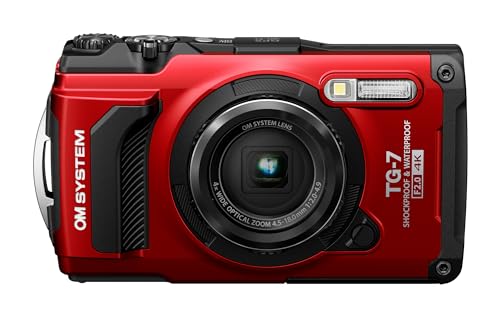
OM SYSTEM TG-7 Tough Camera, 15m Waterproof, 4x Zoom (Red)
ASIN B0CGLZZ9GC • $652.74 • Ships from Amazon AU
The OM SYSTEM TG-7 is the waterproof tough camera of the five picks, and it's the one I'd buy for most families who want a camera that can go anywhere. Amazon AU sells it for $653, and it's #384 overall on Amazon AU, the best-ranked of the five by a long way. The listing gives a bright f2.0 lens with 4x optical zoom plus a 2x digital tele-converter, a backlit CMOS sensor with an AR coating, a TruePic VIII processor and a 3.0 inch screen with 1.04 million dots. The model code is V110030RU000 in red, and the listing states a 12 month Oceania warranty, which tells you it's the local stock rather than a grey import.
Toughness is the reason to buy it. The listing gives 15m waterproof, -10 degree freezeproof, 2.1m shockproof, dustproof and crushproof, so it handles the beach, the pool, snorkelling and the snow with no housing. Like most tough cameras it zooms inside the sealed body, which is why it copes with sand and drops that would jam a zoom compact. It also lists 4K video, 120fps Full HD for slow motion, vertical video and interval shooting, which covers holiday clips, reels and time-lapses. A bright f2.0 lens also helps underwater, where light drops off quickly once you're a few metres down, and a camera you don't need a separate housing for is a lot less to carry, rinse and look after on a trip. It's the camera I'd leave in the beach bag all summer.
The listing doesn't state the sensor size or megapixels, and it's a small-sensor camera, so don't expect it to beat a recent flagship phone in dim light. Its waterproofing depends on the door seal, so wipe the seal before every swim and rinse the closed camera in fresh water after the sea. Carry a spare battery for long days, and check the door is fully locked before it goes anywhere near water, because a door left open a crack is how most tough cameras flood. For a camera that can be dropped, dunked and handed to the kids, it's my pick.
Honest caveats: The listing doesn't state the sensor size, megapixels or battery life. Its small sensor won't match a big-sensor compact or a top phone in low light, and 4x optical zoom is short next to the TZ99. Waterproofing relies on a clean, fully locked door seal every time.
Best for: Families who want a camera for the beach, the pool and the snow that survives drops and swims.
Price: $653 (Amazon AU) • Type: Waterproof tough compact • Lens: f2.0, 4x optical zoom • Waterproof: 15m stated • Shockproof: 2.1m stated • Video: 4K, 120fps Full HD • Screen: 3.0 inch, 1.04m dots • Warranty: 12 months Oceania • Rank: #384 overall on Amazon AU
View on Amazon AU
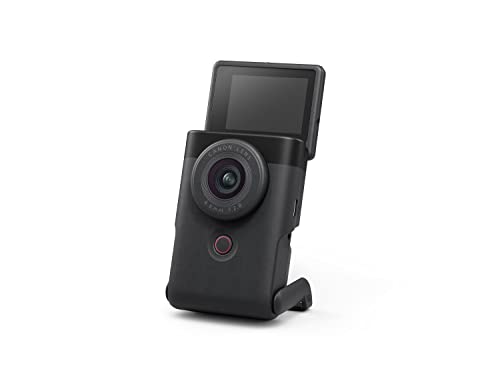
Canon PowerShot V10 Vlog Camera, 1.0 inch Sensor (Black) [AU Version]
ASIN B0C59MM64C • $478 • Ships from Amazon AU
The Canon PowerShot V10 is the entry vlog camera of the five picks and, at $478 from Amazon AU, the lowest-priced. It's #9,950 overall on Amazon AU. The listing gives a 1.0 inch CMOS sensor, a 19mm-equivalent lens, two low noise built-in microphones, a built-in stand and plug-and-play live streaming and webcam use, so it's really a small video studio rather than a holiday camera. The title says AU Version, the model code is PSV10B in black, and its manufacturer data states a 24 month warranty, tied with the V1 and TZ99 for the longest stated warranty of the five picks. Amazon's release data dates it to mid 2023, so it's an established model rather than a brand new one.
The design is the reason to buy it. It stands upright on its own stand, so it can sit on a desk, a cafe table or a car dash and film without a tripod, and the 19mm lens is wide enough to fit you and the background at arm's length. A 1-inch sensor is bigger than most phone main cameras, which helps indoors. Plugging it into a computer as a webcam with no extra software makes it a good streaming camera as well, and two mics pick up voices better than a phone held at arm's length. It's also small enough to live in a jacket pocket or a handbag, which is how a camera actually gets used.
The listing doesn't mention optical zoom, stabilisation or battery life, so it's a wide, fixed-view camera rather than an all-rounder. Filming long stretches warms a small body up, so keep it out of direct sun and carry a power bank. It isn't waterproof, so keep it away from the pool. Clean the lens with a microfibre cloth rather than a shirt, because a wide lens shows every smear, and keep the stand hinge free of sand so it doesn't grind. For someone moving from phone videos to a first dedicated vlog camera, it's the pick.
Honest caveats: The listing doesn't state optical zoom, stabilisation, resolution or battery life. Its single wide lens can't zoom in on anything far away. It's built for filming yourself, so it's a weaker choice for travel photos or wildlife. It isn't waterproof.
Best for: First-time vloggers and streamers who want a 1-inch sensor camera that stands up on its own.
Price: $478 (Amazon AU) • Type: Vlog compact • Sensor: 1.0 inch CMOS • Lens: 19mm equivalent • Audio: 2 built-in mics • Extras: Built-in stand, webcam, streaming • Warranty: 24 months stated • Model: PSV10B, AU Version • Rank: #9,950 overall on Amazon AU
View on Amazon AU
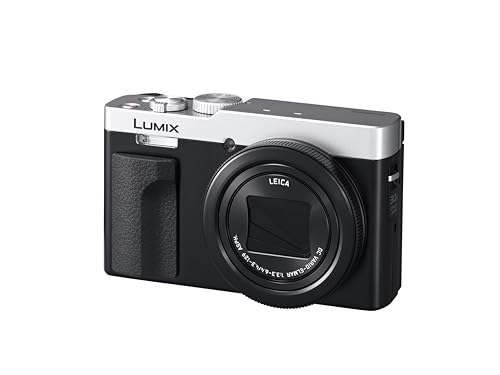
Panasonic LUMIX TZ99 4K Travel Camera, 30x Leica Zoom, 20.3MP (Silver)
ASIN B0DR2992VX • $864 • Ships from Amazon AU
The Panasonic LUMIX TZ99 is the travel zoom of the five picks, and the one to buy if reach is what your phone lacks. Amazon AU sells it for $864, and it's #6,726 overall on Amazon AU. The listing gives a 30x Leica DC lens from 24 to 720mm, a 20.3MP MOS sensor, 4K PHOTO for pulling 8MP stills out of 30fps video, a 1,840k-dot touchscreen that tilts 180 degrees for selfies, Bluetooth image transfer and USB Type-C battery charging. Its model code is DC-TZ99GN-S, the GN marking Panasonic's Oceania code, and it states a 2 year manufacturer warranty. Amazon's release data dates it to March 2025, the newest of the five picks alongside the V1.
That zoom range is the whole point. At 720mm it brings in wildlife, a surfer out the back or a player across the oval, far past what any phone reaches without digital cropping. Post Focus lets you pick the sharp point after shooting, and Focus Stacking combines several shots for close-ups with more in focus, which is handy for flowers and small things. USB-C charging means a phone charger or power bank tops it up on the road, and of the five picks it's the one whose listing states USB-C charging. The tilting touchscreen also makes low and high angle shots easier, which helps over a crowd or down at a toddler's height.
The listing doesn't state the sensor size, and it's a small sensor, so low light isn't its strength and a steady hand matters at full zoom. The long extending barrel is the part most likely to give trouble, so turn it off before pocketing it, keep it out of sand and never force the lens. Use the screen's tilt rather than holding it at odd angles, keep a lens cloth in the pouch and carry a spare battery on long days, since zooming and 4K PHOTO both use a fair bit of charge. For a pocket camera that zooms from a landscape to the far side of the bay, it's the pick.
Honest caveats: The listing doesn't state the sensor size or battery life, and a small sensor gives noisier shots indoors and at night. At 720mm hand shake is magnified, so it needs good light or support. The long extending barrel is the most exposed to grit and drops of the five.
Best for: Travellers who want real optical zoom in a camera that fits a pocket.
Price: $864 (Amazon AU) • Type: Travel zoom compact • Lens: Leica DC 24 to 720mm, 30x • Sensor: 20.3MP MOS, size not stated • Screen: 1,840k-dot touch, tilts 180 degrees • Charging: USB Type-C • Warranty: 2 years manufacturer • Model: DC-TZ99GN-S • Rank: #6,726 overall on Amazon AU
View on Amazon AU
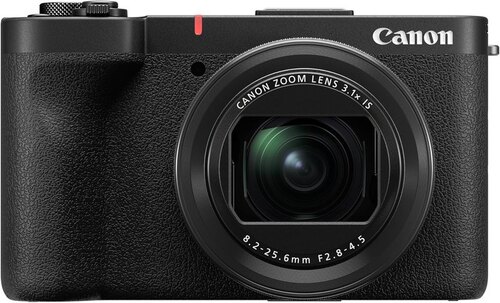
Canon PowerShot V1 4K Vlog Camera, 1.4 inch Sensor [AU Version]
ASIN B0DYHYWHXX • $1,098 • Ships from Amazon AU
The Canon PowerShot V1 is the big-sensor vlog camera of the five picks, and the one for creators who've outgrown a phone and a starter camera. Amazon AU sells it for $1,098. Amazon AU's API returned no rank of any kind for this listing on 13 November, so there's no sales figure to compare. The listing gives a 1.4 inch sensor, the biggest of the five picks, 4K video at up to 60p, an ultra-wide f/2.8 lens, Dual Pixel CMOS AF II with subject and eye detection for people and animals, and image stabilisation. The title says AU Version, the model is PSV1, and it states a 2 year warranty.
The sensor and autofocus are the reasons to buy it. A 1.4 inch sensor gathers noticeably more light than the 1-inch picks, which helps in dim rooms and gives softer backgrounds, and eye detection keeps your face sharp as you move around the frame. Stabilisation means handheld walking shots without a gimbal. The listing also mentions landscape and vertical video, customisable buttons and dials, and built-in Wi-Fi and USB for moving footage to a phone or computer, so it fits a creator's workflow rather than a holiday snapper's. Amazon's release data dates it to March 2025, so it's one of the two newest cameras of the five. If you already edit video on a computer, it slots in without changing how you work.
The listing doesn't state the zoom range, battery life or whether it charges over USB, so check the box contents before relying on a power bank. Long 4K recording heats a compact body, so keep it out of direct sun between takes. It isn't waterproof. Use a fast card with the speed class the manual asks for, because 4K60 writes a lot of data and a slow card stops recording, and keep the lens covered in a bag, since an ultra-wide front element picks up scratches easily. For a creator who wants the biggest sensor of the five in a pocket body, it's the pick.
Honest caveats: Amazon AU's API returned no rank for this listing, so its sales can't be compared with the others. The listing doesn't state zoom range, battery life or charging method. It's a video-first camera and a lot to spend if you mostly take still photos.
Best for: Creators who want 4K60, eye-detect autofocus and a 1.4 inch sensor in a compact body.
Price: $1,098 (Amazon AU) • Type: Vlog compact • Sensor: 1.4 inch • Lens: Ultra-wide f/2.8 • Video: 4K up to 60p • Autofocus: Dual Pixel CMOS AF II, eye detect • Warranty: 2 years stated • Model: PSV1, AU Version • Rank: Not returned by Amazon AU's API (checked 2026-11-13)
View on Amazon AU
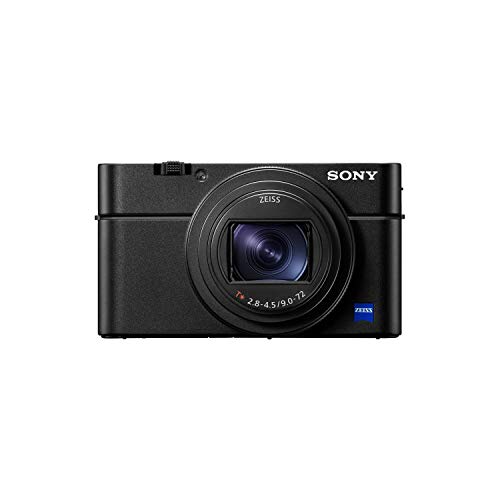
Sony RX100 VII Digital Compact Camera, 1 inch Sensor, 24 to 200mm (DSC-RX100M7)
ASIN B07XLZKW38 • $1,637 • Ships from Amazon AU
The Sony RX100 VII is the premium all-rounder of the five picks, pairing a 1-inch sensor with a real zoom. Amazon AU sells it for $1,637, the highest price of the five, and it's #58,555 overall on Amazon AU, the weakest rank of the ranked picks. The listing gives a 20.1MP 1-inch Exmor RS BSI CMOS sensor, a BIONZ X processor with a front-end LSI, and a ZEISS Vario-Sonnar T f/2.8 to 4.5 lens from 24 to 200mm. The model is DSC-RX100M7, and Amazon's release data dates it to 2019, the oldest camera of the five. Amazon AU is the seller, which keeps returns simple if something isn't right in the box.
The combination is what sets it apart. Of the five picks, it's the one that pairs a 1-inch sensor with a zoom past 100mm, so it should handle low light better than a small-sensor travel zoom while still reaching a long way, and it's small enough for a jacket pocket. That makes it the closest thing among the picks to a camera that does everything, travel, family, low light and some zoom, without a bag of lenses. It's an older design, but the RX100 line has stayed popular because the formula still works. If you'd rather have one camera that does a bit of everything than a tough camera, a vlog camera or a travel zoom, this is the one that spreads across all of it.
The listing says only a limited 1 year warranty and doesn't say AU version, so check the box for a Sony Australia warranty card when it arrives. Its extending zoom barrel is the part to protect: turn it off before pocketing, keep it out of sand and use a soft pouch. A camera this size gets carried everywhere, so a wrist strap makes a drop with the lens out less likely. Carry a spare battery too, because a small body leaves little room for a big one, and register it with Sony when it arrives. For one pocket camera that covers the most ground, it's the pick.
Honest caveats: The listing states only a limited 1 year warranty and doesn't say AU version. It's the oldest and most expensive of the five, with the weakest sales rank. The extending zoom barrel is exposed to grit and drops, and the listing doesn't state battery life.
Best for: Buyers who want a 1-inch sensor and a 24 to 200mm zoom in one pocket camera.
Price: $1,637 (Amazon AU) • Type: Premium zoom compact • Sensor: 1-inch, 20.1MP • Lens: ZEISS 24 to 200mm, f/2.8 to 4.5 • Processor: BIONZ X with front-end LSI • Warranty: Limited 1 year stated • Model: DSC-RX100M7 • Rank: #58,555 overall on Amazon AU
View on Amazon AUSide-by-side comparison
| Product | Price | Best for |
|---|---|---|
| Canon PowerShot V10 Black [AU Version] | ~$478 | |
| OM SYSTEM TG-7 Tough Camera - Red | ~$652.74 | |
| Panasonic 4K Compact Travel Camera with… | ~$864 | |
| Canon PowerShot V1 Vlog Camera [AU Version] | ~$1,098 | |
| Sony RX100 VII Digital Compact Camera | ~$1,637 |
What we see fail in the workshop: compact cameras
Compact cameras share most of their weak points with phones: a battery that ages, a screen connector that hates water and a board that corrodes after a dunking. They add one fault phones don't have, which is the extending lens. Most of what kills a compact is the way it gets carried and used on holiday, so a few habits do more for its life than anything you could buy.
Jammed lenses and lens error messages
A zoom compact's lens runs out of the body on tiny gears, and sand, grit and lint work into the gaps until the motor can't move it. The camera then shows a lens error, sticks part way out or shuts down a second after turning on. A drop with the lens out can bend a barrel section or strip a gear. Turn it off before you pocket it, keep it in a pouch away from sand and never force the lens by hand. A bent barrel usually means a lens unit replacement.
Water and salt in the doors and ports
Water gets in past a dirty door seal on a waterproof camera or straight into a normal one, and salt water does the most damage. It corrodes the battery contacts, the board and the screen connector, and the camera often seems fine for a day or two before it fails. Take the battery and card out, don't charge it and get it dried and checked quickly. On a tough camera, wipe the seal before every swim and rinse it closed in fresh water after the sea, then dry it before you open the door.
Swollen batteries and dead cards
Small camera batteries swell as they age, and no-name spares swell sooner. A swollen battery can jam in its bay, push the door open or crack the body, and it should be removed carefully, kept away from anything flammable and not charged again. Memory cards fail too, usually a fake or slow card that corrupts 4K files. Buy batteries from the maker or a known brand, use a card with the speed class the manual asks for and format it in the camera rather than on a computer, before every trip.
Decision tree: which one should you actually buy?
- Want a camera for the beach, the pool and the kids? → The OM SYSTEM TG-7 at $653 is waterproof to 15m, shockproof from 2.1m and the best-ranked of the five on Amazon AU.
- Starting out with vlogging or streaming? → The Canon PowerShot V10 at $478 has a 1-inch sensor, a built-in stand, two mics and plug-and-play webcam use.
- Want real zoom for travel? → The Panasonic LUMIX TZ99 at $864 has a 30x Leica lens from 24 to 720mm, USB-C charging and a 2 year warranty.
- Serious about video and want the biggest sensor? → The Canon PowerShot V1 at $1,098 has a 1.4 inch sensor, 4K60 and eye-detect autofocus.
- Want one pocket camera that does a bit of everything? → The Sony RX100 VII at $1,637 pairs a 1-inch sensor with a 24 to 200mm ZEISS zoom.
- Camera or phone dropped, dunked or full of sand? → Take the battery out and don't charge it. Bring it into our Erina workshop and we'll check it and tell you the cost before you spend anything.
Frequently asked questions
Is a compact camera better than a phone camera?
In daylight a good phone is hard to beat, so a compact earns its place by doing something the phone can't. That's usually a bigger sensor for low light, like the 1-inch Canon V10 and Sony RX100 VII or the 1.4 inch Canon V1, real optical zoom like the Panasonic TZ99's 24 to 720mm, or toughness like the OM SYSTEM TG-7's 15m waterproofing. A compact that doesn't beat your phone on one of those is hard to justify, so decide which one you need first.
What does a lens error mean on a compact camera?
It means the motor that extends and retracts the lens can't move it. The usual causes are sand or grit in the gaps between the barrel sections, or a drop with the lens extended that bent a section or stripped a gear. Don't keep turning the camera on and off, because the motor strains against the jam. Take the battery out, gently blow grit away with a hand blower and try once more. If it still won't move, it needs a repair, and a bent barrel usually means a new lens unit.
What sensor size should a compact camera have?
For better low light shots than a phone, look for a 1-inch sensor or bigger. The Canon V10 and Sony RX100 VII list 1-inch sensors and the Canon V1 a 1.4 inch sensor. Smaller sensors, like those in most travel zoom and waterproof compacts, let the camera carry a long zoom or a sealed body, but they won't beat a recent flagship phone indoors. Megapixels matter much less than sensor size, so be wary of a small camera that shouts about 48MP or 64MP.
Is a waterproof camera really waterproof?
The OM SYSTEM TG-7 lists 15m waterproofing, but it's only as good as the door seal. A grain of sand or a hair across the seal lets water in, so wipe it and check the door locks fully before every swim, and never open it wet or on the sand. After the sea, soak the closed camera in fresh water for a few minutes and dry it before opening. Seals harden with age, so an older tough camera deserves more care before a dive.
How do I know a camera on Amazon AU is an Australian version?
Look for AU Version in the title, an Oceania or Australian warranty in the listing, or a regional model code. Both Canon picks say AU Version, the Panasonic TZ99's model code ends in GN, Panasonic's Oceania code, and the TG-7 states a 12 month Oceania warranty. The Sony RX100 VII listing says only a limited 1 year warranty, so check its box for a Sony Australia warranty card. Grey imports usually work, but warranty repairs can be harder.
Do compact cameras need a spare battery?
Almost always. Compact batteries are small, and 4K video, Wi-Fi and a bright screen drain them quickly, so a spare is the first accessory I'd buy. Get it from the camera maker or a known brand, because no-name camera batteries can swell, overheat while charging or misreport their charge. The Panasonic TZ99 lists USB Type-C charging, so a power bank tops it up on the road. Check the box for a charger on the others before your first trip.
Related buying guides
Camera or phone back from holiday with sand or water in it?
Sand jams lenses and water corrodes boards, and the damage often shows up days after the trip. Take the battery out, don't charge it and bring it into our Erina workshop. We'll open it up, check the board and the lens, and tell you what it needs and what it costs before you spend anything.
Visit our Erina workshop Book Online