Prices from Amazon AU, updated daily. Swipe or use the arrows for more.
Disclosure: This article contains affiliate links to amazon.com.au. If you buy through one of these links iFix may earn a small commission at no extra cost to you. It doesn't change which products we recommend. We focus on what actually lasts based on 16 years of repair-shop experience.
Quick summary8 picks
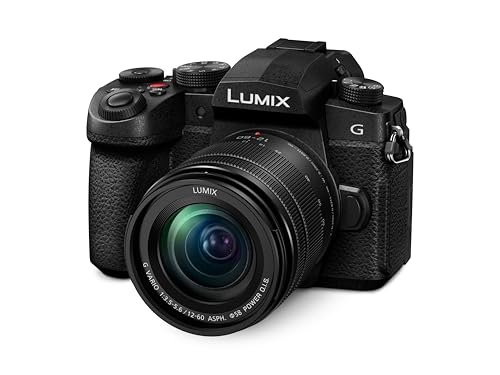
- CheapestPanasonic LUMIX G97 Photo and Video Hybrid… about$9873" screen, OLED.
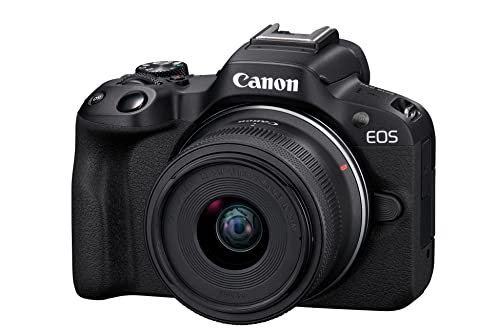
- Canon EOS R50 Mirrorless Camera with RF-S… about$997
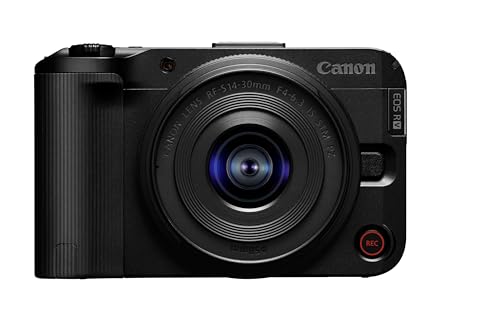
- Canon EOS R50 V Mirrorless Camera Kit with… about$1,119
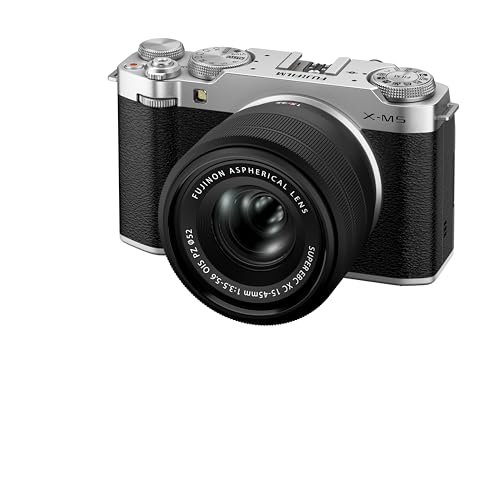
- Fujifilm X-M5 Mirrorless Digital Camera about$1,247
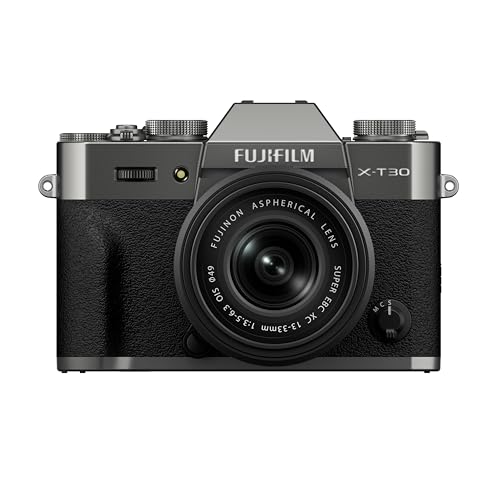
- Fujifilm X-T30 III Mirrorless Camera about$1,459
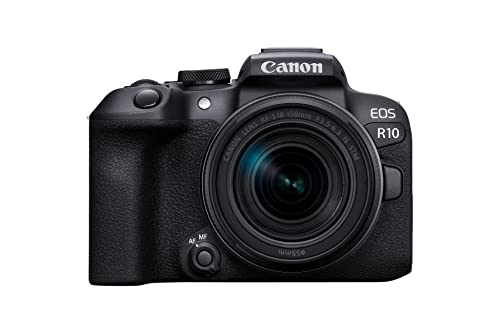
- Canon EOS R10 Mirrorless Camera with… about$1,545
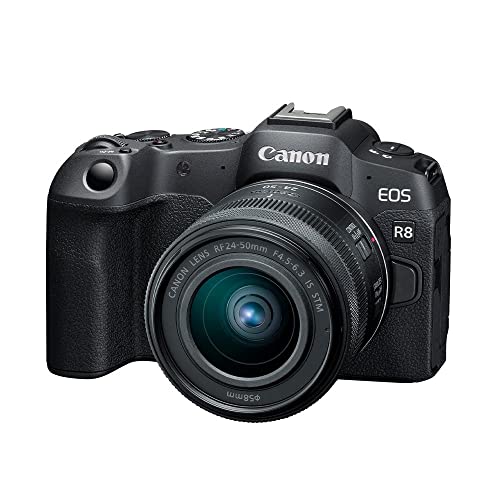
- Canon EOS R8 Mirrorless Kit with RF 24-50mm… about$1,899
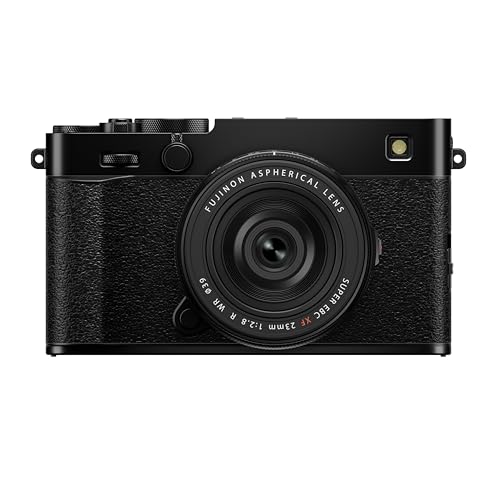
- Most PremiumFujifilm X-E5 Mirrorless Digital Camera Body about$2,375
Sensor size, explained plainly
Most people who ask me about a mirrorless camera are really asking for one thing: photos of their kids, their dog or their holiday that look better than what their phone manages indoors and at night. The sensor is the part that decides most of that, and the confusing thing is that camera boxes rarely describe it in a way that means anything to a normal buyer. There are two sizes on this page. Four of the five picks use APS-C, the smaller of the two (every Fujifilm X body is APS-C, and so are Canon's RF-S bodies), and one, the Canon R8, is sold as Canon's compact full-frame body.
Full frame gathers more light per shot, which helps indoors and at dusk, and it gives you softer backgrounds at the same framing. It also makes every lens bigger, heavier and dearer, and that's the part people forget when they're comparing body prices. An APS-C body with a decent kit lens will out-shoot a phone in a dim lounge room by a wide margin, and in my experience the gap between a good APS-C camera and a full-frame one only really shows up once you're buying faster lenses to go with it. If you're not planning to spend another $1,000 or so on lenses over the next couple of years, APS-C is the sensible size, and the money you'd have spent on the bigger body is better spent on a second battery, a good card and eventually a lens that suits what you actually shoot.
Megapixels matter less than the ads suggest. Twenty-odd megapixels is plenty for a big print on the lounge room wall, and more resolution mostly means bigger files to store, more cards to fill and slower edits on an older laptop. I'd choose on the lens and the handling long before I'd choose on the megapixel count.
Kit lens or body only
Every pick here comes with a lens in the box, and that's deliberate. A body-only listing looks like the better price until you add the lens you need to actually take a photo, and by the time you've done that you've usually spent more than the kit would have cost. Kit lenses get a bad reputation from people who've moved past them, but for a first camera they're the right tool: light, mostly stabilised, and wide enough for a room full of people at a birthday.
The kits on this page aren't all the same kind of lens, though. The Canon R10 ships with an 18-150mm, which covers wide landscape shots through to the far end of a footy field, and it's the one I'd pick for travel where you don't want to swap lenses on a dusty roadside. The Canon R50 V comes with a 14-30mm power zoom, which is wide and built for video, with a motor that zooms smoothly while you're recording. The Fujifilm X-E5 comes with a 23mm prime that doesn't zoom at all, and that suits people who'd rather take a step forward than twist a ring. The Fujifilm X-T30 III's 13-33mm and the Canon R8's 24-50mm sit in between as compact everyday zooms.
If you already own lenses from an older Canon DSLR, check the adapter story before you buy anything. Canon's EF-to-RF adapter works well in my experience, and a cupboard of Canon lenses is a strong reason to stay with Canon, because Fujifilm bodies won't take them without third-party adapters that usually lose autofocus speed along the way.
The lens mount is the real purchase
The body is the part you'll probably replace in five or six years. The lens mount is the part you'll keep, because every lens you buy afterwards fits one brand and nothing else without an adapter. That's why I'd spend more time choosing between Canon RF and Fujifilm X than choosing between two bodies from the same maker, and it's why this guide is really a Canon versus Fujifilm decision with five ways in.
Canon RF has the widest range of lenses on Amazon AU at the moment, from small primes through to the long zooms that sports parents end up wanting. RF-S lenses are designed for the APS-C bodies (the R50 V and R10 here), and they'll also mount on a full-frame RF body like the R8, which crops the frame, so check what you're buying before you mix them. Fujifilm's X mount is APS-C only, and its lenses are generally smaller, with a lot of compact primes that suit the small Fujifilm bodies and keep the whole kit light enough to carry all day.
Third-party lens makers matter too. Sigma, Tamron and Viltrox now make lenses for these mounts, although Canon's full-frame RF range has fewer outside options than Fujifilm X does, and a third-party prime often costs a fraction of the maker's own. From a repair point of view, the lower the price of a lens, the more likely its autofocus motor or aperture ribbon is the thing that fails, so I'd buy the maker's own lens for anything you'll use every week and keep the off-brand glass for occasional work.
Screens, viewfinders and the parts that flex
The part of a mirrorless camera that comes into the workshop most often isn't the sensor or the shutter. It's the hinge. Flip and vari-angle screens hang off a thin ribbon cable that runs through the hinge, and every time the screen swings out to face you, that cable bends. Done carefully it lasts for years. Done in a hurry, with the screen twisted against its stop, the cable cracks and the screen goes black or starts flickering at certain angles.
The Canon R50 V and R10 both have a screen that swings out to the side and rotates, which is what you want for filming yourself or shooting from low angles. The Fujifilm X-T30 III's listing doesn't describe its screen arrangement, so check the product photos before you buy if a selfie screen matters to you. The X-E5 has an electronic viewfinder (the listing mentions a Classic Display mode that only appears in the EVF), and a viewfinder matters more than people expect in bright Australian sun, where a rear screen can wash out so badly you can't judge exposure at all.
Treat the hinge like a door you don't slam. Open it fully before you rotate it, close it before the camera goes in a bag, and don't use the open screen as a handle when you pick the camera up. If the screen does start flickering, stop flexing it, because a cracked trace usually gets worse quickly, and replacing a cable is a much smaller job than replacing a screen.
Video, heat and the record button
Every camera here shoots 4K video, but they're built for it to different degrees. The Canon R50 V is the one designed around video first, with a front record button, a power zoom kit lens, 4-channel audio support and the ability to work as a 4K webcam over UVC for live streaming. The R8 records 4K at 60 frames per second oversampled from 6K, and it has a 3 or 5 second pre-record that keeps the moment just before you pressed the button. The X-E5 records 6.2K at 30p in 10-bit 4:2:2, which is a high-end recording format for a camera this small.
Small bodies and high-resolution video make heat, and heat is what stops long recordings. None of these listings quote a recording time limit or an overheating figure, so I wouldn't buy any of them expecting to film a two-hour school concert in 4K without a break. For long recordings, drop to 1080p, keep the screen flipped out so it isn't trapping heat against the back of the body, and keep the camera out of direct sun. Running from USB-C power, where the body supports it, also takes the battery's own heat out of the picture.
4K files are large, and 6.2K files are larger again. If you plan to edit them rather than just share clips from your phone, your computer needs to keep up, and my guide to laptops that handle 4K editing covers what that takes in memory, storage and graphics.
Cards, batteries and chargers
The SD card is the part people skimp on and the part that loses them photos. All five of these bodies take full-size SD cards, not microSD, but the same speed-class rules from my microSD card guide apply: for 4K video, look for V30 or faster, and buy a name-brand card from a seller you can identify, because counterfeit cards report a capacity they don't have and quietly overwrite earlier files once the real space runs out.
Batteries are the other consumable. A second genuine battery is the first accessory I'd buy, ahead of a bag or a filter, because a flat camera takes no photos. Third-party batteries are usually fine from a known accessory maker, but we see swollen no-name packs that have pushed the battery door out of shape, and once a door latch is bent the camera can lose power when it's bumped. Charge in-camera over USB-C where the body supports it, using a decent charger rather than a servo-counter brick, and my piece on what bad chargers do to electronics explains why that matters for the camera's charging circuit.
When a card does fail, stop shooting to it straight away. Most deleted or corrupted photos are still physically on the card until something new is written over them, which is why professional data recovery works best on a card that went straight into a drawer rather than back into the camera.
Sand, salt and humid summers
On the Central Coast the camera killer is the beach. Fine sand gets into zoom rings and lens mounts, and salt spray dries into a film that slowly corrodes contacts and screw heads. None of these five listings claim weather sealing, so I'd treat all of them as cameras that need protecting from spray rather than cameras that shrug it off.
Change lenses away from the wind, ideally in the car, with the body pointed down so dust falls out rather than in. Never blow on the sensor and don't use a can of compressed air on it, because the propellant can spit liquid onto the glass. A rubber hand blower and a clean lens cloth will handle most of it, and anything stuck to the sensor itself is a careful cleaning job, not a scrubbing job.
Humidity is the quieter problem. Bring a cold camera from an air-conditioned car into a hot, humid afternoon and condensation forms inside the lens as well as on it. Let it warm up in the closed bag for twenty minutes before you open it. If a camera does get properly wet, take the battery out, don't turn it on to check, and read how water damage spreads on a circuit board before you try the rice trick, which doesn't help.
What to check the day it arrives
Amazon AU returns are easiest in the first few days, so test the camera properly before the box goes in the recycling. Check that the listing says AU Version, which all five of these do at time of writing, because grey imports often aren't covered by the local warranty, and keep the invoice with the serial number on it somewhere you'll find it in two years.
Then shoot a few frames at the smallest aperture (the highest f-number) against a plain bright sky or a white wall and look at them full size on a computer. Dark spots that stay in the same place on every frame are dust on the sensor, and a stuck or dead pixel shows as a single bright or black dot. Run every button and dial, swing the screen through its full travel, zoom the kit lens end to end listening for grinding, and record a minute of 4K to make sure the card and the camera agree with each other.
Register the warranty with the maker while you're at it. It takes five minutes, and it's the thing that makes a later claim easy. If anything fails those checks, send it back while it's new rather than living with it, because small faults on a new camera rarely fix themselves, and an early return is far less hassle than a warranty repair later.
The 5 picks, $1,119 to $2,375
Prices are Amazon AU at time of writing (14 October 2026) and move week to week. Ranks are Amazon AU sales ranks, checked the same day; Amazon AU doesn't publish a camera subcategory rank for these listings, so the site-wide rank is shown.

Fujifilm X-T30 III with XC 13-33mm Lens (AU Version)
ASIN B0FVFDTWJN • $1,459.00 • Ships from Amazon AU
This is the camera I'd hand to most people asking where to start, and the sales data agrees: at #518 overall on Amazon AU at time of writing, it's the best-selling camera on this page. Fujifilm lists it at 378g, which is light enough that it actually comes out of the bag, and that matters more than any spec, because a camera that stays home takes worse photos than a phone. The design is dial-operated, with physical controls on the top plate rather than everything buried in menus, and once you've learnt where they sit you can change settings without looking at the screen. The kit lens is the XC 13-33mm, a compact wide-to-normal zoom that suits rooms, streets and holiday shots.
The headline feature for a lot of buyers is the Film Simulation dial. Fujifilm's film colour profiles are applied to the JPEGs straight out of the camera, so the photos come out looking finished without any editing, and having them on a physical dial means you'll actually use them rather than forgetting they exist. For people who don't want to learn Lightroom, that matters more than it sounds. It's an interchangeable-lens camera on Fujifilm's X mount, so the 13-33mm is a starting point rather than a ceiling, and the X mount has a good range of small primes that keep the whole kit light. The listing doesn't state the sensor resolution, video specs or battery life, so I'd check those on Fujifilm's own spec page if video is a big part of why you're buying.
From a workshop point of view, the thing I like is the physical dials. Dials wear slowly and predictably, whereas a camera that relies on a touchscreen for everything is stuck when the touch layer fails. It's sold and shipped by Amazon AU, and it's the AU Version, which keeps the local warranty simple. The things to protect are the usual ones on a small body: keep the lens mount clean, don't carry it by the lens, and don't leave it in a hot car, where the battery and the adhesive holding the rear screen both suffer. Treat it like that and there's no reason it won't outlast the next couple of phones you own.
Honest caveats: The listing doesn't state the sensor resolution, video resolution, battery life or whether the screen flips, so check those on Fujifilm's spec page before you buy. The XC 13-33mm is a compact zoom rather than a long one, so sport and wildlife need another lens. At 378g there isn't much grip to hold on to.
Best for: First-time camera buyers who want great colour straight out of the camera in a body light enough to carry every day.
Lens: XC 13-33mm kit zoom • Weight: 378g (stated) • Controls: Dial-operated, Film Simulation dial • Mount: Fujifilm X, interchangeable • Sensor: Not stated on the listing • Version: AU Version • Seller: Amazon AU • Rank: #518 overall on Amazon AU
View on Amazon AU
Canon EOS R50 V with RF-S 14-30mm PZ Lens (AU Version)
ASIN B0F3X5K2V3 • $1,119.00 • Ships from Amazon AU
The R50 V is the lowest-priced camera on this page and the one built most clearly around video. Canon's listing describes an APS-C sensor, 4K and Full HD slow-motion recording, a front-mounted record button and a rotating screen, which together make it the easiest camera here to film yourself with. It can also stream 4K over USB as a webcam through UVC, so it doubles as a far better camera for video calls and live streams than anything built into a laptop, without a capture card. If most of what you'll shoot is moving, talking or travelling, this is the one I'd start with, and at $1,119 at time of writing it leaves room in the budget for a second battery and a decent card.
The kit lens is the RF-S 14-30mm F4-6.3 IS STM PZ, and the PZ is the interesting part: it's a power zoom, driven by a motor, so you can zoom smoothly while recording instead of the jerky twist you get from a manual ring. It's wide, too, which is what you want for holding the camera at arm's length or filming in a small room. The listing also mentions 4-channel audio support and Colour modes, plus Wi-Fi and Bluetooth for moving files to a phone. It takes Canon RF lenses, so the full RF range is open to it, although on an APS-C body like this the RF-S lenses are the size-matched choice and usually the lighter one.
The parts that wear on a camera like this are the moving ones. The power zoom motor and its gearing don't like sand, and the swing-out screen hinge doesn't like being twisted against its stop, so treat both gently and keep the camera in a pouch at the beach. Streaming as a webcam for hours at a time is a heat job, so keep it out of the sun and give it some air around the body. It's sold and shipped by Amazon AU as the AU Version. I'd pair it with a V30-rated full-size SD card and a second genuine battery before buying anything else for it.
Honest caveats: The listing doesn't state a viewfinder, battery life or a recording time limit, so check Canon's spec page if you plan long recordings. The 14-30mm kit lens is wide rather than long, so it won't reach across a sports field. It's the most video-focused body here, so stills shooters may prefer the R10.
Best for: Vloggers, streamers and families who mostly film video and want the lowest entry price on this page.
Sensor: APS-C (stated) • Lens: RF-S 14-30mm F4-6.3 IS STM PZ power zoom • Video: 4K, Full HD slow motion • Audio: 4-channel support • Streaming: 4K webcam over USB (UVC) • Wireless: Wi-Fi and Bluetooth • Seller: Amazon AU • Rank: #2,700 overall on Amazon AU
View on Amazon AU
Canon EOS R10 with RF-S 18-150mm IS STM Lens (AU Version)
ASIN B0B1Z91HXC • $1,544.99 • Ships from Amazon AU
The R10 is the stills-first Canon in this group, and the 18-150mm kit lens is why I've picked this bundle over the shorter 18-45mm one. That lens runs from properly wide to a useful telephoto, which covers a landscape, a group shot and a kid on the far side of a field without swapping anything. For travel that's worth a lot, because every lens change on a windy roadside is a chance for dust to land on the sensor. The listing quotes up to 23 frames per second continuous shooting and high-performance subject tracking, which is the combination you want for sport, birds and pets that won't sit still for you.
Video isn't an afterthought either. Canon lists 4K 60p recording, and the vari-angle touchscreen swings out for filming yourself or shooting low to the ground. The listing calls it compact and lightweight but doesn't give a weight, and with the 18-150mm attached it'll feel noticeably bigger than the Fujifilm X-T30 III. That's the trade for having all that zoom range in one lens. It's an RF-mount body, so it takes the full Canon RF and RF-S range, and if you've got older EF lenses from a Canon DSLR in the cupboard, Canon's EF-to-RF adapter will let them work on it too, which can make this the most sensible upgrade on the page.
At $1,544.99 at time of writing it sits in the middle of this list, and it's sold and shipped by Amazon AU as the AU Version. The things I'd watch are the long zoom and the hinge. A long kit zoom extends as you zoom in, and an extending barrel draws air (and dust) in as it moves, so don't zoom in and out at the beach in a breeze. Close the screen when it's not in use and never carry the camera by the lens. Fast continuous shooting fills cards quickly, too, so a fast, genuine card is part of the purchase rather than an optional extra.
Honest caveats: The listing doesn't state the sensor size, resolution, weight or battery life. With the 18-150mm on, it's bigger than either Fujifilm body here. A long extending zoom pulls dust in over the years, so it needs more care at the beach and on dirt roads than a short lens.
Best for: Travellers and sports parents who want one lens that goes from wide to long without changing it.
Lens: RF-S 18-150mm IS STM • Burst: Up to 23fps continuous • Video: 4K 60p • Screen: Vari-angle touchscreen • Autofocus: Subject tracking (stated) • Version: AU Version • Seller: Amazon AU • Rank: #3,920 overall on Amazon AU
View on Amazon AU
Canon EOS R8 with RF 24-50mm IS STM Lens (AU Version)
ASIN B0BXNYVXQN • $1,899.00 • Ships from Amazon AU
If you've decided you want full frame, the R8 is the way in on this page. Canon sells it as its compact full-frame body, though this listing doesn't print the sensor size, and what it does print is telling: 24.2MP resolution and an ISO ceiling of 102400, which says it's built for low light. Indoor sport, school concerts and dim restaurants are where a bigger sensor earns its money, with cleaner files at high ISO and softer backgrounds at the same framing. At $1,899 at time of writing the kit costs a lot less than full frame used to, and it's sold and shipped by Amazon AU as the AU Version.
The feature list is strong for the money. Canon quotes 4K 60p video oversampled from 6K, up to 40 frames per second with the silent shutter, and a 30fps RAW burst with 0.5 seconds of pre-shooting, so the camera is already saving frames from just before you fully press the button. There's a 3 or 5 second movie pre-record for video as well, which is handy for the moment a kid finally does the trick. The kit lens is the RF 24-50mm F4.5-6.3, a compact full-frame zoom. It's a sensible starter, but it's slow at the long end, and I reckon most R8 owners end up adding a faster prime, which is where the real full-frame difference shows.
The thing to understand before you buy is the running cost of full-frame lenses. Full-frame RF lenses are bigger and dearer than the RF-S lenses for the R50 V and R10, and that's where the budget goes over the following years. It's also a small body for its sensor class, and small bodies tend to run warm during long 4K recordings while their small batteries work hard, so a second genuine battery is close to essential. The sensor is exposed every time the lens comes off, so change lenses with the body pointed down and away from the wind.
Honest caveats: The listing doesn't state the sensor size, battery life, weight or recording limits, so confirm those on Canon's spec page. The RF 24-50mm kit lens is slow at the long end. Full-frame lenses cost more than APS-C ones, so budget for that before you commit to the system.
Best for: People who shoot indoors and at night and are ready to invest in full-frame lenses over the next few years.
Resolution: 24.2MP • Max ISO: 102400 • Video: 4K 60p, 6K oversampled • Burst: Up to 40fps silent, 30fps RAW burst • Pre-capture: 0.5 sec stills, 3 or 5 sec movie • Lens: RF 24-50mm F4.5-6.3 IS STM • Seller: Amazon AU • Rank: #5,662 overall on Amazon AU
View on Amazon AU
Fujifilm X-E5 with XF 23mm Lens (AU Version)
ASIN B0FBXCSD35 • $2,375.00 • Ships from Amazon AU
The X-E5 is the most expensive camera here and the second best-selling, at #630 overall on Amazon AU at time of writing, which says a lot about how many people want a small, beautifully made camera rather than the biggest spec sheet. It comes with the XF 23mm prime, a fixed lens that doesn't zoom, and that's the point of the kit: you frame by walking, the lens stays small, and the whole camera fits a small shoulder bag. The newly designed Film Simulation dial sits on top, and the listing counts 20 Film Simulation modes including REALA ACE, so the colour straight out of the camera is a big part of what you're paying for.
It's no toy on the video side. Fujifilm lists in-camera recording to SD card at 6.2K/30p in 4:2:2 10-bit, plus 4K/60p and 1080/240p slow motion, which is a serious recording format for a body this size. The autofocus uses what Fujifilm describes as a prediction algorithm for tracking moving subjects, and there's an electronic viewfinder with a Classic Display mode that keeps the shooting information along the bottom of the frame. A viewfinder is something I'd want on a camera at this price, because a rear screen in midday Australian sun is hard to judge exposure on, and you'll end up guessing. Holding a camera to your eye also steadies it, which helps at slower shutter speeds.
From a repair angle, a prime lens is about the most durable lens you can own. There's no zoom barrel drawing in dust and no zoom ribbon cable to wear, so the failure points shrink to the focus motor and the mount contacts. The body is where I'd be careful: a small premium camera gets carried everywhere and ends up in hot cars, so keep it in a pouch and out of the glovebox in summer. It's sold and shipped by Amazon AU as the AU Version, at $2,375 at time of writing, and it's the one on this list I'd expect to still be using in eight years.
Honest caveats: The 23mm prime doesn't zoom, so sport, wildlife and group shots from across a room need another lens. The listing doesn't state sensor resolution, weight or battery life. 6.2K 10-bit files are large, so plan for storage and a computer that can edit them comfortably.
Best for: Street and travel photographers who value a small camera, great colour and a viewfinder over zoom range.
Lens: XF 23mm prime • Video: 6.2K/30p 4:2:2 10-bit, 4K/60p, 1080/240p • Colour: 20 Film Simulation modes incl. REALA ACE • Viewfinder: EVF with Classic Display mode • Autofocus: Subject prediction (stated) • Version: AU Version • Seller: Amazon AU • Rank: #630 overall on Amazon AU
View on Amazon AUSide-by-side comparison
What we see fail in the workshop: mirrorless cameras
Cameras come into the shop less often than phones, but when they do it's usually one of three faults, and all three are mostly avoidable. None of them involve the sensor itself, which is a well-protected part. They're the parts that move, flex or get wet, and the habits behind them are the same ones I see wearing out phones and laptops every week.
Flip-screen ribbon cables
The ribbon cable that feeds a flip or vari-angle screen runs through the hinge and bends every time the screen moves. Twisting the screen past its stop, or carrying the camera by the open screen, cracks the copper traces inside the ribbon. The first sign is a screen that flickers or goes black at certain angles and comes back at others. If you catch it then, replacing the flex is a much smaller job than replacing the screen, but it gets worse with every flex, so stop swinging it around and get it looked at.
Battery doors and swollen packs
No-name batteries are the most common cause of battery-door damage I see. A cell that's started to swell pushes against the door, the latch bends, and the camera starts losing power when it's bumped because the battery is no longer pressed firmly against its contacts. Swollen lithium cells are also a fire risk, so if a battery looks puffy or the door won't close properly, take it out, stop charging it and drop it at a battery recycling point rather than in the bin. A new door latch is a small part; a scorched battery bay isn't.
Sand and salt in the mount and zoom
Beach trips are the classic camera killer here. Sand works into the zoom ring and the lens mount, and salt spray dries into a film that corrodes the mount contacts and the screws. Symptoms are a gritty zoom, lens communication errors, or autofocus that hunts back and forth. A careful clean of the contacts sometimes clears the error, but a gritty zoom needs the lens opened up, and the longer it's used gritty, the more it scores the inside of the barrel. Keep a pouch on it at the beach and change lenses in the car.
Decision tree: which one should you actually buy?
- First camera, mostly photos of family and holidays? → The Fujifilm X-T30 III at $1,459. Light, simple dials and colour that looks finished without editing.
- Mostly video, vlogging or streaming? → The Canon EOS R50 V at $1,119, with its power zoom kit lens, front record button and 4K webcam mode.
- Travel or kids' sport, one lens for everything? → The Canon EOS R10 with the 18-150mm at $1,544.99. Wide to long without a lens change.
- Indoor sport, concerts and low light? → The Canon EOS R8 at $1,899, the full-frame option, as long as you're ready to budget for full-frame lenses.
- Want something small and special for street and travel? → The Fujifilm X-E5 with the 23mm prime at $2,375, with a viewfinder and 6.2K video.
- Camera already playing up after a beach trip or a drop? → Bring it to our Erina workshop. We'll check the mount, the hinge and the battery door and tell you what it needs before you spend anything.
Frequently asked questions
Is a mirrorless camera better than my phone?
In good daylight a recent phone does very well, and its processing hides a lot of weaknesses. The difference shows indoors, at night, with moving subjects and whenever you want a longer lens. A mirrorless camera's sensor is much larger than a phone's, so it gathers more light, and swapping lenses gives you reach a phone can't match without cropping. If you mostly shoot daytime holiday snaps and view them on a phone screen, the gap is small. If you shoot kids' sport or indoor events, or you want prints, a camera like the Fujifilm X-T30 III or Canon R10 is a big step up.
Should I buy APS-C or full frame?
For most people, APS-C. It keeps the body and the lenses smaller and lower-priced, and it's plenty for prints, holidays and family photos. Full frame, like the Canon R8 here, gives cleaner high-ISO files and softer backgrounds, which helps with indoor sport and low light, but every lens you buy for it costs more and weighs more. If you're not planning to spend real money on lenses over the next few years, the full-frame advantage mostly goes unused, and the money is better spent elsewhere.
Do I need to buy a lens separately?
Not with any of the five picks here, because each one is a kit that includes a lens. Body-only listings look like the better price until you add a lens, and then they usually cost more than the kit would have. The kit lens is a good way to learn what you actually like to shoot. Once you know, a second lens, such as a fast prime for low light or a long zoom for sport, is usually a more useful upgrade than a newer body.
What memory card should I use?
All five of these cameras take full-size SD cards. For 4K video, look for a card rated V30 or faster, and for the fast burst modes on the Canon R10 and R8, a faster card helps the buffer clear sooner. Buy name-brand cards from a seller you can identify, because counterfeit cards report more capacity than they have and silently overwrite earlier files. Carry two smaller cards rather than one huge one, so a single failure doesn't take a whole trip's photos with it.
Are third-party batteries safe in a camera?
From a known accessory maker, generally yes, but no-name batteries are the most common cause of the swollen packs and bent battery doors we see. A swelling cell pushes the door out, the contacts lose pressure and the camera cuts out when it's bumped. Buy one genuine spare first, and if you add third-party packs, check them for any puffiness every few months. Never keep charging a battery that's swollen or hot to the touch; take it out and get it recycled.
What does AU Version mean on Amazon camera listings?
It means the camera was supplied for the Australian market, which normally means the local manufacturer warranty applies and the charger suits Australian power. Grey imports are cameras brought in from overseas outside the local distributor, and they often aren't covered for warranty repairs here, which some listings now state outright in the title. All five picks on this page are listed as AU Version and sold by Amazon AU at time of writing. Check the title and the seller name before you buy, especially on lower-priced listings.
Related buying guides
Camera playing up after a drop or a beach trip?
Most camera faults we see come from flexed screen cables, swollen batteries or sand and salt in the mount, and many are fixable for far less than a new body. Bring it into our Erina workshop and we'll check the hinge, the battery door and the lens contacts, then tell you what it needs and what it'll cost before you spend anything.
Visit our Erina workshop Book Online