Prices from Amazon AU, updated daily. Swipe or use the arrows for more.
Disclosure: This article contains affiliate links to amazon.com.au. If you buy through one of these links iFix may earn a small commission at no extra cost to you. It doesn't change which products we recommend. We focus on what actually lasts based on 16 years of repair-shop experience.
Quick summary8 picks
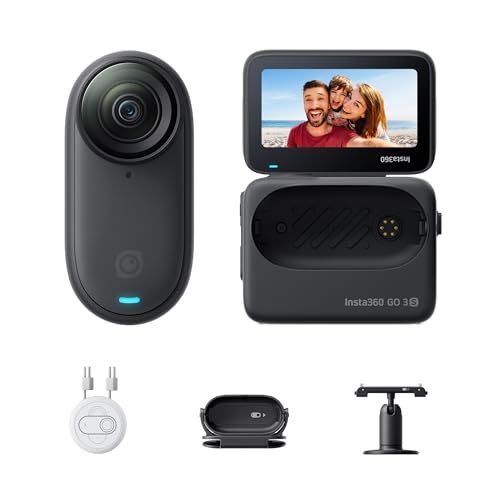
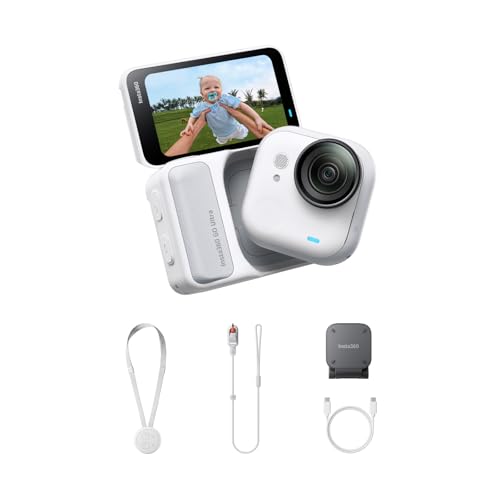
- CheapestInsta360 GO 3S - 128 GB Black 4K Tiny… about$4592.2" screen.
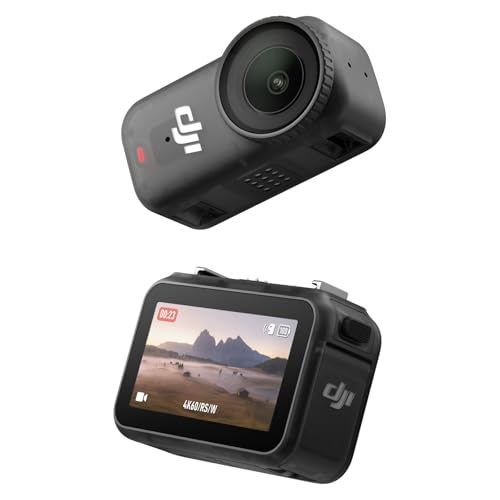
- DJI Osmo Nano Standard Combo about$528
- Insta360 Ace Pro 2 Pack Xplorer Grey about$6262.5" screen.
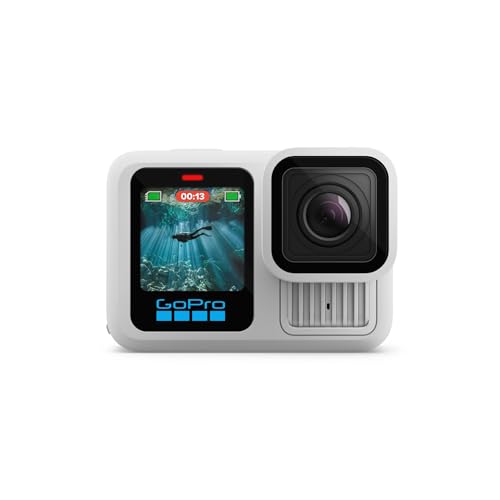
- GOPRO HERO13 Black in Polar White about$648
- DJI Osmo Action 6 Standard Combo about$662
- DJI Osmo 360 Adventure Combo about$6984" screen.
- Insta360 X5 - Waterproof 8K 360° Action Camera about$73928" screen.
- Most PremiumInsta360 GO Ultra Arctic White- Small 4K… about$75928" screen.
What an action camera is actually for
An action camera is a small, sealed box with a very wide lens and heavy stabilisation, built to be bolted to a helmet, a handlebar, a surfboard or a dog harness and ignored. That last part is the whole appeal. Your phone shoots lovely video, but you can't strap it to a mountain bike, drop it in the surf or mount it upside down on a car's roof rack without risking a $1,500 repair. An action camera costs less, survives more and records the thing you were actually doing rather than you holding a phone up in front of it.
Most people buy one for a specific trip or sport and then find it lives in a drawer between uses. That's fine, but it changes what matters. A camera that sits for months needs a battery that holds up in storage, an app that still works when you come back to it, and mounts you can find. The fancy headline specs, 8K video in particular, matter much less than whether the camera is charged, sealed and attached when the moment happens.
The three brands on this page all make good cameras, and the choice between them usually comes down to the mounting ecosystem you already own, how much low light you'll shoot in, and whether you want a normal wide lens or a 360 camera you reframe afterwards. I've picked five that cover those choices at $528 to $739, every one sold by Amazon AU or the maker's own Australian store.
Waterproof ratings and the door seals
Waterproof depth is the first spec people look at, and the listings are clear on three of these. The DJI Osmo Action 6 is rated to 20m without a case, the Insta360 X5 to 15m, and the Insta360 Ace Pro 2 to 12m. The GoPro HERO13 Black and DJI Osmo Nano listings on Amazon AU don't state a depth, so check the maker's own spec page before you take either diving rather than assuming.
The rating is for a new camera with a clean, properly closed door, and that's where most water damage I see starts. Every action camera has at least one hinged door over the battery, card or USB-C port, sealed by a rubber gasket. A single hair, a grain of sand or a smear of sunscreen on that gasket is enough to let water past it. Before every swim, open the door, wipe the seal and the seat with a lint-free cloth, check for nicks in the rubber, and close it until it clicks.
After salt water, rinse the camera in fresh water with the door closed, then dry it before you open anything. Opening a wet door lets the droplets on the outside run straight into the battery bay. If a camera does flood, take the battery out, don't power it on to see if it still works, and read what corrosion does to a wet circuit board first. A depth rating is also not the same as an IP rating on a phone, and my explainer on what waterproof ratings really mean covers why splash and depth aren't interchangeable.
Batteries in heat and cold
Batteries are the part of an action camera that ages fastest, and Australian summers age them quicker still. A camera left on a car dashboard or in a black backpack on the beach can sit well above the temperature a lithium cell is happy at, and heat is what makes cells swell. A swollen battery pushes the door out, the seal stops sealing, and the next swim floods the camera. If a battery ever looks puffy, or the door is harder to close than it used to be, retire the battery.
Cold is the opposite problem. Lithium cells lose usable capacity as they cool, which is why a camera that lasted an hour at the beach dies in twenty minutes on a snowfield. DJI calls the Osmo Action 6 cold-resistant and quotes up to 4 hours in normal conditions, and Insta360 rates the Ace Pro 2 down to -20°C. The Insta360 X5 quotes up to 208 minutes and fast charging to 80% in 20 minutes, and the DJI Osmo Nano quotes up to 200 minutes. Treat all of those as best-case numbers in mild weather.
The habit that helps most is carrying a spare. The Ace Pro 2 kit here comes with two batteries in the box, which is a real advantage. For everything else, budget for a genuine spare from the start, keep it in an inside pocket in the cold, and charge from a decent USB-C charger, such as one from my GaN charger guide, rather than a no-name car adapter.
Sensor size and low light
Action cameras have small sensors because they have small bodies, and that's why their footage falls apart at dusk, in shade under trees and indoors. The newer cameras on this page push sensor size up to fight that. The DJI Osmo Action 6 uses a 1/1.1-inch square sensor, the DJI Osmo Nano a 1/1.3-inch sensor, and the Insta360 X5 a pair of 1/1.28-inch sensors. The Insta360 Ace Pro 2 listing quotes a 2.4μm equivalent pixel size and 13.5 stops of dynamic range rather than a sensor size. The GoPro HERO13 Black listing doesn't state its sensor size.
A bigger sensor gathers more light, so the picture stays cleaner as the light drops, but the processing matters nearly as much on cameras this small. Insta360's PureVideo mode on the Ace Pro 2 runs AI noise reduction up to 4K60, and the X5 uses three AI chips for noise reduction. The Action 6 has a variable aperture from f/2.0 to f/4.0, which is unusual on an action camera and lets it open up when the light falls. If you ride at dawn, dive in murky water or film the kids at an indoor pool, these are the specs that matter, far more than the resolution figure on the box.
In bright daylight, honestly, all five look good. The differences show up in the hour after sunset and in the shade, so I'd buy for the worst light you expect to film in rather than the best.
Resolution, stabilisation and storage
The resolution figures on these boxes get silly. The Ace Pro 2 and Action 6 both quote up to 8K, the GoPro quotes 5.3K, the Osmo Nano 4K/60fps, and the X5 records 8K30 in 360°, which is spread around a whole sphere and ends up much closer to a normal 4K frame once you reframe it. For most people, 4K at 60 frames per second is the setting they'll actually use, because it's sharp, smooth and doesn't fill a card in ten minutes. Higher resolutions are useful when you plan to crop in heavily during editing, and that's about it.
Stabilisation matters more than resolution on a helmet or handlebar. GoPro's HyperSmooth 6.0 and Insta360's FlowState both do the job of a gimbal in software, and the X5 adds a 360° horizon lock that keeps the horizon level even if the camera rolls right over. All of it works best in good light, because stabilisation needs short exposures to avoid blur, which is another reason the low-light specs above matter.
Storage is where people get caught. Most action cameras record to microSD, and a slow or fake card is the most common cause of corrupted clips I see from these cameras, so my microSD card guide is worth a look before you buy one. The DJI Osmo Action 6 has 50GB of built-in storage, and the Osmo Nano kit here is the 128GB version, which takes some of the card risk off the table. The X5 doesn't include a card in the box, so order one at the same time.
Mounts, microphones and the bits that matter
The mount you'll use most is the one that came in the box, so check what's included before comparing prices. The Ace Pro 2 kit on this page is the Xplorer pack, with a grip, a utility frame, a wrist strap, a cold shoe shutter button, a wind guard, two batteries and a standard mount. The Action 6 Standard Combo comes with DJI's standard accessories, and DJI notes the lower-priced Essential Combo drops the curved adhesive base. The X5 comes with a pouch, a lens cloth and a cable, and the invisible selfie stick that makes it shine is sold separately.
Mounts are also where things break. The plastic fingers on a mount snap when a camera takes a hit, which is a good thing, because a snapped mount is a few dollars and a snapped camera housing isn't. Don't over-tighten the thumb screw with pliers, check adhesive mounts haven't lifted after a hot day, and use a tether on anything over water. On a bike, an e-bike or a scooter, a simple vibration-damping mount makes the stabilisation's job easier, and my e-bike accessories guide covers the bars and phone mounts that sit alongside one.
Wind noise ruins more action footage than shaky video. The Ace Pro 2 and X5 both include a wind guard, and the DJI Action 6 can connect two DJI microphone transmitters directly without a receiver, which is the best audio option here for interviews and talking-to-camera clips.
A normal lens or a 360 camera
Four of these cameras shoot the way you'd expect: point the lens at the action and it records a wide, flat frame. The Insta360 X5 is different. It has two lenses back to back and records everything around it in 360°, and you choose the angle afterwards in the app. That means you can't miss the shot, because the shot is everywhere, and the selfie stick disappears from the final video because it sits in the blind spot between the two lenses.
The catch is the editing. A 360 camera turns every clip into a decision you have to make later on your phone or computer, and some people love that while others find their footage sits unedited forever. Insta360's InstaFrame mode helps by saving a ready-to-share flat video alongside the 360 file, and the app's AI editing can pick highlights automatically. If you know you won't edit, a normal action camera is the better buy.
There's also a repair angle. A 360 camera's lenses bulge out from both sides, so they're the first thing to hit the ground, and a scratched lens shows in every frame. Insta360 makes the X5's lenses replaceable, which I like a lot, and it's the main reason I'd recommend this one over older 360 cameras with fixed glass.
Apps, phones and firmware
Action cameras lean on a phone app for setup, previews and transferring clips, so the app is part of what you're buying. Both DJI listings on Amazon AU carry a warning worth reading: the DJI Mimo app has been removed from Google Play, and Android users need to download the current version from DJI's official website instead. DJI says all Mimo features are free. That's workable, but it's an extra step, and sideloading an app means you'll also need to check for updates yourself.
Firmware matters too. The Insta360 X5 listing says to update to firmware v1.3.0 or later, and it states that next to the waterproofing and battery claims, so do that update before the camera's first swim. Check for camera firmware updates every few months anyway, because they often fix overheating, stabilisation and card compatibility problems after launch.
Before a big trip, run everything once at home: charge every battery, format the card in the camera, pair the app, record a test clip and transfer it to your phone. Most of the panicked messages we get about action cameras turn out to be a card that was never formatted in the camera or an app that needed updating, and both are far easier to sort out on the kitchen table than on a boat ramp. If a camera does stop charging or reading cards, our Erina workshop can check the port and the card slot before you replace anything.
The 5 picks, $528 to $739
Prices are Amazon AU at time of writing (14 October 2026) and move week to week. Ranks are Amazon AU sales ranks, checked the same day; Amazon AU doesn't publish an action camera subcategory rank for these listings, so the site-wide rank is shown.

Insta360 Ace Pro 2 Xplorer Pack, Dual Battery
ASIN B0F74W8T7X • $625.99 • Sold by Insta360 Official Store AU on Amazon AU
This is the action camera I'd point most people to first, and it's one of the best sellers in the category on Amazon AU at #345 overall at time of writing. It does the classic action camera job well: a 157° wide-angle lens, FlowState stabilisation and waterproofing to 12m without a case, plus cold tolerance down to -20°C. Insta360 quotes 13.5 stops of dynamic range and a 2.4μm equivalent pixel size, with Leica-branded optics, which in practice means it holds detail in bright sky and dark shade at the same time better than most cameras this size. It records up to 8K30, and 4K60 with Active HDR, which is the setting I'd actually use.
Low light is where it pulls ahead of older action cameras. Insta360's PureVideo mode runs AI noise reduction up to 4K60, using a dedicated imaging chip alongside a 5nm AI chip, and it's the mode I'd use at dusk, in the shade under trees, or at an indoor pool. The 2.5-inch flip touchscreen faces forward for talking to the camera and is rated brighter than the previous model's, which helps in direct sun. A snap-on wind guard is included for clearer audio on a bike or a boat. The Leica colour profiles are a nice touch if you want footage that looks graded without editing it yourself. It's the setting most people should leave on for evening rides and indoor sport.
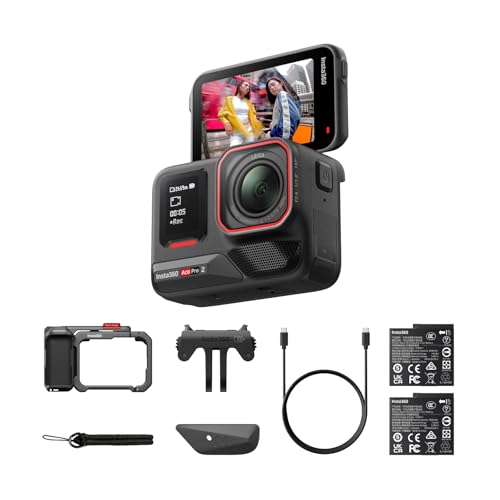
The kit is what makes this listing good value. The Xplorer pack adds a grip, a utility frame, a wrist strap, a cold shoe shutter button, a wind guard, a standard mount and, most usefully, two batteries, so you're not buying a spare on day one. It's sold by Insta360's official Australian store on Amazon AU at $625.99 at time of writing. The flip screen hinge is the part I'd treat gently, because hinges are where these cameras wear first. Open it fully before you rotate it, and close it before the camera goes back in the bag. Treat the door seal the same way as on any action camera: wipe it before every swim, and rinse the whole camera in fresh water after the beach.
Honest caveats: 12m is the shallowest waterproof rating among the three listings that state one, so divers should look at the DJI Action 6. The flip screen hinge is a moving part that can wear. 8K files are large, and the listing doesn't state battery life in minutes, so check that on Insta360's spec page.
Best for: Most people who want one action camera that handles low light well and comes with a spare battery in the box.
Video: Up to 8K30, 4K60 Active HDR • Lens: 157° wide angle • Waterproof: 12m without a case • Cold rating: Down to -20°C • Screen: 2.5-inch flip touchscreen • In the box: 2 batteries, grip, frame, wind guard • Seller: Insta360 Official Store AU • Rank: #345 overall on Amazon AU
View on Amazon AU
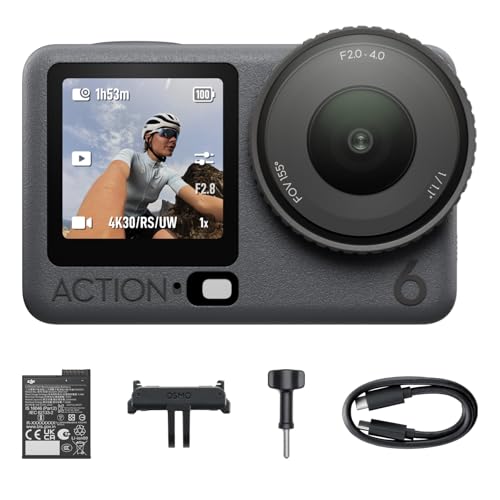
DJI Osmo Action 6 Standard Combo
ASIN B0FM3X3DW5 • $662.31 • Ships from Amazon AU
The Osmo Action 6 has the biggest sensor of the normal-lens cameras on this page, a 1/1.1-inch square sensor, and the only variable aperture, running from f/2.0 to f/4.0. That combination is why it's my pick for anyone who films in poor light, because it can open up when the light drops and the larger sensor keeps the picture cleaner. DJI quotes up to 8K video. It's also the deepest-rated camera here, waterproof to 20m without a case, which makes it the one I'd hand to snorkellers and divers. At $662.31 at time of writing, sold and shipped by Amazon AU, it's priced right in the middle of this list.
There are practical touches I like too. DJI quotes up to 4 hours of shooting in normal conditions with a cold-resistant design, and it has 50GB of built-in storage, so a forgotten or failed microSD card doesn't end the day. It can connect two DJI microphone transmitters directly without a receiver, which is the best audio setup on this page for interviews and talking to camera. Gesture and voice controls let you start recording or change modes when the camera is on a helmet and out of reach. The Standard Combo includes DJI's standard accessories, while the Essential Combo is a pared-back version without the curved adhesive base. That's a useful option if you only need the camera for one sport.
The catch is the app on Android. DJI's listing says the Mimo app has been removed from Google Play and has to be downloaded from DJI's website, which works but means you'll need to check for updates yourself. On the hardware side, it's the usual action camera care: clean the door seal before every swim, rinse after salt water, and keep the camera off the dashboard in summer. A 20m rating only holds while that seal is clean, so treat it as a maintenance item rather than a promise. If you're buying for diving, budget for a genuine spare battery too, because cold water drains cells quicker than the quoted figure suggests, and swapping batteries on a boat is easier than finding a charger.
Honest caveats: Android users install the DJI Mimo app from DJI's website, not Google Play. The 4-hour battery figure is for normal conditions, so expect less in the cold or at high settings. It's the most expensive normal-lens camera here, and the extension rod and second battery need the pricier combos.
Best for: Divers, snorkellers and anyone filming at dawn, dusk or under trees who wants the best low-light picture here.
Sensor: 1/1.1-inch square • Aperture: Variable f/2.0 to f/4.0 • Video: Up to 8K • Waterproof: 20m without a case • Battery: Up to 4 hours (normal conditions) • Storage: 50GB built in • Audio: Pairs 2 DJI mic transmitters • Seller: Amazon AU • Rank: #922 overall on Amazon AU
View on Amazon AU
GoPro HERO13 Black, Polar White
ASIN B0F1W8DR96 • $648.00 • Ships from Amazon AU
GoPro is still the name people search for, and the HERO13 Black is its current flagship, here in the Polar White finish at $648 at time of writing, sold and shipped by Amazon AU. The listing quotes 5.3K video, 27MP photos, HyperSmooth 6.0 stabilisation and slow motion down to 13x normal speed, which is the slowest any GoPro has managed. It's the one I'd buy if you already own a drawer full of GoPro mounts, because the mounting fingers are the standard everyone else copies and everything you've got will fit it without adapters. It's the safe choice for people who don't want to learn a new system, and GoPro's own accessories are easy to find in Australian stores if you lose a mount on holiday.
The HERO13 is also compatible with GoPro's HB-Series lenses, which clip on to change the field of view for specialty shots. That's a genuine point of difference, because none of the other cameras here take interchangeable lens mods. HyperSmooth has always been one of the best stabilisation systems around, and on a helmet or chest mount it does a very convincing gimbal impression. The 5.3K resolution gives you room to crop in during editing without the file sizes of 8K, which I think is a sensible middle ground. The white finish is a practical choice too, because it shows up when you drop it on dark rocks or dark carpet.
The Amazon AU listing is thin, though. It doesn't state the waterproof depth, battery life, sensor size or what's in the box, so check GoPro's own spec page before you buy, especially if you plan to dive. It also ranks well below the DJI and Insta360 cameras on Amazon AU at #20,858 overall, which I read as buyers moving towards the newer brands rather than any problem with the camera. GoPro batteries have historically been the weak point of older models in hot weather, so whatever the HERO13's figure turns out to be, I'd carry a genuine spare and keep the camera out of direct sun between runs. A white body also shows scuffs and sunscreen marks, which is worth knowing if that bothers you.
Honest caveats: The listing doesn't state waterproof depth, battery life, sensor size or box contents, so confirm them with GoPro before buying. HB-Series lens mods are sold separately. GoPro's subscription is optional, but some cloud features need it, so check what you actually want before signing up.
Best for: People who already own GoPro mounts, or who want interchangeable lens mods and very slow slow-motion.
Video: 5.3K • Photos: 27MP • Stabilisation: HyperSmooth 6.0 • Slow motion: Up to 13x • Lens mods: HB-Series compatible • Waterproof: Not stated on the listing • Seller: Amazon AU • Rank: #20,858 overall on Amazon AU
View on Amazon AU
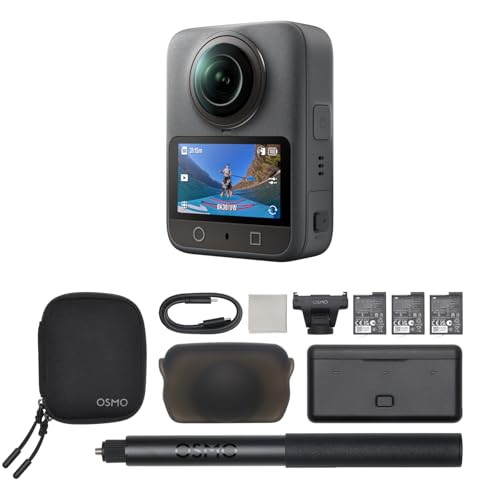
DJI Osmo Nano Standard Combo, 128GB
ASIN B0DYD56G2Y • $528.00 • Ships from Amazon AU
The Osmo Nano is the lowest-priced camera on this page at $528 at time of writing, and the best seller of the five at #272 overall on Amazon AU. It's a different shape of camera: tiny, magnetic and built for point-of-view clips, the kind you clip to a cap, a jacket or a dog's harness and forget about. DJI quotes a 1/1.3-inch sensor, which is large for something this small, and 4K at 60 frames per second through a 143° ultra-wide lens. For walks, pets, kids' sport from the sideline and casual travel clips, it's the camera most likely to actually be on and recording. It's light enough to forget it's there.
It also records in 10-bit with D-Log M, a flat colour profile that keeps more detail for editing, which is unusual at this price and size. DJI quotes up to 200 minutes of battery with fast charging, and the version here has 128GB of storage built in, so you're not buying a card before you can use it. The magnetic mounting is quick, which is the point of this camera, and it means you'll use it more often than a camera that needs a mount screwed on every time. Sold and shipped by Amazon AU, so returns are simple if it doesn't suit how you film. It's the one I'd buy as a gift.
The Amazon AU listing doesn't state a waterproof rating, so I'd treat it as splash-resistant at most until DJI's spec page says otherwise, and keep it out of the surf. Small magnetic cameras are also easy to lose, so check the magnet is fully seated before a run. Like the Action 6, Android users get the Mimo app from DJI's website rather than Google Play. A camera this small also has a small battery door and port, so keep sand away from both and charge it with a decent cable rather than the frayed one in the car. If you want it for swimming or surfing, the Action 6 is the better DJI choice, because its depth rating is printed right on the listing.
Honest caveats: No waterproof rating on the listing, so don't take it swimming without checking DJI's spec page. It tops out at 4K/60fps rather than 8K. Magnetic mounts are quick but can be knocked off, and Android users install the Mimo app from DJI's website.
Best for: Walkers, pet owners and casual travellers who want a tiny clip-on camera they'll actually use every day.
Sensor: 1/1.3-inch • Video: 4K/60fps, 10-bit, D-Log M • Lens: 143° ultra-wide • Battery: Up to 200 minutes (stated) • Storage: 128GB built in • Mounting: Magnetic • Seller: Amazon AU • Rank: #272 overall on Amazon AU
View on Amazon AU
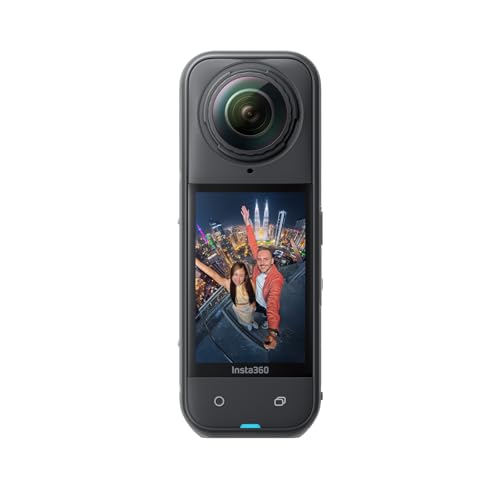
Insta360 X5 8K 360° Action Camera
ASIN B0DZCBYCNY • $739.00 • Sold by Insta360 Official Store AU on Amazon AU
The X5 is the one to buy if you want to stop worrying about where the camera is pointing. Two lenses back to back record everything around it in 360° at up to 8K30, using dual 1/1.28-inch sensors, and you choose the angle afterwards in the app. Mount it on a selfie stick and the stick disappears from the final video, which gives you those floating third-person shots you see from mountain bikers and skiers. Insta360's FlowState stabilisation and a full 360° horizon lock keep the picture level even if the camera rolls right over. It's $739 at time of writing from Insta360's official Australian store on Amazon AU. It's the most fun camera on this page.
The specs are strong. It's waterproof to 15m without a case, quotes up to 208 minutes of battery with fast charging to 80% in 20 minutes, and uses a triple AI chip design for noise reduction in low light. A 4-mic array with a built-in wind guard handles audio. InstaFrame mode saves a ready-to-share flat video alongside the 360 file, which takes away a lot of the editing burden that puts people off 360 cameras, and the app's AI editing can build highlights for you. The listing asks you to update to firmware v1.3.0 or later, and I'd do that before its first time in the water. Fast charging is handy between runs.
The feature I like most from a repair point of view is the replaceable lenses. A 360 camera's lenses bulge out from both sides and they're the first thing to hit the ground, so being able to swap one in seconds instead of sending the camera away makes a real difference to how long it lasts. Note that the invisible selfie stick and a microSD card are both sold separately. Keep the supplied pouch on it whenever it's not filming, because a 360 camera rolling around loose in a bag scuffs both lenses at once. Clean the lenses with the included cloth rather than a shirt, since grit on a shirt sleeve scratches the coating, and that kind of mark shows up in every frame you shoot afterwards.
Honest caveats: The invisible selfie stick and microSD card aren't in the box, so add both to the cost. Every clip needs reframing in the app unless you use InstaFrame. Exposed dual lenses scratch more easily than a flat lens, even if they're replaceable. Update the firmware before swimming.
Best for: Mountain bikers, skiers and travellers who want third-person shots and never want to miss the angle.
Video: 8K30 360° • Sensors: Dual 1/1.28-inch • Waterproof: 15m without a case • Battery: Up to 208 minutes, 80% in 20 min • Lenses: Replaceable • Audio: 4-mic array, built-in wind guard • Seller: Insta360 Official Store AU • Rank: #1,082 overall on Amazon AU
View on Amazon AUSide-by-side comparison
What we see fail in the workshop: action cameras
Action cameras are built tough, so when one comes into the shop it's nearly always for a reason that happened over months rather than in one crash. The three faults below account for most of what we see, and each one has a habit that prevents it, which is why I'd read this section before the first trip rather than after the first failure.
Flooded battery bays
The most common fault by a long way. Water gets past the door seal, usually because of sand, hair or sunscreen on the gasket, or because the door was opened while the camera was still wet. Salt water corrodes the battery contacts and the board around them within days, so a camera that seemed fine after a swim stops charging a week later. Clean and check the seal before every swim, rinse in fresh water with the door shut, and dry the outside fully before you open it. A camera that's been in salt water should be opened and checked rather than just dried.
Worn USB-C ports
Action cameras get charged in cars, boats and campsites, often with the cable tugged sideways or yanked out by the cord. That wears the USB-C port's contacts and can crack its solder joints, so charging becomes intermittent and only works with the cable held at an angle. Sand and salt in the port speed it up. Pull the plug, not the cable, keep the port dry and clean, and use a short cable so it isn't levering on the socket while it charges. If it only charges at an angle, stop forcing it, because a cracked joint gets worse each time.
Swollen batteries and cracked lens covers
Heat swells batteries, and a swollen battery forces the door open just enough to break the seal. Leave cameras in the shade, not on the dashboard. Lens covers are the other wear item: they take every knock, and a cracked one lets water in as well as spoiling the picture. Many cameras have a replaceable cover or lens, which is worth checking before you buy, and worth replacing at the first crack rather than after the camera has flooded. A puffy battery should be recycled, never charged again, and never left in the camera.
Decision tree: which one should you actually buy?
- One action camera for everything, with a spare battery in the box? → The Insta360 Ace Pro 2 Xplorer pack at $625.99. Strong low light, flip screen, 12m waterproof and two batteries included.
- Diving, snorkelling or a lot of low-light filming? → The DJI Osmo Action 6 at $662.31, with a 20m rating, a variable aperture and 50GB built in.
- Already own a box of GoPro mounts? → The GoPro HERO13 Black at $648. Everything you own will fit it, and it takes HB-Series lens mods.
- Want a tiny clip-on camera for walks and pets? → The DJI Osmo Nano at $528, magnetic, 4K/60fps and 128GB built in. Keep it out of the surf.
- Want third-person shots and never to miss the angle? → The Insta360 X5 at $739, 360° at 8K30 with replaceable lenses. Budget for the selfie stick and a card.
- Camera stopped charging, flooded or won't read cards? → Bring it to our Erina workshop. We'll check the port, the seal and the battery bay and tell you what it needs before you spend anything.
Frequently asked questions
GoPro, DJI or Insta360: which brand should I buy?
All three make good cameras, so I'd choose on what you'll film rather than the badge. DJI's Osmo Action 6 has the largest sensor, a variable aperture and the deepest waterproof rating here, so it suits divers and low light. Insta360's Ace Pro 2 is the best all-rounder and comes with two batteries, and the X5 is the 360 option. GoPro's HERO13 Black makes the most sense if you already own GoPro mounts or want its clip-on lens mods. Check the app situation too, because DJI's Android app now installs from DJI's website rather than Google Play.
Do action cameras need a waterproof case?
Three of these are rated waterproof without a case: the DJI Osmo Action 6 to 20m, the Insta360 X5 to 15m and the Insta360 Ace Pro 2 to 12m. The GoPro HERO13 Black and DJI Osmo Nano listings on Amazon AU don't state a depth, so check the maker's spec page before you take them in the water. Whatever the rating, it only holds when the door seal is clean and properly closed. For deeper diving than the rating, or for heavy surf, a dive housing adds a second layer of protection.
Is 8K worth it on an action camera?
For most people, no. 8K files are huge, they fill cards and phones quickly, and they need a capable computer to edit. Most footage gets watched on a phone or a TV where 4K at 60 frames per second already looks sharp and smooth. 8K is useful when you want to crop heavily in editing, for example pulling a tight shot out of a wide helmet clip. I'd choose on low-light performance, stabilisation and waterproofing first, and treat 8K as a bonus rather than a reason to buy.
What memory card should I use in an action camera?
Most action cameras record to microSD, so use a name-brand card rated V30 or faster from a seller you can identify, and format it in the camera rather than on a computer. Fake and slow cards are the most common cause of corrupted clips, and fakes report more capacity than they really have. The DJI Osmo Action 6 has 50GB built in and the Osmo Nano kit here has 128GB built in, which helps, but the Insta360 X5 doesn't include a card, so buy one with it.
Why does my action camera battery die so quickly?
Cold, heat and high settings are the usual reasons. Lithium cells lose usable capacity in the cold, so a battery that lasts an hour at the beach can die in twenty minutes on a snowfield. High resolutions, high frame rates, Wi-Fi and a bright screen all drain it faster. Batteries also wear with age and heat, and a battery that's been left in a hot car loses capacity for good. Carry a spare in an inside pocket, turn off Wi-Fi when you don't need it, and retire any battery that looks swollen.
Can a flooded action camera be fixed?
Often, if you act quickly. Take the battery out straight away, don't power it on to test it, and don't put it in rice, which doesn't dry anything inside. Salt water is the urgent case, because it starts corroding the contacts and the board within days. A repair shop can open it, clean the corrosion off the board and test it, and the earlier that happens the better the odds. If the camera has been sitting wet for weeks, the damage is usually much harder to reverse, so bring it in sooner rather than later.
Related buying guides
Action camera flooded or stopped charging?
Most action cameras that come in have water past the door seal or a worn USB-C port, and both are often fixable for less than a new camera if they're caught early. Bring it into our Erina workshop and we'll check the seal, the battery bay and the charging port, then tell you what it needs and what it'll cost before you spend anything.
Visit our Erina workshop Book Online