Prices from Amazon AU, updated daily. Swipe or use the arrows for more.
Disclosure: This article contains affiliate links to amazon.com.au. If you buy through one of these links iFix may earn a small commission at no extra cost to you. It doesn't change which products we recommend. We focus on what actually lasts based on 16 years of repair-shop experience.
Quick summary5 picks
- CheapestYamaha P-143B Portable Digital Piano about$680
- Kawai ES120 88 Note Weighted Keys Portable… about$84920W.
- Roland FP-40 Portable Digital Piano with… about$1,059
- Roland F107 Digital Piano | Streamlined and… about$1,499
- Most PremiumRoland RP 107 Digital Piano Compact and… about$1,521
The key action matters more than the sound
Every digital piano in this band sounds good through its own speakers in a showroom, and that's why the sound is the wrong thing to shop on. What a student or a returning player lives with every day is the action, which is the mechanism under each key that makes it feel heavy at the bottom of the keyboard and lighter at the top, the way a real hammer action does. Get that wrong and the piano is pleasant for a month and frustrating for years.
All five picks here use a graded hammer action with 88 full-size keys. Roland calls theirs PHA-4 Standard, Yamaha's new one is GHC (Graded Hammer Compact) and Kawai's is RHC (Responsive Hammer Compact). The compact versions are shallower so the piano can be slim and light, and they're a touch less even across the key than the full-depth actions on the console models. For a learner that difference is small, and I'd rather someone had a compact action they actually play than a full one they can't fit in the house.
What I'd avoid is anything sold as a weighted keyboard with 61 or 76 keys, or a semi-weighted board with springs under the keys. Those are fine for songwriting and synth parts, but a piano teacher will notice within a lesson, and the habits they build in your fingers don't carry over well to a real piano. Everything in this guide is a full 88.
A quick way to judge an action in a shop is to play one note softly over and over, then loudly, and listen for whether the volume follows your finger smoothly. A good action lets you play very quietly without notes dropping out. If you can't get to a shop, the actions named on these five listings are all current designs from the three big piano makers, so none of them is a poor choice for a learner.
Portable slab or furniture-style console
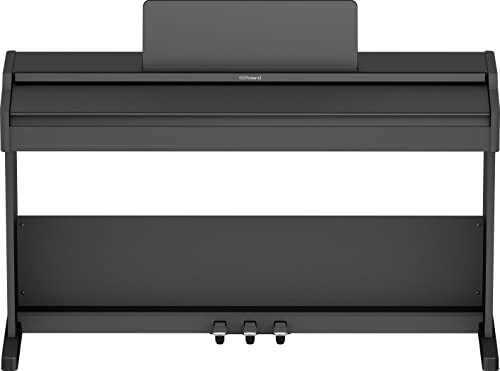
There are two shapes in this price band. The slab, like the Yamaha P-143, Kawai ES120 and Roland FP-40, is a keyboard in a long box that sits on a stand or a table and goes in the car if you need it to. The console style, like the Roland F107 and RP107, has its own wooden-look cabinet, a fixed three-pedal unit and speakers built into the body, and it lives in one spot.
The slab is the smaller cheque up front, but the price on the listing usually isn't the price of a working piano. You'll need a stand, a proper sustain pedal rather than the little footswitch most slabs ship with, and a stool at the right height. By the time those are added, a slab and a console can end up closer in price than they look on the screen, and the console has a lid that keeps dust and drinks off the keys.
I'd buy a slab when space or portability really matters, or when the piano might go to lessons or gigs. I'd buy a console when it's the family piano that stays in the lounge room, because the fixed pedals and covered keys solve two of the faults I see most often. A slab on a wobbly X-stand also takes a knock every time someone bumps it, and that's hard on the jacks at the back.
Polyphony, sounds and the numbers on the box
Polyphony is the number of notes the piano can play at once before it starts dropping the oldest ones. It matters more than you'd think, because holding the sustain pedal through a fast passage stacks up notes quickly, and a layered sound can use two voices per note. None of the Amazon AU listings for these five state a polyphony figure, so check the maker's spec sheet before you buy if you play dense, pedal-heavy music.
The sound count is the number I'd care about least. Most people play the main grand piano sound ninety percent of the time, then an electric piano now and then, and maybe strings at Christmas. The Kawai lists its Shigeru Kawai SK-EX concert grand plus 24 other sounds, and the Yamaha has a hand-picked set of keyboard and string voices, and that's plenty for a home piano.
What's worth paying for is the quality of that one main sound and how it changes as you play softer and harder. Roland's SuperNATURAL engine on the F107 and RP107 and the newer Piano Reality engine on the FP-40 both model the way a real string decays and resonates, and in my experience that's what keeps a player sitting at the instrument for longer.
Weight is the other number that doesn't get printed on many listings, and it matters more for a slab than people think. A piano that one adult can carry to the car gets taken to lessons and gigs, and one that needs two people stays home. The Yamaha is the most compact of the P Series according to its listing, and that's about as far as these five listings go on size, so check the maker's figures if it'll move often.
Speakers, headphones and the neighbours
The built-in speakers on a slab are small and usually face down or back, so where you put the piano changes how it sounds. Yamaha says it angled the P-143's rear speakers so it still sounds balanced against a wall, which is where most home pianos end up. The Kawai lists a 20W speaker system, and the console pianos have more cabinet to work with, which mostly shows up in the low notes.
Every pick here has a headphone output, and that's the real reason a lot of families buy a digital piano at all. Practice at 10 pm doesn't wake anyone, and a learner playing the same bar forty times isn't a household event. Get a decent pair of wired over-ear headphones, because Bluetooth headphones add a delay you'll feel between pressing a key and hearing the note.
If you live in a unit, remember that headphones only fix the sound, not the thump. The keys still knock and the pedal still taps the floor, and that travels through timber floors and slabs more than people expect. A rug and a firm, well-placed stand help. If you want to record yourself playing, a line output or USB connection beats holding a phone up, and a good USB microphone covers the voice side.
Bluetooth, apps and what they're really for
Most of these pianos connect to an app over Bluetooth, and the apps do two different jobs. The first is control: Yamaha's Smart Pianist app lets you change sounds and settings from a phone instead of learning button combinations, and Kawai's PianoRemote does the same for the ES120. That's useful on pianos with very few buttons, which is most of them.
The second job is lessons and play-along, where the piano sends MIDI to a learning app on a tablet. The Kawai listing names third-party learning apps and GarageBand, and the Roland F107 lists onboard Bluetooth as a headline feature. Bluetooth audio, where the piano's speakers play music from your phone, is handy for playing along to a track and it's on the ES120 and F107 according to their listings.
The Roland FP-40 is the odd one here, because it's the first Roland piano with Wi-Fi built in, used for over-the-air firmware updates and the Piano Sphere app. Updates are good news for a piano you'll own for ten years, but I'd still check that the features you want work without an account or subscription before relying on them.
One more thing on apps: they come and go faster than pianos do. A piano bought today should still be in use in 2036, and there's no guarantee the app it pairs with will still be supported by then. That's why I'd always choose the piano on its keys and sound first, and treat the app as a bonus. The good news is that standard Bluetooth MIDI works with plenty of other apps, so you're rarely locked in.
Pedals, stands and the bits that don't come in the box
The sustain pedal is the most-used part of any piano after the keys, and it's where slab pianos cut corners. The small square footswitch included with most portables is on or off, and it slides around the floor. A proper piano-style pedal with a weighted base stays put, and a continuous one lets you half-pedal, which a teacher will ask for sooner or later.
Stands matter for the same reason. An X-stand is quick and folds away, but it flexes, and the piano can bounce when played hard. A matching furniture stand with a pedal board is steadier and keeps the pedal cable from getting kicked out of its socket. If you're comparing a slab against the F107, price the slab with a decent stand and pedal before you decide which is the better value.
Last, the power side. Slab pianos usually run from an external adapter, and those get stepped on, tangled and swapped for the wrong one. Keep the original with the piano and label it, because a generic adapter with the wrong polarity or a noisy output can damage the power circuit, and no-name power bricks are a fault I see across every kind of gear. Plug it into a surge-protected powerboard as well.
How long a digital piano lasts, and what wears
A good digital piano should give ten years or more of daily practice, and when one does come into the shop it's rarely the electronics that go first. The usual fault is in the keybed: a key that plays too loud, too soft, twice, or not at all. Underneath each key are rubber contact strips with small carbon pads that close two switches as the key goes down, and the timing between them tells the piano how hard you played.
Dust, crumbs and especially spilled drinks get into those strips, and that's when velocity goes erratic. A sweet drink is the worst, because the sugar dries sticky and corrodes the contact board under it. If anything goes into the keys, unplug the piano straight away and don't keep playing to see if it dries out. The same advice as for liquid damage on a phone or laptop applies: power off, dry, and get it checked.
Here on the coast, humidity and salt air add slow corrosion to contacts and jacks, so a piano in a closed-up beach house suffers more than one in an inland lounge room. A cover when it's not in use, and a lid on a console, keeps most of that off. Headphone jacks and pedal sockets wear from being plugged in and out, and they're usually a straightforward part to replace.
The other wear item is the sustain pedal itself. The basic footswitch kind uses a small internal switch that eventually gets intermittent, which shows up as notes sustaining when they shouldn't. A good pedal unit uses a more solid sensor and lasts much longer. On consoles the pedal board's cable runs inside the cabinet, so it's protected, and on slabs it's the cable lying on the floor that tends to fail first.
Before you buy: what to check on arrival
When the piano arrives, check the model on the box and the back panel matches the listing, and that it's the colour you ordered. Then plug it in and play every key, one by one, softly and then hard, from the bottom note to the top. You're listening for any key that's much louder or quieter than its neighbours, any key that sticks, and any key that clicks or knocks differently.
Try the sustain pedal while holding a chord and make sure it catches and releases cleanly. Put headphones in and confirm the speakers mute and both sides of the headphones work. If there's Bluetooth, pair it once with the app before the return window starts ticking, so you know it works with your phone or tablet.
If something's off, the Amazon AU return window is the easiest fix, and every pick here is sold and shipped by Amazon AU. If a fault turns up later, a sticky or double-triggering key is usually fixable by cleaning or replacing a contact strip, and you can bring it to the Erina workshop for a look before you decide whether it's worth repairing.
The 5 picks, $680 to $1,521
Prices are Amazon AU at time of writing (17 October 2026) and move week to week. Ranks are Amazon AU category sales ranks, checked the same day.

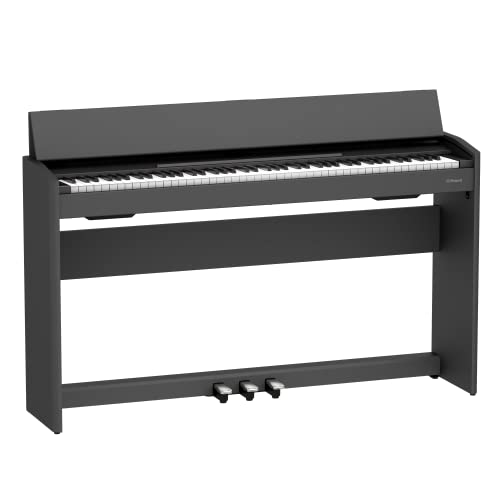
Roland F107 Digital Piano with PHA-4 Standard Keys and Bluetooth
ASIN B0B6D4YRBK • $1,499.00 • Ships from Amazon AU
This is the piano I'd put in most family lounge rooms, and at the time of writing it's the fifth best-selling piano on Amazon AU, which is a better rank than any other pick here. The F107 is a compact console with its own cabinet, so it doesn't need a separate stand, and Roland says the slim design is based on the F701, which won a red dot design award in 2021. It uses the 88-note PHA-4 Standard keyboard, the same graded hammer action Roland puts in its higher pianos, and the SuperNATURAL piano sound engine. It's sold and shipped by Amazon AU, which makes returns and warranty claims simpler. At $1,499 it costs more than a slab, but the price includes the furniture.
The interface is simple, with a few buttons rather than a screen, which suits a learner who just wants to sit down and play the piano sound. Bluetooth is built in according to the listing, so it works with learning apps on a tablet and with Roland's own control app for the deeper settings. Because it's a console, the speakers have a proper cabinet to sit in, and that usually shows up as fuller low notes than you'll get from a slab on a stand. The keys also sit at a fixed height, which takes a guess out of setting up a stool. It's slim enough to go against a wall in a hallway or a smaller lounge room without taking over.
From a repair point of view I like the console shape. The pedal cable can't be kicked out, the power is internal so there's no adapter to lose, and a lid over the keys keeps out dust and drinks, which are the two things behind most keybed faults I see. The PHA-4 action is a common Roland part with a long track record, so a sticky key later in life is a known fix rather than a mystery. I'd still keep it away from a sunny window and an air conditioner outlet.
Honest caveats: The listing doesn't state polyphony, speaker power or weight, so check Roland's spec sheet if any of those matter to you. It's a fixed piece of furniture, so it won't travel to lessons or gigs. The cabinet finish in the photos may not match your room, so check the colour options on the listing before ordering.
Best for: A family piano that stays in the lounge room and needs to feel right for lessons.
Type: Compact console digital piano • Keys: 88-note PHA-4 Standard • Sound engine: SuperNATURAL Piano • Connectivity: Bluetooth • Stand: Built-in cabinet • Sold by: Amazon AU • Price: $1,499 at time of writing • Rank: #5 in Pianos (Amazon AU)
View on Amazon AU
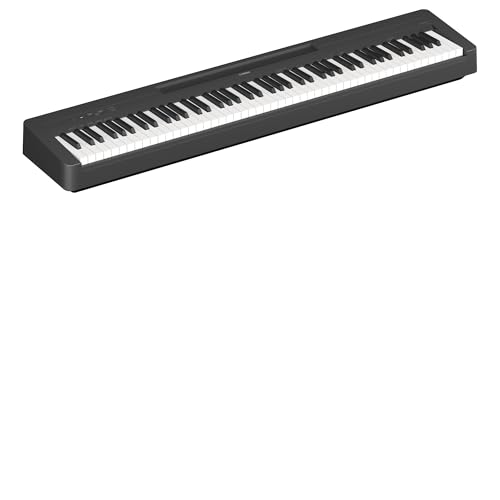
Yamaha P-143B Portable Digital Piano, Black
ASIN B0H6MSBCL3 • $679.99 • Ships from Amazon AU
If you want a proper weighted piano for the smallest outlay in this guide, this is the one I'd start with. At $680 the P-143 it's sold and shipped by Amazon AU and sits at number 23 in the Digital Pianos category at the time of writing. Yamaha says the new body is much shorter and thinner than its predecessor, making it the most compact piano in the P Series. Inside is the new GHC (Graded Hammer Compact) 88-key action, which Yamaha describes as giving the same weighted feel as the GHS keys used in earlier P models. For a beginner that's the right kind of action. That's a lot of piano for the money.
The controls are physical buttons rather than a touch panel, which I'd take every time on a piano that kids will use. Yamaha has picked a small set of sounds beyond the grand piano, including electric piano, pipe organ, harpsichord and strings, and that covers most of what a home player reaches for. The rear speakers are angled to imitate the sound coming off a grand piano's soundboard and lid, and Yamaha says it stays balanced even with the piano pushed against a wall. The Smart Pianist app connects to it so you can change settings from a phone screen rather than learning button combinations. An optional soft case is available if it'll travel.
The thing to budget for is everything around it. Like most slabs it needs a stand, a better sustain pedal and a stool at the right height, and those add up. In the shop the faults I see on small portables are the power adapter getting lost or swapped for the wrong one and the pedal socket wearing loose from being yanked. Keep the adapter labelled and run the pedal cable where feet won't catch it. I'd also put a dust cover over the keys when it's not in use, because a slab has no lid, and dust and crumbs on the keys are what end up on the contact strips underneath. A simple cloth cover does the job.
Honest caveats: The listing doesn't state polyphony, speaker power, the included pedal type or whether it runs from an external adapter, so check those on Yamaha's spec page. A compact action is shallower than a full-depth one, which more advanced players will notice. Stand, pedal and stool are extra.
Best for: A first weighted piano for a learner, where space and spend both need to stay small.
Type: Portable slab digital piano • Keys: 88-key GHC Graded Hammer Compact • Controls: Physical buttons • App: Yamaha Smart Pianist • Speakers: Rear-facing, angled • Sold by: Amazon AU • Price: $680 at time of writing • Rank: #23 in Digital Pianos (Amazon AU)
View on Amazon AU
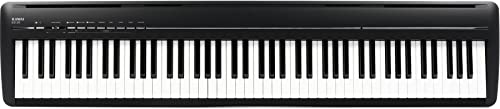
Kawai ES120 88-Key Weighted Portable Digital Piano, Black
ASIN B0BMZ4PZHP • $849.00 • Ships from Amazon AU
Kawai is the one big piano maker that also builds a lot of acoustic pianos, and in my experience it shows in the main sound. The ES120 uses the Shigeru Kawai SK-EX concert grand sample, which the listing calls the premier piano of Japan, plus 24 other sounds. The action is Kawai's Responsive Hammer Compact, a fully weighted 88-key mechanism built to keep the piano slim. At $849 it's sold and shipped by Amazon AU and ranks 33rd in Digital Pianos at the time of writing. It's a step up in price from the Yamaha, and I reckon most people who try both side by side notice the difference in the piano sound before the keys.
It's also the best-connected slab here. The listing names integrated Bluetooth for the PianoRemote control app, third-party learning apps and DAWs such as GarageBand, and the same Bluetooth can stream music from your phone through the piano's speakers to play along with. Those speakers are listed at 20W, which is plenty for a lounge room. There's a stereo line output, which matters if the piano ever plugs into a PA, an amplifier or a recording interface. Kawai also mentions Spatial Headphone Sound for practice in headphones, which tries to make the sound come from in front of you rather than inside your head. That's nicer for long practice sessions. It's a well-equipped piano.
As a slab it shares the usual weak points: it needs a stand and a better pedal, and the sockets at the back take a beating if it's moved around a lot. The line outputs and headphone jacks are the parts I'd expect to wear first on a piano that goes to gigs. Keep the cables plugged in where possible, use a padded bag for travel, and it should give years of service. I'd also keep a cover over the keys at home, since a slab has no lid, and a padded bag rather than a soft sleeve if it travels in a car boot, because a knock on the end cheek can crack the case around the jacks.
Honest caveats: The listing doesn't state polyphony, the pedal that's included or the power supply type, so check Kawai's spec page. Like any compact action, it's shallower than a full-depth console keybed. A stand, pedal unit and stool are extra, so price them in before comparing it with a console.
Best for: A player who cares most about the main piano sound and wants Bluetooth and line outputs in a slab.
Type: Portable slab digital piano • Keys: 88-key Responsive Hammer Compact • Main sound: Shigeru Kawai SK-EX concert grand • Sounds: 25 total • Speakers: 20W • Connectivity: Bluetooth MIDI and audio, L/R line out • Sold by: Amazon AU • Price: $849 at time of writing • Rank: #33 in Digital Pianos (Amazon AU)
View on Amazon AU
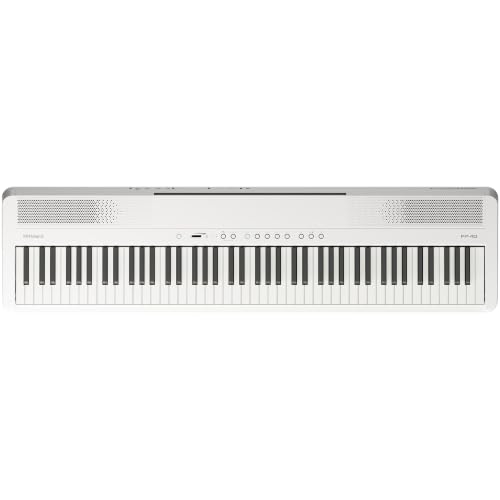
Roland FP-40 Portable Digital Piano with Piano Sphere App, White
ASIN B0HGHM511N • $1,059.00 • Ships from Amazon AU
The FP-40 is Roland's newest slab and the one I'd buy over the older FP-30X, which is still listed at $1,149 for the white model while this sells for $1,059 in white at the time of writing. It's new enough that Amazon AU doesn't publish a rank for it yet. The key action is PHA-4 Standard with escapement, Ivory Feel keys and triple-sensor detection, which is the same family of action as the F107 console with the extra sensor for faster repeated notes. Escapement is the slight notch you feel near the bottom of a grand piano key, and some teachers like students to get used to it early. It's sold and shipped by Amazon AU.
The sound engine is Roland's Piano Reality technology, which the listing says reproduces the natural decay, resonance and tonal colour of an acoustic piano. Roland has also redesigned the speakers to give more depth in the low register, which is where small slabs usually sound thin. The headline change is that it's Roland's first piano with Wi-Fi on board, used for over-the-air firmware updates and the Piano Sphere app. That's useful on an instrument you'll keep for a decade, because fixes and new features can arrive without a trip to a music shop. Note that the black version is listed separately and was $1,149 when I checked, so the white one is the better value today.
Wi-Fi is one more radio inside the case, and on any device that means one more thing that can drop out after an update. I'd set it up, update it once and then not worry if the app side isn't used. Mechanically it's a slab, so the same advice applies: a solid stand, a proper pedal and care with the sockets at the back. A slab has no lid either, so a cloth cover over the keys when it's not being played keeps dust off the contact strips. That's the simplest thing you can do to avoid the key faults described further down.
Honest caveats: Amazon AU doesn't publish a sales rank for it yet, and the listing doesn't state polyphony, speaker power or what pedal is included. App features may need an account, so check before relying on them. Stand, pedals and stool are extra, and the black model costs more at the time of writing.
Best for: A player who wants the best Roland action in a slab and will use firmware updates and the app.
Type: Portable slab digital piano • Keys: 88-key PHA-4 Standard, escapement, Ivory Feel • Sensors: Triple-sensor • Sound engine: Piano Reality • Connectivity: Wi-Fi (updates, Piano Sphere app) • Sold by: Amazon AU • Price: $1,059 (white) at time of writing • Rank: Not published by Amazon AU (checked 17 October 2026)
View on Amazon AU
Roland RP107 Digital Piano with Traditional Upright Cabinet
ASIN B0BL3BMXGP • $1,520.95 • Ships from Amazon AU
The RP107 is for the home that wants something that looks like a piano rather than a keyboard. It's a traditional upright-style cabinet, and Roland pitches it squarely at a family's first piano. Inside it shares the important parts with the F107: the 88-note PHA-4 Standard action and the SuperNATURAL piano engine. At $1,521 it's sold and shipped by Amazon AU and ranks 56th in Digital Pianos at the time of writing. So the extra over the F107 is mostly furniture, a fuller cabinet and a more traditional look. That's a fair thing to pay for if the piano sits in the main room and you'll look at it every day.
The upright cabinet gives the speakers more room, and on console pianos that usually means a warmer, fuller sound in the bass than any slab can manage. It also means the pedal unit is fixed, so the pedals don't slide around or come unplugged mid-piece, which is a real practical gain for young learners. Roland lists a simple and direct interface, so like the F107 it's designed around sitting down and playing rather than menus. The key height is fixed by the cabinet, so pick a stool that adjusts. If someone in the house is serious about exams or lessons, this and the F107 are the two I'd shortlist from this guide. Both suit a teacher's expectations.
Because it's heavy and fixed, it's the least likely pick to be bumped, dropped or moved around, which is good news for the keybed and jacks. The flip side is that if it ever needs work, it's a bigger lift to bring in. Keep drinks off the lid, close it when the piano's not in use, and it should be the most trouble-free piano here. If you're moving house, get the movers to carry it upright and flat rather than on its end, and keep the original packing if there's room, because a knock on the keybed in transit is the one way a console like this gets damaged.
Honest caveats: The listing doesn't state polyphony, Bluetooth, speaker power, dimensions or weight, so confirm those on Roland's spec page before you order. It's the heaviest and least movable pick here, which matters for stairs and delivery. It costs more than the F107 for largely the same action and sound.
Best for: A family piano that should look like a traditional upright in the main room.
Type: Upright-style console digital piano • Keys: 88-note PHA-4 Standard • Sound engine: SuperNATURAL Piano • Cabinet: Traditional upright styling • Pedals: Built into cabinet • Sold by: Amazon AU • Price: $1,521 at time of writing • Rank: #56 in Digital Pianos (Amazon AU)
View on Amazon AUSide-by-side comparison
| Product | Price | Best for |
|---|---|---|
| Yamaha P-143B Portable Digital Piano | ~$680 | |
| Kawai ES120 88 Note Weighted Keys Portable… | ~$849 | |
| Roland FP-40 Portable Digital Piano with… | ~$1,059 | |
| Roland F107 Digital Piano | Streamlined and… | ~$1,499 | |
| Roland RP 107 Digital Piano Compact and… | ~$1,521 |
What we see fail in the workshop: digital pianos
Digital pianos are long-lived, and when one comes into the shop it's nearly always for one of three faults. Two of them are mechanical and caused by how the piano is used, and one is about power. All three are easier to prevent than to repair, and none of them need any special skills to avoid. Here's what to watch for over the life of the piano.
Keys that play too loud, twice or not at all
Each key presses down on a rubber strip with carbon contacts, and the piano measures the time between two contacts closing to work out how hard you played. When dust, crumbs or a spill get between the carbon and the board, that timing goes wrong. The result is a key that suddenly plays at full volume from a gentle touch, double-triggers, or goes silent. Cleaning the strip and the board usually fixes it, and replacing a worn strip is a common job. Sweet drinks are the worst case because the residue is sticky and corrosive, so unplug the piano straight away if anything spills.
Worn headphone jacks and pedal sockets
The headphone jack and the pedal socket get plugged and unplugged far more often than anything else on a piano, and on slabs they're often pulled at an angle when the piano is moved or someone trips on a cable. The socket's contacts loosen, and you start hearing crackle, one-sided sound, or a sustain pedal that works backwards or cuts in and out. A fresh socket is usually a small part and a short repair. To make them last, leave cables plugged in where possible, run them where feet won't catch them, and use an adapter extension rather than a heavy plug hanging off the jack.
Power adapters and power circuits
Portable pianos that run from an external adapter tend to lose it, and the replacement is often a generic one grabbed from a drawer. If the voltage, polarity or current rating is wrong, it can damage the power circuit inside, and a generic adapter with a noisy output can make the piano hum or reset. Lightning and grid surges also come in through the power lead. Keep the original adapter labelled and with the piano, and if it's lost, buy the maker's part or a matched replacement. A surge-protected powerboard is a small spend against a power circuit failure.
Decision tree: which one should you actually buy?
- Buying a family piano that stays in the lounge room? → The Roland F107 at $1,499 is the pick, with a built-in cabinet, PHA-4 keys and Bluetooth.
- Want a proper weighted first piano and need to keep it small? → The Yamaha P-143B at $680, with a stand and a better pedal added.
- Care most about the main piano sound in a portable? → The Kawai ES120 at $849, with the SK-EX grand sound, Bluetooth and line outputs.
- Want Roland's best slab action and firmware updates? → The Roland FP-40 at $1,059 in white, which I'd buy over the older FP-30X.
- Want it to look like a traditional upright piano? → The Roland RP107 at $1,521, the same action and sound engine as the F107 in a fuller cabinet.
- Keys sticking, playing too loud or the pedal cutting out? → Bring it to our Erina workshop and we'll check the contact strips, sockets and power side and tell you what it needs before you spend anything.
Frequently asked questions
How many keys does a beginner digital piano need?
I'd go straight to 88 full-size weighted keys, even for a beginner. Most learning material and almost all teachers assume the full range, and a weighted action builds the finger strength and control that carries over to a real piano. Keyboards with 61 or 76 keys are fine for songwriting or synth work, but a learner tends to outgrow them within a year or two and then has to buy again. Every piano in this guide is a full 88-key graded hammer action, so any of them will see a student through years of lessons.
Is a portable or a console digital piano better?
It depends on two things: whether the piano ever needs to move, and how much you'll spend on extras. A portable slab is lighter and can go in a car, but it needs a stand, a proper pedal and a stool, and those add up. A console like the Roland F107 or RP107 includes the cabinet and fixed pedals, keeps dust off the keys with a lid and has fuller speakers. For a family piano that stays put, I'd usually lean console. For lessons, gigs or tight spaces, a slab makes more sense.
What is polyphony and how much do I need?
Polyphony is how many notes the piano can sound at once before it starts cutting off the oldest ones. Holding the sustain pedal through a fast passage, or playing a layered sound, uses up notes quickly, so more is better for advanced music. For a beginner or intermediate player, any current model from Roland, Yamaha or Kawai in this band is usually fine. The Amazon AU listings for these five don't state polyphony, so check the maker's spec sheet if you play dense, pedal-heavy pieces and want to compare them on that number.
Can I use Bluetooth headphones with a digital piano?
You can on some models, but I wouldn't. Bluetooth audio adds a short delay between pressing a key and hearing the note, and on a piano you feel that straight away, especially in fast passages. Wired over-ear headphones plugged into the headphone output are the better choice and don't need charging. Bluetooth on these pianos is mostly for MIDI to learning apps and for streaming music from your phone through the piano's speakers, which both work well. Keep a wired pair with the piano for practice and save Bluetooth for the apps.
What do I do if I spill a drink on my digital piano?
Unplug it straight away, don't keep playing, and don't try to dry it with a hair dryer. Wipe off what you can, tilt the piano gently so liquid isn't pooling on the keys, and let it sit unplugged. Liquid gets under the keys onto the rubber contact strips and the circuit board, and sweet drinks leave a sticky residue that corrodes the contacts over days or weeks. Even if it seems to work again once dry, it's worth having the keybed opened and cleaned before the corrosion spreads. Early cleaning is a much smaller job than replacing a contact board.
Are the Roland FP-30X and FP-40 the same piano?
No. The FP-40 is the newer model and replaces the FP-30X in Roland's portable range. The FP-40 listing describes a PHA-4 Standard action with escapement, Ivory Feel keys and triple sensors, Roland's Piano Reality sound engine, a redesigned speaker system and built-in Wi-Fi for updates and the Piano Sphere app. At the time of writing the white FP-40 was listed at $1,059 on Amazon AU while the white FP-30X was $1,149, so I'd buy the newer one. Prices on both move week to week, so compare them on the day you order.
Related buying guides
Piano key sticking, double-triggering or going quiet?
Most digital pianos that come into the shop have dirty or corroded key contact strips, a worn headphone or pedal socket, or a power fault from the wrong adapter, and all three are often fixable for far less than a new piano. Bring it into our Erina workshop and we'll find the fault and tell you what it needs before you spend anything.
Visit our Erina workshop Book Online