Prices from Amazon AU, updated daily. Swipe or use the arrows for more.
Disclosure: This article contains affiliate links to amazon.com.au. If you buy through one of these links iFix may earn a small commission at no extra cost to you. It doesn't change which products we recommend. We focus on what actually lasts based on 16 years of repair-shop experience.
Quick summary8 picks
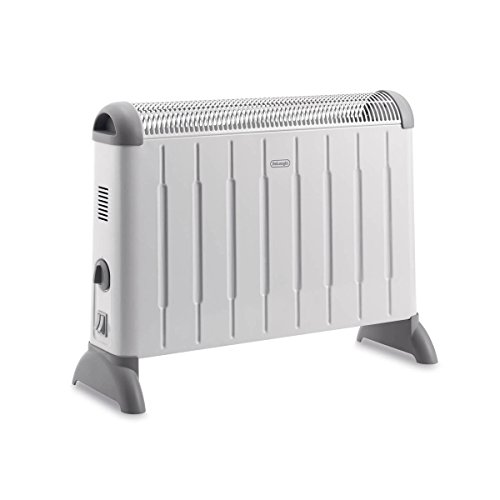
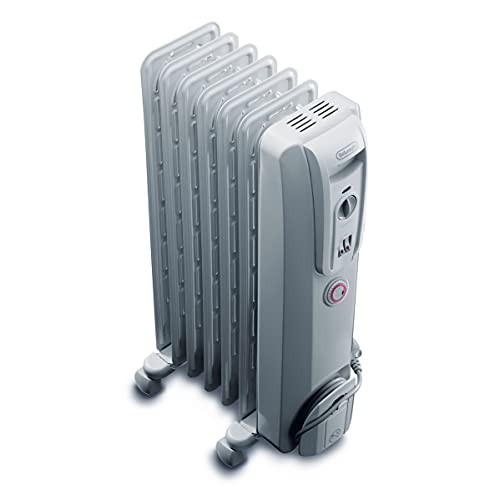
- Entry PickDe'Longhi Lightweight Portable Convector… about$552000W.
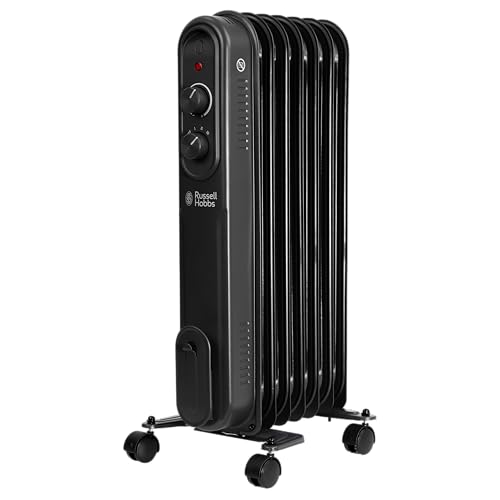
- Russell Hobbs 7 Fin Oil Column Heater about$79.951500W.
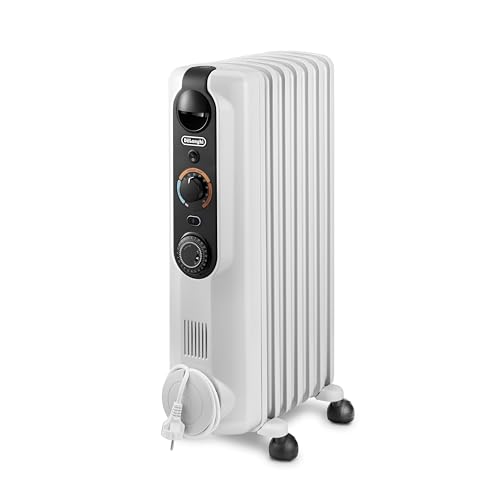
- De'Longhi Radia Easytronic 1500W Oil Column… about$1381500W.
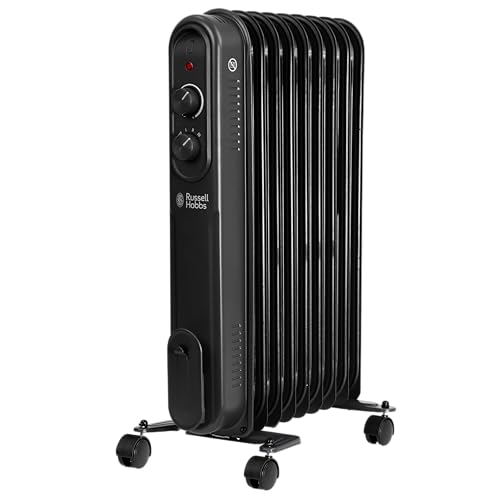
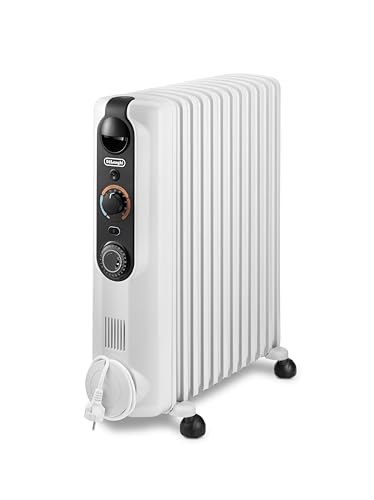
- Russell Hobbs 9 Fin Oil Column Heater about$992000W.
- De'Longhi Electric Oil Column Heater DL1501T about$92.951500W.
- De'Longhi Radia S Easytronic Oil Column… about$168.082400W.
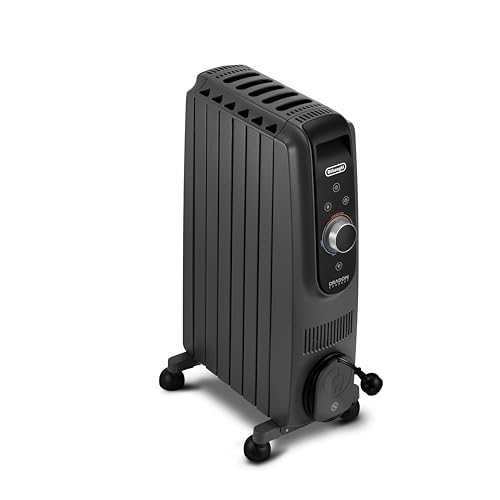
- De'Longhi Dragon 5 Easytronic Connect Oil… about$3141500W.
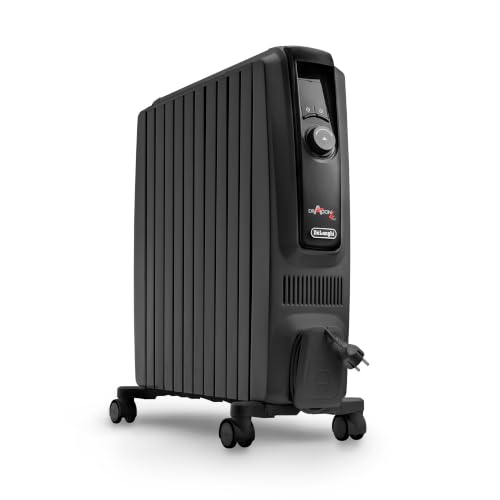
- Most PremiumDe'Longhi Dragon 4 Pro TRDX41024EG 2400W… about$4942400W.
Every 2,400W heater makes the same heat
A resistive heating element does one thing with electricity: it turns all of it into heat. Not most of it. All of it. A 2,400W oil column, a 2,400W fan heater and a 2,400W bar radiator each put the same 2,400 joules per second into the room, and none of them can do better because there is no trick in the physics to find. This is the first thing I tell people who ring the shop asking which heater is the most efficient. They are all 100 per cent efficient at the point of use. What differs is where the heat goes, how fast it gets there, how loud the process is, and how well the controller decides when to stop.
So the spec sheet number that matters least is the wattage. On a standard Australian 10A wall socket, 2,400W is the ceiling anyway (10A at 240V), which is why every full-size heater on the market lands at 2,400W or just under, and why 1,500W models exist for smaller rooms rather than as some lesser product. Running cost is plain arithmetic. At the AU average tariff of roughly 33c per kWh, a 2,400W heater held flat out costs about 79c an hour and a 1,500W one about 50c. The assumption is the tariff; plug your own in. Nobody runs a thermostat-controlled heater flat out for long though, and that is exactly the point of this guide.
What you are paying for, once you accept that the heat is the same, is control and silence. How tight the thermostat holds temperature. Whether there is an ECO mode that drops power once the room is close. Whether a timer can bring it on at 5:30 so the bedroom is warm before the alarm. How much metal and oil is in the thing, because that decides how long it keeps radiating after the element clicks off. And whether the castors will still be attached in three winters. Those are the axes I used to sort the four De'Longhi units below, and they are the axes I would use for any brand.
Why an oil column suits a bedroom, and where it does not
An oil column has no fan. The element sits inside a sealed steel body filled with thermal oil; the oil warms, the fins warm, and heat leaves by convection off the fin surfaces and by radiation to whatever is facing them. The only noises are the relay or thermostat click and the occasional tick of steel expanding. In a bedroom that is the whole argument. A ceramic fan heater at 2 a.m. is a white-noise machine you did not ask for. An oil column is silent. If you do want a fan heater for a room you move through quickly, I have covered those separately in our ceramic fan heater guide.
The second advantage is surface temperature. The fins run hot enough to hurt if you grab one, but nowhere near the glowing-element temperature of a bar radiator, and there is no exposed element for a dropped sock or a curtain hem to sit against. They are still not toys. Keep the clearance the manual asks for, do not dry washing on them, and do not let one touch the bed. The third advantage is thermal mass, and that gets its own section below.
Where they fall down is speed. Cold oil takes ten to twenty minutes to come up, so an oil column is the wrong tool for a bathroom you will be out of in five. It is also the wrong tool for a draughty, high-ceilinged living room where the convection plume drifts up and sits under the ceiling while your feet stay cold. For a closed bedroom, a study, or a small lounge with the door shut, it is the right tool, and the timer is how you get around the slow start.
The thermostat is the product
Strip the fins off and an oil column heater is an element, a thermostat and a cut-out. The element is a commodity. The cut-out is a safety part that should never operate in normal use. Everything you experience day to day (the comfort, the running cost, the clicking) comes from the thermostat. Older and simpler units use a bimetallic strip behind a knob: the strip bends as it warms, breaks a contact, cools, re-makes it. It works, but the gap between switch-off and switch-on (the hysteresis) is wide, often several degrees, and the knob is marked 1 to 6 rather than in degrees, so you are guessing.
Electronic control replaces the strip with a thermistor and a small microcontroller driving a relay. The Radia S Easytronic lists control to the degree; the Radia Easytronic lists twelve temperature settings from 14 to 28 °C. That matters for two reasons. The first is comfort: a tighter band means the room does not swing warm, stuffy, cool, warm all night. The second is cost: the heater spends more of the night off. A 2,400W unit that is only energised a third of the time is averaging 800W, and at the 33c tariff that is about 26c an hour rather than 79c. The controller is doing that saving, not the element.
There is a trade-off I see on the Central Coast repair bench. The electronic board is the part that fails. A bimetal stat rarely dies. A relay that has clicked on and off tens of thousands of times over five winters eventually welds shut or stops pulling in, and a board that has lived inside a warm chassis for years has electrolytic capacitors that dry out and a display that starts missing segments. None of that is a reason to avoid electronic control. It is a reason to buy from a brand that has sold the same chassis for years so a board can be sourced, and a reason not to be surprised if the control panel is the part that goes rather than the metal.
ECO modes, power steps and the 24-hour timer
Three power settings on a column heater are normally two elements switched separately and together: low, medium, both. ECO modes layer logic on top of that. De'Longhi's ECO Plus, listed on the 2,400W Dragon 4 Pro in pick D, adjusts the power output to the room temperature automatically. In practice that means it runs the full element while the room is cold and drops to a lower step as the room approaches the setpoint, instead of slamming full power on and off across a wide band. The Radia S, the Radia Easytronic and the Dragon 5 Connect list an Eco power limit setting that does a simpler version of the same job.
Why does that save anything, if all heat is equal? Because overshoot is waste. A heater that runs full power until the thermostat trips has already loaded the oil and fins with heat that keeps pouring into the room after the click, pushing the temperature past what you asked for. That overshoot is energy you paid for and did not want, and the room then has to cool further before the heater comes back. A lower power step near the setpoint lands softly. Same reason a car driven gently uses less fuel than one that brakes hard at every light.
The timer is the feature I would not buy without. The Dragon 4 Pro lists a programmable 24-hour timer in 15-minute intervals, the Radia S lists a 24-hour timer plus a sleep setup that holds 14 to 18 °C overnight, and the Dragon 5 Connect does its scheduling through an app instead. Used properly that means on at 5:45, room warm by 6:15, off at 7:30 once everyone has left. Or the sleep profile, which accepts a cooler room once you are under the doona rather than holding 22 °C for eight hours for nobody. A column heater ticking over at 14 to 18 °C with a low-wattage electric blanket on the bed costs far less over a night than a heater alone held at 22.
If you want to see what any of this does at the meter rather than take a listing's word for it, a plug-in energy monitor will log watt-hours per night, and I went through the ones worth owning in our smart energy monitor roundup. Run the heater on ECO one night and on full the next, same setpoint, same weather if you can manage it, and compare the totals. On units I have metered the gap is real, not dramatic, and larger in a leaky room than a sealed one.
Fins, oil and the chimney effect
Thermal mass is the quiet advantage. A full-size column holds litres of oil and a lot of pressed steel, and once that lot is up to temperature it keeps radiating for a good while after the element clicks off. The Radia S listing says exactly this: the oil retains heat and keeps radiating after switch-off. The practical effect is that room temperature sags slowly rather than dropping the moment the power stops, which is what lets the thermostat sit off for long stretches. The flip side is that the same mass is why you feel nothing for the first fifteen minutes from cold.
Fin design is about surface area and airflow. More fin area means more convection and a lower fin temperature for the same wattage, which is gentler on the paint and on fingers. The Dragon 5 Connect listing is the most specific about this, calling its fin profile a chimney-effect design and claiming 130% more surface area for faster airflow. The idea is fins shaped so warm air accelerates upward through the gaps and pulls cooler floor air in at the bottom, circulating warmth without a fan. It is the same principle as a convector heater, just with the element buried in oil instead of exposed. Do not expect miracles from a fin profile. Expect a slightly better spread of warmth across the room and slightly cooler fins to touch.
Weight is the honest proxy for mass, and none of these four listings state one, so I will not quote a figure. Judge in store if you can, or check the current listing. A heavier column generally means more oil and more steel, and both are good news for the thermostat duty cycle and bad news for the castors, which is where the next section starts.
Castors, cords and the 10A socket
Every column heater I have had in the workshop with a broken castor failed the same way. The castor bolts, usually two per bracket through the bottom of the end fin, loosen as the steel heats and cools a few hundred times a winter, the bracket starts to rock, and then either the thread strips or the plastic wheel splits. When you unbox one, tighten the bolts properly. Check them again in a month. Three of the four De'Longhi units here list 360-degree swivel castors; the 2,400W Dragon 4 Pro listing does not state them either way. The Dragon 5 Connect and the Radia S list dual or integrated handles. That matters because a heavy column dragged by its fins ends up with bent fins and strained castor brackets.
The cord is the other wear point. A 2,400W load is 10A continuous, and that is the full rating of a standard Australian wall socket. Never run a column heater off a powerboard or a double adaptor, and never put two heaters on one outlet. A 10A powerboard with a heater and anything else plugged in is over its rating, and the first things to warm up are the board's own contacts. Plug the heater straight into the wall. If the plug or the socket feels warm after an hour, stop and have the outlet looked at. Look for the RCM compliance mark (the tick inside a triangle) on the rating plate. We see unbranded imports in the workshop with no mark at all and a cord plainly too thin for 10A, and those go straight back to wherever they came from.
The tip-over switch is a small ball or pendulum switch in the base that cuts the element if the unit goes past a set angle. It is a good thing and also a common nuisance fault: a column that shuts off on a slightly sloped floor, or after being bumped, usually has a sticky tip switch rather than a failed board. The thermal cut-out is the other protection, a fuse or resettable stat against the tank that opens if the surface temperature runs away. If that has operated, something upstream went wrong (a covered unit, a thermostat stuck on) and it is a fault to have looked at, not reset and forgotten.
How I sorted the four
All four are De'Longhi, which was not a brand decision so much as a reflection of what is actually ranking in Amazon AU's Heating category this winter. Two are 1,500W and suit a bedroom or study. One is 2,400W and suits a larger closed room. The fourth is a colour variant of one of the others at a higher price, and I say so plainly in its entry. I rated them on the control story, not on heat, because the heat is settled physics and the control is where the money goes. Prices are at time of writing and will move.
One more workshop note before the picks. The controller board on these is not something I can repair economically once it fails, so the buying decision is also the longevity decision. Tighten the castors, keep it off powerboards, and keep it away from condensation: we see PCB corrosion on heaters stored in damp garages over summer, and I covered how moisture kills electronics in this explainer on water damage. Do that and a column heater will see out a decade. If one stops responding, bring it past the Erina workshop on the way to the tip and we will at least tell you whether it is the board or the tip switch.
The four picks, $88 to $402
Prices are Amazon AU at time of writing (15 August 2026) and move week to week. Ranks are Amazon AU category sales ranks, checked the same day.

De'Longhi Radia Easytronic 1500W Oil Column Heater
ASIN B0GXYZ7Q2X • $111.00 • Ships from Amazon AU
This is the one I would put in most bedrooms. It is 1,500W, which the listing rates for rooms up to 45 square metres, and at the 33c per kWh assumption that is about 50c an hour flat out and considerably less once the thermostat is holding a setpoint. The Easytronic digital controls give twelve temperature settings from 14 to 28 °C, so you are setting a number rather than turning a knob marked 1 to 6 and guessing. That alone is the reason to pick it over a mechanical-thermostat column at a similar outlay. At $111.00 at time of writing it is the lowest-priced of the four, and it is sitting at #6 in Amazon AU's Heating category, which tells you plenty of other people reached the same conclusion.
The three presets are the other thing worth understanding. Extra Care, Comfort Temp and Sleep are named on the listing; the listing does not spell out the exact behaviour of each, so I will not invent it, but the pattern across De'Longhi's range is that Comfort targets a living temperature, Sleep steps the target down for overnight, and Extra Care is a gentler profile. The practical use is simple: Comfort while you are reading, Sleep before lights out, and let the electronic thermostat cycle the element as little as it can. It is oil-filled and fanless, so the only sound is the relay click, and it sits on 360-degree swivel castors.
What you give up against the bigger picks is scheduling: no 24-hour timer is stated on this listing, and no app either. If you are the sort who switches a heater on when you walk in and off when you leave, that costs you nothing. If you want the room warm before the alarm, look at pick B or C. For a closed bedroom or a study where the door stays shut, 1,500W with a proper digital thermostat is the right amount of heater, and this is the best value of the four for that job.
Honest caveats: No 24-hour timer is stated on the listing, and the ECO power limit wording is less specific than on the Radia S, so read the current listing if either matters. The 45 square metre room figure is the listing's claim and assumes a closed, insulated room; a draughty 45 square metre lounge will outrun 1,500W. Weight is not stated.
Best for: A closed bedroom or study where silence and a proper degree-based thermostat matter more than a timer.
Power: 1,500W • Room size (listing): Up to 45 square metres • Controls: Easytronic digital, 12 settings from 14 to 28 °C • Presets: Extra Care, Comfort Temp, Sleep • Timer: Not stated on the listing • Noise: Oil-filled, no fan • Castors: 360-degree swivel • Price (at time of writing): $111.00 • Rank: #6 in Heating (Amazon AU)
View on Amazon AU
De'Longhi Dragon 5 Easytronic Connect TRD50615WIFI.G 1500W Oil Column Heater
ASIN B0GN9BV9KW • $200.00 • Ships from Amazon AU
If pick A is a heater you set and forget, this is the one you set before you get home. The Dragon 5 Easytronic Connect runs the same 1,500W as the Radia Easytronic, and the $200.00 asking price (at time of writing) buys the electronic thermostat plus WiFi: the listing says the My Comfort Hub app manages temperature, modes and schedules remotely. That scheduling is why it sits at the top of the control ladder at 1,500W. An oil column is a slow heater, and the fix for a slow heater is not more watts, it is starting it earlier. The listing rates it for rooms up to 45 cubic metres, and note the unit, because that is volume rather than floor area: a 3 by 4 metre bedroom with a 2.4 metre ceiling is about 29 cubic metres and well inside it, while a lounge is not.
The Eco power limit and what the listing calls intelligent power modulation do the soft-landing job described above, holding your setpoint without slamming the full element on and off across a wide band. The fin work is the other half of it. De'Longhi claims the chimney-effect design increases surface area by 130% for faster airflow, which is the usual column-heater trick: warm air accelerates up through the gaps between fins and drags cooler floor air in underneath, circulating warmth with no fan anywhere in the machine. It is oil-filled and fan-free, so the only sound is the relay click, and it rides on 360-degree castor wheels with dual handles.
It is ranked #132 in Amazon AU's Heating category. Whether the step up from pick A is worth it comes down to one honest question: will you actually use the app? If yes, having a 1,500W column already warm when you walk into the room is the biggest comfort difference on this page, and that is the whole reason this is pick B. If no, pick A does the same heating job with twelve degree-based settings on the panel and nothing to log into. If the room is a lounge rather than a bedroom, no amount of control fixes 1,500W being the wrong size, so go to pick C.
Honest caveats: The listing does not state a 24-hour on-board timer, so scheduling runs through the app; if you want a timer that works with no phone and no WiFi, picks C and D both state one. App control also means a cloud account and a firmware dependency, which is one more thing than a dial that can stop working in five years, and it is the part I would expect to outlive its app support before the steel gives up. The 45 cubic metre figure is the listing's and assumes a closed room. Weight is not stated.
Best for: A bedroom or study you want warm before you get to it, in a household that will genuinely use a phone app to schedule it.
Power: 1,500W • Room size (listing): Up to 45 cubic metres • Controls: Electronic thermostat plus My Comfort Hub app for temperature, modes and schedules • ECO mode: Eco power limit, intelligent power modulation • Timer: Not stated on the listing; scheduling via the app • Fin design: Chimney effect, listed as 130% more surface area • Noise: Oil-filled, no fan • Handling: 360-degree castors, dual handles • Colour: Grey • Price (at time of writing): $200.00 • Rank: #132 in Heating (Amazon AU)
View on Amazon AU
De'Longhi Radia S Easytronic TRRSE1224T 2400W Oil Column Heater
ASIN B0GN95KM1W • $169.00 • Ships from Amazon AU
This is the only 2,400W unit of the four and the one to buy if the room is a lounge rather than a bedroom. The listing rates it for rooms up to 75 cubic metres, and note the unit: that is volume, not floor area, so a 30 square metre room with a 2.4 metre ceiling is around 72 cubic metres and right at the limit. At 2,400W it draws the full 10A a standard Australian socket can supply, which is why it has to go straight into the wall and nowhere near a powerboard. Flat out that is about 79c an hour at 33c per kWh. The electronic thermostat is there to make sure it almost never runs flat out, and the listing is explicit that the oil retains heat and keeps radiating after switch-off, which is the thermal mass argument in one line.
Control is electronic to the degree, with a 24-hour timer and an Eco power limit setting. The sleep setup is the detail I like most: it holds the room between 14 and 18 °C overnight rather than at a daytime setpoint, which is plenty under bedding and roughly halves the overnight duty cycle compared with holding 22. Pair the timer with that and you have a heater that warms the room before you get home, holds it while you are up, eases off overnight and brings it back before the alarm, all without you touching it. It has integrated handles and 360-degree castors. At $169.00 at time of writing it is ranked #27 in Amazon AU's Heating category.
The caution is simply that 2,400W in a small closed bedroom is more heater than the room needs, and a bigger column takes longer to warm from cold. For a bedroom, pick A or B. For a lounge, a large study or a room with a higher ceiling, this is the one, and at $169 it is priced below the 1,500W Dragon 5 Connect while offering more power, a timer and a sleep profile. The difference you are accepting is the Radia fin profile rather than the Dragon 4 Pro fin profile, which in a closed room I would not lose sleep over.
Honest caveats: Full 10A draw: wall socket only, never a powerboard or double adaptor, and if the plug runs warm have the outlet checked. The 75 cubic metre figure is the listing's and assumes a closed room. More oil means a slower start from cold, so use the timer. Weight is not stated on the listing.
Best for: A lounge, large study or higher-ceilinged room where 1,500W will not keep up, and a household that will use the timer and sleep setup.
Power: Up to 2,400W • Room size (listing): Up to 75 cubic metres • Controls: Electronic, to the degree • Sleep setup: Holds 14 to 18 °C overnight • ECO mode: Eco power limit • Timer: 24-hour • Thermal mass: Oil keeps radiating after switch-off (listing) • Handling: Integrated handles, 360-degree castors • Price (at time of writing): $169.00 • Rank: #27 in Heating (Amazon AU)
View on Amazon AU
De'Longhi Dragon 4 Pro TRDX41024EG 2400W Oil Column Heater, Grey
ASIN B0GRNK77R4 • $402.00 • Ships from Amazon AU
This is the most heater on the page and the most money, and it is worth being straight about which of those two facts is doing the work. It is 2,400W with the Dragon 4 Pro fin design, rated by the listing for rooms up to 75 cubic metres, which is the same volume figure the Radia S in pick C carries. Control is a digital LED display driven by a turn-and-push dial, with a 24-hour programmable timer in 15-minute increments and ECO Plus, which the listing says adjusts power levels automatically to hold your chosen temperature. It is oil-filled, so it keeps radiating after the element cycles off. At 2,400W it pulls the full 10A a standard Australian socket is rated for, which means wall outlet only, and about 79c an hour flat out on the 33c per kWh assumption used throughout this article.
The turn-and-push dial is the part I would actually pay for. One control you rotate to a value and press to confirm is a far better way to drive a 24-hour timer in a dark bedroom than a row of touch buttons that all feel identical under your fingers. ECO Plus is the other real difference against the simpler Eco power limit setting on the Radia units, stepping power down as the room closes on the setpoint instead of running full tilt to the trip point. On a 2,400W heater that matters more than it does at 1,500W, because there is half again as much overshoot available to waste. It is ranked #125 in Amazon AU's Heating category, which is the strongest position of the four.
Now the price, because it is the whole story here. At $402.00 at time of writing this is more than double pick C, and pick C is also 2,400W, also rated to 75 cubic metres, and also carries a 24-hour timer plus a sleep setup. So for most readers the honest answer is pick C. What the Dragon 4 Pro adds is the Dragon 4 Pro fin profile, ECO Plus instead of a plain Eco power limit, and that dial. If you are heating a lounge every evening from May to September and you want the better control set on the bigger heater, that is a defensible buy. If you simply need 2,400W in a big room, pick C does it for less than half the outlay and I would not try to talk you out of it. Check both listings on the day, because Amazon AU prices move week to week and the gap may have narrowed by the time you read this.
Honest caveats: Highest price on the page by a wide margin, and the listing does not claim more heat than pick C. Full 10A draw, so wall socket only, never a powerboard or a double adaptor, and if the plug runs warm after an hour have the outlet checked. Castors, handles and weight are not stated on this listing, so if you plan to move it between rooms check the current listing photos first. More oil means a slower start from cold, which is exactly what the 24-hour timer is for.
Best for: A lounge or large room heated every evening through winter, by someone who wants the Dragon 4 Pro control set and has looked at pick C with open eyes first.
Power: 2,400W • Room size (listing): Up to 75 cubic metres • Fin design: Dragon 4 Pro, advanced fin design • ECO mode: ECO Plus, adjusts power levels automatically • Controls: Digital LED display, turn-and-push dial • Timer: 24-hour programmable, 15-minute increments • Thermal mass: Oil keeps radiating after the heater cycles off (listing) • Colour: Grey • Price (at time of writing): $402.00 • Rank: #125 in Heating (Amazon AU)
View on Amazon AUSide-by-side comparison
What we see fail at the bench: oil column heaters
Oil columns are among the simplest appliances that come through the door, and that simplicity is why the faults cluster. The oil almost never leaks, the element almost never opens, and the steel outlasts the house. What fails is the small stuff bolted to the end: the control board and its relay, the tip-over switch, and the castor brackets. Here is what each looks like and what you can do about it before it becomes a fault.
Thermostat, relay and control board
On electronic units the relay that switches the element is the hardest-working part in the box. Every cycle arcs the contacts a little, and after years of winters the contacts either weld (heater stuck on, thermal cut-out eventually trips) or pit until they stop making (heater dead, display alive). Around it, electrolytic capacitors on the board sit in a warm chassis and dry out, and a display that drops segments or a panel that stops responding to touches is usually that. We can confirm which it is quickly. Whether a board is worth replacing depends on whether the maker still supplies it, which is a point in favour of buying a chassis that has been on sale for years.
Tip-over switch
The tip switch is a ball or pendulum in the base that opens the circuit when the heater leans past a set angle. They fail sticky rather than dead. A heater that cuts out on a carpeted floor that is not quite level, or after being nudged, or that will only run when you wedge a coin under one castor, almost always has a tip switch rather than a board problem. Dust and carpet fibre get into the mechanism and the ball hangs. It is a small, inexpensive part, and it is the first thing we check on a column that keeps switching itself off. Do not bypass it. A column heater face down on carpet with the element energised is the one scenario the whole design exists to prevent.
Castor bolts and brackets
Castor brackets are two or four bolts through the bottom of the end fin, and the thermal cycling of the steel works them loose over a winter. Once a bracket rocks, the bolt hole elongates, the thread strips, or the plastic wheel splits where it meets the axle. By the time it is noticed the fix is a new bracket or a tapped-out hole. The prevention is trivial: snug the bolts on unboxing, check them a month in, and move the heater by its handles rather than dragging it by the fins. A dragged column also bends fins, and a bent fin that touches its neighbour is a hot spot the thermostat cannot see.
Decision tree: which one should you actually buy?
- Closed bedroom, you want silence and a proper thermostat, no interest in timers? → Pick A, the Radia Easytronic 1500W at $135.85. Twelve degree-based settings, three presets, no fan, and the best-ranked of the four.
- Bedroom or study, and you want it warm before you walk in? → Pick B, the Dragon 5 Easytronic Connect at $200.00. App scheduling plus an electronic thermostat is the best control set at 1,500W, as long as you will use the app.
- A lounge or larger room where 1,500W will not keep up? → Pick C, the Radia S Easytronic 2400W at $169.00. Full 10A draw, so wall socket only, with a 24-hour timer and a sleep setup that holds 14 to 18 °C overnight.
- Heating a lounge every evening and you want the best control set on a 2,400W unit? → Pick D, the Dragon 4 Pro TRDX41024EG at $402.00, but read pick C first: it is also 2,400W and also rated to 75 cubic metres, for less than half the outlay. Pick D earns its place on ECO Plus, the turn-and-push dial and the 24-hour timer, not on more heat.
- Not sure what the heater is actually costing you each night? → Any of the four plus a plug-in energy monitor from our energy monitor guide. Log a night on ECO and a night on full and decide with numbers.
- Heater keeps cutting out, display is dead, or a castor has sheared off? → Do not bypass the tip switch or run it on a powerboard to test it. Bring it into our Erina workshop and we will tell you whether it is the tip switch, the relay or the board, and whether it is worth fixing.
Frequently asked questions
Do oil column heaters cost less to run than fan heaters?
Not per watt. Every resistive heater turns all of its electricity into heat, so a 2,400W oil column and a 2,400W fan heater cost the same per hour when both are running: about 79c at the AU average tariff of roughly 33c per kWh. The difference is in how long each spends running. An oil column with an electronic thermostat and a decent amount of thermal mass cycles off for long stretches and keeps radiating while it is off, so over a night it can draw less. A fan heater heats faster and cools instantly when it stops. Measure it with a plug-in energy monitor if you want the real figure for your room.
Can I run a 2,400W oil column heater from a powerboard?
No. A 2,400W heater draws 10A at 240V, which is the full rating of a standard Australian wall socket and of most powerboards. Add anything else to that board and it is over its rating, and the first things to get warm are the board's own contacts and the cord. Plug the heater directly into the wall, one heater per outlet, and never daisy-chain a heater through an extension lead or double adaptor. If the plug or the wall socket is warm to the touch after an hour, stop using that outlet and have it looked at by an electrician.
Why does my oil column heater keep switching itself off?
Two usual causes. The first is the thermostat doing its job: once the room is at the setpoint the element cycles off and the heater sits silent until the temperature drops, which is normal and saves money. The second is the tip-over switch, a small ball or pendulum switch in the base that cuts power if the heater leans. They get sticky with dust and will cut out on an uneven floor or after a bump. If the heater only runs when perfectly level or with a coin wedged under a castor, it is the tip switch. Do not bypass it; have it replaced.
Is it safe to leave an oil column heater on overnight?
Oil columns are one of the better choices for overnight use because there is no fan, no exposed glowing element and the fin temperature is lower than a bar radiator. The conditions are the usual ones: plugged straight into a wall socket, not a powerboard; clear of bedding, curtains and washing by the distance in the manual; standing on a level, hard floor so the tip switch is not nuisance-tripping; and a cord that is not pinched under the castors or the bed. A sleep setup that holds 14 to 18 °C, as on the Radia S, means it spends most of the night off anyway.
What room size does a 1,500W oil column heater suit?
The Radia Easytronic listing rates its 1,500W for rooms up to 45 square metres, and the 2,400W Radia S lists up to 75 cubic metres, which is volume rather than floor area. Treat both as closed-room figures. A sealed bedroom or study with the door shut is well inside the 1,500W range. A lounge with a hallway opening off it, a high ceiling or single-glazed windows will leak heat faster than 1,500W replaces it and you will want the 2,400W unit or a second heater on a separate circuit. Ceiling height matters more than people think because warm air from a column goes up first.
How long should an oil column heater last, and what goes wrong?
The oil and element routinely outlast a decade. What fails is bolted to the end: the control board and its relay on electronic models, the tip-over switch, and the castor brackets. Relay contacts wear with every cycle, board capacitors dry out in a warm chassis, tip switches get sticky with dust, and castor bolts loosen with thermal cycling until a bracket rocks or a wheel splits. Tighten the castors on unboxing and again a month later, move it by the handles, keep it out of damp storage over summer so the board does not corrode, and never run it on a powerboard. Do that and ten winters is a fair expectation.
Related buying guides
Heater dead, display blank, or cutting out for no reason?
On an oil column it is nearly always the control board, the relay or the tip-over switch, not the oil or the element. Bring it into our Erina workshop on the Central Coast and we will diagnose it properly: In my experience, we can tell you in minutes whether it is a sticky tip switch, a welded relay or a board that is no longer supplied, and whether repair makes sense against replacement.
Visit our Erina workshop Book Online