Prices from Amazon AU, updated daily. Swipe or use the arrows for more.
Disclosure: This article contains affiliate links to amazon.com.au. If you buy through one of these links iFix may earn a small commission at no extra cost to you. It doesn't change which products we recommend. We focus on what actually lasts based on 16 years of repair-shop experience.
Quick summary8 picks
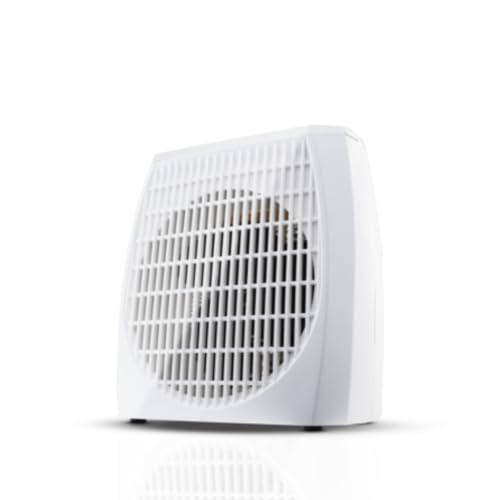
- CheapestGoldair 2000W Upright Fan Heater with 2… about$37.842000W.
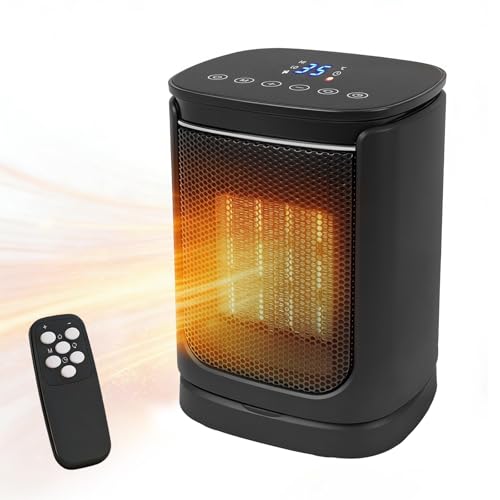
- Portable Space Heater about$35.181500W.
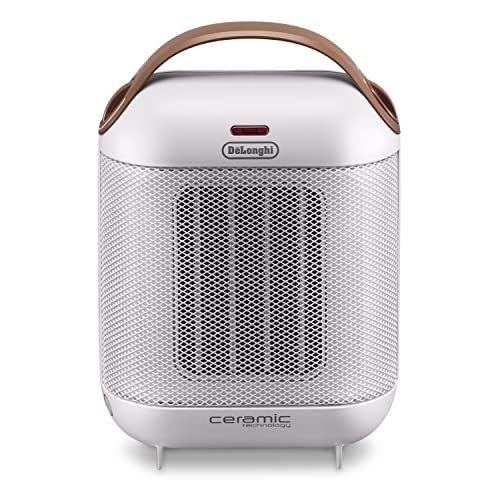
- De'Longhi Capsule Ceramic Heater HFX30C18.IW about$641800W.
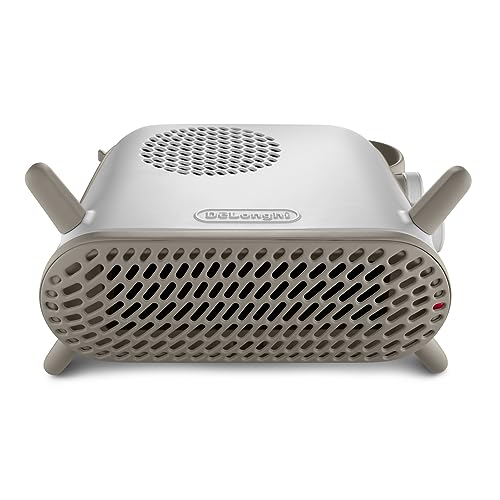
- De'Longhi Capsule Fit Fan Heater HFS70B24.WH about$692400W.
- Goldair 2000W Convector Heater about$792000W.
- Goldair 2000W Ceramic Tower Heater with Wi-Fi about$742000W.
- Goldair 2400W Ceramic Tower Heater with Wi-Fi about$1042400W.
- Most PremiumDe'Longhi about$2562200W.
What a ceramic fan heater is actually good at
A ceramic fan heater is a blower pushing room air across a PTC element. That is the whole machine. A motor, a fan, a block of doped ceramic, a thermostat, one or two cut-outs and a plastic or metal shell. It does one thing well: it puts warm air on you within about thirty seconds of switching on. It does a second thing poorly: it heats a whole room. The first job is why you buy one. The second is why people end up running the thing flat out from June to August.
I say this from 16 years in the workshop in Erina, where fan heaters arrive every winter with one of about four faults. Match the tool to the task. If you want warm feet under a desk, a fast blast in a cold home office, or something to take the edge off an ensuite for ten minutes, a 1,800W to 2,400W ceramic unit is the right kind of heater. If you want a lounge room held at 20 °C all evening, you are asking a hair dryer to do a radiator's job.
The four picks cover that range. Two De'Longhi capsule units at $64 and $69 for the desk and the small room, a $279 De'Longhi HX65L22 with a double fan and a 24-hour timer for a whole room, and a $79 Goldair 2000W convector with a 24-hour timer at #65 in Amazon AU's Heating category. There is also a companion guide to oil column heaters, because for a lot of rooms that is the better purchase, and I would rather say so here than have you find out in July.
How a PTC ceramic element self-regulates
PTC stands for positive temperature coefficient. The element is a ceramic (usually barium titanate based) whose electrical resistance climbs steeply once it passes a designed transition temperature. Cold, it has low resistance, so it draws close to its rated current and heats fast. As it warms, resistance rises, current falls, and the element settles where the heat it makes equals the heat the fan carries away. Nobody programmed that. It is a property of the material.
That matters for two reasons. First, the element does not glow. A nichrome wire heater runs its coil red hot, which is why a sock dropped over a bar heater is a fire. A PTC block sits a few hundred degrees cooler, and if airflow is blocked it pulls less power rather than more, because the surface temperature rises and the resistance follows. That is a real safety margin, and it is what the De'Longhi listings mean by 'self-regulating ceramic'.
Second, it changes how the heater behaves as the room warms. A 2,000W label is a cold-start peak. Once the element is up to temperature, a ceramic heater on high often draws less than its rating, and in a warm small room less again. For the actual figure in your house, put it through a plug-in meter. I have a separate guide on energy monitors that measure what a heater really draws, and a $20 one will tell you more about your running cost than any box will.
The flip side is that a PTC element relies on the fan. It cannot radiate meaningfully. If the motor stalls, the element climbs until its own resistance chokes the current, and the thermal cut-out should trip first. That 'should' is why I care so much about the fan side of these machines.
Fast heat versus room heat: what 2,000W does and does not do
Every electric resistance heater turns electricity into heat at effectively 100 per cent. A 2,000W fan heater, a 2,000W oil column and a 2,000W bar heater all put the same energy into a room. What differs is where it goes and how fast you feel it. A fan heater throws a warm air stream at you, so the warmth is immediate and directional. Point it at your legs and you feel it in seconds. Point it at the far wall and you have warmed the wall.
Room heat is a different problem. Air is a poor heat store and a small one. Most of the thermal mass in a room is plaster, brick, furniture and floor, and a fan heater does very little to warm those. Switch it off and the warm air stratifies against the ceiling and leaks out within a few minutes. This is why a ceramic unit feels fantastic for ten minutes and then seems to run constantly for little result. It is. It is heating air that is escaping.
De'Longhi rate the $69 Capsule Fit at 2,400W for rooms up to 75 cubic metres, roughly a 4 by 5 metre room with a 2.4 m ceiling. Treat that as the upper edge, not a target. The $279 HX65L22 uses a double fan to spread air rather than blast it, which is a fairer attempt at room heating than a single blower. For anything bigger than a small bedroom, read the last section before you buy.
Placement is simple. Sit it low and aim it across the floor; warm air rises on its own. Never put it where a curtain, a dressing gown on a door hook or a pile of washing can fall across the grille.
Running cost at 2,000W, and the 10A socket limit
The arithmetic is blunt. Assume the Australian average tariff of roughly 33c per kWh. A 2,000W heater running flat out draws 2 kWh per hour, so about 66c per hour. Four hours an evening is about $2.64, and thirty evenings about $79. The 2,400W Capsule Fit on its top setting is closer to 79c an hour flat out, and the 1,800W capsule about 59c. Those are ceilings. Once the thermostat cycles and the PTC element settles, real draw is lower, but plan around the ceiling.
Set next to that, a 120W heated throw costs about 4c an hour at the same tariff. A heated throw over your knees plus a fan heater on low for the first ten minutes costs a fraction of running the heater on high all night, and for someone sitting still it is warmer. If your interest is trimming the winter bill, the smart home power savings write-up goes through scheduling and plug-level measurement in more detail.
Now the socket. A standard Australian general power outlet is rated at 10A, about 2,400W. A 2,400W heater is the entire socket. A four-way board with a heater, a TV and a gaming PC on it is how cords get warm and how the thermal fuse inside the board eventually does its job, or does not. Plug heaters straight into the wall. Never daisy-chain them through boards or extension leads. We see melted board sockets every winter on the Central Coast repair workshop, and the heater is usually the culprit.
Feel the plug after a session on high. Warm is normal. Too hot to hold is a loose contact, a tired socket or a damaged cord, and that is an electrician's job. Any 10A load for hours at a time finds the weakest contact in the chain.
Tip-over switches, thermal fuses and thermostats: what each one actually does
Every heater here claims some combination of tip-over cut-out, overheat protection and thermostat, so here is what each one means inside the case. The thermostat is the control. It is either a bimetal strip (the $64 capsule lists a mechanical thermostat) or a thermistor read by a small PCB (the HX65L22 with its electronic 24-hour timer and ECO mode). It cycles the element to hold a setting. It is not a safety device, and it is the part most likely to drift or stick.
The overheat cut-out is a second bimetal switch or a thermal fuse bonded to the element carrier or the housing behind it. A bimetal overheat switch resets when it cools. A thermal fuse is one-shot: once it opens, the heater is dead until someone replaces it, and that is deliberate. The Capsule Fit listing names both a safety thermostat and a thermal fuse, which is the arrangement I like to see, because the fuse backs up the switch. The HX65L22 lists an overheat thermal cut-off and a tilt switch. The Goldair lists overheat protection without naming the part, and says nothing about a tip-over switch.
The tip-over switch is usually a plunger under the base or a mercury-free ball tilt switch on the PCB. When the heater is not upright, it opens the element circuit. On the $64 capsule it is listed as auto shut-off if tipped over. The plunger type fails most often in the workshop, usually because it has filled with carpet fluff and sticks in, so the heater keeps running on its side. Press it with a finger when the unit is new: it should click freely and the heater should stop within a second.
In short: the PTC behaviour is the first safeguard, the thermostat is the control, the overheat switch is the second safeguard, and the fuse and tip-over are the last. When a heater comes in dead after a tip, it is usually the thermal fuse that has done its job, and that is a quick fix at the Erina workshop. A heater that trips repeatedly is telling you something is wrong with airflow, and replacing the fuse without finding out why is how you get the next fault.
Fan bearings, dust and noise at each setting
The fan is where ceramic heaters live and die. The element almost never fails. What fails is the small motor spinning the blower, and it fails for a boring reason: dust. Everything airborne in your house goes through that grille, and a surprising amount sticks to the blades and the motor shaft. Over a winter or two the bearing dries out, the fan slows, the element runs hotter, and the overheat switch starts tripping on high.
Noise is the early warning. A new fan heater on low is a steady hush. On high it is a proper whoosh, which is normal for that much air through a small opening. Not normal: a rhythmic tick, a grind, or a whine that changes pitch as the unit warms. That is a bearing, or a blade touching the housing. The De'Longhi Capsule Fit claims up to 60 per cent quieter than standard fan heaters on low and medium, while the Goldair listing gives no noise figure at all, so judge its turbo fan boost by ear.
Maintenance is simple and nobody does it. Unplug the heater and vacuum both grilles at the start of each winter and once mid-season. Do not spray anything into the unit. If it has started to tick, a sealed motor bearing is not user-serviceable, and on a capsule heater the hour it takes costs about what the heater did, so the sensible answer is often a new heater and a stricter vacuuming habit. On the $279 HX65L22 it is worth repairing, and a double fan unit has two motors to look after.
Dust does not just clog. A layer of it on a PCB holds moisture on damp mornings, and that is the start of the corrosion we see on control boards. The water damage explainer covers the mechanism; a heater stored in a damp room over summer comes back in autumn with the same green crust we see on phones.
Bathrooms, IP ratings and where not to put one
None of the four heaters here states an IP rating on its listing. None of them should go in a bathroom in the normal sense of the word. Australian wiring rules divide a bathroom into zones around the bath and shower, and a portable, non-IP-rated, fan-assisted heater has no business in any of them. Steam condenses on the cold control PCB, the thermistor reads wrong or a track corrodes, and the heater either will not start or will not stop. We see the second less often than the first, but we see it.
The practical version. Warm the bathroom from the doorway before the shower, then switch the heater off and take it out before the room fills with steam. Never touch it with wet hands. Heat while you are in the bathroom is a job for a hard-wired IP-rated heat lamp installed by an electrician, not a $64 capsule.
Other places to think twice: long-pile carpet that can block the intake, a child's bedroom where a toy can end up on the grille, and anywhere the cord runs under a rug. The HX65L22 on castors is easy to move and easy to wheel against a curtain. The capsules have a small footprint and a high centre of gravity, which is what the tip-over switch is for and why it needs to work.
When an oil column heater is the better buy
I will lose a sale or two saying this. If the room is a bedroom or lounge you sit in for hours, and you do not need heat in the first minute, an oil column heater is usually the better tool for the same money. It puts the same watts into the room but stores them in oil and steel, so it keeps radiating after the thermostat cycles off, it runs silently because there is no fan, and it has no motor to wear out or grille to clog.
A ceramic fan heater wins when you need heat fast, when the room is small and you will leave soon, or when you want to aim warmth at a person rather than a space. It also wins on weight. The De'Longhi capsules are desk-portable with a handle, and the HX65L22 at 7.5 cm deep slides behind a door in a way no column heater will.
My honest split for a larger room: spend the $64 on a capsule for the study and the morning warm-up, and put the rest toward a column heater for the room you live in. If you run any heater for hours every night, the energy monitor pays for itself inside the first month in what it teaches you about your own habits.
The four picks, $64 to $279
Prices are Amazon AU at time of writing (15 August 2026) and move week to week. Ranks are Amazon AU category sales ranks, checked the same day.

De'Longhi Capsule Fan Heater HFX30C18.IW, 1800W
ASIN B0742JBJMV • $64.00 • Ships from Amazon AU
This is the one I would put under a desk. It is a 1,800W self-regulating ceramic element in a small ivory white capsule with a lace-style carry handle, motorised oscillation, two power settings and a mechanical thermostat. That mechanical thermostat is a point in its favour from a repair perspective: a bimetal strip has no PCB to corrode and no firmware to sulk, and when it eventually drifts it drifts slowly and obviously. The listing lists auto shut-off if tipped over and an anti-frost setting, which keeps the element cycling to hold a room just above freezing if you leave it in a shed or a caravan. At $64 and sitting at #2 in Amazon AU's Heating category at time of writing, it is the default for anyone who wants heat on their legs, not a room temperature.
At 1,800W flat out it costs about 59c an hour at the 33c/kWh assumption, and under a desk on the low setting with oscillation on you will run well under that once the space around your feet warms up. The oscillation is the useful bit for a personal heater. A fixed blower on your shins for an hour is too much on one spot and nothing on the other leg. Sweeping it across the footwell gives even warmth and lets the thermostat cycle more gently. The carry handle is more than styling, because a heater you actually carry from the study to the bathroom doorway each morning is a heater that earns its keep, and this one is light enough that you will.
What is not on the listing: a noise figure, a stated room size, a timer or a remote. It is a mechanical heater with a dial and a switch. That is fine at $64 and fine for a desk. It is not a bedroom heater you set and forget, because there is no timer to turn it off when you fall asleep, and for that I would look at the Goldair or the HX65L22, which both list a timer. Check the oscillation mechanism clicks cleanly out of the box and that the tip-over plunger under the base moves freely, then vacuum the grilles each winter and it should see out several seasons.
Honest caveats: two power settings and a mechanical dial only, no timer, no remote, no stated noise level and no stated room size on the listing. Oscillation motors are a wear item on any heater; if it starts to judder, stop using the oscillation rather than forcing it. It is a personal heater, not a room heater.
Best for: Anyone who wants fast, aimed warmth under a desk or in a small study, and prefers a simple mechanical heater with nothing electronic to fail.
Power: 1,800W, two settings • Element: Self-regulating ceramic (PTC) • Control: Mechanical thermostat, anti-frost • Oscillation: Motorised • Safety: Auto shut-off if tipped over • Carry: Lace-style handle • Colour: Ivory white • Price: $64 at time of writing • Rank: #2 in Heating (Amazon AU)
View on Amazon AU
De'Longhi Capsule Fit Fan Heater HFS70B24.WH, 2400W
ASIN B0DX24WGHJ • $69.00 • Ships from Amazon AU
The Capsule Fit is the step up for a small room rather than a footwell. It is rated up to 2,400W with three heat settings and listed for rooms up to 75 cubic metres, and the trick that makes it interesting is that it runs horizontal or upright. Flat, it sits low and throws warm air across the floor, which is where you want it in a bedroom or a study; upright, it takes less floor space. The listing names a safety thermostat and a thermal fuse, a cool-metal casing, rubber feet and a soft-touch handle, plus a pilot light so you can see it is live. At $69 and #10 in Amazon AU's Heating category at time of writing, it is $5 more than the capsule for considerably more heater.
Two things matter at 2,400W. The first is that it is the whole of a 10A socket, so it goes straight into the wall and nothing else shares that board. The second is running cost: about 79c an hour flat out at 33c/kWh. Three settings help here. De'Longhi claim the unit is up to 60 per cent quieter than standard fan heaters on low and medium, and those two settings are where it should live most of the time, with high kept for the first five minutes of a cold room. Rubber feet on a heater that lies flat are not a detail; they keep the intake off the carpet pile, and a blocked intake is how a fan heater ends up tripping its overheat switch.
Not stated on the listing: a timer, a remote, oscillation, or a decibel figure behind the 60 per cent claim. So this is still a manual heater, switched by hand, and the pilot light is your reminder that it is on. The safety thermostat backed by a thermal fuse is the protection arrangement I prefer, because the one-shot fuse catches what a sticky switch misses. Keep the horizontal intake clear, vacuum it each winter, and check that the rubber feet have not compressed flat after a season on a hard floor.
Honest caveats: no timer, remote or oscillation on the listing, and the 60 per cent quieter claim is relative to an unnamed baseline with no decibel figure given. At 2,400W it fills a standard 10A socket on its own. The 75 cubic metre room rating is a ceiling for comfort, not a promise, and for a larger lounge an oil column is the better tool.
Best for: A small bedroom, study or home office where you want a low-profile heater that can lie flat, with a proper thermal fuse behind the thermostat.
Power: Up to 2,400W, three settings • Room size: Up to 75 m3 (listing) • Positioning: Horizontal or upright • Noise: Up to 60% quieter than standard on low and medium (listing) • Safety: Safety thermostat, thermal fuse, pilot light • Casing: Cool-metal, rubber feet, soft-touch handle • Price: $69 at time of writing • Rank: #10 in Heating (Amazon AU)
View on Amazon AU
De'Longhi Ceramic Portable Heater HX65L22, 2200W
ASIN B076HN6BCL • $279.00 • Ships from Amazon AU
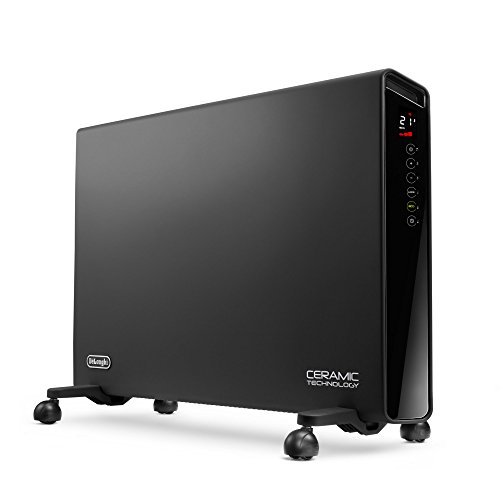
The HX65L22 is the only heater here I would call a room heater. It is a 2,200W slim grey unit, 7.5 cm deep, on castors with a handle, with a double fan system and what De'Longhi call 'Hi-Fi Technology' for even distribution. The idea is two smaller fans spreading a wider, slower stream of air across a medium to larger room rather than one blower firing a hot jet at a single spot. That is a more honest approach to heating a space than a capsule unit can manage, and it is why the price jumps to $279. It holds #189 in Amazon AU's Heating category and #21 in Home Thermostats and Accessories at time of writing, which tells you it sells on features rather than on impulse.
The features are the point. A 24-hour electronic timer with delay start and delay stop means it can warm a bedroom before you wake and switch itself off after you have fallen asleep, which is exactly what the capsules cannot do. An ECO function regulates power and temperature, stepping the element down as the room reaches setpoint rather than cycling between full blast and off. For protection it lists an overheat thermal cut-off, a tilt switch and anti-frost. At 2,200W flat out it is about 73c an hour at 33c/kWh, but with ECO engaged and a timer, the real average in a room that holds heat is well under that, and a plug-in meter will show you by how much.
The trade-offs are the electronic control board and the two motors. Two fans is twice the bearings and twice the dust, so the grille vacuuming habit matters more here, not less. The PCB is what reads the timer and ECO, and it is what suffers if the heater lives in a damp room over summer. Store it dry. The listing does not state a decibel figure beyond 'silent', a remote, or an IP rating, so treat 'silent' as quieter than a single blower and not as nothing. At $279 this is the one worth repairing when it eventually needs it.
Honest caveats: no remote and no decibel figure on the listing, and 'silent' is a De'Longhi description rather than a measurement. Two fans and an electronic board mean more to maintain and more to corrode if stored damp. Castors make it easy to wheel against a curtain; mind where it ends up. At $279 it competes with good oil column heaters, which radiate silently with no fan at all.
Best for: A medium to larger bedroom or living room where you want timed, thermostat-led ceramic heat that spreads across the space rather than blasting one spot.
Power: 2,200W • Fan: Double fan system, 'Hi-Fi Technology' distribution • Timer: 24-hour electronic, delay start and stop • Modes: ECO function regulating power and temperature, anti-frost • Safety: Overheat thermal cut-off, tilt switch • Form: 7.5 cm deep, castors and handle • Colour: Grey • Price: $279 at time of writing • Rank: #189 in Heating, #21 in Home Thermostats & Accessories (Amazon AU)
View on Amazon AU
Goldair 2000W Convector Heater, 24-Hour Timer and Adjustable Thermostat
ASIN B0CTZB7X1Y • $79.00 • Ships from Amazon AU
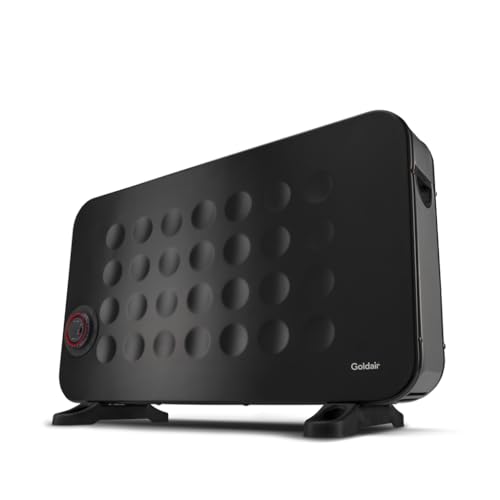
This is the timer pick. It is a 2,000W convector from Goldair, sold by Amazon AU, and it sits at #65 in Amazon AU's Heating category at time of writing. It is not a ceramic fan heater in the strict sense: the listing describes a convector with three heat settings, an adjustable thermostat and a 24-hour timer, plus a Turbo Fan Boost that pushes air through to warm a room faster. I am including it because it does the one thing the two capsules cannot, which is switch itself on and off while you are asleep or out of the room, and it does it at $79 from Amazon directly.
The timer is the feature that matters. A 24-hour timer lets you set when the heater turns on and off, so a bedroom can be warm before you wake and the element off again after you have left. The thermostat is adjustable, so once the room reaches your setting the heater cycles instead of running flat out, which is where the running cost comes down. At 2,000W flat out it is about 66c an hour at 33c/kWh, and a heater that cycles on a thermostat and stops on a timer will average well under that. The Turbo Fan Boost is for the first few minutes in a cold room; I would use it as a warm-up and then drop to a lower heat setting.
What the listing does not give you is the detail I would want before trusting any heater with a timer. There is no stated noise level, room size, tip-over switch or oscillation, and no remote. Overheat protection is listed, but not which part does the job. On arrival, press the base to see whether a tip-over switch is fitted, run it on high for fifteen minutes and feel the plug and cord, and check the rating label for the RCM mark. A convector with a fan boost also warms the room more slowly than a fan heater aimed at your legs, so for warm feet in the first thirty seconds the De'Longhi capsules are still the better tool.
Honest caveats: the listing names no remote, no oscillation, no noise figure, no room size and no tip-over switch, so check the unit in your hands. It is a convector with a fan boost, not a PTC ceramic fan heater, so it is slower to warm the air in front of you. The listing does not say whether the timer is electronic or a mechanical dial.
Best for: Someone who wants a thermostat and a 24-hour timer for a bedroom or lounge, from a brand sold directly by Amazon AU.
Power: 2,000W convector • Heat: Three heat settings, Turbo Fan Boost • Control: Adjustable thermostat, 24-hour timer • Safety: Overheat protection (listing) • Colour: Black • Price: $79 at time of writing, Amazon AU • Rank: #65 in Heating (Amazon AU)
View on Amazon AUSide-by-side comparison
What we see fail in the workshop: ceramic fan heaters
A ceramic fan heater has very few parts, and after 16 years in Erina the failures sort themselves into a short list. The element almost never dies. The motor, the cut-outs and the control side do, and nearly all of it traces back to dust, moisture or a plug that got hot. Here is what arrives in the workshop and what it usually means for the heater and for you.
Fan motor bearings and dust loading
The most common fault by a distance. Dust packs onto the blower blades and the motor shaft, the bearing dries out, the motor slows and draws more current, and the element runs hotter because less air is carrying heat away. The first symptom is a tick or a whine on start-up; the second is the overheat switch tripping on high and the heater cutting out after ten minutes. By the time it arrives the motor is usually done. On a $64 capsule the economics favour replacement and a vacuuming habit. On a $279 double-fan unit it is worth opening up, cleaning out and, if the bearing is gone, replacing the motor.
Tip-over plungers and thermal fuses
Tip-over switches fail in two directions. A plunger full of carpet fluff sticks in, so the heater keeps running on its side, which is the dangerous one. Or the plunger or ball switch fails open, so the heater is dead on a perfectly level floor, which is the annoying one and the one we see more. Thermal fuses are one-shot, and a heater that is dead after a tip or a blocked grille has often just done what it was designed to do. Replacing the fuse is a ten-minute job. Finding out why it blew is the actual repair, and if the cause was a seized fan, a new fuse on its own lasts one evening.
Control PCBs, thermistors and corrosion
Anything with a timer, a remote, an ECO mode or a digital thermostat has a small control board with a thermistor on it, and the board is what suffers from steam and damp storage. The heater is warm when running and cold when off, so it breathes moist air in and out, and a bathroom or a cold spare room over summer leaves a green crust on the board tracks and the IR receiver. Symptoms are a remote that stops responding, a display that flickers, or a thermostat that reads wrong and will not switch the element. Mechanical dial heaters do not have this failure mode, which is half the reason I still like them.
Decision tree: which one should you actually buy?
- I want warm feet under a desk for a few hours a day? → The $64 De'Longhi Capsule HFX30C18. Mechanical thermostat, oscillation, and a carry handle, with nothing electronic to corrode. Run it on low and aim it across the floor.
- I need to take the chill off a small bedroom or study without much noise? → The $69 De'Longhi Capsule Fit HFS70B24. Lie it flat, keep it on low or medium where De'Longhi claim it is quietest, and plug it straight into the wall because at 2,400W it fills the socket.
- I want a medium to large room warmed on a timer, with the heater stepping down as it gets there? → The $279 De'Longhi HX65L22 with its 24-hour timer, ECO function and double fan. If the room is large and you do not need heat in the first minute, price an oil column heater against it first.
- I want a thermostat and a timer so the bedroom warms itself, from a brand sold directly by Amazon AU? → The $79 Goldair 2000W Convector. It lists a 24-hour timer and an adjustable thermostat but no remote or noise figure, so run it on high for fifteen minutes on day one and feel the plug and cord.
- I want to know what my heater is really costing me rather than guessing from the label? → Put any of the four through a plug-in energy monitor; see the energy monitor guide. A 2,000W heater is 66c an hour flat out at 33c/kWh, and the meter will show you how far below that you actually sit.
- My heater ticks, trips out after ten minutes, or is dead after being knocked over? → Stop using it and bring it to our Erina workshop. A blown thermal fuse, a stuck tip-over plunger or a tired fan bearing are all diagnosable in the workshop, and we will tell you honestly whether it is worth fixing or replacing.
Frequently asked questions
Are ceramic fan heaters safer than bar heaters or fan heaters with wire elements?
Generally yes, for one physical reason. A PTC ceramic element runs a few hundred degrees cooler than a glowing nichrome wire, and its resistance rises as it heats, so if airflow is blocked it draws less power rather than more. That is a real margin. It does not make the heater foolproof. The fan still needs to spin, the tip-over switch still needs to work, and the thermal fuse still needs to be there. Keep the grilles clear, plug it straight into the wall, and do not leave it running unattended with washing or curtains near it.
How much does a 2,000W ceramic heater cost to run in Australia?
At the Australian average tariff of roughly 33c per kWh, a 2,000W heater running flat out costs about 66c an hour. Four hours an evening is about $2.64, and a month of that is about $79. The 2,400W Capsule Fit on high is closer to 79c an hour, the 1,800W capsule about 59c. Those are ceilings. Once the thermostat cycles and the PTC element settles, the real draw is lower, and a plug-in energy monitor will tell you exactly how much lower in your room at your tariff.
Can I use a ceramic fan heater in the bathroom?
Not in the bathroom while the shower is running, and not near the bath at all. None of the four heaters here states an IP rating, and portable heaters do not belong in the wet zones around a bath or shower. Warm the room from the doorway before you shower, switch the heater off and move it out before the room fills with steam. Steam condenses on the control board and the thermistor, and that is how a heater ends up refusing to start, or worse, refusing to stop. Permanent bathroom heat is a job for an electrician and an IP-rated fixed unit.
Why does my fan heater cut out after ten or fifteen minutes on high?
Nine times out of ten the intake or outlet is restricted and the overheat switch is doing its job. Dust on the grille, the heater pushed against a wall or carpet, or a fan motor that has slowed because the bearing is dry all reduce airflow, the element runs hotter, and the cut-out trips. Unplug it, let it cool, vacuum both grilles and give it clear space. If it still trips, the motor is probably tired, and that is a workshop job or a replacement depending on the heater's price.
Is a heater with a timer worth paying for?
Yes, if you heat a bedroom or a lounge on a routine. The Goldair 2000W Convector at $79 lists a 24-hour timer and an adjustable thermostat, which the two De'Longhi capsules do not have. The timer is the feature people undervalue: a heater that switches itself off cannot be left running in an empty room. What you give up is speed and aim. A convector with a fan boost warms a room more slowly than a fan heater pointed at your legs, and its listing names no remote, oscillation or noise figure. On arrival, press the base to check for a tip-over switch, run it on high for fifteen minutes and feel the plug and cord, and look for the RCM compliance mark on the rating label.
Should I buy a ceramic fan heater or an oil column heater?
Fan heater for fast, aimed heat in a small space you will leave soon: a desk, a study, a bathroom warm-up. Oil column for a room you sit in for hours, where silence and stored heat matter more than the first minute. Both put the same watts into the room. The column stores them in oil and steel and keeps radiating after the thermostat cycles off, with no motor to wear or grille to clog. For a larger lounge or a bedroom overnight, the column is usually the better purchase.
Related buying guides
Heater ticking, tripping or dead after a tip? Bring it in.
Fan heaters fail in predictable ways: a dust-choked motor bearing, a stuck tip-over plunger, a thermal fuse that did its job, or a control board that spent summer in a damp room. Walk it in to our Erina workshop and we will diagnose it in the workshop, tell you straight whether it is worth repairing, and fix it if it is. Sixteen years of board-level work on the Central Coast, and yes, that includes heaters.
Visit our Erina workshop Book Online