![Samsung Galaxy A37 [AU Version] 5G A Series…](/images/affiliate-products/B0GS5J22Y7.jpg)
Prices from Amazon AU, updated daily. Swipe or use the arrows for more.
Disclosure: This article contains affiliate links to amazon.com.au. If you buy through one of these links iFix may earn a small commission at no extra cost to you. It doesn't change which products we recommend. We focus on what actually lasts based on 16 years of repair-shop experience.
Quick summary5 picks
- CheapestSamsung Galaxy A37 [AU Version] 5G A Series… about$5486.7" screen.
- Xiaomi Redmi Note 15 Pro+ 5G(AU Version) about$577120Hz refresh, 1.4" screen, AMOLED.
- Motorola Edge 70 5G 256GB Gadget Grey about$597
- Nothing Phone about$649120hz refresh, 77" screen, AMOLED.
- Most PremiumOppo Reno13 5G 256 GB about$899
Why $500 to $1,000 is where most people should shop
Flagship phones now cost two grand or more, and the gap between them and a good mid-range phone has never been smaller for everyday use. Messages, maps, banking apps, photos of the kids and a bit of streaming all run fine on the phones in this guide. What you give up is mostly at the edges: the very best zoom camera, the fastest chip for heavy games and some premium materials. What you keep is the money, and a phone that costs less to fix when it gets dropped. It's also where the most sensible buys sit for families buying two or three phones at once, because the savings multiply.
That last point is the one I'd weigh most heavily. A screen on a top flagship can cost more to replace than an entire phone from this list, and a cracked screen is still the most common reason anyone walks through a repair shop door. When the replacement part costs a third of what it would on a flagship, a repair is an easy yes instead of a hard decision. I'd rather see someone buy a $600 phone and fix it twice over four years than buy a $2,000 phone and live with a cracked screen because the fix felt too dear.
If you're set on an iPhone, this guide isn't for you, and you'll get better value from a warranted refurbished one. We sell tested refurbished iPhones in our phone store. Everything below is Android, all five are sold by Amazon AU itself, and all five sit between $548 and $899 at the time of writing. If you want the top end instead, our flagship phone guide covers the phones above this band. Prices move week to week, so treat them as a guide rather than a promise.
The AU version matters more than the spec sheet
The single most important word in a phone listing on Amazon is "AU". An Australian version is built and certified for the frequency bands our networks use, it's set up to make Triple Zero emergency calls properly on Australian networks, and it comes with a local warranty. A grey import can look identical and cost less, but it might miss a band your carrier relies on in regional areas, and some imported phones were blocked from Australian networks after the 3G shutdown because they couldn't make emergency calls the way they needed to.
Coverage on the Central Coast is a good example. In town most phones work fine, but once you head up into the hinterland or along the coast road, the low-frequency bands carry the signal, and that's exactly where an import missing a band drops to one bar or none. You won't notice in the shop. You'll notice on a back road with a flat tyre. The same goes for anyone who works on farms, drives for a living or spends weekends camping, because that's when a phone is a safety device rather than a toy.
Warranty is the other half. An AU-version phone bought from Amazon AU is covered by Australian Consumer Law and the maker's local warranty, and the maker's local service network will look at it. With an import, warranty claims usually mean posting the phone overseas or arguing with a reseller. Every phone in this guide is either listed as the AU version or sold directly by Amazon AU, and the Redmi and Samsung say AU version in the title. I skipped anything listed by an overseas seller, and anything renewed or used. If the price looks too good on a phone with no AU in its name, check the seller before you buy.
Software updates decide how long the phone lasts
A mid-range phone's hardware will usually outlast its software support. The battery can be replaced and the screen can be replaced, but once the maker stops sending security updates, banking apps and work email can start refusing to run, and that's the point where a working phone becomes a phone you have to replace. So the number of years of updates is worth more attention than the processor model.
None of the five Amazon AU listings state an update policy, so I can't quote one from the listing. Samsung has published long update commitments for its recent A-series phones, and Google has done the same for Pixel, but you should check the exact model's policy on the maker's Australian site before you buy. Motorola, Nothing, OPPO and Xiaomi have all improved in recent years, though their commitments still vary more from model to model. It's worth five minutes on the maker's website, because the difference between three and six years of updates is the difference between replacing a phone in 2029 or 2032.
A practical rule: work out roughly when the phone launched, add the promised years of security updates, and that's about how long it'll be fully usable. A phone bought at the end of its sales life with only two years of support left is worth less than the price tag suggests. If two phones are close on price and you'd keep either for four years, buy the one with the longer promise. Security updates also matter for scams. Most of the phone scams we hear about rely on people tapping a link or installing an app, and an up-to-date phone closes off a lot of the tricks those apps use to take over a device.
Screens: what a crack actually costs
Every phone in this guide has an AMOLED or similar OLED-type screen, which looks great and costs more to replace than the LCD screens on very low-priced phones. In an OLED phone the display and the touch layer are bonded together, so a crack in the glass usually means replacing the whole display assembly, not just the glass. Curved edges add to the price again, and they're more likely to crack in a drop because the edge takes the hit. Flat screens are usually the easier and lower-cost repair, so check whether the model you like has curved edges before you buy it.
Parts supply matters as much as the part price. Samsung's Galaxy A-series parts are easy to get in Australia, and a common A-series screen is usually a same-day job. Parts for Motorola, Nothing, OPPO and Xiaomi models are available but can take longer, especially in the first months after a model launches, so you may be without a phone for a few days. That's not a reason to avoid those brands, but it's worth a protective case and a screen protector from day one. Our Samsung screen replacement guide explains how the job works and what drives the price. Ask for a quote on the screen before you buy a case, and you'll see why the case is worth it.
One habit saves more screens than any case: don't put the phone in the same pocket as keys or coins. Scratches weaken the glass, and a scratched screen cracks from a smaller drop.
Batteries, charging and the charger that isn't in the box
Batteries are the other thing that wears out on every phone, usually starting to fade noticeably somewhere after two or three years of daily charging. The Redmi Note 15 Pro+ listing quotes a 6,500mAh silicon-carbon battery and says it's designed for up to six years of use, and OPPO says the Reno13's battery has a five-year lifespan. Those are the makers' claims, and they depend on how you charge, but they're encouraging. Battery capacity isn't stated on the other three listings. Battery health is also something you can check yourself in the settings menu on most Android phones, so keep an eye on it from year two.
Battery replacement on these phones is a glued-back job, so it's a workshop repair rather than a quick swap at home. That's fine, and it's usually well worth doing at year three or four if the rest of the phone is in good shape. Heat is what ages a battery fastest, so don't leave the phone charging under a pillow or on the car dash in summer.
Watch for chargers. The Redmi's title says plainly that no charger is included, and most phones now ship without one. Use a decent USB-C charger from a known brand rather than the lowest-priced one you can find, because a poorly made charger can damage the charging circuit and the port. Our guide to bad chargers shows what counterfeit and poor-quality chargers do inside a phone, and the GaN charger picks list ones I'd plug in. Fast charging is fine to use day to day, and most phones now slow the charge near full to protect the battery. If your phone has an option to stop at 80 or 85 percent overnight, turn it on, because it noticeably slows battery ageing.
Water ratings, and what happens after a repair
Three of the five list a water rating. The Samsung A37 states IP68, the Redmi Note 15 Pro+ states IP69K, and the OPPO Reno13 says it passes IP69, IP68 and IP66 tests. IP68 means protection against dust and continuous immersion under conditions the maker sets, usually fresh water at a stated depth for a stated time. The IP69 ratings add resistance to high-pressure, high-temperature water jets. None of that makes a phone a pool toy, and salt water and chlorine are harder on the seals than the fresh water used in testing. Our guide to phone water ratings goes through what each number really means.
The rating applies to the phone as it left the factory. Once a phone has been opened for a screen or battery repair, the original adhesive seal has been cut. A good repair uses a new seal and gets close to the original protection, but no repair shop can honestly promise the factory rating afterwards. Seals also age with heat and time, so a four-year-old phone isn't as water resistant as a new one, repaired or not. That's true of every brand, and any shop that tells you otherwise is guessing.
If a phone does get wet and starts acting strangely, turn it off, don't charge it, and get it looked at quickly. Corrosion starts within hours and spreads while the phone is powered.
How I picked the five
Each pick had to be new, an Android phone between $500 and $1,000, the Australian version or sold directly by Amazon AU, and current enough to have years of support ahead. All five are sold by Amazon AU itself. I skipped anything renewed or used, anything sold by an overseas reseller, and any listing that read like an import. Amazon AU doesn't publish a phone category rank for these listings, so the ranks below are the website-wide Amazon AU sales rank on the day I checked, and the best-ranked phone leads. A website rank also moves daily, so it's a snapshot of what's selling rather than a measure of quality.
Specs come off the listings and nowhere else, and some listings are very thin. The Nothing and Motorola listings say little beyond the screen, cameras and storage, so where a detail isn't stated, I've said so rather than fill it in from memory. If the phone you have now has a cracked screen, a weak battery or a charge port that only works at an angle, it may be worth fixing before you replace it, and our Erina workshop can tell you which.
The 5 picks, $548 to $899
Prices are Amazon AU at time of writing (10 October 2026) and move week to week. Amazon AU doesn't publish a phone category rank for these listings, so ranks are its website-wide sales rank, checked the same day.

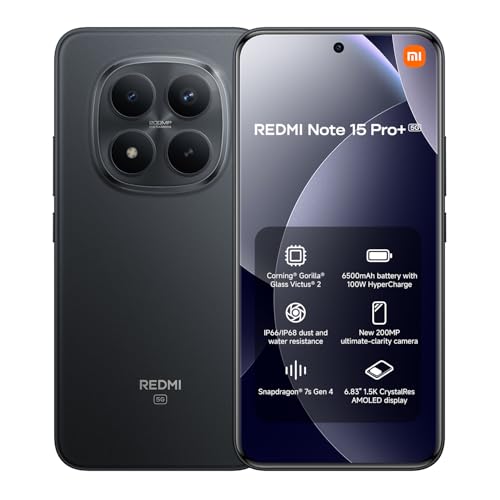
Xiaomi Redmi Note 15 Pro+ 5G (AU Version), 256GB
ASIN B0G3TTPVPS • $577.00 • Ships from Amazon AU
The Redmi Note 15 Pro+ leads because it had the best sales rank of any gated phone in this band on the day I checked. It sat at #3,049 across all of Amazon AU when I checked, and it's $577 from Amazon AU in the Australian version with 256GB of storage. For that money the listing reads like a phone from a higher price bracket: a 6.83-inch 1.5K AMOLED screen with up to 3,200 nits peak brightness, a 200MP main camera on a 1/1.4-inch sensor, and a Snapdragon 7s Gen 4 chip with Xiaomi's IceLoop cooling. It's the phone I'd suggest to most people who want one answer under $600. Xiaomi's AU-version phones are sold and supported locally, which matters for warranty, and the 256GB of storage means you won't be deleting photos to make room in year two.
The battery is the standout. Xiaomi lists a 6,500mAh silicon-carbon battery with 100W HyperCharge and 22.5W reverse charging, and claims it's designed to last up to six years. Silicon-carbon cells pack more capacity into the same space, which is how a phone this size gets a battery that big. Treat the six-year figure as the maker's claim, but even on a normal day you should get well into a second day of light use. The listing also states IP69K dust and water resistance, which is the highest rating in this guide. The 3,200 nit peak brightness figure also matters more than it sounds, because a bright screen is what keeps a map readable in full sun at the beach or in the car.
Two things to know. The title says plainly that no charger is included, so budget for a good USB-C charger if you want anything near the 100W speed. And parts for a newer Xiaomi can take a little longer to arrive than Samsung parts, so a case and screen protector are worth fitting on day one. RAM isn't stated on this listing, and neither is the update policy, so check both on Xiaomi's Australian site before you order. It's also a big phone at 6.83 inches, so if you have small hands or want something that disappears in a pocket, hold one in a store first. For most people, though, this is the phone to beat in the band.
Honest caveats: No charger in the box, and the 100W speed needs a compatible charger. RAM isn't stated on this listing. The six-year battery figure is Xiaomi's claim. Update policy isn't stated, so check Xiaomi's AU site. Screen parts may take longer to source than for Samsung.
Best for: Most people who want the biggest battery, a bright screen and strong water resistance for under $600.
Screen: 6.83-inch 1.5K AMOLED, up to 3,200 nits • Chip: Snapdragon 7s Gen 4 • Storage: 256GB • Main camera: 200MP, 1/1.4-inch sensor • Battery: 6,500mAh, 100W wired, 22.5W reverse • Water rating: IP69K • Charger: Not included • Price: $577 at time of writing • Rank: #3,049 overall on Amazon AU
View on Amazon AU
Samsung Galaxy A37 5G (AU Version), 128GB
ASIN B0GS5J22Y7 • $548.23 • Ships from Amazon AU
The Galaxy A37 is the lowest-priced phone here at $548 from Amazon AU, and it ranked #8,449 overall on Amazon AU when I checked. It's the Australian version with 128GB of storage, and it's the phone I'd point to if long-term ownership matters more than headline specs. Samsung's A-series is the most common mid-range Android phone we see, and that means parts are easy to get and most repairs are routine. That's a real advantage over four years, even if it never shows up on a spec sheet. Samsung also has a large service network across Australia, which helps if anything goes wrong under warranty.
The listing is light on numbers. It states a 6.7-inch Vision Booster display, a 50MP Nightography camera, IP68 water and dust resistance, long battery life and super fast charging, but it doesn't give the battery capacity, charging wattage or the processor name. That's typical for Samsung's Amazon listings, and Samsung's own Australian site has the full sheet if you want it. IP68 is the same rating Samsung uses on its flagships, so it'll cope with rain and an accidental drop in the sink. Vision Booster is Samsung's name for a screen mode that lifts brightness and contrast in direct sunlight, which is handy outdoors. The 50MP Nightography camera is aimed at low-light shots, though the listing doesn't list the other lenses.
Samsung has published long update commitments for recent A-series phones, so check the A37's exact policy on Samsung's AU site. If it matches the recent pattern, it's the safest bet here for software support. 128GB is enough for most people, but heavy photo and video users should check their current phone's storage first. It's also the phone I'd buy for a parent or teenager, because it's simple, widely supported and the case and screen protector range is huge. If the battery or screen goes at year three, it's the easiest phone in this guide to get repaired quickly, usually on the same day. That alone makes it the most sensible long-term choice here.
Honest caveats: Battery capacity, charging wattage and the chip aren't stated on the listing. 128GB storage, the smallest in this guide. Update years aren't on the listing, so confirm them with Samsung before buying. The camera is the most modest on paper of the five.
Best for: People who keep a phone for four years or more and want parts and repairs to stay easy.
Screen: 6.7-inch Vision Booster display • Storage: 128GB • Main camera: 50MP Nightography • Water rating: IP68 • Charging: Super fast charging (wattage not stated) • Battery: Capacity not stated on the listing • Version: AU version • Price: $548 at time of writing • Rank: #8,449 overall on Amazon AU
View on Amazon AU
Motorola Edge 70 5G, 256GB
ASIN B0GT8Q6NVN • $597.00 • Ships from Amazon AU
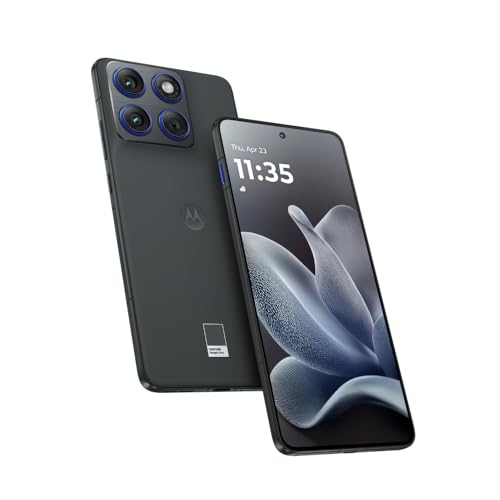
The Edge 70 is $597 from Amazon AU with 256GB of storage, and it ranked #16,291 overall on Amazon AU when I checked. Motorola's pitch is an impossibly thin design, three 50MP cameras and up to 38 hours of battery life, and that's nearly all the listing says. For a phone at this price the slim body is the selling point, and it'll suit people who find most modern phones too heavy and too thick in a jeans pocket. The 256GB of storage at this price is also generous, and Motorola's software has traditionally stayed fairly close to plain Android with a few useful gesture shortcuts added.
Because the listing is so thin, there's a lot I can't confirm from it: the screen size and type, the chip, the battery capacity, the charging speed and any water rating aren't stated. Check them on Motorola's Australian site before you buy, especially the water rating if you're near the beach or out in the weather a lot. Three 50MP cameras usually means a main, an ultra-wide and either a telephoto or a front camera, but the listing doesn't break that down either, so look at the spec sheet rather than assume. I'd also check reviews for real-world battery life, because 38 hours will be a light-use figure.
Thin phones trade a little toughness for the feel in the hand. A slimmer frame has less metal to resist bending, so a good case is sensible. Motorola parts are available in Australia, though not always as quickly as Samsung's. If you're tough on phones, the OPPO or the Redmi will handle a hard life better on paper. But if you mostly carry a phone in a pocket or bag, sit at a desk, and want something that doesn't feel like a brick, the Edge 70 is a nice thing to use every day, and 256GB means storage won't be the reason you replace it.
Honest caveats: The listing states very little: screen, chip, battery capacity, charging speed and water rating are all missing. The 38-hour battery figure is Motorola's claim. Update policy isn't stated. A thin frame is more vulnerable to bending, so use a case.
Best for: People who want a slim, light phone with 256GB and are happy to check the full specs on Motorola's site.
Design: Thin body (dimensions not stated) • Storage: 256GB • Cameras: Three 50MP • Battery life: Up to 38 hours (maker claim) • Screen: Not stated on the listing • Water rating: Not stated on the listing • Seller: Amazon AU • Price: $597 at time of writing • Rank: #16,291 overall on Amazon AU
View on Amazon AU
Nothing Phone (4a), 8GB RAM, 128GB
ASIN B0GMRLYTQT • $649.00 • Ships from Amazon AU
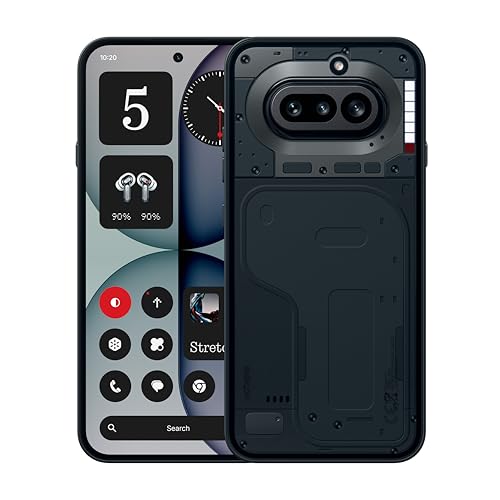
The Nothing Phone (4a) is $649 from Amazon AU in the 8GB RAM and 128GB version, and it ranked #6,191 overall on Amazon AU, the second-best rank in this guide. Nothing's phones have a following for their look, with a distinctive back design, and for software that stays close to plain Android without much extra clutter. If you've had a phone that slowed down under a pile of preinstalled apps, that cleaner approach is a big part of the appeal. Nothing is also one of the few makers that still puts real thought into how the phone looks, which some people care about more than they'd admit.
The listing is the shortest in this guide. It states 8GB of RAM, 128GB of storage, Wi-Fi 6 and a 6.77-inch 120Hz AMOLED screen, and that's it. The chip, cameras, battery capacity, charging speed and water rating aren't stated, so check them on Nothing's site before you buy. The 120Hz screen is a nice touch at this price, because scrolling and animations look noticeably smoother than on a 60Hz panel. There's also a 12GB and 256GB version at a higher price if you keep a lot of photos. The 8GB of RAM is fine for most people and keeps apps open in the background without reloading.
Nothing is a younger brand than the others here, so its parts network in Australia is smaller. Repairs are doable, but expect a short wait for some parts, and fit a screen protector early. The phone ranked well on Amazon AU, so plenty of people are buying it, and that usually means case and screen protector options are easy to find. It's a good choice for someone who wants a phone that works the way Google intended, without much extra software from the maker. Check the update policy on Nothing's site before you buy, since it isn't on the listing.
Honest caveats: The listing omits the chip, cameras, battery capacity, charging and water rating. 128GB on this version, with the bigger 12GB and 256GB model costing more. Nothing's AU parts supply is smaller than Samsung's, so repairs can take longer. Update policy isn't stated on the listing.
Best for: People who want clean, uncluttered Android and a smooth 120Hz screen, and like a phone that looks different.
Screen: 6.77-inch 120Hz AMOLED • RAM: 8GB • Storage: 128GB • Wi-Fi: Wi-Fi 6 • Battery: Capacity not stated on the listing • Water rating: Not stated on the listing • Seller: Amazon AU • Price: $649 at time of writing • Rank: #6,191 overall on Amazon AU
View on Amazon AU
OPPO Reno13 5G, 256GB
ASIN B0F1M8PH51 • $899.00 • Ships from Amazon AU
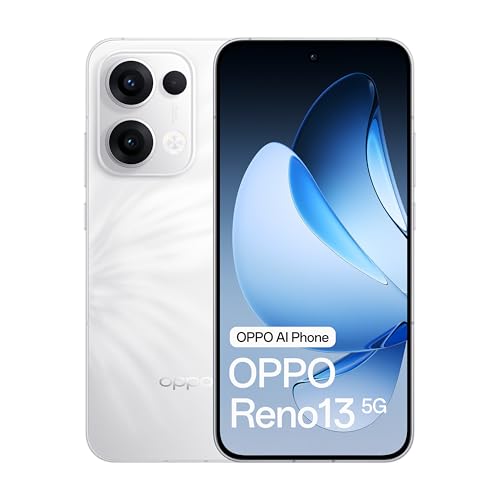
The Reno13 is the most expensive phone here at $899 from Amazon AU, with 256GB of storage, and it ranked #27,283 overall on Amazon AU when I checked. It's the pick for people who are hard on phones. OPPO's listing leans on durability: it says the phone passes IP69, IP68 and IP66 tests, and describes cushioning built into the frame along with toughened glass and metal to protect the parts inside from drops and knocks. If your last phone died from a drop onto concrete, or a fall into a sink, this is the one written for you. That's a niche, but a real one.
The rest of the listing is general. It mentions AI photo tools that can restore detail when you pull a still frame from a video, fast charging and a large battery, and OPPO claims the battery has a five-year lifespan. It doesn't give the screen size, the chip, the battery capacity or the charging wattage, so check those on OPPO's Australian site. The water ratings are the strongest point on paper, with IP69 covering high-pressure water jets on top of the IP68 immersion rating. The AI frame restore tool is a fun extra for anyone who shoots a lot of video of kids or pets and wants a usable still from it later.
At $899 it's close to the top of the band, so compare it against the Redmi, which also claims IP69K, has a bigger stated battery and costs $322 less. The Reno13 makes sense if you prefer OPPO's design or software, or if the toughness claims matter most to you. OPPO has a decent Australian presence and parts are generally available, though not as quickly as Samsung's. Even with the toughness claims, I'd still use a case, because cushioning inside the frame protects the internals but the glass can still crack on a bad landing. Check the update policy on OPPO's AU site, as it isn't on the listing.
Honest caveats: Screen size, chip, battery capacity and charging wattage aren't stated on the listing. The five-year battery lifespan is OPPO's claim. It's the highest price in this guide, and the Redmi matches its water rating for less. Update policy isn't on the listing.
Best for: People who are hard on their phones and want the strongest stated water and drop protection.
Water rating: IP69, IP68 and IP66 • Storage: 256GB • Drop protection: Cushioned frame, toughened glass (maker description) • Battery: Five-year lifespan (maker claim) • Charging: Fast charging (wattage not stated) • Screen: Not stated on the listing • Seller: Amazon AU • Price: $899 at time of writing • Rank: #27,283 overall on Amazon AU
View on Amazon AUSide-by-side comparison
| Product | Price | Best for |
|---|---|---|
| Samsung Galaxy A37 [AU Version] 5G A Series… | ~$548 | |
| Xiaomi Redmi Note 15 Pro+ 5G(AU Version) | ~$577 | |
| Motorola Edge 70 5G 256GB Gadget Grey | ~$597 | |
| Nothing Phone | ~$649 | |
| Oppo Reno13 5G 256 GB | ~$899 |
What we see fail in the workshop: mid-range Android phones
Mid-range phones fail in the same few ways flagships do, they just cost less to fix. These are the three faults that come in most often on Android phones in this price range, what usually causes each one, and how to tell whether yours is worth repairing before you start shopping for a new one. Most of them cost less to fix than people expect.
Cracked screens and dead touch
A cracked OLED screen is the most common repair on any phone. Sometimes the picture is fine and only the glass is broken, and sometimes there's a black blot or green line spreading from the crack, which means the display underneath is damaged. Either way the fix on these phones is a full display assembly, because the glass and display are bonded. Don't keep using a phone with a badly cracked screen for months, because moisture and dust get in through the crack and can damage the display connector and the board over time.
Charge ports full of lint
A phone that only charges at an angle, or charges slowly, often has a port packed with pocket lint. Every time you plug in, the cable pushes the lint tighter until the plug can't seat properly. A careful clean fixes most of these in minutes, and it's the first thing we check before replacing anything. If the port is loose or the pins are bent, the port needs replacing, and on many Android phones it sits on a small separate board, which keeps the job reasonable. Don't dig at it with a pin.
Batteries that swell or fade
After a few years of daily charging, batteries hold less and can start shutting the phone down at 20 or 30 percent. Heat speeds this up, and so does leaving a phone on charge on a hot dashboard. In some cases the battery swells, which pushes the screen or back glass out from the frame. If you see a gap opening up along the edge, stop charging it and bring it in, because a swollen lithium battery shouldn't be left to get worse. A new battery usually gives the phone years more life.
Decision tree: which one should you actually buy?
- Want one phone that does almost everything well for under $600? → The Xiaomi Redmi Note 15 Pro+ at $577, with a 6,500mAh battery and IP69K.
- Plan to keep it four years or more and want easy repairs? → The Samsung Galaxy A37 at $548, the AU version with easy-to-get parts.
- Want something slim and light with 256GB? → The Motorola Edge 70 at $597.
- Want clean Android and a 120Hz screen? → The Nothing Phone (4a) at $649.
- Hard on phones and want the toughest stated build? → The OPPO Reno13 at $899, rated IP69, IP68 and IP66.
- Current phone has a cracked screen, a tired battery or a fussy charge port? → Bring it into our Erina workshop and I'll tell you what the repair costs before you spend anything on a new phone.
Frequently asked questions
Is it worth paying more than $1,000 for a phone?
For most people, no. Phones between $500 and $1,000 handle messages, maps, banking, streaming and good photos without trouble. Flagships add better zoom cameras, faster chips and premium materials, which matter to some people, but they also cost much more to repair. A screen on a top flagship can cost more than an entire phone from this guide. If you don't need the best camera or play demanding games, a mid-range phone and the money left over is the better choice for most households.
Why does the AU version of a phone matter?
An AU version is built for the frequency bands Australian networks use, including the low bands that carry signal in regional and rural areas. It's set up to make Triple Zero emergency calls properly on Australian networks, and it comes with a local warranty. Imported versions can miss bands, and after the 3G shutdown some imported phones were blocked from Australian networks because they couldn't make emergency calls correctly. Warranty claims on imports can also mean sending the phone overseas.
How many years of updates do these phones get?
None of the five Amazon AU listings state an update policy. Samsung has published long update commitments for its recent A-series phones, and other makers including Motorola, Nothing, OPPO and Xiaomi have improved their policies, though they vary by model. Check the exact model's policy on the maker's Australian website before you buy. Update support matters because once security updates stop, banking apps and some work apps may stop running, which can force a replacement even when the hardware still works.
Do these phones come with a charger?
Most phones now ship without a charger, and the Redmi Note 15 Pro+ listing says plainly that one isn't included. To get close to the fast charging speeds the makers quote, you need a compatible USB-C charger, and some brands only reach full speed with their own charger. Buy a charger from a known brand rather than the lowest-priced option, because a poorly made charger can damage a phone's charging circuit and port over time. A good charger is a small cost next to a charge port repair.
Is an IP68 phone waterproof?
Not completely. IP68 means the phone resisted dust and immersion in fresh water under test conditions set by the maker, usually a stated depth and time. Salt water, chlorine, hot water and soapy water are harder on the seals than the test water, and seals age with heat and time. After a screen or battery repair the original seal has been replaced, so a repaired phone is unlikely to match the factory rating. Treat a water rating as protection against accidents, not permission to swim with the phone.
Should I repair my old phone or buy a new one?
If the phone is under about four years old, still gets security updates and the fault is a screen, battery or charge port, a repair usually makes sense, and it often costs a fraction of a new phone. If the phone no longer gets updates, or the board itself has failed and the repair would cost close to a new mid-range phone, replacing it is usually the better call. A quick diagnosis tells you which side of that line your phone is on before you spend anything.
Related buying guides
Cracked screen or dying battery? Fix it before you replace it
Most phones that come in with a cracked screen, a battery that won't last the day or a port that only charges at an angle are worth fixing, and the repair usually costs far less than a new phone. Bring it to Erina and I'll tell you what's wrong and what it costs before you spend anything.
Visit our Erina workshop Book Online