Prices from Amazon AU, updated daily. Swipe or use the arrows for more.
Disclosure: This article contains affiliate links to amazon.com.au. If you buy through one of these links iFix may earn a small commission at no extra cost to you. It doesn't change which products we recommend. We focus on what actually lasts based on 16 years of repair-shop experience.
Quick summary8 picks
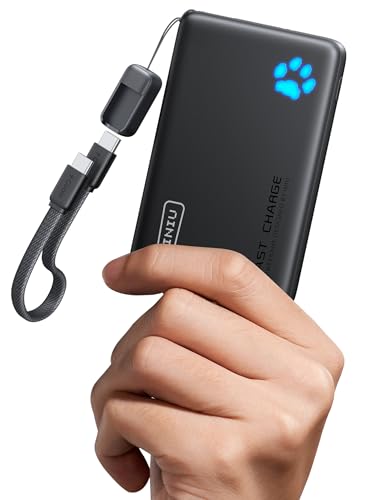
- Entry PickINIU 45W Fast Charging Power Bank about$33.9910000mAh, 45W.
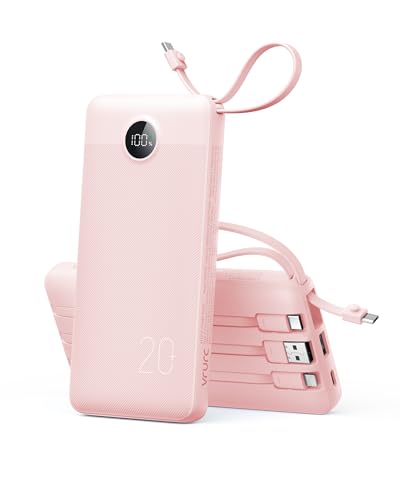
- 20000mAh Power Bank with Built in Cables about$40.99
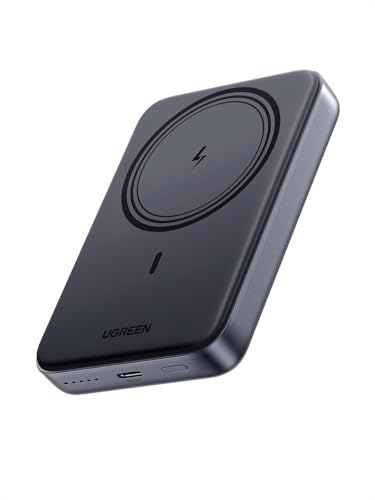
- UGREEN Magsafe Power Bank 10000mAh Portable… about$49.9910000mAh, 20W.
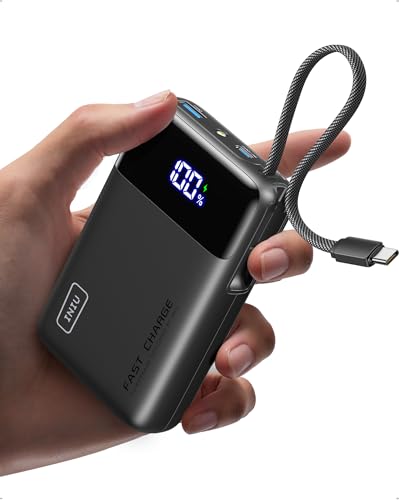
- INIU 20000mAh Power Bank about$48.4420000mAh, 45W.
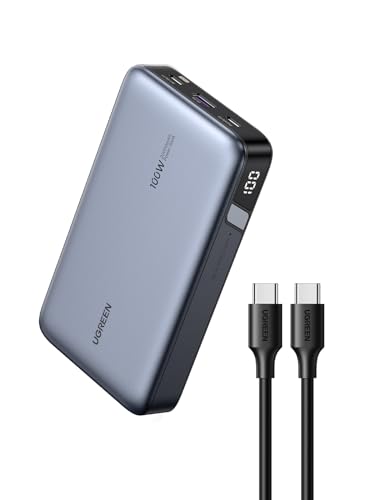
- UGREEN 100W Power Bank 20000mAh USB C… about$69.9620000mAh, 100W.
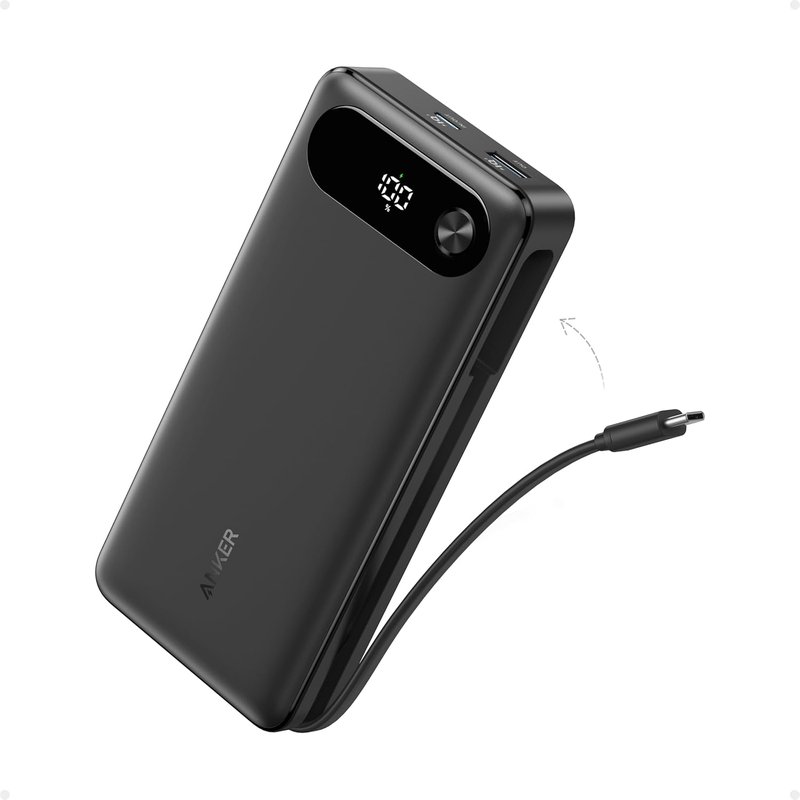
- Anker Power Bank about$79.9920000mAh, 87W.
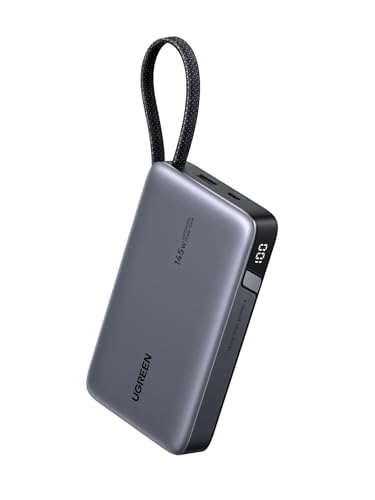
- UGREEN 145W Power Bank 20000mAh with… about$79.9920000mAh, 145W.
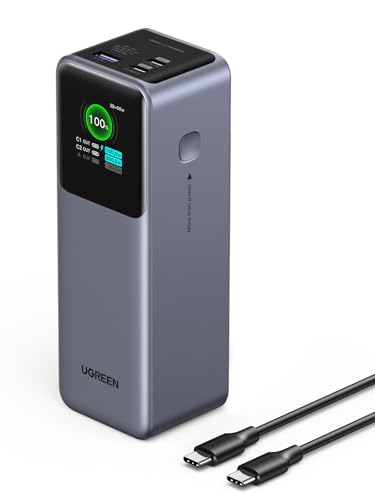
- Most PremiumUGREEN Nexode 200W Power Bank 25000mAh about$129.9925000mAh, 200W.
The number on the box is not the number you get
Every power bank on this page says 20,000mAh on the shell. None of them will put 20,000mAh into your phone. That is not a scam, it is arithmetic, but the marketing leans on you not doing the arithmetic. The mAh rating is measured at the lithium cell voltage of 3.7V, so a 20,000mAh pack stores about 74 watt-hours of energy. Your phone wants that energy at 5V or 9V, the boost converter that lifts the voltage burns some of it as heat, the cable takes a cut, and your phone's own charging circuit takes another. In practice you keep somewhere around 60 to 70 per cent of the label. Call it 45 to 50Wh actually delivered into your devices.
Run the numbers on a real phone and the picture sharpens. A current flagship carries roughly a 5,000mAh battery, which holds about 19Wh. A healthy 20,000mAh bank therefore fills it two and a half to three times. Not four. If a listing promises four full flagship charges from 20,000mAh, somebody skipped physics class, and I would treat every other claim on that listing with the same suspicion.
The honest unit of measurement is the watt-hour, and it is printed on the regulatory label of every legitimate pack because airlines require it. Flip the unit over before you buy, or check the listing photos for the label. A 20,000mAh bank should read about 74Wh. If the label is missing, unreadable, or disagrees wildly with the headline capacity, the headline is the lie. Amazon's own listing photos usually include the label shot for exactly this reason, and the four picks below all show one.
Cell quality decides whether it lasts two years or six months
Inside the shell there are either decent lithium cells behind a proper protection board, or somebody's factory seconds behind a hopeful one. You cannot see which from the outside and the sticker will not tell you. Weight will. Energy density has hard limits, so a true 20,000mAh pack needs real material: INIU's listing states its unit weighs about 326 grams, and that kind of specificity is a good sign. A suspiciously light 20,000mAh bank is a smaller battery wearing a bigger number, and we have opened enough of them to say the ratio of shell to cell in the worst units is genuinely impressive.
The second tell is the seller. Every pick below ships from an Australian storefront (INIU AU, UGREEN, AnkerDirect AU, or Amazon AU itself), which means Australian Consumer Law applies and a warranty claim has somewhere to land. Grey imports give you neither. The counterfeit packs we see follow the same script as the counterfeit wall bricks in our bad chargers explainer: the shell is a faithful copy, the internals are whatever was least expensive that week, and the protection circuitry is the first corner cut. A battery with no working protection board is not an accessory, it is a hazard that happens to charge phones. If the price gap between an AU storefront and a grey import is under twenty dollars, the import is not a saving, it is an unpriced risk.
PD wattage honesty: what the watt number buys you
The headline wattage is a ceiling, not a promise. As a rough map: 20 to 30W fills any phone at close to its maximum accepted rate. 65W runs a MacBook Air or most work ultrabooks properly. 100W covers nearly every USB-C laptop short of a gaming machine. Beyond that you are paying for output your devices cannot draw, which is the most common way people overspend in this category. The four picks below span that range deliberately, from 45W to 145W, so the guide covers a phone-only pocket unit and a two-device workhorse without overlap.
The catch is sharing, because the big number is usually a combined budget. UGREEN's 145W unit means 100W on the built-in cable and 45W on the second USB-C port at the same time. Anker's 87W splits across three devices with any single device capped at 65W. Plug a second device into almost any bank and the first one renegotiates downward, sometimes with a brief disconnect while the ports re-deal the power between them. If you plan to charge a laptop and a phone together, read the split table on the listing, not the headline figure.
The same arithmetic applies to handheld consoles, which mostly charge at up to 45W and are fussier than phones about the protocols they accept; the units in our gaming handheld guide all sit happily on a 65W-class bank. Match the bank to the hungriest device you actually own, add a margin for sharing, and stop there.
Flight rules: where 20,000mAh sits against 100Wh
Power banks fly in carry-on baggage only, never checked. The reasoning is blunt: a lithium fire in the cabin gets noticed and dealt with, one in the hold does not. The thresholds CASA and the airlines work to are written in watt-hours. Under 100Wh, no approval needed. From 100Wh to 160Wh, airline approval required and usually a two-unit cap. Over 160Wh, it stays home. The rules are the same across Qantas, Jetstar, Virgin and Rex, because they all inherit them from the same dangerous goods framework.
The three 20,000mAh picks here sit near 74Wh, comfortably under the line, and the 25,000mAh UGREEN 200W is stated at 90Wh, still under it but the closest pick to it. The class that catches people out is 27,000mAh, which lands within a rounding error of 100Wh, and the no-label specials, which security screening can refuse outright because the capacity cannot be verified. Keep the regulatory label readable. If yours has worn smooth against a year of pocket grit, replace the bank before a trip rather than argue the point at the gate, because the gate always wins. Airline staff do not measure anything at the gate; they read labels. A clear 74Wh print settles the conversation before it starts.
Built-in cables help right up until they fail
Three of the four picks build the USB-C cable into the shell: a braided built-in cable on the INIU, a carry strap on the UGREEN, a short captive lead on the Anker. It solves the actual failure of most power bank outings, which is arriving with the bank and without a cable. Anker rates its captive cable for more than 10,000 bends, and it needs to be that tough, because a built-in cable shares the lifespan of the whole unit.
That is the trade to think about before you buy. When a plug-in cable frays, you bin the cable and spend $15. When a built-in cable frays, you are holding a $120 unit with a $15 fault, and on these sealed shells the cable is not a user-replaceable part. None of the listings state a replacement procedure for the captive lead. So treat it as the primary wear item it is: pull on the plug body rather than the cord, do not wind it tight around the shell, and use the ordinary ports for the daily desk routine so the captive cable keeps its bends for travel. A $15 braided lead in the bag is the insurance policy either way.
Recharge speed is the spec nobody reads
Refilling 74Wh through an old 10W phone charger takes most of a day once charging losses and the taper at the top of the cycle are counted. This is how a big bank quietly becomes a flat bank: it takes so long to refill that it never gets refilled, and the day you need it, it has been sitting at 15 per cent since the last trip. Input wattage is the spec that decides whether the thing is actually charged when you pick it up, and it is buried at the bottom of every listing. The listings all quote recharge times with a specific wall charger attached, so compare like with like.
The picks here spread widely on it. UGREEN's 145W unit accepts up to 80W through its own cable and quotes about 1.5 hours to full with an 80W-class PD charger, which is fast enough to refill over a lunch break. The Anker refills at PD rates through its built-in USB-C cable. The INIU and the UGREEN 200W do not state an input rate, so treat both refill times as unknown, and accept that as the trade for the INIU at its price and size. Whatever you buy, feed it from a wall charger that can keep up, ideally the same GaN brick that already runs your laptop, and plug the bank in the moment you get home rather than the night before you fly. The habit costs nothing and it is the one that decides whether the bank is useful at all.
Habits that double the life of the pack
Battery packs age on three axes: charge cycles, heat, and time spent parked at the extremes of charge. You control two of them. Keep the bank out of the car in summer, because cabin temperatures on the Central Coast clear 60 degrees behind glass and lithium chemistry ages roughly twice as fast for every 10 degrees you add. And stop storing it at 100 per cent: if the bank is about to sit idle for a month, leave it near half charged instead. Neither habit costs anything. Together they are the difference between a pack that fades gracefully across four years and one that is a paperweight at eighteen months.
Charge etiquette matters at the connector too. Pull the plug body, never the cord. Do not leave the bank charging face-down on carpet or under a pillow, because the modest heat it makes during an 80W refill needs somewhere to go. Give it one full discharge and one unbroken recharge every couple of months to keep the gauge calibrated, so the number it reports keeps meaning something. None of this is exotic. It is the same maintenance logic iFix pushes for phone batteries, and it works for the same reason: lithium cells do not fail randomly, they fail on schedule, and the schedule is set by how you treat them.
Storage location is the last habit. A drawer in the house beats the glovebox, the glovebox beats the boot, and anywhere beats a sunny windowsill. If a bank comes back from a beach day hot to the touch, let it cool before you charge it, because charging a hot lithium cell is the fastest way to shorten its life. The pack does not mind being used hard. It minds being charged hot, stored full and wrenched at the connector, and every one of those is a choice.
How I picked these four
The gate was blunt. Condition new, sold by an Australian storefront on Amazon AU, priced between $40 and $250, no import versions, no overseas sellers hiding behind local-sounding names. Then I sorted the survivors by Amazon AU sales rank, because a pack that sells in volume gets its failures found fast and its listing corrected or buried. The INIU sits at #58 site-wide on Amazon AU as I write this, which for a $43 battery is a strong position and not one a bad product holds for long. Rank is not a quality metric by itself, but survival at high rank is: a pack with a fire problem or a gauge problem does not hold a top-20 position through twelve months of buyer reviews.
Specs below come from the listings and nowhere else. Where a listing goes quiet on a number, the review says so instead of guessing, because a spec invented by a reviewer is worth less than no spec at all. And since every battery pack eventually becomes a repair question, the rule I apply on the computer repair bench applies here too: buy the unit whose failure mode you can live with, from a seller who has to answer the phone when it happens. If one of these ever misbehaves near the Central Coast, the bench in Erina will give it an honest verdict in minutes.
The 4 picks, $43 to $120
Prices are Amazon AU at time of writing (22 August 2026) and move week to week. Ranks are Amazon AU site-wide sales ranks, checked the same day.

INIU 20,000mAh 45W Power Bank with Built-in Cable
ASIN B0DCYRXNFN • $42.72 • Sold by INIU AU on Amazon AU
At $42.72 from INIU's Australian storefront, this is the pick for people whose heaviest device is a phone. The listing quotes 45W output and puts a number on it: an iPhone 17 Pro from 20 to 76 per cent in half an hour. In the 20,000mAh class this is also one of the smaller shells sold here, and INIU is refreshingly direct about what that costs. The listing states the unit weighs 11.5 ounces, about 326 grams, and compares it to a 330ml can of cola. Most brands hide the weight. This one prints it. There is also a small flashlight in the shell, which sounds like a gimmick until the next blackout proves otherwise.
The USB-C cable is built into the shell as a braided lead the listing rates for more than 10,000 bends, so the cable you forgot to pack is already attached. INIU quotes about four full phone charges or two tablet charges from a full pack, and it will run three devices at once. At roughly 74Wh the capacity sits under the 100Wh carry-on threshold with room to spare, and the listing calls it TSA-compliant, so it flies without paperwork. INIU backs it with a 3-year warranty through the AU storefront, the longest coverage of the four picks. Recharging the bank itself runs through USB-C, though the listing does not state the input rate.
It ranks #58 site-wide on Amazon AU as I write this, a strong position for a battery pack, and volume like that means faults get found and fixed fast. The limits are honest ones. 45W will charge a phone or a tablet properly but it is not a laptop supply, a numeric charge display is not stated on the listing, and the built-in cable is USB-C only, so older USB-A-to-Lightning leads need a spare port. As a phone-and-earbuds companion at $42.72 it is the unit I would hand a teenager or a traveller without a second thought. For laptop duty, step up to the UGREEN below.
Honest caveats: 45W is the ceiling, so a power-hungry laptop is off the menu. The listing does not state a numeric charge display, an input rate, or a recharge time for the bank itself. The built-in cable is convenient but shares the unit's lifespan: if it frays, no user-replaceable option is stated.
Best for: Phone-first users who want the smallest honest 20,000mAh at the lowest price here.
Capacity: 20,000mAh (about 74Wh) • Max output: 45W • Cable: Built-in braided USB-C, rated 10,000+ bends • Devices: Up to 3 at once • Extras: Flashlight • Weight: 11.5oz, about 326g (listing) • Warranty: 3 years (listing) • Seller: INIU AU storefront on Amazon AU • Price: $42.72 at time of writing • Rank: #58 site-wide (Amazon AU)
View on Amazon AU
UGREEN 145W 20,000mAh Power Bank with Built-in USB-C Cable
ASIN B0DSPVP337 • $69.96 • Sold by UGREEN GROUP LIMITED AU on Amazon AU
This is the one I would carry for a laptop-and-phone working day. The built-in USB-C cable delivers up to 100W on its own, which runs a MacBook Pro or any USB-C ultrabook at full rate, while a second USB-C port adds up to 45W and a USB-A port covers the small stuff. The 145W figure is the combined budget across the three outputs, and the listing states the split rather than hiding it, which is exactly the honesty this guide keeps asking for. Capacity is the standard 20,000mAh, about 74Wh, so it stays inside carry-on rules, and at $69.96 from UGREEN's AU storefront it undercuts both dearer picks below while out-powering the Anker.
The same captive cable turns around and refills the bank at up to 80W, and UGREEN quotes roughly 1.5 hours to full from an 80W-class PD charger. That single spec changes how the unit gets used, because a bank that refills over a lunch break is a bank that is actually charged when you walk out the door. The cable is built to double as a carry strap, the listing claims a full Galaxy S25 Ultra three times over from one charge, and the whole thing refills from the same GaN wall charger that already runs your laptop. For anyone tired of triaging which device gets the wall socket on a work trip, this is the fix.
Site-wide it ranks #473 on Amazon AU, a solid position in a 145W class that barely existed two years ago. What you give up against the Anker below is the published cable bend rating and brand service history, and against the UGREEN 200W below the live voltage and power readout its listing describes, since this listing does not state a display. What you gain is strong output and the fastest stated recharge on this page for $69.96, ten dollars under the Anker. On capability per dollar it is the strongest pick in the guide. For most people reading this, it is the default answer.
Honest caveats: 145W is the combined ceiling: load all three outputs and per-port rates drop, with the full 100W only available on the built-in cable. No numeric charge display is stated on the listing. The captive cable doubles as the carry handle, so it takes mechanical load every day; treat it gently.
Best for: Laptop commuters who want strong output and a fast stated recharge for the money.
Capacity: 20,000mAh (about 74Wh) • Max output: 145W combined; 100W via built-in cable • Other ports: USB-C up to 45W, plus USB-A • Recharge: Up to 80W in; about 1.5h with 80W+ PD charger (listing) • Built-in cable: USB-C, doubles as carry strap • Seller: UGREEN AU storefront on Amazon AU • Price: $69.96 at time of writing • Rank: #473 site-wide (Amazon AU)
View on Amazon AU
UGREEN Nexode 200W 25,000mAh Laptop Power Bank
ASIN B0CXHM5RY2 • $119.96 • Sold by UGREEN GROUP LIMITED AU on Amazon AU
This is the pick for a laptop that will not be satisfied by 65W. The listing states 200W total output over PD 3.1 with dual 100W outputs, so two laptops can charge from it at once, and it claims a 16-inch MacBook Pro reaches 56 per cent in 30 minutes. Capacity is 25,000mAh, which the listing states as 90Wh and describes as airline-approved for carry-on, so it stays under the 100Wh line while holding a quarter more than the 20,000mAh picks. The listing says it fully charges a 16-inch MacBook Pro up to 1.3 times and an iPhone 15 up to 5.2 times.
The display is the part I would have asked for. A smart TFT screen shows real-time voltage, current and power in and out, which tells you far more than a four-dot gauge and makes it obvious when a cable or a port is the bottleneck. Protocol support is wide: PD, PPS, QC, AFC, FCP, SCP and 60W Galaxy Super Fast Charging 3.0 are all listed, and the listing names 140W charging for a MacBook Pro. It also claims the pack keeps above 80 per cent of its capacity after 1,000 charge-discharge cycles and describes real-time temperature detection and heat dissipation, which I read as design intent rather than a test result.
It ranks #235 site-wide on Amazon AU, sold by UGREEN GROUP LIMITED AU, the same storefront as the 145W pick, at $119.96. That is the dearest unit in this guide. What the money buys over the UGREEN 145W is 5,000mAh more, a 200W ceiling instead of 145W, and a screen that reports what the bank is doing. If one laptop and a phone is your day, the 145W does that for less. If two laptops share a bag, this is the one that keeps up.
Honest caveats: The listing states it is incompatible with charging Lenovo Legion series laptops, so check your model first. 200W is the maximum total output, and the listing does not state how it divides across the three ports when all are in use, or the bank's own recharge rate. At a stated 90Wh it sits close to the 100Wh carry-on line, so keep the regulatory label readable.
Best for: <strong>Best for:</strong> Anyone charging two laptops, or a laptop and phones, from one bag who wants a live power readout.
Capacity: 25,000mAh (stated 90Wh) • Max output: 200W total; dual 100W outputs (PD 3.1) • Ports: 3 • Display: Smart TFT, voltage, current and power in and out • Protocols: PD, PPS, QC, AFC, FCP, SCP, 60W Galaxy Super Fast Charging 3.0 • Cycle life: Above 80% after 1,000 cycles (listing) • Seller: UGREEN GROUP LIMITED AU on Amazon AU • Price: $119.96 at time of writing • Rank: #235 site-wide (Amazon AU)
View on Amazon AU
Anker 87W 20,000mAh Power Bank with Built-in USB-C Cable
ASIN B0CXDXP8VR • $79.99 • Sold by AnkerDirect AU on Amazon AU
Anker's 87W unit is the durable pick because of one number nobody else here publishes: the built-in USB-C cable is rated for more than 10,000 bends. Captive cables are the number-one wear point on modern power banks, and Anker is the only brand on this page that puts a durability figure against that risk in writing. Output is 87W shared across three devices, with any single device drawing up to 65W, so a MacBook Air, a phone and earbuds all move at once. The listing quotes an iPhone 17 Pro to 58 per cent or a MacBook Air to 52 per cent in 30 minutes through the captive cable, which is quick enough that the bank stops being the bottleneck.
The 20,000mAh pack lands at the usual 74Wh, inside carry-on limits, and the same cable recharges the bank itself, one lead working both directions. AnkerDirect AU handles the sale with an 18-month warranty behind it. Anker is the brand I name when someone asks for the boring, durable option in charging hardware, and this unit holds the pattern: nothing exotic, every claim on the listing specific and checkable, and a shell built for the life a power bank actually lives, dropped into bags, crushed under laptops, cable yanked at the plug a dozen times a day. If the UGREEN 145W is the spec-sheet win, this is the one engineered for entropy.
At $79.99 it costs $10 more than the UGREEN 145W and does not carry the biggest number, since the UGREEN beats it on paper for less. It ranks #384 site-wide on Amazon AU. What the extra money buys is the published bend rating, a 65W single-device feed through a cable that should outlive the cells around it, and Anker's service network for when something eventually goes wrong. Buy it if your last bank died at the cable, because this one was designed by people who knew that is how they die.
Honest caveats: 87W is the combined figure and a single device tops out at 65W, so a 100W-class laptop will not feed at full rate. The 18-month warranty is shorter than INIU's 3 years. No numeric percentage display is stated on the listing.
Best for: Anyone who has already killed a power bank through its cable and wants the durable one.
Capacity: 20,000mAh (about 74Wh) • Max output: 87W across three devices; 65W max per device • Built-in cable: USB-C, rated 10,000+ bends (listing) • Charging claim: iPhone 17 Pro to 58% in 30 min (listing) • Warranty: 18 months • Seller: AnkerDirect AU on Amazon AU • Price: $79.99 at time of writing • Rank: #384 site-wide (Amazon AU)
View on Amazon AUSide-by-side comparison
| Product | Price | Best for |
|---|---|---|
| INIU 45W Fast Charging Power Bank | ~$33.99 | Phones on a tight budget |
| 20000mAh Power Bank with Built in Cables | ~$40.99 | A budget 20,000mAh with built-in cables |
| UGREEN Magsafe Power Bank 10000mAh Portable… | ~$49.99 | iPhone users who want a magnetic 10,000mAh bank |
| INIU 20000mAh Power Bank | ~$48.44 | Phone-first users who want the smallest honest 20,000mAh |
| UGREEN 100W Power Bank 20000mAh USB C… | ~$69.96 | A 100W 20,000mAh bank for a USB-C laptop |
| Anker Power Bank | ~$79.99 | Anyone who has killed a power bank through its cable |
| UGREEN 145W Power Bank 20000mAh with… | ~$79.99 | Laptop commuters who want strong output and a fast stated recharge |
| UGREEN Nexode 200W Power Bank 25000mAh | ~$129.99 | Two laptops, or a laptop and phones, from one bag |
What we see fail at the bench: power banks
Power banks reach the bench for three reasons, and none of them is the cells wearing out on schedule. Li-ion loses a little capacity every cycle, and that steady fade is normal ageing: two to three years of daily use before it annoys you. The units that arrive early all share the same short list of faults, and every one of them is either avoidable or detectable before it strands you somewhere inconvenient.
The USB-C port goes first
The most common fault is mechanical, not electrical. The USB-C socket is soldered straight to the board, every insertion levers against those joints, and a power bank lives loose in a bag where a plugged-in cable gets snagged and wrenched sideways. First it charges only when the cable sits at the right angle. Then not at all. On phones iFix reflows or replaces the port at board level; on a sealed power bank the labour can exceed the unit's price, which is exactly why captive-cable designs exist and why their strain relief matters. Buy the unit whose port you will treat gently, or whose cable is rated for the abuse.
Swollen packs
A swollen lithium pack is not resting, it is off-gassing inside its pouch. The shell bulges, seams lift, and on units with screens the display pushes out first. Stop using it, stop charging it, and keep it out of household rubbish, because bin-truck battery fires are a real and growing problem in NSW. Supermarket battery bins and council transfer stations take them for proper recycling. Swelling is driven by heat, deep discharge and cell quality: keep the bank off the dashboard and out of hot cars, and buy from sellers who are answerable under Australian Consumer Law when a cell lets go early.
The gauge that lies
Low-grade packs drift out of calibration until 100 per cent means 60. The gauge estimates charge from voltage and current flow, and a poor board estimates badly, especially after months of shallow top-ups. If your bank claims full then dies a third of the way into a phone charge, run it flat, charge it unbroken to full, and repeat the cycle once. If the gauge still lies after that, the cells or the board are finished. The four picks here come from brands whose gauges rarely generate complaints in the workshop, which is part of why brand matters in a category with no visible internals.
Decision tree: which one should you actually buy?
- Phone and earbuds only, smallest shell and lowest spend? → The INIU at $42.72. 45W covers any phone at full rate, and the built-in cable means the lead is always attached.
- One bank to run a laptop and a phone all day? → The UGREEN 145W at $69.96: 100W through the built-in cable, 45W beside it, and an 80W recharge that refills it over lunch.
- Charging two laptops from one bag? → The UGREEN 200W at $119.96. Dual 100W outputs, a stated 90Wh that still clears the carry-on line, and a TFT readout of voltage, current and power.
- Killed your last bank through the cable? → The Anker at $79.99. Its captive cable is rated for 10,000+ bends and AnkerDirect AU backs the sale with an 18-month warranty.
- Flying with it? → Any of the four: they all sit near 74Wh, under the 100Wh carry-on threshold. Cabin baggage only, label readable.
- Bank charges only at odd cable angles, or the case has started to bulge? → Stop charging it and bring it past our Erina workshop: we will tell you in minutes whether it is a port fault worth fixing or a pack that needs safe disposal.
Frequently asked questions
Can I take a 20,000mAh power bank on a plane in Australia?
Yes, in carry-on baggage only, never in checked luggage. The rules are written in watt-hours: under 100Wh needs no approval, 100 to 160Wh needs airline approval and is usually capped at two units, and over 160Wh does not fly at all. A 20,000mAh bank at the standard 3.7V cell voltage stores about 74Wh, comfortably under the line, and all four picks in this guide clear it. Two practical notes: keep the capacity label readable, because security can refuse a bank they cannot verify, and do not put the bank in a bag you might end up gate-checking at the last minute.
Why does my 20,000mAh power bank only charge my phone two or three times?
Because the rating is measured at the cell voltage of 3.7V, not at the 5V or 9V your phone actually charges at. Converting the voltage upward burns energy as heat, the cable loses a little more, and your phone's own charging circuit is not perfectly efficient either. A 20,000mAh pack stores about 74Wh; a modern flagship battery holds about 19Wh; after real-world losses you land at two and a half to three full charges. That is normal and every honest bank behaves this way. If yours delivers much less than that when new, or the count drops sharply within months, the cells are below grade.
Can a power bank actually charge a laptop?
Yes, if both ends cooperate. The laptop needs to charge over USB-C Power Delivery, which almost every modern ultrabook and MacBook does, and the bank needs to supply enough wattage, which in practice means 65W or more for comfortable charging while the machine is in use. The UGREEN 145W and Anker picks in this guide push 100W and 65W respectively through their built-in cables, and the UGREEN 200W lists dual 100W outputs. Gaming laptops are the exception: their barrel-jack power bricks run far past what USB-C banks deliver, so a bank will slow the drain at best.
Why has my power bank got worse after a year?
Three causes stack up. Lithium cells lose capacity with every charge cycle, which is unavoidable chemistry, and heat accelerates it, so a bank that lives in a hot car ages at double speed. Second, the charge gauge drifts out of calibration after months of shallow top-ups, so the number it shows becomes fiction even when the cells are fine. Third, the USB-C port wears mechanically and starts dropping the connection. You can fix the gauge with a full discharge and unbroken recharge, and you can avoid the heat. The cycle wear you simply budget for: a hard-used bank is a consumable on a two-to-three-year clock.
My power bank is swollen. What should I do with it?
Stop using it and stop charging it immediately. A swollen pouch cell is off-gassing, the pressure you can see is the warning, and continuing to cycle it is how bag fires start. Do not put it in household rubbish or the recycling bin, because compaction trucks provide exactly the crushing a damaged lithium cell does not need. Australian supermarkets and council waste facilities host battery recycling drop-offs that take power banks. Store it somewhere cool and non-flammable until you drop it off, a ceramic bowl on a concrete floor beats a kitchen drawer, and if it is hot to the touch, get it outside first.
Should I keep my power bank plugged in all the time?
No. Lithium cells held at 100 per cent charge age faster than cells stored partly charged, and the trickle of heat from constant charging compounds it. The practical routine: charge the bank after you use it, then unplug and store it somewhere cool. If it will sit unused for months, leave it around half charged and top it up every couple of months, because every pack self-discharges slowly and a lithium battery left flat for a long stretch can drop below the voltage where its protection board will allow recharging at all. That is how perfectly good banks die in drawers.
Related buying guides
Dead power bank, or just a worn port?
Half the dead banks and phones that reach iFix turn out to be a worn USB-C port, not a dead battery. I do board-level port replacement and straight answers on whether a battery is worth saving, backed by 16 years of board-level work. Walk it in to the Erina workshop and get the real diagnosis before you pay for a replacement you might not need.
Visit our Erina workshop Book Online