Prices from Amazon AU, updated daily. Swipe or use the arrows for more.
Disclosure: This article contains affiliate links to amazon.com.au. If you buy through one of these links iFix may earn a small commission at no extra cost to you. It doesn't change which products we recommend. We focus on what actually lasts based on 16 years of repair-shop experience.
Quick summary5 picks
- Entry PickCuisinart Venture™ Portable Gas Grill about$228.99
- BeefEater Bugg 2 Burner Gas BBQ about$299
- Weber Baby Q Premium Gas BBQ Q1200N about$399
- Most PremiumWeber Q+ Premium Gas BBQ about$619
- Premium QWeber Q Premium Gas BBQ about$549
What counts as a portable gas BBQ
A portable gas barbecue is a lidded grill small enough to lift into a car boot, running on LPG from a bottle. That covers the Weber Q range, which most Australians picture straight away, and smaller camping grills like the Cuisinart Venture. They're made for balconies, small courtyards, caravan trips, the beach and the backyard of a unit. They're not a replacement for a big four-burner hooded barbecue, and they're not trying to be.
The appeal is mostly the lid and the cast iron. A lidded grill holds heat like a small oven, so you can roast a chicken or a leg of lamb on a camping trip, not just sausages. Cast iron grills hold their heat when you drop cold meat on them, so you get proper sear marks rather than grey meat. Weber has sold that idea for years, and the third generation Q models on Amazon AU now are refined versions of it.
The five picks here are three Weber Q models in different sizes and trims, a two-burner BeefEater, and a Cuisinart portable grill for people who want something lighter. The Webers are sold by Weber BBQ Australia's own Amazon storefront, and the BeefEater and the Cuisinart are sold by Amazon AU, so a warranty claim stays local. That matters with gas appliances more than most, because you want parts and fittings made for Australian LPG and regulators, not something an overseas seller has sent over.
Weber Q sizes: Baby Q, Q and the Premium versions
Weber's naming gets confusing quickly, so here's the short version. The Baby Q is the smaller size and the Q is the bigger one. The Q1000N and Q2000N are the standard versions of each size. The Q1200N and Q2200N are the Premium versions, which add a lid thermometer and electronic ignition,. The Q2800N+ is a Premium Q with an additional + burner, according to its listing. The N on the end marks the latest third generation, which is what you want if you're buying new.
On Weber's listings, the Baby Q Q1000N can grill up to nine burgers at once and the Q2800N+ up to twelve. That's the easiest way to think about size. For two people, or a couple with a small kid, the Baby Q is plenty. For a family of four or five, or if you have people over often, the bigger Q is the one you won't outgrow. Most people who come back disappointed bought the Baby Q for a family and spent every barbecue cooking in shifts.
Weight goes up with size. On the listing figures, the Q1000N is about 10kg. The other Q listings don't give a usable weight, so I haven't quoted one, but expect the bigger Q to weigh more than the Baby Q. The Baby Q models are a one-person lift into a car boot, and the bigger Q starts to feel heavy if you're carrying it from the car park to the beach.
Gas bottles, hoses and regulators
Every barbecue here runs on LPG, which in Australia mostly means a 9kg swap-and-go bottle or a refillable cylinder. Portable models can also run from smaller cylinders with the right fitting. The listings don't say exactly what hose, regulator or adaptor comes in each box, so check the current product page before you buy, and make sure you know if you're getting a fitting for a 9kg bottle or for small disposable canisters. Getting that wrong means a second trip to the hardware store.
The hose and regulator are the parts I'd watch most closely. Rubber hoses perish in the sun, especially when the barbecue lives outside, and a cracked hose near the regulator is one of the most common faults people find when they finally do a leak test. Check it before the first cook of every summer. Mix dish soap with water, brush it over every join with the bottle valve open and the burners off, and look for bubbles. Bubbles mean a leak, so turn the bottle off and don't light it.
Gas cylinders in Australia carry a test date stamped on the collar, and refill stations usually won't fill a cylinder that's past its ten-year test. Check yours before a camping trip, not at the servo on the way. Always store the bottle upright, outside, away from heat and never in the house or a closed garage. Turn the bottle off at the valve after every cook, not just the burner knobs, because a small leak overnight empties a bottle and is a fire risk.
If the flame is yellow and lazy instead of blue, or the barbecue struggles to get hot, the regulator may have tripped into its low-flow safety mode. That usually happens when the bottle valve is opened too fast or a burner knob is left on while connecting. Turn everything off, disconnect, wait a minute, reconnect and open the bottle valve slowly. If that doesn't fix it, the regulator or the hose may need replacing, which is a common part rather than a new barbecue.
Ignition: piezo against electronic
The ignition is the part of a gas barbecue that fails most often, and the type matters. The standard Q1000N and Q2000N use piezo ignition, which is a push button with a small crystal that makes a spark when you press it. There's no battery. The Premium Q1200N, Q2200N and Q2800N+ use electronic ignition, which uses a battery to make a series of sparks and usually lights first time more reliably. Both work, but they fail in different ways.
Piezo igniters wear out and the button can stick, but they don't care about flat batteries, which makes them a good choice for a barbecue that lives in a caravan and gets used a few times a year. Electronic ignition is the nicer one to use, but a flat battery is the most common reason it stops working, and the battery compartment can corrode if rain gets in. Most of the dead electronic igniters I see just needed a new battery and a clean of the contacts.
Whatever kind you have, the spark has to reach the gas. If the electrode is coated in grease or sits too far from the burner, it'll click without lighting. Keep the electrode clean, keep the gap right, and keep a long lighter or matches in the kit in case. Never keep pressing the igniter with the gas on for more than a few seconds. Turn the gas off, wait for it to clear, then try again.
Camping, caravans and balconies
For camping and caravan trips, size and weight matter more than features. The Baby Q fits in most boots with room to spare, and its cast iron grill and lid mean it'll roast as well as grill. The Cuisinart Venture is smaller again, with a carry handle and a cutting board built in, and it's the easiest one here to carry from a car to a picnic table. Pack the barbecue with the lid latched and the grill in place so it doesn't rattle loose on corrugated roads.
Never run any of these inside a tent, annexe, closed caravan or garage. Burning gas uses up oxygen and makes carbon monoxide, and it's not a risk worth taking for the sake of a dry spot in the rain. Set it up outside, on a stable flat surface, away from tent walls, awnings and overhanging branches. On a windy beach, set it up with the back of the barbecue into the wind so the flame doesn't blow out, and keep sand out of the burner tube.
Balconies are trickier than they look. Many apartment buildings have strata by-laws that restrict or ban gas bottles on balconies, and some only allow electric grills. Check your by-laws before you buy. If gas is allowed, keep the barbecue clear of walls, keep the bottle outside and never block a fire exit. If gas isn't allowed, the pellet grills won't suit either, but an electric grill will.
Cast iron grills, grease trays and flare-ups
The Baby Q, the Q2200N and the Cuisinart use porcelain enamelled cast iron cooking grills, according to the listings, while the BeefEater and Q2800N+ listings don't say what their grills are made of. Cast iron holds heat well and gives good sear marks, and the enamel coating stops it rusting as long as it isn't chipped. Don't use a wire brush hard enough to chip the enamel, and don't drop the grill on concrete. Once the enamel chips, the bare iron rusts quickly, especially near the coast, and a rusty grill sheds flakes into the food.
Grease management is where portable barbecues get dirty. The Q1000N and Q2000N listings mention a front facing grease tray, which makes it easier to pull out and check. Empty it often, and use a disposable foil liner if you want less scrubbing. A full grease tray is the most common cause of a barbecue fire. When fat builds up under the burner and catches, it can burn hot enough to melt plastic parts and damage the burner itself.
Flare-ups come from fat dripping onto a hot burner. Trim excess fat, cook fatty cuts with the lid down and the heat lower, and move food away from the flare rather than squirting water on it. Water on hot cast iron can crack it. If a grease fire does start, turn the gas off at the bottle, close the lid if it's safe to do so, and keep a fire blanket or dry powder extinguisher nearby. Don't throw water on it.
Covers, storage and the salt air problem
Where you store a barbecue decides how long it lasts. On the Central Coast, salt air reaches a long way inland, and it eats unprotected steel, screws and burner parts faster than most people expect. A fitted cover helps a lot, and so does storing a portable barbecue in a shed or carport between uses. The cast aluminium body on a Weber Q doesn't rust, but the screws, hinges and burner can. Rinse off salt spray after a beach trip.
Spiders are a surprisingly common problem. They love the dark, narrow burner tubes on gas barbecues, and a web or nest inside the tube can block the gas and air mix. That gives you a weak or uneven flame, or flame burning back near the control knob. If your barbecue suddenly runs poorly after a winter in the shed, check the burner tube with a torch and clear it with a pipe cleaner or a venturi brush before you light it.
Before you put it away for winter, burn it on high for ten minutes with the lid down to burn off fat, then let it cool and brush the grill. Empty the grease tray, disconnect the bottle and store the bottle outside, and take the battery out of an electronic igniter. A little bit of care at the end of each season usually saves the igniter, the hose and the burner, which are the three parts we see fail most.
Warranty, parts and what I left out
The Cuisinart Venture lists a three-year manufacturer warranty. The Weber listings don't state a warranty period, so check the current terms on Weber's product page and keep your order email. Weber sells burners, igniters, hoses, regulators and grill plates for the Q range in Australia, which is a big reason the Webers dominate this list. A barbecue you can still buy a burner for in five years is worth more than one you can't.
I left out natural gas models, because they need a fixed gas point and aren't portable, and I left out electric grills, pellet grills and pizza ovens, which do different jobs. I also skipped no-name portable barbecues from overseas sellers, because gas parts and fittings for them are hard to find here, and some listings don't show any local gas certification. For a gas appliance, I won't recommend one without it. Look for the gas certification label on the barbecue itself.
If you're heading away this summer, a 12V car fridge is the other half of the camping kitchen, and for evenings on the deck at home the outdoor patio heaters guide is worth a look. If an electronic igniter has stopped sparking after rain, our page on how water damages electronics explains why the contacts corrode, and most of the time a clean and a new battery brings it back.
The 5 picks, $229 to $619
Prices are Amazon AU at time of writing (4 November 2026) and move week to week. Ranks are Amazon AU category sales ranks, checked the same day.

Weber Baby Q Premium (Q1200N) Gas Barbecue, LPG
ASIN B0HNMFC2SM • $399 • Sold by Weber BBQ Australia on Amazon AU
The Weber Baby Q Premium Q1200N is the portable gas BBQ I'd point most people to first. It's #4 in Amazon AU's Gas Grills category at time of writing, and it's sold by Weber BBQ Australia's own Amazon storefront at $399. It's the third generation Baby Q, which is the N in the model name, and it runs on LPG. The Premium trim adds a lid thermometer and electronic ignition over the standard Q1000N. For couples, small families and caravan trips, it's the size and spec I'd buy. The thermometer is the extra people use every time they cook.
The cooking grills are porcelain enamelled cast iron, which holds heat well and gives proper sear marks. The lid gives it room to bake and roast, so a whole chicken or a small leg of lamb fits under it. The lid thermometer lets you watch the temperature without lifting the lid and letting the heat out, which makes roasting far easier. Electronic ignition lights with a single press. The cooking area is the same as the standard Baby Q, so you're paying for convenience rather than size.
The electronic igniter runs on a battery, so keep a spare in the kit and take the battery out over winter. Check the hose and regulator with soapy water before the first cook each summer. Empty the grease tray often. Keep it covered or under a roof between uses, especially near the coast. Check the burner tube for spiders after storage. It's the best all-round portable here. The listing doesn't say if a cover is included, so budget for a fitted Weber cover if it'll live outside. On a camping trip, pack it with the lid latched and the grill in place so nothing rattles loose.
Honest caveats: The listing doesn't say what hose, regulator or cylinder fitting is in the box, so check that before you buy. It doesn't state a weight or warranty period either. It's sized for about two to four people, so a bigger family will cook in shifts. The electronic igniter needs a battery.
Best for: Couples, small families and caravan owners who want a lidded portable grill that roasts as well as it grills.
Size: Baby Q (third generation) • Fuel: LPG • Grill: Porcelain enamelled cast iron • Ignition: Electronic • Thermometer: Built into lid • Seller: Weber BBQ Australia • Rank: #4 in Gas Grills (Amazon AU)
View on Amazon AU
BeefEater Bugg 2 Burner Gas BBQ, Graphite
ASIN B07997Q3ZN • $299 • Sold by Amazon AU
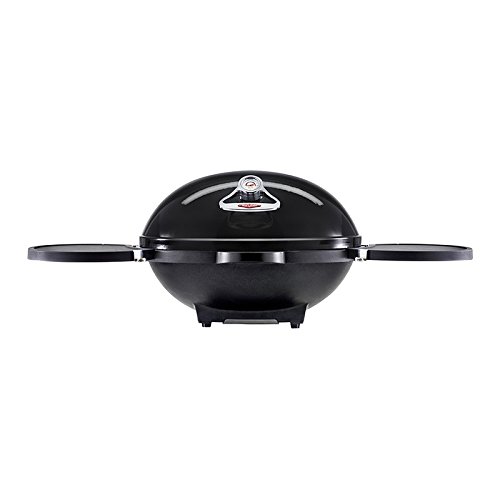
The BeefEater Bugg 2 Burner is the one pick here that isn't a Weber Q or a single-burner camping grill. It's #24 in Amazon AU's Gas Grills category at time of writing and sold by Amazon AU at $456, and the listing describes it as a 2 burner gas BBQ in graphite. Two burners are the reason to look at it: you can run one side hot and the other gentler, which suits a mixed grill better than a single burner does.
The listing is short. It says the barbecue has high strength construction for stability and that it's great for portability because it comes off the trolley, so the idea is a two-burner barbecue that lives on its trolley at home and lifts off for a camping trip or a picnic. It doesn't state the weight, cooking area, burner output, ignition type or grill material, so I haven't quoted any of them. BeefEater also lists a Bugg trolley base as a separate item on Amazon AU, so check what's in the box before you order.
Whatever the ignition turns out to be, the usual gas care applies. Leak test the hose and regulator with soapy water each season, empty the grease tray often, check the burner tubes for spiders after storage, and keep it covered or under a roof, especially near the coast. Turn the bottle off at the valve and disconnect it before you lift the barbecue off its trolley.
Honest caveats: The listing doesn't say whether this one runs on LPG or natural gas, so confirm you're buying the LPG version before you pay. It also doesn't state a warranty period, weight, ignition or cooking area. At $456 it's one of the three dearest picks here and has the thinnest listing, so you're buying on the brand and the two burners rather than on stated specs.
Best for: Cooks who want two burners and a grill that lifts off its trolley.
Type: 2 burner gas BBQ • Finish: Graphite • Portability: Comes off the trolley (listing) • Seller: Amazon AU • Rank: #7 in Gas Grills (Amazon AU)
View on Amazon AU
Cuisinart Venture Portable Gas Grill CGG-750XA
ASIN B0FPWK5BQQ • $228.99 • Sold by Amazon AU
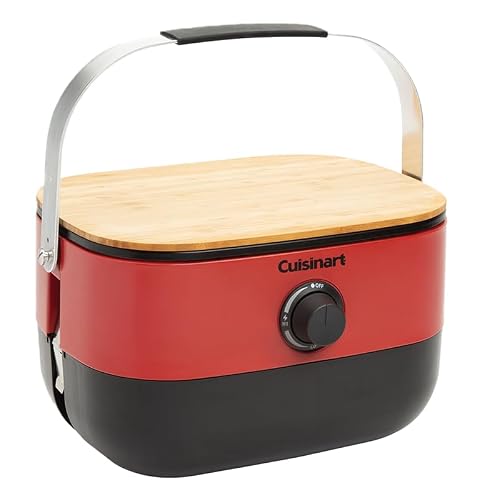
The Cuisinart Venture is the most compact pick here and the lightest by the listing figures, and it's the one for picnics, beach days and campsites where you're carrying the barbecue any distance. It's sold by Amazon AU at $228.99 at time of writing and ranks #10 in Amazon AU's Portable Barbecues category. The model number on the listing is CGG-750XA. The listing states a three-year manufacturer warranty, which is the only stated warranty among the five picks. It's a small, single-burner grill with a carry handle and a cutting board built into the design, so it packs and carries like a small cooler. It's the one barbecue here that you could carry in one hand from the car park to the sand.
The listing gives it a 9,000 BTU stainless steel burner, which is roughly 2.6kW, and a 995 square centimetre porcelain enamelled cast iron grill plate. That's a smaller cooking area than the Baby Q, so think two or three people rather than a family. The listing says it has a quick connect gas system and runs on propane, which in Australia means LPG. The grill plate and drip tray both come out for cleaning. On the listing figures, it weighs about 10kg, and its shape and carry handle make it easier to carry. A smaller grill also heats up faster and uses less gas per cook, which helps on a long trip.
It's a simpler machine than the Webers, so there's less to break. Check the gas fitting suits your bottle or cylinder before your first trip. Leak test every join with soapy water. Empty and clean the drip tray after each use. Dry it before packing. It's the best pick here if carrying distance matters most. The listing doesn't show whether replacement burners and grill plates are sold locally, so keep the three-year warranty paperwork somewhere you'll find it. Use the built-in cutting board for prep only, and wipe it dry before closing. Let the grill cool fully before you latch it and put it back in the car.
Honest caveats: The cooking area is smaller than either Weber size, so it's for two or three people. The listing doesn't say what type of ignition it has or what hose and regulator are included, so check both. There's no lid thermometer. It's newer to Amazon AU than the Webers, so it has a shorter sales history.
Best for: Picnics, beach trips and campers who carry the barbecue from the car and cook for two or three.
Type: Portable single-burner gas grill • Burner: 9,000 BTU stainless steel (listing) • Grill: 995 sq cm porcelain enamelled cast iron • Fuel: Propane (LPG) with quick connect • Weight (listing): About 10kg • Model: CGG-750XA • Warranty: 3 year manufacturer (listing) • Rank: #10 in Portable Barbecues (Amazon AU)
View on Amazon AU
Weber Q+ Premium Gas BBQ Q2800N+ LPG (Third Generation)
ASIN B0CKSN7LNT • $619 • Sold by Weber BBQ Australia on Amazon AU
The Weber Q+ Premium Q2800N+ is the bigger Q with the most extras on its listing, and it's the one I'd buy for a family of four or five who cook outdoors most weekends. It's #6 in Amazon AU's Gas Grills category at time of writing and sold by Weber BBQ Australia at $619, the dearest pick here. It's the latest third generation model and runs on LPG. The listing says it can grill up to twelve burgers at once, which is a third more than the Baby Q's nine, and that's the difference between cooking everything at once and cooking in shifts.
The listing calls out an additional + burner, which Weber says opens up high sear cooking as well as low and slow, and that's the reason to pay over the Q2200N. It also lists a lid thermometer, electronic ignition and removable side tables, so it carries the same Premium extras as the Q2200N. The listing doesn't state a weight, burner output, grill material or whether a stand is included, so I haven't quoted any of them. Midnight Black is the colour on this listing, and the Charcoal Grey and Flame Red versions sell as separate listings.
The electronic igniter runs on a battery, so keep a spare in the kit and take the battery out over winter. Leak test the hose and regulator with soapy water before the first cook each summer. Empty the grease tray often, keep it covered or under a roof between uses, especially near the coast, and check the burner tubes for spiders after storage. The listing doesn't say if a cover is included, so budget for a fitted Weber cover if it'll live outside. If the thermometer reads oddly, check it against an oven thermometer before you assume the lid is faulty.
Honest caveats: At $619 it's the dearest pick here, $70 more than the Q2200N, and the extra + burner is what you're paying for. The listing doesn't state a weight, cooking area measurements, warranty period or what gas fitting is included, so check all of those on Weber's page before you buy. The electronic igniter needs a battery. It's the bigger Q, so expect a heavier carry than the Baby Q.
Best for: Families of four or five who want the extra + burner, lid thermometer and electronic ignition on the bigger Q.
Size: Q+ (third generation) • Fuel: LPG • Ignition: Electronic • Thermometer: Built into lid • Burners: Additional + burner (listing) • Capacity (listing): Up to 12 burgers • Extras: Removable side tables • Model: Q2800N+ • Seller: Weber BBQ Australia • Rank: #5 in Gas Grills (Amazon AU)
View on Amazon AU
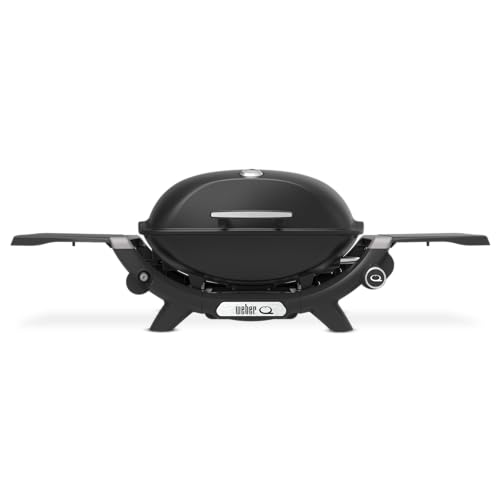
Weber Q Premium Gas BBQ Q2200N LPG (Third Generation)
ASIN B0CKSPXB97 • $549 • Sold by Weber BBQ Australia on Amazon AU
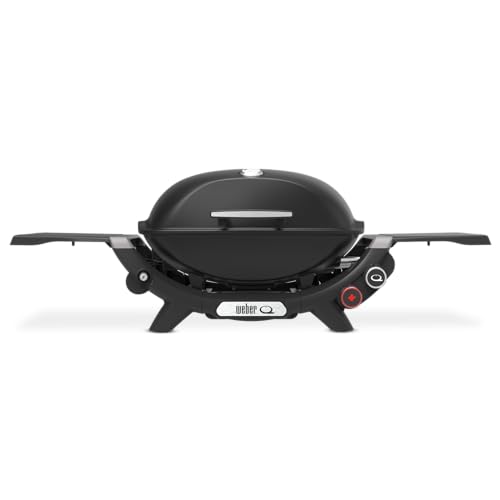
The Weber Q Premium Q2200N is the bigger Q size in the Premium trim, and it's the way into a lid thermometer and electronic ignition on that size without paying for the Q2800N+'s extra burner. It's #3 in Amazon AU's Gas Grills category at time of writing and sold by Weber BBQ Australia at $549. It's the third generation model, it runs on LPG, and the model number on the listing is 28410024, which matches the Q2200N. Over the standard trim it adds a lid thermometer and electronic ignition, and it keeps the removable side tables. For a family that roasts as often as it grills, those two extras are worth having, and it's the one I'd pick for a household that uses its barbecue most weekends.
The cooking grill is porcelain enamelled cast iron, and the high domed lid gives it plenty of roasting room. The lid thermometer means you can keep an eye on a roast without lifting the lid. Electronic ignition is quicker and more reliable to use than piezo. The listing weight figure is clearly wrong, so I haven't quoted it, but expect it to weigh more than the Baby Q. It's portable in the sense that it fits in a boot, but most people who buy this one keep it on the deck. Midnight Black is the colour on this listing, and a natural gas version sells separately, so make sure you order the LPG one.
Keep a spare battery for the electronic igniter, and take it out over winter. Leak test the hose and regulator each season. Empty the grease tray often. Keep it covered on the deck. Check the burner tube after storage. It's dear, but it's the Weber Q I'd keep for years. The listing doesn't say if a cover is included, and a barbecue at this price deserves one. If the thermometer reads oddly, check it against an oven thermometer before you assume the lid is faulty. Keep the electronic ignition battery compartment closed and dry, because corrosion there is the most common reason it stops sparking.
Honest caveats: At $549 it's one of the three dearest picks here, and you're paying for the thermometer and the electronic ignition. The listing's weight figure is clearly an error, so check the real weight on Weber's site if you'll carry it often. The electronic igniter needs a battery. The listing doesn't state a warranty period or say what gas fitting is included.
Best for: Families who roast as often as they grill and want a lid thermometer and electronic ignition on the bigger Q.
Size: Q (third generation) • Fuel: LPG • Grill: Porcelain enamelled cast iron • Ignition: Electronic • Thermometer: Built into lid • Extras: Removable side tables • Model: 28410024 • Seller: Weber BBQ Australia • Rank: #4 in Gas Grills (Amazon AU)
View on Amazon AUSide-by-side comparison
| Product | Price | Best for |
|---|---|---|
| Cuisinart Venture™ Portable Gas Grill | ~$228.99 | Picnics, beach trips and campers cooking for two or three |
| BeefEater Bugg 2 Burner Gas BBQ | ~$299 | Cooks who want two burners and a grill that lifts off its trolley |
| Weber Baby Q Premium Gas BBQ Q1200N | ~$399 | Couples, small families and caravan owners |
| Weber Q+ Premium Gas BBQ | ~$619 | Families of four or five |
| Weber Q Premium Gas BBQ | ~$549 | Families who roast as often as they grill |
What we see fail in the workshop: portable gas BBQs
Gas barbecues are simple machines, but the same three faults turn up again and again. Most of them come down to storage, weather and grease rather than anything wrong with the barbecue itself. Here's what usually goes wrong, why it happens and what you can do about it before the first cook of summer. None of it needs special tools, just a torch, a brush and a bit of soapy water.
Igniters that click but won't light
The igniter is the part that fails most often. On electronic ignition models, a flat battery or corroded battery contacts are the usual cause, especially when rain gets into the compartment. On piezo models, the button wears or sticks. On both, a grease-coated electrode or one knocked too far from the burner will spark without lighting the gas. Clean the electrode, check the gap and fit a fresh battery before you replace anything. Most igniters we look at need a clean rather than a new part, and a long lighter in the kit saves the day either way.
Perished hoses and tripped regulators
Rubber gas hoses perish in the sun, and a crack near the regulator is a leak waiting to happen. We see it most on barbecues that live outside all year without a cover. The regulator can also trip into a low-flow safety mode if the bottle valve is opened too fast, giving a weak yellow flame. Do a soapy water leak test on every join each season, open the bottle valve slowly, and replace any hose that looks cracked, stiff or swollen. Hoses and regulators are common parts and far less than a new barbecue.
Blocked burner tubes and grease fires
Spiders build webs and nests inside burner tubes when a barbecue sits in a shed, and that blocks the gas and air mix. The result is a weak, uneven flame, or flame burning back near the knob. Grease is the other problem: a full grease tray or fat built up under the burner can catch fire and burn hot enough to damage the burner and melt plastic parts. Check the burner tube with a torch after storage, clear it with a venturi brush, and empty the grease tray after every few cooks.
Decision tree: which one should you actually buy?
- Cooking for two to four and want the best all-rounder? → The Weber Baby Q Premium Q1200N at $399 adds a lid thermometer and electronic ignition to the Baby Q.
- Want two burners and a grill that lifts off its trolley? → The BeefEater Bugg 2 Burner at $456 is a two-burner gas BBQ that the listing says comes off the trolley, though the listing doesn't state its weight, size or ignition.
- Carrying it to picnics and the beach? → The Cuisinart Venture CGG-750XA at $228.99 is the most compact here, has a carry handle and lists a three-year warranty.
- Cooking for a family of four or five? → The Weber Q+ Premium Q2800N+ at $619 grills up to twelve burgers at once, with a lid thermometer, electronic ignition, side tables and an additional + burner.
- Want a lid thermometer and electronic ignition on the bigger Q? → The Weber Q Premium Q2200N at $549 adds both to the bigger Q size, for $70 less than the Q2800N+.
- Electronic igniter dead after rain, or a barbecue control fault? → Bring the igniter module to our Erina workshop. We'll check the battery contacts and the wiring and tell you whether it's a clean or a part before you spend anything. Gas leaks and hoses are a job for a licensed gasfitter.
Frequently asked questions
What's the difference between the Weber Baby Q and the Weber Q?
The Baby Q is the smaller size and the Q is the bigger one. On Weber's listings, the Baby Q Q1000N grills up to nine burgers at once and the Q2800N+ up to twelve. The Baby Q suits couples and small families and is lighter to carry, at about 10kg on the listing. The Q suits families of four or five and is a heavier carry. The Baby Q and Q2200N listings state porcelain enamelled cast iron grills, and both sizes come in standard and Premium versions.
Is the Weber Q Premium worth it?
It depends on how you cook. The Premium Q1200N and Q2200N add a lid thermometer and electronic ignition over the standard models. If you roast often, the thermometer saves a lot of lid lifting and guesswork, and electronic ignition lights more reliably. If you mostly grill sausages, steaks and burgers, the standard models cook just as well, and their piezo ignition has no battery to go flat, which suits a caravan that sits unused for months.
Why won't my gas barbecue igniter light?
The most common causes are a flat battery or corroded contacts on electronic ignition, a worn or sticking piezo button, or a grease-coated electrode that sparks without reaching the gas. Clean the electrode, check it sits close to the burner, and fit a fresh battery if it uses one. If it still clicks without lighting, the gas flow may be the problem, such as a tripped regulator or a burner tube blocked by spiders. Keep a long lighter handy in the meantime.
How do I check a gas BBQ for leaks?
Mix dish soap with water and brush it over every gas join, including the bottle valve, regulator and both ends of the hose. Open the bottle valve with all burner knobs off, and watch for bubbles. Bubbles mean gas is escaping, so turn the bottle off straight away and don't light the barbecue. Tighten the fitting or replace the hose or regulator. Do this before the first cook each summer and any time you reconnect the bottle. Never test for leaks with a flame.
Can I use a portable gas barbecue on my apartment balcony?
Check your building's strata by-laws first. Many apartment buildings restrict or ban gas bottles on balconies, and some only allow electric grills. If gas is allowed, keep the barbecue clear of walls and anything that can burn, keep the gas bottle outside, never block a fire exit and turn the bottle off at the valve after every cook. Never use a gas barbecue indoors or in an enclosed space, because burning gas makes carbon monoxide.
Why is my BBQ flame yellow and weak?
A weak yellow flame usually means the gas and air mix is wrong. The two common causes are a regulator that's tripped into low-flow safety mode and a burner tube blocked by spider webs or debris. Turn everything off, disconnect the bottle, wait a minute and reconnect, then open the bottle valve slowly with the burner knobs off. If that doesn't fix it, check the burner tube with a torch and clear it with a venturi brush. A hose or regulator that's damaged needs replacing.
Related buying guides
Barbecue igniter stopped sparking?
A dead electronic igniter is usually a flat battery, corroded contacts or a grease-coated electrode, and most of the time it's a clean rather than a new part. Bring the igniter or the barbecue into our Erina workshop and we'll check the electrical side and tell you what's wrong before you spend anything. Gas leaks, hoses and regulators are a job for a licensed gasfitter.
Visit our Erina workshop Book Online