Prices from Amazon AU, updated daily. Swipe or use the arrows for more.
Disclosure: This article contains affiliate links to amazon.com.au. If you buy through one of these links iFix may earn a small commission at no extra cost to you. It doesn't change which products we recommend. We focus on what actually lasts based on 16 years of repair-shop experience.
Quick summary6 picks
- Entry PickLENOXX Infrared Heater Free-Standing… about$84.952000W.
- VEXLON 2000W Outdoor Patio Heater about$99.992000W.
- DONYER 800W/2000W Hanging Halogen Heater about$163.593000W.
- Maxkon 2000W Carbon Fibre Infrared Heater… about$249.992000W.
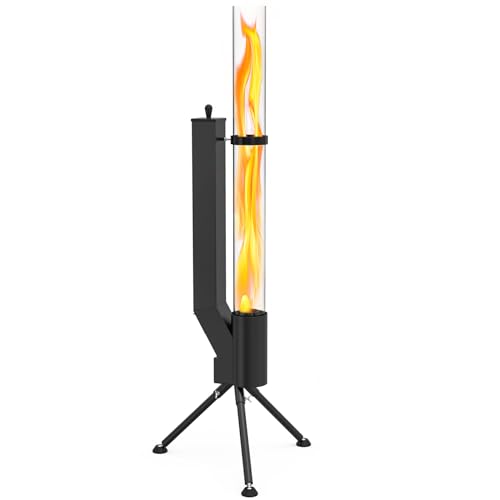
- Onlyfire Outdoor Fire Pit about$283.89
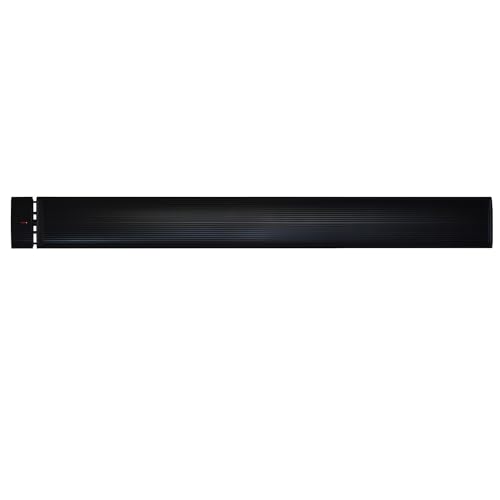
- Most PremiumBonaire 2400W Outdoor Radiant Strip Heater about$379.982400W.
Heat people, not air: why infrared is the only thing that works outdoors
A fan heater on a patio is a joke the wind is in on. It warms a parcel of air, the breeze takes that air over the fence, and you have paid to heat the neighbour's yard. Convection needs containment. A patio has none. Radiant infrared skips the air entirely: the element glows, the energy travels in straight lines, and it only turns into heat when it lands on something solid. Skin, a jumper, the table top, the dog. The air in between barely warms at all, which is exactly why it survives a breeze that would defeat any convector.
That mechanism sets every rule that follows. Radiant intensity falls away with distance roughly by the inverse square, so sitting twice as far from the element gives you about a quarter of the warmth. It needs line of sight, too. Sit behind a mate and you are in his shadow, thermally speaking. And it only warms the side of you facing the element: warm face, cold back at the edge of the coverage. None of that is a fault. It is the physics you are buying.
All four picks here are 2,000W, and that is not a coincidence. A standard Australian 10A wall socket is good for 2,400W, so 2,000W is about as much as any plug-in heater can draw with a sensible margin. On running cost, at the rough Australian average tariff of 33c per kWh (check your own bill), a 2,000W element flat out costs about 66c an hour. At 1,000W, about 33c. A three-hour dinner on full power is around $2. That is the honest number, with the assumption stated, and it is what to weigh against swapping a gas bottle every few weeks. For the real figure on your own unit, a plug-through meter from our smart energy monitor guide will log it to the cent.
Quartz versus carbon fibre: what the glowing bit actually is
Two of the picks use quartz tubes (the LENOXX and the VEXLON), one uses carbon fibre (the Maxkon), and the DONYER is listed as a halogen heater, a lamp-style element that works on the same principle. A quartz element is a resistive wire sealed inside a quartz glass tube, often with a halogen gas fill. It runs hot and bright, a hard orange glow, and reaches full output within a couple of seconds. The shorter-wavelength infrared it produces travels well through air and lands with real punch at a couple of metres. It also lights the patio up like a servo forecourt, which some people hate and some stop noticing.
Carbon fibre elements run a woven carbon filament at a lower surface temperature. The glow is dimmer, still visible, and the output sits at longer wavelengths that clothing and skin absorb readily. The Maxkon listing claims heat in 5 to 10 seconds, which matches how these elements behave. Carbon fibre is generally sold on a longer service life than quartz halogen because there is no fine tungsten filament to thin out and snap, and that is a reasonable part of why the Maxkon costs roughly three times the LENOXX. Reasonable, not proven. The listing does not state an element life figure and I would not invent one.
From the bench, the element is the consumable either way. A quartz tube that goes dark has usually broken its filament, often after a knock while hot, or from years of thermal cycling. A hairline crack lets air in, the filament oxidises, and it is gone. Replacement tubes for common industrial lengths exist, but marketplace units frequently use odd lengths and proprietary end caps. The lamp holders matter as much as the tube: ceramic blocks with spring contacts that lose tension after enough heat cycles. A loose contact at 8A arcs, the terminal blackens, and the unit presents as a dead element when the tube is fine. Before you buy, look for the tube length, whether the end caps look standard, and whether the brand sells a spare at all.
IPX4, IP44, IP65: what the water ratings promise and what they do not
An IP code has two digits. The first is protection against solids (fingers, wire, dust), the second is protection against water, and an X means that digit was not claimed. So IPX4, the LENOXX, means splashing water from any direction with no dust claim. IP44, the Maxkon, adds protection against objects over 1mm (a wire, a small finger) plus the same splash resistance. IP55, the VEXLON, is dust protected and resists water jets from any direction. IP65, which none of these four claims, means dust tight and protected against low-pressure water jets from any direction. The DONYER's listing mentions only an IP24 certificate, a splash rating with finger-size dust protection. None of those ratings means the heater can live out in the rain. They describe an enclosure surviving a test rig for a set time, not a winter on the coast.
In practice: IPX4 and IP44 belong under a roof, a verandah, a pergola with a solid top. Sideways rain in a gust is a splash. A storm emptying onto the head of the unit is not. IP65 is the rating you want if the heater will stay mounted under an open-sided carport and take weather, and none of these four has it, so a ceiling-hung heater like the DONYER belongs under a solid roof. But every one of those ratings applies to the heater body only. Not the plug. Not the lead join lying in a puddle. Not the wall socket with a cracked cover. The weakest point of an outdoor heater installation is almost always the connection you made.
The second thing the rating does not promise is corrosion resistance. IP protection is a day-one property. Corrosion is a day-500 problem, and on the Central Coast the salt air is unkind. We see green crust on terminal screws, rust blooming under alloy casings where the powder coat chipped, and water tracking down the supply cord into the switch housing of freestanding units stored upright outside. The mechanisms are the same ones in our explainer on water damage and electronics, only slower. Store freestanding units under cover and check the cord gland every few months.
Mounting height, tilt angle and the circle you actually warm
Only two of the four listings state a coverage figure: the Maxkon claims a 1.8m radius and a 120 degree spread, and the DONYER claims a heating scope of 65 sq ft, about 6 square metres. Treat those as an anchor for all of them, because they are all 2,000W and the physics does not care about the badge. A 1.8m radius is a circle about 3.6m across, a four-seat table with the heater at one side, not a long trestle with twelve people on it. People at the far end of a long table are outside the useful zone of a single 2,000W unit, and no setting on the remote changes that. The answer for a long table is two heaters at two points, on two separate circuits, which means hanging a second unit and giving it its own outlet.
Height and tilt decide whether that circle lands on people. The VEXLON adjusts from 182 to 210cm and tilts its head 45 degrees. The LENOXX has an adjustable stand height and a 45 degree head tilt. Think in torsos: aim the element at the chests of seated people about 1.5 to 2m away, not at the tops of their heads. Aim a 2,000W head straight down from 2m and you get a hot scalp, cold shins, and someone shuffling their chair every ten minutes. Tilt it so the beam crosses the group at chest height and the same 2,000W feels like far more. For the ceiling-hung DONYER, the manual's clearance distances from the ceiling and from anything combustible are the law for your install, and they matter more than the height number. Hang it on the side of the area that blocks the prevailing breeze, because the warm air next to your skin does blow away even if the radiant heat does not.
The 10A socket, the extension lead, and the powerboard that is not invited
A standard Australian general purpose outlet is rated at 10A, which at 240V is 2,400W. A 2,000W heater takes 83 per cent of that, continuously, for hours. So: one heater, one socket, nothing else in it. No double adaptor. No powerboard, even a good one with its own breaker. Never two heaters sharing an outlet, which flatly rules out running two 2,000W units off one socket: together they draw about 17A, well past what a 10A outlet is rated to carry. Behind the socket a 16A or 20A breaker usually feeds several outlets, so a patio heater plus an outdoor fridge plus the kettle on one circuit is a trip waiting to happen. If it trips once, the circuit is full.
Extension leads are where most of the trouble lives. Use a lead rated for 10A with heavy conductors, the shortest one that reaches, and if it is on a reel, unwind the whole thing. A coiled lead under an 8A load cannot shed heat and I have seen the insulation gone soft along the inner turns. Keep the join between heater plug and lead socket off the ground and under the roofline, because that join has no IP rating at all. After the first hour, feel the plug. Warm is normal. Hot enough that you pull your hand back means a poor contact, and poor contacts get worse. Every outdoor circuit should be on an RCD (safety switch) at the board. Press its test button before the first cold night.
On compliance, portable heaters sit in the higher-risk tier of electrical equipment in Australia, so a legitimate unit carries the RCM mark (the triangle with a tick) on its rating label, with the supplier details. When the box arrives, photograph that label before you throw any packaging out. If there is no RCM mark, or the plug is a travel adaptor fitted over foreign pins, send it back. This is a heater that will sit at 8A for three hours a night all winter, and I have had enough dodgy adaptors across the bench, the kind covered in our bad chargers explainer, to know how that ends.
Tip-over switches, pull cords and remotes: the controls that fail before the element
A tip-over switch is a gravity device: a weighted plunger or a ball in a cup that holds a contact closed while the heater is upright and opens it once the unit leans past a set angle. The LENOXX and the VEXLON both list one. The Maxkon lists a built-in tip and collision sensor, the same job with a different name. Test it cold, on day one, by tilting the unit until it clicks off, and again each winter. The failure I see is the plunger sticking: dust, spider eggs, corrosion on the shaft. Stuck open means the heater will not start, which is annoying and safe. Stuck closed means it keeps running on its side, the one case the switch exists to prevent.
The VEXLON uses a pull-cord switch for its 650W, 1,300W and 2,000W steps. That is a mechanical rotary switch stepped by a cord, no electronics at all, and outdoors I rate that highly. No PCB to corrode, no receiver to fog up. Its weakness is the contacts, which carry the full load and can pit from arcing after years of switching under 8A. The Maxkon uses a remote: an infrared receiver, a small control board, and a relay or triac doing the switching. Those boards are what dies from condensation. A warm housing cools overnight, moisture condenses on the board, and after a season the heater ignores the remote or drops out after a few minutes. The Maxkon's 0 to 24 hour timer is genuinely useful for the dinner you forget to switch off.
Remote-controlled heaters keep their control electronics powered whenever they are plugged in, so switch them off at the wall when you are finished, which also takes the receiver off the mains during storms. None of these four listings mention a thermal cut-out, so I am not stating that they have one. If a heater starts cycling off by itself, something is stopping heat leaving the housing, or it is mounted closer to a surface than the manual allows. Fix the cause. Do not bridge it.
Why every pick is an Australian marketplace brand, and what that means for you
Let me name it. LENOXX, Maxkon, DONYER and VEXLON are all importer labels. LENOXX is a long-running Australian importer brand, DONYER is sold through Sapphire-AU, Maxkon through AUSWAY, and VEXLON is sold through VelionAU. They are not factories in the way Dyson or De'Longhi are factories. They buy heaters from contract manufacturers, badge them, hold stock in Australia and sell through Amazon AU. You will notice the same chassis under more than one label. That is not a scandal, it is how plug-in patio heaters are sold here, because the established appliance names mostly do not bother with this end of the market.
It has consequences you should walk in knowing. Warranty runs through the seller, and the Australian Consumer Law guarantees apply regardless of how small the brand is, which is your real protection. Spare parts are close to non-existent: a replacement quartz tube is whatever you can match by length and end cap, and a dead control board is usually the end of the unit. The differences between listings at the same wattage come down to element type, controls, IP rating, and how the seller handles a problem, not the name on the front. Read the spec list rather than the marketing line, and assume anything not stated was left out for a reason.
What I actually do: buy the listing with the most specific specification sheet, photograph the rating label and serial on day one, test the tip-over switch before first use, and keep the box for the return window. Treat the first winter as the warranty test; a bad joint or a damp board tends to show itself in the first season. Outside that window, the Central Coast repair bench can usually tell you in ten minutes whether it is a $15 lamp holder or a dead board, so bring it into the Erina workshop rather than binning it. And if your outdoor area is more enclosed sunroom than open deck, a fan-forced unit from the ceramic fan heater guide may serve you better.
The 4 picks, $85 to $250
Prices are Amazon AU at time of writing (15 August 2026) and move week to week. Ranks are Amazon AU category sales ranks, checked the same day.

LENOXX 2000W Free-Standing Infrared Patio Heater, IPX4
ASIN B08YJLQ3GD • $84.95 • Sold by Aussie discounts on Amazon AU
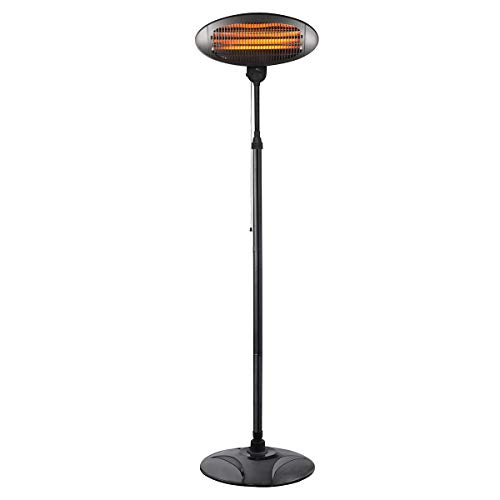
This is the one most people should start with, and the Amazon AU rank agrees: #1 in Outdoor Heaters at time of writing, at $84.95. It is a 2,000W quartz radiant head on a height-adjustable freestanding pole with a weighted base, and the listing gives it a 45 degree tilt on the head and a tip-over switch. That is the whole feature list, and I mean that as praise. There is no remote, no timer and no control board to corrode. You plug it in, you point it at the table, and the quartz tube is glowing at full output in a second or two. For a covered balcony or a verandah with a solid roof, that is almost exactly the job description.
The adjustable head is the feature that earns its place. Quartz is bright and directional, so being able to drop the beam from a standing-height pole down across seated chests is the difference between a warm group and a hot ceiling. Set it so the element sits a little above head height when seated and tilt it down until the glow lands on torsos about 1.5 to 2m away. The weighted base and tip-over switch handle the accidental kick from a chair leg. In the workshop, the things to watch on a unit like this are the lamp holder contacts and the cord gland at the base of the pole. Both are easy to inspect each winter and both are the usual cause of a unit that dims or flickers.
IPX4 means splash resistant and nothing more, so this is not a unit to leave on an open deck in weather. Wheel it under cover or inside when you are done, and keep the plug and lead join off the ground. Running cost at the rough Australian average of 33c per kWh is about 66c an hour flat out, and there is no half-power mode on the listing, so that is the figure. It is the least complicated heater here and, for that reason, probably the one with the fewest ways to go wrong.
Honest caveats: Honest caveats: one heat setting only, no remote and no timer, so it is on or off. IPX4 is splash resistance for covered areas, not weather protection. The listing does not state the coverage radius, the quartz tube length, the cord length or whether a thermal cut-out is fitted, so check the current listing for anything you need before you order.
Best for: A covered balcony or verandah where one seated group needs warmth without any electronics to look after.
Power: 2,000W, single setting • Element: Quartz, radiant • Type: Freestanding, adjustable stand height • Head angle: 45 degree adjustable • Water rating: IPX4 splash-proof, covered outdoor areas • Safety: Tip-over switch, weighted base • Price: $84.95 at time of writing • Rank: #1 in Outdoor Heaters (Amazon AU)
View on Amazon AU
Maxkon 2000W Carbon Fibre Infrared Freestanding Heater, IP44
ASIN B09XHYLRBW • $249.99 • Sold by AUSWAY on Amazon AU
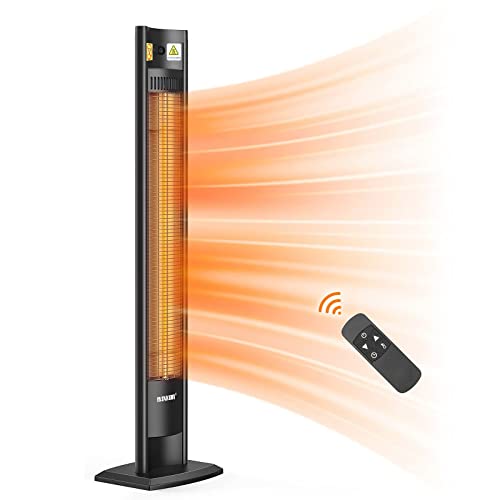
At $249.99 the Maxkon is the most expensive pick by a wide margin, and it is the only one with a carbon fibre element. The listing claims heat in 5 to 10 seconds, a 1.8m coverage radius and a 120 degree spread, which makes it the only heater of the four that actually tells you how big a circle it warms. Two power modes, 1,000W and 2,000W, are switched from a remote, there is a 0 to 24 hour timer, a built-in tip and collision sensor, and an IP44 rating. It sits at #15 in Amazon AU's Outdoor Heaters category at time of writing. You are paying for the element and the controls, so those are the things to judge it on.
The carbon fibre element is the reason to pick it over the quartz units. Lower surface temperature, a softer glow rather than a servo-forecourt orange, and longer-wavelength output that clothing absorbs well. Carbon elements are also sold on longer service life than halogen quartz tubes because there is no fine metal filament to thin and break, though the listing gives no life figure so I will not either. The 1,000W mode matters more than it sounds: most nights on a covered patio you do not need the full 2,000W once people are settled, and half power at the rough Australian average tariff is about 33c an hour instead of 66c. The timer means the thing switches itself off after the guests leave.
The trade-off is the control board. A remote means an infrared receiver and a small PCB inside the housing, and that board is what fails on the remote-controlled heaters we see, usually from overnight condensation rather than rain. IP44 covers splashes, not dew forming inside a cooling enclosure. Keep it under cover, switch it off at the wall after use, and if it ever starts ignoring the remote or dropping out after a few minutes, the board is the first suspect. The stand height range is not stated on the listing, so if you need to drop the head to a low lounge setting, confirm that before ordering. At 66c an hour flat out, or 33c on the low mode, the running cost is the same as the quartz units; you are paying for comfort and controls, not efficiency.
Honest caveats: Honest caveats: the most expensive pick here by a factor of three over the LENOXX. IP44 is splash protection only, so it still lives under a roof. The remote and timer add a control board that is more vulnerable to condensation than a pull-switch. The listing does not state the stand height range, the cord length, or a thermal cut-out.
Best for: A covered entertaining area where you want a softer glow, a half-power mode and a timer, and you will look after the electronics.
Power: 2 modes, 1,000W / 2,000W • Element: Carbon fibre infrared • Warm-up: 5 to 10 seconds (listing claim) • Coverage: 1.8m radius, 120 degree angle (listing claim) • Controls: Remote, 0 to 24 hour timer • Water rating: IP44 • Safety: Built-in tip and collision sensor • Price: $249.99 at time of writing • Rank: #15 in Outdoor Heaters (Amazon AU)
View on Amazon AU
DONYER 2000W Ceiling-Hung Halogen Patio Heater, 2 Settings
ASIN B07HG4SBW6 • $163.59 • Sold by Sapphire-AU on Amazon AU
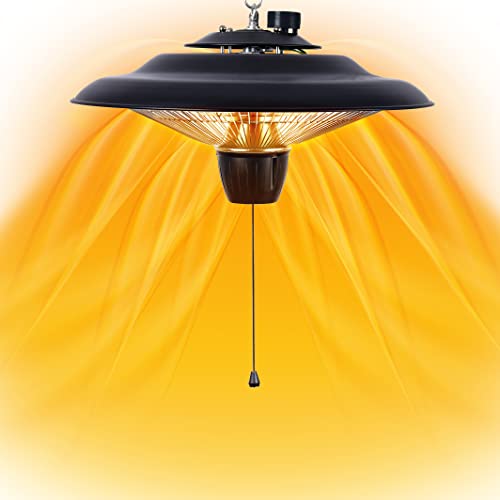
The DONYER is the odd one out here: a halogen heater that hangs from a chain rather than standing on a pole. It has two settings, 800W and 2,000W, a listing that quotes warm-up in about 3 seconds, a 1m adjustable chain and a stated heating scope of 65 square feet, about 6 square metres. At $163.59, and #110 in Amazon AU's Outdoor Heaters category at time of writing, it earns its place on rank: that is a proven seller in a category where most listings are not. Hanging it frees the floor, which matters on a small verandah, and there is nothing to knock over.
Do the electrical sums before you hang it. 800W is about 3A and costs roughly 26c an hour at the Australian average of 33c per kWh, and 2,000W is about 8A and 66c, so like every heater here it wants an outlet to itself. There is no middle step, so on a mild night you choose between a gentle glow and full power. The listing suggests hanging it at about 1.8m (70.9 inches) to keep it out of reach of children and pets, and says the chain can be taken apart to adjust the distance. At 2kg and 42cm across it is light, but fix the chain to structure rather than lining, and keep to the manual's clearances from the ceiling and from anything combustible.
The listing mentions an IP24 certificate, which is a splash rating with only finger-size dust protection. I read that as a heater for under a solid roof, not an open-sided carport, even though the listing names gardens, balconies and a camping BBQ area as places to use it. Switch it off at the wall when you are done, and let a halogen unit cool before you touch or move it.
Honest caveats: the listing does not describe how the two settings are selected, so check the controls before you order. It does not state a tip-over or thermal cut-out, a cord length or a plug type. The IP24 certificate is the only water rating given. This one sells through a third-party storefront (Sapphire-AU) rather than Amazon itself, so verify the wattage and rating on the current listing before ordering.
Best for: A covered pergola or verandah with a solid ceiling to hang from, where lifting the heater off the floor frees up the seating, and where you can run power to the spot.
Power: 2 settings, 800W / 2,000W • Element: Halogen • Type: Ceiling-hung, 1m adjustable chain • Size: 42cm diameter, 2kg • Heating scope: 65 sq ft • Water rating: IP24 certificate listed • Controls: Not described on the listing • Price: $163.59 at time of writing • Rank: #110 in Outdoor Heaters (Amazon AU)
View on Amazon AU
VEXLON 2000W Freestanding Patio Heater, 3 Settings, IP55
ASIN B0H98WCSX2 • $99.99 • Sold by VelionAU on Amazon AU
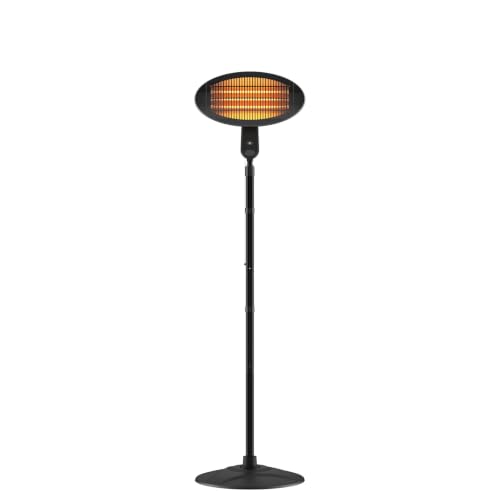
The VEXLON is the LENOXX with a power selector added. Three quartz tubes, a pull-cord switch stepping through 650W, 1,300W and 2,000W, a stand that adjusts from 182 to 210cm, a head that tilts 45 degrees and tip-over protection, at $99.99 and #1,121 in Amazon AU's Heating category at time of writing. The pull-cord switch is the feature I like most. The listing describes it as a simple pull-cord switch, with no receiver and no control board to fog up overnight. Outdoors that is the right kind of simple, and it gives you the half-power option the LENOXX lacks without paying for a remote you would then have to keep dry. For $15 more than the LENOXX, that is a fair trade in my book.
Three settings and three quartz tubes suggest each pull energises another tube. If so, the 650W setting is one tube glowing, useful for a single person on a mild night where 2,000W would be wasteful and hot. At the rough Australian average of 33c per kWh the three settings cost about 21c, 43c and 66c an hour respectively, and the 1,300W middle step is where most covered-patio evenings will sit. The lowest the stand goes is 182cm, which is high for a seated group, so the 45 degree tilt does the aiming: point the head down across the table rather than relying on height alone. The listing gives a 185cm power cord and an Australian plug, so the heater has to sit within reach of its own outlet.
Watch the pull-cord switch contacts over the years. They carry the full load and can pit from arcing if the switch is operated under load a lot, so step up and down with the unit already on rather than using the cord as the on-off, and switch at the wall instead. The listing states IP55, a better rating on paper than the LENOXX or the Maxkon, but it sells the heater for covered patios and balconies, so I read that as keep it under cover and bring it in when you are done. Three tubes also means three lamp holder pairs, so if one tube starts flickering while the others hold steady, that is a holder contact rather than a power fault, and it is the thing to have looked at.
Honest caveats: the IP55 rating covers the heater body only, not the plug or any lead join, so treat it as covered-area only and store it inside. The stand does not go below 182cm, so low lounge seating gets its heat from the tilt alone. Three separate quartz tubes means three filaments that can eventually fail, and replacements will need to be matched by length. The listing does not state a coverage radius.
Best for: A covered patio where you want low, medium and full settings with no electronics, and you will store it under cover.
Power: 3 settings, 650W / 1,300W / 2,000W • Element: 3 quartz tubes • Type: Freestanding, adjustable stand • Height: 182 to 210cm • Head tilt: 45 degrees • Controls: Pull-cord switch • Water rating: IP55 • Safety: Tip-over protection • Cord: 185cm, Australian plug • Price: $99.99 at time of writing • Rank: #1,121 in Heating (Amazon AU)
View on Amazon AUSide-by-side comparison
| Product | Price | Best for |
|---|---|---|
| LENOXX Infrared Heater Free-Standing… | ~$84.95 | |
| VEXLON 2000W Outdoor Patio Heater | ~$99.99 | |
| DONYER 800W/2000W Hanging Halogen Heater | ~$163.59 | |
| Maxkon 2000W Carbon Fibre Infrared Heater… | ~$249.99 | |
| Onlyfire Outdoor Fire Pit | ~$283.89 | |
| Bonaire 2400W Outdoor Radiant Strip Heater | ~$379.98 |
What we see fail at the bench: outdoor patio heaters
A patio heater is a resistive element, a switch, a frame and a cord, so the failure list is short and repeats. It is also an appliance that spends its life outside, cycling from red hot to cold and damp every night, which is exactly the regime that loosens joints and corrodes contacts. These are the three faults that account for almost every unit that crosses the bench, in the order we see them.
Dead or flickering element, which is usually the holder
The tube goes dark or starts flickering and the owner assumes the element is gone. Half the time it is the lamp holder. The ceramic end blocks hold the tube with spring contacts, and after a few hundred heat cycles the spring loses tension. A loose contact carrying 8A runs hot, arcs a little every time the unit vibrates, and the terminal slowly carbonises until the tube flickers, then dies. The tube itself tests fine. Replacing holders is quick work if you can get the parts, and for a quartz tube that really has broken its filament, the question is whether the length and end caps match anything available. On the marketplace brands that is a coin toss, which is why I tell people to check for spares before they buy.
Corroded terminals and a cord gland that gave up
Salt air plus heat cycling is a corrosion engine. We open units that have lived on Central Coast decks and find green crust on the terminal screws, rust creeping under the powder coat of the alloy housing, and verdigris on the earth connection, which is the one you least want compromised. Freestanding units stored upright outside are the worst for it, because water tracks down the cord into the switch housing through a gland that has gone hard and cracked. None of this is what the IP rating tested for. It is the slow version of the same ingress, and the fix is a cover, dry storage, and a look at the gland and terminal screws every autumn before the first cold night.
Control boards and tip-over switches that stop behaving
On remote-controlled units the complaint is that the heater ignores the remote, or drops out after a few minutes, or will not come out of standby. That is the control board, and the cause is almost always condensation forming on it as the housing cools overnight, then corroding tracks and the receiver. Pull-switch units skip this failure entirely, which is a big part of why I rate them outdoors. The other control fault is the tip-over switch: a plunger or ball that sticks from dust or corrosion. Stuck open, the heater will not start and people think it is dead. Stuck closed, it will keep running on its side. Test it by tilting the unit cold, at the start of every winter, and if it does not click off, do not use it until it does.
Decision tree: which one should you actually buy?
- Covered balcony, one small table, you want the least to go wrong? → The LENOXX at $84.95. Single 2,000W quartz head, tilting, tip-over switch, no electronics. Point it at chests and get on with dinner.
- You want half power most nights, a softer glow and a timer that switches it off for you? → The Maxkon at $249.99. Carbon fibre element, 1,000W and 2,000W modes, 0 to 24 hour timer and a 1.8m coverage claim. Keep the remote and the board dry.
- Covered pergola or verandah with a solid ceiling to hang from, and you can run power to the spot? → The DONYER at $163.59. 800W and 2,000W settings, hung from the ceiling on its chain, and the listing mentions only IP24, so it stays under a solid roof. A second unit needs its own outlet.
- You want low, medium and full settings with no remote and no control board? → The VEXLON at $99.99. Three quartz tubes stepped by a pull-cord switch, 650W to 2,000W, adjustable to 2.1m. It lists IP55, which I still read as a covered-area rating, so it lives under cover and comes inside after.
- Your outdoor area is really an enclosed sunroom with windows on three sides? → Radiant is still fine, but a convector or fan heater will now actually work in there, and our our guide to ceramic fan heaters covers the options.
- The heater flickers, ignores the remote, or the tip-over switch will not reset? → Stop using it and bring it into our Erina workshop. Lamp holders, corroded terminals and condensation-damaged control boards are quick to diagnose in the workshop, and we will tell you straight if it is worth fixing.
Frequently asked questions
How much does a 2,000W patio heater cost to run per hour in Australia?
At the rough Australian average tariff of about 33c per kWh, a 2,000W heater on full power costs about 66c per hour. At 1,000W it is about 33c, and at 600W around 20c. Your own tariff will differ, so check the rate on your bill and multiply by the kilowatts. A three-hour evening on full power comes to roughly $2. If you want an exact number, a plug-through energy meter will log what the unit actually draws across a night, which is also a useful way to spot a heater that is drawing more than its label says.
Can I run two patio heaters off one powerboard or double adaptor?
No. A standard Australian 10A outlet is rated for 2,400W, and a single 2,000W heater already uses most of that. Two heaters on one socket, through a powerboard or a double adaptor, will pull well over the rating and at best trip the breaker, at worst overheat the board or the socket. Each heater needs its own outlet, and where possible each should be on a different circuit so that the heater, an outdoor fridge and the kettle are not all sharing one breaker. Two 2,000W heaters together draw about 17A, so plan two outlets and never share one.
What is the difference between IPX4, IP44 and IP65 on a heater?
The first digit is protection against solids and dust, the second is protection against water, and an X means that digit was not claimed. IPX4 is splash resistance from any direction with no dust claim. IP44 adds protection against objects over 1mm and keeps the splash rating. IP65 is dust tight and resists low-pressure water jets from any direction. None of them means the heater can sit out in the rain. IPX4 and IP44 units belong under a solid roof. IP65 units can stay mounted in a more exposed spot, but the plug and any extension lead join still have no rating at all.
Is quartz or carbon fibre better for an outdoor heater?
Quartz tubes run hotter and brighter, reach full output in a second or two, and throw shorter-wavelength infrared that lands with punch at a couple of metres. They also light the area up with a strong orange glow. Carbon fibre elements run at a lower surface temperature, glow more softly, produce longer-wavelength infrared that clothing absorbs readily, and are generally sold on a longer service life because there is no fine metal filament to break. Carbon fibre costs more. If you want instant, directional heat and do not mind the glow, quartz is fine. If you sit under it for hours most nights, the softer output of carbon fibre is easier to live with.
Can I use an extension lead with an electric patio heater?
Yes, with care. Use a lead rated for 10A with heavy conductors, the shortest one that reaches, and if it is on a reel, unwind it completely, because a coiled lead under load cannot shed heat. Keep the join between the heater plug and the lead socket off the ground and under cover, since that join has no water rating. Feel the plug after an hour: warm is normal, hot is a poor contact. Make sure the outlet is protected by an RCD safety switch and test the button before winter. Never put a powerboard or double adaptor anywhere in the chain.
Why does my patio heater flicker or go dim before it dies?
On quartz units that is usually the lamp holder rather than the tube. The ceramic end blocks grip the tube with spring contacts, and after years of heating and cooling the spring loses tension. A loose contact carrying 8A runs hot, arcs slightly, and carbonises the terminal, so the tube flickers and eventually stops. The tube itself is often fine. Corroded terminal screws produce the same symptom. If the unit is remote controlled and cuts out rather than flickering, suspect the control board and condensation. Either way stop using it, unplug it, and have it looked at before the next cold night.
Related buying guides
Patio heater flickering, dead, or ignoring the remote? Bring it in before you bin it.
Most patio heaters that die have a loose lamp holder, a corroded terminal or a condensation-damaged control board, not a dead element. Those are quick to diagnose. Walk it into our Erina workshop on the Central Coast and we will tell you straight whether it is a small part or the end of the road. Sixteen years of board-level repair work, and we would rather fix it than see it in landfill.
Visit our Erina workshop Book Online