Prices from Amazon AU, updated daily. Swipe or use the arrows for more.
Disclosure: This article contains affiliate links to amazon.com.au. If you buy through one of these links iFix may earn a small commission at no extra cost to you. It doesn't change which products we recommend. We focus on what actually lasts based on 16 years of repair-shop experience.
Quick summary6 picks
- Entry PickGarmin Forerunner 165 about$372.43AMOLED.
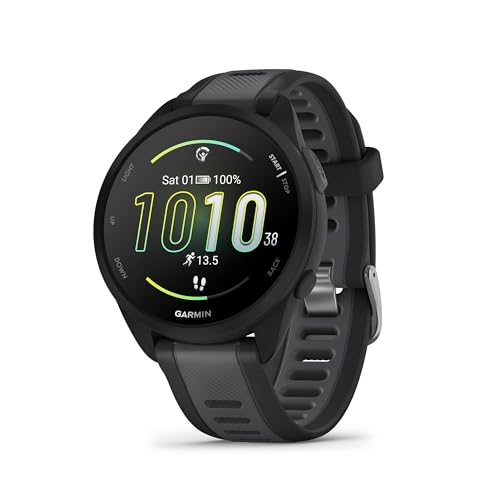
- Garmin Forerunner 165 Music about$451.11AMOLED.
- COROS PACE 4 Black with Silicone Band about$479.95AMOLED.
- Garmin Forerunner 265 Running Smartwatch about$397AMOLED.
- Garmin Forerunner 265S about$399.50AMOLED.
- Most PremiumGarmin Forerunner 965 Carbon Gray DLC… about$598.84AMOLED.
Black Friday price watch
Prices checked 17 Nov 2026, 4:39amEach pick's Amazon AU price today, next to the lowest price iFix has tracked for that listing. We check every morning, so you can tell a genuine low from a normal price with a sale badge on it.
| Pick | Today | Lowest tracked | Verdict | |
|---|---|---|---|---|
| Garmin Forerunner 165 | $372.43 | $344.89 | Close to its low | Check price |
| Garmin Forerunner 165 Music | $451.11 | $448.84 | Lowest we've tracked | Check price |
| COROS PACE 4 Black with Silicone Band | $479.95 | $479.95 | Steady price | Check price |
| Garmin Forerunner 265 Running Smartwatch | $397 | $397 | Lowest we've tracked | Check price |
| Garmin Forerunner 265S | $399.50 | $399.50 | Lowest we've tracked | Check price |
| Garmin Forerunner 965 Carbon Gray | $598.84 | $598.84 | Lowest we've tracked | Check price |
Lowest tracked means the lowest Amazon AU price iFix has recorded for that listing since 27 October 2026, not an all-time low. A verdict appears once a listing has 14 days of history and a live Buy Box offer. Prices change through the day; Amazon's checkout price is the one that counts. See every tracked price drop.
Why a running watch is a different thing to a smartwatch
Most smartwatches are built around the phone in your pocket: notifications, payments, a nice screen and a battery that gets you to bedtime. A running watch flips that order. It's built around the GPS chip, the battery that feeds it and the buttons you press with sweaty fingers at the 8km mark, and the smart features are the extras. That's why a $345 Forerunner can outlast a premium watch costing twice as much on a long run, and why I'd steer most runners away from buying on screen size or app count.
The watches in this guide all have built-in GPS for pace and distance, wrist-based heart rate, physical buttons and an AMOLED screen. Where they differ is how long the GPS runs before the battery's flat, how well it tracks under trees and between buildings, how much training analysis sits on top, and who's selling the unit on Amazon AU. If you mostly want a general fitness watch for walks and the gym, the value smartwatch guide covers that better than this one does.
I've picked these on the things that come back to bite people later: GPS hours rather than smartwatch days, real buttons, bands you can swap without tools, and a seller that ships from inside Australia. Every pick here is new stock from Amazon AU or a seller shipping domestically, and none of them are grey imports or renewed units. One Forerunner 965 listing I checked carried a Forerunner 265 part number, so I left it out and used the 965 listing whose model code actually matches the watch.
GPS accuracy: what actually changes the trace
Every GPS watch gets a clean trace on an open oval. The differences show up under heavy gum tree canopy, down in a gully or between tall buildings, where the satellite signal bounces off surfaces before it reaches your wrist. That bounce is what turns a straight footpath into a zigzag and adds a few hundred metres to a 10km run. Pace readings jump around for the same reason, which is why people complain their watch says 4:50 per km one second and 6:10 the next.
Multi-band GNSS is the main fix for that. A multi-band watch listens on two satellite frequencies instead of one, so it can usually pick the direct signal out from the bounced copies. Of the picks here, the Forerunner 965 listing states multi-band GPS with Garmin's SatIQ, which switches multi-band on only when the signal's poor so it doesn't chew through the battery all the time. The Forerunner 165, 265, 265S and COROS PACE 4 listings don't state multi-band, so I haven't claimed it for them.
Where and how you wear it matters nearly as much as the chip. Wear the watch on top of the wrist, snug enough that it doesn't roll, and keep a jacket cuff off it if you can. Give it a minute to lock on before you start, especially on the first run after a flight or a long spell switched off, because it needs fresh satellite position data from the phone app. A lot of the bad traces people show me come from starting the run the second the watch wakes up.
If your trace is suddenly worse than it used to be, it isn't always the watch. Software updates change GPS settings, a cracked case lets moisture in near the antenna, and a phone app that hasn't synced in weeks leaves the watch working from stale satellite data. Sync it, check for updates and run a test lap of a known 400m track before you assume the GPS has died. If it still wanders on an open track after all that, it's most likely a hardware fault worth getting looked at.
Battery life: read the GPS hours, not the days
Every listing leads with smartwatch-mode days because it's the bigger number. For a runner the figure that matters is GPS hours, because that's what drains while you train. On these listings it runs from 19 hours on the Forerunner 165 up to 41 GPS hours on the COROS PACE 4, with the 265 at 20, the 265S at 24 and the 965 at 31. Those are manufacturer figures in good conditions, so plan on less with the screen always on, music playing or multi-band switched on.
Here's a rough way to work it out. If you run five hours a week and the watch is rated for 20 GPS hours, the GPS side alone uses about a quarter of the battery each week, and the smartwatch side takes a good share of the rest. Most people I talk to end up charging a Forerunner 265 every week or so, and a PACE 4 less often than that. If you're training for a marathon or an ultra, a three or four hour long run in a hot week is where a short GPS rating starts to pinch.
The lithium-ion cells in watches are tiny and they age the same way phone batteries do. Heat is the big one: leaving the watch on the car dashboard in summer, or charging it on a hot windowsill, wears the cell faster than any amount of running. After two or three years most watches have lost a noticeable slice of their capacity, and the GPS hours drop with it. Charge from a decent USB port or a known-good brick rather than a no-name one, for the reasons in our guide to bad chargers.
The screen and buttons you'll actually use mid-run
All five picks use AMOLED screens, which are bright, sharp and easy to read in direct sun with the brightness up. The trade-off is power. An AMOLED left in always-on mode can cut battery life by a big margin, so most runners set it to wake on a wrist turn and only switch always-on for races. Memory-in-pixel screens use far less power but look dull indoors, and while COROS still sells them on its outdoor models, none of those watches made this list.
Buttons matter more than people expect. Touchscreens don't work well with sweat, rain or gloves, and swiping to the lap screen at race pace is a good way to stop the timer by accident. Every Garmin here keeps the classic five-button layout for start, stop, lap and scrolling, which most runners learn inside a week. The COROS PACE 4 pairs its touchscreen with physical controls too, but the listing doesn't describe them, so check the current listing photos for the layout before you commit if you're coming from a Garmin.
Screen and case size are mostly about your wrist and how much data you want on one page. The Forerunner 265S here is the 42mm case, aimed at smaller wrists, the 265 is the 46mm version, and the 165 is 43mm. The listings don't give a case size for the 965 or the PACE 4, though the PACE 4 lists a 1.2 inch screen. A bigger case is easier to read at pace, but it's heavier and more likely to catch on a sleeve or a backpack strap.
Training features worth paying for
Every Garmin here gives you a morning report, training readiness or recovery time, daily suggested workouts and Garmin Coach plans for 5km, 10km and half marathon races. These are training-load estimates built from your runs, your sleep tracking and heart-rate variability readings, and Garmin's own listings say the data is a close estimation rather than a measurement. I treat them like a fuel gauge: handy for spotting a pattern over a few weeks, not something to argue with on a single morning.
The step up from the 165 to the 265 and 265S is mostly about structure. The 265 adds triathlon and open-water swim profiles, plus race-specific workouts planned around a course you enter in the app. The 265S gives you the same training tools in a 42mm case for smaller wrists, with 24 GPS hours on the listing. The 965 adds full-colour maps and wrist-based running power and dynamics like cadence, stride length and ground contact time, which matter more to coached runners than to most of us.
COROS takes a lighter approach. The PACE 4 listing is short on detail, mentioning advanced training tools without naming them, so I've judged it on the hardware it does state: a 1.2 inch AMOLED, 41 GPS hours, 19 days of daily use and a two-year warranty. If you're the kind of runner who wants every metric explained in an app, Garmin's usually the safer bet. If you want a light watch that records the run and goes a long time between charges, the PACE 4 makes a lot of sense.
What wears out: bands, buttons and charge contacts
Running watches live a hard life. Sweat is salty and slightly acidic, and it sits in every gap between the case, the buttons and the band. Over a year or two that's what gums up buttons, corrodes charging contacts and turns a silicone band brittle where it bends at the buckle. None of it is dramatic, it just builds up quietly, and most of the watches that come into the shop with a dead button or a flaky charge have never been rinsed once.
The fix is boring and it works. Rinse the watch in fresh water after sweaty runs and after every swim in the ocean or a chlorinated pool, press each button a few times under the tap to flush the salt out, and dry the charge contacts before you clip the cable on. Don't use solvents or alcohol wipes on the seals, and don't hit it with a hair dryer. Water resistance ratings assume healthy seals, and as our water damage explainer covers, seals get tired and heat speeds that up.
Bands are a consumable and you'll probably replace one. Most of these models use quick-release bands, so a new one usually goes on in a minute without tools, but check the band width matches your case size before you order. Charging cables are proprietary on both brands, so keep the one from the box and buy a spare from a known seller rather than a no-name listing, because a poor cable that doesn't seat properly is one of the most common reasons a watch suddenly stops charging.
Garmin or COROS: the app matters as much as the watch
Four of the five picks are Garmin, and that's not brand loyalty. Garmin's Forerunners rank higher on Amazon AU than any other dedicated running watch I checked, and its Garmin Connect app is where the training plans, the race widget and all your history live. Once you've got a couple of years of runs in Connect, switching brands means leaving that behind, so pick the platform with some care. The Garmin listings confirm notifications from both Android and Apple phones, which keeps your options open if you change phones later.
COROS is the alternative most runners look at, and the PACE 4 is its current light running watch. It's sold by Amazon AU here, carries a two-year warranty on the listing, and was released in February 2026, so it's the newest model in this guide. In my experience COROS watches get a lot of praise for battery life, but the app and plans are simpler, and fewer Australian running groups and online coaches build workouts for it than for Garmin, which matters if you train with one.
Music is the other platform question. The Forerunner 165 Music version stores songs on the watch, but I've picked the standard 165 because most runners carry a phone anyway for safety. If you want to leave the phone at home, check that the watch you choose stores music and pairs Bluetooth headphones, and look at our wireless earbuds guide for buds that stay put. Incident detection on the Garmins also needs a paired phone with coverage to send its message.
Buying in Australia: sellers, warranty and part numbers
Four of these picks are listed as sold by Amazon AU directly. The Forerunner 265 here is sold by Atkinsons Australia, which ships from inside the country, and it showed early November delivery to Erina when I checked. That matters for warranty: a watch bought from a seller in Australia is covered by the Australian Consumer Law on top of the maker's warranty, and it's a lot easier to sort out a fault with a seller that's actually here.
Garmin part numbers are worth a glance before you buy. The Forerunner 965 on this list carries model code 010-02809-20, which matches the 965 family, while the other 965 listing I looked at carried a 265 code, which is exactly the kind of mismatch that leads to the wrong watch turning up. Avoid anything that says grey import or not eligible for AU warranty, or has a model code ending in a US or EU suffix, and skip renewed listings: a second-hand watch battery is an unknown quantity.
Prices on running watches move a lot, especially around Black Friday and new model launches, and the older Forerunners often drop when a successor arrives. The prices here are Amazon AU at time of writing. If you're torn between two models, weigh the price gap against the GPS hours and features you'll really use rather than the spec sheet. If you're after a do-everything watch with LTE or a bigger titanium case, our premium smartwatch guide covers the Fenix and Apple Watch Ultra end.
The 5 picks, $345 to $950
Prices are Amazon AU at time of writing (29 October 2026) and move week to week. Ranks are Amazon AU category sales ranks, checked the same day.

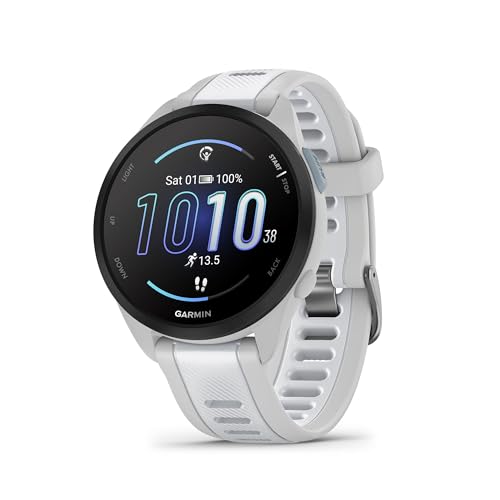
Garmin Forerunner 165, Mist Grey/Whitestone
ASIN B0CT3VBDTV • $372.43 • Ships from Amazon AU
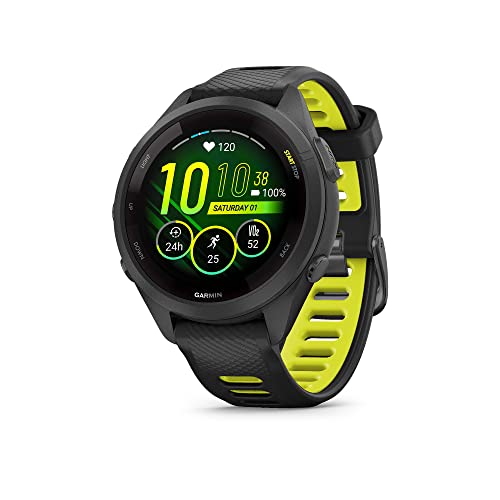
The Forerunner 165 is the watch I'd hand most people who are starting to run seriously, and it's the best-selling running watch on this list, sitting at #23 in Amazon AU's smartwatch category when I checked. It's sold by Amazon AU at $345 at time of writing. You get built-in GPS for pace and distance, wrist heart rate, an AMOLED touchscreen and the physical buttons that make Garmins easy to use at pace. The case is 43mm and the listing weight works out to about 39 grams, so it's light enough to forget about on a long run. Battery is rated at up to 11 days in smartwatch mode and 19 hours in GPS mode. That's a week or two of normal training between charges for most people. It's the watch I'd start with.
The training side is the same Garmin system the dearer models use, cut down rather than stripped out. There's a morning report, HRV status, training readiness, recovery time and training effect, plus daily suggested workouts that adapt to how your runs are going. Garmin Coach and race adaptive plans are there for 5km, 10km and half marathon goals. It has 25 plus activity profiles covering running, cycling, HIIT and strength, so it'll log the gym sessions as well. Garmin Pay handles contactless payments where your bank supports it, and smart notifications come through from an Android or Apple phone. Incident detection can send your live location to emergency contacts during select outdoor activities, as long as your phone's with you and has coverage. For a first proper running watch, that covers nearly everything most people end up using.
The model code on this listing is 010-02863-21, the Mist Grey and Whitestone colour, and the warranty is stated as one year from the manufacturer. The Australian Consumer Law sits on top of that when you buy from Amazon AU. The light band shows dirt and sunscreen more than black does, so give it a rinse after sweaty runs. The listing doesn't state multi-band GPS, so expect a slightly messier trace under heavy tree cover than the 965 gives you. There's no music storage on this version, and the 165 Music model adds that for about $100 more. Keep the charge contacts dry before you clip the cable on. It's the one I'd buy for most new runners.
Honest caveats: No multi-band GPS is stated on the listing, so traces under heavy canopy or between tall buildings won't be as tidy as the 965's. There's no music storage on this version, no maps and no triathlon profile listed. The warranty is one year from the manufacturer, with the Australian Consumer Law on top.
Best for: New and regular runners who want a proper Garmin GPS watch with real buttons without paying for features they won't use.
Display: AMOLED touchscreen, 43mm case • Battery: Up to 11 days smartwatch / 19 hr GPS • Weight: About 39g (listing) • Profiles: 25+ incl. running, cycling, HIIT • Payments: Garmin Pay • Model: 010-02863-21 • Seller: Amazon AU • Warranty: 1 year manufacturer • Rank: #23 in Smartwatches (Amazon AU)
View on Amazon AU
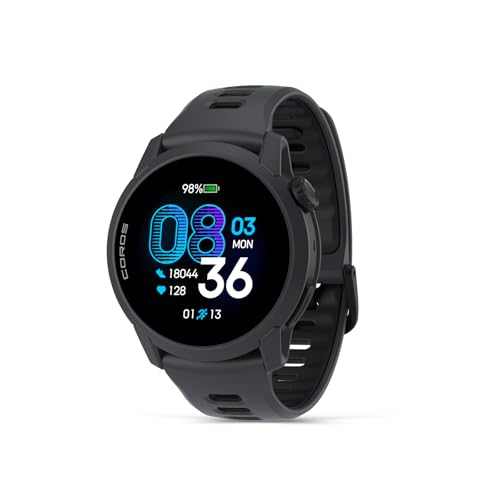
COROS PACE 4, Black with Silicone Band
ASIN B0G14KQB27 • $479.95 • Ships from Amazon AU
The COROS PACE 4 is the light, long-lasting option, and it's the newest watch here with a February 2026 release date on the listing. It's sold by Amazon AU at $480 at time of writing and sits at #56 in the smartwatch category. The headline is battery: COROS rates it at 41 GPS hours and 19 days of daily use, more than double the GPS hours of the Forerunner 165. The screen is a 1.2 inch colour AMOLED touchscreen with a tapered edge, and the body is a low-profile two-tone design that sits close to the wrist. The listing weight works out to about 32 grams, the lightest of the five picks. That's a noticeable difference on a skinny wrist or over a long race. If charging is the thing that annoys you most about your current watch, start here.
The listing is short on detail. It mentions ultralight engineering, long battery life and advanced training tools without listing them, so I haven't claimed features it doesn't state. What it does give you is the hardware that matters most for running: GPS, a bright screen and a battery that'll get through a week of hard training and a long run without a top-up. COROS watches pair with the COROS app on your phone, which is where your workouts, plans and history live. In my experience it's simpler than Garmin Connect, which some runners like and others find a bit thin. If you already follow a coach who builds workouts in Garmin's system, that's a good reason to stay with a Forerunner. If you don't, the PACE 4 is a strong alternative at this price.
The part number on this listing is WPACE4-BLK with model W335, in black with a silicone band, and the warranty is stated as two years limited. That's double the manufacturer term on the Garmin listings here, and the Australian Consumer Law applies on top of it. The listing doesn't state multi-band GPS, a water rating or the button layout, so check the current listing photos and specs before you order. A nylon band version is also listed for a little less if you prefer the feel. Rinse the band and case after salty runs, and dry the charge contacts before charging. It's my pick for runners who'd rather charge less often than read more graphs.
Honest caveats: The listing gives very little feature detail beyond battery, screen and weight, so the water rating, multi-band GPS and button layout aren't stated. The COROS app is simpler than Garmin Connect, and fewer coaching platforms build workouts for it. Check the current listing before you swim with it.
Best for: Runners who want the longest GPS battery and the lightest watch here, and don't need Garmin's training system.
Display: 1.2 inch AMOLED touchscreen • Battery: Up to 41 hr GPS / 19 days daily use • Weight: About 32g (listing) • Released: February 2026 (listing) • Model: WPACE4-BLK (W335) • Seller: Amazon AU • Warranty: 2 years limited (listing) • Rank: #56 in Smartwatches (Amazon AU)
View on Amazon AU
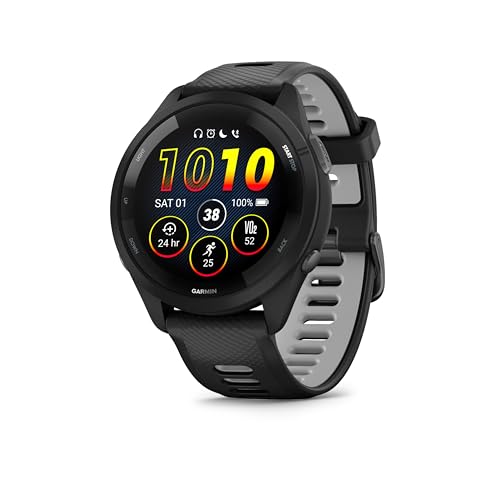
Garmin Forerunner 265, 46mm, Black/Powder Grey
ASIN B0BS1T9J4Y • $397 • Sold by Atkinsons Australia on Amazon AU
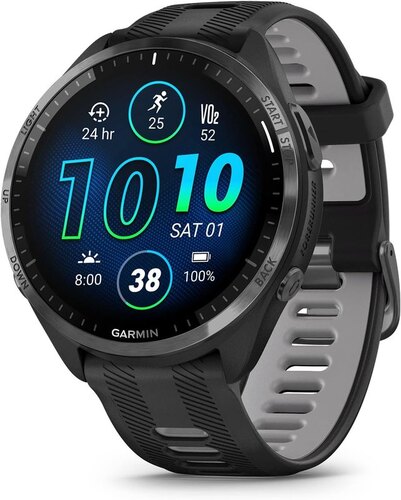
The Forerunner 265 is where Garmin's running watches stop being a starter and turn into a full training tool, and for a lot of runners it's the one to stop at. This is the 46mm version in Black and Powder Grey, sold by Atkinsons Australia at $699 at time of writing and ranked #55 in Amazon AU's smartwatch category. It has an AMOLED touchscreen with physical buttons, up to 13 days of battery in smartwatch mode and up to 20 hours in GPS mode. The listing weight works out to about 47 grams, heavier than the 165 but still comfortable on most wrists. It adds 30 plus activity profiles including triathlon and open-water swimming, which the 165 doesn't list. If you swim or ride as well as run, that alone can justify the jump. It's the all-rounder of the group.
The training features build on the 165's. There's the morning report with HRV status, training readiness and weather, and the readiness score pulls together sleep quality, recovery, training load and HRV to suggest whether today's a hard day or an easy one. Daily suggested workouts adapt after every run, and you can enter a race and course in Garmin Connect and follow a race widget on the watch as the day gets closer. For anyone working towards a specific half or full marathon, that race planning is the feature that gets used most. Like all of Garmin's readiness numbers, the listing says the data is a close estimation, so treat it as a guide rather than gospel. The button layout matches the 165, so moving up is easy. It's the model I'd pick for a first marathon block.
Atkinsons Australia ships from inside Australia, and the buy box showed 3 to 4 November delivery to Erina when I checked. The listing doesn't state a warranty term, so ask the seller and keep your invoice, since the Australian Consumer Law applies either way. The model code is 010-02810-00, which matches the 265 family. Multi-band GPS isn't stated on this listing, so I haven't claimed it here. The 265S below is the smaller-case version if this 46mm one feels too big for your wrist. Rinse the buttons under the tap after salty runs so they don't start sticking. It's my pick for runners training for a specific race.
Honest caveats: This one is sold by Atkinsons Australia rather than Amazon AU, and the listing doesn't state a warranty term. Multi-band GPS isn't stated on the listing either. The 46mm case is the largest Forerunner size here, so small wrists should look at the 265S instead.
Best for: Runners and triathletes training for a specific race who want Garmin's full training plan and race tools.
Display: AMOLED touchscreen, 46mm case • Battery: Up to 13 days smartwatch / 20 hr GPS • Weight: About 47g (listing) • Profiles: 30+ incl. triathlon, open-water swim • Model: 010-02810-00 • Seller: Atkinsons Australia (ships in AU) • Warranty: Not stated on the listing • Rank: #55 in Smartwatches (Amazon AU)
View on Amazon AU
Garmin Forerunner 265S, 42mm, Black/Amp Yellow
ASIN B0C2QGY5TK • $399.50 • Ships from Amazon AU
The Forerunner 265S is the smaller-case version of the 265 and the watch I'd point smaller wrists towards. This one is the 42mm case in Black and Amp Yellow, sold by Amazon AU at $747 at time of writing and ranked #89 in Amazon AU's activity tracker category. You get an AMOLED touchscreen with traditional button controls in a lightweight 42mm design. Battery is up to 15 days in smartwatch mode and up to 24 hours in GPS mode, a step up from the 165's 19 hours. The listing states 30 plus built-in activity profiles including running, triathlons, cycling and open-water swimming. If you swim or ride as well as run and the 46mm 265 looks like a lot of watch on your wrist, this is the one to look at.
The training side matches the 265. There's a morning report with an overview of your sleep, recovery and training outlook alongside HRV status, training readiness and weather, and a training readiness score built from sleep quality, recovery, training load and HRV. You can enter a race and course in the Garmin Connect app and follow a race widget on the watch, and the daily suggested workouts adapt after every run to match performance and recovery. Garmin says the data is a close estimation, so treat it as a guide. There's also a pulse ox sensor for blood oxygen saturation, and smart notifications for emails, texts, reminders and alerts when it's paired with a compatible phone. The listing doesn't mention a microphone or speaker, so I haven't claimed calls from the wrist.
Amazon AU is the seller, so the Australian Consumer Law applies on top of whatever the maker's warranty says, and the buy box showed 5 November delivery to Erina when I checked. The listing doesn't state a warranty term or a model code, so keep your invoice and check the code on the box against the 265S before you wear it. Multi-band GPS isn't stated either, so I haven't claimed it. Rinse the buttons under the tap after salty runs so they don't start sticking, and dry the charge contacts before you clip the cable on. It's my pick for runners with smaller wrists who still want triathlon and open-water swim profiles.
Honest caveats: The listing doesn't mention maps, calls from the wrist, multi-band GPS, a warranty term, a model code or the weight. At 24 GPS hours it's behind the 965's 31 and the PACE 4's 41. The 42mm case suits smaller wrists, so if yours are big the 46mm 265 is the better fit.
Best for: Runners with smaller wrists who want Garmin's training tools plus triathlon and open-water swim profiles.
Display: AMOLED touchscreen with buttons, 42mm case • Battery: Up to 15 days smartwatch / 24 hr GPS • Profiles: 30+ incl. triathlon, open-water swim • Health: Pulse ox sensor • Seller: Amazon AU • Warranty: Not stated on the listing • Rank: #89 in Activity Trackers (Amazon AU)
View on Amazon AU
Garmin Forerunner 965, Carbon Grey DLC Titanium, Black/Powder Grey
ASIN B0CP2SNKND • $598.84 • Ships from Amazon AU
The Forerunner 965 is the top of the Forerunner line here, and it's the one I'd pick for long runs, trails and anyone who cares about GPS accuracy above everything else. It's sold by Amazon AU at $950 at time of writing and ranks #59 in Amazon AU's activity tracker category. This is the Carbon Grey DLC titanium bezel with a black case and a Black and Powder Grey band. Battery is rated at up to 23 days in smartwatch mode and 31 hours in GPS mode. It's the only pick whose listing states multi-band GNSS, with SatIQ choosing when to use it. That's the feature that cleans up traces under gum trees and between buildings. It also has full-colour built-in maps for following a route you haven't run before.
The 965 also measures running dynamics from the wrist, including cadence, stride length and ground contact time, along with wrist-based running power, a continuous reading of how much effort you're putting into the road. Coached runners use power to pace hills more evenly than pace alone allows, because pace drops on a climb even when the effort doesn't. You get the same race planning as the 265, with daily suggested workouts based on the race and course you enter in Garmin Connect, and a race widget on the watch. The titanium bezel keeps the weight down for a watch with this much battery. It's a lot of watch, and most of it earns its keep on long training days. If you mostly run 5km around the block, it's more than you need, and the 165 will do the job.
The model code on this listing is 010-02809-20, which matches the 965 family, and the warranty is stated as one year from the manufacturer, with the Australian Consumer Law on top since Amazon AU is the seller. That's worth checking because another 965 listing I looked at carried a Forerunner 265 part number. The case size isn't stated on this listing, so check the current listing photos against your wrist. Maps and multi-band both use more power, so expect fewer than 31 GPS hours with them running. Keep the titanium bezel away from abrasive cleaners. It's my pick for trail runners and marathoners who want the most accurate GPS here.
Honest caveats: The dearest pick, and it first launched in 2023, so a successor could arrive and move the price. The case size isn't stated on the listing. Multi-band GPS and maps cut into the 31 hour GPS rating. The warranty is one year from the manufacturer, with the Australian Consumer Law on top.
Best for: Trail runners and marathoners who want multi-band GPS, maps and running power in one watch.
Display: AMOLED touchscreen, titanium bezel • Battery: Up to 23 days smartwatch / 31 hr GPS • GPS: Multi-band GNSS with SatIQ • Maps: Full-colour, built in • Running metrics: Cadence, stride, ground contact, wrist power • Model: 010-02809-20 • Seller: Amazon AU • Warranty: 1 year manufacturer • Rank: #59 in Activity Trackers (Amazon AU)
View on Amazon AUSide-by-side comparison
| Product | Price | Best for |
|---|---|---|
| Garmin Forerunner 165 | ~$372.43 | New and regular runners |
| Garmin Forerunner 165 Music | ~$451.11 | Running without your phone |
| COROS PACE 4 Black with Silicone Band | ~$479.95 | Longest GPS battery, lightest |
| Garmin Forerunner 265 Running Smartwatch | ~$397 | Race training and triathlon |
| Garmin Forerunner 265S | ~$399.50 | Smaller wrists, swim profiles |
| Garmin Forerunner 965 Carbon Gray DLC… | ~$598.84 | Multi-band GPS and maps |
What we see fail in the workshop: running watches
Running watches don't fail often, but when they do it's nearly always the same three things: the charge contacts, the buttons and the battery. Sweat, salt water and heat are behind most of it, not bad luck or a dud unit. Here's what each fault looks like and what you can do before it gets that far. A rinse and a dry after each run prevents most of it.
Charge contacts that stop connecting
The watch sits on the cable but won't charge, or charges only if you hold it at an angle. Nine times out of ten it's a film of dried sweat and salt on the gold contacts on the back of the case, or corrosion that's started to eat into them. A careful clean with a dry soft brush or a cotton bud with a little fresh water usually fixes it, followed by a proper dry. If the contacts are pitted or green, the corrosion can be deeper, and that's when it's worth bringing in rather than scraping at it with something metal.
Buttons that stick or stop clicking
The lap button is the one that goes first, because it gets pressed hundreds of times a week with sweaty fingers. Salt dries inside the button seal and the button either sticks down, feels mushy or stops registering. Rinsing under the tap while pressing each button a few times after salty runs prevents most of it. Once a button has stopped working completely, it usually needs the seal or switch looked at, and forcing it with a pin can tear the seal and let water into the case. Rubber seals also harden with age and sunscreen.
Batteries that fade and swell
After a couple of years of daily charging, the GPS hours drop and the watch needs charging far more often. That's normal ageing, and heat makes it happen faster. The one to watch for is a battery that's swelling, which shows up as the screen or back case lifting slightly, a gap appearing at the edge, or the watch rocking on a flat table. Stop charging it if you see that, because a swollen lithium-ion cell shouldn't be pushed, and get it looked at before you decide on a new watch.
Decision tree: which one should you actually buy?
- Starting out, or running a few times a week? → The Garmin Forerunner 165 at $345 has GPS, real buttons, Garmin's training plans and 19 GPS hours, which is plenty for most runners.
- Hate charging, or want the lightest watch? → The COROS PACE 4 at $480 is rated for 41 GPS hours, weighs about 32 grams on the listing and has a two-year warranty.
- Training for a specific race or a triathlon? → The Garmin Forerunner 265 at $699 adds triathlon and open-water swim profiles and race planning around your course.
- Smaller wrist, but still want triathlon and swim profiles? → The Garmin Forerunner 265S at $747 has a 42mm case, 24 GPS hours and open-water swim profiles.
- Trails, long runs, and GPS accuracy first? → The Garmin Forerunner 965 at $950 is the only pick with multi-band GPS on the listing, plus maps and 31 GPS hours.
- Watch won't charge, a button's stuck or the battery's fading? → Bring it to our Erina workshop. We'll check the contacts, buttons and battery and tell you what's wrong and whether it's worth fixing before you spend anything on a new watch.
Frequently asked questions
Do I need multi-band GPS for running?
Not for most runners. Single-band GPS is accurate enough on open roads, ovals and most suburban routes, and the difference over a 5km run is usually small. Multi-band earns its keep under heavy tree cover, in gullies and between tall buildings, where the signal bounces before it reaches your wrist. If you run bush trails or city streets a lot, or you want your race distances to match the course, it's worth paying for. Of the picks here, only the Forerunner 965 listing states multi-band GPS, and it uses more battery when it's switched on.
How long does a running watch battery last before it needs replacing?
Most running watch batteries hold up well for two to three years of regular charging before the drop in GPS hours becomes noticeable, and many keep going well past that. Heat is what ages them fastest, so don't leave the watch on a car dashboard or charge it in direct sun. Charging from a decent USB port and not running it flat every time helps too. If the case or screen starts lifting, the battery may be swelling, and you should stop charging it and get it checked.
Is Garmin or COROS better for running?
Both make good running watches, and the hardware gap is smaller than the app gap. Garmin Connect has more training plans, race tools and coaching platform support, and Garmin watches rank higher on Amazon AU. COROS watches tend to go longer between charges and the app is simpler, which some runners prefer. If you train with a coach or a group that sets workouts in Garmin's system, stay with Garmin. If you mostly want to record your runs and charge less often, the COROS PACE 4 is a strong choice.
Can I swim with a running watch?
The Forerunner 265, 265S and 965 listings include open-water or triathlon swim profiles, so they're built to be swum with. The Forerunner 165 and COROS PACE 4 listings don't state a water rating, so check the current listing before you swim with either. Whatever you buy, rinse it in fresh water after the ocean or a chlorinated pool, and don't press the buttons underwater unless the maker says it's fine. Seals age over time, so a watch that was fine in the pool for years can start letting water in.
Why does my running watch pace jump around?
Instant pace comes from GPS position changes measured every second or so, so any error in position shows up straight away as a jump in pace. Tree cover, buildings and a watch worn loose on the wrist make it worse. Using lap pace or average pace instead of instant pace on your main data screen smooths it out. Waiting a minute for the watch to lock on before you start, and syncing it with the phone app regularly, also helps. A multi-band watch like the Forerunner 965 usually gives steadier readings in difficult spots.
Should I buy the music version of a running watch?
Only if you plan to run without your phone. Music versions store songs on the watch and play them through Bluetooth headphones, which is handy for leaving the phone at home. Most runners carry a phone anyway for safety and payments, and features like incident detection need a paired phone with coverage to send a message. The Forerunner 165 Music costs about $100 more than the standard 165 on Amazon AU at time of writing. If you do go phone-free, pick headphones with a secure fit so they stay put.
Related buying guides
Running watch stopped charging or holding a charge?
Most running watch faults are corroded charge contacts, a sticky button full of salt or a tired battery, and a lot of them can be sorted. Bring it into our Erina workshop and we'll find the fault, tell you what it will cost and whether it's worth fixing before you spend anything on a new watch.
Visit our Erina workshop Book Online