![Samsung Galaxy Watch9 [AU Version]](/images/affiliate-products/B0H7W7JFLR.jpg)
Prices from Amazon AU, updated daily. Swipe or use the arrows for more.
Disclosure: This article contains affiliate links to amazon.com.au. If you buy through one of these links iFix may earn a small commission at no extra cost to you. It doesn't change which products we recommend. We focus on what actually lasts based on 16 years of repair-shop experience.
Quick summary8 picks
- Best sellerGarmin Fenix E about$1,217.75AMOLED.
- Samsung Galaxy Watch Ultra about$845
- Samsung Galaxy Watch9 [AU Version] about$697
- Apple Watch Series 12 GPS 46mm Space Grey… about$737
- Garmin Instinct 3 50mm AMOLED about$882.82AMOLED.
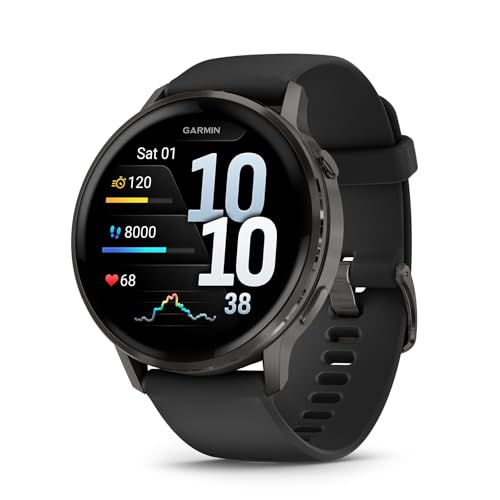
- Garmin Venu® 4 about$847
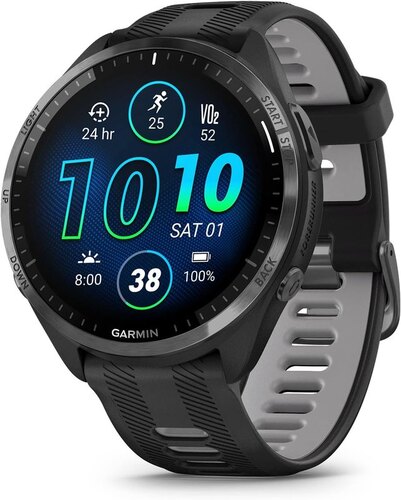
- Garmin Forerunner 965 Carbon Gray DLC… about$939.00AMOLED.
- Most PremiumApple Watch Ultra 4 GPS + Cellular 49mm… about$1,347
Why the battery decides how long a $700 watch lasts
A smartwatch battery is a small lithium-ion pouch cell glued into a sealed case, under a screen that's glued on top of it. That's the whole reason these watches can be water resistant, and it's also the reason they're harder to keep going than a phone. Every charge cycle wears the cell a little. After a few years of daily charging, most of them hold noticeably less than they did new, and the day you notice it is usually the day the watch stops making it to bedtime.
On a $100 watch you shrug and buy another. Spend $700 to $1,300 and the question changes: how many years will this thing do before the battery becomes the problem, and what happens then? That's the angle I've taken with this guide. I've picked five watches from $737 to $1,347, four sold by Amazon AU itself and one by an Australian-operated retailer, and judged them on things I can actually speak to from a repair bench: battery life claims and how they're measured, the glass, the case metal, the water rating and how it ages, and what the maker's own listing tells you.
What I haven't judged is the wellness and fitness tracking. Every listing here leans hard on it, and I'm a repair tech, not the right person to rate those features. If they matter to you, read the maker's own pages and independent reviews for that part. What I can tell you is which of these watches is likely to still be on your wrist in four years, and what tends to go wrong before then. That's a narrower question than most smartwatch reviews ask, but at this price it's the one that decides whether the money was well spent.
Garmin, Apple or Samsung: start with your phone
The first filter is the phone in your pocket, and it narrows things quickly. An Apple Watch needs an iPhone to set up and use properly. The Series 12 listing says it works with your iPhone or Wi-Fi, and even the cellular Ultra 4 is built around being paired to one. If you're on Android, Apple is out. If you're on an iPhone and thinking of changing, the watch is one more thing tying you in, and it's worth thinking about before you buy. If you need an iPhone to go with it, our refurbished iPhones come with our own warranty.
Samsung's Galaxy Watch Ultra runs Samsung's watch software and is aimed at Android phones, and in my experience it's happiest with a Samsung phone, where every feature turns up. On another Android brand most of it works, but check the features you care about against your exact phone before you buy. If you're due for a new Android phone anyway, I've covered the ones I'd buy in the flagship phone guide.
Garmin is the one that doesn't care much what phone you have. Its watches pair with iPhone and Android through Garmin's own app, which makes a Garmin the safest pick if you might change phones in the next few years or if your household runs a mix. The trade-off is that a Garmin feels less like an extension of the phone. Replies, apps and voice assistants are more limited than on an Apple Watch with an iPhone, even though both Garmins here can take calls on the wrist through the phone.
Battery life claims, and what they're measured against
Every maker measures battery life its own way, so the headline numbers don't compare directly. The Apple Watch Series 12 claims up to 24 hours of normal use. The Ultra 4 claims up to 45 hours of what Apple calls Max Extended Workout tracking, which is a stripped-back workout mode, not everyday use. Samsung quotes up to 100 hours for the Galaxy Watch Ultra in power saving mode and up to 48 hours in exercise power saving mode. Garmin claims up to 12 days for the Venu 4. The Fenix E listing only says enhanced battery life and doesn't give a figure, which is a strange omission for a watch that sells partly on endurance.
Those are best-case numbers with the friendliest settings. An always-on bright screen, GPS running for a long walk or ride, LTE switched on, and a lot of notifications all eat into them. In practice the gap between a Garmin and an Apple Watch is still large: one gets charged once or twice a week and the other gets charged every day or so. That difference matters more than people expect, and not only for convenience.
Here's why. A lithium cell wears according to how many full charge cycles it goes through and how much time it spends at high charge and high temperature. A watch that charges every day goes through roughly seven times as many cycles in a year as one charged weekly. After three or four years, that's the difference between a battery that's tired and one that's still going fine. If you want the watch to last, battery life is a durability spec as well as a convenience one. Apple's fast charging helps the daily routine, with 15 minutes giving up to 12 hours on the Series 12 and up to 18 hours on the Ultra 4, but it doesn't change the cycle count.
Glass, case metal and what each one costs you
The screen glass is the part that gets knocked against doorframes, brick walls and gym equipment, and it's the most common reason a smartwatch comes in for repair after the battery. The Ultra 4 uses sapphire crystal over its display, and Apple says titanium and ceramic Series 12 cases do too. The aluminium Series 12 I've picked uses Apple's Ceramic Shield 2 instead. Sapphire is very hard to scratch, which is why mechanical watches use it, but very hard also means it can crack from a sharp knock rather than scuffing. The Instinct 3 uses a scratch-resistant lens and a metal-reinforced bezel, and Garmin's other listings here don't name the glass at all.
Case metal is mostly about scratches, weight and how it ages. Titanium, on the Ultra 4 and the Galaxy Watch Ultra, is light and strong. Steel, on the Fenix E and the Venu 4, is heavier and takes a polish back. Aluminium, on the Series 12, is the lightest and the softest, and it marks more easily. None of that changes what's inside, but it does change how a four-year-old watch looks on your wrist. Bands are the other thing that wears. Silicone and fabric bands stretch, crack and go grubby, and every maker here uses its own fitting, so a spare band from the same maker is a sensible first accessory.
On the inside they're more alike than the prices suggest. Each one is a sealed unit with a glued screen and a glued battery, charged by a proprietary puck or cradle. That charger matters more than it looks, because if you lose it you can't just borrow a USB-C cable. Keep the original, and if you buy a spare, buy the maker's own rather than a marketplace copy, for the reasons covered in this piece on what goes wrong inside bad chargers.
Water ratings, and why they fade
The water ratings on these watches are real but easy to misread. The Ultra 4 is water resistant up to 100m by its listing, and the Galaxy Watch Ultra is rated 10 ATM, which is a pressure figure and roughly the same thing. Both are fine for swimming. Neither rating is a promise about hot water, soap, sunscreen or salt left to dry on the seals, and none of them lasts forever. The seal on a smartwatch is mostly the adhesive under the screen and around the back, and that adhesive ages.
Heat is the enemy here. Hot showers, saunas, spas and a watch left on a car dashboard in an Australian summer all soften the adhesive and let the gap open a fraction. Salt water and chlorine left to dry leave crystals that hold moisture against the seal. Rinse it in fresh water after the beach or the pool, and keep it out of the spa. I've written more about what water ratings really promise on phones, and the same physics applies to watches, only in a smaller case with thinner seals.
The other thing nobody mentions is what happens after a repair. Once a watch has been opened for a battery or screen, its factory water rating can't be taken for granted, even when the job is done properly with new adhesive. That's another reason to look after the battery you've got.
GPS, LTE and paying for a second plan
Two of these watches have mobile connectivity built in: the Ultra 4 (GPS plus Cellular) and the Galaxy Watch Ultra (LTE). With a cellular watch you can take calls, stream music and send messages without your phone nearby, which is handy for runs and swims. The catch is that it usually needs a matching plan or add-on from your mobile carrier, and that's a monthly cost that never appears on the Amazon listing. Check that your carrier supports the exact watch before you buy, because not every Australian carrier supports every model. LTE also drains the battery faster when it's being used. If you mostly want music on a run without the phone, a watch with downloaded playlists and a decent pair of wireless earbuds can do that without any plan at all.
The Ultra 4 also has satellite communications built in, which the listing says lets you text emergency services when you've got no mobile service or Wi-Fi. That's a real step up for bushwalkers and anyone who travels off the main roads. I'd still carry a proper satellite messenger or PLB on a serious trip, because a watch battery is small and gets used for everything else as well.
Both the Ultra 4 and the Galaxy Watch Ultra list dual-frequency GPS, which generally holds position better between tall buildings and under tree cover than single-band GPS. The Series 12 I've picked is the GPS-only model and leans on your iPhone for anything that needs data when you're away from Wi-Fi. For most people who carry a phone anyway, GPS-only is enough and keeps the price and the battery drain down.
How I picked the five
I searched Amazon AU on 6 October 2026 in the $600 to $1,500 range for Garmin, Apple, Samsung and Google watches, kept only new stock, preferring Amazon AU itself as the seller, and ranked them by Amazon AU sales rank. The Fenix E came out on top at #6 in the Smartwatches category, then the Series 12 at #15, the Venu 4 at #35 and the Ultra 4 at #43. I added the Galaxy Watch Ultra at #622 (checked 22 October 2026) so there's a proper option for Android users, because its listing gives battery, water and GPS figures where the higher-ranked Galaxy Watch9 listing mostly doesn't.
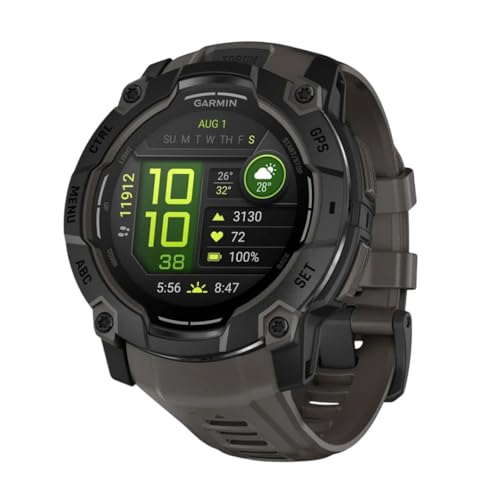
I left a few things out on purpose. Several older Apple Watch Ultra listings in the range were from a marketplace seller rather than Amazon AU, and at a current-model price I'd rather buy from Amazon AU or a local retailer. The Garmin Forerunner 965 and Instinct 3 were close, and the Forerunner is a good choice if running is the main use. It's listed under Activity Trackers rather than Smartwatches, and its listing gives a clear battery figure of up to 23 days in smartwatch mode. The Instinct 3 has a bolted case and a metal-reinforced bezel and would suit someone who's hard on gear, but at $883 it sat too close to the Fenix E to earn a full write-up of its own, so it sits in the table instead. I also skipped the Google Pixel Watch 5 at #153, since this guide was already heavy on daily-charge watches. Four of the five picks are sold by Amazon AU itself, which keeps returns and warranty straightforward on a product where a battery or screen fault can turn up in the first year. The fifth, the Galaxy Watch Ultra, is sold and dispatched by Becextech, an Australian-operated retailer.
One more thing worth saying plainly: a premium smartwatch isn't a better watch in every way. It's a better-built one, with a bigger battery or tougher materials. If all you want is notifications and a step count, a mid-range watch does that, and you'll replace it with less regret when the battery fades.
The 5 picks, $737 to $1,347
Prices are Amazon AU at time of writing (refreshed 22 October 2026) and move week to week. Ranks are Amazon AU category sales ranks, checked on 6 October 2026 (the Galaxy Watch Ultra on 22 October).

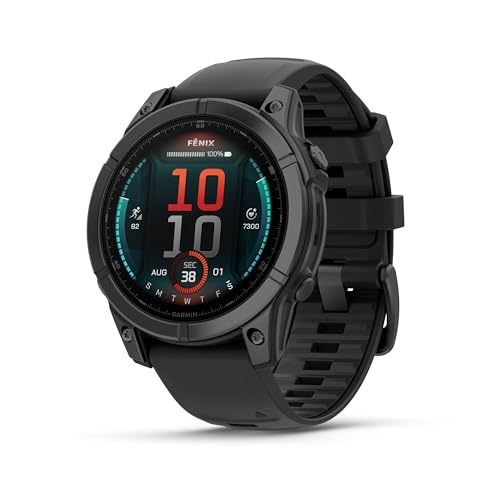
Garmin Fenix E, 47mm, AMOLED, Slate Grey Steel with Black Silicone Band
ASIN B0DC6ZHZX2 • $1,281.83 • Ships from Amazon AU
The Garmin Fenix E is the best-selling watch in this price range on Amazon AU right now, at #6 in the Smartwatches category, and at $1,281.83 it is the second most expensive pick here. It's sold by Amazon AU. It's part of Garmin's Fenix 8 family, with a 47mm slate grey steel case, an AMOLED screen and a black silicone band. The listing points to a built-in LED flashlight, which sounds like a gimmick until you're looking for keys in the dark or walking a dog at night, and a built-in speaker and microphone that let you take calls on the wrist when it's paired to your phone. That combination is a big part of why it's selling.
The listing is thin, though, and I'd rather say so than fill the gaps. It says enhanced battery life but gives no figure, and it doesn't state a water rating, the glass type, the weight or the GPS type. Those are all things you'd want to know on a watch that sells on toughness, and you'll need to check Garmin's own spec page for them before you buy. What's clear is the layout: buttons rather than a touchscreen-first design, which suits gloves, wet hands and mud, and a steel case that will take knocks and can be polished back. The silicone band is standard Garmin fare and easy to replace.
I'd pick this if you want a tough outdoor-style watch that works with an iPhone or Android, from a seller with easy returns. Garmin watches generally charge less often than Apple ones, which helps the battery last more years. It's the one I'd suggest for someone who switches phones every few years. Buttons also mean there's less reason to touch the screen with wet or dirty fingers, which helps on a watch that'll see the outdoors. Keep the charging cable somewhere safe, because Garmin's plug is its own design and not something you'll find in a drawer of spare USB cables.
Honest caveats: Honest caveats: the listing doesn't state battery life, water rating, glass type, weight or GPS type, so check Garmin's own spec page before ordering. The 47mm steel case is big and fairly heavy on a small wrist. Calls need your phone nearby, because this isn't a cellular model.
Best for: Anyone who wants a tough, button-driven outdoor watch that works with both iPhone and Android.
Family: Garmin Fenix 8 series • Case: 47mm, slate grey steel • Display: AMOLED • Extras: Built-in LED flashlight • Calls: Speaker and mic, via paired phone • Battery life: Not stated on the listing • Sold by: Amazon AU • Rank: #6 in Smartwatches (Amazon AU)
View on Amazon AU
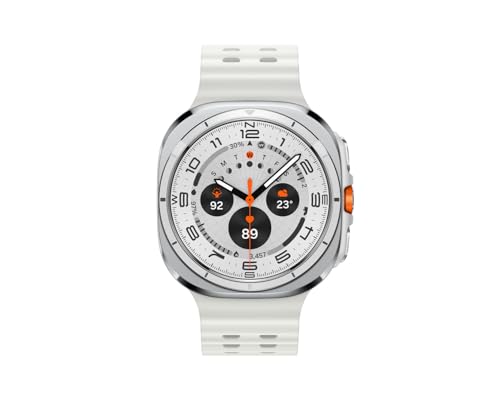
Samsung Galaxy Watch Ultra (2025), 47mm, Titanium White, LTE
ASIN B0FG8M1ND6 • $845.00 • Sold and dispatched by Becextech
The Galaxy Watch Ultra (2025) is the Android pick, and it's one of the better-specified watches in this guide for the money. It's $845 for the 47mm LTE model in titanium white, and it's #622 in Amazon AU's Smartwatches category (checked 22 October 2026). It's the one pick here that isn't sold by Amazon AU itself: the seller is Becextech, an Australian-operated retailer that dispatches the order itself, and delivery to Erina was quoted for 5 November when I checked on 22 October. The case is titanium, the water rating is 10 ATM, and the listing claims up to 100 hours of battery in power saving mode and up to 48 hours in exercise power saving mode. It also lists dual-frequency GPS. The 47mm case is on the large side.
That's a lot of watch for roughly a third less than the Fenix E. Titanium keeps the weight down for the size, and the 10 ATM rating covers swimming and water sports. The LTE model means you can leave the phone behind on a run or swim and still take calls, as long as your carrier supports it and you're paying for the plan. The battery figures are in power saving modes, so day to day with LTE on and the screen bright you'll see less, but it's still a better starting point than a daily-charge watch.
Pick this if you're on Android, ideally a Samsung phone, and want a rugged watch with mobile data built in. Check that your carrier supports it before you buy, and keep the charger safe, because it's a proprietary puck. The power saving battery figures are the best-case claims here, so treat them as a ceiling. Day to day, I'd expect a couple of days per charge with LTE mostly off. It's also the one to look at if you want titanium without paying Apple Ultra prices, since it costs roughly a third less than the Ultra 4.
Honest caveats: it's designed for Android phones and won't suit an iPhone user. The listing's battery claims are in power saving modes, not normal use. LTE usually needs a separate carrier plan, and unlike the Galaxy Watch9 here this listing doesn't carry an AU Version tag, so confirm your carrier supports this exact model before you order. Its sales rank is far lower than the other picks here, so it's a less common sight in the shop. Returns and warranty go through the seller rather than Amazon, so check the seller's return terms on the listing before you order.
Best for: Android users who want a titanium, 10 ATM watch with LTE for leaving the phone at home.
Case: 47mm titanium • Connectivity: 4G LTE • Water rating: 10 ATM • Battery: Up to 100h power saving, up to 48h exercise power saving • GPS: Dual-frequency • Colour: Titanium White • Sold by: Becextech, dispatched by the seller • Rank: #622 in Smartwatches (Amazon AU)
View on Amazon AU
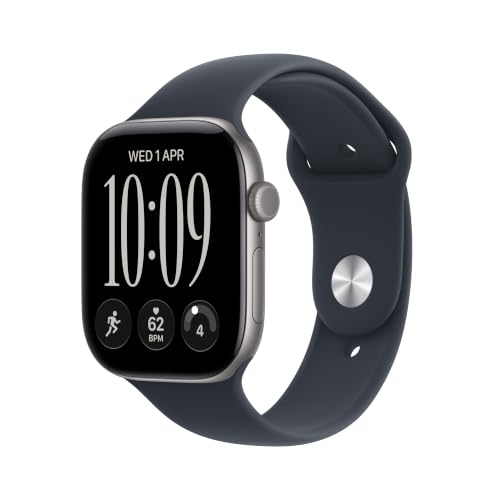
Apple Watch Series 12 GPS, 46mm Space Grey Aluminium, Navy Blue Sport Band M/L
ASIN B0HJB9NBJL • $737.00 • Ships from Amazon AU
The Apple Watch Series 12 is the one most iPhone owners should look at first. It's $737 for the 46mm GPS model in space grey aluminium with a navy blue sport band in M/L, sold by Amazon AU, and it's #15 in the Smartwatches category. The listing claims up to 24 hours of normal use, with 15 minutes of fast charging giving up to 12 hours. The aluminium case has Ceramic Shield 2 over the screen, which Apple says is tougher than any smartwatch glass. The GPS model works with your iPhone or Wi-Fi to send texts, take calls, play music and get notifications. That's the most complete everyday spec sheet of the five.
The reason to buy it is how well it works with an iPhone. Replies, calls, maps and payments all sit on the wrist without much fuss, and that's the part no Garmin quite matches. The reason to think twice is the battery. A watch that needs charging roughly every day runs through charge cycles far faster than a Garmin charged once a week, and after a few years that shows. Aluminium is the lightest case Apple makes but also the easiest to mark, so a decent screen protector or a slim bumper is worth it if you work with your hands. Remember to check the band size, because this is the M/L.
Pick this if you have an iPhone and want the watch that works best with it, and you don't mind charging nightly. It's light and slim enough to wear all day and to bed. The 46mm size gives a bigger screen and a slightly bigger battery than the smaller case, which helps a bit with the nightly charge. Keep the charger by the bed and put it on while you shower in the morning, and the 15-minute fast charge covers most of a day. If the battery ever starts letting you down, look at it early rather than living with it, because a tired cell is also the one most likely to swell.
Honest caveats: Honest caveats: it only works with an iPhone. Battery life is up to 24 hours by the listing, so it's a nightly charge. The aluminium case scratches more easily than titanium or steel, and the M/L band won't fit smaller wrists. This is GPS-only, with no cellular.
Best for: iPhone owners who want the closest match with their phone and are fine charging every night.
Case: 46mm space grey aluminium • Glass: Ceramic Shield 2 • Connectivity: GPS, works with iPhone or Wi-Fi • Battery: Up to 24h normal use • Fast charge: 15 minutes for up to 12h • Band: Navy blue sport band, M/L • Sold by: Amazon AU • Rank: #15 in Smartwatches (Amazon AU)
View on Amazon AU
Garmin Venu 4, 45mm, Slate with Black Silicone Band
ASIN B0FRG18TLS • $847.00 • Ships from Amazon AU
The Garmin Venu 4 is the watch here with the longest stated battery life in normal use, up to 12 days by the listing, and that's the main reason it's in this guide. It's $847 for the 45mm slate model with a black silicone band, sold by Amazon AU, and it's #35 in the Smartwatches category. The listing describes a bright, colourful display, a stainless steel design and a built-in flashlight. You can make and take calls from the wrist through your phone, and use your phone's voice assistant to reply to messages. It has more than 80 built-in sports apps. That's a long list for a watch that also claims the best battery here.
For anyone who's had an Apple Watch and got tired of charging it every night, this is the obvious move. Twelve days is a stated maximum, and GPS workouts, a bright screen and lots of notifications will cut it down, but even half that means charging once or twice a week. Fewer cycles means a battery that ages more slowly, which is the most useful thing a watch at this price can do for its own lifespan. Like the Fenix E, it pairs with iPhone and Android through Garmin's app, so it survives a change of phone. It's a more everyday-looking watch than the Fenix, closer in style to an Apple Watch.
Pick this if you want a smartwatch that looks at home in the office and still goes most of a week or more between charges, with either phone brand. It's also the pick I'd suggest for someone upgrading from an older Apple Watch whose battery is fading, because it removes the daily charge habit that wore the old one out. Check the water rating and glass type on Garmin's own page first, since the listing leaves both out. The steel design and 45mm size sit comfortably on most wrists, and the silicone band is easy to swap.
Honest caveats: Honest caveats: the listing doesn't state the water rating, the glass type, the weight or the display technology by name. Twelve days is a best-case figure. At $847 it costs well below the Fenix E, but you're paying mostly for the design and features rather than toughness.
Best for: People who want an everyday-looking watch that charges once or twice a week and works with any phone.
Case: 45mm, stainless steel design • Battery: Up to 12 days (stated) • Display: Bright, colour display • Extras: Built-in flashlight • Calls: Make and take calls via paired phone • Sports apps: 80+ built-in • Sold by: Amazon AU • Rank: #35 in Smartwatches (Amazon AU)
View on Amazon AU
Apple Watch Ultra 4 GPS + Cellular, 49mm Black Titanium, Black Ocean Band
ASIN B0HJ9WL2Z2 • $1,347.00 • Ships from Amazon AU
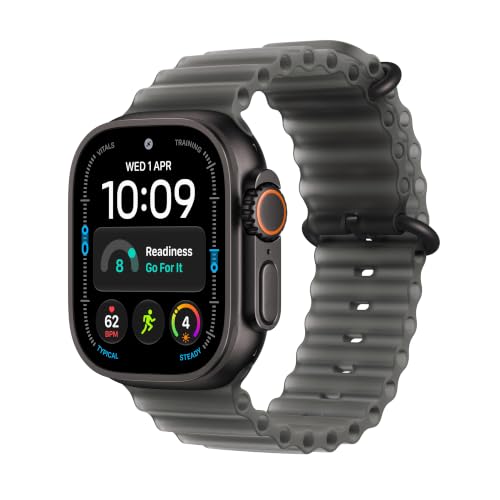
The Apple Watch Ultra 4 is the most expensive watch here at $1,347, and it's the one that fixes most of what I'd complain about on the Series 12. It's the 49mm GPS plus Cellular model in black titanium with a translucent black ocean band, sold by Amazon AU, and it's #43 in the Smartwatches category. The case is titanium, the display is covered by sapphire crystal, and it's water resistant up to 100m by the listing. Apple claims up to 45 hours of Max Extended Workout tracking, with 15 minutes of fast charging giving up to 18 hours of use. It has dual-frequency GPS. That's the strongest spec sheet in this guide.
The cellular model lets you take calls, stream music and listen with AirPods without your iPhone nearby, and the listing says built-in satellite communications let you text emergency services when there's no mobile service or Wi-Fi. For bushwalkers, paddlers and anyone who heads off the main roads, that's a meaningful addition. The bigger case means a bigger battery, so it'll usually go a couple of days between charges in normal use, which halves the cycle count compared with a daily-charge watch. Titanium and sapphire should also look much better after four years than aluminium. That cuts the number of charge cycles and the wear on the battery along with it.
Pick this if you're on an iPhone, spend time outdoors, and want the toughest, longest-running Apple Watch. If you'll never use cellular or satellite features, the Series 12 does the everyday things for about $600 less. It's also the watch here that I'd expect to look best after years of hard use, thanks to the titanium and sapphire. Budget for the carrier add-on if you want cellular, and keep the original charger. If you need an iPhone to pair it with, the refurbished ones we sell come with our own warranty.
Honest caveats: Honest caveats: it only works with an iPhone, and cellular use usually needs a carrier plan add-on. The 49mm case is large on smaller wrists. The 45-hour battery claim is in a reduced workout mode, not everyday use. Sapphire resists scratches but can crack from a hard, sharp knock.
Best for: iPhone users who spend time outdoors and want titanium, sapphire, cellular and satellite texting.
Case: 49mm black titanium • Glass: Sapphire crystal • Water: Resistant up to 100m • Battery: Up to 45h Max Extended Workout tracking • Fast charge: 15 minutes for up to 18h • Connectivity: GPS + Cellular, satellite texting to emergency services • GPS: Dual-frequency • Sold by: Amazon AU • Rank: #43 in Smartwatches (Amazon AU)
View on Amazon AUSide-by-side comparison
| Product | Price | Best for |
|---|---|---|
| Garmin Fenix E | ~$1,217.75 | Garmin on any phone |
| Samsung Galaxy Watch Ultra | ~$845 | Android, power saving mode |
| Samsung Galaxy Watch9 [AU Version] | ~$697 | Android, Samsung phones |
| Apple Watch Series 12 GPS 46mm Space Grey… | ~$737 | iPhone users, daily charging |
| Garmin Instinct 3 50mm AMOLED | ~$882.82 | Hard-wearing, rugged use |
| Garmin Venu® 4 | ~$847 | Garmin, up to 12 days |
| Garmin Forerunner 965 Carbon Gray DLC… | ~$939.00 | Running, long battery |
| Apple Watch Ultra 4 GPS + Cellular 49mm… | ~$1,347 | iPhone, cellular, sapphire glass |
What we see fail at the bench: smartwatches
Smartwatches come in for fewer reasons than phones, but the reasons repeat. Most are about the battery, the glass, or water that got past an ageing seal, and most give some warning before the watch stops altogether. A watch at this price is worth looking after, and knowing what fails first is the easiest way to do it. Here are the three I see most.
Batteries that swell and lift the screen
As a watch battery ages it can swell, and in a sealed case the only place it can push is up against the screen. The first sign is often a screen that sits a fraction proud of the case on one side, a gap you can catch with a fingernail, or a display that's started to lift at an edge. Stop charging it at that point and don't press the screen back down, because you'd be pressing on a damaged cell. It's a battery replacement job, and the sooner it's done, the less chance the swelling cracks the screen or tears the cable under it.
Water past a tired seal
A watch that's swum happily for two years can suddenly let water in, and it's usually the seal ageing, not a sudden defect. Hot showers, spas and dried salt speed it up. The signs are fog under the glass, a speaker that sounds muffled long after it's dried, or a watch that won't charge or keeps restarting. Get it off the charger and bring it in quickly, because corrosion keeps working after the water is gone. The board inside is tiny, and a few days can be the difference between a clean-up and a dead watch.
Charging contacts and pucks
A lot of 'it won't charge' watches turn out to be dirty or corroded contacts on the back of the watch or the charger. Sweat and sunscreen build up a film that stops the connection, and on watches with pins the contacts can corrode green. A soft dry brush and a wipe with isopropyl alcohol on a cotton bud fixes most of them. The other common cause is a marketplace replacement charger that doesn't sit quite right or doesn't deliver what the watch expects. Try the original charger before assuming the battery has gone.
Decision tree: which one should you actually buy?
- Not sure which phone you'll have in two years? → The Garmin Fenix E at $1,281.83 is the top-ranked watch here and pairs with iPhone and Android alike.
- On Android and want to leave the phone at home? → The Galaxy Watch Ultra (2025) at $845 is titanium, 10 ATM and LTE, and it's the Android pick with mobile data built in.
- On an iPhone and fine charging every night? → The Apple Watch Series 12 at $737 is the closest match for an iPhone, at up to 24 hours per charge.
- Tired of charging every day? → The Garmin Venu 4 at $847 claims up to 12 days and works with either phone.
- On an iPhone and often out of mobile range? → The Apple Watch Ultra 4 at $1,347 adds titanium, sapphire, cellular and satellite texting to emergency services.
- Screen lifting, fogged up or won't charge? → Take it off the charger and bring it to our Erina workshop. We'll check the battery, seal and charging contacts and give you a quote before any work starts.
Frequently asked questions
Is an Apple Watch Ultra worth it over a Series 12?
If you're outdoors a lot, probably yes. The Ultra 4 adds a titanium case, sapphire crystal over the screen, a 100m water rating, cellular, satellite texting to emergency services and a bigger battery that usually lasts a couple of days. The Series 12 is lighter, costs about $600 less, and does the everyday things just as well with an iPhone, but it needs charging nightly and its aluminium case marks more easily. For a desk job and the odd walk, the Series 12 is plenty. For bushwalking, water sports or working outdoors, the Ultra 4 earns its price.
Can I use an Apple Watch with an Android phone?
No. An Apple Watch needs an iPhone to set up and use properly, and the Series 12 listing says it works with your iPhone or Wi-Fi. If you're on Android, the Galaxy Watch Ultra (2025) is the closest premium option, especially with a Samsung phone, and either Garmin here works with iPhone and Android. If you think you might switch phones in the next few years, a Garmin is the safest choice, because it keeps working when you change brands.
How long does a smartwatch battery last before it needs replacing?
It depends mostly on how often you charge it. Every charge cycle wears the cell a bit, so a watch charged daily ages its battery much faster than one charged once a week. Heat speeds it up too, so a watch that lives on a hot car dashboard or gets worn in the spa wears faster. Most daily-charge watches show a noticeable drop in a few years. To slow it down, avoid heat, don't leave it sitting on the charger at full for days, and if it'll be stored for a while, leave it about half charged.
Can a smartwatch battery be replaced?
Usually, yes, but it isn't like changing a battery in a regular watch. The battery is glued in and the screen is glued on top, so the screen has to come off to reach it, then new adhesive goes on when it's closed back up. Done properly it works, but the factory water rating can't be taken for granted afterwards. If the battery has swollen and the screen is lifting, stop charging it and get it looked at soon, because the swelling can crack the screen or damage the cable underneath.
Is 10 ATM the same as 100m water resistance?
Close enough for everyday use. 10 ATM is a pressure rating, and it's roughly equivalent to a 100m static water test. Both are fine for swimming. What neither means is that the watch is safe in hot water, soapy water or a spa, or that the rating lasts forever. The seals are mostly adhesive, and heat, chlorine and dried salt wear them down over time. Rinse the watch in fresh water after the beach or the pool, and keep it out of the sauna and spa.
Do I need a separate phone plan for an LTE or cellular watch?
Usually, yes. A cellular smartwatch like the Apple Watch Ultra 4 GPS plus Cellular or the LTE Galaxy Watch Ultra generally needs a matching plan or add-on from your mobile carrier, and that's a monthly cost on top of the watch. Not every carrier supports every watch, so check your carrier's list for the exact model before you buy. If you always carry your phone, a GPS-only model like the Series 12 does nearly everything for less, and its battery lasts a bit longer without LTE running.
Related buying guides
Screen lifting, fogging up, or won't charge?
On a smartwatch, a lifting screen usually means a swelling battery, and fog under the glass means water got past an ageing seal. Both get worse the longer they're left, and charging a swollen battery is the worst thing you can do. Bring it into our Erina workshop. We'll open nothing until we've told you what we think is wrong, what it'll cost, and whether it's worth doing.
Visit our Erina workshop Book Online