Prices from Amazon AU, updated daily. Swipe or use the arrows for more.
Disclosure: This article contains affiliate links to amazon.com.au. If you buy through one of these links iFix may earn a small commission at no extra cost to you. It doesn't change which products we recommend. We focus on what actually lasts based on 16 years of repair-shop experience.
Quick summary8 picks
- Entry PickApple Watch SE 3 GPS 40mm Midnight… about$397
- Garmin vívomove® Trend about$449
- Garmin vívoactive® 5 about$474AMOLED.
- Garmin Lily 2 Active about$476
- Garmin vívoactive® 6 about$485AMOLED.
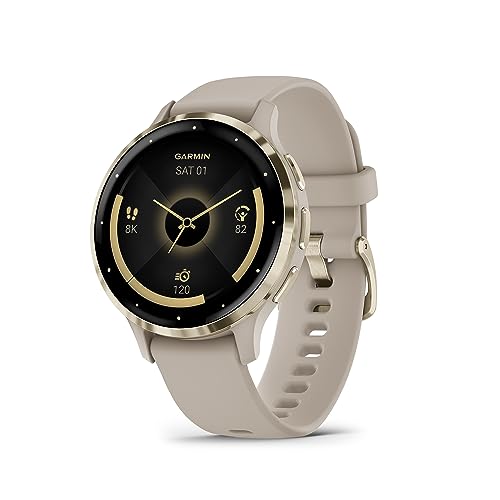
- Garmin Venu 3S about$619AMOLED.
- Apple Watch Series 12 GPS 42mm Light Gold… about$647
- Most PremiumGarmin Venu 4 about$847
Why a women's smartwatch is mostly about case size
Most of the watches sold as women's smartwatches are the same hardware as the bigger model, in a smaller case with a lighter colour and a narrower band. That isn't a complaint. A 40 or 42 mm case sits flatter on a slim wrist, catches less on jumper cuffs and doesn't dig into the back of your hand when you bend it, and in my experience that's what decides whether a watch gets worn every day or ends up in a drawer with a flat battery.
So I've judged these on the hardware you live with: case diameter and thickness, weight, which band size comes in the box, how long the battery lasts and what it needs to charge. I've left the health and wellness claims on the listings out of it, because that isn't something a repair shop can test and it isn't my place to tell you what a sensor reading means. What I can tell you is which parts wear out, and which watches are easy to keep going for four or five years.
The five picks run from $397 to $847 on Amazon AU at time of writing, and every one is sold and shipped by Amazon AU. Two are Apple, and they only make sense if you carry an iPhone. Three are Garmin, which pair with either kind of phone and last days rather than hours between charges. If you'd rather start from the bigger flagships, the premium smartwatch guide covers the 44 mm and up crowd.
Measure your wrist before you pick a case
The easiest way to get this right is a strip of paper and a ruler. Wrap the paper around your wrist where the watch will sit, just above the wrist bone, mark the overlap and measure it. Then lay a coin or a bottle cap of about the same diameter as the case on the top of your wrist and look at it from the side, because the thing that makes a watch look too big is usually the lugs hanging past the edge of your wrist, not the face itself.
Band size is the part people get wrong on Amazon. Apple sells the same watch with an S/M or an M/L sport band, and the two Apple listings in this guide ship different sizes: the Series 12 comes with S/M and the SE 3 comes with M/L. If you've got a small wrist and you order the M/L, you'll be on the last hole or past it, and a loose watch slides around, which is hard on the band pins and the sensor window on the back.
Garmin's listings name a band colour and material but not always a band length, so check the size chart on the day you order. Thickness matters as much as diameter for comfort. The Lily 2 Active's listing dimensions come out at about 11 mm thick and the Venu 4 41mm at about 12 mm, which is the difference between a watch that slides under a shirt cuff and one that catches on it every time you reach for something.
Battery life on a small watch
A smaller case holds a smaller battery, and there's no getting around that physics. What changes between brands is how hard the watch works that battery. The Apple Watch Series 12 lists up to 24 hours of normal use and the SE 3 up to 18 hours, so either one goes on the charger every night. The Garmin vivoactive 6 lists up to 11 days, which means you'd charge it maybe three times a month, depending on how much you use GPS.
Neither approach is wrong, but they suit different people. If you already charge your phone beside the bed, adding a watch to the same routine is easy, and Apple's fast charging helps: the Series 12 listing claims up to 12 hours of use from 15 minutes on the charger. If you travel, sleep away from home a lot or simply forget, a Garmin that lasts a week or more is the one you'll still be wearing in six months, because a flat watch is just jewellery.
Two of the Garmin listings here don't state a battery figure at all, the Lily 2 Active and the Venu 4 41mm, so I haven't quoted one. Check Garmin's own spec page for those before you buy if battery life is the deciding point. And keep in mind that every lithium cell loses capacity with charge cycles, so a watch you charge nightly will age its battery faster than one you charge twice a month.
Your phone decides half of this for you
Apple Watch needs an iPhone to set up and run properly. Both Apple listings say the GPS models work with your iPhone or Wi-Fi, and there's no Android support at all, so if you use a Samsung or a Pixel phone the two Apple picks are off the table. If you're due for an iPhone anyway, we sell refurbished iPhones with our own warranty in the store rather than linking them to Amazon, and a two or three year old model runs a new Apple Watch without trouble.
Garmin watches pair through the Garmin Connect app on iPhone or Android, which makes them the safer pick if there's any chance you'll switch phones in the next few years. The trade is that notifications and replies are more limited than on an Apple Watch paired to an iPhone. You'll see messages and calls on the wrist, but the Garmin is mostly a watch with a good battery rather than a phone on your arm, and some people prefer it that way.
I'd make this call before you look at colours or prices. A watch that suits your phone and your charging habits will get worn, and one that doesn't will end up back in the box. If you're not sure which phone you'll be carrying in two years, lean towards Garmin. If you're settled on iPhone and want the tightest connection, the Apple picks are the obvious place to start.
Screens, glass and what they cost you
The vivoactive 6 lists an AMOLED touchscreen, and the Apple Watches use bright OLED screens too, which look sharp and colourful. The cost is battery. A bright always-on screen on a small case is usually the single biggest drain, and turning off always-on display or dropping brightness a notch is the easiest way to stretch a day or two out of any of these. The Lily 2 Active's listing describes a patterned lens but doesn't state the display type, so I won't guess at it.
Glass is where the money is when something goes wrong. Apple says the Series 12's aluminium cases now have Ceramic Shield 2 glass, which it claims is tougher than any smartwatch glass, while its titanium and ceramic cases use sapphire. That's a meaningful claim on a watch you wear every day, because the screen is glued to the case and a cracked front almost always means replacing the whole display assembly rather than just the glass.
A screen protector or a thin bumper case is worth it if you garden, lift weights or work with your hands. Pick one made for your exact case size, because a 40 mm protector on a 42 mm watch leaves the edges bare, and that's where most cracks start. I'd skip the hard plastic covers that clip over the whole watch, since they trap sweat and sunscreen against the glass and the back sensor window, and that grime is what we end up cleaning out of the buttons.
What a smartwatch costs to own
The box price is only part of it. Over four or five years you'll probably replace a band or two, and silicone bands crack at the holes long before the watch wears out. Apple and Garmin both use their own band fittings, so check the replacement price on the day you buy. A spare band in a second colour is also the easiest way to make one watch suit both a workday and a weekend without buying a second watch.
Charging is the other running cost, and it's where I see the most avoidable damage. Every pick here uses its own charger, and a no-name replacement charger or a worn-out USB brick can run hot or deliver dirty power. If a charger or cable is getting warm or the watch only charges at a certain angle, replace it with the proper part. The guide to bad chargers explains what goes wrong inside the no-name ones and why it matters for small lithium cells.
Then there's the battery itself. After a few years of nightly charging the cell in a small watch holds noticeably less, and on most of these the battery sits under a glued screen, so replacing it is a delicate job. That's part of why I lean towards the Garmins for people who want a watch to last: charging them a few times a month instead of every night means fewer cycles, and fewer cycles is what keeps a lithium battery healthy for longer.
Water, sweat and sunscreen
None of the five listings in this guide states a water resistance rating in the data Amazon AU returned, so I'm not going to quote one. Check the manufacturer's page for the exact rating before you swim with any of them. What I can say from the workshop is that the water itself is rarely what kills a watch. It's the slow build-up of sweat, salt and sunscreen in the buttons, the speaker grille and the charging contacts that does the damage over a year or two.
Sunscreen is the sneaky one. It's oily, it carries salt and grit, and it sits in the gap around the crown and the band release buttons. Rinse the watch under fresh tap water after the beach or the pool, dry it with a soft cloth and let it air dry before it goes back on the charger. A wet watch on a charger is how charging contacts corrode, and once those contacts are pitted, charging gets unreliable fast.
If a watch does stop responding after getting wet, don't keep pressing buttons or put it on the charger to see if it comes back. Power it off if you can and get it looked at. The water damage explainer covers why corrosion keeps spreading for weeks after the device seems dry, and the same chemistry happens inside a watch as inside a phone, just in a much smaller space.
Buying on Amazon AU: model numbers and colour listings
Every watch here comes in several colours, and on Amazon AU each colour is usually its own listing with its own price. The sales rank is often shared across those colours, so the Lily 2 Active's #43 covers the Lunar Gold, Silver and Jasper Green versions together, and the vivoactive 6's #12 is shared with its Pink Dawn version. I've noted that in the specs so you don't read a shared rank as one colour outselling the rest.
The model number is the quickest check that you're getting an Australian unit. The Apple listings carry part numbers ending in X/A, which is Apple's Australian code, and both come with Apple's one year limited warranty. The Garmin listings carry Garmin part numbers and a 12 month warranty. If you see a listing for the same watch at a noticeably lower price from a third-party seller, check the seller and the warranty line before you order, because that's usually where grey stock turns up.
Prices move week to week, and in my experience the colour listings drift apart by $10 to $40 at a time, so it's worth checking two or three colours if you're not fussed. If you want a smaller, lighter option that isn't a full smartwatch, the value smartwatch guide covers bands and simpler watches under $400, and they're a sensible first step if you're not sure you'll wear one every day.
The 5 picks, $397 to $847
Prices are Amazon AU at time of writing (23 October 2026) and move week to week. Ranks are Amazon AU category sales ranks, checked the same day.

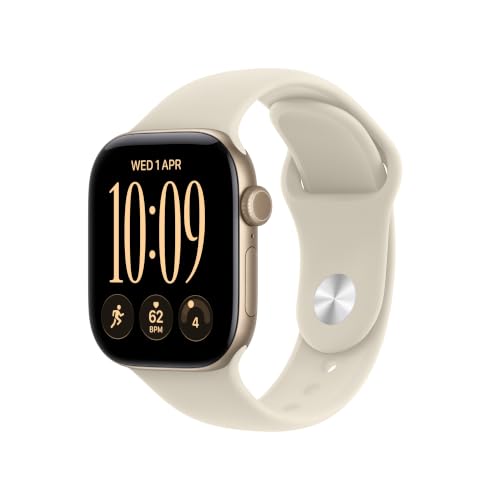
Apple Watch Series 12 GPS 42mm, Light Gold Aluminium, Sand Sport Band S/M
ASIN B0HJB6WXXK • $647.00 • Ships from Amazon AU
If you carry an iPhone, this is the one I'd look at first, and it's the best-ranked watch in this guide. It's $647 at time of writing, sold and shipped by Amazon AU, and it was ranked #6 in Amazon AU's Smartwatches category on the day I checked. The case is 42 mm aluminium in Light Gold, which is the smaller of Apple's two Series 12 sizes. It comes with a Sand sport band in S/M, so it suits a smaller wrist out of the box. Apple says the aluminium cases now use Ceramic Shield 2 glass, which it claims is tougher than any smartwatch glass. The listing went up in September 2026, so this is the current model. This is the GPS version, not cellular.
Battery life is listed at up to 24 hours of normal use, which means it goes on the charger every night, like your phone does. Apple claims 15 minutes of fast charging gives up to 12 hours of use, so a top-up while you shower covers most of a day. The listing also describes fall and crash detection that can contact emergency services through your iPhone, which is a hardware feature I'd count in its favour for anyone who walks or rides alone. It works with your iPhone or Wi-Fi only, with no Android support. The part number is MJED4X/A, Apple's Australian code. Warranty is Apple's one year limited warranty.
The GPS plus cellular version of the same watch is $797 at time of writing, and it only earns the extra if you'd leave your phone at home. Most people won't, so I'd save the $150 and put some of it towards a spare band. Order the S/M band if your wrist measures on the small side, and buy that spare before the first one cracks at the holes. Keep the charger and the watch dry, and rinse off sunscreen after the beach. For an iPhone owner who'll charge it nightly, this is the pick.
Honest caveats: It needs an iPhone and won't work with Android. Battery life is listed at 24 hours, so it's a nightly charge with no way around it. The screen is glued to the case, so a crack means a display replacement. This listing is the GPS model, and cellular costs $150 more.
Best for: iPhone owners who want the most complete smartwatch in a smaller 42 mm case.
Case: 42 mm aluminium, Light Gold • Band: Sand Sport Band, S/M • Glass: Ceramic Shield 2 (aluminium cases, per Apple) • Battery: Up to 24 hours normal use (listing) • Fast charge: Up to 12 hours from 15 minutes (listing) • Phone: iPhone only (GPS model) • Model: MJED4X/A • Warranty: Apple one year limited • Rank: #6 in Smartwatches (Amazon AU)
View on Amazon AU
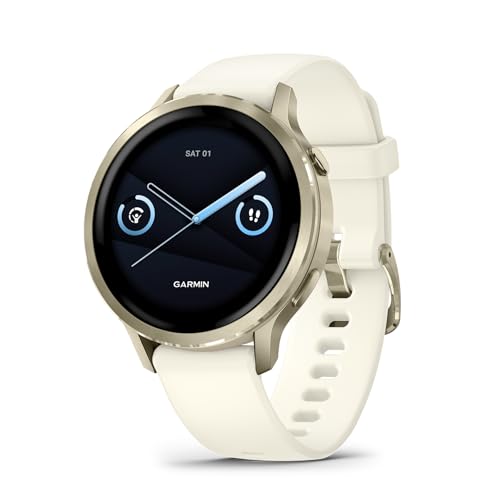
Garmin vivoactive 6 GPS Smartwatch, 42mm, Lunar Gold with Bone Band
ASIN B0F38FCHD2 • $485.00 • Ships from Amazon AU
This is the watch I'd point most people to if they want something that works with any phone and doesn't need charging every night. It's $485 at time of writing, sold and shipped by Amazon AU, and it was ranked #12 in Amazon AU's Smartwatches category on the day I checked. The case is 42 mm, with a Lunar Gold bezel and a Bone silicone band. The listing gives up to 11 days of battery life, which is the longest stated figure in this guide. It has an AMOLED touchscreen and built-in GPS, so it'll track a walk or a run without your phone. The listing first went up in April 2025, so it's a settled model rather than a brand-new one.
Garmin's software leans towards training rather than apps. The listing mentions downloadable animated workouts for strength, cardio, yoga and Pilates through Garmin Connect, and a morning summary of your day when you wake up. It pairs with iPhone or Android through the Garmin Connect app, which is the main reason I'd pick it over an Apple Watch for anyone who might switch phones. Notifications show on the wrist, but replies and apps are more limited than on an Apple Watch. The part number is 010-02985-01, which is worth matching against the box when it arrives. Warranty is listed as 12 months. The Pink Dawn colour is a separate listing at about the same price and shares the same rank.
Eleven days is Garmin's figure, and heavy GPS use or an always-on screen will cut it, but even half of that is a different way of living with a watch. Charging a few times a month also means fewer cycles on the battery, which helps it age more slowly than a watch charged every night. Keep the charging port clean and dry, and wipe the back after a sweaty walk. The listing doesn't state a water rating, so check Garmin's page before you swim with it. For a slim wrist and any phone, this is the one.
Honest caveats: The listing doesn't state a water resistance rating or the case thickness. Replies and third-party apps are more limited than on an Apple Watch. The 11 day battery figure is Garmin's and drops with GPS and an always-on screen. The rank is shared with the Pink Dawn colour listing.
Best for: Anyone with an Android phone, or an iPhone they might change, who wants days between charges.
Case: 42 mm, Lunar Gold bezel • Band: Bone silicone • Display: AMOLED touchscreen • Battery: Up to 11 days (listing) • GPS: Built-in • Phone: iPhone or Android (Garmin Connect) • Model: 010-02985-01 • Warranty: 12 months • Rank: #12 in Smartwatches (Amazon AU), shared with the Pink Dawn listing
View on Amazon AU
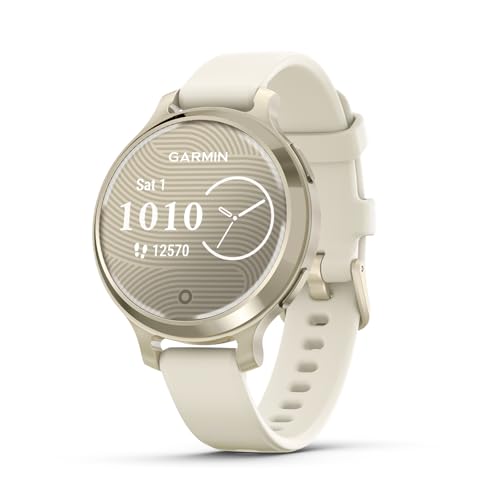
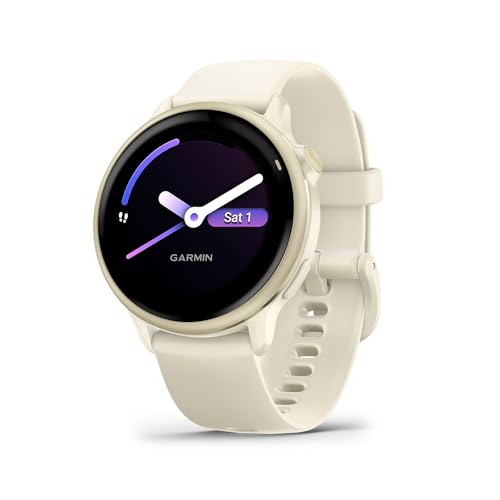
Garmin Lily 2 Active GPS Smartwatch, Lunar Gold with Bone Silicone Band
ASIN B0DGWDRGP6 • $475.85 • Ships from Amazon AU
The Lily 2 Active is the smallest watch in this guide, and it's the one I'd suggest for a slim wrist or for anyone who wants it to look like a watch first. It's $475.85 at time of writing, sold and shipped by Amazon AU, and it was ranked #43 in Amazon AU's Smartwatches category on the day I checked. The listing dimensions come out at about 38 by 38 mm and 11 mm thick, and the listed weight is about 29 g. It has a metal case, two buttons and a patterned lens that hides the screen when it's off. Built-in GPS is listed, so it'll track a walk or a run without your phone in your pocket. It's the 2024 model.
The software is simpler than the vivoactive 6, which suits some people better. The listing mentions preloaded workouts for strength, HIIT and yoga, plus step and activity tracking through the day. Like the other Garmins, it pairs through Garmin Connect on iPhone or Android. The listing doesn't state the battery life or the display type, so I haven't quoted either and won't guess at them, and you should check Garmin's own page if battery is the deciding point for you. The part number is 010-02891-00, and the warranty is listed as 12 months. Silver and Jasper Green versions are separate listings at the same price and share the same rank.
Small watches have small buttons and small charging contacts, so keep both clean, especially after sunscreen or a swim, and let the watch dry before it goes back on the charger. The patterned lens looks lovely but shows scratches, so a thin protector cut for this exact model is worth fitting in the first week. Don't buy it expecting Apple-style apps, because it's a fitness watch with notifications rather than a phone on your wrist. At $475.85 it's within about $10 of the vivoactive 6, so the choice between them comes down to size, not money. If the case size of the others feels too big, this is the one.
Honest caveats: Battery life, display type and water rating aren't stated on this listing, so check Garmin's page. The software is simpler than the vivoactive 6, with fewer apps. The small screen shows less at a glance. The rank is shared with the Silver and Jasper Green listings.
Best for: A slim wrist, or anyone who wants a smartwatch that looks like a dress watch.
Case: Metal, about 38 x 38 x 11 mm (listing dimensions) • Weight: About 29 g (listing) • Band: Bone silicone • Controls: Two buttons plus touch • GPS: Built-in • Battery: Not stated on this listing • Model: 010-02891-00 • Warranty: 12 months • Rank: #43 in Smartwatches (Amazon AU), shared with other colours
View on Amazon AU
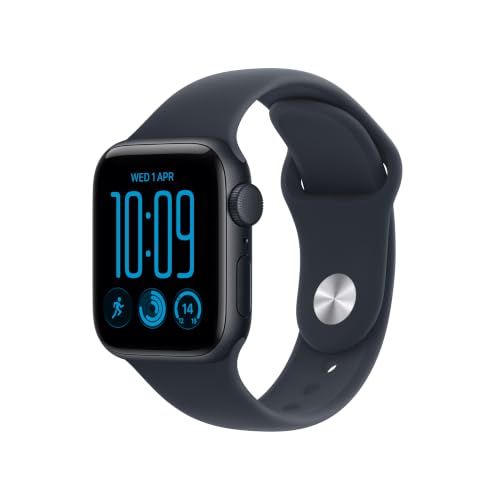
Apple Watch SE 3 GPS 40mm, Midnight Aluminium, Navy Sport Band M/L
ASIN B0HJ9XMQ3L • $397.00 • Ships from Amazon AU
The SE 3 is the way into Apple Watch for less, and it's the lowest-priced watch in this guide. It's $397 at time of writing, sold and shipped by Amazon AU, and it was ranked #11 in Amazon AU's Smartwatches category on the day I checked. The case is 40 mm aluminium in Midnight, which is smaller than the Series 12's 42 mm. Be careful with the band, because this listing ships the Navy sport band in M/L, which may be loose on a small wrist. The listing went up in September 2026, so it's the current SE. Like the Series 12, this is the GPS version and needs an iPhone. The listing also describes fall and crash detection through your iPhone.
Battery life is listed at up to 18 hours, which is less than the Series 12's 24 hours, so it's a nightly charge and a short day if you forget. Apple says it charges up to twice as fast as the SE 2, with up to 8 hours of use from 15 minutes on the charger. It works with your iPhone or Wi-Fi only, with no Android support. The part number is MJL14X/A, Apple's Australian code, and the warranty is Apple's one year limited warranty. The screen and glass aren't described on this listing the way the Series 12's are, so I wouldn't assume it shares the Ceramic Shield 2 claim.
If your wrist is small, I'd look for a colour listing that ships with the S/M band, or budget for a second band in the right size from the start. The $250 gap to the Series 12 buys a longer battery figure, the tougher glass claim and the Light Gold finish, so it's worth thinking about how long you'll keep it. Charge it nightly beside your phone, keep the charger dry and don't leave it on a sunny windowsill to charge. If you're on an older iPhone, check it's supported before you order. For a first Apple Watch on an iPhone, this is the one.
Honest caveats: This listing ships the M/L band, which may be too big for a small wrist. Battery is listed at 18 hours, so a missed charge means a flat watch the next afternoon. It needs an iPhone. The listing doesn't describe the glass, so don't assume the Series 12's Ceramic Shield 2 claim applies.
Best for: iPhone owners trying an Apple Watch for the first time who'll charge it nightly.
Case: 40 mm aluminium, Midnight • Band: Navy Sport Band, M/L • Battery: Up to 18 hours (listing) • Fast charge: Up to 8 hours from 15 minutes (listing) • Phone: iPhone only (GPS model) • Model: MJL14X/A • Warranty: Apple one year limited • Rank: #11 in Smartwatches (Amazon AU)
View on Amazon AU
Garmin Venu 4 GPS Smartwatch, 41mm, Lunar Gold with Bone Silicone Band
ASIN B0FRGDGRXY • $847.00 • Ships from Amazon AU
The Venu 4 is Garmin's more complete everyday smartwatch, and this is the smaller 41 mm version. It's $847 at time of writing, sold and shipped by Amazon AU, and it was ranked #18 in Amazon AU's Smartwatches category on the day I checked. The listing dimensions come out at about 41 by 41 mm and 12 mm thick, and the listed weight is about 34 g. It comes in Lunar Gold with a Bone silicone band. The listing mentions more than 80 preloaded GPS and indoor sports apps, covering walking, running, cycling, strength and mobility. That's a lot more than the Lily 2 Active, and it's the main reason to pay the extra. It's the most expensive pick in this guide.
Garmin's listing for this colour is short and mostly about health tracking, which I'm not judging here. It doesn't state the battery life, the display type or a water rating, so I haven't quoted any of them, and you should check Garmin's spec page before you buy. What the listing data does confirm is the 41 mm size, the GPS and the sports apps. Like the other Garmins, it pairs through Garmin Connect on iPhone or Android. The part number is 010-03013-00, and the warranty is listed as 12 months. The 45 mm version and the Slate colour are separate listings at the same price and share the same rank.
At $847 it costs $362 more than the vivoactive 6, so I'd only pay that if you've checked Garmin's own specs and the extra sports apps matter to you. If you mostly walk and want days between charges, the vivoactive 6 does that for less. Fit a protector early, because a scratched lens is the first thing people complain about on any watch they wear every day. Keep the charging contacts clean and dry, and don't charge it straight after a swim. For a Garmin owner moving up who wants the fullest feature set in a smaller case, this is the one.
Honest caveats: The listing doesn't state the battery life, display type or water resistance, so check Garmin's spec page first. It costs $362 more than the vivoactive 6. At 12 mm it's the thickest watch here. The rank is shared with the 45 mm and Slate listings.
Best for: Garmin users who want the fullest sports app list in a 41 mm case and will check the specs first.
Case: 41 mm, about 41 x 41 x 12 mm (listing dimensions) • Weight: About 34 g (listing) • Band: Bone silicone • Sports apps: 80+ preloaded GPS and indoor (listing) • Battery: Not stated on this listing • Phone: iPhone or Android (Garmin Connect) • Model: 010-03013-00 • Warranty: 12 months • Rank: #18 in Smartwatches (Amazon AU), shared with 45 mm and Slate listings
View on Amazon AUSide-by-side comparison
| Product | Price | Best for |
|---|---|---|
| Apple Watch SE 3 GPS 40mm Midnight… | ~$397 | |
| Garmin vívomove® Trend | ~$449 | |
| Garmin vívoactive® 5 | ~$474 | |
| Garmin Lily 2 Active | ~$476 | |
| Garmin vívoactive® 6 | ~$485 | |
| Garmin Venu 3S | ~$619 | |
| Apple Watch Series 12 GPS 42mm Light Gold… | ~$647 | |
| Garmin Venu 4 | ~$847 |
What we see fail in the workshop: smartwatches
Smartwatches are small, sealed and worn through everything, so the faults we see come from the same few places. A battery that swells after a few years of nightly charging, charging contacts that corrode from sweat and sunscreen, and screens that crack or lift. Here's what each one looks like and what you can do before it gets that far.
Swollen batteries lifting the screen
A lithium cell that's been charged every night for three or four years can start to swell, and in a watch there's nowhere for it to go except up into the back of the screen. The first sign is usually a faint gap or a raised edge on one side of the display, or a screen that feels soft when you press it. Stop charging it and stop wearing it once you see that, because a swollen cell is under pressure and can fail. Fewer charge cycles slow this down, which is one reason the longer-lasting Garmins age better.
Corroded charging contacts
The contacts on the back of a watch, and the pins on the charger, sit against sweaty skin all day. Salt and sunscreen build up there, and if the watch goes on the charger wet, the contacts start to corrode. It shows up as a watch that only charges at a certain angle, charges slowly or stops charging at all. Wipe the back of the watch and the charger with a dry cloth every week or so, and always let the watch dry before you charge it. Never scrape the contacts with metal, because the plating is thin.
Cracked and lifted screens
Most cracked watch screens we see come from a knock on a door frame or a fall onto tiles, and they almost always start at the edge, where the glass meets the case. Because the screen is glued in, a crack usually means replacing the whole display rather than just the glass, and that can cost a fair chunk of a new watch. A screen that's lifting without being cracked is a different problem, and it's usually the battery pushing it up from behind, so get that checked before you try to press it back down.
Decision tree: which one should you actually buy?
- You carry an iPhone and want the most complete watch? → The Apple Watch Series 12 42mm at $647 is the one, and it ships with the S/M band.
- You've got an Android phone, or might switch? → The Garmin vivoactive 6 at $485 pairs with either phone and lists up to 11 days of battery.
- Your wrist is slim and the others look too big? → The Garmin Lily 2 Active at $475.85 is the smallest here, at about 38 mm and 29 g.
- You want an Apple Watch for the least outlay? → The Apple Watch SE 3 40mm at $397, but check the band, because this listing ships M/L.
- You want the fullest Garmin in a smaller case? → The Garmin Venu 4 41mm at $847, once you've checked Garmin's battery and water specs.
- Your watch won't charge, the screen is lifting or it got wet? → Stop charging it and bring it to our Erina workshop, and we'll check the battery, contacts and screen before you spend anything.
Frequently asked questions
What size smartwatch suits a small wrist?
A case of 38 to 42 mm usually sits best on a smaller wrist, but thickness and the lugs matter as much as the number. Measure your wrist with a strip of paper, then check the band size on the listing, because Apple sells the same watch with S/M or M/L bands. In this guide the Garmin Lily 2 Active is the smallest at about 38 mm and 11 mm thick, and the Apple Watch SE 3 is 40 mm. If a watch overhangs the edge of your wrist when you look from the side, it'll catch on cuffs and feel bigger than it is.
Can I use an Apple Watch with an Android phone?
No. Both Apple Watch listings in this guide say the GPS models work with your iPhone or Wi-Fi, and Apple Watch can't be set up or run from an Android phone. If you use a Samsung, a Pixel or another Android phone, the Garmin picks are the ones to look at, because Garmin watches pair through the Garmin Connect app on iPhone or Android. If you're planning to move to an iPhone anyway, it makes sense to sort the phone first and choose the watch after.
How long do smartwatch batteries last?
There are two answers. Day to day, the Apple Watch listings here give 18 to 24 hours of normal use, so they need charging every night, while the Garmin vivoactive 6 lists up to 11 days. Over years, every lithium battery loses capacity with charge cycles, and a watch charged nightly for three or four years will usually hold noticeably less than when it was new. Charging less often, keeping the watch out of hot cars and not leaving it on the charger in the sun all help the battery age more slowly.
Is a women's smartwatch different from a men's one?
Mostly it's the same hardware in a smaller case, a lighter colour and a narrower band. The watches marketed to women in this guide are the smaller sizes of mainstream models, like the 42 mm Apple Watch Series 12 and the 41 mm Garmin Venu 4, plus the Lily 2 Active, which Garmin designs as a small watch from the start. I'd ignore the label and choose on case size, band size, battery life and which phone you use, because those are what decide whether you'll wear it every day.
Can I swim with these smartwatches?
Check the manufacturer's page for the exact water resistance rating, because none of the five listings in this guide stated one in the data Amazon AU returned. In general, most current smartwatches handle rain, washing your hands and the shower, but salt water, chlorine and sunscreen are harder on the seals and buttons over time. Rinse the watch in fresh water after swimming, dry it and let it air dry before you put it on the charger, because charging a wet watch is how the charging contacts corrode.
Can a smartwatch battery or screen be replaced?
Usually, yes, but it's delicate work, because on most watches the screen is glued to the case and the battery sits underneath it. A cracked screen generally means replacing the whole display assembly, and a swollen battery means opening the watch carefully so the screen isn't damaged further. If your watch has a lifting screen, a cracked front or won't hold a charge, stop charging it and get it assessed before you decide whether a repair or a new watch makes more sense for its age.
Related buying guides
Watch screen lifting or won't charge? Get it checked
Most smartwatch faults come down to a swollen battery pushing the screen up, corroded charging contacts or a cracked display. Bring it to our Erina workshop and we'll tell you what's wrong and whether it's worth repairing for its age, before you spend anything on a new one.
Visit our Erina workshop Book Online