Prices from Amazon AU, updated daily. Swipe or use the arrows for more.
Disclosure: This article contains affiliate links to amazon.com.au. If you buy through one of these links iFix may earn a small commission at no extra cost to you. It doesn't change which products we recommend. We focus on what actually lasts based on 16 years of repair-shop experience.
Quick summary6 picks
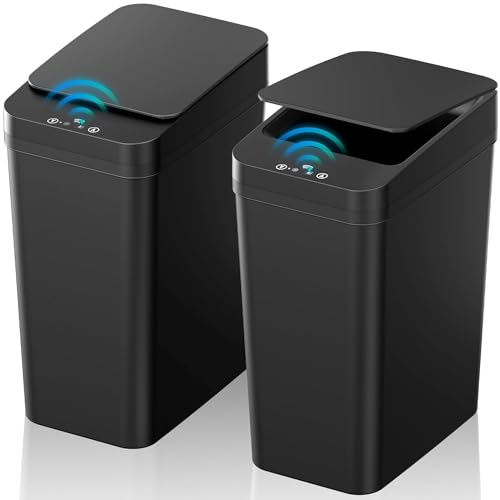
- Entry Pick2 Pack 11L Automatic Touchless Garbage Can about$59.99
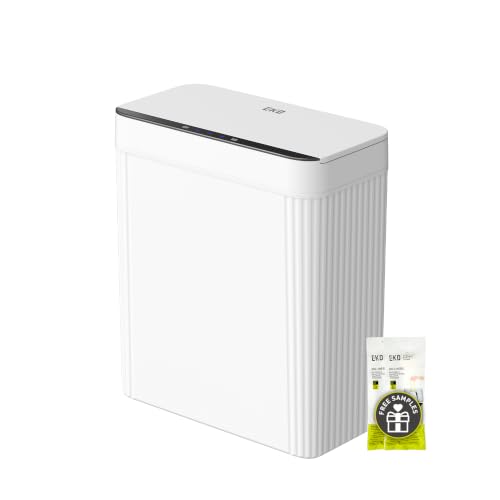
- EKO Automatic Sensor Rubbish Bin for Bathroom about$69.9529W.
- Devanti Black 58L Devanti Motion Sensor… about$79.95
- Oikiture Rubbish Bin 60L Kitchen Bin with… about$86.92
- EKO Automatic Sensor Rubbish Bin for Bathroom about$119.95
- Most PremiumEKO Kitchen Automatic Sensor Rubbish Bin about$149.95
What a sensor bin actually is
A sensor bin is an ordinary kitchen or bathroom bin with a small infrared sensor in the lid, a geared motor and a battery box. Wave a hand or hold a plate of scraps over the lid and the motor swings it open, then closes it again a few seconds later. The bucket, the liner ring and the bag are the same as any other bin. Everything that makes it different, and nearly everything that goes wrong with it, lives in the lid.
That matters because the lid is the part you can't easily replace. On a pedal bin the wear parts are a steel rod and a plastic damper, and if the pedal snaps you've still got a bin you can open by hand. On a sensor bin the lid holds a circuit board, a sensor window, a motor, a gearbox and the battery contacts, all sitting a few centimetres above food waste and steam. When one of them fails, you're usually down to a manual button or a lid that won't move at all.
I've picked five here from $70 to $150 at time of writing, all sold new on Amazon AU. Three are EKO bins sold by Amazon AU itself: a 50L stainless kitchen bin and two small bathroom bins at 20L and 10L. The other two are big kitchen bins from Australian marketplace sellers, a 58L Devanti and a 60L Oikiture, both under $90. Every one of them has a manual mode or a stay-open button, which I'd treat as a must on any motorised bin.
I didn't include the dual-compartment recycling bins that came up in the same search. Several turned up from Devanti, Giantex and EKO, but the sensor versions sat above $150 and a few were pedal bins with no sensor at all. A pedal bin is a perfectly good choice if you'd rather have no electronics in the kitchen, and most of what I say below about liners, hinges and bag sizes applies to those too.
The sensor, the motor and the gearbox
Most sensor bins use an infrared proximity sensor behind a small dark window on the lid. It sends out pulses of infrared light and watches for a reflection, so a hand inside its range triggers the motor. Oikiture quotes a sensing range of up to 25cm, which is about right for the type. The EKO bathroom bins quote 0.2 seconds to open and about five seconds before the lid closes again. The Devanti and the EKO 50L listings don't state a range or a timing.
The trouble with infrared is that it can't tell a hand from a cat, a cupboard door or a kid leaning on the counter, so a bin parked next to a doorway or under a hanging tea towel will open itself all day. Every false trigger is a full motor cycle, and motor cycles are what drain the batteries and wear the gears. Put the bin where nothing passes within a hand's width of the lid, and wipe the sensor window when it fogs up with grease or steam, because a dirty window either stops seeing you or starts seeing things that aren't there.
The motor is a small DC motor driving a plastic gear train, with either a limit switch or a current sense telling the board when the lid is fully open or fully closed. Plastic gears are fine as long as nothing fights them. Push the lid shut by hand while the motor's still opening it, or pile rubbish so high that the lid hits it on the way down, and you're loading teeth that were never meant to carry that force. In my experience a stripped gear is the most common way these lids die, after flat or leaking batteries.
The soft-close lid that four of the five listings mention is mostly the motor slowing down at the end of its travel, sometimes helped by a damper. It's quieter, and it's also gentler on the hinge and the gears. The trade-off is that the lid takes a little longer to close, so if you're scraping a stack of plates into the bin you'll want the stay-open button rather than waving at it every few seconds.
Batteries are the running cost
The two EKO bathroom bins are the listings that say how they're powered: 4 AA batteries for up to 8 months on the 20L, and 2 AA batteries for up to 6 months on the 10L. The Devanti, Oikiture and EKO 50L listings don't state a battery type or a battery life, so check the current listing or the box before you buy, and budget for batteries either way. A bin that takes D cells costs a fair bit more to run than one that takes AAs.
Both EKO listings also say not to use rechargeable batteries, and that isn't the maker being difficult. An alkaline AA starts at about 1.5V while a NiMH rechargeable sits around 1.2V for most of its charge, so a four-cell pack starts more than a volt lower. The motor runs slower, the lid struggles near the end of its travel, and some boards read the lower voltage as a flat battery and stop opening the lid at all. It's the same reason some TV remotes and door locks get fussy on rechargeables.
Battery life depends far more on the number of lid cycles than on anything else. A kitchen bin that opens 40 times a day, with a few false triggers on top, will chew through a set much faster than a bathroom bin that opens a handful of times. I'd treat the 6 and 8 month figures as best cases for light use, and a busy family kitchen should expect a fraction of that. Good-quality alkalines are worth it here, because a no-name cell's voltage sags harder under the motor's load.
Leaking batteries are the thing to watch. An alkaline cell left flat in a warm lid for months will often leak potassium hydroxide, which eats the spring contacts and creeps along the wiring toward the board. When the lid starts slowing down, change all the cells at once, don't mix old and new, and if the bin's going to sit unused while you're away for a few weeks, take the batteries out.
Liners, bag fit and the cost per week
The bag is the other running cost, and it's the one that makes people hate their bin. The EKO 50L uses a removable liner ring that clamps the bag in place, with a lid big enough to hide the overhang. The Devanti has an inner bag holder, and the Oikiture has a removable inner barrel you lift out to change the bag and wash. The EKO 10L also has a liner ring, and its listing says EKO Code B liner samples are included in the box.
Branded fitted liners sized to one bin fit perfectly and usually cost more per bag. A standard supermarket bag that's slightly too small for the rim will pull loose, slide down and leave you fishing it out of a bin that smells. Too large and the excess bunches under the lid, which can stop it seating or jam the closing travel against the motor. Measure the rim, then buy the bag size that wraps it with a few centimetres to spare.
Capacity changes the bag maths too. A 58 or 60L bin takes a large bag that'll often last a family a couple of days, but a full 60L bag of food waste is heavy, and in summer it starts to smell well before it's full. A 50L is a decent middle ground for two or three people. The 10 and 20L bathroom bins use small bags and mostly get emptied once a week.
If your council runs a food organics bin, a big kitchen sensor bin often makes less sense than a smaller one plus a caddy for scraps, because the wet waste goes out every few days and the general bin fills slowly. If you're already composting, our guide to compost tumblers covers the other end of that. Sealing leftovers properly with a vacuum sealer also cuts down how much food ends up in the bin in the first place.
Stainless, plastic and water around the bin
The three kitchen picks have steel bodies: the Devanti and the EKO 50L are described as fingerprint-resistant stainless steel, and the Oikiture as a finger-resistant steel body in black. The EKO 20L is listed as stainless steel in a vanilla finish, and the EKO 10L is plastic. Steel is harder to dent and looks better for longer, but a scratch through a painted or coated finish can rust at the edge if it stays wet.
Water is the electronics' real enemy. Both EKO bathroom bins state IPX4, which means they're built to handle splashes from any direction, not a hose or a soak. The kitchen picks don't state an IP rating, so I'd treat them as splash-shy. Wipe the lid with a damp cloth rather than spraying it, and never put the lid under a tap, because water that gets past the battery cover goes straight to the board. If you want the detail, here's what water does to a circuit board over time.
Steam is the sneakier one. A bin parked beside the kettle or the dishwasher gets warm, wet air on its lid every day, and that condensation settles on the sensor window and on the board. Over a year or two it shows up as green corrosion on the battery springs and a sensor that triggers on its own. Moving the bin half a metre away from steam sources probably does more for its life than anything else you can do.
The same goes for liquid in the bucket. Leaking bags pool in the bottom, and on bins where the bucket and the lid are one body, tipping it out to empty that liquid runs it toward the lid. The Oikiture's removable inner barrel and the EKO liner rings make that easier to handle, because you can lift the bag out cleanly and rinse the bucket in the laundry tub, well away from the electronics.
Manual override and the stay-open button
Every pick here has a way to open the lid without waving at it, and I wouldn't buy one that doesn't. The Devanti has a manual mode, the Oikiture can run in auto or manual, and the three EKO bins have a stay-open button: up to 20 minutes on the two bathroom bins, and a press to hold it open on the 50L.
Stay-open is the button you'll use most. Changing the bag, scraping a pile of plates or clearing out the fridge are all jobs where you want the lid parked open, not cycling every five seconds. It also cuts battery use and gear wear, because the motor runs once to open and once to close instead of every time your hand moves near the lid.
Manual mode matters when the electronics give up. A dead set of batteries, a fogged sensor or a stripped gear shouldn't leave you with a bin you can't open. Before you buy, look at the listing photos for how the lid opens with the power off. If it can't be lifted by hand without forcing the gearbox, the bin is only as good as its batteries, and a lid that's been forced a few times usually ends up at our Erina workshop or in the wheelie bin.
Which size goes where
For a family kitchen, the Devanti 58L at $80 and the Oikiture 60L at $87 give you the most capacity for the outlay, and the Devanti is the best-ranked kitchen bin in this guide. For a smaller household or a narrower gap, the EKO 50L at $150 is the one I'd pick. It has the longest stated warranty here at 3 years, and it's sold by Amazon AU, which makes an early return simple.
Bathrooms, bedrooms and offices suit the EKO 10L at $70 or the 20L at $120. Both are IPX4, both state their battery type and battery life, and the 10L is narrow enough at 15cm deep to sit beside a toilet or under a desk. The 20L is 23.7cm square and stands 47.2cm tall, opening to 66.3cm, so check the lid has room to swing under a vanity or a shelf.
Measure the open height for any bin going under a counter overhang or a cabinet. The lid swings up, and a bin that fits closed can hit the counter when it opens, which stalls the motor every single time. It's one of the more common faults with these, and it isn't a fault in the bin at all. If a robot vacuum runs your kitchen floor, leave a small gap around the bin's base too, because a bin that gets nudged off its spot tends to end up under that overhang.
The 5 picks, $70 to $150
Prices are Amazon AU at time of writing (2026-11-07) and move week to week. Ranks are Amazon AU category sales ranks, checked the same day.

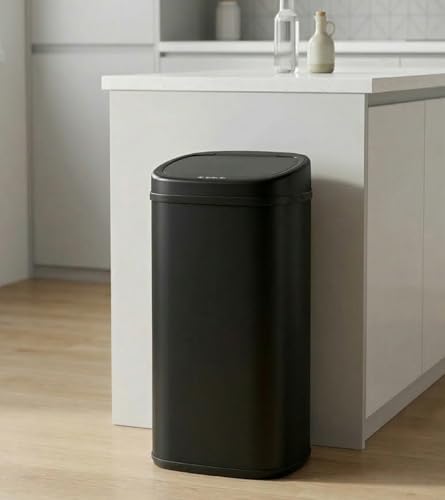
Devanti 58L Motion Sensor Rubbish Bin, Black
ASIN B0GSCS4DSZ • $79.95 • Sold by Artiss Furnishings on Amazon AU
The Devanti 58L is the best-ranked kitchen bin in this guide, at #9 in Amazon AU's Kitchen Waste Bins category at time of writing, and it's $80. It's a big rectangular sensor bin with a black fingerprint-resistant stainless steel body, a motion sensor in the lid and a soft-close lid that the listing says won't slam. The 58L capacity suits a family kitchen and means fewer bag changes through the week. It's sold by Artiss Furnishings, an Australian marketplace seller, rather than by Amazon AU. Devanti is a house brand you'll see across a lot of Australian online stores. The white version of the same bin is the same price and shares the same rank, so pick the colour that suits your kitchen. The part code on the black listing is SB-58L-S06-BK.
The listing describes a touch-free lid that opens when a hand or rubbish comes near and closes again after a few seconds, plus a manual mode for opening and closing the lid yourself. There's an inner bag holder to stop the bag sliding down, which matters on a bin this deep. The item dimensions are listed at about 68cm tall, 38cm wide and 27cm deep, so it's a slim bin for its capacity and should fit beside a fridge or at the end of a run of cupboards. Check the open-lid height against any overhang before you order, because the listing doesn't state it. The sensor range, the opening time and the close delay aren't stated either, so you're taking those on trust.
What's missing is the power information. The listing doesn't say whether it runs on AA batteries, D cells or a rechargeable pack, or how long a set should last, and it doesn't state a warranty. I'd still make it the first big bin to look at, because the rank says plenty of people are buying it and the price leaves room for a good set of alkalines. Stainless steel also cleans up better than a plastic body after a summer of food scraps. If the power and warranty details matter to you, ask the seller before ordering, and keep the receipt somewhere you'll find it.
Honest caveats: The listing doesn't state the battery type, battery life, sensor range or warranty, and there's no IP rating, so keep it away from the sink and the kettle. It's sold by a marketplace seller rather than Amazon AU, so returns go through Artiss Furnishings. The open-lid height isn't listed, which matters under an overhang.
Best for: A family kitchen that wants the most capacity for the outlay and doesn't mind checking the power details first.
Capacity: 58L • Body: Black stainless steel, fingerprint-resistant • Lid: Motion sensor, soft-close • Manual mode: Yes • Bag fit: Inner bag holder • Size: About 68 x 38 x 27cm (listed item dimensions) • Power: Not stated on the listing • Seller: Artiss Furnishings • Rank: #9 in Kitchen Waste Bins (Amazon AU), listing shared with the white version
View on Amazon AU
Oikiture 60L Automatic Sensor Kitchen Bin, Black
ASIN B0DR2CHZRR • $86.92 • Sold by Oikos 1943 on Amazon AU
The Oikiture 60L is the biggest bin here and $87 at time of writing, ranked #15 in Amazon AU's Kitchen Waste Bins category. It's a black steel sensor bin from Oikiture, sold by Oikos 1943, a marketplace seller. The same bin comes in 40L and 50L sizes and in a silver stainless finish, and the listing's colour code reads MT-A1-Black. Sixty litres is a lot of bin: it takes a big bag, it'll hold a couple of days of rubbish for most families, and it's heavy when full, so put it somewhere you can lift the bag out without twisting. The listing gives the bin's own weight at about 5.5kg, which is solid for a bin and helps it stay put when the lid swings open.
The listing quotes a sensing range of up to 25cm, which is the most specific sensor figure among the kitchen picks, and the bin can run in auto or manual mode. Oikiture describes the motor as efficient, smooth and quiet. The body has a finger-resistant finish, and there's a removable inner barrel, which is the feature I'd most want on a bin this size. You lift the barrel out to change the bag or rinse it, so liquid from a split bag never gets tipped toward the lid electronics. The listing states a one year warranty, which is worth having on anything with a motor in it. The Devanti listing doesn't state a warranty at all, so that's a real difference between the two big bins.
The listing doesn't say how the bin is powered or how long batteries last, and it doesn't give dimensions for the 60L size. Measure your space and check the size chart in the listing photos before you order, especially the open-lid height if it's going under a counter overhang. The 25cm range is generous, which is good for hands-free use and not so good near a doorway, so give it a clear spot. At this capacity in summer, I'd empty it before it's full rather than waiting for the bag to fill.
Honest caveats: Power source, battery life and dimensions aren't stated on the listing, and there's no IP rating. A 25cm sensor range will catch passers-by in a narrow kitchen. It's sold by a marketplace seller, Oikos 1943, so warranty claims go through them. The 40L and 50L versions are separate listings with their own prices.
Best for: Big households that want the largest bin and a lift-out inner barrel for cleaning.
Capacity: 60L (40L and 50L also listed) • Body: Black steel, finger-resistant • Sensor range: Up to 25cm • Modes: Auto and manual • Inner barrel: Removable • Weight: About 5.5kg • Power: Not stated on the listing • Warranty: One year • Rank: #15 in Kitchen Waste Bins (Amazon AU)
View on Amazon AU
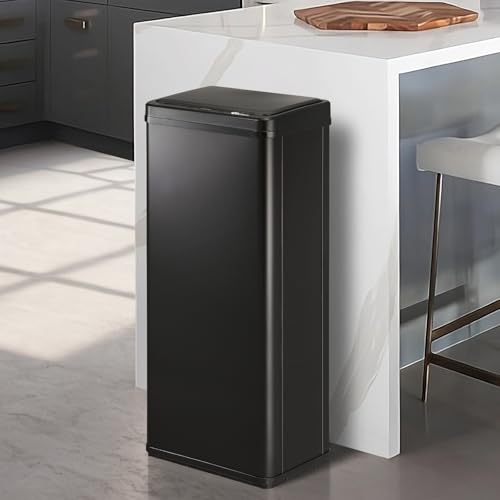
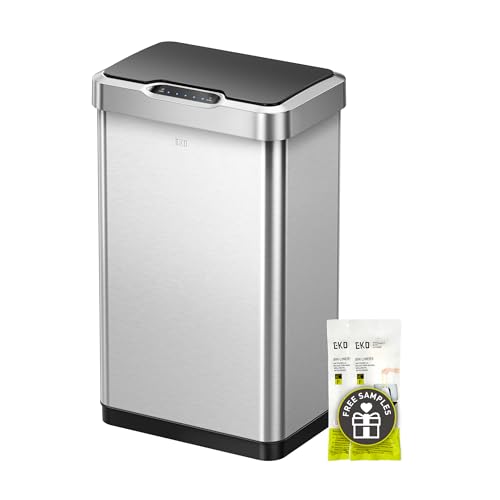
EKO 50L Automatic Sensor Kitchen Bin, Stainless Steel
ASIN B07RYBNJG3 • $149.95 • Ships from Amazon AU
The EKO 50L is the kitchen bin I'd buy for a smaller household, and it's $150 at time of writing, sold by Amazon AU. It's ranked #17 in Amazon AU's Kitchen Waste Bins category. EKO is a bin specialist rather than a general homewares brand, and this is a rectangular brushed stainless steel bin with an anti-fingerprint finish and a soft-close lid. The model code on the listing is EK9278TBMT. The listing states a 3 year warranty, which is the longest stated warranty of any pick here, and it's a big part of why it costs nearly twice what the Devanti does. There's also a matte black version of the same bin listed separately at $170.
The lid uses a motion sensor, and a press of a button keeps it open for bigger jobs like changing the bag or clearing out the fridge. There's a removable liner ring that clamps the bag in place, and the lid is large enough to hide the bag's overhang, so it looks tidy and the bag doesn't slide down into the bucket. EKO describes it as power efficient. The listed item dimensions come out at about 62cm tall, 38cm wide and 25cm deep, and the weight at about 4kg. That's a narrow bin that should slot into a gap beside the fridge or at the end of a run of cupboards without sticking out.
It doesn't state its battery type, battery life or sensor range, which surprised me on a $150 bin, so check those on the current listing. Being sold by Amazon AU makes returns straightforward if the lid or the sensor misbehaves early. I'd still put this one first for anyone who wants one kitchen bin to last years, because a 3 year warranty on a motorised lid is a real commitment from the maker, and the liner ring makes daily use easier. Keep the receipt with the paperwork, because a lid motor that quits in year two is exactly what that warranty is for.
Honest caveats: Battery type, battery life and sensor range aren't stated, and there's no IP rating. At $150 it costs nearly twice the Devanti for 8L less capacity. The matte black version is a separate listing at $170, so check you've got the finish you want in the cart.
Best for: Couples and smaller households who want a slim stainless bin with a 3 year warranty, sold by Amazon AU.
Capacity: 50L • Body: Stainless steel, anti-fingerprint • Lid: Motion sensor, soft-close, stay-open button • Bag fit: Removable liner ring • Size: About 62 x 38 x 25cm (listed item dimensions) • Model: EK9278TBMT • Warranty: 3 years • Rank: #17 in Kitchen Waste Bins (Amazon AU)
View on Amazon AU
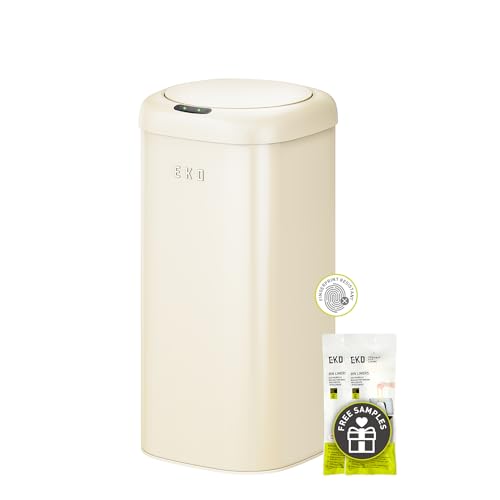
EKO 20L Automatic Sensor Bathroom Bin, Vanilla
ASIN B0DK6X5M4L • $119.95 • Ships from Amazon AU
The EKO 20L is a bathroom and bedroom bin, $120 at time of writing, sold by Amazon AU and ranked #13 in Amazon AU's Kitchen Waste Bins category. It's a rectangular bin in a vanilla finish, listed as stainless steel, and the model is EK9184. It measures 23.7 x 23.7 x 47.2cm and opens to 66.3cm tall, which the listing states outright, and that open height is the number you need if it's going under a vanity or a bedside shelf. Twenty litres is a good size for an ensuite, a nursery or a home office where a 10L fills too quickly. The listing shares its overall Amazon rank with the EKO 10L, so the two look grouped on Amazon.
This is one of the two picks that tells you how it's powered: 4 AA alkaline batteries, for up to 8 months of everyday use according to EKO. The listing also says not to use rechargeable batteries, for the voltage reason I covered above. The lid opens in 0.2 seconds and closes after about 5 seconds, and a stay-open button holds it open for up to 20 minutes. The lid is soft-close and the opening is wide, which makes it easier to drop things in without aiming. It's rated IPX4, so it should handle splashes from a basin or a shower nearby, though not being hosed down or left sitting in water.
At $120 it's a lot for a 20L bin, and you're paying for the steel body, the IPX4 rating and Amazon AU as the seller. Eight months on a set of four AAs is a light-use figure, so a busy family bathroom will see less. Change all four cells together and use a decent brand, because one weak cell drags the whole pack down. Wipe the sensor window now and then too, because hairspray and steam film it over. I'd pick it over the 10L wherever the bin is shared by more than one person.
Honest caveats: It's $50 more than the 10L for twice the capacity, and the rated 8 months of battery life is a best case. IPX4 means splash resistant, not waterproof. The listing doesn't state a warranty, and EKO says rechargeable batteries shouldn't be used in it.
Best for: Ensuites, bedrooms and nurseries where a 10L bin fills too fast and splash resistance matters.
Capacity: 20L • Size: 23.7 x 23.7 x 47.2cm (66.3cm open) • Power: 4 x AA alkaline, up to 8 months • Lid: Opens in 0.2s, closes after about 5s, stay-open up to 20 min • Water resistance: IPX4 • Body: Stainless steel, vanilla finish • Model: EK9184 • Rank: #13 in Kitchen Waste Bins (Amazon AU), overall rank shared with the 10L
View on Amazon AU
EKO 10L Automatic Sensor Bathroom Bin, Glacier White
ASIN B0FNMYN4F1 • $69.95 • Ships from Amazon AU
The EKO 10L is the smallest and lowest-priced bin here, $70 at time of writing, sold by Amazon AU and ranked #16 in Amazon AU's Trash & Recycling Containers category. It's a slim plastic bathroom bin in glacier white, measuring 29cm wide, 15cm deep and 31cm tall and opening to 41.4cm, so it fits beside a toilet, under a desk or next to a bed. The model code is 6677-10L-WH. It shares its overall Amazon rank with the 20L EKO, so the two listings look grouped. A plastic body means it won't dent or rust, and it's light enough to carry out to the wheelie bin and rinse in the laundry tub without any fuss.
It runs on 2 AA alkaline batteries for up to 6 months, according to EKO, and like the 20L the listing says rechargeables aren't recommended. The lid opens in 0.2 seconds and closes after about 5 seconds, with a stay-open button that holds it for up to 20 minutes. It's rated IPX4 for splashes, which is the rating I'd want next to a basin. There's a removable liner ring that hides the bag, and the listing says EKO Code B liner samples are included in the box, so you can see the fitted liner before you decide whether to keep buying them or use a standard small bag from the supermarket.
At this size the cost of batteries over a year is a bigger share of the bin's price than on the kitchen bins, but two AAs every six months is still a small cost. The plastic lid is the weak point compared with the steel bins, so don't lean on it or force it shut while the motor's moving. Keep it out of a shower's direct spray, since IPX4 is about splashes. For a powder room or a home office this is the one I'd pick, and it's easy to return through Amazon AU if the sensor's fussy out of the box.
Honest caveats: Plastic body and lid, so it won't feel as solid as the steel bins. The 6 month battery figure is a best case for light use, and small bags need changing often in a busy bathroom. The listing doesn't state a warranty.
Best for: Powder rooms, bedside and under-desk spots where a slim, splash-resistant bin fits best.
Capacity: 10L • Size: 29 x 15 x 31cm (41.4cm open) • Power: 2 x AA alkaline, up to 6 months • Body: Plastic, glacier white • Water resistance: IPX4 • Bag fit: Liner ring, EKO Code B samples included • Model: 6677-10L-WH • Rank: #16 in Trash & Recycling Containers (Amazon AU)
View on Amazon AUSide-by-side comparison
| Product | Price | Best for |
|---|---|---|
| 2 Pack 11L Automatic Touchless Garbage Can | ~$59.99 | |
| EKO Automatic Sensor Rubbish Bin for Bathroom | ~$69.95 | |
| Devanti Black 58L Devanti Motion Sensor… | ~$79.95 | |
| Oikiture Rubbish Bin 60L Kitchen Bin with… | ~$86.92 | |
| EKO Automatic Sensor Rubbish Bin for Bathroom | ~$119.95 | |
| EKO Kitchen Automatic Sensor Rubbish Bin | ~$149.95 |
What we see fail in the workshop: sensor bins
Sensor bins aren't something most people think to bring to a repair shop, but the faults are the same ones we see on any small battery-powered gadget with a motor in it: corroded contacts, stripped gears and boards that have had water on them. Here's what usually goes, and what's worth trying at home before you give up on the lid.
Corroded battery contacts
This is the most common fault by a long way. A set of alkalines goes flat, sits in a warm, damp lid for months and leaks. The white or green crust on the springs stops the current getting through, so the lid opens slowly, opens halfway or does nothing at all. If the crust is light, take the batteries out, scrub the contacts with a cotton bud dipped in white vinegar, dry them properly and fit fresh cells. If the springs have gone black or the corrosion has crept along the wires toward the board, the damage is past a clean, and on most bins the lid assembly isn't sold as a separate part.
Stripped gears and a lid that grinds
When the motor whirs but the lid doesn't move, or it moves and then stops with a grinding sound, a gear tooth has usually gone. It happens when the lid gets pushed shut against the motor, when it hits rubbish piled above the rim, or when it closes onto a counter overhang. The motor keeps spinning and the plastic gear gives up first. On a few bins the gearbox can be opened and the gear replaced with a matching part, but finding that part is the hard bit, so most of the time manual mode is what you're left with. Keep rubbish below the rim and let the lid finish its travel.
A sensor that opens on its own
A lid that opens and closes all day with nobody near it usually has one of a few things wrong. The sensor window is dirty or fogged, something in range is reflecting the infrared (a cupboard door, a shiny splashback or the cat), or water has got to the board and the sensor line is reading noise. Clean the window first, then move the bin and see if it settles. If it still won't behave, pull the batteries out, open the battery cover and look for moisture or corrosion. A damp board is worth drying out for a couple of days with the batteries removed before you decide it's dead.
Decision tree: which one should you actually buy?
- Need a big bin for a family kitchen? → The Devanti 58L at $80 is the best-ranked kitchen bin here, and the Oikiture 60L at $87 adds a removable inner barrel and a one year warranty.
- Want the longest warranty and Amazon AU as the seller? → The EKO 50L stainless at $150, with a 3 year warranty on the listing and a liner ring that hides the bag.
- Bathroom or ensuite shared by a couple or a family? → The EKO 20L at $120: IPX4, 4 AA batteries for up to 8 months, and a 66.3cm open height to check against the vanity.
- Powder room, bedside or under a desk? → The EKO 10L at $70: 15cm deep, IPX4 and 2 AA batteries for up to 6 months.
- Bin going under a counter overhang? → Measure the open-lid height first. The EKO 20L and 10L state theirs (66.3cm and 41.4cm), and for the others check the listing photos or ask the seller before you order.
- Lid stopped opening, grinding or opening on its own? → Try fresh alkalines and a clean of the contacts and sensor window first. If it's still playing up, bring it to our Erina workshop and we'll tell you whether it's worth fixing before you spend anything.
Frequently asked questions
Do sensor bins use a lot of batteries?
It depends mostly on how often the lid opens. EKO rates its 20L bathroom bin at up to 8 months on 4 AA batteries and its 10L at up to 6 months on 2 AA batteries, but those are light-use figures. A kitchen bin that opens dozens of times a day, or one that keeps triggering on a passing cat or cupboard door, will go through batteries much faster. Using the stay-open button for bag changes and big clean-ups, and keeping the bin away from doorways, makes a set last noticeably longer.
Can I use rechargeable batteries in a sensor bin?
EKO says not to on both of its bathroom bins. A NiMH rechargeable sits around 1.2V for most of its charge against about 1.5V for a fresh alkaline, so a pack of them runs the lid motor slower, and some bins read the lower voltage as flat and stop opening. If your bin's manual doesn't mention it, alkalines are the safe choice. Take them out if the bin will sit unused for weeks, because flat alkalines are the ones that leak.
Why does my sensor bin open by itself?
Usually the infrared sensor is seeing a reflection it shouldn't: a cupboard door, a shiny splashback, a tea towel, a pet or someone walking past. A greasy or fogged sensor window can also cause it, and so can moisture on the circuit board. Wipe the window, move the bin somewhere with nothing within a hand's width of the lid, and fit fresh batteries, since a low voltage can make the sensor behave oddly. If it still opens on its own, check under the battery cover for water or corrosion.
What size sensor bin do I need for a kitchen?
For a family of four or more, 58 to 60L is a common choice, like the Devanti 58L or Oikiture 60L in this guide. A 50L, like the EKO 50L, suits two or three people and takes up less floor space. Bigger isn't always better, because a 60L bag of food waste is heavy and can start to smell before it's full in summer. If your council collects food organics separately, a smaller general bin plus a scraps caddy often works better.
Can I use normal bin bags in a sensor bin?
Usually, yes, as long as the bag is the right size for the rim. A bag that's too small pulls loose and slides into the bucket, and one that's too big bunches under the lid and can stop it closing, which strains the motor. Bins with a liner ring or bag holder, like the EKO and Devanti picks here, hold a standard bag better. Branded fitted liners fit perfectly but cost more per bag, so measure the rim and buy the closest standard size.
Is it worth repairing a sensor bin?
Sometimes. Corroded battery contacts can often be cleaned, and a damp board can recover once it's dried with the batteries out. A stripped lid gear or a failed board is harder, because most makers don't sell the lid assembly separately, and the repair can cost close to a new bin. If the bin has a manual mode, you can keep using it as an ordinary bin. Anything inside its warranty period should go back to the seller first.
Related buying guides
Sensor bin lid stopped working?
Most sensor bin faults we see come down to corroded battery contacts, a stripped lid gear or water on the board. Bring it into our Erina workshop and we'll find the actual fault and tell you whether it's worth fixing or replacing before you spend anything. Take the batteries out first if it's been sitting flat.
Visit our Erina workshop Book Online