Prices from Amazon AU, updated daily. Swipe or use the arrows for more.
Disclosure: This article contains affiliate links to amazon.com.au. If you buy through one of these links iFix may earn a small commission at no extra cost to you. It doesn't change which products we recommend. We focus on what actually lasts based on 16 years of repair-shop experience.
Quick summary10 picks
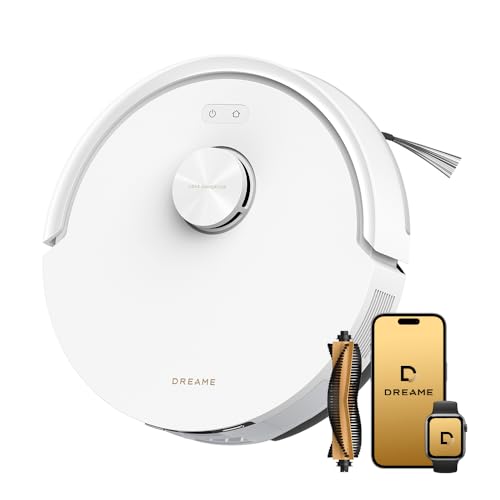
- Cheapestdreame F20 Eco Robot Vacuum and Mop 2-in-1 about$249.993200mAh.
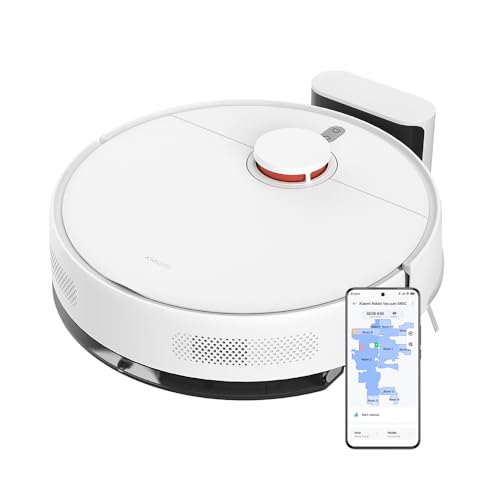
- XIAOMI S40C Robot Vacuum Cleaner with Mop about$255.005000Pa suction.
- B: Best Value, No Dockroborock Q7B Robot Vacuum about$299
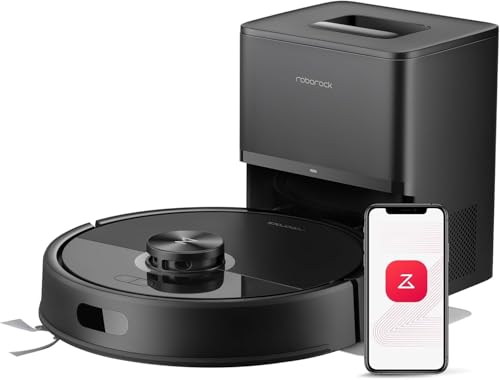
- roborock Q7T+ Robot Vacuum & Mop about$366.99
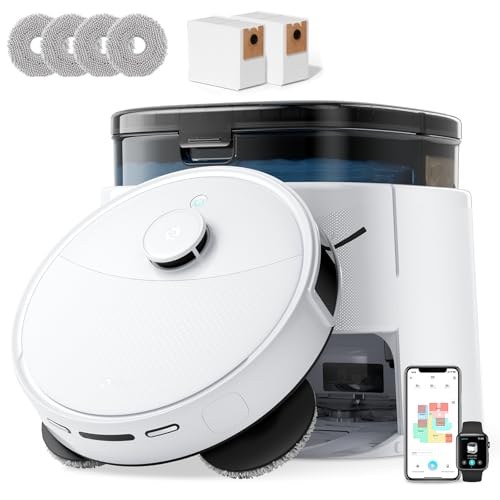
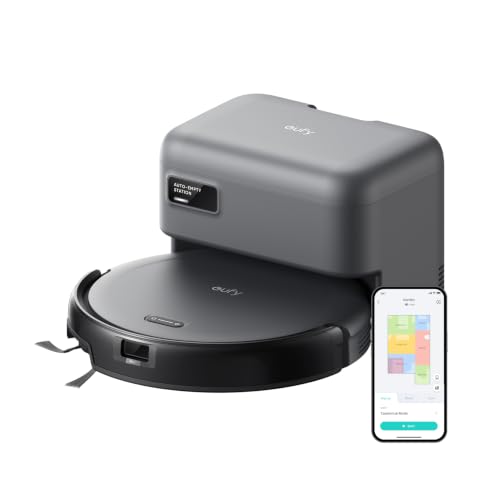
- eufy C28 2026 New Robot Vacuum and Mop Combo about$399
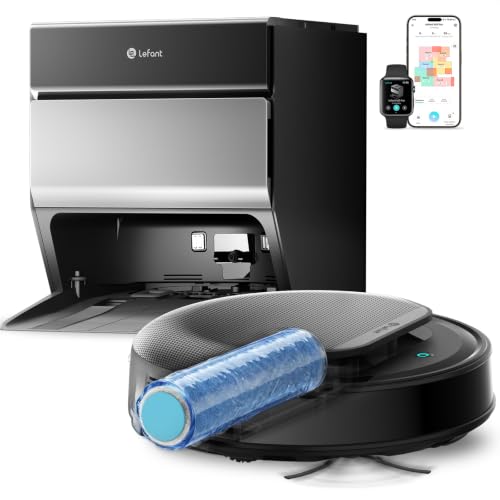
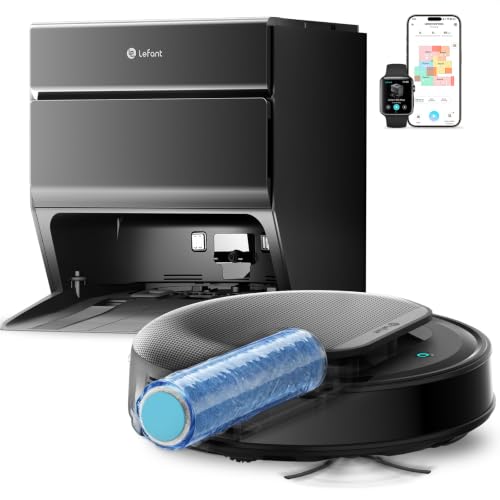
- Lefant M3 Robot Vacuum and Mop about$409.995200mAh.
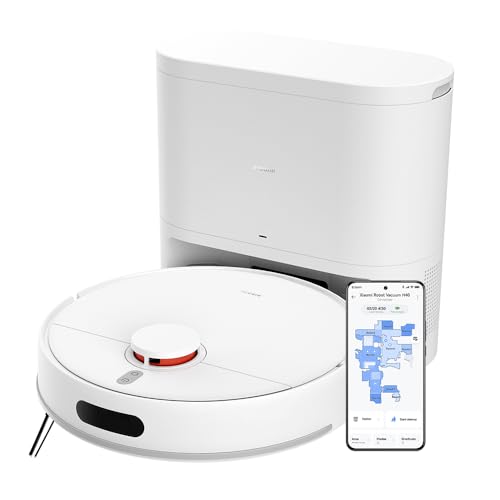
- XIAOMI H40 Robot Vacuum Cleaner with Self… about$447.99
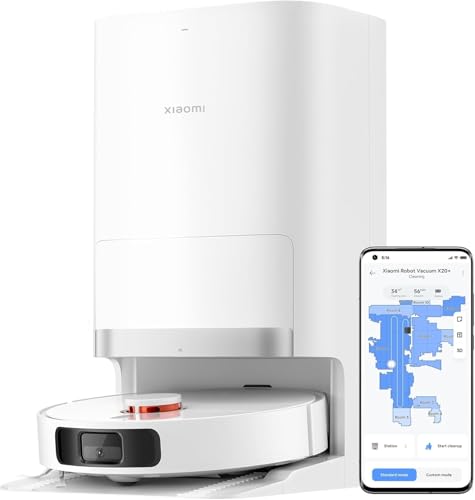
- XIAOMI X20+ Robot Vacuum Cleaner with Mop… about$489.00
- Lefant M5 Pro Robot Vacuum and Mop with… about$539.99
- Most PremiumLEFANT M5 Max Robot Vacuum and Mop with… about$609.99
Why a repair shop is writing about vacuum cleaners
A robot vacuum has never crossed my bench. That goes in the first paragraph because everything below depends on you knowing where the authority comes from.
Take the top shell off one and you are not looking at a vacuum cleaner. You are looking at a small mobile robot: a lithium pack, two or three brushed DC motors, an impeller fan, an optical navigation sensor spinning on its own motor and bearing, spring charging contacts and a charge circuit managing the lot. I have 16 years of component-level failure data on every one of those parts. Not in vacuums. In laptops, phones, tablets and cordless tools that arrive at Erina in a shopping bag with the words "it just stopped working".
So here is the deal. Where a claim comes from the bench, I say so. Where it comes from the Amazon listing, I label it, because I have not pulled a Q7T+ apart. Every other site will tell you how many grams of rice each unit lifted off carpet. None will tell you which part decides whether you still own the thing in 2030.
The battery decides how long you own it
Start with the pack, because it sets the ceiling on everything else.
Your phone lives a soft life, sitting between 40 and 90 percent most of the day. A robot vacuum does the opposite: a deep discharge under sustained high current, then straight back on the charger, most days of the week, with a fan motor warming the pack the entire run. That is closer to a cordless drill on a building site than to anything in your pocket, and lithium cells hate both the heat and the depth.
The failure mode is what people get wrong. Packs under this load rarely die outright. They shrink. Capacity fade shows up as a robot that used to finish the floor and now docks two rooms short, and because these units auto-recharge and resume, the change hides for months. No warning light. Just a house that is quietly 70 percent clean.
Which brings the question I would ask before any suction figure: is the pack a user-replaceable part, and does the brand sell it in Australia? The physical job is usually easy, a base panel and a plug. Supply is the hard part, and none of these three listings says whether a replacement pack is sold locally. A robot vacuum whose battery cannot be bought here is a three to four year appliance no matter what it cost.
What the listings do state: the Dreame quotes a 5200mAh pack, 300 minutes of runtime and up to 270m² per charge. Both Roborocks quote up to 150 minutes of continuous mopping over 2,260 sq ft, roughly 210m², flagged as mop-only, with no pack capacity at all. Different measurements, so do not read 300 against 150 as double the battery.
Brushed motors are consumables, not faults
Three motors do work in one of these: the main brush roller, the side sweeper and the fan. All three are wear items. Brushed DC motors run carbon brushes against a commutator and that contact is designed to erode; bearings dry out and get noisy. Not a defect. A service life.
The fault you will meet first is not the motor. It is hair.
Hair wrapping the main roller and the side sweeper is the single most common cause of "it lost suction". The wrap builds at the roller ends near the bearings, the brush stops touching the floor, and the motor draws more current to turn the same roller. Louder, cleaning worse. That is maintenance, not a breakdown, and it takes four minutes with the seam ripper in the box. Leave it a year and that extra load runs through a brushed motor the whole time, which is when a service job becomes a real fault.
Roller material matters more than anything printed on the carton. Rubber lets you slide a wrap off with a fingernail; a bristle roller needs a blade, and you shave the bristles down every time. Both Roborock listings claim a JawScrapers Comb main brush and a tangle-free side brush, which is a design claim rather than a stated material. Worth catching: the Q7T+ title calls it a DuoRoller Anti-Tangle Brush while the feature list calls it a JawScrapers Comb, and the same title carries a "Q8 Max+ Upgraded" note, so confirm which unit ships. The Dreame listing makes no anti-tangle claim at all.
The navigation sensor is the reliability variable
All three picks use LiDAR according to their listings. That turret is the raised puck on top, and inside it a laser and receiver spin on a small motor and bearing, hundreds of revolutions a minute, every time the robot cleans. It is the only significant moving assembly that never touches the floor, and like any spinning part it has a wear life. Listen for a whine that was not there when it was new, then intermittent mapping errors, then a unit spinning on the spot trying to work out where it is.
The honest alternative is camera and gyroscope navigation, which has nothing to wear out and maps worse: more bumping, patchier coverage in dim rooms, no-go zones that drift. That is the real trade, and at this price I would still take the turret, because good mapping is most of what makes a robot vacuum worth owning instead of a stick vac.
The Dreame listing adds edge and ledge detection plus 20mm threshold climbing. The Roborock listings state no climb height, so measure your worst doorway strip and check.
The dock is a subscription you did not sign up for
The Q7T+ listing sells seven weeks of hands-free cleaning, which is the self-empty dock doing that work: the robot returns, the dock pulls the bin out into a larger container, and you deal with it every month or two. Genuinely useful. It is also a recurring cost for the life of the machine, because self-empty docks in this class generally collect into disposable bags. The listing states neither bag type nor price, so cost a year of bags before you buy, not after.
This is the same arithmetic that decides which printer is actually worth owning, where the least expensive machine on the shelf hides the most expensive consumable. Price the filters and mop pads while you are there.
The Q7B makes no self-empty claim, and at $249.00 that is the honest trade for the $49.99 gap. You empty a 400ml bin yourself. If you already run a stick vac, that will not feel like a compromise. If you are buying a robot precisely so you never think about vacuuming again, it will.
Charging contacts, docks and coastal air
Two spring contacts on the dock, two plates on the robot. That is the entire charging interface, and it is exposed to a machine whose job is driving through dust.
The intermittent-charging fault follows the same script on every dock-charged device. It docks, chimes, reports full. Next morning it is on 40 percent. Nine times in ten that is contact resistance: dust film, light oxide, corrosion. A dry cloth on both sets of contacts, a pencil eraser on anything dull, never a wet wipe. Quarterly. Salt air makes it worse, which is why charge ports from Terrigal and Copacabana corrode at a rate you never see inland, so keep the dock off the beach side of the house and out of direct sun.
The dock also draws power 24 hours a day for the life of the unit, and self-empty docks draw more. Small and constant is the category nobody measures, which is what plug-level energy monitoring gear is for.
What the spec sheet will not tell you
Pa figures are not comparable across brands
8,000Pa, 10,000Pa, 13,000Pa. Manufacturer numbers, measured in-house, with no shared standard behind them. Roborock calls its system HyperForce and Dreame calls its own Vormax Extreme, and the fact that both need a brand name attached to a unit of pressure tells you what kind of figure it is. Within one brand's range the ranking is honest enough. Across brands you are comparing two different experiments.
Mopping on these is a damp wipe, not a scrub
A pad dragged behind the robot, fed by a water tank. That lifts dust film, dried footprints and light kitchen splash, and hard floors come up looking finished rather than merely vacuumed. It does not scrub. No downward pressure, no oscillation, so dried milk and cooking grease stay put. Both Roborocks state three flow levels with a 270ml tank; the Dreame states 32 moisture levels and 570ml. A bigger tank buys more floor between refills, not more force.
Your floor plan matters more than the suction spec
Cables are what actually stop these machines. Charger leads, floor lamp cords, the tail of a curtain tie-back. The robot finds one, wraps it round the roller and stops with an error, always in the room you are not in. Half an hour clipping cables to skirting boards does more for coverage than 3,000 extra Pa. Same for fringed rugs, and for thresholds.
They are 2.4GHz-only devices, and that breaks more setups than anything else
Both Roborock listings state 2.4G Wi-Fi only. The Dreame listing names no band, so assume the same and check. This is the most common setup failure in the category and it is not the vacuum's fault. Mesh systems publish one network name across 2.4GHz and 5GHz and pick the band for you, so during pairing the phone sits on 5GHz, the robot cannot see the network it needs, and the app fails with an error that explains nothing. Give the 2.4GHz band its own name for setup. The router picks and band-separation notes in this series cover where that setting hides on the common Australian models.
The three picks, $249.00 to $299.99
Prices are Amazon AU at time of writing (10 August 2026) and move week to week. Sales ranks are Amazon AU's Robotic Vacuums category, checked the same day. Every spec below is quoted from the product listing, not from a teardown.

roborock Q7T+ Robot Vacuum and Mop, All-in-one with Self-Empty Dock
ASIN B0GZVV4D94 • $366.99 • Ships from Roborock AU Direct
Sitting at #2 in Amazon AU's Robotic Vacuums category, and the reason is the dock. The listing quotes seven weeks of hands-free cleaning, meaning the robot empties itself into the dock and you deal with the collection point every month or two rather than after every run. For a house with a dog and a school-morning routine, that is the feature that turns a robot vacuum from a gadget you maintain into an appliance that just runs.
The rest of the sheet is coherent rather than headline-chasing: 10,000Pa stated suction, LiDAR mapping that builds a plan you can annotate in the app, a JawScrapers Comb main brush paired with a tangle-free side brush, a 400ml bin and a 270ml electronically controlled water tank with three flow levels. It quotes 60dB in mop-only mode, quiet enough to run while someone is on a call in the next room. Alexa, Google Home and Siri are all listed.
Honest caveats: the dock is a running cost. Self-empty docks in this class generally use disposable bags and the listing states neither bag type nor price, so check before you buy. The title also carries a "Q8 Max+ Upgraded" note while describing the roller two different ways, so confirm which unit and roller assembly ships. Battery capacity and pack replaceability are not stated anywhere in the listing. 2.4GHz Wi-Fi only.
Best for: Pet households and anyone who wants the machine to look after itself for weeks at a time.
Suction (stated): 10,000Pa HyperForce • Navigation: LiDAR mapping, app-annotated maps, no-go zones • Brushes: JawScrapers Comb main brush, tangle-free side brush • Mopping: Detachable pad, 3 flow levels, 270ml tank • Dock: Self-empty, 7 weeks hands-free (stated) • Runtime: Up to 150 min continuous mopping, mop only (stated) • Rank: #2 in Robotic Vacuums (Amazon AU)
View on Amazon AU
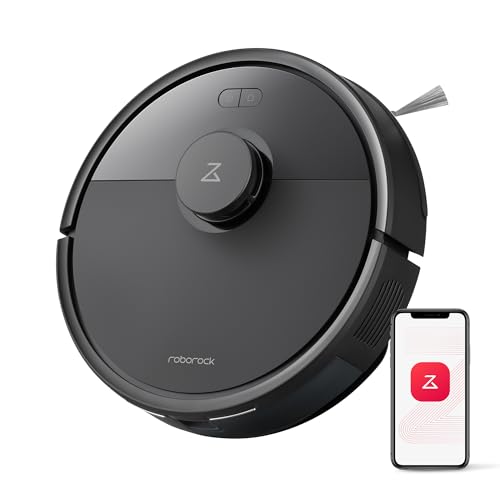
roborock Q7B Robot Vacuum, 8000Pa Suction
ASIN B0GTKV34TW • $249.00 • Ships from Roborock AU Direct
The Q7B is the same idea as the Q7T+ with the tower removed and $49.99 taken off the price, and it sits at #14 in Robotic Vacuums. You keep the LiDAR mapping, the JawScrapers Comb main brush and tangle-free side brush, the electronically controlled 270ml water tank with three flow levels, the 400ml bin, app scheduling and no-go zones. Stated suction drops to 8,000Pa, which inside Roborock's own range is a real step down from the Q7T+ but is not the deciding difference between these two.
The deciding difference is the bin. You empty it. On a normal Australian three-bedroom floor plan that is a fifteen second job every day or two, and in exchange you have deleted an ongoing consumable cost, a second fan motor and a large piece of plastic from the hallway. If you already own a stick vac you empty by hand, this will not feel like a compromise.
Honest caveats: no self-empty claim on the listing, so plan on manual emptying. Like the Q7T+ it states 2.4G Wi-Fi only, and it does not name the voice assistants the Q7T+ listing names, so check compatibility if you run a specific smart home platform. No battery capacity, cycle rating or pack replaceability stated.
Best for: The tightest sensible spend, smaller homes, and buyers who would rather not sign up for dock consumables.
Suction (stated): 8,000Pa HyperForce • Navigation: LiDAR mapping, precise obstacle avoidance • Brushes: JawScrapers Comb main brush, tangle-free side brush • Mopping: Detachable pad, 3 flow levels, 270ml tank • Dock: Charging only, no self-empty stated • Runtime: Up to 150 min continuous mopping, mop only (stated) • Rank: #14 in Robotic Vacuums (Amazon AU)
View on Amazon AUSide-by-side comparison
| Product | Price | Best for |
|---|---|---|
| dreame F20 Eco Robot Vacuum and Mop 2-in-1 | ~$249.99 | |
| XIAOMI S40C Robot Vacuum Cleaner with Mop | ~$255.00 | |
| roborock Q7T+ Robot Vacuum & Mop | ~$366.99 | |
| Lefant M3 Robot Vacuum and Mop | ~$409.99 | |
| XIAOMI X20+ Robot Vacuum Cleaner with Mop… | ~$489.00 | |
| eufy C28 2026 New Robot Vacuum and Mop Combo | ~$399 | |
| XIAOMI H40 Robot Vacuum Cleaner with Self… | ~$447.99 | |
| Lefant M5 Pro Robot Vacuum and Mop with… | ~$539.99 | |
| LEFANT M5 Max Robot Vacuum and Mop with… | ~$609.99 | |
| roborock Q7B Robot Vacuum | ~$299 | B: Best Value, No Dock |
What 16 years of component repair says about this category
iFix does not repair robot vacuums. What follows is not a claim about these three units. It is what the parts inside them do in every other category that has landed in the workshop.
A fading pack does not look like a battery fault to the owner
On a laptop, capacity fade is obvious: the operating system reports it and the machine dies at 2pm instead of 5pm. On a device with no screen and an auto-resume feature, the same 25 percent fade just looks like slightly worse cleaning. I see the equivalent constantly with cordless tools and older tablets, where the customer has worked around a symptom for a year and the warranty window has closed by the time it arrives. If your robot starts docking mid-run, check the pack age before you blame the app.
Airflow loss is almost never the motor
Every vacuum follows this script, corded or not. Suction drops, the owner assumes the motor is dying, and the actual problem is a wrapped roller and a loaded filter. On a robot the wrap concentrates where the roller meets its bearing housing, adding mechanical drag on top of the airflow loss, so the motor works harder to clean worse. Four minutes with the supplied tool, fortnightly with a pet in the house.
The supplied adapter is not interchangeable
Undersized components, poor thermal design and no proper temperature cutoff produce the same three symptoms in every category: heat while charging, a charge that stops short of full, and a pack that ages faster than it should. That is why the wrong charger quietly destroys good batteries, and why the dock and adapter in the box beat a generic replacement off a marketplace.
What I cannot tell you about these three
I have not opened a Q7T+, a Q7B or an F10 Plus. I cannot tell you which uses better cells, whose roller bearings hold up, or how any of them handles four years of daily use, and anyone claiming otherwise after a fortnight of testing is guessing too. What I can tell you is which questions decide the outcome, and every one is answerable on the product page before you spend the money.
Decision tree: which one should you buy?
- Pets, kids, and you want to think about it as little as possible? → roborock Q7T+ at $298.99. Budget for dock bags and check their price before you order.
- Tightest sensible spend, or you object on principle to consumables? → roborock Q7B at $249.00. Same LiDAR platform, 8,000Pa stated, you empty the 400ml bin.
- Bigger floor plan, or raised thresholds between rooms? → dreame F10 Plus at $299.99. The only one stating a climb height (20mm) and a pack capacity (5200mAh).
- Long hair or a shedding dog? → Weight the anti-tangle brush claim above the suction figure. Both Roborocks state one; the Dreame listing does not.
- Planning to keep it five years or more? → Find the brand's Australian replacement battery listing first. If there is not one, price whichever you buy as a three to four year appliance.
- Something with a screen and a battery misbehaving instead? → That is our actual trade. Bring it in to the Erina workshop for a diagnosis before you replace it.
Frequently asked questions
How long will the battery in a robot vacuum last?
Plan on three to four years of daily use before capacity fade becomes obvious, and understand what obvious means here. A robot vacuum runs a harder duty cycle than a phone: a near-full discharge followed by an immediate recharge, most days, with a fan motor pulling hard the whole time. Lithium packs do not usually die suddenly under that pattern, they shrink. The first symptom is not a dead unit, it is a robot that stops halfway down the hallway and heads back to its dock, and most people blame the software before they blame the pack. None of the three listings in this guide states a cycle rating, so treat the three to four year figure as a general lithium expectation rather than a manufacturer number.
Can I replace the battery myself when it fades?
On most robot vacuums the pack sits behind a screwed base panel and lifts out on a connector, which is a far gentler job than any phone battery. The real question is not the screwdriver, it is supply. Before you buy, search the brand's Australian parts listing for a replacement pack and see whether one exists at a sensible price. None of the three listings in this guide states whether the battery is user-replaceable or sold separately in Australia, so check that on the product page or with the seller. A robot vacuum with no locally available pack is a three to four year appliance regardless of what you paid, and that answer should carry more weight in your decision than any suction figure.
My robot vacuum will not connect to my Wi-Fi. What is wrong?
Nine times out of ten it is the 2.4GHz band. Both Roborock listings in this guide state 2.4G Wi-Fi support only, and most robot vacuums are the same. Modern mesh systems broadcast one network name across 2.4GHz and 5GHz and decide for you which band your phone sits on, so during pairing the phone is on 5GHz, the robot cannot reach the network it needs, and setup fails with an error message that tells you nothing useful. The fix is to split the bands in your router app, give the 2.4GHz network its own name, pair the robot to that, then decide whether to leave the split in place permanently. This is the single most common setup failure on any 2.4GHz-only smart device.
Is 13,000Pa suction actually better than 10,000Pa?
Not in any way you can rely on across brands. Pa figures are manufacturer numbers produced on in-house rigs with no shared test standard, which is why each brand attaches its own label: Roborock calls its system HyperForce, Dreame calls its own Vormax Extreme. Setting 13,000Pa from one brand against 10,000Pa from another is comparing two different experiments. Within a single brand's range the numbers do rank the models sensibly, so the 10,000Pa Roborock genuinely pulls harder than the 8,000Pa one. What decides whether your floors come up clean is brush contact, roller condition and how many passes the robot makes. A roller wrapped in hair will beat any figure on the box for making a vacuum feel weak.
Does the LiDAR turret wear out?
It is a spinning assembly with a small motor and a bearing, so yes, it has a wear life in a way a solid-state sensor does not. The usual sequence is an audible whine that was not there when the unit was new, then intermittent mapping errors, then a robot that spins on the spot trying to work out where it is. Camera and gyroscope navigation avoids that failure entirely because nothing spins, but it maps worse: more bumping, poorer coverage in dim rooms, less reliable no-go zones. All three picks here use LiDAR according to their listings, so the turret comes with the territory at this price. Keep its window free of dust, because a smeared turret reads dust as an obstacle and the robot starts avoiding clean floor.
Do you repair robot vacuums at iFix?
No, and I would rather say that plainly than let you assume otherwise. iFix is a phone, computer and data recovery workshop in Erina, and robot vacuums are not on our repair list. What sits behind this guide is 16 years of component-level work on the parts a robot vacuum is built from: lithium packs and their charge circuits, brushed DC motors, optical sensors and corroded spring contacts. Those failure patterns carry across product categories, which is why this guide is built around them instead of around app features. Where a claim here comes from the bench I have said so, and where it comes from the Amazon listing I have labelled it, because there is a real difference between the two.
Related buying guides
Battery-powered device fading? That part we do fix.
Robot vacuums are not on our bench list, but the failure modes in this guide are our daily work: swollen and faded lithium packs, charge circuits that cook cells, corroded contacts and ports. If your phone, laptop or tablet is dying earlier every month, get it diagnosed before you replace it. Sixteen years of board-level repair means we can tell you in minutes whether it is the pack, the charger or the board.
Visit our Erina workshop Book Online