Prices from Amazon AU, updated daily. Swipe or use the arrows for more.
Disclosure: This article contains affiliate links to amazon.com.au. If you buy through one of these links iFix may earn a small commission at no extra cost to you. It doesn't change which products we recommend. We focus on what actually lasts based on 16 years of repair-shop experience.
Quick summary5 picks
- Entry PickRazor E300 HD Electric Scooter about$699.009" front tyre.
- Xiaomi Electric Scooter 6 Lite 10 Inch… about$643.08300W.
- NCM Prague Electric Mountain Bike about$1,499250W.
- NCM Paris Folding E-Bike about$1,49920" screen, 250W.
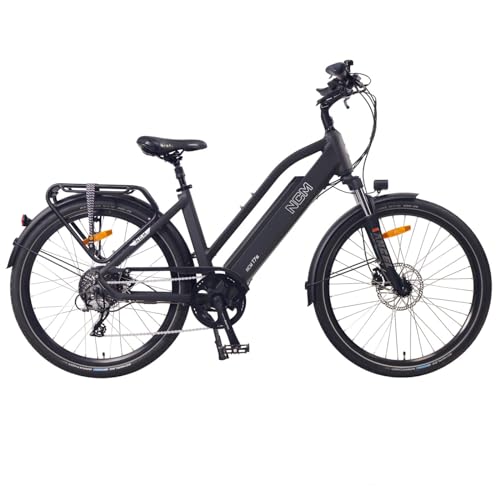
- Most PremiumNCM T7S Step Thru Trekking E-Bike about$2,399250W.
Where you live decides most of this
Most of the comparisons I've read line the two up on range, weight and price, then pick a winner. That's the wrong order for anyone on the Central Coast. In NSW a privately owned e-scooter still can't be ridden on a road, a footpath, a shared path or a bike lane, and a 250W pedal-assist e-bike can be ridden on all of them. So for a NSW reader the legal question answers the buying question before you get to watt-hours, and I'd rather say that up front than bury it under a spec table.
Cross the border and it gets more interesting. Queensland lets you ride both, but it's tightened the rules on both this year, and its e-bike rules are stricter than the NSW ones in a way that catches people out. A 500W e-bike that's legal in Gosford today can't be ridden in Coolangatta. I've put the rules for each state in their own section below, taken from the Transport for NSW and Queensland Government pages on 6 October 2026, and I've left the other states out because I couldn't load their transport pages on the day I checked. I'd rather leave a gap than fill it with a retailer's summary.
After the law, the comparison is mostly about your trip. A scooter is lighter and folds into a boot or under a desk. An e-bike carries more, climbs better, goes further on a charge and copes with rough ground that would rattle a scooter apart. Both cost almost nothing to charge. Both carry a lithium battery that needs a bit of respect at home, and both pick up the same few electrical faults when they're ridden through winter.
What Transport for NSW says about each
Start with e-scooters, because it's the short one. The Transport for NSW e-scooter page says personal e-scooters remain illegal on NSW roads and road-related areas, including footpaths, shared paths and bicycle lanes, and you can only use them on private property. The only legal public riding is on hired scooters inside the shared trial sites, which right now are Forster-Tuncurry and Wollongong. Those trial riders must be 16 or over, wear an approved helmet, stay off footpaths, and keep to 10km/h on shared paths and 20km/h on roads and bike lanes. Riding a private scooter on the road can bring penalties for an unregistered, uninsured and unlicensed motor vehicle, which is a much bigger problem than a parking-style fine. The government's pages talk about plans to legalise e-scooter riding, but I couldn't find a start date on any of them.
E-bikes are allowed, with limits. The Transport for NSW e-bike page says a road-legal e-bike must have a maximum continuous rated power of 500W, a motor that stops helping above 25km/h, and a throttle-only function that cuts out at 6km/h. From 1 March 2029 the power limit drops to 250W and only EN 15194 certified e-bikes will be allowed on NSW roads. A bike over any limit is illegal even if an app, switch or code restricts it. Since 21 August 2026, NSW Police and authorised officers have had wider powers to seize and crush illegal e-bikes used on roads and road-related areas.
The everyday rules for a legal e-bike are the push-bike rules: an approved helmet, fitted and fastened, and no footpath riding if you're 16 or older unless you're supervising a child under 16 who's riding. I've covered the bikes themselves in our legal e-bike guide, and every bike in that guide and in this one has a 250W motor, so it's inside the 2029 limit as well as today's.
Queensland's rules, and why they matter for a NSW bike
Queensland's e-bike page sets the bar at 250W maximum continuous rated power, pedal assist up to 25km/h, a throttle that only works up to 6km/h, and compliance with EN 15194 with a label on the bike. Bikes over 250W are illegal on public paths and roads there, and police can seize, impound and destroy them. There's a transition: a bike that doesn't meet EN 15194 can still be ridden until 28 February 2027 if it's 250W and capped at 25km/h. From 1 March 2027 you'll need a compliance label to ride in public. For older 250W bikes without one, the state's EPAC Assurance Scheme is expected to go live on 2 November 2026, with approved bike shops checking eligible bikes made before 1 July 2026 and charging up to $70 for the inspection and label.
Queensland also changed who can ride. Since 31 August 2026 you must be 16 and hold at least a learner licence to ride an e-bike or an e-scooter, with exemptions for supervised kids, some recreational trails and people who can't hold a licence for medical reasons. Parents can be fined for letting a child ride an illegal device.
Scooters are legal in Queensland as personal mobility devices. The device must weigh no more than 60kg and can't go faster than 25km/h under motor power. Footpaths are capped at 12km/h, shared paths at 12km/h when you're passing pedestrians, and bike paths and separated paths at 25km/h. On the road you're limited to bike lanes and streets with a speed limit of 60km/h or less, at no more than 25km/h. The practical point for Central Coast riders is the border. None of the e-bike listings below states EN 15194, so if you ride in Queensland, get the seller to confirm it in writing before you buy, or you'll be relying on a transition period that ends in February.
What each costs per kilometre
Electricity is the smallest line in either budget. I'll use the average tariff of roughly 33c/kWh. The Xiaomi scooter below has a 216Wh battery, so a full charge costs about seven cents, and the listing claims up to 25km, which works out to under a third of a cent per kilometre on paper. The NCM Prague e-bike carries 468Wh, about 15 cents to fill, for a claimed range of up to 60 miles in Eco mode, roughly 97km. The T7S has a 912Wh pack, about 30 cents a charge. Even if you halve every range claim, and I would, you're paying a fraction of a cent to a cent per kilometre on either.
The money that actually matters is in the hardware and the wear parts. An e-bike costs more up front, and the five picks here run from $522 for the Razor scooter to $2,399 for the T7S. An e-bike's tyres, chain, brake pads and cassette are standard bicycle parts that any bike shop stocks. Scooter tyres and brake parts are often specific to the model, and on smaller brands they can be hard to find a year or two later. The battery is the big one on both. When it wears out, a replacement pack is a large share of the original price, so a design that uses a common, removable pack from a known maker is worth paying a bit more for.
There's one cost that only applies to scooters in NSW, and it's the one I'd take most seriously. If a privately owned scooter is ridden on a public road or path here, the penalties can be the ones for an unregistered, uninsured and unlicensed motor vehicle. That's a risk no running-cost sum can offset.
Range, hills, luggage and the trip itself
A scooter suits a short, flat trip that ends somewhere you can carry it inside: the station to the office, the car park to the campus. The Xiaomi weighs 18.1kg by its listing and folds in one step, so it goes under a desk or into a lift. Small wheels are the trade-off. The Razor has a 9-inch pneumatic front tyre and the Xiaomi 10-inch pneumatic tyres, and on cracked footpaths, tree roots and gravel, small wheels find every bump. Hills eat a scooter's range quickly because the motor does all the work, and you're standing still on the deck rather than pushing.
An e-bike shares the effort with you. Pedal assist means a 250W motor on a hill is adding to your legs, not replacing them, and that's why a bike with a smaller motor can still climb further on a charge than a scooter with a bigger one. Bigger wheels roll over rough ground, there's room for a rack and panniers, and the riding position is more stable at 25km/h. The costs are weight and space. The NCM Prague weighs 25kg including its electrics, and none of the full-size bikes here fold. The Paris does, but it's still a lot heavier to lug up stairs than a scooter.
Weather counts too. Neither type likes being ridden through heavy rain, and both have connectors and controllers sitting low where road spray lands. I've seen more water damage in scooter decks than in bike frames, mostly because the deck is so close to the ground. If your ride is long, hilly or has a supermarket stop at the end, the bike wins. If it's short, flat, and you need to carry the thing into a building, a scooter makes sense, where your state allows it. Either way, budget for a decent lock, a helmet and lights; I've listed the ones I'd buy in this e-bike locks and accessories round-up.
Lithium batteries in both, and charging them at home
Both are lithium-ion battery packs on wheels, and the pack is where the risk sits. A pack is dozens of cells wired together, watched over by a battery management system (BMS) that cuts power if a cell runs too high, too low or too hot. The Xiaomi listing says its BMS has six protections including over-charge, over-discharge, short circuit and overheat. None of the other listings says much about the BMS, and that's normal, but it's also why the charger and the way you charge matter so much.
My rules are simple. Use the charger that came with it, or a replacement from the same maker, never a universal brick because the plug happens to fit, because the same connector turns up on chargers for different pack voltages. I've written about what goes wrong inside bad chargers if you want the detail. Charge somewhere you'd notice a problem, not in a hallway or by the only exit, and not unattended overnight. Unplug once it's full. Put a photoelectric smoke alarm wherever the bike or scooter lives if there isn't one already.
Treat damage seriously. A pack that's been dropped, crashed, dunked or has started to swell can look fine and still have a cracked cell or a damaged weld inside. Don't charge it, don't open it, and don't keep riding it to see what happens. Store either type at around half charge if it'll sit unused for months, because a pack left flat for a whole winter can sink below the voltage where the BMS will let it charge again. That isn't a fault in the BMS, it's the BMS doing its job.
How I picked the five, and the one I dropped
I started from the two buying guides on this site and re-checked every pick against its Amazon AU listing and sales rank on 6 October 2026. The three e-bikes are the NCM models from the e-bike guide, all sold by Leon Cycle Australia and all stating a 250W motor and a 25km/h assist cut-off. The Prague sits at #10 in Amazon AU's Adult Electric Bicycles category, the T7S at #75 and the Paris at #121. I looked again for a second legal brand with Amazon AU supply in this band and didn't find one, so it's three NCMs again.
Of the two scooters, only the Xiaomi 6 Lite states a 25km/h top speed. The Razor E300 HD, at #517 in Sport Scooters, doesn't state one, which is why its card carries a check-first warning. I dropped the Segway Ninebot E2 this time, even though it's in the e-scooter buying guide, because its current listing mentions a boost mode reaching up to 70km/h. That figure may well be a listing error, but a scooter that claims it can go faster than 25km/h isn't one I'll recommend for a guide about staying legal. I left out an iScooter model too, because the seller is the brand's own storefront and I wanted local retail sellers on the scooter side.
The 5 picks, $522 to $2,399
Prices are Amazon AU at time of writing (6 October 2026) and move week to week. Ranks are Amazon AU category sales ranks, checked the same day.

NCM Prague Electric Mountain Bike, 250W, 36V 13Ah 468Wh, 26-inch
ASIN B0836BH5TW • $1,499.00 • Sold by Leon Cycle Australia on Amazon AU
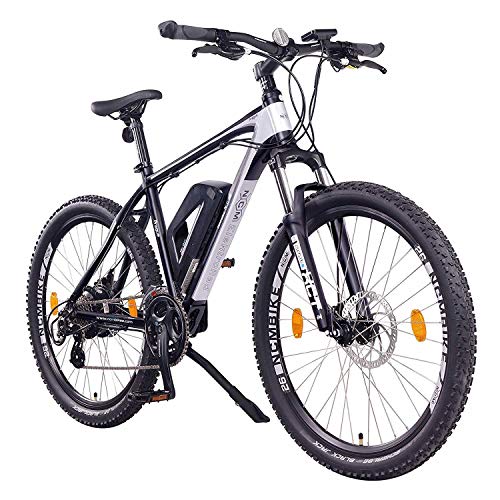
The NCM Prague is #10 in Amazon AU's Adult Electric Bicycles category at $1,499, sold by Leon Cycle Australia, and it's the highest-ranked e-bike I found whose listing states a 250W motor. It's a hardtail e-MTB on 26-inch wheels with an aluminium frame, and the listing puts it at 25kg including the electrics. Power comes from a Bafang 250W rear hub motor and a 468Wh DeHawk battery (36V 13Ah), with a Das-Kit L6B display and controller. Assistance tops out at 15.5mph, which is 25km/h, with six assist levels and a zero setting that turns the motor off so it rides like a normal bike. On a legal bike that cut-off is the whole point, because it's what keeps the Prague a bicycle in law rather than a motorbike.
Against a scooter, this is the one that changes what trips are possible. A Suntour XCT fork with preload adjustment and Schwalbe Smart Sam tyres mean gravel, fire trails and broken kerbs are fine, where a scooter's small wheels would be skittering. Gearing is Shimano and stopping is Tektro mechanical disc brakes, which need adjusting more often than hydraulics but are easy for any bike shop to service. The listing quotes up to 60 miles in Eco mode, roughly 97km. With hills and a mid assist level, I'd plan on well under half that, which is still more real range than either scooter here. That gap between claim and reality applies to every listing in this guide, scooters included, so it's a fair comparison.
I'd pick this for anyone in NSW who wants one legal machine for the shops, the commute and the odd weekend trail. It's also the lowest-priced e-bike here alongside the Paris. Bafang is one of the most common hub motor makers, so connectors, displays and controllers are easier to source down the track than parts for a no-name motor. Get EN 15194 confirmed in writing before you order, especially if you ever ride in Queensland. The rear hub layout also keeps things simple at the bench, since the motor, cable and plug sit in one place near the axle. A dry, covered spot to park it will do more for the electrics than any accessory you could buy.
Honest caveats: Honest caveats: the listing doesn't state EN 15194 certification, the sensor type, a replacement battery price or a water rating, so ask about all four. The bullet points are written in miles, which suggests copy written for another market, so confirm the bike shipped here matches. At 25kg it's no fun up a flight of stairs.
Best for: NSW riders who want one legal 250W bike for errands, commuting and gravel, at the lowest e-bike price here.
Motor: Bafang 250W rear hub • Battery: DeHawk 36V 13Ah, 468Wh • Assist cut-off: 15.5mph (25km/h) • Assist levels: 6, plus zero • Weight: 25kg including electrics • Brakes: Tektro mechanical disc • Sold by: Leon Cycle Australia • Rank: #10 in Adult Electric Bicycles (Amazon AU)
View on Amazon AU
NCM Paris Folding E-Bike, 250W, 36V 15Ah 540Wh, 20-inch
ASIN B07KKGKZB4 • $1,499.00 • Sold by Leon Cycle Australia on Amazon AU
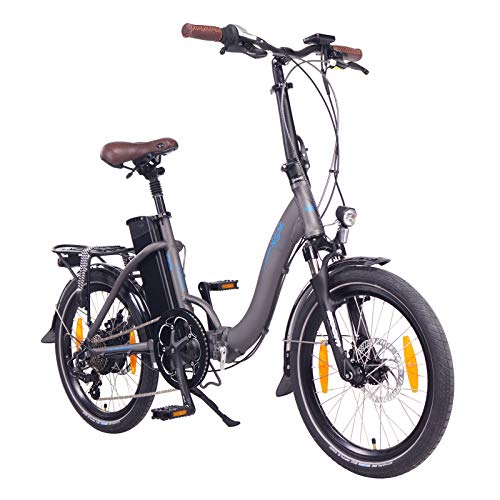
The NCM Paris is the e-bike that gets closest to a scooter's main trick. It's $1,499 at #121 in Adult Electric Bicycles, sold by Leon Cycle Australia, and the frame, stem, pedals and saddle all fold without tools. It runs a 250W motor and a DeHawk 36V 15Ah battery, which is 540Wh, a bigger pack than the Prague's. Assistance stops at 15.5mph (25km/h), there are six assist levels plus zero, and the listing claims at least 25 miles of pedal support and up to 70 miles in Eco mode. That's roughly 40km to 113km, and I'd plan around the lower figure. The motor brand isn't named on this listing, unlike the Prague's Bafang.
Compared with the two scooters, the Paris gives you a seat, pedals and a far bigger battery for about $800 to $1,100 more. It comes with a lot fitted that a scooter buyer would have to add: Tektro disc brakes front and rear, a Spanninga 20 lux headlight, mudguards, a rear rack and a chain guide. The low step-through frame makes it easy to get on and off, and the battery lifts out from under the flip-up saddle, so you can charge it inside while the bike stays in a garage or on a balcony. There's a USB port on the battery too. On a scooter, a rack and mudguards usually aren't even an option.
Pick this one if storage is the thing stopping you from buying a full-size e-bike, or if you want to fold it into a car boot and ride the last few kilometres. On 20-inch wheels it's less settled on rough ground than the Prague, but it's far more stable than a scooter at the same speed. Ask the seller about the folded size and weight before you buy, because neither is on the listing. The flip-up saddle and removable battery also make it the easiest bike here to charge indoors safely, where you'll notice if anything is wrong. For a renter without a garage, that matters more than an extra few kilometres of range.
Honest caveats: Honest caveats: the listing doesn't state the bike's weight, its folded dimensions, EN 15194 certification or a water rating. Folding hinges need checking and tightening as part of normal care, because a loose hinge is a safety problem. Small wheels feel every pothole more than 26-inch wheels do.
Best for: Apartment and car-boot riders who want a legal e-bike that folds away like a scooter.
Motor: 250W • Battery: DeHawk 36V 15Ah, 540Wh, removable • Assist cut-off: 15.5mph (25km/h) • Wheels: 20-inch • Folding: Frame, stem, pedals and saddle, tool-free • Fitted extras: Spanninga 20 lux headlight, mudguards, rack, USB port • Sold by: Leon Cycle Australia • Rank: #121 in Adult Electric Bicycles (Amazon AU)
View on Amazon AU
NCM T7S Step-Thru Trekking E-Bike, 250W, 48V 19Ah 912Wh, 26-inch
ASIN B0CY1X281H • $2,399.00 • Sold by Leon Cycle Australia on Amazon AU
The NCM T7S is the one for long commutes. It's $2,399, #75 in Adult Electric Bicycles, sold by Leon Cycle Australia, and it carries a 48V 19Ah battery, which is 912Wh, almost double the Prague's pack and more than four times the Xiaomi scooter's 216Wh. The motor is a 250W rear hub that, per the listing, holds 25km/h for long stretches. The display is a Das-Kit C8 LCD that detaches from the bars, with six assist levels, and the listing mentions location tracking. A full charge costs about 30 cents at 33c/kWh. That's the most energy of any pick here, and it's the reason this bike costs more. For a long ride, the pack size is the spec I'd look at first, ahead of the motor.
The hardware is where the extra money goes. Tektro hydraulic disc brakes with 180mm rotors stop better and need less fiddling than mechanical discs, and both levers have sensors that cut the motor when you brake, which is exactly what you want on a bike that'll spend a lot of time at 25km/h. Gearing is a Shimano Acera 8-speed, and the tyres are Schwalbe Marathon, a commuter tyre with a strong reputation for resisting punctures. There's a Suntour suspension fork, an adjustable handlebar, a suspension seat post and Spanninga lights front and rear. That's a lot of fitted hardware, and it's all common bicycle parts that a bike shop can service, which keeps running costs down later.
If your round trip is 30km or more, or it's hilly, this is the pick, and it's the clearest case of where an e-bike does something no scooter on the market here can match. It's step-through, so it's easy to mount with a loaded rack. It's also the heaviest commitment here, so confirm EN 15194 and the replacement battery price before you order. It's the bike I'd point most people towards if they told me they wanted to leave the car at home most days, because it's comfortable enough for daily use and the battery covers a long week. Store it under cover, and keep the pack around half charged if it sits for a while.
Honest caveats: Honest caveats: the listing doesn't state the bike's weight, EN 15194 certification or a replacement pack price, and a 912Wh pack won't be a small cost to replace. Some listing text refers to the Milano Plus model, so check you're getting the T7S spec shown. The sensor type isn't stated.
Best for: Commuters riding 30km or more a day, or hilly routes, who want hydraulic brakes and the biggest battery.
Motor: 250W rear hub • Battery: 48V 19Ah, 912Wh • Assist: Holds 25km/h (per listing) • Brakes: Tektro hydraulic disc, 180mm rotors, motor cut-off levers • Gears: Shimano Acera 8-speed • Tyres: Schwalbe Marathon • Sold by: Leon Cycle Australia • Rank: #75 in Adult Electric Bicycles (Amazon AU)
View on Amazon AU
Xiaomi Electric Scooter 6 Lite, 300W Rated, 216Wh, 10-inch Pneumatic Tyres
ASIN B0GTV1M3TP • $671.04 • Ships from Amazon AU
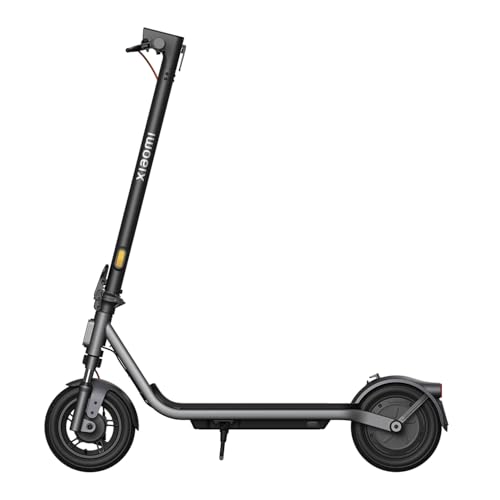
The Xiaomi 6 Lite is the scooter whose listing tells you the most, which is why it's here. It's $671, #52 in Amazon AU's Sport Scooters category, and sold by Amazon AU itself. The motor is stated as 300W rated and 500W peak, top speed 25km/h (20km/h in some regions), and the battery is 10Ah and 216Wh with a BMS listing six protections including over-charge, over-discharge, short circuit and overheat. Range is claimed at up to 25km. A full charge costs about seven cents at 33c/kWh. That's a straightforward listing, and it's how I'd like every scooter seller to write theirs. Nothing here is a mystery number you have to chase up.
Against the e-bikes, its strengths are weight and size. It's 18.1kg by the listing, with a 100kg maximum load, and it folds in one step, so it goes under a desk, into a lift or across a train platform far more easily than any bike here. The 10-inch pneumatic tyres and 25mm dual-spring front suspension take the edge off rough paths better than solid tyres would, and the front drum brake is sealed, which helps in the wet. Behind that there's an electronic E-ABS rear brake. The listing rates it for a 15 per cent climb, which is a gentle hill, not a steep one. That's the reality of every scooter here.
This is the scooter I'd buy in Queensland, where it's legal on bike paths and low-speed roads at 25km/h, or for riding on private property in NSW. At 18.1kg it's well under Queensland's 60kg device limit. Plan on two-thirds of the 25km range claim, less in winter. Unlike the Razor, it tells you the battery size, so you can do the range sums yourself before you buy. Amazon AU as the seller also keeps returns and warranty simple, which is worth something on a battery-powered product. If you're in NSW and just want something for a big private block or a farm track, it's the one I'd choose, but don't expect to ride it to the station.
Honest caveats: Honest caveats: it isn't legal to ride on public roads or paths in NSW as of writing, only on private property. The listing doesn't state an IP water rating, a charge time or a replacement battery price. A 216Wh pack is small, and a long hilly commute will empty it well before 25km.
Best for: Queensland riders with a short, flat commute who need to carry the scooter inside.
Motor: 300W rated, 500W peak • Battery: 10Ah, 216Wh, six BMS protections • Top speed: 25km/h (20km/h in some regions) • Range: Up to 25km (claimed) • Brakes: Front drum, rear E-ABS • Weight / load: 18.1kg / 100kg max • Sold by: Amazon AU • Rank: #52 in Sport Scooters (Amazon AU)
View on Amazon AU
Razor E300 HD Electric Scooter, Brushless Hub Motor, 9-inch Pneumatic Front Tyre
ASIN B09ZVKZBWK • $522.15 • Ships from Amazon AU
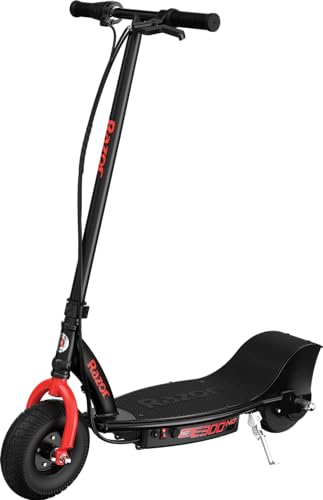
The Razor E300 HD is the lowest-priced scooter in this comparison at $522 and the one with the most familiar name on the deck. It's #517 in Amazon AU's Sport Scooters category and sold by Amazon AU itself. The listing describes a brushless, hub-driven motor that Razor calls quiet and maintenance-free, a 9-inch (229mm) pneumatic front tyre, an extra-wide anti-slip rubber deck, rear-wheel drive for traction and steering, and a tubular steel frame. Razor pitches it as an upgrade on its best-selling E300.
The gap between this and the Xiaomi is what the listing leaves out. There's no motor rating, no top speed, no battery size, no range claim, no weight and no load limit, and it doesn't say whether it folds, how it brakes or what lighting it has. Power and speed are the two figures the NSW and Queensland rules above turn on, so a listing that states neither can't be checked against them from the page. The Xiaomi's stated 300W rated motor and 25km/h can. Against any of the e-bikes it's a fraction of the price, but you're buying unknowns on a battery product.
I'd only look at this once the seller or Razor has confirmed the power, top speed and battery size, and once you've checked them against the rules for the state you ride in. If the numbers land inside the limits, rear-wheel drive and a wide deck are a sensible setup for short, flat trips. If they don't come back at all, I'd spend the extra on the Xiaomi rather than guess, because range and legality are the first things you'll care about on a scooter.
Honest caveats: the listing doesn't state motor power, top speed, battery capacity, range, weight, maximum load, brakes, lighting or whether it folds, so legality can't be confirmed from the page. Only the front tyre is described as pneumatic. It isn't legal on NSW public roads or paths as of writing.
Best for: <strong>Best for:</strong> Short, flat trips where you want a known scooter name, once you've confirmed the power and speed against your state's rules.
Motor: brushless hub-driven, rating not stated • Top speed: not stated • Drive: rear-wheel • Tyres: 9-inch (229mm) pneumatic front • Deck: extra-wide anti-slip rubber • Frame: tubular steel • Sold by: Amazon AU • Rank: #517 in Sport Scooters (Amazon AU)
View on Amazon AUSide-by-side comparison
| Product | Price | Best for |
|---|---|---|
| Razor E300 HD Electric Scooter | ~$699.00 | |
| Xiaomi Electric Scooter 6 Lite 10 Inch… | ~$643.08 | |
| NCM Prague Electric Mountain Bike | ~$1,499 | |
| NCM Paris Folding E-Bike | ~$1,499 | |
| NCM T7S Step Thru Trekking E-Bike | ~$2,399 |
What we see fail at the bench: e-bike and scooter electrics
I don't true wheels or adjust gears, and I'd send you to a bike shop for those. What comes across the bench is the electrical side of both: chargers, connectors, controllers and the occasional drowned scooter deck. Scooters and e-bikes fail in surprisingly similar ways, and most of the faults give warning signs well before the thing stops on the side of the road.
Scooter decks and bike connectors that hold water
A scooter keeps its battery and controller inside the deck, a few centimetres above the road, and every puddle sprays straight at its seams. On e-bikes the weak spots are the battery rail contacts and the motor plug near the rear axle. Either way the first sign is usually intermittent: the display flickers, the power cuts over bumps, or it won't switch on when it's cold and damp. Inside we find green or white crust on connectors and boards. Caught early it's a clean and reseal. Left for a winter it spreads, and that's how water slowly corrodes a circuit board until it's beyond saving.
Chargers that were never the right one
The charger is the part most likely to be swapped, lost or borrowed, and that's where the trouble starts. Scooter and e-bike chargers often use the same barrel or three-pin plugs across completely different pack voltages, so a charger that fits isn't proof that it matches. A charger set for a higher voltage than the pack can overcharge it if the BMS doesn't catch it. Original chargers fail too: the cooling fan seizes, or the lead fractures where it flexes at the plug. A charger that's too hot to hold, clicks, smells or never changes its light colour should be replaced with the maker's own.
Packs that were dropped, crashed or left flat
Scooters get dropped a lot, usually while folding or carrying them, and e-bike batteries fall off racks. A pack can look perfect after a knock and still have a cracked cell or a broken weld inside, which is why I won't open or charge a pack that's been hit hard, swollen or soaked, and I'd ask you not to either. The other common one is a pack left flat over winter that the BMS won't charge any more. That's the protection working, not a fault, and it's a job for the maker's service agent, not a different charger.
Decision tree: which one should you actually buy?
- Live in NSW and want to ride on roads or paths? → Get an e-bike. A privately owned e-scooter can't be ridden in public in NSW as of writing. The NCM Prague at $1,499 is the top-ranked 250W bike here.
- Need it to fold into a boot or a small apartment? → The NCM Paris at $1,499 folds without tools and comes with lights, mudguards and a rack, and it's legal in NSW.
- Commuting 30km or more a day, or up serious hills? → The NCM T7S at $2,399, for its 912Wh battery and hydraulic brakes with motor cut-off levers.
- In Queensland with a short, flat trip and a building to carry it into? → The Xiaomi 6 Lite at $671 is 18.1kg, states its battery and motor ratings honestly, and is sold by Amazon AU. The Razor E300 HD at $522 costs less but tells you far less.
- Riding across the NSW and Queensland border? → Buy a 250W e-bike with EN 15194 confirmed in writing. A 500W bike that's legal in NSW now is illegal in Queensland, and Queensland will want a compliance label from 1 March 2027.
- Cutting out, won't charge, or got caught in a downpour? → Stop charging it and bring it to our Erina workshop. We'll check the charger, connectors and controller and tell you what's wrong before you spend anything.
Frequently asked questions
Are electric scooters legal in NSW?
Not privately owned ones, as of writing. The Transport for NSW e-scooter page says personal e-scooters remain illegal on NSW roads and road-related areas, including footpaths, shared paths and bicycle lanes, and can only be used on private property. The exception is hired scooters inside the shared trial sites, currently Forster-Tuncurry and Wollongong. The NSW Government talks about plans to legalise e-scooters, but I couldn't find a start date on its pages when I checked on 6 October 2026. If you want to ride legally on NSW roads and paths today, a 250W e-bike is the option.
Is an e-bike legal in NSW?
Yes, if it meets the rules. Transport for NSW says a road-legal e-bike must have a maximum continuous rated power of 500W, a motor that stops helping above 25km/h, and a throttle-only function that cuts out at 6km/h. From 1 March 2029 the limit drops to 250W and only EN 15194 certified e-bikes will be allowed on NSW roads. A bigger motor limited by an app or switch is still illegal, and since 21 August 2026 police have had wider powers to seize and crush illegal e-bikes. A 250W EN 15194 bike is legal now and in 2029.
Do I need a licence to ride an e-bike or e-scooter in Queensland?
Yes, in most cases. Since 31 August 2026, Queensland requires riders of e-bikes and e-scooters to be 16 and hold at least a learner licence. There are exemptions: under-18s supervised by a parent or guardian, recreational areas like rail trails and mountain bike trails, and people who can't hold a licence because of a medical condition or disability, who can apply for an exemption form. You don't currently need registration or insurance for a legal device. Parents can also be fined for letting a child ride an illegal device, so check the rules before buying for a teenager.
Is a 500W e-bike legal in Queensland?
No. Queensland's limit is 250W maximum continuous rated power, with pedal assist cutting out at 25km/h and a throttle only up to 6km/h. Its e-bike page says bikes over 250W are illegal on public paths and roads, and police can seize, impound and destroy them. That's the trap for NSW riders, where 500W is allowed until 2029. Queensland also requires EN 15194 compliance with a label, with a transition period for 250W bikes that ends on 28 February 2027. If you ride on both sides of the border, buy 250W with EN 15194 confirmed.
Which costs less to run, an e-bike or an e-scooter?
Both are close to free to charge, so the difference is in parts. At roughly 33c/kWh, a 216Wh scooter battery costs about seven cents to fill and a 468Wh e-bike battery about 15 cents. Per kilometre, both land somewhere around a fraction of a cent to a cent once you allow for real-world range. E-bikes use standard bicycle tyres, chains and brake pads that any bike shop stocks. Scooter parts are often model-specific. On both, the battery is the big future cost, so ask what a replacement pack costs before you buy.
Is it safe to charge an e-bike or e-scooter inside?
It can be, if you treat the battery with some respect. Use the charger that came with it or a replacement from the same maker, not a universal one that happens to fit. Charge where you'd notice a problem, not in a hallway or beside your only exit, and don't leave it charging unattended overnight. Unplug it when it's full. Never charge a pack that's been dropped hard, crashed, soaked or has started to swell. A working smoke alarm near where it's stored and charged is a sensible extra for the rare bad day.
Related buying guides
Power cutting out over bumps, or a charger that's gone hot?
On both e-bikes and scooters, water in a connector or a tired charger usually shows up as flickering, cut-outs or a battery that won't fill long before anything dies outright. Bring it, or just the battery and charger, into our Erina workshop. We'll check the connectors, charger output and controller, and tell you what's wrong and what it'll cost before you spend a cent.
Visit our Erina workshop Book Online