Prices from Amazon AU, updated daily. Swipe or use the arrows for more.
Disclosure: This article contains affiliate links to amazon.com.au. If you buy through one of these links iFix may earn a small commission at no extra cost to you. It doesn't change which products we recommend. We focus on what actually lasts based on 16 years of repair-shop experience.
Quick summary4 picks
- Entry PickMicro Black - Commuter Scooter for Adults about$349.95
- Razor E300 HD Electric Scooter about$699.009" front tyre.
- Segway E2 Ninebot Electric KickScooter about$565.83
- Most PremiumXiaomi Electric Scooter 6 Lite 10 Inch… about$643.08300W.
The commute arithmetic, and the catch
The sums on an e-scooter commute are almost silly. The Xiaomi pick below carries a 216Wh battery, which is 0.216 of a kilowatt hour. At the average tariff of roughly 33c/kWh, a full charge costs about seven cents and the listing rates it for up to 25km of travel. Do the same trip in a small car at 7L/100km with fuel at $2 a litre and the fuel alone is about $3.50, before parking, and parking is where the real money goes in most commutes. Even allowing for range claims being optimistic, which they are and I'll get to why, the running cost isn't a comparison, it's a rounding error. That's the appeal, and it's real. Congestion does the rest of the selling: a scooter doesn't queue, and the last two kilometres from the station are exactly the distance these things exist for. Add tyres and brake pads and the total still embarrasses a weekly fuel bill.
The catch has nothing to do with the hardware. Whether you can legally ride one anywhere other than your own driveway depends entirely on which state you're standing in, and the differences are not small print, they're the whole question. I've put the law section next, before any product, because I'm on the Central Coast and the honest starting point is this: in NSW, as of writing, a privately owned e-scooter can't legally be ridden in public at all. If that surprises you, you're not alone, the things are sold in every retailer here. Read your own state's section before you spend a dollar.
The law, state by state, from the people who write it
NSW first, because it's the strictest and it's home. Transport for NSW is blunt about it: personal e-scooters remain illegal on NSW roads and road-related areas, which includes footpaths, shared paths and bicycle lanes. Private property is the only place you can ride one. The only legal street riding is on hired scooters inside the shared-scheme trial areas. The NSW Government has been working toward legalisation since it announced a framework in October 2024, with proposed rules including a 16-year minimum age and helmets, but as of writing no start date has been set. If you're in NSW, you're buying ahead of a law change that looks likely but hasn't happened, and that's a decision to make with open eyes, not one to discover at the kerb when an officer does.
Victoria and Queensland have settled rules, and they're a good template for what legal looks like. In Victoria, riders must be 16 or older, wear a helmet, keep to 20km/h, and stay off footpaths; legal territory is shared-use paths, bicycle paths and roads signed at 60km/h or less, and the device itself must be capped at 25km/h and weigh no more than 45kg. Queensland allows 12km/h on footpaths and 25km/h on bike paths and low-speed roads, requires a helmet, caps devices at 25km/h and 60kg, and from 31 August 2026 also requires riders to be at least 16 and hold at least a learner licence. The other states and territories broadly permit 25km/h-class devices with helmet rules and their own path speed limits, with the Northern Territory the notable outlier at much tighter caps. Rules keep moving, so check your own state or territory transport department's current page the week you buy, not a retailer's summary of it. Retailer summaries age badly and they're not the ones who'll be fined. One more wrinkle for buyers near a border: the rules attach to where you ride, not where you bought, so a scooter that's legal on a Gold Coast bike path is illegal the moment you cross into NSW with it. Tweed and border commuters get to learn both rulebooks.
Watts, volt figures and what range claims are worth
Motor ratings are where scooter marketing does its heaviest lifting. There are two numbers, rated power and peak power, and only the first one tells you much. Rated power is what the motor sustains; peak is what it survives for a few seconds on a hill. The Xiaomi listing is the honest version: 300W rated, 500W peak, stated plainly. Other listings quote one big number and let you assume it's sustained. When two scooters both say 500W and one costs $200 less, this is usually the difference you're paying for. Battery listings play a similar game with volt and amp-hour figures, quoting whichever sounds biggest. The number that matters is watt hours, volts multiplied by amp hours, because that's the size of the tank. Xiaomi states 216Wh outright; for anything that doesn't, do the multiplication yourself before comparing.
Range claims come from the friendliest possible test: a light rider, a flat route, no wind, the gentlest power mode. Reality has hills, headwinds, cold mornings that sap lithium and a rider carrying a backpack. My rule for any scooter listing is to plan on something like two-thirds of the claimed figure and be pleased when you beat it. That rule also decides which claims matter: a 25km claim covering a 6km commute has margin to be wrong, but a 25km claim covering a 20km commute does not, and you'll be walking the difference. Buy the range for winter with a headwind, not for the spec sheet. The same conservatism applies to charge time claims, which assume the battery was nearly empty and the charger was the original, and to hill ratings, which never mention the rider's weight doing half the work.
Brakes, tyres and the hardware that touches the road
Braking hardware separates commuter scooters faster than motors do. You want two independent systems, because a single point of failure on the thing that stops you is a bad bet in traffic. Two of the three electric picks state dual setups and they're different flavours: the Xiaomi pairs a front drum with rear E-ABS, and the Segway lists two independent brakes worked from a single lever. The Razor's listing doesn't describe its brakes at all, so ask before you buy. Discs bite hardest and are easy to service but bend in a fall; drums are sealed against weather and mostly maintenance-free; electronic and E-ABS braking is regenerative and consistent but is software wearing a brake costume, so I like it paired with something mechanical, which is how the picks here that state their brakes use it.
Tyres matter more than most buyers expect. Pneumatic tyres, which the Xiaomi runs (the Razor's listing only confirms the front, and the Segway's gives neither size nor type), soak up the road chatter that solid tyres transmit straight into your wrists, and they grip wet bitumen far better. The costs are punctures and pressure checks, and the pressure part isn't optional: an underinflated scooter tyre squirms in corners and eats its own range. Size counts too, because a 10-inch wheel rolls over the pothole a smaller wheel drops into. The Razor's 9-inch pneumatic front is the only size its listing gives, which helps, but on the broken footpath-adjacent surfaces most commutes actually cross, bigger rubber at both ends is the simpler engineering answer. A basic pressure gauge in the drawer beside the charger is the least glamorous accessory purchase in this guide and probably the most useful one.
Lithium, chargers and not trusting luck
A commuter scooter carries a laptop bag's worth of lithium between your feet, and the difference between a safe pack and a news story is management electronics and charging discipline. The Xiaomi listing states a battery management system with six protections including over-charge, over-discharge and short circuit, and that's the kind of disclosure to look for on any scooter. Charging discipline is on you: use the charger that came in the box, replace a failed one with the maker's part rather than a marketplace lookalike, and charge somewhere you'd be comfortable having a fault, which is not the hallway between you and the door. The same reasoning I've laid out about counterfeit power bricks applies double when the battery is this size.
Packs age in ways you can watch for. Range that drops suddenly rather than gradually, a charger that reaches full in half the usual time, a pack that's warm hours after charging, any smell of solvent: each of those is the pack telling you something, and the answer is to stop charging it indoors and get it looked at. The packs and controllers that come across our workshop in Erina from scooters and e-bikes fail the same ways phone batteries do, just with a hundred times the energy on board. Water is the usual accelerant, which is the next section, and the reason the charge port cover on any scooter deserves more respect than it gets.
Rain, theft and the ownership questions nobody puts in listings
None of the four listings here states an IP rating, which tells you something about the category: assume splash resistance at best and treat standing water, pressure washing and riding through storms as things that shorten the scooter's life. Water doesn't kill electronics on contact, it kills them over the following weeks as corrosion works across the boards, so a scooter that got soaked and still works isn't necessarily a scooter that's fine. Dry it, leave the charge port cover open somewhere warm, and don't charge until you're confident it's dry inside. Commuting means riding in weather eventually, and pneumatic tyres and drum brakes handle wet roads well, but the electronics would rather you picked the train on the genuinely foul days.
Theft is the other running cost. A folded scooter is a carryable object, which is its best security feature: the scooter that comes inside with you doesn't get stolen. For the times it has to wait outside, a proper lock through the folding mechanism beats a cable, and a tracker hidden in the stem or under the deck turns a theft into a recovery chance rather than a shrug. The tracker guide covers the AirTag-versus-4G decision. Check your contents insurance too, because policies differ on whether a scooter is covered away from home, and the answer is buried in the product disclosure statement, not the ad. Serial numbers help here too: photograph the frame number and keep the receipt, because recovered scooters go unclaimed constantly for want of proof of ownership.
How I picked the four
The gates were the same as every guide in this series, with one extra that did most of the work. Condition New on Amazon AU, sold by Amazon itself or Australian storefronts, no grey imports, sales rank high enough to show the market's actually buying, and a price band of $300 to $1,800. The extra gate: the scooter had to make sense as a legal commuter, which means the 25km/h device class that Victoria and Queensland's rules are built around. That gate removed the 1,200W and 2,500W machines advertising 50 to 80km/h top speeds, and they were some of the strongest sellers in the search results. I don't doubt they're fun. There is no Australian state where riding one at those speeds in public is legal, and a buying guide that pretends otherwise is writing cheques its readers get to cash with the police.
What survived is a tight, honest field: three electric commuter scooters from $566 to $699 and one no-motor kick scooter at $350, from several different sellers including Amazon AU itself. The Xiaomi states its braking, top speed and fold mechanism; the Segway and Razor listings are the thin ones, and I've said so on their cards. The price gaps buy real differences in motor rating, wheel size and finish rather than stickers. I'd also flag what isn't here: nothing with a seat, because seated scooters shift into different vehicle definitions in several states, and nothing sold on range claims above 30km, because at this price those claims and reality diverge too far for me to put a name to them. A fourth electric pick, a 500W hill-climber, came out on 9 October 2026 because its seller and delivery estimate pointed offshore. I looked again on 10, 13 and 14 October across Segway, Xiaomi, Razor, Lenoxx and other brands. The Segway I had been linking dropped off Amazon AU with no live offer, and the Lenoxx I swapped in on 13 October lost its offer within hours. The only adult e-scooter from an Australian seller still standing is another Segway E2 listing, which advertises a 70km/h boost mode. I don't believe that figure and I've said on its card not to ride in boost on public ground, but it is the only one I can link, and I'd rather give you the caveat than leave the slot empty. The rest of the field was kids' scooters, mobility scooters, seated trikes or sellers shipping from overseas. So the Micro is here instead, and it's the only pick without a motor. It's for the reader whose state or commute makes a powered scooter a poor fit, and the guide is honest about that rather than padding the electric list with something I'd have to talk around.
The 4 picks, $350 to $699
Prices are Amazon AU at time of writing (15 September 2026) and move week to week. Ranks are Amazon AU category sales ranks, checked the same day.

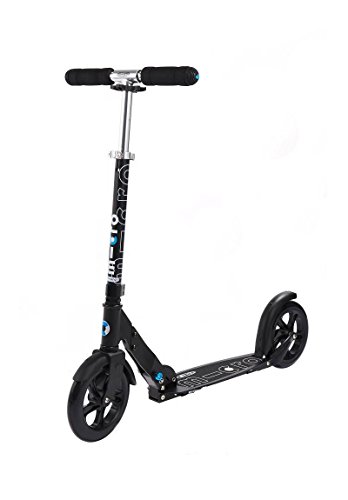
Micro Black Commuter Scooter for Adults, 200mm Wheels, Folding
ASIN B001L2NBOI • $349.95 • Sold by MICRO Scooters Australia on Amazon AU
The Micro Black is the odd one out here, deliberately: it has no motor. It's a kick scooter for adults, #115 in Amazon AU's Sport Scooters category at $349.95, sold by MICRO Scooters Australia. I've kept it because this is a legal-first guide, and in NSW, where privately owned e-scooters can't be ridden in public, a scooter you push along yourself is a different question to a powered one. Rules for non-powered scooters on footpaths and roads vary by state as well, so check your own state's page the same way you would for the electric picks.
The listing gives you big 200mm wheels that Micro says make for a smoother and faster ride, a lower footplate that takes pressure off your back and knees by cutting the need to lean when you kick, a fold for carrying on public transport or chucking in the boot, adjustable height, and a 2 year manufacturer warranty with the full range of parts available. The item weight in the listing's dimensions works out at about 3kg (6.6 lb), which is the whole point of it: you can carry it onto a train without thinking about it.
The trade is the obvious one. No motor means no battery to charge and no lithium pack to look after, so most of the charging and battery sections in this guide don't apply to it. It also means hills and headwinds are on your legs. For a flat last couple of kilometres from the station it's a sensible and fairly low-cost answer. For a long commute it's the wrong tool, and one of the electric picks is the answer once your state allows it.
Honest caveats: No motor, so every kilometre is your own effort and hills are hard work. The listing's feature list doesn't state a maximum rider weight, so ask Micro before buying if you're a heavier rider. 200mm wheels are big for a kick scooter but small next to the electric picks, so rough surfaces will still be felt.
Best for: Short, flat last-mile trips for someone who wants a scooter with no battery or charger to look after.
Type: Kick scooter, no motor • Wheels: 200mm • Footplate: Lower, ergonomic • Folding: Yes, with adjustable height • Weight: About 3kg (6.6 lb, from the listing's dimensions) • Warranty: 2 years (manufacturer) • Sold by: MICRO Scooters Australia • Rank: #115 in Sport Scooters (Amazon AU)
View on Amazon AU
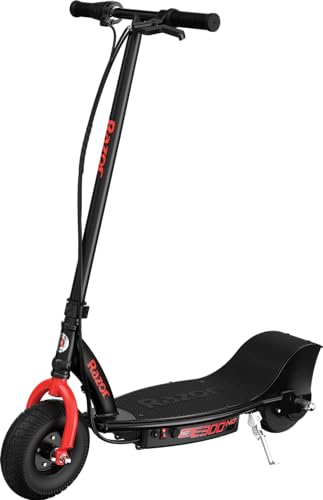
Razor E300 HD Electric Scooter, Brushless Hub Motor, 9 Inch Pneumatic Front Tyre
ASIN B09ZVKZBWK • $699.00 • Ships from Amazon AU
The Razor E300 HD is the one pick here wearing a name most people already know on a scooter, and the listing is short on numbers in a way worth being upfront about. What it does say: a brushless, hub-driven motor that Razor calls quiet and maintenance-free, a 9-inch (229mm) pneumatic front tyre for shock absorption, an extra-wide anti-slip rubber deck, rear-wheel drive that moves weight over the back wheel for traction and steering, and a tubular steel frame. Razor pitches it as an upgrade on its best-selling E300, and Amazon AU is the seller, which keeps returns and warranty simple.
Here is what it doesn't say: motor power, top speed, battery size, range, weight, braking, lighting, or whether it folds. On a legal-first page that matters. The state rules above turn on motor power and top speed, and this listing gives you neither, so get both confirmed before you ride it anywhere those rules apply. If you can't confirm them, buy one of the picks that state their figures instead.
What the listing does give you is a layout I like for the money. Driving the rear wheel helps traction on wet bitumen and rough path edges, the wide deck gives your feet room on a longer ride, and a pneumatic front tyre takes the edge off cracked footpaths. For a short, flat trip it's a sensible first scooter once the numbers check out. For anything where range matters, pick one with a stated battery.
Honest caveats: The listing doesn't state motor power, top speed, battery capacity, range, weight, brakes or whether it folds, so you can't check it against your state's rules from the page. Only the front tyre is described as pneumatic. Check power and speed with the seller before you buy.
Best for: A first scooter for short, flat trips from a name you already know, once you've confirmed the power and speed suit your state's rules.
Motor: brushless hub-driven, rating not stated • Top speed: not stated • Drive: rear-wheel • Tyres: 9-inch (229mm) pneumatic front • Deck: extra-wide anti-slip rubber • Frame: tubular steel • Sold by: Amazon AU • Rank: #517 in Sport Scooters (Amazon AU)
View on Amazon AU
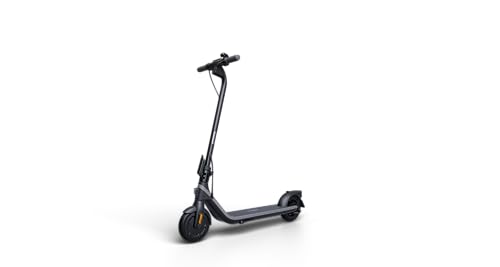
Segway E2 Ninebot Electric KickScooter
ASIN B0B3RZVX6X • $565.83 • Sold by Value Village Australia on Amazon AU
The Segway E2 is the lowest-priced powered scooter left in this guide, and it takes over the slot after the Lenoxx I put there on 13 October lost its offer within hours. It is sold by Value Village Australia, and when I checked on 14 October Amazon AU quoted a delivery estimate of 23 to 26 October to Erina, so look at the date at checkout before you count on it.
The listing needs careful reading. Its copy claims a boost mode that reaches 70km/h. No Australian state allows anything close to that on a path or road, I don't treat the figure as a rating, and you shouldn't ride in any boost mode on public ground. The listing gives no rated top speed, motor power, battery capacity, range, weight or fold details, so I can't tell you which legal device class this scooter fits. Get the rated top speed and motor power from Segway's own spec sheet for part number NEEF2210A before you ride it anywhere public.
What the listing does state is practical: two independent brakes worked from a single brake lever, three riding modes (eco, standard and sport), powerful lights with turn signals, and an aircraft-grade aluminium alloy structure. Two independent brakes mean losing one still leaves you a way to stop. At $566 it is the lowest-cost powered scooter in this guide, but the money buys a recognised name and a brake setup, not stated numbers. The Xiaomi at $685 is the pick that discloses everything.
Honest caveats: The listing doesn't state a rated top speed, motor power, battery capacity, range, charge time, weight, maximum load, tyre type or whether it folds, and it advertises a 70km/h boost mode I would not use on any public path. It's sold by a marketplace seller (Value Village Australia) rather than Amazon AU itself, so check who handles warranty claims before you order.
Best for: The buyer who wants a recognised scooter brand with two independent brakes at the lowest powered price, and will confirm the rated top speed and range with the seller before ordering.
Brand: Segway • Top speed: no rated figure stated (listing claims a 70km/h boost mode) • Motor: Not stated on the listing • Riding modes: eco, standard, sport • Brakes: two independent, one lever • Lighting: lights and turn signals • Frame: aircraft-grade aluminium alloy • Range, battery, weight: Not stated on the listing • Sold by: Value Village Australia • Rank: #22 in Sport Scooters (Amazon AU)
View on Amazon AU
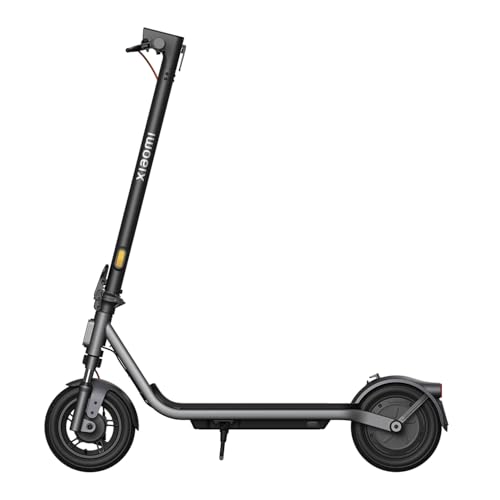
Xiaomi Electric Scooter 6 Lite, 10 Inch Pneumatic Tyres, Folding
ASIN B0GTV1M3TP • $685.02 • Ships from Amazon AU
The Xiaomi 6 Lite is the disclosure champion of this guide, and after a run of 'not stated on the listing' you can probably guess how much that's worth to me. Rated power 300W with a 500W peak, stated as exactly that. A 10Ah, 216Wh battery with a 25km range claim and a battery management system listing six named protections including over-charge, over-discharge and short circuit. A 25km/h maximum speed, noted as 20km/h in specific regions, which is Xiaomi acknowledging that regulators exist, a rare quality in this category. Weight of 18.1kg on a carbon structural steel frame, 100kg maximum load, 15 percent climbing ability. Every number you need to sanity-check a commute against the earlier sections is on the page, and it's sold by Amazon AU itself.
The riding hardware backs the paperwork. Ten-inch pneumatic tyres pair with a front suspension using 25mm-travel dual springs, which is the most sophisticated bump control in this guide and the right answer for the speed-bump-and-gravel reality of Australian bike paths. Braking pairs a front drum, sealed against weather and effectively maintenance-free, with rear E-ABS, and that drum-plus-electronic combination is my preferred wet-commute setup because neither end minds the rain. The fold is a one-step action Xiaomi rates at three seconds, and at 18.1kg it's the sort of thing you can actually carry onto a train or up office stairs, which is the difference between a scooter that multiplies public transport and one that replaces it badly.
At $685 it costs about the same as the Razor and more than the Segway, sold and shipped by Amazon AU, and the premium over the Segway buys certainty rather than a badge: a stated 216Wh battery and range, every figure disclosed, a named BMS, and the simplest warranty path in the guide. The honest sales pitch is that it's the pick for the buyer who read the watts-and-range section and nodded. If the guide has one buy-it-once recommendation for a daily commuter with no unusual requirements, this is it: not because it's the fastest or the strongest, but because it's the one machine here where you know exactly what you're getting before it arrives.
Honest caveats: The 100kg load limit is the lowest stated here, so heavier riders should check their weight against it before ordering. Range is claimed at 25km, so plan on the two-thirds rule like everything else. The 20km/h regional note means the cap can vary by market firmware, worth confirming for your state's limit.
Best for: The commuter who wants every spec stated, a named battery management system and Amazon AU handling the warranty.
Motor: 300W rated, 500W peak • Battery: 10Ah, 216Wh, six BMS protections • Range: Up to 25km (claimed) • Top speed: 25km/h (20km/h in some regions) • Tyres: 10-inch pneumatic, 25mm dual-spring front suspension • Brakes: Front drum, rear E-ABS • Weight / load: 18.1kg / 100kg max • Sold by: Amazon AU • Rank: #48 in Sport Scooters (Amazon AU)
View on Amazon AUSide-by-side comparison
| Product | Price | Best for |
|---|---|---|
| Micro Black - Commuter Scooter for Adults | ~$349.95 | A no-motor kick scooter for short, flat trips with no battery to charge. |
| Razor E300 HD Electric Scooter | ~$699.00 | A first scooter for short, flat trips from a known name, once power and speed are confirmed. |
| Segway E2 Ninebot Electric KickScooter | ~$565.83 | The lowest-priced powered pick, with two independent brakes, but no rated top speed or range. |
| Xiaomi Electric Scooter 6 Lite 10 Inch… | ~$643.08 | Every spec stated, a named battery management system and Amazon AU handling the warranty. |
What we see fail in the workshop: e-scooters
Scooters live outdoors, vibrate constantly and carry their electronics centimetres off wet bitumen, so the failure patterns are predictable. It's rarely the motor. What arrives is water damage wearing different disguises, connectors shaken loose by a thousand kerbs, and battery packs that were mistreated by chargers or weather long before they misbehaved. The good news is that nearly all of it is preventable with habits, and diagnosable when it isn't.
Water finds the controller first
The speed controller usually lives in the deck, the deck lives in the splash zone, and the seals are only as good as the weakest grommet in the run. Water gets in during winter, nothing fails immediately, and weeks later the scooter throws error codes, cuts out under load or refuses to power on. By then the board is showing corrosion across its tracks and connectors. Caught early it's cleanable and repairable at board level; left long enough, tracks are eaten through and it's a controller replacement. If a scooter's been through genuinely heavy rain, opening the deck to check for moisture beats waiting to find out.
Folding latches and stem play
The folding joint carries your whole weight through a hinge that gets cycled twice a day, and wear shows up as stem play: a click or knock you feel through the bars over bumps. A little play grows quickly because every bump hammers the worn faces harder, and a stem that folds or lets go in traffic is the scooter's most dangerous failure. Check for play weekly by grabbing the stem with the wheel locked between your knees, keep the latch adjusted to the manual's spec, and treat a latch that no longer closes firmly as a stop-riding fault rather than a quirk to live with.
Charge ports and mistreated packs
Charge ports sit low, collect grit and get their covers left open, and a corroded or loose port either stops charging or, worse, heats up while doing it. The packs themselves mostly die from habits: left flat for months, charged flat-frozen on winter mornings, or fed by lookalike chargers with the wrong cutoff behaviour. A pack that suddenly loses a third of its range, finishes charging suspiciously fast or sits warm hours after the charger's done is telling you its cells or BMS need attention. Those symptoms are worth a proper look, not a bigger charger and hope.
Decision tree: which one should you actually buy?
- In NSW and want one anyway? → Know exactly what you're buying: something legal on private property only, until the announced legalisation lands. If that's fine, buy the pick that fits your eventual commute, and check the Transport for NSW e-scooter page for the current status before riding anywhere public.
- Want a scooter with no motor, no battery and no charger? → The Micro Black at $350. A 200mm-wheel folding kick scooter for flat, short trips, and check your own state's rules for non-powered scooters.
- A known name for short, smooth trips? → The Razor E300 HD at $699. A 9-inch pneumatic front tyre and rear-wheel drive, but no stated power, speed or battery, so confirm those first and keep the trips short.
- Want the lowest-priced powered scooter, with a recognised name and two independent brakes? → The Segway E2 at $566. Two independent brakes and three riding modes, but no rated top speed, power, range or weight, so confirm those with the seller first and ignore the listing's 70km/h boost claim.
- Want every spec stated and Amazon AU holding the warranty? → The Xiaomi 6 Lite at $685. Rated and peak power split honestly, 216Wh battery with a named six-protection BMS, 18.1kg carry weight, drum plus E-ABS braking for wet commutes.
- Already own a scooter that cuts out, won't charge or throws errors? → Don't buy a controller off a marketplace and hope. Water-damaged controllers, worn connectors and misbehaving packs are diagnosable, and often board-level repairable for a fraction of replacement. Bring it in to our Erina workshop and we'll tell you what's actually wrong first.
Frequently asked questions
Are electric scooters legal in NSW?
Privately owned e-scooters are not legal to ride in public in NSW as of writing. Transport for NSW states they remain illegal on roads and road-related areas, which covers footpaths, shared paths and bicycle lanes, leaving private property as the only legal place to ride your own. Hired scooters within the shared-scheme trial areas are the exception. The NSW Government announced a legalisation framework in October 2024, with proposed rules including a 16-year minimum age and mandatory helmets, but no commencement date has been set. Check the Transport for NSW e-scooter page for the current position before buying, because this is the state most likely to change its rules soon.
What speed can I legally ride an e-scooter in Australia?
It depends on the state and the surface. Victoria caps riding at 20km/h on shared paths, bicycle paths and roads signed 60km/h or less, with footpaths off limits entirely. Queensland allows 25km/h on bicycle paths and low-speed roads but only 12km/h on footpaths. Most other states that permit e-scooters work around a 25km/h device class with their own path limits, and the Northern Territory is far stricter. The device itself matters too: Victoria and Queensland both require the scooter to be incapable of more than 25km/h on level ground. Your state or territory transport department's page is the authority, and it's worth rechecking each year because these rules are still settling.
Do I need a helmet or a licence to ride an e-scooter?
A helmet, yes, in every state that allows e-scooters at all: an approved bicycle helmet is mandatory in Victoria and Queensland, and the same requirement runs through the other jurisdictions' rules. Licensing is newer and mostly Queensland's doing: from 31 August 2026, Queensland riders must be at least 16 and hold at least a learner licence to ride an e-scooter legally. Victoria requires riders to be 16 or older but does not currently require a licence. Minimum ages of 16 are the common pattern in the states with settled rules. If you're buying for a teenager, check your state's age rules first, because several states make riding under 16 illegal outright rather than just inadvisable.
Why is my scooter's real range so much less than the claim?
Because the claim was earned under the friendliest conditions the manufacturer could defend: a light rider on a flat, windless route in the most economical mode. Your commute adds body weight, luggage, hills, headwinds, stop-start traffic and higher power modes, and cold weather cuts lithium battery output on top. Two-thirds of the claimed figure is a sensible planning number, and less again in winter. Range also fades as the pack ages, gradually and normally for the first years. What isn't normal is a sudden drop of a third or more, which points at a failing cell group or battery management fault rather than ordinary ageing, and that's worth a proper diagnosis rather than just charging more often.
Can I ride an electric scooter in the rain?
Occasionally and carefully, on most commuter scooters, but the listings in this guide don't state IP ratings, and that silence is informative. Treat them as splash-resistant rather than waterproof: fine for damp roads and light drizzle, not for downpours, deep puddles or a hose-down. Wet-weather braking favours sealed hardware like the Xiaomi's front drum, and pneumatic tyres grip wet bitumen far better than solid ones. The bigger risk is slow: water that gets into the deck or charge port doesn't fail anything on the day, it corrodes boards over the following weeks. After a proper soaking, let everything dry thoroughly before charging, and if the scooter starts behaving oddly weeks later, water is the first suspect.
How much does an e-scooter cost to charge?
Almost nothing, which is the category's best trick. The Xiaomi's stated 216Wh battery is 0.216 of a kilowatt hour, so a full charge at the average Australian tariff of roughly 33c/kWh costs about seven cents, for a claimed 25km of travel. Even charging every workday, you're looking at under two dollars a month in electricity. The real running costs live elsewhere: tyre punctures and wear, brake adjustments, the eventual battery pack replacement after a few years of daily cycling, and whatever your state's helmet and lighting requirements add up front. Budget for consumables rather than electricity, and the arithmetic against a car or even public transport still lands firmly in the scooter's favour.
Related buying guides
Scooter electronics fail like phone electronics, just bigger
Controllers that cut out, displays that died after rain, packs that charge strangely, ports that wobble: most of it is water or vibration damage, and most of it is diagnosable and repairable at board level. Before you pay for a new controller or write the scooter off, bring it in to the workshop in Erina and we'll tell you what actually failed and whether fixing it makes sense.
Visit our Erina workshop Book Online