Prices from Amazon AU, updated daily. Swipe or use the arrows for more.
Disclosure: This article contains affiliate links to amazon.com.au. If you buy through one of these links iFix may earn a small commission at no extra cost to you. It doesn't change which products we recommend. We focus on what actually lasts based on 16 years of repair-shop experience.
Quick summary8 picks
- CheapestQuell Q501 9V Photoelectric Smoke Alarm… about$16.95
- PSA HomeGuard HG140AC about$38.6050Hz refresh.
- Quell Q501 9V Photoelectric Smoke Alarm… about$48.00
- PSA Lifesaver LIF6800 about$49.10
- Quell Q10YK-CO Photoelectric Smoke & Carbon… about$78.10
- LEVSUPTY 4 Pack Wireless Interconnected Smoke Alarms about$160
- LEVSUPTY 5 Pack Wireless Interconnected… about$199.87
- Most PremiumLEVSUPTY 8 Pack Wireless Interconnected… about$294.40
The date on the back of your alarm matters more than the brand
Take a chair to the hallway tonight, twist the smoke alarm off its base and look at the back. There's a date of manufacture printed there, and if it's more than ten years old, that alarm is past its service life no matter how confidently it beeps when you press the test button. The sensing chamber drifts, dust builds up inside it, and the electronics age like everything else does. Australian fire services and the manufacturers both put the working life of a smoke alarm at ten years, and the units I see in customers' ceilings are routinely older than the teenagers sleeping under them.
This guide is about replacing them properly. Every pick is photoelectric, every pick carries AS 3786 certification, and the range runs from a $35 mains-powered replacement to a $160 pre-linked wireless set of four that all sound together. Two of them need a licensed electrician because they're 240V units, and I'll be clear about which ones, because that's not a corner anyone should cut with fixed wiring.
One honest note before the picks. I fix electronics for a living, and smoke alarms aren't something anyone repairs: when one misbehaves or ages out, it gets replaced. What a repair bench does give me is a front-row seat to the things that start house fires, mostly chargers and lithium batteries, and a strong opinion about the sensor type that catches those fires early. That's the lens for everything below.
What the law actually says, state by state
The baseline is national: every state requires smoke alarms that meet Australian Standard AS 3786, and the trend in every rewrite of the rules is toward photoelectric sensors and interconnection. Where the states differ is how far along that road they are, and the two most relevant here are NSW, where I am, and Queensland, which has the deadline everyone's talking about.
In NSW, the Environmental Planning and Assessment (Development Certification and Fire Safety) Regulation 2021, Part 13, is the instrument that requires working smoke alarms in every building where people sleep, with at least one on each level of the home. Alarms must meet AS 3786 and be replaced within ten years of manufacture. For rentals, the rules got real teeth in 2020: landlords must check alarms annually, replace batteries on schedule, and repair or replace a failed alarm within two business days of being told about it. Interconnection isn't mandatory for existing NSW homes, but Fire and Rescue NSW recommends it, and new builds have required it under the construction rules for years.
Queensland is further down the road. Under its smoke alarm legislation, all existing private homes, townhouses and units must have interconnected photoelectric smoke alarms by 1 January 2027, extending the rules that have applied to new builds and rentals since 2017 and 2022. That's every dwelling, not just rentals, and the deadline is now inside eighteen months. If you own property in Queensland, a pre-linked wireless set like the LEVSUPTY pack below is exactly the sort of product that deadline created. Other states sit somewhere between these two positions, so check your own fire service's page, and treat what I've written here as a repair tech's summary rather than a compliance certificate.
Photoelectric versus ionisation, without the marketing
The two sensor types catch different fires. An ionisation alarm holds a tiny radioactive source that keeps a small current flowing through the air in its chamber; combustion particles disturb the current and trip the alarm. A photoelectric alarm shines a beam inside a dark chamber and watches for light scattered off smoke particles. Ionisation responds a little faster to fast, flaming fires. Photoelectric responds much faster to slow, smouldering fires, the kind that start in a couch cushion, a mattress or a charging cable and fill a house with smoke long before there's a visible flame.
The reason every Australian fire service now recommends photoelectric is that the smouldering scenario is the one that kills people in their sleep, and it's also the one modern homes are full of. Foam furniture, synthetic fabrics and lithium batteries all burn dirty and slow before they burn fast. The Quell Q501's own listing leads with exactly this: the sensor is pitched at smoke from foam, rubber and synthetic materials in modern homes. Queensland has gone as far as requiring photoelectric outright, and no state rulebook anywhere is moving back toward ionisation.
Ionisation units also carry a practical nuisance: they're the ones that scream every time the toast browns, because they're most sensitive to the invisible combustion particles cooking throws off. People respond by pulling the battery, and a disabled alarm protects nobody. If there's an ionisation unit in your hallway now, replacing it with a photoelectric model is the single most useful upgrade in this whole guide, ahead of any smart feature.
Interconnection: the feature that matters at 2am
A smoke alarm's job is to wake you, and a single alarm at the far end of the house has to do that through two closed doors and a running fan. The physics are against it. An alarm sounding in a downstairs laundry can be surprisingly easy to sleep through in an upstairs bedroom, and the minutes lost there are the minutes that decide how a fire ends. Interconnection fixes this: when one alarm detects smoke, every linked alarm in the house sounds at once, including the one on your bedroom ceiling.
There are two ways to get there. Hardwired interconnect runs a signal wire between 240V alarms, which is tidy in new construction and painful to retrofit through an existing ceiling. Wireless interconnect does the same job over RF, and the good sets arrive pre-linked from the factory, so the pairing dance is already done: mount them, test, done. The 240V PSA units in this guide support both routes, with the HG140AC linking up to 48 units over a 150 metre cable run and the LIF6800 taking wireless interconnection through its accessory range. The LEVSUPTY set is the pure wireless version: four battery alarms, paired in the box, no electrician.
My advice runs one step past the minimum: whichever set you buy, put the sleeping areas and the escape route on it. A linked alarm in each bedroom, the hallway and the living area means the household hears the same alarm at the same time wherever smoke starts, and that's the entire point. Interconnection is also precisely what the Queensland 2027 rules mandate, so buying an unlinked single unit today is buying twice if you're north of the border.
9V, 10-year sealed, or 240V: pick your power honestly
The 9V battery alarm is the format everyone knows, and its weakness is the battery flattening quietly until the 3am chirp starts. The Quell Q501 handles that era of design about as well as it can be handled, with an end-of-life chirp pattern and a hush button, and at $24 an alarm in the twin pack it's the lowest-effort way to get certified photoelectric coverage into a couple of rooms today. Just accept the yearly battery ritual as part of the price, and buy name-brand alkalines, because the leaky no-name cells are what corrode the terminals.
Ten-year sealed lithium is the format the industry is moving to, and it deletes the battery ritual entirely: the cell is built in, rated for the full service life of the alarm, and the whole unit gets replaced at the end. No battery door means no flat spare in the drawer and no alarm sitting silent because someone borrowed the 9V for a guitar pedal. The LEVSUPTY set and the Quell smoke-and-CO unit both use this format, and it's the right call for rentals and for anyone managing alarms across more than one property, because it removes the failure mode that inspections keep finding.
240V mains alarms with battery backup are the premium architecture: powered from the switchboard, with a 9V cell riding along for blackouts, which is when candles and camp stoves come out and the fire risk actually rises. The catch is that fixed wiring is legally an electrician's job in Australia, every state, no exceptions, so a $35 alarm carries an install cost on top unless it's replacing an existing 240V unit on the same wiring, which is still a job for the sparky but a quick one. Both PSA units here are built for exactly that swap-over.
Buying traps, and the fires we actually see coming
The trap on marketplaces is the uncertified alarm: a $15 unit with a smoke logo, no AS 3786 marking, and no local certification behind it. Certification is the entire product. You're buying a promise that the chamber fires at the right smoke density, and an untested chamber is a plastic disc with a battery in it. Every pick in this guide states AS 3786 on the listing, and the PSA LIF6800 goes further with ActivFire certification, which is the register the fire industry itself uses. If a listing doesn't state the standard, that's the whole review.
Check the date, even on new stock. Alarms date from manufacture, not installation, so a unit that sat in a warehouse for three years has spent three tenths of its rated life in a box. The date is printed on the back of the unit; look at it when it arrives, write the replacement year on the base in marker, and you've done more maintenance planning than most households ever do.
As for what starts the fires: from where I sit, the growth area is lithium. Swollen phone batteries, e-scooter packs charged on hallway carpet, and the no-name chargers I've pulled apart and written up in the bad chargers explainer, with creepage distances that would be funny if they weren't plugged in next to a bed. The same goes for overloaded boards behind entertainment units, which is why I keep pointing people at properly rated surge powerboards and away from double adapters. A photoelectric alarm is the backstop for all of it, because lithium and electrical fires smoulder and smoke before they flare.
Placement, dust and the boring upkeep
Location does more than brand. Smoke rises and pools at the ceiling, so alarms go on the ceiling, away from corners where dead air sits, and outside the kitchen's direct steam path so cooking doesn't train the household to ignore alarms. Bedrooms, hallways that serve bedrooms, and at least one on every level including any level people sleep on: that's the pattern the state rules describe, and it's the right pattern regardless of your postcode. The kitchen end of the house is what the Quell smoke-and-CO unit is designed for, sitting near, not in, the cooking zone.
Dust is the quiet enemy of the sensing chamber. A photoelectric chamber that fills with dust either goes deaf or starts crying wolf, and both PSA units advertise chamber design against exactly this, with anti-static housings and finer insect meshes. You can help from the outside: run the vacuum's brush head over each alarm's vents a couple of times a year. If a room is genuinely dusty, that's its own problem worth measuring, and the air quality monitors I've reviewed will show you what's floating around before it ends up inside your alarm.
Then just test them. Press the button monthly, actually monthly, and put a repeating reminder in your phone rather than trusting your memory, because nobody's memory schedules a job whose payoff is silence. Use the hush button for nuisance trips instead of pulling batteries. And when an alarm ages out or misbehaves, replace it the same week: the failure mode of procrastinating on a $35 safety device is not one you want to explain to an assessor, or worse. If you're local and unsure what you're looking at in the ceiling, ask when you're next past our Erina workshop and I'll tell you straight.
The 5 picks, $35 to $160
Prices are Amazon AU at time of writing (19 September 2026) and move week to week. Ranks are Amazon AU category sales ranks, checked the same day.

Quell Q501 9V Photoelectric Smoke Alarm, Twin Pack
ASIN B0FMPZFG4J • $48.00 • Ships from Amazon AU
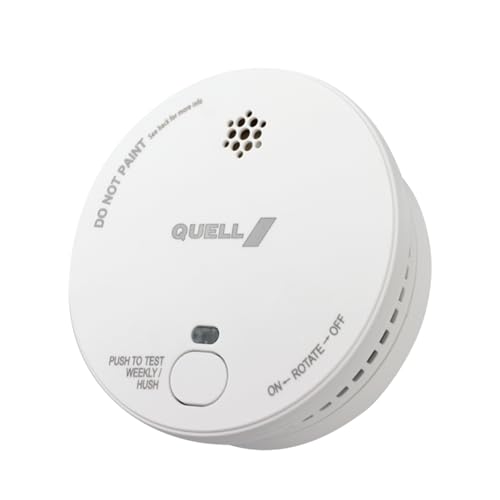
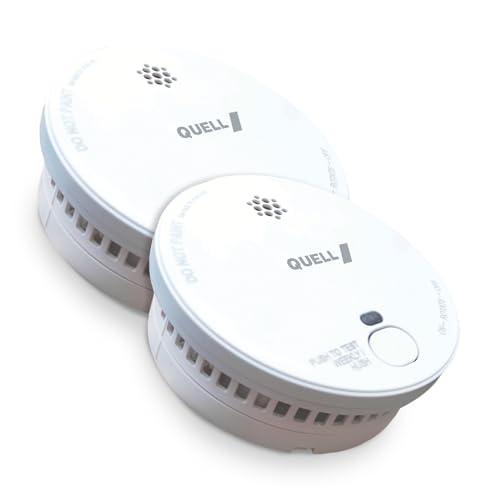
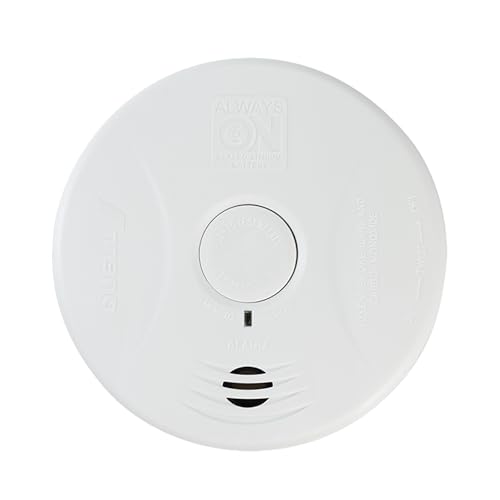
The Q501 twin pack is the volume seller of this list, sitting at #17 in Amazon AU's whole Safety & Security category at $48 for two, sold by Amazon AU. It's the simplest recipe here: a photoelectric sensor, a 9V battery, and a twist-and-click mounting bracket that makes installation a screwdriver job anyone can do in ten minutes per room. The listing pitches the sensor squarely at smouldering fires from foam, rubber and synthetic materials, which is the honest description of what photoelectric chambers are best at, and it's AS 3786 certified with a ten-year service life and a five-year warranty. Two certified alarms into two bedrooms for under fifty dollars is the fastest meaningful safety upgrade in this guide.
The details are sensible rather than flashy. There's a hush feature for silencing a nuisance trip while the toast smoke clears, which matters because alarms that can't be hushed get their batteries pulled, and a pulled battery is how protection quietly ends. End of life is announced properly too: when the unit is done, it chirps twice every 30 seconds, a distinct pattern from the single low-battery chirp, so you know if the fix is a battery or a whole new alarm. That distinction sounds trivial until you've watched someone feed fresh batteries into an expired alarm for a year, annoyed at the batteries the whole time. The bracket design also means the alarm twists off for battery changes without a wrestle, which is the difference between a ritual that happens and one that gets postponed until the chirping starts.
Where does it fit? Anywhere you need certified coverage now, without an electrician, in a house that doesn't yet need interconnection: bedrooms, hallways and living areas, per the listing's own suggestion. It's also the natural spare-room and granny-flat alarm, and at this price there's no excuse for an uncovered sleeping area anywhere in the house. The trade-off is the yearly battery change, and that's a known cost rather than a surprise, but be realistic about your household: if nobody's going to do that ritual, the sealed ten-year units further down this list are the format that matches how you actually live, and there's no shame in buying around your own habits.
Honest caveats: It's a standalone alarm with no interconnection, so it won't satisfy the Queensland 2027 rules on its own, and the 9V battery is on you to replace yearly. Warranty is five years against a ten-year service life, and the battery isn't stated as included on the listing, so have a 9V ready.
Best for: Getting certified photoelectric coverage into a couple of rooms this week, with no wiring and no hub.
Type: Photoelectric, standalone • Power: 9V battery • Pack: Twin pack, $24 per alarm • Hush: Yes, for nuisance alarms • End of life: Chirps twice every 30 seconds • Certification: AS 3786, 10-year service life • Warranty: 5 years • Price: $48.00 at time of writing • Rank: #17 in Safety & Security (Amazon AU)
View on Amazon AU
LEVSUPTY 4 Pack Wireless Interconnected Photoelectric Smoke
ASIN B0FCXXBDG9 • $160.00 • Sold by LEVSUPTY-AU on Amazon AU
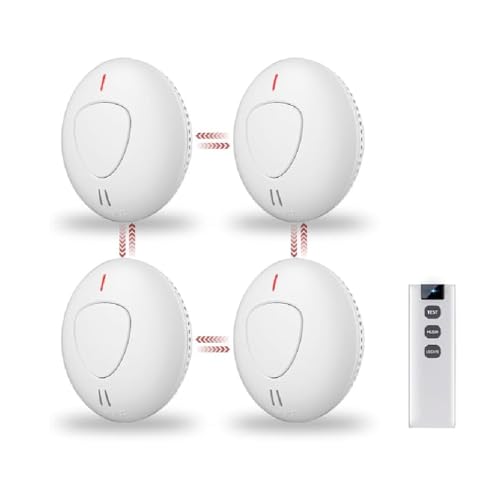
This is the pick the Queensland deadline created, and the one I'd point at anyone who wants whole-house alarming without an electrician. It's a set of four photoelectric alarms with wireless interconnection, so when one detects smoke, all four sound together across bedrooms, hallway and living area. The listing states AS 3786:2014 certification, and the alarms arrive pre-linked from the factory: power on, test, mount. Pairing procedures are where wireless sets usually go wrong, and shipping them already talking to each other removes the step people get wrong. At $160 for four from the brand's AU storefront, it holds #77 in Safety & Security, which is a strong rank for a wireless set at several times the price of a single alarm.
Power is the ten-year sealed lithium format: no battery door, no yearly ritual, and the built-in cell keeps the alarms running through blackouts, which is when fire risk in a house genuinely rises. The listing pitches the set at homeowners, landlords and property managers upgrading coverage, and the sealed format is exactly right for that use, because it deletes the flat-battery failure that rental inspections keep finding. There's also a remote control in the box for test and hush, which sounds like a gimmick until the alarm needing a hush is three metres up a stairwell ceiling, and it makes the monthly test a thirty-second job done from the hallway instead of a chair-dragging expedition through the house.
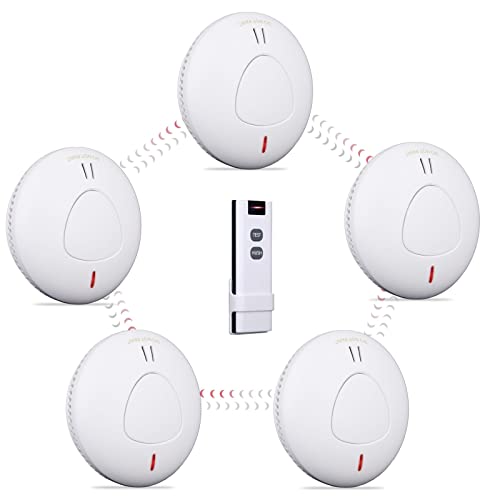
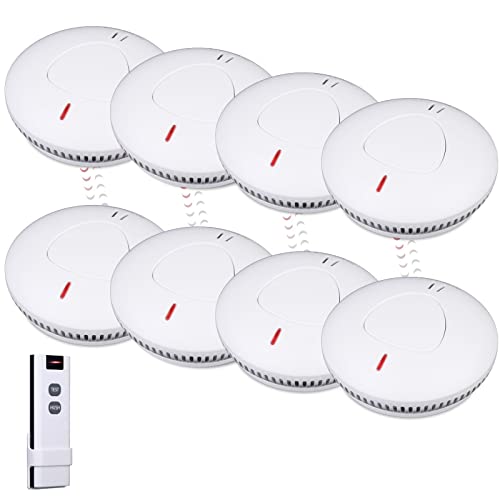
The honest positioning: this is a bare-name brand next to Quell and PSA, sold by its own storefront rather than Amazon AU. What it offers in exchange is the complete interconnected package, certified to the standard the listing states, in the format the Queensland rules call for by 1 January 2027. For a three-bedroom single-level home, four alarms cover each bedroom and the hallway, and the 5 and 8 pack sets further down the page are the next step up if the living areas need joining. Weigh the seller question against the convenience of a set that arrives pre-linked and decide with open eyes; the rank says plenty of buyers already have.
Honest caveats: Small brand sold by its own AU storefront, so support runs through the seller. The listing says to install according to local regulations and the manual, and it's worth reading your state's placement rules before mounting. Sealed battery means the whole alarm is the consumable at end of life.
Best for: Whole-house interconnected coverage with no wiring, and Queensland owners facing the 1 January 2027 deadline.
Type: Photoelectric, wireless interconnected • Pack: 4 alarms, pre-linked in the box • Power: 10-year sealed lithium battery • Interconnect: RF wireless, all sound together • Extras: Remote control for test and hush • Certification: AS 3786:2014 per listing • Price: $160 at time of writing • Rank: #77 in Safety & Security (Amazon AU)
View on Amazon AU
PSA Lifesaver LIF6800 240V Photoelectric Smoke Alarm
ASIN B0CLMYTJ57 • $49.10 • Ships from Amazon AU
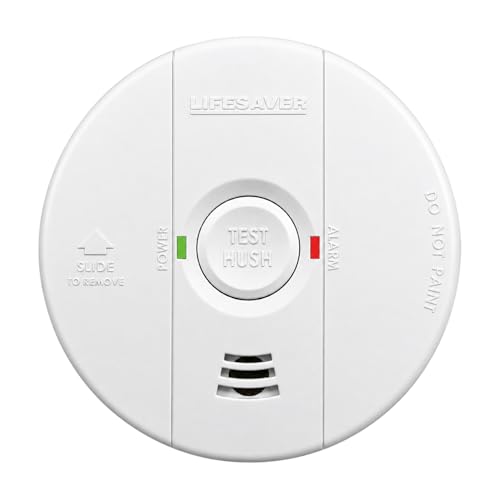
PSA is the Australian brand the trade actually installs, and the LIF6800 is their current-generation 240V unit, at $49.10 from Amazon AU and #259 in Safety & Security. The headline is the chamber: PSA's Advance Sensor design is pitched at resisting false alarms from humidity, heat and dust, and the listing says it was tested across 40 Australian sites with zero failures. I can't verify their test program, but the engineering claims are the right ones, because humidity and dust are exactly what make Australian hallway alarms cry wolf, and a false-alarming unit is a unit that ends up with its breaker flicked or its backup battery pulled, which is worse than no alarm because everyone believes the ceiling is covered.
The spec sheet reads like it was written by an installer. Mains 240V power with a replaceable 9V alkaline backup, included in the box, so the alarm rides through blackouts. An 85dBA sounder rated at three metres. A QUICK SLIDE base that separates mounting from maintenance, so the unit comes down for cleaning without touching wiring. Interconnect capability for up to 24 units, hard-wired or wirelessly through the LIF6000 accessory range. An anti-static chamber that resists dust build-up, and a reduced insect mesh, because ants and thrips walking into the chamber are a real trigger for Australian false alarms. Certification is ActivFire and SAI Global to AS 3786:2014, with a ten-year warranty.
This is the unit for replacing an existing 240V alarm that's past its date, which is a quick job for an electrician since the wiring's already in the ceiling. It's also the pick for anywhere that's had nuisance-trip problems: near bathrooms, in humid coastal hallways, or in dusty rooms, which between them describe half the houses on the Central Coast. If your current alarm has a history of shrieking at shower steam, swapping it for a chamber engineered against exactly that beats another year of everyone flinching at breakfast, and the ten-year warranty means the decision doesn't come around again soon.
Honest caveats: It's a 240V unit, so installation is legally an electrician's job, and that cost sits on top of the $49 unless it's a straight swap on existing wiring. Wireless interconnection needs the accessory range rather than being built in, so price that up if linking is the goal.
Best for: Replacing aged 240V alarms, and any spot where humidity, dust or insects have caused false alarms before.
Type: Photoelectric, 240V mains • Backup: 9V alkaline battery, included • Sounder: 85dBA at 3 metres • Interconnect: Up to 24 units, wired or wireless via accessories • Chamber: Anti-static, reduced insect mesh • Certification: ActivFire, SAI Global, AS 3786:2014 • Warranty: 10 years • Price: $49.10 at time of writing • Rank: #259 in Safety & Security (Amazon AU)
View on Amazon AU
Quell Q10YK-CO Photoelectric Smoke & Carbon Monoxide Alarm
ASIN B0B5FD4NBY • $78.10 • Ships from Amazon AU
The Q10YK-CO is two alarms in one housing: a photoelectric smoke sensor and a carbon monoxide sensor, pitched by Quell at the kitchen end of the house. At $78.10 from Amazon AU and #520 in Safety & Security, it's the specialist of this list. CO is the gas you can't see or smell, produced by incomplete combustion from gas appliances, heaters and anything with a flame, and a CO sensor is the only way a household finds out about it early. Australian homes with gas cooktops, gas heaters or an attached garage are the obvious candidates, and one combined unit near the kitchen covers the two risks that zone actually produces.
The power format is the good one: a sealed ten-year lithium battery, so there's no battery door and no yearly ritual, and the unit activates automatically when it's mounted on its single-screw bracket. The listing covers the housekeeping features properly: a smart hush for silencing nuisance trips, a combined test function that exercises the circuitry and the horn, an end-of-life signal when the ten years are up, and a deactivation switch for safe disposal, which sealed-battery units genuinely need because a lithium cell you can't remove shouldn't go in a bin still live. Certification is AS 3786 for the smoke side, with a ten-year limited warranty across the whole unit, so the warranty and the service life actually line up for once.
Placement advice from the bench: near the kitchen, not in it. Directly over a cooktop, any smoke alarm becomes a toast detector, and steam is a classic nuisance trigger. Just outside the kitchen zone, this unit watches both the slow smoulder from an unattended pan and the CO a struggling gas appliance puts out, and the hush button handles the occasional culinary event without teaching anyone to ignore it. If winter means a gas heater running in a closed room, the CO side of this unit is the part earning its keep, and that's precisely the situation where skimping on the sensor hurts most.
Honest caveats: It's the dearest single unit here, and the CO sensor only earns that if you have combustion appliances or an attached garage; all-electric homes can stay with plain photoelectric. Standalone, with no interconnection stated on the listing, and the sealed battery means whole-unit replacement at end of life.
Best for: The kitchen end of homes with gas appliances, where smoke and carbon monoxide are both live risks.
Type: Photoelectric smoke + carbon monoxide • Power: 10-year sealed lithium battery • Mounting: Single screw bracket, auto activation • Hush: Smart hush plus combined test • End of life: Signal, with deactivation switch • Certification: AS 3786 (smoke) • Warranty: 10-year limited • Price: $78.10 at time of writing • Rank: #520 in Safety & Security (Amazon AU)
View on Amazon AU
PSA HomeGuard HG140AC 240V Photoelectric Smoke Alarm, 140mm Base
ASIN B0F8N1G9LH • $35.09 • Ships from Amazon AU
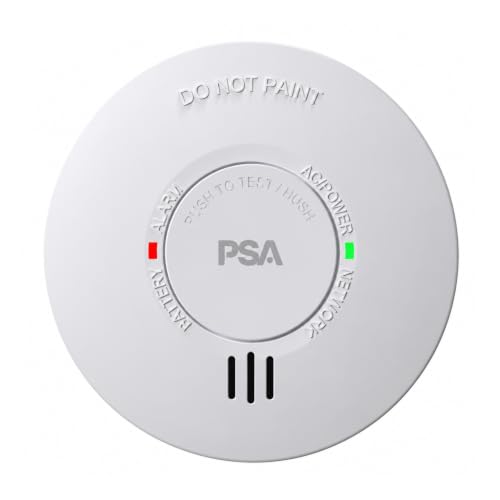
The HG140AC solves a problem you don't know you have until the old alarm comes down: the ring of yellowed paint, screw holes and ceiling grime the previous unit spent a decade protecting. Its 140mm extra-wide hinged base is designed to cover the footprint of the old install, so the swap doesn't come with a patch-and-paint job. At $35.09 from Amazon AU, it's the lowest-priced certified unit in this guide, ranked #697 in Home Security Systems, and it's aimed squarely at replacement work in houses that already have 240V alarms wired into the ceiling, which after two decades of mains-alarm requirements in new builds is a very large share of Australian housing stock.
Under the wide base it's a proper current-generation unit, not a cut-corner one. 240V AC power with a replaceable 9V backup and status LEDs for power, alarm and low battery. A photoelectric chamber behind an ultra-small insect screen, which matters for the same nuisance-trip reasons as the LIF6800. An 85dBA sounder using the ISO 8201 temporal pattern, a big combined test and hush button with roughly ten minutes of hush, and ceiling or wall mounting. The interconnect figure is the standout at this price: up to 48 compatible units over a 150 metre maximum cable run, which is multi-level, multi-wing territory. Certification is to AS 3786:2014 with a ten-year warranty.
The buyer is anyone with dated 240V alarms overhead: the electrician swaps like for like on the existing wiring, the wide base hides the evidence, and the house comes back to current spec for $35 a room plus the visit. For a rental portfolio that number is the argument, because a landlord replacing alarms across six rooms and two properties is price-sensitive in a way one household isn't, and this unit hits the annual-inspection requirements without giving anything up on certification. Bundle the swap with whatever other electrical work the sparky's already coming for and the visit cost spreads even thinner.
Honest caveats: 240V means a licensed electrician, full stop, and the interconnect is wired rather than wireless, so linking alarms that aren't already cabled together is a bigger job than the spec suggests. The 140mm base is the point of the product, but on a clean new ceiling a standard-size unit looks tidier.
Best for: Like-for-like replacement of aged 240V alarms, especially where the old unit has left its mark on the ceiling.
Type: Photoelectric, 240V AC mains • Backup: Replaceable 9V battery • Base: 140mm wide retrofit base • Interconnect: Up to 48 units, 150m max cable run • Sounder: 85dBA, ISO 8201 pattern • Hush: About 10 minutes, combined test button • Certification: AS 3786:2014 • Warranty: 10 years • Rank: #697 in Home Security Systems (Amazon AU)
View on Amazon AUSide-by-side comparison
| Product | Price | Best for |
|---|---|---|
| Quell Q501 9V Photoelectric Smoke Alarm… | ~$16.95 | |
| PSA HomeGuard HG140AC | ~$38.60 | |
| Quell Q501 9V Photoelectric Smoke Alarm… | ~$48.00 | |
| PSA Lifesaver LIF6800 | ~$49.10 | |
| Quell Q10YK-CO Photoelectric Smoke & Carbon… | ~$78.10 | |
| LEVSUPTY 4 Pack Wireless Interconnected Smoke Alarms | ~$160 | |
| LEVSUPTY 5 Pack Wireless Interconnected… | ~$199.87 | |
| LEVSUPTY 8 Pack Wireless Interconnected… | ~$294.40 |
What we see fail at the bench: smoke alarms
Smoke alarms don't get repaired, they get replaced, but the ways they quietly stop protecting a house follow the same patterns as every other neglected electronic device that comes through the shop. The chamber is a sensor, the battery is a consumable, and the radio link is a radio link, which means all three fail the way sensors, consumables and radios always fail. Here's what actually goes wrong, and what each one costs to prevent.
The 9V battery that leaks instead of chirping
Alkaline 9V cells left in place for years past flat don't just die, they vent, and the electrolyte wicks up the terminals and corrodes the battery clip. I see the same failure in effects pedals and test gear constantly: the spring contacts turn green, the joint goes high-resistance, and afterwards even a fresh battery can't make a solid connection. In an alarm, that's a dead unit that looks fine from the floor. Yearly battery changes with name-brand cells prevent it entirely, and if a clip is already crusty, the alarm is a replacement, not a cleaning job, because you can't trust a compromised connection with this job.
Chambers full of dust, insects and kitchen film
Ten years of ceiling time fills a sensing chamber with dust, insect debris and, near kitchens, a sticky film of vaporised cooking oil. A dirty photoelectric chamber drifts in both directions: scattered light off dust means false alarms, and clogged mesh means real smoke arrives late. The manufacturers know it, which is why the current PSA units advertise anti-static chambers and finer insect screens. Your half of the arrangement is vacuuming the vents twice a year and keeping alarms out of the direct steam and oil path of the cooktop. An alarm that's been painted over by a decorating crew, and I've seen plenty, is done: replace it.
Wireless links that were never tested again
Pre-linked wireless sets arrive paired, and the pairing generally holds, but RF is RF: a unit that loses its link after a factory reset, a replacement alarm added years later, or interference from a new neighbour's gear can quietly leave one alarm off the party line. The failure is invisible because each unit still works alone, and the whole point, everything sounding together, is what's silently gone. When you press one test button, walk the house and confirm every alarm in the set is sounding, not just the one under your finger. Do it after any change to the set, and put it on the same reminder as the battery ritual.
Decision tree: which one should you actually buy?
- Whole house, no wiring, sorted this weekend? → The LEVSUPTY 4 pack at $160. Pre-linked wireless interconnection, ten-year sealed batteries, and it's the format Queensland's 2027 rules require.
- Old 240V alarm on the ceiling past its date? → The PSA HG140AC at $35.09 as a like-for-like swap by your electrician, and its 140mm base hides the old unit's footprint on the ceiling.
- Alarm near the bathroom or a humid hallway keeps false alarming? → The PSA LIF6800 at $49.10. Its chamber design targets humidity, dust and insect false trips, which is why the trade fits PSA gear in coastal houses.
- Gas cooktop, gas heating or an attached garage? → The Quell Q10YK-CO at $78.10 near the kitchen zone. One unit covers slow smoulder and carbon monoxide, the two risks that end of the house produces.
- Just need certified alarms in the bedrooms, today, minimum fuss? → The Quell Q501 twin pack at $48. Two AS 3786 photoelectric alarms, a screwdriver, ten minutes per room.
- Found a swollen battery or a suspect charger while you were up the ladder? → Stop charging it and bring it to the workshop in Erina. Swollen lithium is a fire in slow motion, and we deal with them properly, assess the device and tell you what's safe before anything gets plugged in again.
Frequently asked questions
What's the difference between photoelectric and ionisation smoke alarms?
They sense different things. Ionisation alarms use a tiny radioactive source and react fastest to fast-flaming fires, but they're slow on smouldering smoke and they're the units that false alarm from cooking. Photoelectric alarms shine a light inside a chamber and watch for scatter off smoke particles, which makes them much faster on the slow, smoky fires that start in furniture, bedding and charging electronics, the scenario that kills people in their sleep. Every Australian fire service now recommends photoelectric, Queensland requires it, and every alarm in this guide uses it. If you still have ionisation units in the hallway, replacing them is the upgrade that matters most.
Do smoke alarms really have to be replaced every ten years?
Yes, and the clock runs from the date of manufacture printed on the back of the unit, not from the day you installed it. The sensing chamber degrades with dust and age, and the standard service life across the industry and in state rules like NSW's is ten years. A ten-year-old alarm that beeps on the test button is testing its battery and horn, not proving its chamber still senses smoke properly. When a unit hits its date, replace it, and write the replacement year on the base of the new one in marker so the next decision takes no research.
Do I need interconnected smoke alarms in NSW?
For an existing NSW home, interconnection isn't mandatory: the requirement under the Environmental Planning and Assessment (Development Certification and Fire Safety) Regulation 2021 is a working AS 3786 alarm on every level, near sleeping areas. New builds and major renovations have stricter requirements under the construction rules, and Fire and Rescue NSW recommends interconnection for everyone because an alarm you can't hear from bed is an alarm that isn't doing its job. Queensland is the state with the hard deadline: all existing homes there need interconnected photoelectric alarms by 1 January 2027. If you're covering a whole house anyway, pre-linked wireless sets make interconnection nearly free effort-wise.
Can I install a 240V smoke alarm myself?
No. Fixed wiring work is restricted to licensed electricians in every Australian state, and that includes swapping a 240V smoke alarm even where the wiring already exists. It's not a grey area, and the fines are real, but the practical point matters more: a miswired alarm can look installed and be dead. What you can legally do yourself is everything battery-powered, which is why the Quell twin pack and the LEVSUPTY wireless set exist. If your house already has 240V alarms, a like-for-like swap is a quick, inexpensive visit for a sparky, and worth bundling with any other electrical work you've been putting off.
Why does my smoke alarm chirp at 3am and not during the day?
Battery voltage sags as temperature drops, and the coldest point of the night is usually a few hours before dawn, so a battery that's marginal at 3pm dips below the alarm's low-battery threshold at 3am. That's the single chirp. The fix is a fresh name-brand battery, not removing the alarm from the ceiling in a rage. If a chirp continues with a new battery, check the pattern: Quell's units, for example, chirp twice every 30 seconds when the whole alarm has reached end of life, which means the unit itself is due for replacement, not the battery.
Who's responsible for smoke alarms in a rental?
In NSW, the landlord carries the substantive duties: alarms must be checked annually, batteries replaced on schedule, and a failed alarm repaired or replaced within two business days of being reported. Tenants must report a failed alarm when they notice it and generally may not remove or interfere with alarms. If you're renting and an alarm is dead, chirping or past its printed date, report it in writing and the two-business-day clock starts. Other states run similar schemes with different details, and Queensland's rental rules already require interconnected photoelectric alarms. Landlords with a few properties should look hard at ten-year sealed units, which remove the battery ritual entirely.
Related buying guides
The fire risk on our bench is usually a battery
Swollen phone batteries, e-scooter packs that got rained on, chargers that buzz: these are the fire starters we handle every week. If a device of yours is bulging, running hot or charging strangely, stop using it and bring it in to Erina. We'll open it safely, tell you what's actually wrong and what it'll cost before you commit to anything.
Call (02) 4311 6146 Book Online