Prices from Amazon AU, updated daily. Swipe or use the arrows for more.
Disclosure: This article contains affiliate links to amazon.com.au. If you buy through one of these links iFix may earn a small commission at no extra cost to you. It doesn't change which products we recommend. We focus on what actually lasts based on 16 years of repair-shop experience.
Quick summary8 picks
- Entry PickAKASO 360 Action Camera Standard Combo |… about$319.992" screen.
- Insta360 X3 Waterproof 360° Action Camera… about$535.992" screen.
- Insta360 X4 Air Starter Bundle about$699.99
- DJI Osmo 360 Standard Combo about$724.994" screen.
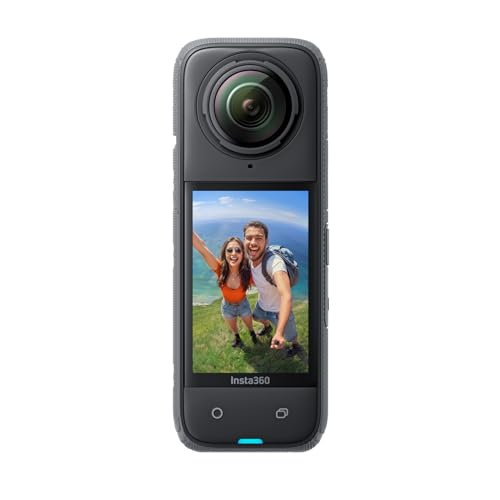
- Insta360 X4 - Waterproof 8K 360 Action Camera about$747.992.5" screen, 2290mAh.
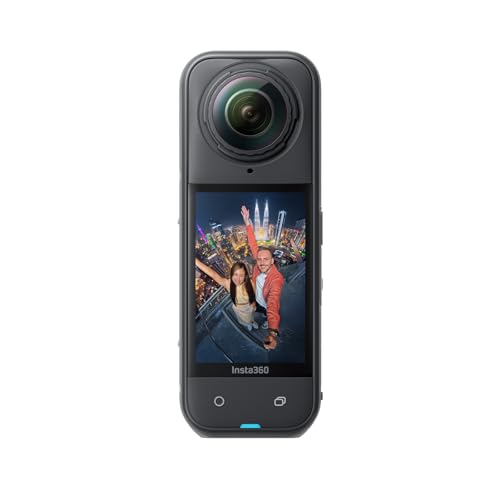
- Insta360 X5 - Waterproof 8K 360° Action Camera about$92928" screen.
- Insta360 X6 about$1,049.991.1" screen, 2600mAh.
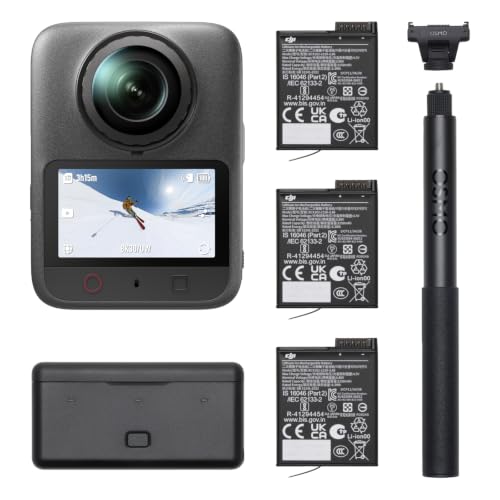
- Most PremiumDJI Osmo 360 II Adventure Combo about$1,079
What a 360 camera does that an action camera doesn't
A 360 camera has two fisheye lenses back to back, and it records everything around it at once. You don't aim it. You film, then later in the app you choose where the shot points, how it moves and whether it ends up as a normal flat video or a full 360 clip. That's what people mean by shoot first, frame later, and it's the reason these cameras have become popular for riding, skiing, travel and family days where nobody wants to be stuck behind a camera.
The trick everyone buys one for is the invisible selfie stick. Because the stick sits exactly in the blind spot between the two lenses, the software stitches it out, and the footage looks like it was filmed by a drone or a second person following you. It works surprisingly well on a straight stick held in line with the camera. It falls apart if the stick is thick, bent or angled, so buy the brand's own stick rather than a random telescopic one.
If you only ever want a forward-facing view on a helmet or a handlebar, a normal action camera is simpler, tougher and gives better single-lens footage for the money. Our action camera guide covers GoPro, DJI and Insta360's single-lens options. A 360 camera earns its place when you want angles you couldn't plan for, or when you're filming yourself with nobody else holding the camera.
Sensor size and resolution, without the marketing
The resolution numbers on 360 cameras look huge, but they're stretched across the whole sphere. An 8K 360 video becomes something closer to a sharp 1080p or a soft 4K when you reframe it into a normal flat clip, because you're only showing a slice of it. That's why 5.7K cameras like the Insta360 X3 and the AKASO 360 look fine on a phone but can look a little soft on a big TV, and why the jump to 8K on the X4 Air, X5, X6 and Osmo 360 is worth paying for if you watch on a large screen.
Sensor size matters more than resolution once the light drops. The X3 and AKASO 360 use 1/2-inch sensors, the X5 uses 1/1.28-inch sensors, the X6 uses 1/1.1-inch square sensors, and the DJI Osmo 360 lists what DJI calls 1-inch 360 imaging. Bigger sensors collect more light, so footage at dusk, indoors or under trees has less noise and less smearing. AKASO is upfront that its camera doesn't support HDR and that video quality may be limited in low light, which I appreciate.
For most people filming in Australian daylight at the beach, on a trail or on a bike, the 5.7K cameras are plenty. If you film at night, indoors at events or in winter at the snow, where the light is flat and the scene is bright, it's worth stepping up to the X5, the X6 or the Osmo 360. Those are the three I'd look at for anyone who already knows they'll use a 360 camera every week.
Stitching, and why you'll still see the join sometimes
Every 360 camera joins the two lens images along a stitch line that runs around the sides of the camera. In the middle of each lens the picture is clean. Along the join, objects that are very close to the camera can look bent, doubled or cut off, because each lens sees them from a slightly different spot. Hands, handlebars, ski poles and the edge of a car window are the usual culprits.
The fix is mostly how you hold it. Keep the lenses pointing at the scene and the narrow sides of the camera toward anything close, and keep the selfie stick straight in line with the body. Mounts that hold the camera side-on to a helmet or a handlebar put the stitch line right through the rider, which is why the brands sell their own angled mounts. Spend ten minutes learning that and the join mostly disappears.
Stitching also depends on the lenses being clean and undamaged. A smudge or a scratch on one lens shows up as a soft patch on one side of the sphere that doesn't match the other, and the app can't hide it. That's why lens care, which I'll get to below, matters more on a 360 camera than on any other camera you own.
The app is half the camera
Nearly all the editing on a 360 camera happens in the brand's phone app or desktop software, because that's where you pick the angles, reframe the shot and export a flat video. Insta360 uses the Insta360 app, DJI uses DJI Mimo, and AKASO uses AKASO 360 Studio. Try the app on your phone before you buy, because a camera you don't enjoy editing on ends up in a drawer.
One thing Android owners need to know: both DJI listings say the DJI Mimo app has been removed from Google Play because of platform compatibility issues, and that you should download the latest version from DJI's own website. That works, and plenty of people do it, but it means installing an app outside the Play Store and updating it by hand. If that's not something you're comfortable with, an Insta360 is the easier choice on Android.
Exporting 8K 360 footage is also hard work for a phone. Older or mid-range phones can take a long time to render a long clip, and they get hot doing it. A recent phone or a desktop computer with a decent graphics card makes the whole process far less painful. If your computer struggles, our Central Coast computer repairs team can look at whether an upgrade or a clean-up will help before you buy a new one.
Lenses are the weak point, so check if they're replaceable
The two lenses on a 360 camera bulge out from the body, and there's no way to protect them without affecting the image. Put the camera down on a table the wrong way and you scratch a lens. A scratched lens means a blurry patch in every clip, and on older 360 cameras it usually meant a repair job or a new camera. That's the single most common way these cameras get ruined.
The good news is that the newer models have user-replaceable lenses. The X4 Air listing says its lenses can be swapped with a kit if they get damaged, the X5 lists tougher, scratch-resistant lenses that can be replaced in seconds, the X6 lists replaceable lenses that Insta360 says cost less to replace, and the Osmo 360 II, DJI's follow-up to the Osmo 360, lists a user-replaceable design too. The X3, the original Osmo 360 and the AKASO 360 listings don't mention replaceable lenses, so treat those lenses as permanent and use lens guards and the pouch every time.
Clip-on lens guards help, but they add a little flare and can soften the stitch line, so most people only fit them for riskier days like mountain biking or the snow. Always use the protective pouch, never put the camera down on its lenses, and clean them with a proper lens cloth rather than a shirt. Sand at the beach is the classic cause of fine scratches.
Water, batteries and charging
The X5 listing says it's waterproof to 15 metres without a case. The X3 is described as waterproof but its listing doesn't state a depth, and the X6, Osmo 360, X4 Air and AKASO listings don't state a depth either. Check the brand's own spec page before you take any of them in the water, and treat surf and diving as a job for a dive case. Our water damage guide explains what happens inside when seals fail.
The battery door and the USB-C port are where water gets in. A grain of sand on the door seal is enough to stop it sealing, so open it only when the camera is dry, wipe the seal before you close it, and rinse the camera in fresh water after the beach or a pool. Salt left to dry in the seal and around the buttons slowly corrodes contacts, and that's a fault we see a lot of in action cameras generally.
Cold is the other battery problem. At the snow, a 360 camera on a stick in the wind can lose a big chunk of its runtime, and the same goes for an early morning ride in winter. Keep spare batteries in an inside pocket where your body keeps them warm, and swap them in rather than charging the camera in the cold. Don't charge a battery that's been in freezing air until it's back to room temperature, because charging a very cold lithium cell is hard on it.
Lithium batteries don't like heat. A camera left on a car dashboard in summer can swell its battery, and a swollen battery can push the door or the case apart. Spare batteries are worth having, the X5 lists up to 208 minutes and fast charging to 80% in 20 minutes, and a good power bank keeps you going on a long day. Stick to the brand's batteries rather than unbranded ones.
Storage and memory cards
360 footage eats storage. The DJI Osmo 360 and Osmo 360 II both have 105GB of built-in storage, so they work out of the box without a card, and DJI lists up to 190 minutes of nonstop recording on the original Osmo 360. That's handy, but it means the storage can't be swapped if it fails, and you'll need to offload footage to your phone or computer more often on a big trip.
The Insta360 and AKASO cameras record to a microSD card, and the X5 listing says the card is sold separately. Buy a fast card from a known brand, because a slow or fake card causes dropped frames and corrupted files, and a corrupted card at the end of a holiday is the worst way to find out. Our microSD card guide lists the cards I'd trust in a camera like this.
Back up after every outing, not at the end of the trip. A camera that's dropped in the water or left on a roof rack loses everything on the card or the built-in storage with it, and data recovery on a flooded card is possible but slow and not guaranteed. Two cards that you swap between days is simple insurance that people only appreciate after the first lost card.
What to check before you buy
The listings carry different warranties. The X3 lists a 2-year manufacturer warranty, the X5 lists 1 year from the manufacturer, the X6 listing doesn't state one, AKASO lists 1 year, and the DJI listings just say DJI. Australian Consumer Law still covers a camera that fails within a reasonable time, and buying from Amazon AU or the brand's own AU store makes a claim far simpler than chasing an overseas seller. Keep your receipt and the box.
Check what's in the box. The X4 Air and X5 listings both say the invisible selfie stick is sold separately, the X6 doesn't list one in the box, and AKASO says the same. The DJI Osmo 360 listing describes a 1.2m invisible selfie stick but doesn't clearly say it's in the Standard Combo, so check the box contents on the day. Budget for a stick, a spare battery and a fast card on top of the camera if they aren't included.
Most of what goes wrong with these cameras is physical: a scratched lens, a cracked screen from a fall, a battery door that won't seal or a USB-C port packed with sand. A lot of that can be repaired. If yours stops charging, fogs up inside or won't turn on after a swim, bring it into our Erina workshop and we'll tell you what's wrong before you spend anything.
The 6 picks, $320 to $1,050
Prices are Amazon AU at time of writing (2 November 2026) and move week to week. Ranks are Amazon AU sales ranks, checked the same day; Amazon AU publishes no category rank for these cameras, so the site-wide rank is shown.

Insta360 X6 8K 360 Camera, Dual 1/1.1-inch Sensors, Replaceable Lenses
ASIN B0H5CR9LZF • $1,049.99 • Sold by Insta360 Official Store AU on Amazon AU
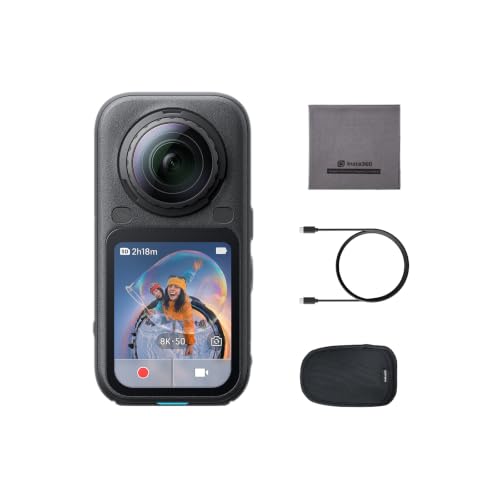
The Insta360 X6 is the best-selling 360 camera on Amazon AU by a wide margin, at #446 site-wide, and it's sold by Insta360 Official Store AU at $1,050 at time of writing. It's Insta360's newest flagship and the most expensive pick here, but if you're going to film with a 360 camera every week, it's the one I'd buy. The part number on the listing is CINSABXA, and the listing title and features both describe the X6. The in-box list is clear: the camera, an Xtreme Battery already fitted, a USB-C cable, a protective pouch and a lens cloth. There's no category rank on the listing, so the site-wide number is the one to go by.
The big change is sensor size. It uses dual 1/1.1-inch square sensors, the largest Insta360 has put in an X-series camera, with a triple AI chip system that Insta360 says includes a new 4nm chip. It records native 8K at 50fps in 360, so fast motion looks smoother than on the 30fps cameras. Flat single-lens video goes up to 5K at 60fps, 5K at 30fps with a 170-degree view, or 4K at 120fps, and it records 10-bit colour, which gives more room when you grade footage. InstaFrame 2.0 tracks people, pets or objects and gives you a 4K flat clip without editing. Insta360's AI Director also edits footage automatically while the camera charges.
The lenses are described as tougher, more scratch-resistant and easier to replace than before, and Insta360 says they cost less to replace. The 2600mAh Xtreme Battery is rated at up to 140 minutes at 8K30, and there are windproof microphones all round. The listing doesn't state a waterproof depth or a warranty period, so check Insta360's AU spec page before you take it swimming. The invisible selfie stick and a microSD card aren't in the box list, so add those to the price. For weekly riding, travel and low-light filming, this is the one I'd buy.
Honest caveats: It's the most expensive camera here by over $100. The listing doesn't state a waterproof depth or a warranty period, unlike the X5's 15 metres and 1 year. The invisible selfie stick and memory card aren't in the box. The 140-minute battery figure is quoted at 8K30, and 8K50 will run shorter. Rendering 8K50 footage needs a recent phone or computer.
Best for: Weekly 360 filming, low light and fast action, from the best-selling 360 camera on Amazon AU.
Video: 8K50 360, 10-bit colour • Sensors: Dual 1/1.1-inch square • Single-lens video: 5K60, 5K30 at 170°, 4K120 • Battery: 2600mAh Xtreme Battery, up to 140 minutes at 8K30 • Lenses: Replaceable, scratch-resistant • In the box: Battery, USB-C cable, pouch, lens cloth • Part number: CINSABXA • Rank: #446 overall on Amazon AU
View on Amazon AU
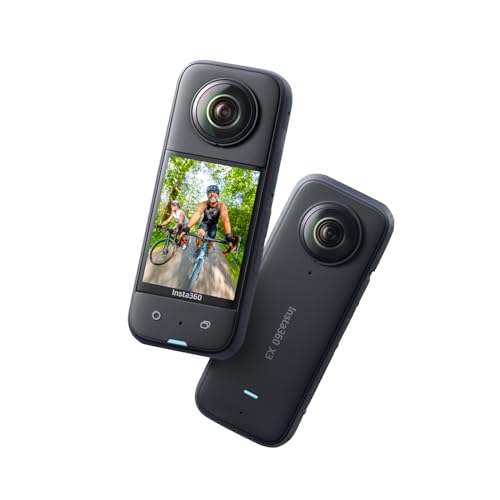
Insta360 X3 Waterproof 360 Action Camera, 5.7K 360, 72MP Photos, 2.29-inch Touch Screen
ASIN B0B9H572LC • $535.99 • Sold by Insta360 Official Store AU on Amazon AU
The Insta360 X3 is the second best-selling 360 camera from a brand's own Australian store on Amazon AU, at #1,492 site-wide behind the X6, and it's sold by Insta360 Official Store AU at $536 at time of writing. It's an older model than the X4 Air, X5 and X6, but it's still a very capable camera and it's the one I'd point most first-time 360 buyers to. The model code is CINSAAQB, matching the X3, and the listing states a 2-year manufacturer warranty, which is the longest of any pick here. It's listed at about 200g, so it's comfortable on a stick all day. Insta360's AU store handles the sale and shipping, so any warranty claim stays local, and it's the same camera that's been on sale since 2022 with plenty of mounts and accessories still made for it.
It uses a 1/2-inch sensor behind each lens and records 5.7K 360 video with Active HDR, 72MP 360 photos and 8K time-lapses. There's also a single-lens mode that turns it into a normal action camera, with 4K at 30fps or a 170-degree 2.7K MaxView mode for a very wide first-person shot. FlowState stabilisation and 360-degree horizon lock keep footage level even if the camera spins. The 2.29-inch touch screen is big enough to frame shots and change settings without the phone, and it supports voice control and live streaming. Voice control is handy on a bike when your hands are busy, and the screen is large enough to check the horizon before you start. The single-lens mode is useful when you just want a quick forward-facing clip, and it saves card space compared to recording the full sphere.
For daylight riding, family days and travel, the 5.7K footage looks good on a phone and fine on a laptop. It's softer than 8K once you reframe it for a big TV, and the smaller sensor shows noise sooner as light drops. The listing doesn't say the lenses are replaceable, so use the pouch and lens guards. It's described as waterproof, but no depth is given. If your budget stops around $550 and you want the easy Insta360 app, this is the one I'd buy. Charge it from a decent USB-C charger, and keep the lens cloth in the pouch so you're not tempted to wipe it on a shirt.
Honest caveats: This is the oldest camera here, and the listing doesn't state a waterproof depth or say the lenses can be replaced, so a scratch is a repair job. Low-light footage is noisier than the X5 or Osmo 360. The listing doesn't say whether an invisible selfie stick or memory card is included. Battery life isn't stated on the listing.
Best for: First-time 360 buyers who want the easiest app and a 2-year warranty from Insta360's AU store.
Video: 5.7K 360 with Active HDR, 8K time-lapse • Photos: 72MP 360 • Sensors: Dual 1/2-inch • Single-lens mode: 4K30 or 2.7K MaxView 170° • Screen: 2.29-inch touch screen • Model: CINSAAQB • Warranty: 2 years, manufacturer • Rank: #1,492 overall on Amazon AU
View on Amazon AU
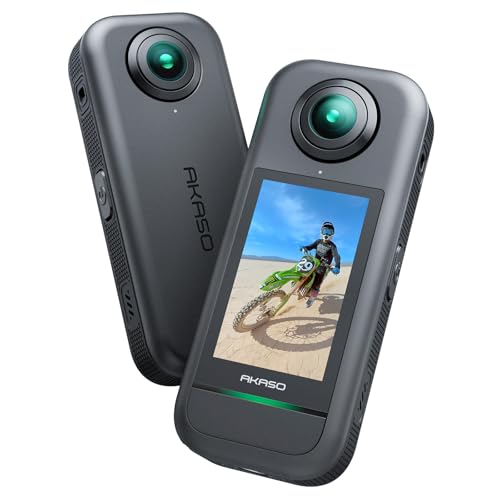
AKASO 360 Action Camera Standard Combo, 5.7K 360 Video, 72MP Photos
ASIN B0FDFMPPW5 • $319.99 • Sold by AKASO-TECH on Amazon AU
The AKASO 360 is the lowest-priced 360 camera I'd put my name to from a seller on Amazon AU, at $320 for the Standard Combo at time of writing. It's sold by AKASO-TECH, the brand's own marketplace store, rather than by Amazon AU, and the listing states a 1-year warranty. Its site-wide rank is #1,216, which is better than the X3, but that rank is shared across the Standard, Creator and Motorcycle combo listings, so I don't read it as this one combo's own number. The model and part number are both AKASO 360, which matches the title. There's a separate Motorcycle Combo with a 128GB card for about $110 more if you'd rather buy the card and mounts together.
On paper it matches the X3 closely. It records 5.7K 360 video and 72MP 360 photos from dual 1/2-inch 48MP sensors, and it has in-app stabilisation, 360-degree horizon lock, AI subject tracking and DNG8 RAW photos for better low-light stills. The invisible selfie stick effect works the same way as on the Insta360s, but the stick isn't included. Editing happens in the AKASO 360 Studio app. AKASO is unusually honest on the listing, saying the camera doesn't support HDR and that video may be limited in low light. The RAW photo mode is a nice touch at this price for anyone who edits stills on a computer. I'd still treat the AI tracking as a bonus rather than something to rely on, and test it on your own footage before a big trip.
That HDR gap matters on bright Australian days, where a sunny sky and a shaded face in the same frame will lose detail in one or the other. For daylight trail rides, beach days and first experiments with 360, it's plenty, and it costs a fair bit less than anything else here. The listing doesn't state a waterproof depth, battery life or replaceable lenses, so treat it as splash-resistant at best until you've checked AKASO's spec page. Keep it in its pouch and buy a stick. Check the AKASO 360 Studio app on your phone before you buy, because that's where the editing happens and it's less mature than the bigger brands' apps.
Honest caveats: There's no HDR, and AKASO says low-light video may be limited. The listing doesn't state waterproofing, battery life, screen size or whether the lenses can be replaced. The invisible selfie stick isn't included. It's sold by AKASO's own marketplace store rather than Amazon AU, and the rank is shared with the other combos. The app ecosystem is smaller than Insta360's or DJI's.
Best for: Trying 360 video in daylight at the lowest outlay, from the brand's own store.
Video: 5.7K 360, no HDR • Photos: 72MP 360, DNG8 RAW • Sensors: Dual 1/2-inch 48MP • Stabilisation: 360-SuperSmooth, 360° horizon lock • Extras: AI subject tracking • Selfie stick: Not included • Warranty: 1 year • Seller: AKASO-TECH (brand store) • Rank: #1,216 overall on Amazon AU (shared with other combos)
View on Amazon AU
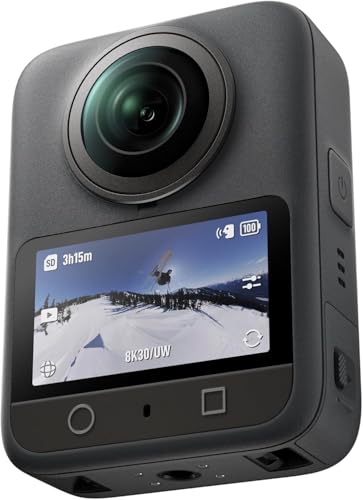
DJI Osmo 360 Standard Combo, 8K 360 Video, 1-Inch 360 Imaging, 105GB Built-in Storage
ASIN B0DTTZZ6Q3 • $724.99 • Ships from Amazon AU
The DJI Osmo 360 is the pick for anyone who films in poor light. It's sold and shipped by Amazon AU at $725 for the Standard Combo at time of writing, and its site-wide rank of #3,213 is shared with the Adventure and Essential combos. DJI lists what it calls 1-inch 360 imaging, which is the largest sensor area here, with native 8K at 30fps for 360 video and 120MP 360 photos. The listing's warranty field just says DJI, so check DJI Australia's terms before you buy. It's listed at about 183g, a little lighter than the X3. The square body sits differently in the hand to the taller Insta360s, and it's designed around DJI's quick-release system.
It doubles as a normal action camera, with 4K at 120fps and a 170-degree Boost Video mode from one lens. There's 105GB of built-in storage and DJI quotes up to 190 minutes of nonstop recording, so you can shoot without a memory card at all. Four microphones record sound from every direction, and it can connect directly to up to two DJI microphone transmitters without a receiver, which is great for vlogging. The magnetic quick-release fits DJI's Osmo Action mounts and there's a standard 1/4-inch thread too. That quick-release system matters if you already own a DJI action camera, because your mounts carry straight over. Built-in storage means one less thing to forget, but it also means your footage lives on the camera until you offload it, so copy it off every evening.
The catch is the app. The listing says DJI Mimo has been removed from Google Play, so Android owners download it from DJI's website and update it by hand. iPhone owners aren't affected. The listing describes a 1.2m invisible selfie stick but doesn't clearly say it's in the Standard Combo, and it doesn't say the lenses are replaceable or state a waterproof depth. If you film at dusk, indoors or under trees and you're happy with the app setup, this is the one I'd buy. Charge it with a decent USB-C charger and keep it out of the dashboard sun, as with any action camera.
Honest caveats: Android users install DJI Mimo from DJI's website, not Google Play. The built-in storage can't be swapped if it fails, so offload footage often. The listing doesn't state a waterproof depth or say the lenses can be replaced. The warranty field just says DJI. The rank is shared with other combo listings.
Best for: Night, indoor and winter filming, with built-in storage and direct DJI mic support.
Video: 8K30 360, 4K120 single-lens • Photos: 120MP 360 • Sensor: 1-inch 360 imaging (DJI's figure) • Storage: 105GB built in • Recording time: Up to 190 minutes (DJI's figure) • Audio: Four mics, direct link to two DJI mic transmitters • Seller: Amazon AU • Rank: #3,213 overall on Amazon AU (shared with other combos)
View on Amazon AU
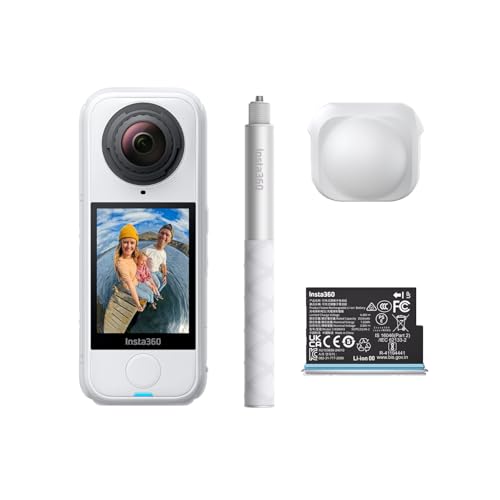
Insta360 X4 Air Starter Bundle, 8K 360 Camera, 165g, Replaceable Lenses (Satin White)
ASIN B0FQNVP87Y • $699.99 • Sold by Insta360 Official Store AU on Amazon AU
The X4 Air is the one for helmets, kids and anyone who finds the bigger cameras heavy on a stick. Insta360 lists it at 165g, and it's sold by Insta360 Official Store AU at $700 for the Starter Bundle at time of writing, with a site-wide rank of #5,960. The part number CINSAAFA matches the X4 Air range, and this listing is the satin white version. The listing doesn't state a warranty, so check Insta360's AU terms, though buying from the brand's own store keeps a claim simple. It's a newer and lighter camera than the X3, and it's the one I'd hand to a teenager or clip to a child's helmet, because the light body suits small helmets and light mounts. Being satin white, it's also easy to spot in a bag or on a beach towel.
It records 8K 360 video at 30fps from dual lenses, so footage reframed into a flat clip stays sharper than the X3 or AKASO. The headline feature for me is replaceable lenses: the listing says they're rugged and can be swapped with Insta360's kit if they get damaged, without replacing the camera. On a 360 camera, where a scratched lens used to mean a write-off, that changes the long-term cost a lot. There's a built-in wind guard for audio, FlowState stabilisation and the same shoot-first, frame-later editing in the Insta360 app. The 8K footage and lighter body make it a better travel camera than the X3, and because it uses the same Insta360 app, editing is the same easy process. Replacement lenses are worth ordering with the camera so you're not waiting on post mid-trip.
The listing says the invisible selfie stick is sold separately and doesn't spell out exactly what the Starter Bundle includes, so check the box contents on the day. It doesn't state sensor size, battery life or a waterproof depth either, so don't assume it matches the X5 in the water. White shows grime more than black, which is worth knowing if it lives on a mountain bike. For light, everyday 360 filming with lenses you can replace, it's the one I'd buy. Keep it in its pouch when it's in a backpack.
Honest caveats: The listing doesn't state the sensor size, battery life, waterproof depth or warranty, and it doesn't list the full bundle contents. The invisible selfie stick is sold separately. Satin white marks easily. It sits close to the Osmo 360 on price, which has the larger sensor area, so choose on weight and app.
Best for: Helmet, family and travel filming where weight matters, with lenses you can replace yourself.
Video: 8K30 360 • Weight: 165g (Insta360's figure) • Lenses: User-replaceable • Audio: Built-in wind guard • Stabilisation: FlowState • Selfie stick: Sold separately • Part number: CINSAAFA-E-W • Rank: #5,960 overall on Amazon AU
View on Amazon AU
Insta360 X5 Waterproof 8K 360 Action Camera, 1/1.28-inch Sensors, Replaceable Lenses
ASIN B0DZCBYCNY • $929 • Sold by Insta360 Official Store AU on Amazon AU
The Insta360 X5 is the one to buy if the X6's price is a stretch. It's $929 from Insta360 Official Store AU at time of writing, with a site-wide rank of #6,722, and the listing states a 1-year manufacturer warranty. The model code CINSAAHA matches the X5. It's the most complete package under $1,000: larger sensors than the X3, replaceable lenses, a stated waterproof depth and the longest stated battery life of any pick. The in-box list is clear, too: the camera, a USB-C cable, a lens cloth, a protective pouch and a user guide. It's listed in midnight black, with the part number CINSAAHA-S, and Insta360 also includes six months of free cloud storage, which is useful for backing up footage on a trip.
It records 8K 360 video at 30fps from dual 1/1.28-inch sensors, with a triple AI chip design that Insta360 says improves noise reduction in dim light. The lenses are described as tougher and scratch-resistant, and they can be replaced in seconds. It's waterproof to 15 metres without a case, runs for up to 208 minutes on the upgraded battery and fast charges to 80% in 20 minutes. There's a new four-mic array with a wind guard, FlowState stabilisation, full 360 horizon lock and an InstaFrame mode that gives you a ready-to-share flat video straight away. That's the strongest feature list of any pick here, and the depth rating is the only stated depth of any pick here.
The invisible selfie stick and microSD card are sold separately, so add both to the price. The listing also asks you to update the firmware to v1.3.0 or later for the battery figure, so do that before your first big trip. It's about $120 less than the X6, which has bigger sensors and 8K50, and against the Osmo 360 the choice mostly comes down to app preference and whether you want a memory card or built-in storage. For regular riding, travel and water use under $1,000, this is the one I'd buy. Keep the lens cloth handy and fit the brand's lens guards on rough days.
Honest caveats: The invisible selfie stick and microSD card aren't included. The 208-minute battery figure needs firmware v1.3.0 or later. The warranty is 1 year from the manufacturer, shorter than the X3's 2 years. Its sensors are smaller than the X6's. Waterproofing to 15 metres assumes the battery door and seals are clean and shut properly, so check them every time.
Best for: Weekly riders, travellers and swimmers who want 8K, a stated depth rating and replaceable lenses.
Video: 8K30 360 • Sensors: Dual 1/1.28-inch • Lenses: Replaceable, scratch-resistant • Waterproof: 15m without a case • Battery: Up to 208 minutes, 80% in 20 minutes • Audio: Four mics with wind guard • Model: CINSAAHA • Warranty: 1 year, manufacturer • Rank: #6,722 overall on Amazon AU
View on Amazon AUSide-by-side comparison
| Product | Price | Best for |
|---|---|---|
| AKASO 360 Action Camera Standard Combo |… | ~$319.99 | |
| Insta360 X3 Waterproof 360° Action Camera… | ~$535.99 | |
| Insta360 X4 Air Starter Bundle | ~$699.99 | |
| DJI Osmo 360 Standard Combo | ~$724.99 | |
| Insta360 X4 - Waterproof 8K 360 Action Camera | ~$747.99 | |
| Insta360 X5 - Waterproof 8K 360° Action Camera | ~$929 | |
| Insta360 X6 | ~$1,049.99 | |
| DJI Osmo 360 II Adventure Combo | ~$1,079 |
What we see fail in the workshop: 360 cameras
360 cameras share most of their faults with action cameras, because they live the same hard life on bikes, boards and beaches. The difference is the exposed lenses, which take the knocks a flat action camera lens never does. Here's what we see come through the door most, and what you can do to avoid it. Most of it is preventable.
Scratched and cracked lenses
The bulging lenses are the first thing to hit the ground when a camera falls off a stick or slides off a table. A fine scratch shows as a soft or hazy patch on one side of every clip, and a crack lets moisture in. On the X4 Air, X5 and Osmo 360 II the lens is designed to be swapped by the owner, which is by far the easiest fix. On models without replaceable lenses, a scratched lens usually means a repair, so use lens guards and the pouch.
Flooded battery bays and corroded ports
Water gets in where the battery door and the USB-C port seal against the body, nearly always because sand or salt was left on the seal. Salt water that dries inside corrodes the battery contacts and the charging port, and the camera then won't charge or switches off at random. Rinse the camera in fresh water after the beach, dry it before opening the door, and if it ever fogs up inside, switch it off, remove the battery and get it looked at quickly. Don't charge a camera that's been wet until it's fully dry.
Swollen batteries and cracked screens
Lithium batteries swell when they're left in a hot car or charged from a no-name charger, and a swollen battery can push the door or the screen out of place. A fall onto the screen side cracks the touch screen, which on these small cameras is usually a full display swap. Stick to the brand's batteries and a decent charger, keep the camera out of the dashboard sun, and replace any battery that has started to bulge rather than forcing the door shut. A bulging battery should never be charged again.
Decision tree: which one should you actually buy?
- First 360 camera and you want the easy app? → The Insta360 X3 at $536 from Insta360's AU store, with a 2-year warranty.
- Trying 360 in daylight for the least outlay? → The AKASO 360 Standard Combo at $320, knowing it has no HDR and no stick in the box.
- Filming at night, indoors or at the snow? → The DJI Osmo 360 Standard Combo at $725 for its larger sensor area, if you're fine installing DJI Mimo outside Google Play on Android.
- Filming every week and want the best image? → The Insta360 X6 at $1,050, with 1/1.1-inch sensors, 8K50 and replaceable lenses.
- Swimming and travel, under $1,000? → The Insta360 X5 at $929, waterproof to 15 metres with replaceable lenses and the longest stated battery life.
- Camera fogged up, won't charge or has a scratched lens? → Switch it off, take the battery out, and bring it into our Erina workshop so we can check the seals, port and lens before you buy a new one.
Frequently asked questions
Is a 360 camera better than a normal action camera?
It depends on how you film. A 360 camera records everything around it, so you can choose the angle later and use the invisible selfie stick effect for third-person shots. A normal action camera gives sharper single-view footage for the money and is simpler and tougher on a helmet or handlebar. If you mostly film forward-facing rides, buy an action camera. If you film yourself with nobody else holding the camera, or want angles you couldn't plan, buy a 360.
Does the invisible selfie stick come with a 360 camera?
Usually not. The Insta360 X4 Air, Insta360 X5 and AKASO 360 listings all say the invisible selfie stick is sold separately. The DJI Osmo 360 listing describes a 1.2m invisible selfie stick but doesn't clearly say it's in the Standard Combo. Buy the brand's own stick if you can, because the effect relies on a thin, straight stick sitting exactly in line with the camera, and thick or angled sticks often show up in the footage.
Is 8K worth it on a 360 camera?
If you watch on a big TV, yes. The resolution is spread across the whole sphere, so when you reframe a 360 clip into a normal flat video you only keep a slice of it. 5.7K cameras like the Insta360 X3 and AKASO 360 look good on a phone but softer on a large screen. 8K cameras like the X4 Air, X5, X6 and Osmo 360 keep reframed footage sharper. Sensor size matters more than resolution once the light drops.
Can I take a 360 camera swimming or surfing?
Only if the listing gives a depth rating and you look after the seals. The Insta360 X5 lists waterproofing to 15 metres without a case. The X3 is described as waterproof without a stated depth, and the X6, Osmo 360, X4 Air and AKASO 360 listings don't state a depth. Check the brand's spec page, keep the battery door seal free of sand, rinse the camera in fresh water afterwards and use a dive case for diving or heavy surf.
What happens if I scratch a lens on a 360 camera?
A scratch shows as a soft or hazy patch on one side of every clip, and the stitching software can't hide it. On cameras with replaceable lenses, like the Insta360 X4 Air, X5 and X6, you can swap the lens yourself with the brand's kit. On models whose listings don't mention replaceable lenses, such as the X3, the original Osmo 360 and the AKASO 360, it's usually a repair. Use the protective pouch and lens guards on rough days.
Why can't I find DJI Mimo on Google Play?
The DJI listings on Amazon AU say the DJI Mimo app has been removed from Google Play because of platform compatibility issues, and they point Android owners to DJI's own website to download the latest version. iPhone owners can still get it from the App Store. It works once installed, but you'll update it by hand. If you'd rather not install apps from outside the Play Store, an Insta360 camera and its app is the simpler path on Android.
Related buying guides
360 camera fogged up, won't charge or scratched?
Most 360 camera faults come from a seal that let water in, a USB-C port full of sand or salt, a swollen battery or a scratched lens. Many of them can be fixed for less than a new camera. Bring it into our Erina workshop with the battery out and we'll check the seals, port, battery and lenses, then tell you what's wrong and what it'll cost before you spend anything.
Visit our Erina workshop Book Online