Prices from Amazon AU, updated daily. Swipe or use the arrows for more.
Disclosure: This article contains affiliate links to amazon.com.au. If you buy through one of these links iFix may earn a small commission at no extra cost to you. It doesn't change which products we recommend. We focus on what actually lasts based on 16 years of repair-shop experience.
Quick summary8 picks
- CheapestDJI Flip Fly More Combo With RC 2 Screen… about$736
- DJI Lito 1 Fly More Combo about$751
- DJI Mini 3 With DJI RC about$850
- DJI Lito X1 Fly More Combo about$1,069
- DJI Lito X1 Fly More Combo Plus about$1,199
- DJI Mini 4 Pro about$1,209
- DJI Mini 5 Pro Fly More Combo With DJI RC-N3 about$1,278
- Most PremiumDJI Mini 4 Pro Fly More Combo with DJI RC 2 about$1,298
Why most people should buy a drone under 250 g
Nearly every drone that comes into the shop is a small folding DJI, and there's a good reason for that. Under 250 g, a drone is light enough that CASA treats it a bit more gently near airports, it fits in a jacket pocket, and it's small enough that most people will actually take it out of the cupboard. The bigger drones still take better footage in wind, but in my experience they end up flown twice a year because they're a hassle to pack and a worry to fly anywhere near people. If what you really want is ground-level footage of the same trip, our action camera picks cover that side.
Every pick in this guide is a DJI, and that's not me picking favourites. In the $600 to $2,000 band on Amazon AU, sold by Amazon itself or DJI's own Australian store, the camera drones that hold up and have parts available are DJI. The no-name folding drones under $200 are a different thing altogether: most of them don't hold position properly without GPS, the cameras are electronically stabilised at best, and they're usually not worth repairing when an arm snaps.
The catch this year is the DJI Mini 5 Pro. Its own Amazon listing gives the weight as approximately 249.9 g, plus or minus 4 g, and says it may vary by batch. That means some units will sit over 250 g, and I'd treat it as an over-250 g drone for the airport rule below. It doesn't stop it being the best camera here, but you should know before you buy.
The CASA rules that apply to every recreational flight
I checked these against CASA's own pages on 15 October 2026 rather than a forum post. CASA's recreational drone safety rules say you must not fly higher than 120 m above ground level, you must keep at least 30 m away from other people and never fly over a person, and you must keep the drone within visual line of sight, meaning you can see it with your own eyes rather than through the screen. You can fly one drone at a time, you can't fly in a populous area, you should only fly in daylight, and you shouldn't fly through cloud, fog or smoke.
You also can't fly over or near areas affecting public safety or where emergency operations are underway. That one matters on the Central Coast in summer, when a bushfire or a rescue on the beach draws a crowd and a few drones with it, and those drones can ground water bombers and rescue helicopters.
Airports are where the 250 g line changes things. If your drone weighs more than 250 g, you must not fly within 5.5 km of a controlled airport. At 250 g or less, CASA allows up to 45 m high within that 5.5 km, as long as you stay out of the airport boundary and clear of the approach and departure paths. Near smaller airports without a control tower you can fly within 5.5 km, but you have to move away and land if a crewed aircraft is around. Within 1.4 km of a helicopter landing site, you move away and land if a helicopter is nearby, taking off or landing. CASA says fines of up to $1,650 can be issued per offence.
Registration, accreditation and flying for work
If you only fly for fun, you don't currently need to register your drone or get any accreditation. CASA did plan a registration scheme for recreational drones over 250 g that was due to start on 1 July 2023, but its registration page says the government has paused it and no new date is given. I'd still check that page before you fly, because a paused scheme can be restarted.
Flying for work is different, and it doesn't matter what the drone weighs. CASA says you need to register your drone if you're flying at or for work, regardless of weight, and you need an RPA operator accreditation. For drones over 250 g and up to 2 kg, that's what CASA calls the sub-2 kg excluded category, because you don't need a remote pilot licence (RePL) or an operator's certificate (ReOC) on top of the registration and accreditation. In plain terms, a real estate agent filming a house, a tradie checking a roof for a quote or someone paid for wedding footage is flying for work, even with a Mini 3.
The DJI listings use phrases like "regulation friendly" and say you won't need a pilot certificate. That's true for recreational flying under CASA's current settings, but it doesn't cover work flights, and it doesn't change the 30 m, 120 m and line-of-sight rules, which apply to every weight class.
Where you can actually fly
CASA's answer to where you can fly is a CASA-verified drone safety app, and that's the right answer: install one before the drone arrives, not on the beach. The app shows controlled airspace, the 5.5 km circles around airports and the no-fly areas that move, such as temporary restrictions around emergencies or events.
What the app tells you is the airspace side. It doesn't tell you whether the person who owns or manages the ground will let you take off from it, and councils, park managers and private landowners can set their own rules about launching from their land. If a park has a sign, it's the sign that counts.
The populous area rule is the one people misread. It isn't only about the 30 m distance from a person; it's about flying over an area where, if the drone failed, it could fall on people who aren't part of what you're doing. A busy beach, a footy oval during a game or a street on a Saturday morning all count, even if you're careful to stay 30 m from everyone.
My advice for a first drone is to pick two or three spots you can fly legally and practise there: an empty paddock, a quiet headland car park at dawn or a mate's farm. You'll learn the drone faster and you won't be the person a park ranger walks over to.
Batteries are the part that wears out
The intelligent flight battery is the most expensive consumable on a small drone and it's what we see fail most often. Each one is a small lithium pack with a management board that tracks cells, cycles and temperature, and the drone won't take off if that board reports something it doesn't like. When a pack goes, it usually starts as one cell sagging under load, which shows up as a battery that reads 40% and then drops to 15% in a minute of hard flying.
Heat kills them, and so does being left full. A drone left in a hot car on the Central Coast in January can see cabin temperatures well past what any lithium pack is designed to sit at, and a pack stored at 100% for weeks ages faster than one stored around half charge. DJI's batteries have a self-discharge setting that drains them to a storage level after a set number of days, and I'd leave it on.
Swelling is the warning sign to act on. If a pack doesn't slide into the drone as easily as it used to, or the case has a bulge or a split seam, stop using it. Don't charge it, don't fly it and don't throw it in the bin; take it to a battery recycling drop-off. This is also why the Fly More combos make sense, because three packs share the wear instead of one doing all the work. A poor-quality third-party charger doesn't help either, so use the hub in the box.
Camera sensor size and what it changes
The camera is the reason most people buy a drone, so the sensor size matters more than the resolution. Every pick here records 4K, but a 1-inch sensor like the one on the Mini 5 Pro collects noticeably more light than the 1/1.3-inch sensors on the Lito X1 and Flip, and that shows up at sunrise, sunset and on overcast days, which is when the light's most interesting.
For holiday clips and social media, the 1/1.3-inch drones are good enough, and most people won't see the difference on a phone screen in daylight. Where you'll notice it is on a big TV, in the shadows of a gully, or when you try to lift the colours in editing and the noise comes up with them.
The other thing worth paying for is a mechanical gimbal, which every DJI pick here has. The gimbal is three small motors and a ribbon cable holding the camera level, and it's also one of the more fragile parts on the drone, which is why the gimbal cover in the box isn't optional. Several of these models can shoot true vertical video by rotating the camera rather than cropping, which saves you losing most of the frame for reels and shorts.
Controllers, phones and the DJI Fly app
There are two kinds of controller in this list. The RC-N3 that comes with the Mini 5 Pro combo uses your phone as the screen, clamped into the controller. The DJI RC and RC 2 on the other picks have their own built-in screen, so your phone stays in your pocket and isn't draining its battery or overheating in the sun.
I'd pay for the screen controller if you can, because the phone setup has more things to go wrong. Phone notifications pop up mid-flight, cables get yanked out of ports, and older phones throttle when they get hot, which can lag the video feed right when you need it. The built-in screens on the RC 2 are also brighter than most phones in direct sun.
There's one more phone detail worth knowing before you buy. Several of these Amazon listings say the DJI Fly app has been removed from Google Play because of platform compatibility issues, and that Android users should download it from DJI's website instead. That works, but it means installing an app from outside the Play Store, and it's another reason the screen controllers, which run the app themselves, are easier for most people.
Fly More combos and what's actually in the box
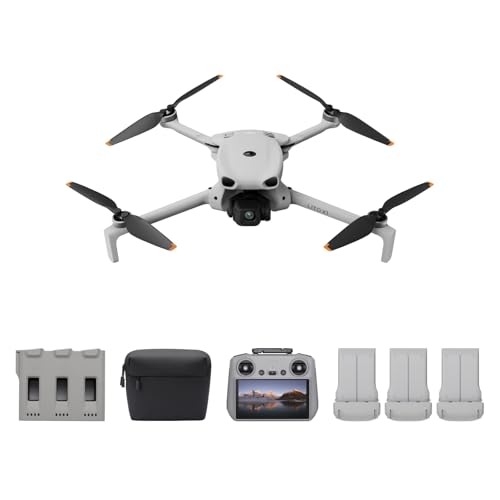
A Fly More combo adds two extra batteries, a charging hub and usually a bag, and for most people it's the version to buy. One battery gives you somewhere around 30 minutes on these listings, which sounds like plenty until you count the time spent getting the shot lined up, and the landing reserve you should be keeping. With three packs you can fly, swap and keep going while the first one cools.
The Mini 4 Pro pick in this guide is the exception: it's the single-battery version with the RC 2, sold by DJI's own Australian store. I've included it because it's the way to get omnidirectional obstacle sensing and the screen controller for less than the full combo, but plan to add at least one spare battery later.
Two accessories I'd buy straight away are spare propellers, which wear and chip faster than you'd think, and a fast microSD card if the drone doesn't have enough internal storage. Our microSD card guide covers which ones are genuine and fast enough for 4K, and if you're charging in the car, a decent power bank with USB-C PD will top up the RC 2 and most charging hubs. And if a drone does come down hard, our Erina repair shop can tell you whether it's an arm, a motor or the gimbal before you buy a new one.
The 5 picks, $736 to $1,278
Prices are Amazon AU at time of writing (15 October 2026) and move week to week. Ranks are Amazon AU category sales ranks in Hobby RC Drones & Multirotors, checked the same day.

DJI Mini 5 Pro Fly More Combo with DJI RC-N3
ASIN B0F6W94FL4 • $1,277.99 • Ships from Amazon AU
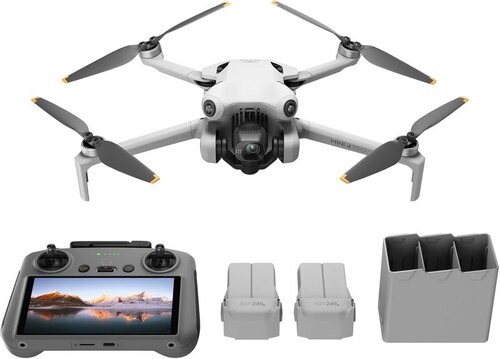
The Mini 5 Pro is the best camera you can get in a pocket-sized DJI right now, and at $1,278 for the Fly More combo it's the one I'd point most people to if the footage is the point. The 1-inch CMOS sensor records 4K at 60fps in HDR, and the gimbal rotates 225 degrees for true vertical shooting, so you're not cropping a landscape frame for social media. It's ranked #11 in Amazon AU's Hobby RC Drones & Multirotors category, which tells you plenty of people have already landed on it. I'd pick it over the Mini 4 Pro if you shoot a lot at dawn and dusk, because that's where the bigger sensor earns its money. It's also the newest of the Mini line, so firmware support should run longer than on the older models here.
Obstacle sensing is the other step up. The listing describes forward-facing LiDAR plus vision sensors detecting in all directions, which helps in low light and on return-to-home, where simpler drones can fly straight into a tree they can't see. Battery life is listed at up to 36 minutes per pack, and the combo includes three batteries, a charging hub, ND filters and spare propellers. The listing says three batteries charge in about 115 minutes on the hub, and there's 42GB of internal storage if you forget the card. ND filters matter more than people expect in Australian sun, because they let the camera keep a slower shutter speed and the footage looks smoother rather than jittery. Spare propellers in the box are handy too, since a chipped blade is the most common thing to replace after the first few weeks.
The thing to understand before buying is the weight. DJI's own listing says approximately 249.9 g plus or minus 4 g, varying by batch, so your drone may well be over 250 g. I'd fly it as an over-250 g drone, which means staying out of the 5.5 km zone around controlled airports entirely. The combo also uses the RC-N3, which needs your phone as the screen. If you live on the Central Coast, that mostly rules out flying near the bigger controlled airports to the south, but leaves plenty of coast and bush to work with. If you'd rather have a screen controller, the Fly More Combo Plus with the RC 2 sells for about $1,534 on Amazon AU, but it's a lot more for a screen.
Honest caveats: The weight can sit over 250 g, so the sub-250 g airport allowance may not apply to your unit. The RC-N3 controller uses your phone as the screen, and the listing says the DJI Fly app is no longer on Google Play, so Android users install it from DJI's site. Night flying needs prior CASA approval, as the listing itself notes.
Best for: People who care most about the footage and are happy to fly away from controlled airports.
Sensor: 1-inch CMOS • Video: 4K/60fps HDR • Gimbal: 225° roll, true vertical • Weight: About 249.9 g ± 4 g (listing) • Flight time: Up to 36 min per battery • Obstacle sensing: Omnidirectional, forward LiDAR • In the box: RC-N3, 3 batteries, hub, ND filters • Storage: 42GB internal • Rank: #11 in Hobby RC Drones & Multirotors (Amazon AU)
View on Amazon AU
DJI Mini 4 Pro with DJI RC 2 (single battery)
ASIN B0CFF1SJ3P • $1,209.00 • Sold by DJI Direct-AU on Amazon AU
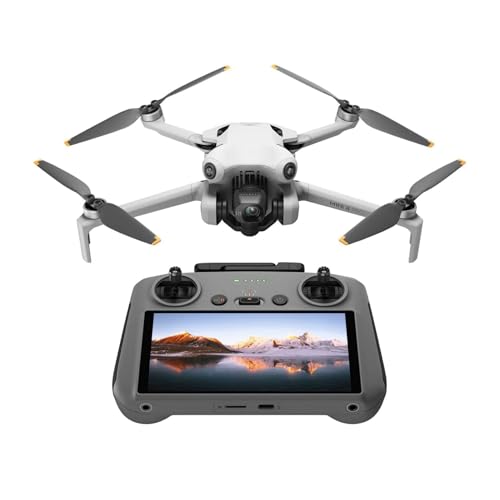
If you want the sub-250 g airport allowance with no question mark over it, the Mini 4 Pro is the one I'd buy. The listing states under 249 g, it has omnidirectional obstacle sensing, and it comes with the DJI RC 2, which has its own bright screen so your phone stays in your pocket. At $1,209 from DJI's Australian store it's a bit less than the Mini 5 Pro combo, but this is the single-battery kit, so the real comparison is closer than the sticker suggests. DJI Direct-AU is DJI's own storefront on Amazon, so warranty and returns go through DJI Australia rather than a third-party seller, which is what I'd want on a drone that will probably get bumped at some point in its life.
The camera records 4K at 60fps in HDR and shoots true vertical video, and the listing quotes up to 34 minutes per battery and up to 20 km of FHD video transmission. That range figure is a lab number in open country; on the coast with trees, houses and other wifi around, you'll see much less, and CASA's line-of-sight rule means you can't fly anywhere near that far anyway. ActiveTrack 360 handles following a bike or a walker hands-free. The obstacle sensing works with ActiveTrack too, so the drone can steer around a tree while it follows you, rather than relying on you to spot it on a small screen. The listing also says it works with DJI's goggles and RC Motion controllers, but flying through goggles isn't visual line of sight on its own, so I've left that side of it out of this guide.
It's ranked #56 in Amazon AU's Hobby RC Drones & Multirotors category, lower than the newer models simply because the Mini 5 Pro has taken most of the attention. The Mini 4 Pro has been out long enough that spare batteries, propellers and arms are easy to find, which matters more than people think when a pack swells or an arm cracks a year in. Budget for at least one extra battery soon after you buy it. A second pack also lets you rotate them, which spreads the wear, and a two-pack setup is what I'd call the practical minimum for a day out.
Honest caveats: This is the single-battery kit, so one pack does all the work until you buy spares, and spares add up. The sensor is smaller than the Mini 5 Pro's 1-inch, so low-light footage is noisier. The listing's 20 km transmission figure is far beyond what CASA's line-of-sight rule allows you to use.
Best for: Buyers who want a definite sub-249 g drone with full obstacle sensing and a screen controller.
Weight: Under 249 g (listing) • Video: 4K/60fps HDR, true vertical • Flight time: Up to 34 min per battery • Transmission: Up to 20 km FHD (listing) • Obstacle sensing: Omnidirectional vision • Controller: DJI RC 2 with screen • In the box: 1 battery • Seller: DJI Direct-AU • Rank: #56 in Hobby RC Drones & Multirotors (Amazon AU)
View on Amazon AU
DJI Lito X1 Fly More Combo with DJI RC 2
ASIN B0FZ9Y4GPF • $1,069.00 • Ships from Amazon AU
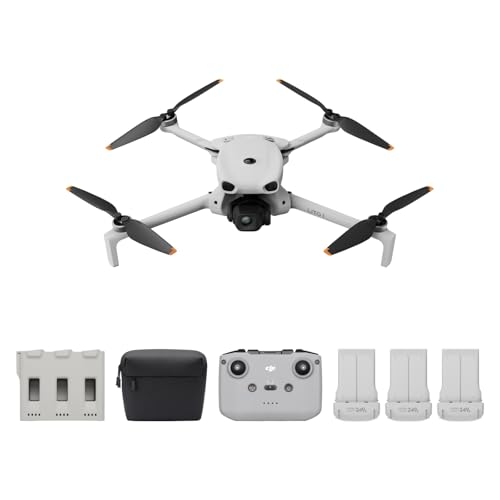
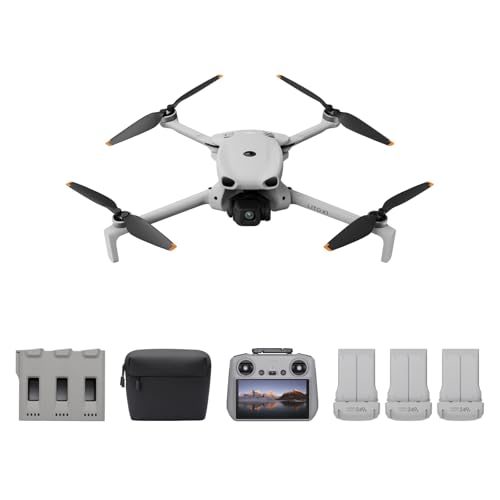
The Lito X1 is DJI's newer drone aimed at beginners, and the Fly More combo at $1,069 is the value pick in this list. You get the drone, the DJI RC 2 screen controller, three batteries and a charging hub, which is everything you'd want to add to a base kit anyway. It's ranked #27 in Amazon AU's Hobby RC Drones & Multirotors category, and the listing states it weighs under 249 g, so the sub-250 g airport allowance applies. It's also the lowest-priced way into a screen controller and LiDAR sensing in this list, which are the two features I'd put first for someone who hasn't flown before. The combo's $209 less than the Mini 5 Pro combo, and that's with a screen controller the Mini 5 Pro kit doesn't have.
The camera uses a 1/1.3-inch sensor, the same size class as the Flip, and it's good for daylight landscapes and holiday clips. The obstacle sensing is the surprise at this price: the listing describes an omnidirectional vision system plus forward-facing LiDAR, which is the kind of safety net first-time flyers benefit from most. ActiveTrack is included for following a subject, and the listing quotes up to 15 km of video transmission, more than you'll legally use within line of sight. In practice, a beginner flies better when the drone stops itself short of a branch, and that's what the sensing is for. Three batteries also mean three goes at learning a manoeuvre in one outing, instead of packing up after the first pack runs flat. The base Lito X1 without the combo sits around $619 if you only want the drone, but read what's left out first.
Flight time per battery isn't stated as a number on the listing, only as improved battery performance, so check DJI's spec page before you count on a figure. Being new, there's less of a track record on how its arms and gimbal hold up, and spare parts can take a little longer to filter through for a fresh model. For most first drones, though, this is where I'd start. I'd still register the warranty straight away and keep the box for the first few months, which is good practice on any new model.
Honest caveats: The listing doesn't give a flight time in minutes, so check DJI's spec sheet. It's a new model, so long-term reliability and parts supply are less proven than the Mini 3 or Mini 4 Pro. The smaller sensor means noisier footage at dusk than the Mini 5 Pro.
Best for: First-time flyers who want the screen controller, three batteries and obstacle sensing in one box.
Sensor: 1/1.3-inch CMOS • Video: 4K • Weight: Under 249 g (listing) • Obstacle sensing: Omnidirectional vision, forward LiDAR • Transmission: Up to 15 km (listing) • Controller: DJI RC 2 with screen • In the box: 3 batteries, charging hub • Flight time: Not stated on the listing • Rank: #27 in Hobby RC Drones & Multirotors (Amazon AU)
View on Amazon AU
DJI Mini 3 with DJI RC
ASIN B0BL3NZT5D • $849.95 • Ships from Amazon AU
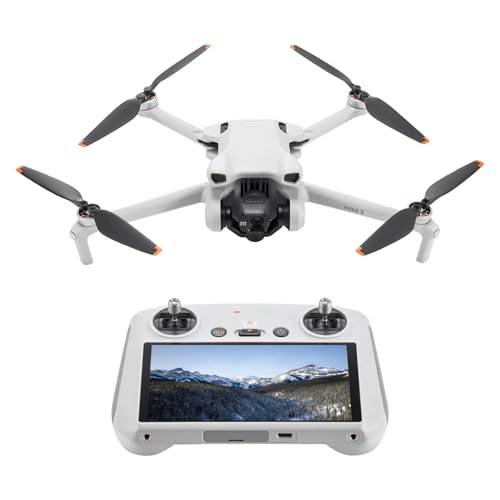
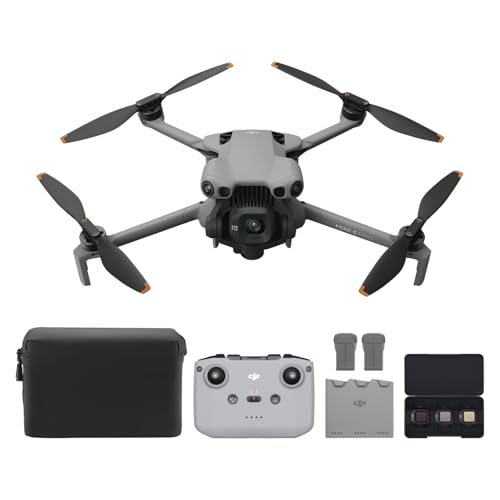
The Mini 3 is the older, simpler drone in this list, and at $850 with the DJI RC screen controller it's still a sensible buy for someone who mostly wants scenery. It's ranked #21 in Amazon AU's Hobby RC Drones & Multirotors category, the listing states under 249 g, and it has a three-axis mechanical gimbal and 4K HDR video. It also has the longest flight time quoted on any listing here, up to 38 minutes per battery. It's a good fit for someone who mainly wants to film the coastline, a property or a road trip and doesn't need tracking or cinematic tricks. It's also been around long enough that spare batteries and propellers are easy to find, which keeps running costs down over a few years of use.
The listing rates it as resistant to winds of 38 km/h, which is level 5, and that's a useful number on the coast, where the breeze at 100 m is often stronger than it feels on the sand. It shoots true vertical video for social posts, and QuickShots will fly preset patterns like a pull-back or a circle while you keep your eyes on the drone. The DJI RC that's included has a 5.5-inch screen with the DJI Fly app already loaded, so there's no phone setup at all. The screen controller is a real step up from the phone-clamp style for beginners, because there's no app to set up and no phone to overheat. It also means you're not taking a call or a notification in the middle of a landing, which happens more often than you'd think with phone-based controllers.
What you give up is obstacle sensing. The Mini 3 doesn't have the all-round sensors of the newer picks, so it relies on you to keep it away from trees, wires and cliffs, and return-to-home will fly in a straight line regardless of what's in the way. That's the single biggest cause of the crashed small drones we see, so fly it in open space until you know it well. Set the return-to-home altitude above the tallest trees around you before every flight, and you'll avoid most of those crashes.
Honest caveats: There's no omnidirectional obstacle sensing, so return-to-home and tracking won't avoid trees or wires. This kit has one battery, so spares are an extra cost. It's an older model, so the sensor and processing are a step behind the Mini 4 Pro and Mini 5 Pro.
Best for: Scenery and holiday flyers who want long flights and a screen controller without paying for sensing.
Weight: Under 249 g (listing) • Video: 4K HDR, true vertical • Gimbal: 3-axis mechanical • Flight time: Up to 38 min per battery • Wind resistance: 38 km/h (level 5) • Controller: DJI RC, 5.5-inch screen • Obstacle sensing: Not stated on the listing • Rank: #21 in Hobby RC Drones & Multirotors (Amazon AU)
View on Amazon AU
DJI Flip Fly More Combo with DJI RC 2
ASIN B0DJ1FKDGP • $736.00 • Ships from Amazon AU
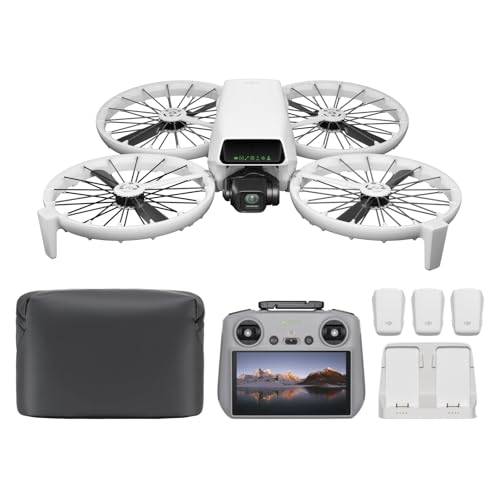
The Flip is the lowest-priced drone in this guide at $736 for the full Fly More combo, and it's the one I'd hand to a nervous first-time flyer. The propellers are fully enclosed in carbon fibre guards, so a bump into a branch or a wall is far less likely to end in a snapped blade or a cut finger. It's ranked #35 in Amazon AU's Hobby RC Drones & Multirotors category, and the listing states under 249 g. That combination makes it a good family drone, especially for someone who's worried about scratching the car or clipping a fence on the first few flights. It's also small and light enough to throw in a backpack without a dedicated case, which means it actually comes on trips.
For the money, the camera's better than you'd expect: a 1/1.3-inch CMOS sensor shooting 4K at 60fps in HDR, the same sensor size class as the Lito X1. Subject tracking follows a walker or a bike, and the listing quotes up to 31 minutes per battery. The combo comes with the DJI RC 2 screen controller, three batteries and a parallel charging hub, so there's nothing extra to buy before the first flight. At this price, getting the screen controller and three batteries in the box is the bit that stands out, because those are the things people usually end up buying separately later. The guards also mean you can practise closer to obstacles than you would dare with a Mini, though I'd still keep it well away from people.
The guards that make it safe also make it less suited to windy days, because the larger frame catches more breeze than a Mini. It's a drone for parks you're allowed to fly in, family trips and short clips rather than long coastal runs. Keep in mind the guards protect the propellers, not the people, so the 30 m rule from other people still applies in full. On a calm morning, though, it's the easiest drone here to learn on, and the one least likely to need a repair after the first few flights.
Honest caveats: The guarded frame is bulkier than the Mini folding drones and catches more wind. Obstacle sensing isn't described as omnidirectional on this listing. The listing says the DJI Fly app is no longer on Google Play, which matters less here because the RC 2 runs the app itself.
Best for: Beginners and families who want enclosed propellers and a complete kit for the lowest outlay.
Weight: Under 249 g (listing) • Sensor: 1/1.3-inch CMOS • Video: 4K/60fps HDR • Flight time: Up to 31 min per battery • Guards: Full carbon fibre propeller guards • Controller: DJI RC 2 with screen • In the box: 3 batteries, parallel charging hub • Rank: #35 in Hobby RC Drones & Multirotors (Amazon AU)
View on Amazon AUSide-by-side comparison
| Product | Price | Best for |
|---|---|---|
| DJI Flip Fly More Combo With RC 2 Screen… | ~$736 | |
| DJI Lito 1 Fly More Combo | ~$751 | |
| DJI Mini 3 With DJI RC | ~$850 | |
| DJI Lito X1 Fly More Combo | ~$1,069 | |
| DJI Lito X1 Fly More Combo Plus | ~$1,199 | |
| DJI Mini 4 Pro | ~$1,209 | |
| DJI Mini 5 Pro Fly More Combo With DJI RC-N3 | ~$1,278 | |
| DJI Mini 4 Pro Fly More Combo with DJI RC 2 | ~$1,298 |
What we see fail in the workshop: drones
Small drones come into the shop for three reasons, and none of them are mysterious. Most are the result of one bad landing or one battery left in the wrong place, and the damage often looks worse than it is. Here's what fails, what it usually costs you in parts, and the habit that would have prevented it in the first place.
Snapped arms and bent motor shafts
Folding arms take the hit in nearly every crash, and the hinge is the weak point. A cracked arm is a plastic part, but on most minis the motor and its wiring run through it, so the repair is a motor-and-arm swap rather than glue. A bent motor shaft is harder to spot: the drone flies, but it vibrates, and that vibration shows up as jelly in the footage and extra load on the gimbal. If your footage suddenly wobbles after a crash, check each propeller spins true before you fly again.
Gimbal ribbon cables and gimbal motors
The gimbal hangs off a thin flex cable that bends every time the camera moves, and a hard landing or a gimbal cover left on at start-up can tear it or strain it. The symptom is a gimbal error at power-on, a camera that tilts to one side, or video that drops out. The fix is usually a cable or a gimbal motor rather than the whole camera, but it's fiddly work at that scale. Always take the gimbal cover off before powering up. Store it with the cover on, too.
Swollen and dead flight batteries
Lithium flight packs fail from heat and from being stored full, and the first sign is usually a pack that's tight in the bay or reads well and then drops fast under load. A swollen pack isn't a repair job, it's a recycling job, and it shouldn't be charged again. Store packs around half charge, keep them out of the car in summer and let them cool before charging after a flight. If a pack won't wake at all, its board may have gone into a protection lock after a deep discharge.
Decision tree: which one should you actually buy?
- Want the best footage and you fly away from airports? → The DJI Mini 5 Pro Fly More Combo at $1,278: the 1-inch sensor is the best here, but treat it as over 250 g.
- Need a definite sub-249 g drone with full obstacle sensing? → The DJI Mini 4 Pro with RC 2 at $1,209, then add a second battery.
- First drone and want everything in the box? → The DJI Lito X1 Fly More Combo at $1,069, with three batteries, the RC 2 and LiDAR sensing.
- Nervous flyer or flying with kids around? → The DJI Flip Fly More Combo at $736: enclosed propellers, and still the 30 m rule from people.
- Mostly scenery and want the longest flights? → The DJI Mini 3 with DJI RC at $850, up to 38 minutes per battery, flown in open space.
- Crashed it, swollen battery or gimbal error? → Bring it to our Erina workshop and we'll check the arms, motors, gimbal and packs and tell you what it needs before you spend anything.
Frequently asked questions
Do I need a licence to fly a drone for fun in Australia?
No. CASA's registration page says that if you only fly for fun, you don't currently need to register your drone or get accreditation. A registration scheme for recreational drones over 250 g was planned for 1 July 2023 but the government paused it, and no new date has been given. You still have to follow the drone safety rules every flight: under 120 m, 30 m from people, within visual line of sight, daylight only, one drone at a time and never over a populous area. Check CASA's site before you fly, because the scheme could restart.
Is the DJI Mini 5 Pro under 250 g?
Not reliably. The Amazon AU listing for the Mini 5 Pro Fly More Combo gives the weight as approximately 249.9 g, plus or minus 4 g, and says it varies slightly by batch. That means some units will weigh more than 250 g. CASA allows drones of 250 g or less to fly up to 45 m within 5.5 km of a controlled airport, but drones over 250 g can't fly within that 5.5 km at all. If you live near a controlled airport, the Mini 4 Pro, Lito X1, Flip or Mini 3, all listed under 249 g, avoid the question.
Can I fly my drone at the beach or in a park?
It depends on two separate things: the airspace and the land. A CASA-verified drone safety app will show you whether the airspace is open, including airport zones and temporary restrictions. It won't tell you whether the council, park manager or landowner allows take-offs from their land, and they can set their own rules. You also can't fly over a populous area, which includes a busy beach or a sports field during a game, and you have to stay 30 m from other people. Early morning on a quiet stretch is usually the easiest way to stay inside all of it.
What changes if I use the drone for my business?
Everything paperwork-wise. CASA says you need to register your drone if you're flying at or for work, regardless of its weight, and you need an RPA operator accreditation. For drones over 250 g and up to 2 kg, CASA calls this the sub-2 kg excluded category, because you don't also need a remote pilot licence or operator's certificate. Filming a property for sale, inspecting a roof for a quote or being paid to film an event all count as work, even if the drone's a Mini 3 you bought for holidays.
Is a Fly More combo worth the extra money?
For most people, yes. A Fly More combo adds two extra batteries and a charging hub, and these listings quote roughly 30 to 38 minutes per pack, which goes quickly once you include setting up shots and keeping a landing reserve. Spreading cycles across three packs also slows the wear on each one, and the battery is the part that ages fastest. The exception is if you only want short flights now and then, in which case a single-battery kit and one spare later works out about the same.
How long do drone batteries last?
It depends far more on how they're stored than on how often they're flown. Lithium packs age fastest when they're kept full for weeks or left in a hot car, and they last longest stored around half charge in a cool room. DJI batteries can drain themselves to a storage level after a set number of days, and I'd leave that setting on. Replace any pack that's swollen, split or no longer slides into the drone easily, and don't charge it again. Take dead packs to a battery recycling drop-off, never the household bin.
Related buying guides
Drone crashed or battery swollen?
Most small drones that come in have a cracked arm, a strained gimbal cable or a tired battery, and the first two are often repairable for far less than a new drone. Bring it into our Erina workshop and we'll check the arms, motors, gimbal and packs and tell you what it needs and what it'll cost before you spend anything.
Visit our Erina workshop Book Online