Prices from Amazon AU, updated daily. Swipe or use the arrows for more.
Disclosure: This article contains affiliate links to amazon.com.au. If you buy through one of these links iFix may earn a small commission at no extra cost to you. It doesn't change which products we recommend. We focus on what actually lasts based on 16 years of repair-shop experience.
Quick summary7 picks
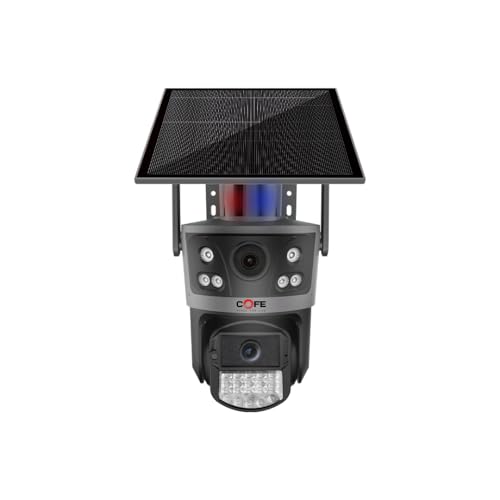
- Entry PickCOFE 24x7 Recording 4G Solar Security Camera about$1697W.
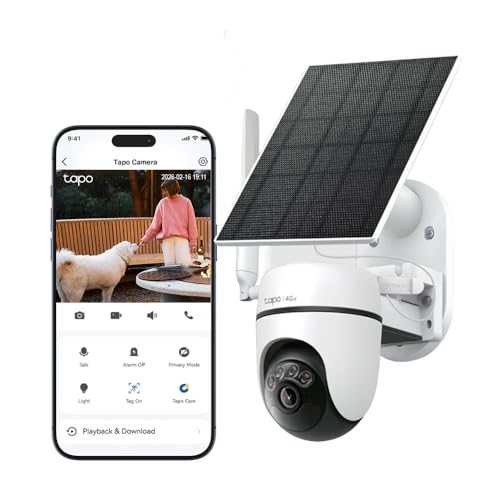
- Tapo C615G Kit Solar-Powered 4G LTE… about$189
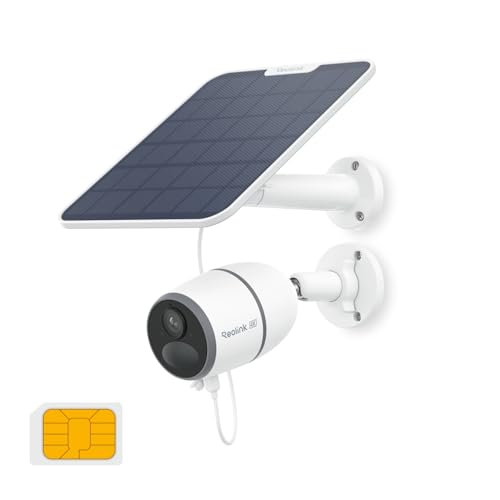
- REOLINK Go Ultra 4K 4G LTE Security Camera… about$223.996W.
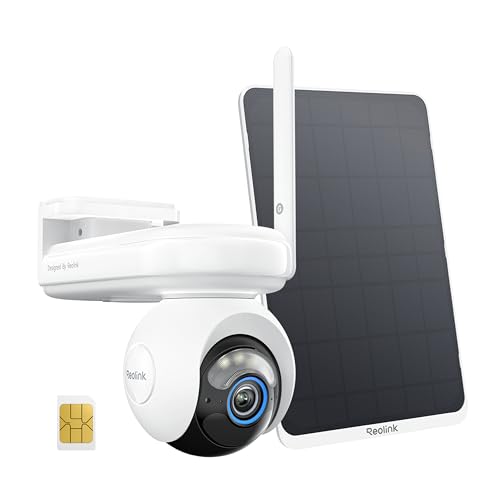
- REOLINK 360° PTZ 4G LTE Security Camera… about$331.491.8" screen, 000mAh, 12W.
- REOLINK Security Camera Wireless Outdoor about$359.99
- Tapo Solar-Powered Pan/Tilt Wi-Fi/4G LTE… about$369
- Most PremiumREOLINK Go PT Ultra+SP about$389.99
Who actually needs a 4G camera
A 4G solar camera is a battery camera with a mobile modem and a SIM slot instead of Wi-Fi, plus a small solar panel to keep the battery topped up. It doesn't need a power point or your home network. That makes it the right tool for places that have neither: a farm gate, a shed at the back of a block, a building site, a boat shed or a holiday house that sits empty for months.
If the camera's going on your house and your Wi-Fi reaches the spot, I'd usually skip 4G. A Wi-Fi battery camera costs less, needs no data plan, and a wired camera system with a recorder is better again for a home you live in, because it records around the clock and nothing depends on a battery. The 4G camera earns its price where the alternative is no camera at all, or a long trench for a cable.
I've picked five here from $189 to $369 at time of writing, all sold new on Amazon AU, and every one ships with a solar panel in the box. Three are Reolink kits sold by Reolink's Australian store, and two are Tapo kits from TP-Link sold by Amazon AU. Four of the five can pan and tilt, so one camera can watch a gate, a driveway and a yard rather than one fixed view.
I left out the trail and game cameras that came up in the same search, because they're built for wildlife triggers rather than watching property, and the 4G cameras with no solar panel in the kit. I also dropped an EZVIZ 4G kit whose listing text named UK carriers, which usually means a listing written for another market. That's the kind of thing worth checking on any 4G camera, since the modem has to suit Australian networks.
The SIM and the data plan
This is the part that catches people. The camera needs a working SIM with data, and that's a running cost for as long as the camera's on the post. The Altas Go PT and Go Ultra kits include a SIM card, and Reolink's SIMs are activated, topped up and tracked through the Reolink app. The Go PT Plus listing doesn't say whether one's in the box. The Altas Go PT listing says that SIM automatically picks the strongest of Telstra, TPG and Optus coverage, and it notes the included SIM is for Reolink cameras only.
The Tapo listings say to insert a SIM card, and neither says one is included, so plan on buying a data SIM yourself. Any prepaid data-only SIM on a network with good coverage at the site should do the job. Before you commit, stand where the camera will go with a phone on the same network and check it has a reliable signal, because a camera with one bar spends its battery trying to upload and still misses clips.
Data use depends almost entirely on how you use it. A camera that sends a short clip for each motion event and gets checked once a day uses very little. A camera you watch live for ten minutes every evening, or one aimed at a busy road so it triggers constantly, can chew through a small plan in a week. Set detection zones tightly, turn on person and vehicle detection so leaves and shadows don't count, and keep live view for when you need it.
Remote sites get one more tip from me. Set up and test the camera at home first, on the same SIM, with the panel connected. Firmware updates over 4G can be large, and it's much easier to get the app paired, the SIM activated and the firmware current while you're sitting at the kitchen table than standing at a farm gate with patchy signal.
Solar panel sizing and the winter problem
The panels in these kits vary a lot, and the listings that state a figure make it easy to compare. The Reolink Go Ultra kit includes a 6W panel, and the Altas Go PT comes with a 12W panel feeding a 20,000mAh battery. The Go PT Plus and both Tapo kits include a panel but don't state its wattage on the listing, so check the current listing or the box if you're putting it somewhere shaded.
Here's the rough maths, with the assumptions stated. A 6W panel in good sun for about three hours a day, which is a fair winter figure for much of NSW, makes around 18Wh on paper, and real-world losses from angle, heat and charging usually cut that by a third or more. A camera that wakes for lots of motion events, runs its infrared lights all night and pans to follow things can use most of that. A 12W panel gives you twice the margin, which matters most in June and July.
Placement matters more than wattage. A panel facing north, tilted up at roughly the latitude angle and clear of shade from 9am to 3pm will beat a bigger panel stuck under an eave. Gum trees are the usual culprit on rural blocks, since a panel that's in full sun in December can sit in shade all winter as the sun drops lower. If you've used portable solar panels for camping, it's the same story at a smaller scale.
Dust, bird droppings and pollen cut output too, so wipe the panel a few times a year. The cable between panel and camera is the other weak spot. Run it with a drip loop so water runs off before reaching the plug, clip it so it can't flap in the wind, and keep it out of reach of cattle, dogs and whipper snippers, because a chewed solar lead is a flat camera within a week.
Batteries in the cold and the heat
These cameras run on lithium-ion packs, and lithium has two weak points outdoors. In cold weather it delivers less capacity and, more importantly, it shouldn't be charged below about 0°C, so a good camera stops charging on a frosty morning until the pack warms up. On the Tablelands or out west that can mean a few slow-charging days in a row. In summer the bigger risk is heat, because a camera in full sun on a dark post can get far hotter than the air.
Heat ages a lithium pack faster than anything else. A battery that spends every summer afternoon above 50°C inside its case will lose noticeable capacity within a couple of years, and that's when people notice the camera going flat overnight in winter. Mount the camera under an eave or a small hood if you can and leave the panel in the sun, which is why a panel on a lead beats one built into the camera body.
Battery life claims are tested under light use. Reolink says the Altas Go PT runs up to 7 months on a full charge in normal use, or 7 days if you switch on 24/7 recording. That second number is the honest one for anyone thinking of continuous recording on battery: the solar panel has to replace a full day's use every day, and in winter it often can't.
Pan and tilt, resolution and night vision
Four of the five picks are pan and tilt cameras. The Go PT Plus pans 355° and tilts 140°, and the Altas Go PT, both Tapo kits and the Go PT Plus all offer some form of 360° coverage with auto tracking, where the camera follows a person or car across the frame. The Go Ultra is a fixed bullet camera, which suits a single gate or driveway and has fewer moving parts to wear out. Pan and tilt motors are the most likely mechanical part to fail in these, so a fixed camera is a fair choice if one view is enough.
Resolution goes from 2K 3MP on the Tapo C615G to 5MP on the Go PT Plus and 4K 8MP on the Go Ultra and the Tapo C665G. The Altas Go PT listing doesn't state a resolution, though it does give the sensor as 1/1.8 inch with an F1.0 lens, which is large for a battery camera and helps more at night than a higher pixel count does. More pixels mean bigger clips, and over 4G that means more data and slower uploads, so 4K isn't automatically better here.
Night vision comes in two kinds. Infrared gives a black and white picture without lighting anything up, and the Go Ultra lists IR night vision. Colour night vision uses a larger lens, a sensitive sensor or a spotlight to keep colour after dark, and the Altas Go PT, both Tapo kits and the Go PT Plus listings all mention colour, starlight or HD night vision of some kind. A spotlight that switches on also uses battery, so expect a busy driveway to drain a colour camera faster in winter.
If you want the area lit as well as watched, pairing a camera with solar security lights does a lot for the night footage without asking the camera's battery to run a light.
Storage, pre-recording and what gets missed
Most of the picks record to a microSD card, and several offer optional cloud storage on top. The Tapo C615G listing doesn't state its storage options. The Go PT Plus listing says it comes with a 32GB microSD card, the Go Ultra takes cards up to 128GB, and the Tapo C665G lists both local and cloud storage. On a 4G camera, local recording matters more than usual, because if the signal drops the camera keeps recording to the card and you don't lose the event, you just see it later.
Battery cameras sleep between events and wake on motion, so they can miss the first second or two of something happening. The Altas Go PT's 10-second pre-recording is the answer to that: it keeps a short buffer running and keeps the moments before the trigger. That costs some battery, which is one reason it carries the biggest battery and panel of the group.
The camera itself is the easiest thing to steal or smash, so think about where the card lives. Mount it high, out of easy reach, and if the site gets visitors, cloud storage is worth paying for during the months nobody's there. A card in a stolen camera is no help to anyone.
Mounting it where the signal and the sun both are
The best spot for the view isn't always the best spot for the signal or the sun, and you need all three. Check the 4G signal with a phone at the mounting height, find a panel spot with clear northern sky in winter, and then work out whether the camera can see what you need from there. The panel can usually sit a few metres away on its lead, which gives you more room to get it right.
Water is the long-term killer. The Go PT Plus is rated IP64 and the Tapo C665G IP65, both of which handle rain from any angle but not being submerged or blasted with a pressure washer. The other listings don't state an IP rating. Mount cameras with the lens pointing slightly down, keep the SIM and card covers fully seated after every swap, and read up on how water gets into electronics if you've never seen what a little moisture does to a board over a year.
Lightning and power surges aren't an issue the way they are for wired cameras, because there's no cable back to the house, but a tall metal post on an open paddock is still the highest point around. Mount it on a timber post or the side of a shed where you can. Use stainless screws, because zinc-plated ones rust and stain within a season on the coast.
If a camera goes quiet, check the obvious things first: the SIM's data balance, the panel's lead and the battery level in the app. If it still won't connect or charge, our Erina workshop can test the battery, the charge circuit and the modem before you decide whether it's worth fixing or replacing.
The 5 picks, $189 to $369
Prices are Amazon AU at time of writing (2026-11-07) and move week to week. Ranks are Amazon AU sales ranks, checked the same day, shown as the overall rank where Amazon AU's API gives no category rank.

Reolink Go PT Plus 4G LTE Pan Tilt Camera with Solar Panel
ASIN B08L8PQK3V • $359.99 • Sold by ReolinkAU on Amazon AU
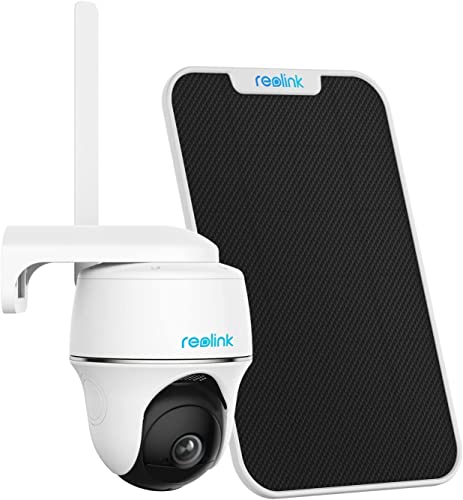
The Reolink Go PT Plus is the best-ranked camera in this guide, at #1,402 overall on Amazon AU at time of writing, and it's $360 with the solar panel included. It's sold by ReolinkAU, Reolink's Australian store on Amazon. The part code is GO PT PLUS+SP, and the listing pitches it at country houses and construction sites with no Wi-Fi. It's a 3G/4G LTE camera that pans 355° and tilts 140°, so one camera can sweep a gate, a yard and a shed door. The rank tells you plenty of people are buying it, and it's been on sale long enough that Reolink's app support for it is mature. This is the camera I'd put at the top of the list for a holiday house or a shed.
It records at 5MP, and the listing describes person and vehicle detection designed to cut false alerts from things like branches moving in the wind. It sends push or email alerts with a picture attached. The listing says it comes with a 32GB microSD card, and Reolink offers a free 7-day cloud service as an option. It's rated IP64, which covers rain and dust from any direction. It also has two-way talk, so you can speak to someone at the gate through the app. The solar panel is a separate piece on a lead, which lets you mount the camera under an eave and the panel in the sun. That split is worth a lot over a few summers.
The listing doesn't state the solar panel's wattage or the battery capacity, so check those if the site is shaded. It also doesn't say outright that a SIM is included, though Reolink's other kits ship with one. It's the oldest design among the picks, and newer Reolink models offer more resolution and bigger batteries, which is why it's priced near the 4K cameras despite its 5MP sensor. For a straightforward 4G pan and tilt camera with a track record, it's the one I'd start with. Test it at home on the SIM before you drive it out to the site.
Honest caveats: Panel wattage, battery capacity and SIM inclusion aren't stated on the listing, so confirm them before buying for a shaded site. It's an older design at 5MP, and the 4K picks cost about the same. IP64 handles rain but not a pressure washer.
Best for: Holiday houses, sheds and sites where one camera needs to sweep several areas over 4G.
Network: 3G/4G LTE, no Wi-Fi • Resolution: 5MP • Pan and tilt: 355° pan, 140° tilt • Power: Battery plus included solar panel (wattage not stated) • Storage: 32GB microSD included, optional 7-day cloud • Weather rating: IP64 • Model: GO PT PLUS+SP • Seller: ReolinkAU • Rank: #1,402 overall on Amazon AU
View on Amazon AU
Reolink Altas Go PT 4G LTE Camera with 12W Solar Panel
ASIN B0DNYL9LT8 • $331.49 • Sold by ReolinkAU on Amazon AU
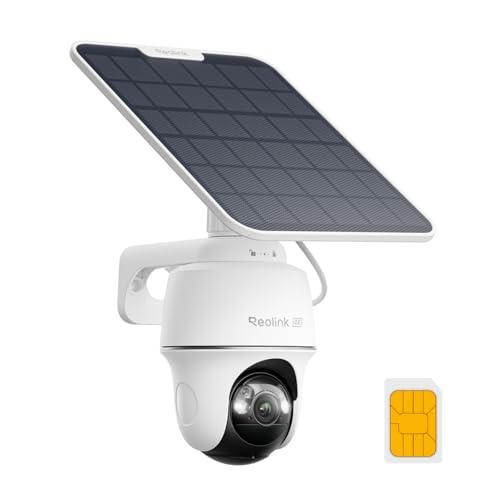
The Reolink Altas Go PT is the camera I'd pick for a site that has to get through winter on its own, and it's $331 at time of writing, ranked #3,385 overall on Amazon AU. It's sold by ReolinkAU, and the model on the listing is Altas Go PT plus Solar Panel 3. What sets it apart is the power side: a 20,000mAh rechargeable battery and a 12W solar panel, the largest stated battery and panel in this guide. Reolink says it runs up to 7 months on a full charge in normal use, or 7 days with 24/7 recording switched on. Those are claims for light use, but the margin is real, and margin is what keeps a camera alive through a run of cloudy June days.
It pans a full 360° with AI auto tracking for people, cars and animals, and it has 10-second pre-recording, which keeps the moments before motion was detected. The listing gives the sensor as 1/1.8 inch with an F1.0 lens for colour night vision, which is a big sensor for a battery camera. The included Reolink SIM automatically uses the strongest of Telstra, TPG and Optus coverage, and the listing notes that SIM only works in Reolink cameras. The title calls it a PTZ camera, but the listing doesn't state an optical zoom. It's pitched at farms, construction sites and holiday homes where nobody's around to recharge it, which is where a 4G camera belongs.
The listing doesn't state a resolution or an IP rating, which I'd want to know at this price, so check both on the current listing. Pre-recording and colour night vision both use battery, so the big pack is doing real work here rather than just sitting as spare capacity. It also costs less than the Go PT Plus at time of writing, which makes it the stronger buy of the two Reolink pan and tilt cameras unless you specifically want the older model's 32GB card in the box. Mount the 12W panel properly and it should be the last of these to go flat in July.
Honest caveats: Resolution and IP rating aren't stated on the listing. The PTZ title doesn't come with a stated optical zoom. The included SIM works in Reolink cameras only, and the 7-month and 7-day figures are maker claims that depend on how busy the site is.
Best for: Farms and remote sites in shaded or cold spots where the camera has to run through winter unattended.
Network: 4G LTE, Reolink SIM included (Telstra, TPG, Optus) • Battery: 20,000mAh • Solar panel: 12W, included • Pan: 360° with auto tracking • Sensor: 1/1.8 inch, F1.0 lens • Pre-recording: 10 seconds • Resolution: Not stated on the listing • Seller: ReolinkAU • Rank: #3,385 overall on Amazon AU
View on Amazon AU
Reolink Go Ultra 4K 4G LTE Camera with 6W Solar Panel
ASIN B0FHKXRLBW • $223.99 • Sold by ReolinkAU on Amazon AU
The Reolink Go Ultra is a fixed 4K camera rather than a pan and tilt one, and it's $224 at time of writing, ranked #17,658 overall on Amazon AU. It's sold by ReolinkAU, and the model on the listing is Go Ultra plus Reolink Solar Panel 2. It records 4K 8MP video, which is the most detail per frame in the Reolink picks, and it's aimed at one view: a gate, a driveway, a shed door or a boat ramp. A fixed camera has no pan and tilt motors to wear out, which matters for something bolted to a post in the weather for years. If you don't need the camera to follow anything, this is the Reolink I'd pick.
The kit includes a 6W solar panel and a SIM card that automatically connects to the carrier with the strongest signal. It has person, vehicle and pet detection with custom motion zones, so you can tell it to ignore the road and watch the driveway. It records to a microSD card up to 128GB, with optional cloud storage, and it uses infrared night vision, which gives a black and white picture after dark without lighting the area up. The listing describes it for farms, stables, campsites, boats and job sites, which is exactly where a 4G camera makes sense. It's also the lowest-priced Reolink kit in this guide, at $136 less than the Go PT Plus.
The 6W panel is half the size of the Altas Go PT's, and the listing doesn't state the battery capacity, so give it the sunniest spot you've got, especially in winter. 4K clips are bigger than 2K or 5MP clips, so it'll use more data per event over 4G, and I'd set the detection zones tightly from day one. The listing doesn't state an IP rating either. Within those limits it's the most camera per dollar among the picks. Aim it slightly down and away from the morning sun so the lens doesn't flare, and keep a second microSD card handy for swaps.
Honest caveats: Fixed view only, so it can't follow movement. The 6W panel is the smallest stated panel here and battery capacity isn't listed. 4K clips use more data per event. No IP rating is stated, and night vision is infrared black and white rather than colour.
Best for: A single gate, driveway or shed door where you want 4K detail and no moving parts.
Network: 3G/4G LTE, SIM included • Resolution: 4K 8MP • Type: Fixed, no pan or tilt • Solar panel: 6W, included • Night vision: Infrared • Storage: microSD up to 128GB, optional cloud • Detection: Person, vehicle and pet, custom zones • Seller: ReolinkAU • Rank: #17,658 overall on Amazon AU
View on Amazon AU
Tapo C615G Kit Solar 4G LTE Pan/Tilt 2K Camera
ASIN B0FQMQSR5M • $189 • Ships from Amazon AU
The Tapo C615G Kit is the lowest-priced camera here at $189 at time of writing, and it's sold by Amazon AU. Amazon AU's API returned no sales rank for this listing, overall or by category, so I can't tell you how it's selling. It's a 2K 3MP pan and tilt camera from TP-Link's Tapo range with 4G LTE and a solar panel in the kit. The listing says it does person, pet and vehicle detection and 360° auto tracking with no monthly subscription fee, and it has colour night vision. The model on the listing is Tapo C615G KIT, and TP-Link states a 1 year warranty with 24/7 technical support. It's the first one I'd look at for a small site on a tighter outlay.
Unlike the Reolink kits, the listing says to insert a SIM card rather than including one, so budget for a data SIM on a network that reaches your site. That's no bad thing, because you can pick whichever carrier has the best signal at the gate rather than relying on a bundled SIM. At 2K, its clips are smaller than the 4K and 5MP cameras' clips, which helps keep the data bill down on a plan with a small allowance. Being sold by Amazon AU also makes a return straightforward if the camera won't hold a 4G connection at your spot. The Tapo app is the same one used across TP-Link's Wi-Fi cameras and plugs.
The listing doesn't state the battery capacity, the solar panel wattage, the storage options or an IP rating, which is a lot to leave out for an outdoor camera, so check all four on the current listing before you buy. 2K is enough to see a person or a car clearly at a gate, but not to read a numberplate at a distance. For a holiday house or a small shed where you mainly want to know when someone's there, it does the job for a lot less money. Give it the sunniest spot you can, since the panel size isn't stated.
Honest caveats: No SIM is included, so you'll need your own data SIM. Battery capacity, panel wattage, storage and IP rating aren't stated on the listing. Amazon AU's API returned no sales rank. 2K resolution won't read numberplates at a distance, so it suits spotting people and cars.
Best for: Small sites and holiday houses where you want 4G pan and tilt at the lowest outlay and your own choice of SIM.
Network: 4G LTE, SIM not included • Resolution: 2K 3MP • Pan and tilt: 360° with auto tracking • Power: Battery plus included solar panel (wattage not stated) • Night vision: Colour • Warranty: 1 year • Model: Tapo C615G KIT • Seller: Amazon AU • Rank: Not returned by Amazon AU's API (checked 2026-11-07)
View on Amazon AU
Tapo C665G Kit Solar Wi-Fi/4G LTE Pan/Tilt 4K Camera
ASIN B0G247Q79Z • $369 • Ships from Amazon AU
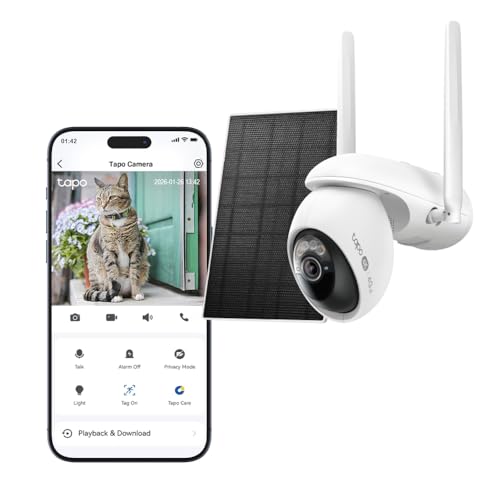
The Tapo C665G Kit is the most expensive pick at $369 at time of writing, sold by Amazon AU. Like the C615G, Amazon AU's API returned no sales rank for it. It's a 4K 8MP pan and tilt camera with both 4G LTE and dual-band Wi-Fi on 2.4GHz and 5GHz, so it can run on your network when it's in range and fall back to a SIM where it isn't. That makes it the most flexible camera in this guide. The model on the listing is Tapo C665G KIT, and TP-Link states a 1 year manufacturer warranty. It's the one I'd pick for a property where the camera might move between the house and a remote shed over the years.
It has 18x digital zoom, starlight colour night vision, free AI detection for people, pets and vehicles, and 360° pan with auto tracking. There's a sound and light alarm you can trigger to scare someone off, and it records locally or to the cloud. It's rated IP65, the highest stated weather rating among the picks, which covers low-pressure water jets from any direction as well as rain. The listing pitches the solar kit as completely wireless, with the panel doing the charging. Like the C615G, it doesn't say a SIM is included, so plan on a data SIM of your own if you're using 4G. On Wi-Fi near the house it won't need one at all.
The listing doesn't state the battery capacity or the solar panel wattage, and on a 4K camera with a light alarm those numbers matter, so check them before you mount it somewhere shaded. Digital zoom crops the image rather than using a zoom lens, so 18x is useful for a quick look but loses detail fast. If you've got Wi-Fi at the house and want one camera that'll also work at the back paddock, it's the one I'd buy. Set it up on Wi-Fi first, then add the SIM once it's on the post.
Honest caveats: Battery capacity and panel wattage aren't stated on the listing. No SIM is included for 4G use. The 18x zoom is digital, not optical. Amazon AU's API returned no sales rank, and at $369 it's the highest price here, so it only makes sense if you'll use the Wi-Fi.
Best for: Properties where one camera needs to run on Wi-Fi near the house and 4G further out.
Network: 4G LTE and dual-band Wi-Fi (2.4/5GHz), SIM not included • Resolution: 4K 8MP • Pan and tilt: 360° with auto tracking • Zoom: 18x digital • Night vision: Starlight colour • Weather rating: IP65 • Warranty: 1 year • Model: Tapo C665G KIT • Rank: Not returned by Amazon AU's API (checked 2026-11-07)
View on Amazon AUSide-by-side comparison
| Product | Price | Best for |
|---|---|---|
| COFE 24x7 Recording 4G Solar Security Camera | ~$169 | |
| Tapo C615G Kit Solar-Powered 4G LTE… | ~$189 | |
| REOLINK Go Ultra 4K 4G LTE Security Camera… | ~$223.99 | |
| REOLINK 360° PTZ 4G LTE Security Camera… | ~$331.49 | |
| REOLINK Security Camera Wireless Outdoor | ~$359.99 | |
| Tapo Solar-Powered Pan/Tilt Wi-Fi/4G LTE… | ~$369 | |
| REOLINK Go PT Ultra+SP | ~$389.99 |
What we see fail in the workshop: 4G solar cameras
Outdoor battery cameras come into the shop for the same few reasons, and most of them are about water, heat and the battery rather than the camera itself. Here's what usually goes wrong on a camera that's spent a couple of years on a post, and what you can check yourself before you climb a ladder and take it down.
Batteries that won't hold through the night
The most common complaint is a camera that charges fine in the day and goes flat overnight. Nine times out of ten it's a lithium pack that's lost capacity from summer heat, often helped along by a panel that's now partly shaded. Check the battery level in the app at sunset and again in the morning, then look at what's changed around the panel. If the pack's worn, some cameras have a replaceable battery and some don't, and on the sealed ones it's a careful job to open the case without breaking the weather seal, so it's worth asking before you try.
Water in the SIM and card slots
The SIM and microSD covers are the weak points in any weather rating. A cover that wasn't pushed fully home after a card swap lets in moisture, and over a few months it corrodes the SIM contacts or the card slot. The camera starts dropping off the network, or stops recording, and it looks like a modem or a software fault. Pull the cover, look for green or white residue, and dry the camera out indoors with the battery disconnected before you assume the worst. Corrosion caught early can usually be cleaned.
Solar leads and plugs
A camera that's stopped charging often has nothing wrong with the camera at all. The lead between the panel and the camera gets chewed by animals, cut by a whipper snipper, or bent hard at the plug until a wire breaks inside the insulation. Water running down the lead into the plug corrodes the pins. Test with the panel plugged straight in, check the plug for corrosion, and run the replacement lead with a drip loop. If the charge circuit has failed, that's a board-level repair, and it's worth getting a quote before you buy another camera.
Decision tree: which one should you actually buy?
- Need one camera to sweep a yard or several gates? → The Reolink Go PT Plus at $360 is the best-ranked 4G pan and tilt camera here, with a 32GB card in the box and IP64.
- Shaded or cold site that has to run all winter? → The Reolink Altas Go PT at $331, with a 20,000mAh battery and a 12W panel, the largest stated in this guide.
- One gate or driveway, and you want 4K detail? → The Reolink Go Ultra at $224: a fixed 4K camera with a 6W panel, a SIM included and no pan and tilt motors to wear.
- Small site and the lowest outlay? → The Tapo C615G Kit at $189, sold by Amazon AU, with your own choice of data SIM.
- Want Wi-Fi near the house and 4G further out? → The Tapo C665G Kit at $369: 4K, dual-band Wi-Fi plus 4G, and IP65.
- Camera going flat, dropping off 4G or not charging? → Check the SIM's data, the solar lead and the battery level in the app first. If it's still playing up, bring it to our Erina workshop and we'll test the battery, charging and modem before you spend anything.
Frequently asked questions
Do 4G security cameras need a SIM card and data plan?
Yes. A 4G camera has no Wi-Fi connection to fall back on, so it needs a SIM with data to send alerts, clips and live view. The Reolink kits in this guide include a Reolink SIM that you activate and top up through the Reolink app. The Tapo kits don't include a SIM, so you'll need a data SIM on a network with good coverage where the camera's going. Check the signal with a phone on that network at the mounting spot before you buy.
How much data does a 4G camera use?
It depends mostly on how many motion events it records and how much live view you watch. A camera that sends short clips for a few events a day and gets checked occasionally uses very little. Watching live every evening, or aiming the camera at a busy road so it triggers constantly, can use a small plan quickly. Higher resolutions make bigger clips, so a 4K camera uses more data per event than a 2K one. Tight detection zones and person or vehicle detection keep it down.
Will a solar security camera work through winter?
Usually, if the panel gets several hours of direct sun a day and the camera isn't triggering constantly. Winter means shorter days, a lower sun and more shade from trees and buildings, so a panel that's fine in summer can struggle in June. A bigger panel and battery help, which is why the Reolink Altas Go PT's 12W panel and 20,000mAh battery suit shaded or cold sites. Face the panel north, tilt it up, and keep it clear of shade between about 9am and 3pm.
Can a 4G solar camera record 24/7?
Some can, but battery cameras aren't built for it. Reolink says the Altas Go PT runs up to 7 days with 24/7 recording against up to 7 months in normal motion-triggered use, which shows how much more power continuous recording takes. The solar panel would need to replace a full day's recording every day. For around-the-clock recording, a wired camera system with mains power and a recorder is the better tool, and 4G cameras are best used on motion detection.
Are Reolink SIM cards locked to Reolink cameras?
The Reolink Altas Go PT listing says the included SIM card is for Reolink cameras only, and it recommends checking compatibility with your provider if you'd rather use a different SIM. The listing also says the included SIM automatically picks the strongest of Telstra, TPG and Optus coverage. If you already have a data SIM you want to use, confirm with Reolink that the camera accepts it before you buy, and test it at home first.
Can a water-damaged outdoor camera be fixed?
Often, if it's caught early. Most water damage on outdoor cameras starts at the SIM or microSD cover, where moisture corrodes the contacts and the camera starts dropping off the network or stops recording. Disconnect the battery, dry the camera indoors, and check the slots for green or white residue. Light corrosion can usually be cleaned. If it's reached the board or the charge circuit, it's a board-level repair, and it's worth getting a quote compared with the cost of a new camera.
Related buying guides
Outdoor camera going flat or dropping off 4G?
Most outdoor camera faults we see come down to a worn battery, water in the SIM or card slot, or a damaged solar lead or plug. Bring it into our Erina workshop and we'll find the actual fault and tell you whether it's worth fixing or replacing before you spend anything.
Visit our Erina workshop Book Online