Prices from Amazon AU, updated daily. Swipe or use the arrows for more.
Disclosure: This article contains affiliate links to amazon.com.au. If you buy through one of these links iFix may earn a small commission at no extra cost to you. It doesn't change which products we recommend. We focus on what actually lasts based on 16 years of repair-shop experience.
Quick summary8 picks
- CheapestSolar Outdoor Lights Motion Sensor w/ 240… about$25.99
- Lepro Solar Security Lights Outdoor Motion… about$34.99
- PATIOPIA 294 LED Solar Motion Sensor… about$43.991800mAh.
- Lepro Solar Security Lights Outdoor Motion… about$43.99
- Solar Lights Outdoor about$28.991500mAh.
- PATIOPIA 294 LED Solar Motion Sensor… about$58.991800mAh.
- intelamp Warm White Outdoor Solar Security… about$69.996000mAh.
- Most PremiumLepro Solar Security Lights Outdoor Motion… about$69.99
The one outdoor light you can fit without a sparky
A hardwired floodlight on the side of a house is a 240V job. That means a licensed electrician, a cable run through the wall cavity, and usually more in labour than the light itself cost. A solar security light is a different animal entirely: a small panel, a lithium battery, a PIR sensor and a string of LEDs in a plastic shell, all running at battery voltage. There's no mains anywhere in the system, so you can screw one to the fascia yourself in ten minutes and nobody's insurance gets upset. That's the whole appeal, and it's why they've quietly become the default way Australians light up a side path, a garage door or the dark strip between the house and the fence.
I'll be straight about what they are and aren't. They're brilliant for the spots that were never going to justify an electrician: sheds, gates, carports, and rentals where you can't touch the wiring anyway. They're not a replacement for a properly wired floodlight over a busy driveway that gets triggered forty times a night, because every trigger spends battery that the panel has to claw back the next day. And they're a genuinely good partner for security camera systems, because most consumer cameras shoot far better footage under a burst of white light than they do in grainy infrared.
The four picks below run $29 to $70, all sold through AU storefronts on Amazon, all new stock. Before the picks, three things the listings won't tell you straight: what the brightness numbers actually mean, what winter does to charging, and which failures we actually see when these things land in the workshop.
Lumens and watts: which numbers to ignore
The numbers on solar light listings are a mess. You'll see lights named '300W' or '1200W' that draw nothing like it: the wattage is the halogen lamp the maker reckons it replaces, not anything the unit consumes. Lumen claims are nearly as loose. Of the four picks here, PATIOPIA claims 2,600 lumens from 294 LEDs and Lepro claims 1,200 lumens from 72, and I'd treat both as marketing numbers measured in whatever way flattered the product. Nobody is testing these in an integrating sphere before they go on sale.
What I actually look at is LED count, battery capacity and panel size, because those are physical things the maker can't fudge as easily. More LEDs spread over a wider board gives you more even coverage with less glare than a few LEDs driven hard. A bigger battery buys longer runtime and more triggers per charge. And in a motion-sensor light, peak brightness matters less than you'd think: the job is a sudden, obvious change from dark to bright, and even a claimed 1,200 lumen unit does that convincingly over a driveway.
There's a second trap: brightness is spent from a battery. A light bright enough to floodlight the yard in constant-on mode will flatten its pack in a few hours, which is why every one of these ships with motion modes and dim-then-boost modes. Treat constant-on as an occasional party trick, not the operating mode. If you want a feel for how little power sensible LED lighting sips compared to the old gear, the arithmetic in our smart home power savings guide applies just as well outdoors.
Winter is the test that matters
Every solar light works in January. The question is June, when the sun sits lower, the days run short, and the panel spends half the morning in the shadow of your own roof. Charge claims on the listings, about six hours of full sun for the PATIOPIA, six to eight for the Lepro, assume the panel is square to strong sun the whole time. In midwinter a panel on the southern side of the house might see no direct sun at all, and even a well-aimed one might get two or three good hours.
The arithmetic that decides whether a light survives winter is triggers per night against charge per day. In motion mode these lights sit at zero or a trickle of standby draw, then spend a burst per trigger. A quiet side gate might fire five times a night and barely dent the pack; a footpath-facing driveway might fire fifty. That's why I'd rather have a modest light with a big battery than a blinding one with a small pack. The intelamp carries a claimed 6,000mAh lithium iron phosphate pack, three to four times the capacity the PATIOPIA and Sunsign list, and LiFePO4 chemistry generally tolerates more charge cycles than standard lithium cells before it fades.
Panel chemistry matters a little too. The PATIOPIA and intelamp list monocrystalline panels, which convert a bit more of the light that hits them than the polycrystalline panel on the Sunsign; the Lepro doesn't state its panel type. In summer the difference is invisible. In July, when the panel is charging off weak, angled light, every percentage point helps. Keep the glass clean either way: a winter's worth of dust and salt film costs more output than the chemistry difference does.
Split panel or all-in-one
The four picks handle the panel differently, and it changes where you can mount them. The Lepro and the Sunsign are proper split designs: the lamp connects to a separate panel on a 5 metre lead, so the light can sit under a carport roof or in a dark eave while the panel goes up on the north face where the sun actually is. The PATIOPIA sits in between, with a panel and light board that can be mounted separately and cabled together, though the listing doesn't state how much cable you get. The intelamp listing doesn't describe a separate panel at all, so treat it as an all-in-one and give it a wall with real sun.
An all-in-one is simpler: one bracket, no cable to clip along the fascia. But the panel and the light are now the same object, and the best place to catch sun is almost never the best place to throw light. The classic failure is a light mounted in the dark corner it was bought for, where its own panel never charges, and the owner concludes solar lights are junk. They aren't. That one was just mounted somewhere no solar anything could work.
My rule: if the spot you want lit gets good direct sun on the wall itself, an all-in-one is fine. If it's shaded by eaves, trees or the neighbour's place for most of the day, buy a split design and put the panel where the sun is. The 5 metres of lead on the Lepro and Sunsign covers a surprising amount of house.
PIR sensing, modes and false triggers
The motion sensing in all of these is PIR, passive infrared: the sensor watches for a warm body moving across zones in its field of view. It's the same technology as an alarm sensor and it has the same quirks. It's most sensitive to movement across its face, least sensitive to someone walking straight at it. The Lepro lists an 8 metre sensing range across 120 degrees with a 20 second shutoff after movement stops; the intelamp claims a 180 degree detection spread from a dual-sensor setup. Ranges like these are measured on a mild day with a person-sized target, so expect less on a hot night when the background sits near body temperature.
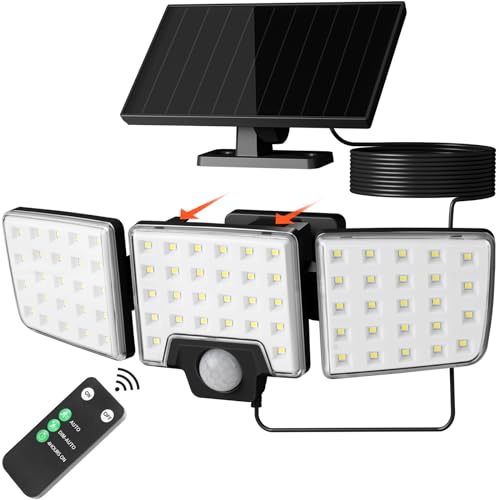
Modes matter more than people expect. The typical set is motion-only (brightest response, longest battery life), a dim glow that boosts to full when triggered, and constant-on. The Sunsign runs its three modes off a small remote, which is genuinely useful once a light is four metres up a wall, because nobody is climbing back up to poke a mode button. The intelamp lists four modes. For security work I'd run motion-only: the sudden change is what gets attention, and it stretches the battery through winter.
False triggers are the other battery killer. Passing headlights won't set off a PIR, but a dog will, and so will tree branches that heat up in the sun and sway, or hot air blowing off an air conditioner condenser. Mount the light so the sensor looks along your property rather than out over the footpath, angle it slightly down, and trim anything that moves in front of it. Fewer wasted triggers means more charge left at 3am, which is the hour you actually care about.
Cool white, warm white and glare
Most solar security lights ship in one colour: a cold white somewhere around 6000K, because cool white LEDs squeeze more output from every watt and look brighter for the same power. Over a driveway or a side passage, that's exactly what you want. Over a front entry, an outdoor table or anywhere you'll actually sit, it's harsh, and it's the main reason the intelamp earns its spot in this list: it's the one warm white unit of the four, and the listing frames that as a deliberate choice for entries and gardens rather than a spec compromise.
Two practical notes on glare. First, a security light that blinds the camera next to it is worse than no light. If you're pairing lights with cameras, mount the light above and slightly behind the camera's field of view so it lights the scene without flaring the lens. Second, think about your neighbours before mounting anything with three articulated heads at fence height. Aim the heads down and along your own paths. A light that strobes the neighbour's bedroom every time a possum crosses your yard is a dispute you don't need, and councils do field complaints about light spill.
Warm white gives up a little claimed brightness at the same power, but at these output levels the difference doesn't decide whether you can see a face at the gate. Pick the colour by where the light points: cold white for the working areas, warm white where people linger.
Batteries, seals and making one last
The battery is the consumable. Every solar light on this page will eventually die the same death: the pack fades until the light barely runs an hour past sunset, then quits. Quality cells put that day years out; junk cells bring it inside eighteen months. You usually can't inspect the cells before buying, which is why I lean on the chemistry and capacity claims in the listings, and why the intelamp's LiFePO4 pack is worth something on paper.
IP ratings deserve a plain reading. IP65, which the Lepro, Sunsign and intelamp list, means sealed against dust and hose-strength water jets: fine for any wall in the country. IP67, which PATIOPIA lists, adds survival of brief submersion. On a wall-mounted light that number is mostly marketing headroom, but a better-sealed shell also tends to keep condensation off the board, and around the coast, where salt air eats exposed copper, sealing is the difference between five years and two. If you've read our piece on what water does inside electronics, the same corrosion story applies here at garden scale.
Maintenance is five minutes twice a year: wipe the panel, check the seal line and the cable entry, and knock the spider webs off the sensor, because a web across a PIR lens is a surprisingly effective blindfold. If a light you like has died, don't bin it straight away. Packs in common sizes can often be swapped, and it's the sort of small job our Erina workshop handles alongside the phones, along with fitting decent connectors when the factory ones corrode. And while you're up the ladder doing the yearly walk-around, test the smoke alarms too. Same battery logic, higher stakes.
The 4 picks, $29 to $70
Prices are Amazon AU at time of writing (25 September 2026) and move week to week. Ranks are Amazon AU category sales ranks, checked the same day.

PATIOPIA 294 LED Solar Motion Sensor Lights, 2600lm, 3 Pack
ASIN B0FV8C9L95 • $55.99 • Sold by Decor AU on Amazon AU
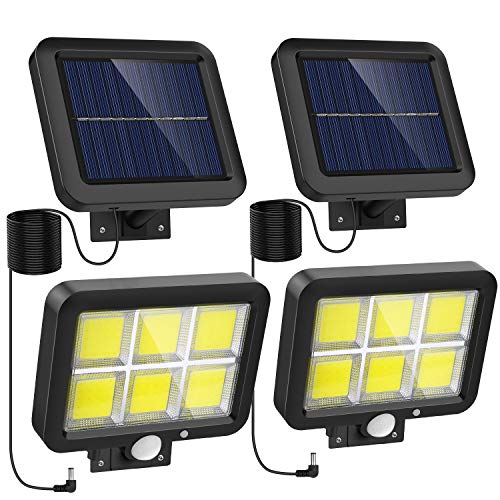
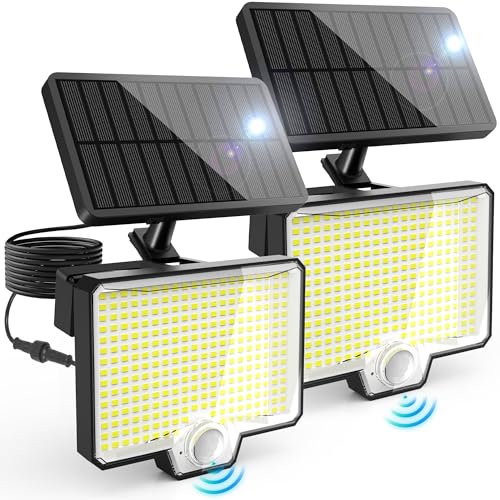
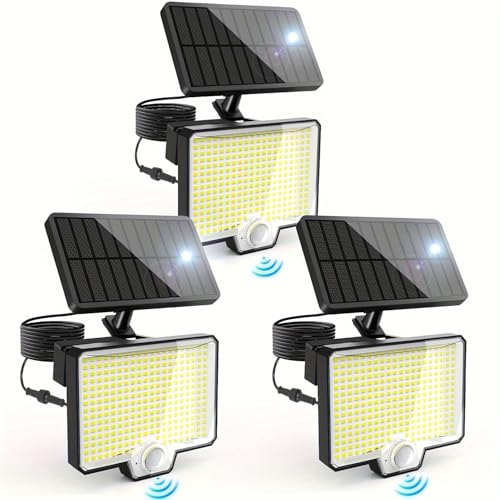
This is the volume seller of the category right now, sitting at #19 in Amazon AU's Decking & Patio Lighting category, and the appeal is obvious: three complete lights in one box for $56, sold through an AU storefront. Each unit carries 294 LEDs behind a claimed 2,600 lumen output, fed by an 1,800mAh battery and a monocrystalline panel the listing says will fully charge in about six hours of decent sun. If your problem isn't one dark corner but a whole house's worth of them, the side path, the bins, the gate, the back door, this is the one order that deals with all of it at once, and every head is the same so you're not juggling three different remotes and modes.
The build details read better than the price bracket suggests. The shell is sealed to IP67, which the listing attributes to ultrasonic sealing rather than a gasket alone, and that's the best sealing claim of anything on this page. The panel and the light board can be mounted separately and cabled together, so you get a little of the split-design flexibility without buying a dedicated split unit, though the listing doesn't state the cable length, so keep the panel within easy reach of the light. Screws and fixings come in the box. In practice, 294 small LEDs spread across a wide board throw an even wash rather than a hot spot, which suits a path or a wall far better than a single glaring point source.
The 1,800mAh pack is the honest limitation. It's enough for a normal side path or gate in motion mode, including through winter, but a spot that triggers forty or fifty times a night will run it down faster than a weak July sun can refill it. I'd also treat the claimed five-year lifespan the way I treat all lifespan claims on garden lighting: as optimism with a marketing department. What matters is that the outlay for a single premium light buys three of these, so a failure two years in costs you a third of the system, not all of it.
Honest caveats: The 2,600 lumen figure is a claim, not a measurement, and the cable length between the panel and the light board isn't stated on the listing, so don't plan on mounting them far apart. The 1,800mAh pack is mid-sized: fine for quiet spots, undersized for a driveway that triggers all night. No warranty period is stated.
Best for: Covering several dark spots around a house in one order, without an electrician.
Claimed output: 2,600 lm • LEDs: 294 per light • Battery: 1,800mAh • Panel: Monocrystalline, separable • Charge time: About 6 h full sun (claimed) • Sealing: IP67 • In the box: 3 lights plus screws • Seller: Decor AU storefront • Rank: #19 in Decking & Patio Lighting (Amazon AU)
View on Amazon AU
Sunsign 113 LED Solar Wall Light with Remote, 1 Pack
ASIN B0DMNKSBJ6 • $28.99 • Sold by Sunsign-AU on Amazon AU
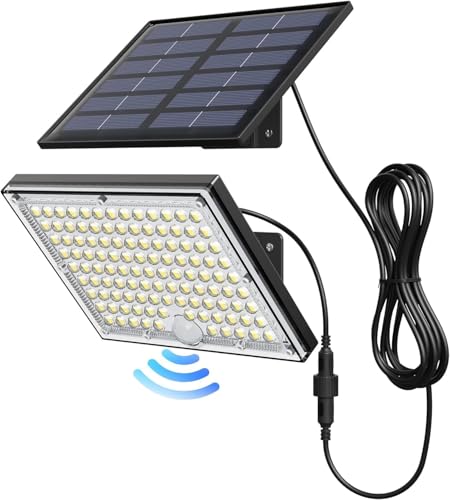
At $29 this is the least you can spend on this page, and the spec sheet doesn't read like it. The light runs 113 LEDs off a 1,500mAh battery, the panel sits on its own 5 metre lead, and the whole thing is driven from a small remote that switches between three modes: motion sensing, constant light, and a dusk-to-dawn setting. That remote is worth more than it sounds. Once a light is mounted high on a gutter line, nobody is climbing back up to change settings, and the Sunsign is the only unit here at this money that lets you do it from the ground, standing on the lawn with a cuppa.
The split design is the other thing you don't usually get at this level. The 5 metre cable means the light itself can go under an eave, inside a carport or on the shaded side of a shed while the panel goes up where the sun actually lands, and that's precisely the situation that kills all-in-one solar lights. The panel is polycrystalline rather than the monocrystalline type on the PATIOPIA and intelamp, which costs it a little charging efficiency in weak light, so give it the best aspect you can. The 180 degree spread from the wide board suits a wall wash over a door or a path more than a long throw down a driveway.
The 1,500mAh pack is the smallest here, and paired with the smaller panel it makes this a light for quiet spots rather than busy ones. In motion mode over a back door or between a house and a fence it'll get through winter fine. Run it in constant or dusk-to-dawn mode and expect it to fade out well before morning in July, which isn't a fault, just small-pack arithmetic doing what it does. The listing backs it with a stated one-year warranty, which at this level is more than some bigger names put in writing.
Honest caveats: IP65 rather than IP67, a polycrystalline panel and the smallest battery of the four picks, so it's the wrong unit for a high-traffic driveway or constant-on running. The remote is line-of-sight and easy to lose. Lumen output isn't stated as a single figure on the listing, so compare it by LED count instead.
Best for: One quiet spot on the smallest spend, especially where the mount point sits in shade.
LEDs: 113 per light • Battery: 1,500mAh • Modes: 3, via remote • Panel: Polycrystalline, 5 m lead • Sensing: PIR motion, dusk to dawn • Sealing: IP65 • In the box: 1 light • Warranty: 1 year (listed) • Rank: #45 in Decking & Patio Lighting (Amazon AU)
View on Amazon AU
Lepro Solar Security Light, 1200lm, 3 Heads, Separate Panel
ASIN B08Z3D92B2 • $69.99 • Sold by Lepro AU on Amazon AU
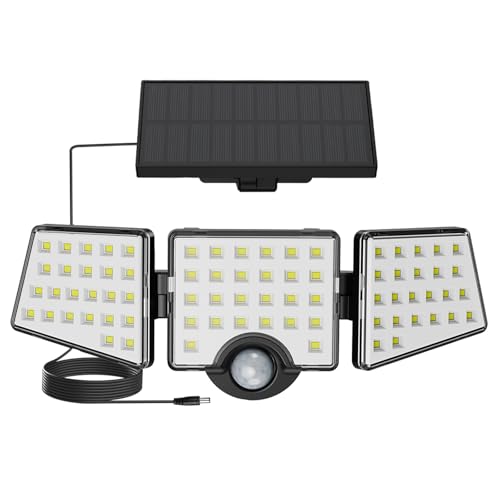
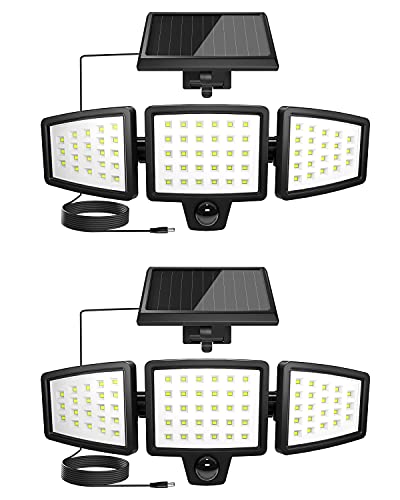
Lepro is the closest thing to a known lighting brand in this band, and the design here is the full split-panel layout: three adjustable heads on one body, wired to a separate solar panel over a 5 metre cable. That cable is the reason to buy it. The light can sit in the darkest spot on the property, under a carport, inside an open shed, on the shaded side wall, while the panel goes somewhere with genuine sun. The three heads rotate independently to spread the claimed 1,200 lumens across up to 270 degrees, so one unit can wrap a corner and light two walls at once, which normally takes a pair of fixed lights and twice the mounting work.
The sensing spec is stated more plainly than most: a PIR sensor with an 8 metre range across 120 degrees, and a 20 second shutoff once movement stops, which matches how alarm-grade sensors behave and is enough to catch someone stepping onto a driveway before they reach the car. The listing quotes six to eight hours of sun for a full charge and more than 200 triggered lightings per charge, and that second figure is the useful one: even a busy night of twenty triggers leaves plenty in reserve, and quiet nights bank the difference for the grey week that follows. The body is GPPS and ABS plastic sealed to IP65, and each head holds its aim once you've set it.
At $70 it's the most you'll spend on this page, and what the extra buys is placement freedom and a sensing spec you can actually plan around, not more brightness. The claimed 1,200 lumens is the lowest headline figure of the four, and honestly it doesn't matter: spread across three aimable heads it's plenty to light a face at the gate or a car in the drive. If your problem spot is genuinely dark because nothing near it ever sees the sun, this or the Sunsign are the two answers here, and this is the better built of the pair.
Honest caveats: Neither the battery capacity nor the panel chemistry is stated on the listing, which makes winter endurance harder to judge on paper than the intelamp's stated 6,000mAh pack. IP65 sealing is fine on a wall, but point the cable entry downward, and remember 5 metres of lead won't reach across a wide block.
Best for: A genuinely dark mount point where the panel has to live somewhere else.
Claimed output: 1,200 lm • LEDs: 72, across 3 heads • Light spread: Up to 270°, adjustable heads • Sensing: PIR, 8 m range, 120° • Panel: Separate, 5 m cable • Charge time: 6 to 8 h (claimed) • Body: GPPS + ABS, IP65 • Per charge: 200+ triggered lightings (claimed) • Rank: #60 in Decking & Patio Lighting (Amazon AU)
View on Amazon AU
intelamp Warm White Outdoor Solar Security Light
ASIN B0GZKNNDHL • $59.49 • Sold by intelamp AU on Amazon AU
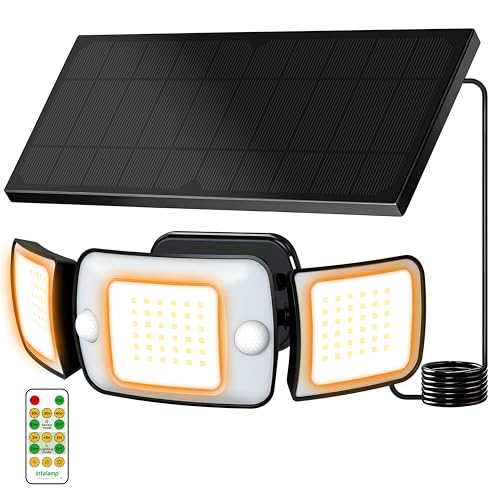
Every other light on this page is cold white. The intelamp is deliberately warm, and that single choice decides where it belongs: over a front entry, a deck or a garden path where a 6500K blast would feel like a service station forecourt. It's still a security light, not a fairy light. Three adjustable heads spread the beam across a claimed 270 degrees, and a dual-sensor arrangement watches a 180 degree arc, which is the widest detection claim of the four picks. Someone cutting across the yard at an angle, the exact case where a single narrow PIR reacts slowest, is what a wide dual-sensor layout like this is set up to catch early.
The battery is the quiet headline. The listing states a 6,000mAh lithium iron phosphate pack, three to four times the stated capacity of the PATIOPIA and Sunsign, and it's the better chemistry for the job: LiFePO4 cells generally take far more charge cycles before fading than standard lithium cells, and a solar light gets cycled every single day of its life. Fed by a monocrystalline panel, that pack is what winter endurance looks like on paper. Four modes cover motion-only through to a constant low glow, and the ABS body carries an IP65 rating, in line with everything here bar the PATIOPIA. It's also the pick I'd trust furthest from the house, where a flat battery means a ladder trip to investigate.
Warm white costs some punch on paper: the listing doesn't quote a lumen figure at all, and warm LEDs give up a little output per watt against cool ones. In practice the big pack and the wide spread matter more for the job this light will actually do. At $59 it sits between the Sunsign and the Lepro, and it's the one I'd put where people, rather than possums, are the usual audience. If you want a light that treats guests gently at the door and still snaps to full brightness when something moves at 2am, this is that light.
Honest caveats: No lumen figure and no sensing range in metres on the listing, so you're trusting the mode list and the battery spec more than measured output. The listing doesn't describe a separate panel, so treat it as an all-in-one and give it a wall that sees real sun. Warm light also shows less crisp detail on camera footage than cool white.
Best for: Entries, decks and paths where warm light suits the space and winter endurance matters.
Colour: Warm white • Heads: 3, adjustable, 270° spread • Sensing: Dual sensors, 180° (claimed) • Modes: 4 • Battery: 6,000mAh LiFePO4 • Panel: Monocrystalline • Sealing: IP65 • Body: ABS • Rank: #68 in Decking & Patio Lighting (Amazon AU)
View on Amazon AUSide-by-side comparison
What we see fail at the bench: solar lights
Solar garden and security lights come through the shop in dribs and drabs, usually in a box with 'it stopped working' on a sticky note, and the autopsy is nearly always one of the same three findings. None of them are exotic. All of them are worth knowing about before you buy, because two are avoidable at install time and the third is just the price of lithium chemistry living outdoors.
The battery fades first
The pack is the consumable in every solar light ever made. Daily full cycles are brutal duty for lithium cells, and garden lights get the worst of it: charged hot in the afternoon sun, drained cold overnight, every day for years. The first symptom is a light that's bright at 8pm and dead by midnight, because faded capacity means the evening's triggers empty it early. Standard lithium packs give you roughly two to four years of that before they're done, quality depending, and the LiFePO4 chemistry in units like the intelamp usually stretches it further. Swapping a common-size pack is often a few dollars in parts and ten minutes, if the housing opens without a fight.
Water gets in at the cable entry, not the face
Nobody's IP rating fails on the sealed front face. Where water gets in is the cable gland on split-panel designs, the battery-door gasket, and screw bosses that crack because the mounting surface wasn't flat. Once moisture is inside, the board grows the same green crust we scrape off phone boards after a swim, and the light turns flaky: random triggers, half brightness, dead sensor. Point every cable entry downward so water drips off rather than tracking in, don't overtighten the housing screws, and if a unit fogs up on the inside of the lens, open it and dry it that week, not that year. Corrosion compounds. Dry boards last.
Panels that fog, yellow and stop charging
The panel is a live part and it ages. Low-end panels are often a cell sandwich behind clear epoxy, and UV slowly yellows that epoxy until the panel is working behind a pair of sunglasses: output drops, the battery never quite fills, and the light dies a slow winter death that looks exactly like a failed pack. Glass-fronted panels age better. Either way, grime does more damage faster: a film of dust, salt and spider silk can cost a real slice of charging before anyone notices. Wipe the panel whenever you clean the gutters, and check the panel lead where it flexes at the gland, because a cracked conductor there reads as a dead panel.
Decision tree: which one should you actually buy?
- Several dark spots and one order to fix them all? → The PATIOPIA 3 pack at $56. Three identical lights, the best sealing claim here, and enough coverage for a side path, a gate and a back door in one hit.
- One quiet corner and the smallest possible spend? → The Sunsign at $29. Small battery, but in motion mode over a back door it'll do the job, and the 5 metre panel lead gets it working in shaded spots.
- The spot you want lit never sees the sun? → Split designs only: the Lepro at $70 is the better built option, with the Sunsign at $29 as the smaller-spend fallback. Put the panel on the sunny wall and run the lead.
- Front entry or deck where cold white looks awful? → The intelamp at $59. Warm light, the biggest stated battery of the four, and it still jumps to full brightness on motion.
- A driveway that triggers all night, every night? → That's hardwired floodlight territory, honestly. Solar earns its keep on the secondary spots; if you run solar there anyway, the PATIOPIA 3 pack at $56 spreads the traffic across three separate lights and packs.
- Got an old solar light that's died? → Don't bin it yet. Nine times out of ten it's the battery, and packs in common sizes can be swapped. Bring it into the workshop in Erina and we'll tell you in a minute whether it's worth doing.
Frequently asked questions
Do solar security lights charge on cloudy days?
Yes, just slowly. Panels charge from daylight, not direct sun alone, so an overcast day still puts something into the battery, typically a small fraction of what full sun delivers. The practical problem is a run of grey days in winter, when short daylight and weak charging stack on top of each other. That's when motion-only mode earns its keep, because the light spends almost nothing while nothing is moving. If a light routinely dies before morning in winter, the panel is usually dirty, shaded or aimed badly rather than broken, so check those three before blaming the unit. A panel that faces north and sits clear of eave shadow will ride out most grey stretches without drama.
Can I replace the battery in a solar light when it dies?
Often, yes. Many of these use common cylindrical lithium cells or standard pack sizes, and a faded pack is the single most common reason a solar light dies. Whether it's practical depends on the housing: some open with four screws, some are glued shut, and a glued unit at this level is usually not worth the fight. If the light was decent and the housing opens, a replacement pack is a small job. Match the chemistry and voltage exactly, because dropping a standard lithium cell into a circuit built for LiFePO4, or the reverse, will either undercharge the cell or cook it. If you're not sure what you're looking at, ask someone who is before connecting anything.
What's the difference between IP65 and IP67?
The first digit is dust, the second is water. IP65 means dust-tight and sealed against water jets from any direction, which covers rain, storms and a hose. IP67 means dust-tight and able to survive brief submersion in shallow water. For a light screwed to a wall, IP65 is honestly enough, and the real-world difference comes down to build quality rather than the number: a well-made IP65 unit with a good gasket outlasts a sloppy IP67 one. Where the higher rating helps is margin. Better sealing tends to mean less condensation creeping inside over years of hot days and cold nights, and condensation is what slowly corrodes the board.
Will a solar security light run all night?
In motion mode, effectively yes: the light is off or nearly off between triggers, so a healthy battery covers a normal night's activity with room to spare, even in winter. In constant-on mode, no. Lighting continuously draws the pack down in a handful of hours, and no pocket-sized panel can put a whole night of constant light back in during a short winter day. The dusk-to-dawn dim modes sit in between: a low glow all night with a jump to full on motion, which most units sustain in summer but only the bigger-battery units manage comfortably through July. If all-night constant light is genuinely the requirement, that's a job for wired lighting.
Does the solar panel have to face north?
North is best in Australia, because that's where the sun tracks, and a north-facing panel gathers the most energy across the day, especially in winter when the sun sits low. East and west work at reduced output, biased to morning or afternoon. South-facing walls are the hard case: in summer they get some sky light, in winter they can get essentially no direct sun at all, and a panel mounted there will slowly lose the battle. That's exactly what split-panel designs are for. Mount the light wherever it's needed, then run the lead so the panel sits on a north or west face with clear sky. Ten minutes with the cable beats a light that dies every June.
Are the lumen claims on solar lights accurate?
Treat them as marketing numbers, useful for comparing one model against another from the same seller and not much else. There's no independent testing behind most of these figures, and some listings quote wattage equivalents that describe the halogen lamp being replaced rather than anything the unit draws. Better clues are physical: LED count, board size, battery capacity and panel size, because those set what the light can actually do. And for a motion sensor light, raw output matters less than the jump from dark to bright, which even modest units deliver convincingly. A claimed 1,200 lumens aimed well beats a claimed 10,000 pointed at the sky.
Related buying guides
A solar light that dies at 8pm is telling you the battery's done
Faded packs, corroded boards and cracked panel leads are all fixable more often than people expect. Before you bin a decent light or order another one, bring it into the shop at Erina and we'll open it up, tell you what failed and whether a new pack makes sense, before you spend anything. Same goes for the power banks and chargers living in the same drawer.
Visit our Erina workshop Book Online