Prices from Amazon AU, updated daily. Swipe or use the arrows for more.
Disclosure: This article contains affiliate links to amazon.com.au. If you buy through one of these links iFix may earn a small commission at no extra cost to you. It doesn't change which products we recommend. We focus on what actually lasts based on 16 years of repair-shop experience.
Quick summary6 picks
- Entry PickMother's Choice Pace Convertible Booster… about$199
- InfaSecure Acclaim Premium Booster Seat about$200
- Britax Safe-n-Sound Kid Guard Booster Seat… about$240
- Britax Safe-n-Sound QuickFix Convertible… about$350
- Britax Safe-n-Sound Maxi Guard Harnessed… about$400
- Most PremiumBritax B-Swivel Car Seat Teak about$699
The sticker is the first check
Every child car seat used in Australia has to comply with AS/NZS 1754, and the seat and its box should carry the standards sticker that says so. A seat that's legal in the US or Europe isn't automatically legal here, even if it's a good seat, because our standard tests for things theirs don't, like the top tether that bolts to an anchor point in the car. So before I looked at features, I checked compliance on every seat I picked.
That turned out to need more than the Amazon listings. None of the six listings among the picks prints the standard in its feature text, so I matched each model to its maker's or retailer's compliance statement instead: Britax's own product pages for the Safe-n-Sound seats, INFA Group's statement that all its InfaSecure restraints are certified to AS/NZS 1754, and a Mother's Choice product sheet published by an Australian retailer. All six are Australian-market models sold by Amazon AU itself.
When the seat arrives, look for the sticker on the seat itself before you fit it, and keep the box until you've found it. If it isn't there, don't use the seat; return it. I left out a booster whose listing gave no Australian model details at all, and a couple of newer Britax models I couldn't match to a compliance statement on the day, which says more about how thin the listings are than about the seats. If a listing you're looking at elsewhere gives no Australian model number or standard, ask the seller before you buy, not after.
Which type of seat for which age
Under the national road rules, a baby has to travel rearward facing until at least six months old. From six months to four years, a child can be rearward or forward facing, but has to be in a seat with an in-built harness. From four to seven, it's a harnessed seat or a booster with the car's lap-sash belt. Those are the legal minimums, and your state's transport department has the exact wording if you want to check it.
In practice the seat decides more than the birthday. Every seat made to the Australian standard has shoulder height markers sewn or moulded into it, and those markers tell you when your child has outgrown a mode. A tall two year old might reach a marker early, and a small five year old might still fit a harness. Go by the markers and the manual, not the age range on the box. Check them every few months, since kids tend to hit a marker in a growth spurt rather than gradually.
The picks cover the three common types. Convertible seats like the B-Swivel and QuickFix go from birth to about four, rearward facing first. Harnessed forward-facing seats like the Maxi Guard keep a child in a harness from about six months to eight years, and the Pace converts from a harness to a booster across the same range. The Kid Guard and Acclaim are boosters for about four to ten years.
If you're buying one seat to cover as long as possible, a harness-to-booster seat like the Pace stretches furthest on paper. I'd still buy for the stage your child is in now, though, because a seat that's very good at one stage usually fits better than one trying to cover three.
Rear facing for longer
Both convertible picks let a child stay rearward facing well past the six month legal minimum. The B-Swivel's listing says up to 36 months, and the QuickFix says about two to three years, depending on the shoulder height markers. Keeping a child rearward facing for longer is what the makers and most road safety groups recommend, and the main thing that stops parents doing it is how awkward it is to get a bigger toddler in and out.
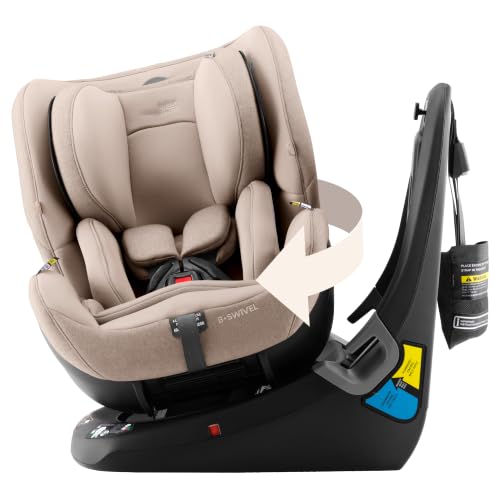
That's where a rotating seat earns its price. The B-Swivel turns 360 degrees with one hand and holds at 90 degrees facing the door, so you lift your child straight in rather than leaning over the seat and twisting your back. It's the same seat facing either way, and the listing says the top tether attaches to the base rather than the seat, so it doesn't get in the way of the turn.
A fixed convertible like the QuickFix does the same job for less money, as long as you're happy with the reach. In a small car with the front seat pushed back, rearward facing seats also take up a lot of front-to-back room, so check the installed depth against your car before you order. The QuickFix's listing calls out a compact installed depth for exactly that reason.
Seatbelt, ISOFIX and top tether installs
There are two ways the picks attach to the car. ISOFIX-compatible seats like the QuickFix clip onto anchor bars between the seat cushion and backrest, and Britax calls its version ISOFLEX. Seatbelt-installed seats like the B-Swivel use the car's lap-sash belt, and the B-Swivel's ClickTight system clamps the belt tight with a lid so you don't have to haul on it. Either way, Australian seats also use a top tether strap to an anchor point in the car.
Both methods pass the same standard. ISOFIX mostly makes a correct install easier, since there's less room to get the belt routing wrong, but it only helps if your car has the anchors and the seat is rated for them. Boosters for older kids, like the Kid Guard and Acclaim, use the adult seatbelt to hold the child and a top tether to hold the seat.
Fitting errors are common, and they're the part I'd spend money on. Many baby stores and some councils run accredited fitting services, and an hour with a trained fitter checking the tether, the belt path and the recline angle is money well spent. Ask them to show you how to refit it yourself, since you'll be moving the seat between cars sooner or later. Once it's in, the seat shouldn't move more than a couple of centimetres side to side when you push it at the belt path.
What wears out on a car seat
The buckle is the part that comes in for the most abuse. Crumbs, sultanas and spilt juice end up inside the buckle housing, and sugar dries into a sticky film that stops the tongues latching cleanly. Most manuals say to rinse the buckle in warm water, work the release button and let it dry fully, and never to oil it. Check your seat's manual first, since the cleaning method differs between makers.
Harness webbing is the next thing to watch. Straps that are twisted, frayed at the edges or stiff from repeated spills don't spread load the way they're meant to, and most makers say a damaged harness should be replaced with their own part, not repaired. Keep the straps flat when you buckle up, and wash them the way the manual says, which on many seats means surface cleaning only.
Moving parts wear too. The headrest adjuster, the recline lever and the B-Swivel's rotation base all have latches and tracks that collect grit, and a latch that doesn't click home properly is a warning sign. Vacuum the base and tracks out every few months and work each adjuster through its full range so you notice if one starts to stick.
The shell and foam are the last things to check. A plastic shell that's cracked, or foam that's crushed or broken away inside the headrest, means the seat needs replacing rather than patching. Hot cars don't help, since plastic left in a closed car through an Australian summer ages faster, so a sunshade over the seat when it's parked is worth having. It also keeps the buckle from getting hot enough to be unpleasant to touch.
Fitting three across and small cars
Width matters if you've got more than one child, or a small car. The Acclaim's listing gives it a 44cm width, the Pace is sold as a narrow seat for three across in most cars, and the Kid Guard and Maxi Guard both call out slim designs. Britax gives the B-Swivel's width as 440mm on its own site, which is narrow for a rotating seat.
Three across is never guaranteed, because it depends on your car's seat shape, buckle positions and where the tether anchors sit. The most reliable way to know is to measure the inside width of the back seat at hip height and add up the widths of the seats you're planning, then allow a few centimetres for buckles. A fitter can usually tell you on the spot whether it'll work, and some baby stores will let you try a seat in your car before you buy, which beats guessing from a photo.
Boosters have one extra catch. The child needs to reach the seatbelt buckle, and a wide booster pressed against the next seat can cover it. The Kid Guard's listing calls out a narrow base for exactly this, so the buckle stays reachable when the car is full.
After a crash, and second-hand seats
Makers generally say a car seat that's been in a crash should be replaced, even if it looks fine, because the shell and foam can be damaged in ways you can't see. Check your car insurance policy too, since some will cover a replacement seat as part of the claim. Keep the receipt and the seat's serial number somewhere you'll find them.
Second-hand seats are fine only when you know their history. You need to know it's never been in a crash, that all the parts and the manual are there, and how old it is, since every seat has a date of manufacture on its label and makers give a service life for their seats. A seat from a family member you trust is a very different thing from one off a marketplace listing.
Older seats also lose out on later improvements to the standard and to the seats themselves, like better side protection and easier harness adjustment. If a second-hand seat is your only option, take it to a fitter, who can check the label, the date and the condition before you rely on it.
Screens, chargers and drinks in the back seat
This is the part we see in the shop. Long drives mean a tablet on the back of the front seat, a phone passed back to the kids or a charging cable stretched from the front console, and those habits send a fair few devices our way. A tablet in a headrest mount needs a mount that clamps firmly to the headrest posts, because a loose tablet is a heavy object in a sudden stop, and our kids tablet guide covers sturdier choices with proper cases.
Drinks are the other problem. A sippy cup of juice tipped over a tablet or phone in the back seat gets into the charging port, and sugary liquid dries into a sticky film that corrodes the contacts and stops it charging. If it happens, switch the device off, don't charge it, and read our water damage guide before trying anything with rice or a hair dryer.
Keep charging cables out of the seat's belt path and away from the buckle, where they can be trapped or crushed when the seat is tightened. Over-ear headphones for kids are usually easier on a long trip than earbuds that end up under the seat, and our kids headphone picks are all volume-limited. If a device does stop charging after a spill, our Erina repair workshop can clean the port and check the board.
The 6 picks, $199 to $699
Prices are Amazon AU at time of writing (2026-11-11) and move week to week. Ranks are Amazon AU sales ranks in the Car Seats category, checked the same day. Compliance was checked against each maker's or retailer's AS/NZS 1754 statement the same day.

Britax Safe-n-Sound B-Swivel Convertible Car Seat (Teak, 3731)
ASIN B0H5BC8CS9 • $699.00 • Ships from Amazon AU
The B-Swivel is the convertible seat I'd choose if the budget stretches, and it ranks #3 in Amazon AU's Car Seats category. It's a Britax Safe-n-Sound seat that turns 360 degrees with one hand and holds at 90 degrees facing the door, so you can lift a child straight in. It installs with the car's lap-sash belt using Britax's ClickTight system, which clamps the belt tight under a lid. The listing says it keeps a child rearward facing up to 36 months, and Britax's own site gives birth to about four years overall. Britax states it's designed to comply with AS/NZS 1754:2013. It's sold by Amazon AU. At $699 it's the highest-priced of the six picks.
The rotation is the reason to buy it, and the design around it is well thought through. The top tether connects to the base rather than the seat, so the tether doesn't get in the way when the seat turns, and a red and green lock indicator shows when it's locked in forward or rearward mode. There's a level indicator for the rearward install angle, which is the part people most often get wrong. The listing describes Britax's deployable side impact cushion and an enclosed shell, plus three recline angles when forward facing. Britax gives its width as 440mm on its own site, which is narrow for a rotating seat. A swivel base does have more moving parts than a fixed seat, so keep the base and tracks free of crumbs.
The listing doesn't give a seat weight or installed depth, and rotating seats are heavy, so this isn't one to move between cars every week. Check the lock indicator shows green every time you turn it. Vacuum grit out of the swivel base every few months and work the rotation through its full range. Have it fitted by an accredited fitter the first time. Keep the receipt and serial number for warranty and insurance. For a family that wants rear facing for as long as possible without the lifting strain, it's my pick.
Honest caveats: It's the most expensive pick and a heavy seat to move between cars. The listing doesn't state a seat weight or installed depth, so check it against your car. Compliance comes from Britax's own product page rather than the listing, so look for the AS/NZS 1754 sticker when it arrives.
Best for: A family keeping a toddler rear facing as long as possible, with one car and regular in and out.
Price: $699 (Amazon AU) • Model: 3731 • Ages: Birth to about 4 years (Britax) • Rear facing: Up to 36 months • Install: Lap-sash belt, ClickTight, top tether • Rotation: 360 degrees, one hand • Compliance: AS/NZS 1754:2013 (Britax) • Rank: #3 in Car Seats (Amazon AU)
View on Amazon AU
Britax Safe-n-Sound QuickFix Convertible Car Seat (Black, 3656)
ASIN B0CL48F7P8 • $349.99 • Ships from Amazon AU
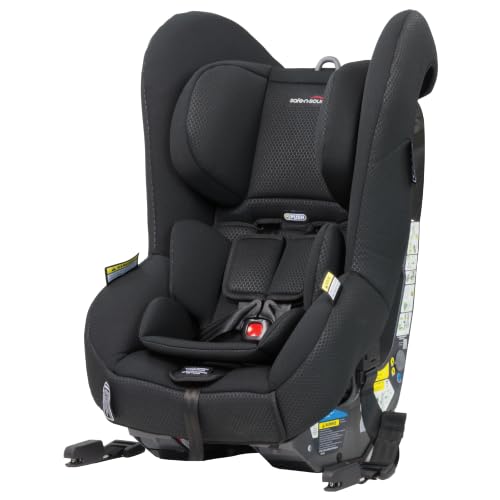
The QuickFix is the convertible I'd buy for a smaller car or a tighter budget. It's a Britax Safe-n-Sound seat for birth to about four years, and the listing says a child can stay rearward facing until about two to three years, depending on the shoulder height markers. It's ISOFIX compatible through Britax's ISOFLEX connectors, which clip onto the anchor bars in cars that have them. The listing calls out a compact exterior and a compact installed depth, which matters in a small car with a tall driver. Australian retailers list it as Type A4/B and complying with AS/NZS 1754:2013. It ranks #17 in Amazon AU's Car Seats category. It's sold by Amazon AU. At $350 it's half the price of the B-Swivel.
The harness adjusts with the headrest, so the shoulder straps move up as you raise it and you don't have to rethread anything as your child grows. That sounds small, but harness straps at the wrong height are one of the most common fitting mistakes, and a seat that keeps them matched makes it less likely. There are two recline positions and a machine-washable cover, which you'll appreciate the first time a bottle of milk goes over. ISOFIX doesn't remove the need for the top tether, so you'll still fit that to the car's anchor point. If your car doesn't have ISOFIX anchors, check the manual for the seatbelt install before ordering. A fitter will check the recline angle too.
There's no rotation, so getting a bigger toddler in rearward facing means leaning in. The listing doesn't give a seat weight or width. Rinse the buckle when it gets sticky rather than oiling it, and keep the harness straps flat when you buckle up. Check the ISOFLEX connectors are fully latched each time you refit it. Keep the manual in the seat's storage pocket. Recheck the recline angle after any change to the front seat position. For a small car, or a second car, where you want ISOFIX and rearward facing past two, it's the one I'd choose.
Honest caveats: No rotation, so rear facing a bigger toddler means more lifting. The ISOFIX connectors need compatible anchors in your car. The listing doesn't state a seat weight or width, and compliance comes from Australian retailers' listings rather than the Amazon one, so check the sticker on arrival.
Best for: A small or second car with ISOFIX anchors, for birth to about four years.
Price: $349.99 (Amazon AU) • Model: 3656 • Type: A4/B convertible (retailer) • Ages: Birth to about 4 years • Rear facing: About 2 to 3 years, by markers • Install: ISOFLEX ISOFIX connectors, top tether • Cover: Machine washable • Compliance: AS/NZS 1754:2013 (retailer) • Rank: #17 in Car Seats (Amazon AU)
View on Amazon AU
Britax Safe-n-Sound Maxi Guard Harnessed Car Seat (Black, 8028)
ASIN B0FDK5R76F • $399.99 • Ships from Amazon AU
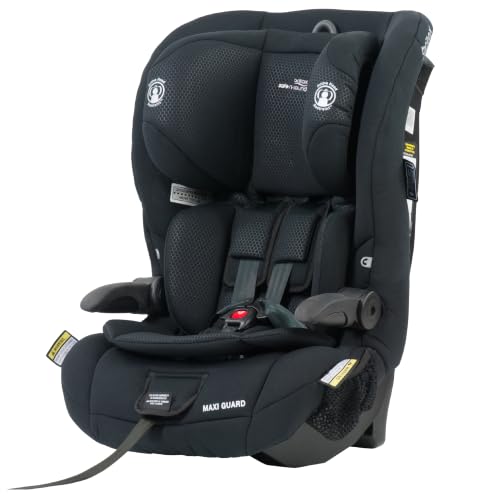
The Maxi Guard is the seat for keeping a child in a harness well past four. It's a forward-facing Britax Safe-n-Sound seat with an in-built harness for about six months to eight years, which means a child who isn't ready for an adult belt can stay harnessed longer. Britax states on its own site that it's designed to comply with AS/NZS 1754:2013. The shoulder straps adjust automatically as the headrest moves, and the listing describes deep side wings on the headrest. There are two recline positions. It ranks #6 in Amazon AU's Car Seats category, a rank it shares with the grey listing. It's sold by Amazon AU, and at $400 it sits mid-range among the picks.
A long harness stage suits kids who wriggle out of a booster's belt position or fall asleep sideways on long drives, which is common at four and five. The Maxi Guard's harness keeps them where the seat can do its job, and the auto-adjusting straps mean the harness height follows the headrest as they grow. It's forward facing only, so it's the second seat after a convertible rather than a first seat for a baby. The listing calls it slim yet spacious, which helps in a car with two seats in the back. Keep the straps flat and untwisted every time you buckle up. Rinse the buckle when it gets sticky rather than oiling it.
The listing doesn't state a seat weight, width or install method, so check the manual for how it attaches to your car before ordering. It isn't suitable from birth. Check the harness webbing for fraying every few months and replace it only with Britax parts. Have a fitter check the tether the first time. Leave a sunshade over it in summer to slow the plastic ageing. Work the headrest adjuster through its range now and then so it doesn't stick. For a child moving out of a convertible who isn't ready for a booster, it's my pick.
Honest caveats: Forward facing only and not suitable from birth. The listing doesn't state a seat weight, width or install method. Compliance comes from Britax's own product page rather than the listing, so check the AS/NZS 1754 sticker when it arrives, and keep the box until you have.
Best for: A child moving out of a convertible who's better kept in a harness than a booster.
Price: $399.99 (Amazon AU) • Model: 8028 • Type: Forward-facing harnessed seat • Ages: About 6 months to 8 years • Harness: In-built, auto-adjusting straps • Recline: 2 positions • Compliance: AS/NZS 1754:2013 (Britax) • Rank: #6 in Car Seats (Amazon AU), listing shared with grey
View on Amazon AU
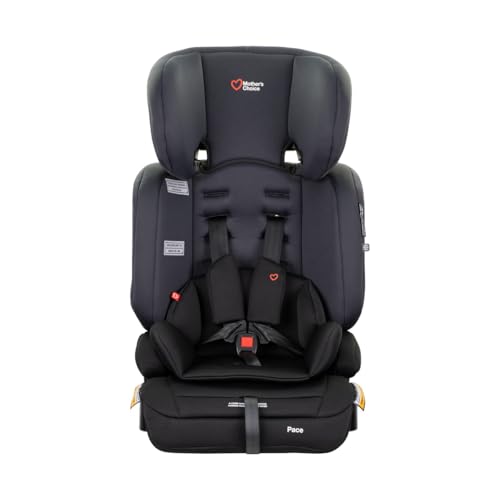
Mother's Choice Pace Convertible Booster Seat (Black)
ASIN B0DDBRJFLS • $199.00 • Ships from Amazon AU
The Pace is the lowest-priced of the six picks and covers the longest stretch on paper. It's a Mother's Choice convertible booster for about six months to eight years: a 5-point harness until about four, then a booster used with the car's lap-sash belt. A Mother's Choice product sheet published by an Australian retailer lists it to AS/NZS 1754:2013. The headrest adjusts one-handed through five positions, the narrow design is sold for three across in most cars, and it comes with an infant insert, two swing-out cup holders and machine-washable covers. It ranks #10 in Amazon AU's Car Seats category. It's sold by Amazon AU. At $199 it's the one I'd buy for a second car or the grandparents.
A harness-to-booster seat makes sense when you want one seat to cover the gap between a convertible and a school-age booster, or when it's a spare that won't be used every day. The trade-off is that the harness stage only runs to about four, the same as a convertible, so it doesn't keep a child harnessed as long as the Maxi Guard. When you switch to booster mode, the harness has to be removed and stored as the manual describes, so keep the manual with the seat. The listing describes a simple belt path for installation. Rinse the buckle when it gets sticky. Wash the covers as the manual says and let them dry before refitting.
The listing doesn't give a seat weight, width or recline detail, and it's forward facing only, so it isn't a seat for a newborn despite the infant insert. Check which shoulder height markers apply to each mode in the manual. Keep the cup holders swung in when they're not in use. Have a fitter check the tether, and again when you switch it from harness to booster mode, since the install changes. For a second car, a grandparent's car or a family on a tight budget, it does the job well.
Honest caveats: Forward facing only, from about six months. The harness stage runs to about four, shorter than the Maxi Guard's. The listing doesn't state a seat weight or width, and compliance comes from a retailer-published product sheet rather than the Amazon listing, so check the sticker on arrival.
Best for: A second car or the grandparents' car, covering six months to eight years in one seat.
Price: $199 (Amazon AU) • Type: Convertible booster • Ages: About 6 months to 8 years • Harness: 5-point to about 4 years • Headrest: 5 positions, one hand • Extras: Infant insert, 2 cup holders • Cover: Machine washable • Compliance: AS/NZS 1754:2013 (product sheet) • Rank: #10 in Car Seats (Amazon AU)
View on Amazon AU
Britax Safe-n-Sound Kid Guard Booster Seat (Black, 4961)
ASIN B07KJMR9C5 • $239.99 • Ships from Amazon AU
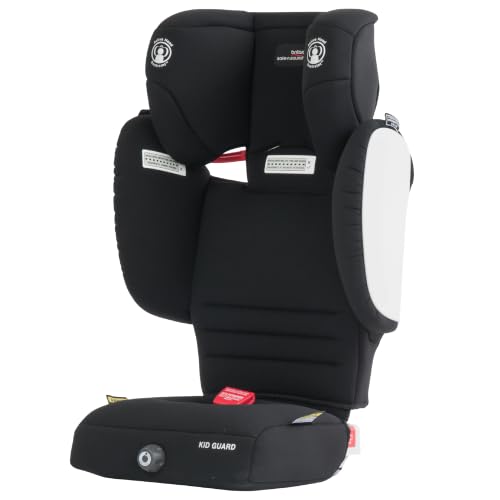
The Kid Guard is the best-ranked seat among the picks, at #1 in Amazon AU's Car Seats category, and it's the booster I'd choose. It's a Britax Safe-n-Sound high-back booster for about four to ten years, used with the car's lap-sash belt. The listing describes anti-submarining technology, which Britax calls SecureGuard, to help keep the lap belt from riding up onto the stomach, plus an active head restraint and deep side wings on an adjustable headrest. Australian retailers list it as a Type F booster, the AS/NZS 1754 category for boosters used to about ten. The base is narrow so the buckle stays reachable. It's sold by Amazon AU. At $240 it's mid-priced for a booster.
A booster's whole job is putting the adult belt in the right place, across the hips rather than the stomach and across the shoulder rather than the neck. The Kid Guard's anti-submarining part adds a fourth point that holds the lap belt low, and the adjustable headrest moves the shoulder belt guide up as your child grows. Britax gives an upper shoulder height marker of 542mm on its own site, which suits kids up to about ten. The slim outside shape is aimed at three across. Make sure the lap belt sits on the hips every trip, and teach your child not to tuck the shoulder belt behind them. Check the belt guides for cracks now and then, since they take the belt's load.
The rank is shared with the grey listing. The listing doesn't give a seat weight or width figure. Boosters rely on the car's belt, so check your car's belt buckles reach past the booster's base. Fit the top tether if the manual calls for it. Rinse sticky drinks off the belt guides and let them dry. Raise the headrest a notch whenever the shoulder belt starts sitting close to the neck, and check the side wings haven't cracked if the seat's been dropped. For a child who's outgrown a harness and is heading for school, it's my pick.
Honest caveats: A booster only, so it isn't for a child who still needs a harness. The listing doesn't state a seat weight or width. The rank is shared with the grey colour. Compliance comes from Australian retailers' Type F listings rather than the Amazon one, so check the sticker on arrival.
Best for: A school-age child who's outgrown a harness, up to about ten years.
Price: $239.99 (Amazon AU) • Model: 4961 • Type: Type F booster (retailer) • Ages: About 4 to 10 years • Install: Car's lap-sash belt • Belt help: Anti-submarining lap belt guide • Headrest: Adjustable, deep side wings • Rank: #1 in Car Seats (Amazon AU), listing shared with grey
View on Amazon AU
InfaSecure Acclaim Premium Booster Seat (Night)
ASIN B0CKSNCBSF • $199.99 • Ships from Amazon AU
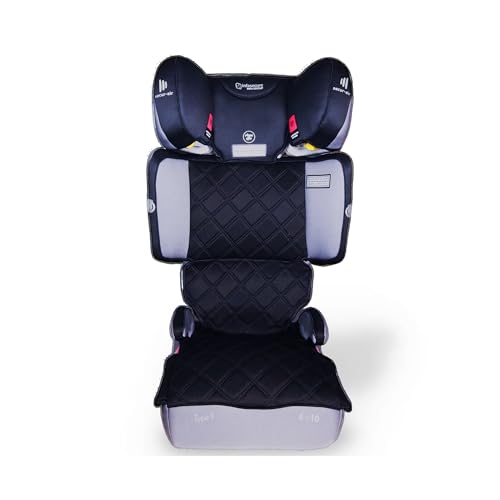
The Acclaim Premium is the booster I'd pick for moving between cars. It's an InfaSecure high-back booster for about four to ten years, and its frame folds, which makes it far easier to lift between cars or store in a boot than a fixed booster. The listing gives a 44cm width, narrow enough to suit a compact car or a row of three. It uses InfaSecure's Air Cocoon and Secur-Air side protection, and the headrest adjusts to keep the sash belt at the right height. INFA Group states all its restraints are certified to AS/NZS 1754, and retailers list this one as a Type F booster. It ranks #11 in Amazon AU's Car Seats category. It's sold by Amazon AU. At $200 it's the lower-priced of the two boosters.
Folding is the feature that matters in real life. A booster that lives in one car is easy, but one that moves between a parent's car, a grandparent's car and a carpool gets dragged around, and a folding frame makes that much less of a chore. The listing describes an Active Bamboo cover meant to wick moisture, which helps on hot days. Like any booster, it relies on the car's belt, so make sure the lap belt sits low across the hips every trip. Check the fold latches click fully home before each use, since a fold mechanism is a moving part. Retailers also list a top tether strap, so fit it as the manual says.
The listing doesn't give a seat weight or the shoulder height markers, so check those in the manual against your child before ordering. It's a booster only. Rinse sticky drinks off the belt guides and fold hinges and let them dry. Keep the tether strap untwisted when you refit it, and don't fold or unfold it with a child's hands anywhere near the hinge. Store it folded flat in the boot rather than under heavy luggage, which can bend the frame. For a family that moves a booster between cars every week, it's the one I'd choose.
Honest caveats: A booster only, for about four to ten years. The fold latches are a moving part to check before each use. The listing doesn't state a seat weight or shoulder height markers, and compliance comes from INFA Group's statement rather than the listing, so check the sticker on arrival.
Best for: A booster that moves between cars every week and needs to fold small.
Price: $199.99 (Amazon AU) • Model: CS6413IP.NIGHT • Type: Type F booster (retailer) • Ages: About 4 to 10 years • Width: 44cm • Frame: Folding • Compliance: AS/NZS 1754 (INFA Group) • Rank: #11 in Car Seats (Amazon AU)
View on Amazon AUSide-by-side comparison
What we see fail in the workshop: the back seat
We don't repair car seats, and you shouldn't let anyone who isn't the maker repair one. What we do see is everything that travels in the back seat with them: tablets, phones, chargers and the drinks that end up spilt over all three. Long school holiday drives are when most of it happens, and most of it is easy to prevent once you know what to look for.
Juice in the charging port
The most common one is a tablet or phone that won't charge after a road trip. A sippy cup or juice box tipped over in the back seat gets into the charging port, the water evaporates and the sugar stays behind, and that sticky film corrodes the contacts. It often looks like a loose port or a dead cable. Switch the device off, don't keep trying to charge it, and get the port cleaned before the corrosion spreads to the board behind it. Lidded drink bottles in the back seat stop most of this happening in the first place.
Screens cracked in the footwell
Phones and tablets slide off small laps and land in the footwell, where they get stood on by kids climbing in and out of the car seat. We see a lot of cracked screens from this, and phones bent by being trapped under a seat's base or crushed when a seat is tightened against the car's own seat. A case with raised edges and a proper tablet mount cut these down more than anything else, and so does a rule that devices go in a seat-back pocket before anyone climbs in or out.
Cables trapped in seat belts
A charging cable run from the front console to the back seat ends up under the car seat or caught in the belt path, and it gets crushed every time the seat is tightened. The copper inside breaks before the outer sheath shows damage, so the cable charges slowly, cuts in and out or runs warm. Replace a crushed cable rather than taping it, and keep cables out of the belt path entirely, since a cable caught in it can also stop the seat being tightened properly. A short cable to a charger in the rear outlet, where the car has one, avoids the problem.
Decision tree: which one should you actually buy?
- Want to keep a toddler rear facing as long as possible, with easy in and out? → The Britax B-Swivel at $699 rotates to face the door and keeps a child rearward facing up to 36 months.
- Small car with ISOFIX anchors, birth to four? → The Britax QuickFix at $350 has ISOFLEX connectors and a compact installed depth.
- Child outgrowing a convertible but not ready for a booster? → The Britax Maxi Guard at $400 keeps a child in a harness from about six months to eight years.
- Need a seat for a second car or the grandparents? → The Mother's Choice Pace at $199 goes from a harness to a booster across six months to eight years.
- School-age child ready for a booster? → The Britax Kid Guard at $240 suits about four to ten years, or the folding InfaSecure Acclaim Premium at $200 if it moves between cars.
- Tablet or phone stopped charging after a juice spill on a road trip? → Switch it off and don't charge it. Bring it into our Erina workshop and we'll clean the port, check the board and tell you what it'll cost before we start.
Frequently asked questions
How do I know a car seat is legal in Australia?
Look for the AS/NZS 1754 standards sticker on the seat and its packaging. Every child restraint used in Australia has to comply with that standard, and a seat sold for the US or European market isn't legal here even if it's a good seat. Most Amazon listings don't print the standard in their features, so check the sticker when the seat arrives, before you fit it. If there's no sticker, don't use the seat and return it.
When can my child face forward in the car?
Under the national road rules, a child has to be rearward facing until at least six months old, and from six months to four years can be rearward or forward facing in a seat with an in-built harness. Most makers and road safety groups suggest keeping a child rearward facing for as long as the seat's shoulder height markers allow. The B-Swivel's listing says up to 36 months rearward facing, and the QuickFix says about two to three years.
Is ISOFIX better than a seatbelt install?
Both methods pass the same Australian standard, so a correctly fitted seat is a correctly fitted seat either way. ISOFIX mostly makes a correct install easier, since there's less room to get the belt routing wrong, but it only helps if your car has the anchors. Australian seats still use the top tether as well. Boosters for older kids use the car's seatbelt to hold the child, so ISOFIX matters most in the baby and toddler years.
Is it safe to buy a second-hand car seat?
Only when you know its full history. You need to be sure it's never been in a crash, that every part and the manual are there, and how old it is, since every seat carries a date of manufacture on its label and makers give a service life. A seat from a family member you trust is very different from one off a marketplace listing. If you do buy second-hand, have an accredited fitter check the label, date and condition before you rely on it.
How do I clean a sticky car seat buckle?
Check your seat's manual first, because makers differ. Most say to remove the buckle or work it free of the cover, rinse it in warm water while pressing the release button to flush out the sugar and crumbs, then let it dry fully before refitting. Don't use oil, spray lubricant or strong detergent, which can attract more grit or affect the latch. If the buckle still doesn't latch cleanly after cleaning, contact the maker for a replacement part.
When should my child move to a booster seat?
When their shoulders pass the upper shoulder height marker on their harnessed seat, not on a birthday. The shoulder height markers are a required feature on Australian restraints, and they're the best guide to when a child has outgrown a mode. The road rules allow a booster from four, but many kids fit a harness longer, which is what seats like the Maxi Guard are for. A booster is then used until the child fits the adult belt properly on their own.
Related buying guides
Juice got into the tablet on the road trip?
Sugary drinks in a charging port are one of the most common faults that come in after the school holidays, and the sticky film keeps corroding the contacts until it's cleaned out. Switch the device off and don't keep trying to charge it. Bring it into our Erina workshop and we'll clean the port, check the board and tell you what it'll cost before you spend anything.
Visit our Erina workshop Book Online