
Prices from Amazon AU, updated daily. Swipe or use the arrows for more.
Disclosure: This article contains affiliate links to amazon.com.au. If you buy through one of these links iFix may earn a small commission at no extra cost to you. It doesn't change which products we recommend. We focus on what actually lasts based on 16 years of repair-shop experience.
Quick summary8 picks
- CheapestRange Tour Hardwire Kit for Dash Cam about$17.99
- Range Tour Dash Cam Hardwire Kit about$17.99
- Range Tour Dash cam Hardwire Kit Mini USB about$17.99
- Range Tour Dash Cam Acc Hardwire Kit about$24.99
- Vantrue 11.5ft Type C USB 12V 24V to 5V… about$39.99
- 70mai Hardwire Kit UP03 about$39.99
- 70mai Adjustable Hardwire Kit UP06 for… about$47.99
- Most Premium70mai 4G Hardwire Kit UP04 for Dash Cam 4K… about$84.99
The $40 box that decides whether your car starts tomorrow
A dash cam hardwire kit is three dollars of wire and thirty-something dollars of judgement. The wire taps your car's fuse box for permanent power; the judgement is a small voltage monitor that watches the battery while the engine is off and cuts the camera loose before the battery drops too low to start the car. That's the whole product. It exists because parking mode, the feature where your dash cam keeps watching after you walk away, needs power your cigarette lighter socket usually stops providing the moment the ignition goes off. So the kit is really an insurance policy in both directions: it keeps the camera alive overnight, and it makes sure the camera can't take the starter motor down with it. Which of the five kits below you should buy has less to do with the kits than with which camera is on your windscreen, and I'll get to why.
This page assumes you already own the camera; if not, start at my dash cam guide and come back for the wiring. The five kits here run $25 to $48, all sold new by Australian storefront sellers on Amazon AU, and they cover the two big camera ecosystems, Vantrue and 70mai, plus an OBD2 kit that fits most USB-C cameras and a mini-USB kit for older and generic ones. None of this is glamorous gear. But of all the car tech that crosses the bench, the hardwire kit punches hardest above its price, because it's the difference between a dash cam that recorded the car park hit-and-run and one that was asleep when it happened. It's also the least expensive component in the chain, which is exactly why people buy the wrong one and discover the compatibility trap this category hides.
Parking mode, and why the cigarette lighter cannot do it
Most cars kill the accessory socket when the ignition goes off, some keep it live for half an hour, and a few keep it live permanently, which is worse, because then the camera runs on a dumb circuit with no low-voltage protection at all. A hardwire kit replaces that lottery with three connections in the fuse box: a constant circuit that stays live around the clock, a switched circuit that only wakes with the ignition, and an earth. The switched line is the clever part. It's how the kit tells the camera the engine state, so the camera drops into its low-power parking mode when you switch off and wakes to full recording when you start. The Vantrue and 70mai kits both describe exactly this ACC detection behaviour on their listings, and it's the mechanism that makes automatic parking mode work at all.
The camera has to hold up its end too. Parking mode is a camera feature, not a kit feature: the kit only supplies the power and the engine-state signal, and the camera decides what to do with them, motion detection, time-lapse, impact wake, whatever its firmware offers. The Range Tour listing says this outright, telling you to check your camera's menu for parking monitoring before buying, and it's the most common misunderstanding in the category. A hardwire kit will not add parking mode to a camera that doesn't have it; it will just keep a camera without one recording normally until the cutoff trips. Check the feature exists before spending anything, and while you're in the menus, check what the camera does about the second consumable in this system, the memory card, which parking mode works roughly twice as hard.
The cutoff voltage is the whole product
Every kit here quotes a low-voltage cutoff, and the numbers deserve more attention than the connectors get. The Vantrue cuts at 11.6V, the Range Tour at 11.7V, the Antkeet lets you pick 11.6V, 12.0V or 12.4V, and the 70mai UP06 lets you choose 11.8V, 12.1V or 12.4V, powering off after three minutes below the threshold. Those tenths matter. A healthy resting 12V battery sits up around 12.6V, and by 11.8V it's deeply discharged; a cutoff at 11.6V leaves less margin for a cold morning and an older battery than one at 12.4V. The trade runs the other way too: a higher cutoff means parking mode quits earlier in the night. There's no free lunch in that trade, just a dial, which is the honest argument for the two kits here that actually give you the dial.
Two things tilt the maths against you quietly. The first is battery age: a battery that's a few winters old sags faster under load, so the same cutoff arrives sooner and the starter gets less margin. The second is short trips: parking mode makes a nightly withdrawal, and a ten-minute commute doesn't deposit much back, so the battery walks slowly downhill across a fortnight until one cold morning settles the argument. If you want to actually watch this instead of guessing, a Bluetooth dongle from my OBD2 scanner guide reads battery voltage in real time, and the Antkeet and 70mai UP06 kits both put a live voltage readout on the kit itself. And keep something in the boot from the jump starter picks, because the failure mode here is stranding, not damage.
Fuse taps, and what the install actually involves
Every kit installs the same way: find the fuse box, identify one constant and one switched circuit with a test light or multimeter, clip a fuse tap into each, earth the third wire to chassis metal, and tuck the cable up the A-pillar and around the windscreen to the camera. The fuse tap is an add-a-circuit: it lifts the original fuse into a piggyback holder and adds a second, separately fused circuit for the camera, so nothing about the car's own wiring gets cut or spliced. The kits differ mainly in how many tap formats they include, because cars use four different fuse sizes: standard, mini, low-profile mini and micro2. The Range Tour ships eight taps across four types, the 70mai UP06 includes two sets of four types with its taps arriving with 5A fuses already fitted, and the Antkeet sidesteps the whole exercise by drawing its power from the OBD-II port instead.
Two rules from the bench keep this a twenty minute job instead of an expensive one. First, pick sensible circuits: tap accessory-class circuits, never anything safety-related, airbag and braking circuits are marked in the manual for a reason, and route the cable away from the curtain airbag line along the pillar. Second, respect the current path: the tap goes in so the added circuit draws through its own fuse, and the earth needs bare metal, not painted trim. If any of that sentence reads like a foreign language, an auto electrician will do the whole thing in under an hour, and that's honest advice, not gatekeeping. The physics of what goes wrong when a 5V supply is dirty or intermittent is the same story I tell about phone chargers in our bad chargers explainer: brownouts, reboots and corrupted recordings, all of it looking like a faulty camera.
Match the kit to the camera brand, not the plug
Here's the trap in this category. Four of the five kits end in USB-C, which suggests any of them powers any USB-C camera, and the listings say otherwise. The Vantrue kit names the specific Vantrue models it works with and nothing else. The 70mai kits name their compatible 70mai models. This isn't pure marketing possessiveness: parking-mode signalling over these connectors is not standardised, output currents differ, 2A on the Vantrue and 2.4A on the 70mai pair, and a camera that draws more than its supply provides will brown out exactly when the draw peaks. A same-brand kit is the boring answer that removes the whole question, which is why the picks below sort by camera brand rather than by feature list.
The odd one out is the Range Tour, which is a generic three-wire kit with a mini-USB plug and a plain 5V/2.5A output, and its listing plays it straight: it asks you to confirm your camera supports parking monitoring and suggests testing before final install. Generic kits like it are the right call for older cameras and the no-name units that came from a car accessory aisle, provided the plug and the polarity match. What I'd avoid is the half-clever move: buying a generic USB-C kit for a branded camera to skip the brand tax. The few dollars spared buy you an unsupported combination where parking mode may or may not engage properly, and nobody on either support line will own the result. Wiring is the one part of this hobby where boring compatibility beats clever adaptation every time.
Hardwire kit or dash cam battery pack?
There's a second way to run parking mode: a dedicated dash cam battery pack, a lithium box that charges while you drive and runs the camera from its own cells while parked, leaving the car battery untouched entirely. It's the correct engineering answer for heavy parking-mode duty, long airport stints and cars with stop-start batteries already working hard. It's also several times the money, and this month it's largely theoretical for this page: the battery-pack searches for this guide turned up nothing in the $20 to $250 band that passed the same Australian-seller gates the kits did, so I'm not recommending a specific one, and I'd rather say that plainly than pad the list. For most driveways and street parking, a hardwire kit with a sane cutoff does the job for a tenth of the outlay.
Wherever the power comes from, parking mode roughly doubles what gets written to the camera's memory card, and the card is the component that actually wears out. A standard card in a parking-mode camera is a corrupted-footage story waiting for its date; the fix costs about $64 and is covered properly in my high endurance microSD picks, published alongside this guide for exactly that reason. Price the pair together: kit plus endurance card lands around $90 to $160 all in, which is still less than one panel respray after the car park incident nobody witnessed. If footage from an incident does end up mattering, handle the card gently and read our footage recovery page before doing anything clever with it.
How I picked these five
Same gates as every guide on this site: sold new on Amazon AU by Australian storefront sellers, priced inside the $20 to $250 queue band on the day of writing, no import versions, no grey-market export sellers, and real Amazon AU sales rank data. The Vantrue kit leads the page from #17 in Amazon AU's automotive fuses and accessories category and the Antkeet sits at #38 in automotive electrical radio accessories; the rest carry site-wide ranks rather than subcategory ones, with the two 70mai kits notably strong for such an unglamorous product. The field clusters around $40, with the generic mini-USB kit at $25 and the OBD2 kit at $29 below it and the adjustable 70mai at $48 above it, so the money question in this category is small. What varies is fit: every spec on this page comes off the current listings, and where a listing goes quiet, the spec tables say not stated instead of guessing.
What got cut: bare-name marketplace sellers with no storefront behind them, a handful of kits whose listings couldn't say what cameras they suit, and the battery packs discussed above that failed the seller gates at this band. One near-miss worth naming: single-model kits like BOTSLAB's, tied to one camera generation, are fine products, but a page like this earns its keep on kits most readers can actually use. Prices move week to week and this category quietly rotates stock, so if a pick is unavailable when you read this, the matching rule still holds: buy the kit your camera brand names, or a generic kit whose plug, output and cutoff voltage you've checked against your camera's manual. The brand does the compatibility work; the cutoff does the battery work.
The 5 picks, $25 to $48
Prices are Amazon AU at time of writing (29 August 2026) and move week to week. Ranks are Amazon AU category sales ranks, checked the same day.

Range Tour Dash Cam Hardwire Kit, Mini USB, 4m
ASIN B09CMJVQMT • $24.99 • Sold by Range Tour AU on Amazon AU
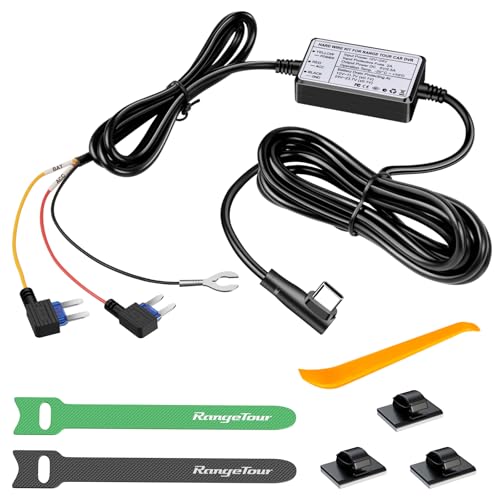
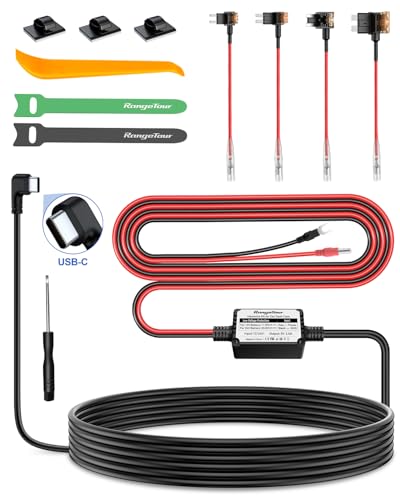
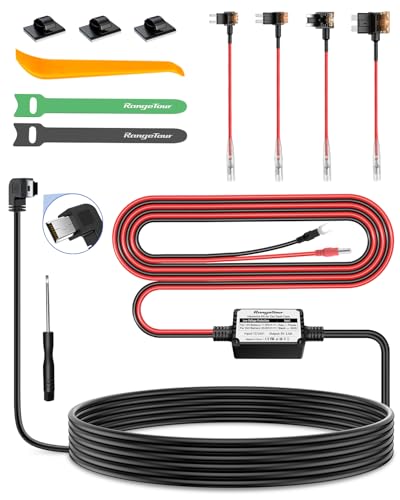
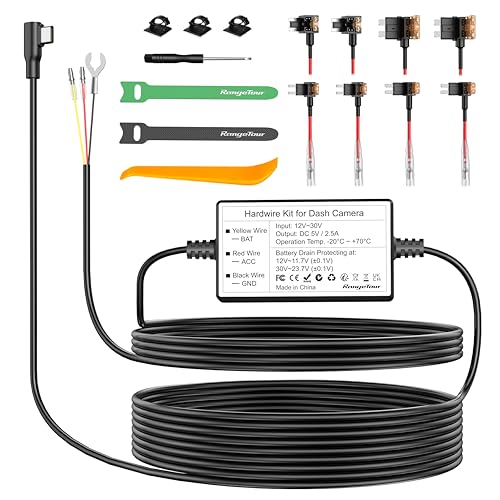
At $25 the Range Tour is the generalist of the page, and the only kit here that admits it. It's a three-wire kit, constant, accessory and earth, with a mini-USB plug on a long 4 metre cable, a 12V to 30V input range and a steady 5V/2.5A output, so it suits the enormous installed base of older and generic cameras that still charge over mini-USB. The cutoff is fixed at 11.7V for 12V systems and 23.7V for 24V, sitting just above the Vantrue's 11.6V and below the 70mai UP06's 11.8V floor. The box is generous for the money: eight fuse taps covering all four fuse formats, a trim tool for tucking the cable, adhesive cable organisers and ties, which is everything the install needs without a second trip to the auto shop.
The listing's honesty is worth rewarding. It tells you plainly to confirm your camera supports parking monitoring before you buy, to test the kit before finishing the install, to connect with the engine off, and to hire a professional if the fuse box reads like a mystery, and every one of those lines is advice I'd give across the counter. The three-core design means it provides the ignition-state signal the same way the branded kits do, so a camera with real parking modes can use them. What it can't do is anything camera-specific: no brand handshakes, no voltage display, just clean switched power at a fixed threshold. For an older camera, a second car, or a no-name unit that's been recording faithfully for years, that's the entire job description.
Check the plug before ordering, because mini-USB is the whole reason this pick exists and also its limit: if your camera is USB-C, buy the kit that names your camera brand instead. Fit the earth to bare chassis metal, test parking mode with a night in the driveway before trusting it anywhere that matters, and treat the 4 metre cable as a feature, since bigger cabins and rear-camera routing eat cable length quickly. At $25 with the full set of taps in the box, it's the kit I'd point at every dash cam still wearing the old connector, and the price leaves room for the endurance card the system actually needs.
Honest caveats: Mini-USB only, so it's wrong for every current USB-C camera, and the 5V/2.5A output and 11.7V cutoff are fixed with no adjustment. No voltage readout, no brand-specific parking handshake, and the brand itself is a small storefront name, so treat the warranty as marketplace-grade.
Best for: Older mini-USB dash cams and generic units that just need clean switched power.
Plug: Mini USB • Input: 12V to 30V • Output: 5V/2.5A • Low-voltage cutoff: 11.7V (12V) / 23.7V (24V), fixed • Cable: 4m, 3-core with accessory signal • Fuse taps: 8 included, all four formats • In the box: Trim tool, cable organisers, cable ties • Rank: #4905 site-wide (Amazon AU)
View on Amazon AU
Antkeet OBD2 Hardwire Kit with Voltage Display
ASIN B0GQYW445V • $29.00 • Sold by Antkeet Au on Amazon AU
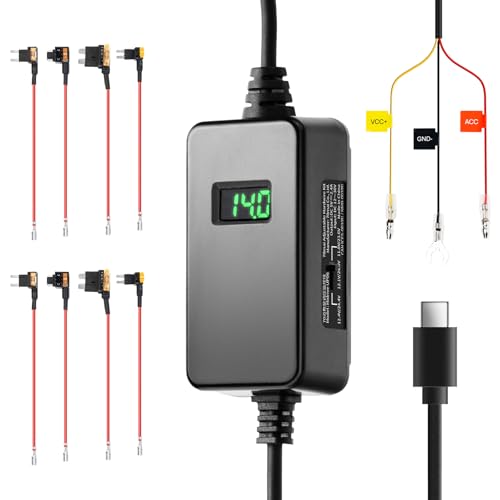
Antkeet's kit is the one that skips the fuse box entirely. It plugs into the OBD-II port under the dash, which turns a panels-off, find-the-switched-fuse, locate-a-clean-earth job into a single connection, and it does it without altering anything in the car's original wiring. What you get alongside the easier install is the feature this slot exists for: a small LED screen on the inline module showing the battery's real-time voltage and the cutoff you've set. Instead of trusting a threshold you can watch the battery's actual state every time you get in, and for anyone running a battery past its third birthday that number is the most useful thing in this category.
The cutoff is adjustable in three steps, 11.6V, 12.0V or 12.4V on a 12V car and 23.6V, 24.0V or 24.4V on a 24V system, which makes it the second kit here that gives you the dial rather than choosing for you. The connector is a standard right-angle Type-C, and the listing claims compatibility across a wide spread of current cameras, the E1 Pro, N4, N4S, N4 Pro, N5, N5S, S1 Pro, N2X, E360, E1 Lite and E2 among them, plus most other USB-C dash cams. Antkeet states an 18 month warranty, which is longer than most of this category bothers with.
The OBD route is a real trade rather than a free win. It is the fastest install on the page and the only one that touches nothing in the fuse box, which makes it the sensible answer on a leased car, a late-model car still under warranty, or any car you would rather not go splicing into. Against that it occupies the OBD port, so a permanently fitted Bluetooth dongle has to come out, and not every car switches its OBD port cleanly with the ignition. Test parking mode over a night in the driveway before you trust it anywhere that matters, which is advice that applies to every kit here but matters most on the one taking an unfamiliar power path.
Honest caveats: The listing does not state an output current, so if you are running a hungry dual-channel 4K camera check your camera's draw before assuming headroom rather than taking it on faith. It takes the OBD port, a real cost if you keep a dongle plugged in there permanently. And there are no fuse taps in the box because there is no fuse tapping to do, so if you specifically wanted a fuse-box install this is the wrong pick.
Best for: A fast, reversible install with a live voltage number, especially on a leased or late-model car you would rather not splice into.
Plug: USB Type-C, right angle • Install: OBD-II port, plug and play • Input: 12V and 24V vehicles • Output: Not stated on the listing • Low-voltage cutoff: Adjustable: 11.6 / 12.0 / 12.4V (23.6 / 24.0 / 24.4V) • Voltage display: Real-time readout plus the set cutoff • Fuse taps: None, OBD install • Warranty: 18 months (listed) • Rank: #38 in Automotive Electrical Radio Accessories (Amazon AU)
View on Amazon AU
Vantrue VP03 Type-C Hardwire Kit with Low Voltage Protection
ASIN B08PK9RKS1 • $39.99 • Sold by VANTRUE AU on Amazon AU
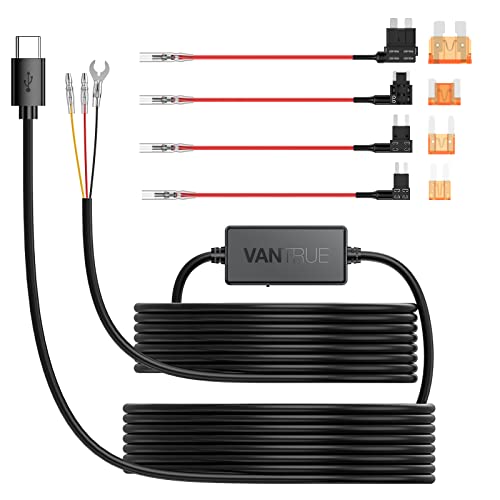
The Vantrue VP03 is the lead pick because it's the one kit on the page with a real category rank behind it, #17 in Amazon AU's automotive fuses and accessories chart, and because it does the ACC job properly. It's a Type-C kit on a 3.5 metre cable, taking 12V or 24V in and delivering 5V/2A out, with add-a-circuit fuse taps in the box, and its listing describes built-in ACC functionality in exactly the terms that matter: engine off, the camera drops to parking mode immediately; ignition on, the camera exits parking mode straight away. The cutoff sits at 11.6V for cars and 23.2V for 24V systems, the most permissive threshold on the page, which reads as maximum parking coverage on the box and minimum battery margin in the workshop.
The compatibility list is long, specific and closed: N4, N4S, N4 Pro and Pro S, N5, N5S, E1 and E1 Lite, E1 Pro, E2, E3, E360 and E360 ACE, N2X, N2S, N2 Pro, X4S, N1 Pro and the S1 Pro variants, and the listing tells you twice to check it, once in the features and again via the install video. Believe it. This is a component for Vantrue cameras, and inside that ecosystem it's the set-and-forget option: the 24-hour surveillance behaviour, the automatic mode switching and the low-voltage protection all come from the same firmware family talking to itself. It also frees the cigarette lighter for the tyre inflator and the phone charger, which sounds trivial until the first road trip where all three want the socket at once.
Bench notes: 5V/2A is the lowest output current here, fine for the listed cameras it was built around, and another reason not to press this kit into service on some other brand's hardware. The 11.6V cutoff is the one setting I'd want higher and can't change, so if your battery has a few winters on it, treat parking mode as an overnight feature rather than a long-weekend one, or plan on a battery test first. Beyond that it's the cleanest recommendation on the page: if a Vantrue camera is on the glass, buy the Vantrue kit, watch the install video, and spend the leftover attention on which fuse slots to tap.
Honest caveats: Locked to the listed Vantrue models, with a 5V/2A output that's the lowest here. The 11.6V cutoff is fixed and permissive, leaving the least battery margin on the page, and there's no voltage readout. Sold by the brand's AU storefront, so support routes through Vantrue rather than Amazon.
Best for: Vantrue owners who want parking mode wired in once and never thought about again.
Plug: USB Type-C • Input: 12V / 24V • Output: 5V/2A • Low-voltage cutoff: 11.6V / 23.2V, fixed • Cable: 3.5m (11.5ft) • ACC: Built in, automatic parking mode switching • Fuse taps: Add-a-circuit fuses included • Compatibility: Listed Vantrue models only • Rank: #17 in Automotive Fuses & Accessories (Amazon AU)
View on Amazon AU
70mai Hardwire Kit UP03, USB Type-C
ASIN B0D7C7SXJS • $39.99 • Sold by 70mai - AU on Amazon AU
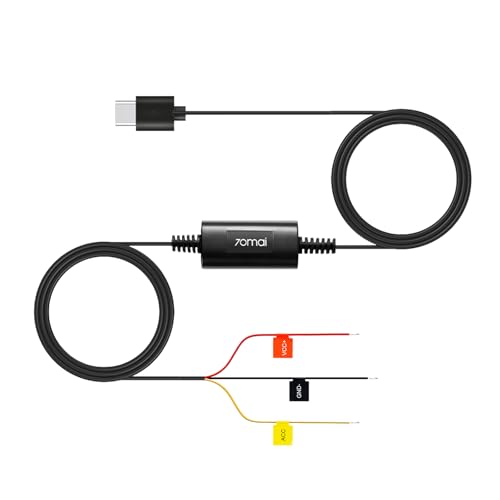
The UP03 is 70mai's standard hardwire kit, $40, and its listing leads with the fact that matters most in that ecosystem: several 70mai cameras don't do parking monitoring at all until a hardwire kit is fitted, so for the A800SE, A810S, T800 and T800E, the 4K Omni and the rest of the named list, this is less an accessory than the missing half of a feature you may have already paid for. It's a Type-C kit with a wide 12V to 30V input, a 5V/2.4A output and a 3.3 metre cable, with the same ACC detection behaviour as the Vantrue: engine off, the camera slides into parking surveillance automatically; engine on, it returns to normal recording without being asked.
70mai's listing spends its remaining breath on provenance, stating the kit is originally manufactured by 70mai and carries a 365-day store warranty, which sounds like boilerplate until you've seen the third-party clone problem this accessory class has. The 3.3 metre cable is the shortest on the page, enough for a hatchback or sedan A-pillar run with slack to spare, tighter if you're routing across a large SUV, so measure the run before install day. What the UP03 doesn't have is any user control: no display, no adjustable threshold, no feedback beyond the camera itself behaving. The low-voltage cutoff value isn't stated as a number on the listing either, so the spec table below says so rather than inventing one.
That missing number is the honest reason the UP06 exists one slot down, and the fair way to choose between them: the UP03 is the set-and-forget kit for a newer car with a healthy battery, where the factory calibration can be trusted to do its quiet job. If the battery's age or your parking pattern makes you want to see and set the threshold yourself, spend the extra $8. Either way, stay inside the compatibility list, run the first parking-mode night as a test with the car somewhere you can jump it if you've misjudged, and check the camera's firmware is current, since parking behaviour on these cameras is firmware-defined at both ends of the cable.
Honest caveats: The low-voltage cutoff value isn't stated on the listing, so you're trusting factory calibration you can't see or change. Compatibility is limited to the named 70mai models, the 3.3m cable is the shortest here, and there's no voltage display or adjustment anywhere on the unit.
Best for: 70mai owners with newer batteries who want parking mode enabled and then forgotten.
Plug: USB Type-C • Input: 12V to 30V • Output: 5V/2.4A • Low-voltage cutoff: Protection stated, value not stated on the listing • Cable: 3.3m • ACC: Automatic parking mode switching • Warranty: 365-day store warranty, stated original 70mai part • Compatibility: Listed 70mai models only • Rank: #127 site-wide (Amazon AU)
View on Amazon AU
70mai Adjustable Hardwire Kit UP06 with Voltage Display
ASIN B0FF52F6ZB • $47.99 • Sold by 70mai - AU on Amazon AU
The UP06 is the kit I'd buy with my own money, and not because it's the dearest by $8. It's the only kit on the page that hands the critical setting to the owner: a three-level low-voltage cutoff at 11.8V, 12.1V or 12.4V (23.6V, 24V or 24.4V on trucks), powering down three minutes after the battery sits below the chosen line, paired with a real-time voltage display so the choice is informed rather than guessed. That combination solves the actual problem of this category, which is that a fixed threshold is calibrated for an imaginary average battery. A new battery in a daily driver can afford 11.8V and maximum overnight coverage; a five-year-old battery in a car that does short trips wants 12.4V and an early exit, and the UP06 is the only kit here that serves both drivers.
The rest of the package is the UP03 grown up: same Type-C output at 5V/2.4A, same 12V to 30V input covering cars and 24V trucks, same 70mai compatibility list from the A800SE through the 4K Omni to the M800, and the same automatic parking-mode switching. The install story is arguably the best on the page, with two sets of four fuse tap formats, standard, mini, low-profile and micro2, arriving with 5A fuses already fitted, so the piggyback goes straight into the fuse box with no separate fuse shopping. 70mai pitches it as easier installation, smarter battery protection and live monitoring over the UP03, which for once is a fair summary of the changes rather than marketing lift.
Setting advice from the bench: start at 12.1V for a battery under three years old, drop to 11.8V only if the overnight coverage comes up short, and go straight to 12.4V for older batteries, stop-start systems already working their battery hard, or any car that sits for days at a time. Re-check the resting voltage on the display after the first cold snap, because winter mornings move the goalposts. The $48 price includes the margin of not buying twice: it's the one kit here that adapts when the battery ages, the car changes, or the parking pattern shifts from driveway to street.
Honest caveats: Still a 70mai-only kit despite the universal-sounding features, so the adjustable cutoff can't rescue a cross-brand pairing. The three thresholds are the only choices, with nothing between 12.1V and 12.4V, and the three-minute delay before cutoff means brief deep dips are tolerated by design.
Best for: 70mai owners with ageing batteries, short commutes or long stints parked: the cutoff you can actually set.
Plug: USB Type-C • Input: 12V to 30V • Output: 5V/2.4A • Low-voltage cutoff: Adjustable: 11.8 / 12.1 / 12.4V (23.6 / 24 / 24.4V) • Cutoff behaviour: Powers off 3 minutes below threshold • Voltage display: Real-time • Fuse taps: Two sets of four formats, 5A fuses fitted • Compatibility: Listed 70mai models only • Rank: #127 site-wide (Amazon AU)
View on Amazon AUSide-by-side comparison
| Product | Price | Best for |
|---|---|---|
| Range Tour Hardwire Kit for Dash Cam | ~$17.99 | |
| Range Tour Dash Cam Hardwire Kit | ~$17.99 | |
| Range Tour Dash cam Hardwire Kit Mini USB | ~$17.99 | |
| Range Tour Dash Cam Acc Hardwire Kit | ~$24.99 | |
| Vantrue 11.5ft Type C USB 12V 24V to 5V… | ~$39.99 | |
| 70mai Hardwire Kit UP03 | ~$39.99 | |
| 70mai Adjustable Hardwire Kit UP06 for… | ~$47.99 | |
| 70mai 4G Hardwire Kit UP04 for Dash Cam 4K… | ~$84.99 |
What we see fail at the bench: dash cam power
Dash cam power problems arrive at the shop wearing camera costumes: a camera that reboots at random, footage full of gaps, parking mode that never triggers, a card the camera keeps blaming. The camera is usually innocent. The power chain behind the glass, the tap, the crimp, the regulator and the battery it all hangs off, produces most of the symptoms, and the same three patterns cover nearly everything we end up tracing.
Flat batteries with nothing wrong with them
The classic call is a car that won't start after a fortnight of parking mode, a new battery fitted in a panic, and the same flat a fortnight later. Nothing is broken. A permissive cutoff, an ageing battery and a short commute simply add up to a slow overdraft: the camera withdraws every night and the alternator never quite repays it. The fix is configuration, not parts: raise the cutoff where the kit allows it, or accept parking mode as an overnight feature rather than a permanent one. A battery load test costs little and settles whether the battery was a victim or a cause, and a resting voltage check on the driveway tells the story in ten seconds.
Taps that back out and crimps that corrode
The fuse box lives in a vibrating car, and the piggyback tap that was snug in January can be loose by June. A loose tap or a corroded crimp doesn't fail cleanly; it makes and breaks contact over bumps, and the camera downstream reboots, drops parking mode, or corrupts whatever file it was writing when the power blinked. The tell is symptoms that follow the road surface. The fix is mechanical: reseat the tap, check the crimp actually bit the conductor rather than the insulation, and confirm the earth is on bare metal. Five minutes with the fuse box lid off solves what looks like a firmware fault, and it's the first thing to check before blaming any camera.
The card wears out before the wiring does
Once the wiring is right, parking mode's real consumable is the memory card. Around-the-clock recording roughly doubles the write load, and a standard card that would survive years of commute duty gets chewed through in a fraction of the time, failing with corrupted clips, gaps in the timeline, or a camera stuck in an error loop that looks like a power problem. It isn't. Any camera doing parking mode should be running a high endurance card, sized so the loop doesn't wrap daily, and the card should be reformatted in the camera every few months. The wiring you fit once; the card you should expect to service like tyres.
Decision tree: which one should you actually buy?
- Vantrue camera on the windscreen? → The Vantrue VP03, $40. Built for the listed Vantrue models, handles the parking mode switching automatically, and leads the page's sales ranks. Just respect its fixed 11.6V cutoff if your battery is old.
- Want the install done in minutes, or a car you would rather not splice into? → The Antkeet OBD2 kit, $29. It plugs into the OBD-II port instead of the fuse box, shows live battery voltage on the module, and lets you set the cutoff at 11.6V, 12.0V or 12.4V.
- 70mai camera and you just want it done? → The UP03, $40, if the battery is young and you'll never think about it again. The UP06, $48, if you want to choose the cutoff and watch the voltage: the better spend for most people.
- Older camera with a mini-USB plug? → The Range Tour, $25. Generic three-wire kit with all four fuse tap formats in the box and a sensible fixed 11.7V cutoff.
- Car sits parked for a week or more at a time? → Set the highest cutoff available, 12.4V on the 70mai UP06 at $48, or skip hardwired parking mode for those stints: no kit on this page is designed to babysit a battery for a fortnight, and unplugging is the honest answer.
- Camera rebooting, parking mode flaky, or a battery that keeps going flat after an install? → That's a diagnosis job, not a shopping job. Bring the camera, the kit and the car's story to our Erina workshop and we'll work out whether it's the tap, the kit, the card or the battery before you replace any of them.
Frequently asked questions
Will a hardwire kit flatten my car battery?
Not if the cutoff does its job and the battery is healthy. Every kit on this page monitors battery voltage and cuts the camera's power when it drops to the kit's threshold, leaving enough charge to start the car; that protection is the reason kits exist rather than a plain fused cable. The realistic risk is the slow version: an older battery, short trips and a permissive cutoff can walk the battery downhill over weeks, because parking mode withdraws more each night than a ten minute commute puts back. If your battery is past its third winter or your driving is mostly short hops, pick a kit with a higher or adjustable cutoff and check the resting voltage occasionally.
Can I install a hardwire kit myself?
Most people can, and most of the kits are packaged on that assumption. The job is clipping fuse taps into a constant and a switched slot in the fuse box, earthing one wire to bare chassis metal, and routing a cable around the windscreen trim, which is twenty to forty minutes with a trim tool and the car's manual open at the fuse diagram. The real cautions: identify circuits with a test light rather than guessing, stay away from safety systems, and keep the cable clear of the curtain airbag line in the A-pillar. If any of that is unfamiliar, an auto electrician does this routinely and quickly, and paying for the hour is a legitimate choice rather than a defeat.
Do I need the same brand hardwire kit as my dash cam?
For the branded ecosystems on this page, yes, and it isn't just marketing. Vantrue and 70mai both publish specific model compatibility lists for their kits, output currents differ between kits, and the way a kit signals engine state to the camera isn't standardised across brands, so parking mode switching can misbehave on a mixed pairing even when the plug fits. A generic kit like the Range Tour or the Antkeet is the exception for cameras without a branded kit, provided your camera's plug matches and its own menus provide parking modes. When a listed same-brand kit exists for your camera, buy it and skip the experiment.
What low-voltage cutoff should I choose?
Higher is safer for starting, lower gives longer parking coverage. On the two adjustable kits here, the 70mai UP06 and the Antkeet, I'd start around 12.0V to 12.1V for a battery under about three years old, and move to 12.4V for older batteries, stop-start cars or short-trip driving; drop to the lowest step only if overnight coverage keeps coming up short and the battery tests healthy. The fixed kits make the choice for you, at 11.6V or 11.7V where they state a figure at all, which is fine on a young battery and worth thinking about on an old one. Whatever the setting, the real test is empirical: run a few parked nights, then check the car starts briskly on a cold morning.
Is a dash cam battery pack better than a hardwire kit?
It's a different tool. A battery pack charges while you drive and runs the camera off its own cells while parked, so the car battery is never touched, which makes it the right answer for very heavy parking-mode use, long airport stays and cars whose batteries are already marginal. The costs are real though: packs run several times a hardwire kit's price, take boot or under-seat space, and add another lithium battery to a hot cabin. No pack passed this page's Australian-seller and price gates this month, so I haven't named one. For a daily driver parked overnight at home, a hardwire kit with a sensible cutoff covers the actual need.
My camera reboots or drops parking mode after hardwiring. Is the kit faulty?
Sometimes, but check the install and the card first, because both fail more often than the electronics. A fuse tap that's worked loose or a crimp that bit insulation instead of copper makes intermittent contact over bumps, which shows up as reboots and file corruption that track the road surface. A worn memory card produces near-identical symptoms, gaps and error loops that look like power faults, especially under parking mode's doubled write load. Reseat the taps, confirm the earth is on bare metal, and test with a known-good endurance card. If symptoms persist on clean connections and a fresh card, then suspect the kit's regulator and use the warranty.
Related buying guides
Wired it in and something still isn't right?
Power faults wear camera costumes: reboots, gaps in footage, parking mode that never wakes. Before you replace the camera or the battery, bring the camera, card and kit in to Erina. We test the supply, the card and the camera separately, tell you which one is actually failing, and what the fix costs before you commit to anything.
Call (02) 4311 6146 Book Online