
Prices from Amazon AU, updated daily. Swipe or use the arrows for more.
Disclosure: This article contains affiliate links to amazon.com.au. If you buy through one of these links iFix may earn a small commission at no extra cost to you. It doesn't change which products we recommend. We focus on what actually lasts based on 16 years of repair-shop experience.
Quick summary8 picks
- Entry PickVeepeak Mini Bluetooth OBD II Scanner… about$26.99
- ANCEL AD310 Universal Enhanced OBD2 Scanner… about$39.99
- Veepeak OBDCheck BLE Bluetooth OBD II… about$45.99
- ANCEL AD410 Enhanced OBD2 Scanner Live Data… about$55.23
- Veepeak OBDCheck BLE+ Bluetooth OBD2… about$51.99
- FOXWELL NT301 OBD2 Scanner Live Data… about$99.982.8" screen.
- FOXWELL NT301 Plus 2-in-1 OBD2 Scanner &… about$127.982.8" screen.
- Most Premium2026 FOXWELL NT624 Elite OBD2 Scanner about$279.97
An engine light is data, not a verdict
Somewhere on the Central Coast tonight a car is idling in a driveway with an orange engine outline lit up on the dash, and its owner is mentally spending thousands. Sixteen years behind a repair bench teaches you what that light usually is: a small sensor telling a small truth at an inconvenient time. The engine computer noticed a reading outside its expected window, logged a fault, stored a code and turned on the lamp. That is the entire event. No countdown started. Nothing is grinding itself to pieces because a lamp is lit, and nothing about the lamp says whether the cause costs $15 or $1,500. The code that answers that question is sitting in memory right now, readable by anything that speaks the OBD2 protocol, and the hardware that reads it starts at $27.
None of the five picks below will fix your car. What they change is the order of the conversation. You walk into the mechanic saying it logged a cylinder one misfire on Tuesday morning, cold start, 14 degrees. Or you walk in saying the light came on. The first conversation starts from evidence. The second starts from a blank cheque, and you can hear the difference in the quotes that follow. To be clear about my lane: iFix is an electronics repair workshop in Erina, not a mechanical shop, and nothing here ends with me selling you a service on your engine. But an OBD2 adapter is pure electronics, a protocol interpreter and a CAN transceiver in a plastic shell, and after years of watching the good and the counterfeit versions of that shell cross the bench, I have opinions about which ones are built properly.
What a fault code tells you, and what it does not
A fault code names a circuit and a symptom. It does not name a part. A code for the oxygen sensor heater circuit could be the sensor itself, the wiring to it, a corroded connector or a blown fuse feeding the heater. The code narrows the search from the whole car down to one circuit, which is enormous, and it hands you nothing else. The most expensive habit in driveway diagnostics is reading a code that mentions a sensor and buying that sensor within the hour. Parts cannons are fired by people holding code readers. The tool is not the problem; treating its output as a shopping list is.
Freeze frame is the underrated feature, and every pick here can read it. When the computer logs a fault it snapshots the conditions at that exact moment: engine revs, coolant temperature, load, road speed, how long the engine had been running. A misfire logged at 4,000 rpm under load and one logged at cold idle are two different investigations pointing at two different families of cause. Write the freeze frame down before you touch anything else. It is the closest thing you get to a witness statement, and the handhelds put it two button presses away.
And clearing a code repairs nothing. The lamp goes out, the fault stays, and once the same conditions repeat the code comes straight back, sometimes within a suburb of driving. Clearing also resets the readiness monitors the car has to complete before an emissions-style inspection, so wiping codes on the way to a check is self-defeating in the most literal way. Read first. Record what you find. Clear later, if at all, and only once you know what logged it.
Dongle and phone, or a handheld with its own screen
Two of the five picks here are thumb-sized adapters that live in the OBD port under your dash and talk to your phone over Bluetooth. The phone is the screen, the logger and the brains. This format wins on depth for the money: live data graphed properly, logging across a whole commute, code definitions pulled from databases far larger than anything a handheld carries onboard, and software that improves whenever the app developer ships an update. The Veepeak pair work this way. The catch is that the adapter is only half the product, and the other half is an app with its own pricing, its own learning curve and its own opinions about how much to show you.
The other format is a handheld with its own screen and a cable, and the ANCEL AD310, FOXWELL NT301 and FOXWELL NT624 Elite are the three here. Nothing to pair, nothing to install, no account to create, no phone battery involved. The ANCEL listing makes the point plainly: it works completely offline. That matters more than it sounds. A handheld can live in the glovebox for five years and still work in a paddock with no reception, in anyone's hands, on the first go. The decision between the formats is really a decision about who uses it. If the person plugging it in is not the person reading this article, buy the handheld and skip the tech support calls.
App lock-in is the spec that is not on the box
With a Bluetooth adapter, the app is the actual product. The adapter is a translator. So the question to ask before buying is not what the dongle does, it is what the app costs and who controls it. The open approach is the Veepeak one: the listing names Car Scanner ELM OBD2, OBD Fusion, Torque on Android, Infocar and the BMW-specific BimmerCode among its compatible apps. None are included, and some cost money, which the listing says up front rather than after checkout. The upside of that honesty is freedom. If one app annoys you, or gets abandoned, or moves to a subscription you dislike, you walk to another and the adapter comes with you.
The handhelds dodge the question altogether, and the FOXWELL NT624 Elite is the clearest case. There is no app, no account and nothing to register: the tool is the screen, and the listing states lifetime free software updates pushed over Wi-Fi. That is an arrangement I will pay for once rather than rent by the year. What I would not buy, from anyone, is a scanner whose headline features sit behind a monthly plan, and that model is spreading through this category quietly. The codes belong to your car. Renting access to them is a poor arrangement at any monthly figure, and the five picks here were partly chosen because none of them try it.
Coverage claims: read them like a contract
Every scanner listing carries a compatibility paragraph, and it earns a slower read than the feature list. The Veepeak listings put Australian coverage at model year 2006 onward for petrol and 2007 onward for diesel, for generic OBD2 functions. That lines up with when the standard became effectively universal here, and it means a 2004 ute may have the right connector while only speaking a dialect these tools do not. Both Veepeak listings also flag that EVs and plug-in hybrids may need special apps or may not be supported at all. If you drive one, check with the maker before paying, because a battery-electric car has no engine codes to read and its interesting data lives behind manufacturer-specific protocols.
The FOXWELL NT624 Elite quotes the widest window here, and it still earns a slow read: 10,000-plus vehicles from 1996 to 2023, specifically 1996-onward US-built cars and 2000-onward European and Asian cars, light trucks and SUVs. Generic OBD2 functions are the same everywhere. What varies is everything past the engine, and FOXWELL says so plainly: function availability depends on the vehicle, and the tool does not do SRS reset, TPMS programming, TCM reset or active test on any of them. Before spending $350, check your exact model against the seller's compatibility list. The same advice applies to every brand, not just this one: enhanced diagnostics beyond the engine are always make-by-make and model-by-model, and no sentence on a listing overrides what your specific car actually supports.
Live data: the numbers worth watching while you drive
Reading codes is the headline act, but live data is where these tools earn long-term shelf space. Five numbers cover most of what a non-mechanic can usefully watch. Coolant temperature should climb steadily and then hold; a thermostat stuck open shows up as a temperature that never quite arrives. Short and long term fuel trims should sit near zero once warm; big positive corrections mean the engine is compensating for something, often an air leak, long before any code exists. Battery voltage at idle tells you whether the charging system is doing its job. And misfire counters, on cars that expose them, let you watch a developing problem instead of waiting for it to become a lamp.
This is also where the phone-based picks pull ahead, because a graph over twenty minutes of driving shows patterns a glance at a number never will. Log a commute, then look at what the trims did on the highway stretch versus the school-zone crawl. If you already run a dash cam on the same windscreen, you have most of a fault-documentation kit for any incident: the camera records what happened outside the car, the scanner records what happened inside it, and I have covered recovering dash cam footage separately for when that half of the kit goes wrong.
Five minutes with a scanner before you buy a used car
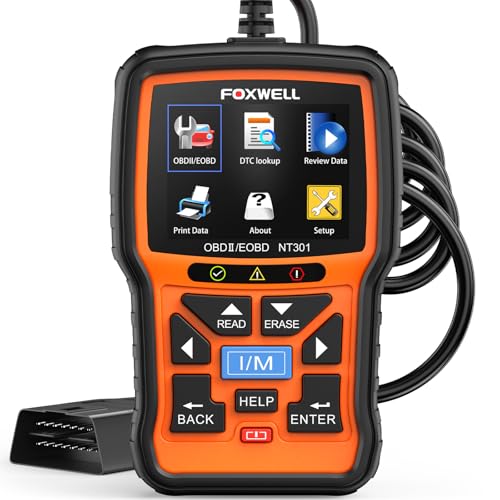
This is the use case that pays for the tool in one afternoon. Plug in before you commit to a private sale and look at two things. First, stored and pending codes, obviously. Second, and more telling, the readiness monitors. When someone clears codes, every monitor resets to not ready, and the car needs a particular mix of driving before they complete again. A used car with a spotless code list and half its monitors showing not ready was wiped recently, and you are allowed to ask why. Sellers with nothing to hide have boring answers. The FOXWELL NT301 makes this a one-button check with a red, yellow and green readiness LED on the front of the unit, no menus involved.
Live data earns its place on the test drive too. Watch coolant temperature climb to operating range and hold there. Glance at the fuel trims once the engine is warm: big corrections point at air leaks or fuel delivery problems before any code has been logged, which is exactly the category of fault a seller hopes you will not find. None of this replaces a proper mechanical inspection, and I am not suggesting it does. It is a filter that costs five minutes and catches the obvious cases. A scanner in the glovebox rounds out the same kit I covered in the portable jump starter guide: the gear that turns a roadside surprise into a ten-minute delay.
How I picked these five
Same gates as every guide in this series. Every pick is sold new on Amazon AU by an Australian storefront, priced inside the $25 to $350 band, and holding a genuine category sales rank on the day I checked rather than a paid placement. The two Veepeaks sat at #1 and #15 in Amazon AU's engine tools category, the ANCEL at #1 and the FOXWELL NT301 at #4 among code readers, with the NT624 Elite at #9. Rank is not quality, but in a product category flooded with clone hardware, thousands of buyers and an established returns trail count for something, and an AU storefront means a warranty claim happens in your timezone.
I skipped import listings, anything sold from overseas storefronts, and every adapter whose app strategy amounted to a free trial with a hook in it. I also kept the spread deliberate rather than stacking five variations of the same dongle: two phone-based adapters at either end of the price range, two standalone handhelds, and one deep-diagnostics tool for the home mechanic. The same selection logic sits behind the cordless tyre inflator picks if you are building out the car kit properly. Prices move week to week. Ranks move daily. The reasoning holds still.
The 5 picks, $27 to $350
Prices are the Amazon AU figures logged when each pick was last checked, and they move week to week. Ranks are Amazon AU category sales ranks, checked the same day.

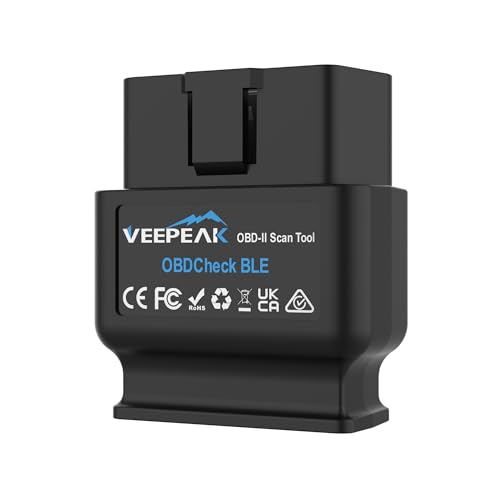
Veepeak Mini Bluetooth OBD2 Scanner Adapter
ASIN B011NSX27A • $26.99 • Sold by VEEPEAK AU on Amazon AU
This is the least you can spend and still get a legitimate adapter from an established brand, and the listing is refreshingly blunt about its main restriction: it does not work with iPhone or iPad. Classic Bluetooth on Android only. Inside that boundary it does the full job: reads why the check engine light is on, clears codes, and streams live sensor data including coolant temperature, oxygen sensor readings, mass air flow and fuel trim to whatever app you point at it. Coverage is the standard Australian window, petrol cars from 2006 and diesels from 2007, across all five OBD2 protocols. At $27 it is the cost of two coffees and a sandwich, and it answers the question that otherwise costs a workshop scan fee.
You supply the app, and the listing says so plainly: a third-party Android app is required, with Torque, OBD Fusion, Car Scanner ELM OBD2 and Dr Prius named as compatible options, some of them paid. That is the same open-app model as its bigger sibling below, and it is the right model. Your data lives in an app you chose, not one you were locked into. The adapter itself is small enough to leave in the port, though I would not, for a reason covered in the bench section: pin 16 of the OBD port is wired straight to the battery and never sleeps, and a forgotten dongle draws from it around the clock.
Who is this for? An Android household that wants a code reader in the glovebox and does not want to think hard about it. The 12-month replacement warranty on the listing is shorter on paper than the one-year manufacturer coverage on the BLE model, though in practice it is the same protection wearing a different name. The listing specifically recommends against using it with aftermarket head units, so pair it with an actual phone or tablet. If anyone in the family runs an iPhone, spend the extra $19 on the OBDCheck BLE below and skip the compatibility argument entirely.
Honest caveats: Android only, stated in the first line of the listing, so an iPhone in the family rules it out. EVs and plug-in hybrids may not be supported. No app is included, and the good Android apps cost a few dollars. Head units are specifically not recommended by the listing.
Best for: Android users who want the check engine light answered for $27 and nothing more.
Price: $26.99 at time of writing • Connection: Classic Bluetooth, Android only • Coverage: 2006+ petrol, 2007+ diesel sold in Australia • Functions: Read and clear codes, live sensor data, freeze frame • App: Third-party Android app required, not included • Warranty: 12-month replacement • Rank: #15 in Automotive Engine Tools & Equipment (Amazon AU)
View on Amazon AU
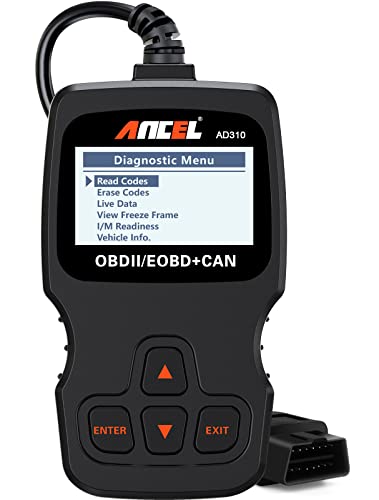
ANCEL AD310 OBD2 Scanner Handheld Code Reader
ASIN B01G5EA74I • $39.98 • Sold by ANCEL AU on Amazon AU
The AD310 is the tool I would hand to someone who does not want a tool. No phone, no pairing, no app store, no account. Plug the cable into the OBD port, the screen lights up off the car's own power, and the codes are on the display with plain-language definitions. The listing highlights support for all the OBD2 protocols including KWP2000 and CAN, which is the difference between a reader that works on every car in the driveway and one that works on some of them. It reads and clears engine codes, shows live data and freeze frame, and runs I/M readiness checks for inspection prep. This model has sat at or near the top of Amazon AU's code reader category for years, and held #1 on the day I checked.
The listing makes a point I will echo from the bench: it works completely offline. There is no firmware pairing dance, no server dependency, no app that gets abandoned by its developer in 2028 and takes your tool's usefulness with it. The cable is the other quietly good decision on this product. It is stated at 2.5 feet with thick flexible insulation, because a handheld scanner spends its working life being dropped into footwells and dragged across door sills, and the cable is what fails first in this category. A device with no battery of its own also means it is always charged, which is exactly the property you want in a tool that gets used four times a year and expected to work on the fifth.
Limits, stated honestly: this is an engine-and-emissions tool. It does not read ABS, SRS or transmission codes, and it has no wireless anything, so there is no live-data logging on your phone during a drive and no graphing beyond what the small screen shows. That is not a flaw, it is the format doing what the format does. For the person who wants exactly one button between them and the reason the light is on, the format is correct, and the price of admission is $40. Keep it in the glovebox next to the owner's manual and it will outlast the car.
Honest caveats: Engine and emissions codes only: no ABS, SRS or transmission coverage, which is what the extra $90 for the FOXWELL NT301 buys. No Bluetooth means no phone logging. The listing does not state a warranty period, so confirm coverage with the seller before buying.
Best for: Anyone who wants codes read with zero setup, and the household member who will never install an app.
Price: $39.98 at time of writing • Type: Standalone handheld, powered by the OBD port • Protocols: All OBD2 protocols incl. KWP2000 and CAN, per listing • Functions: Read/clear engine codes, live data, freeze frame, I/M readiness • Cable: 2.5 ft, thick flexible insulation • Works offline: Yes, no app or connection needed • Warranty: Not stated on the listing • Rank: #1 in Automotive Code Readers & Scan Tools (Amazon AU)
View on Amazon AU
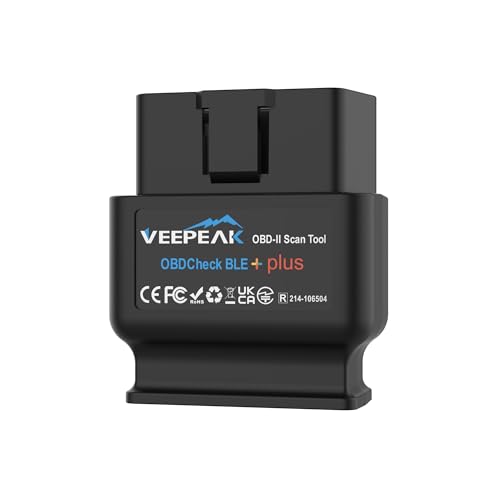
Veepeak OBDCheck BLE Bluetooth OBD2 Scanner Adapter
ASIN B073XKQQQW • $45.99 • Sold by VEEPEAK AU on Amazon AU
This is the default answer for most people, and the sales rank agrees: #1 in Amazon AU's engine tools category on the day I checked, from an Australian storefront with years of history in this exact product. The BLE in the name is the point. It supports Bluetooth Low Energy for both iOS and Android, plus classic Bluetooth for Android, which makes it the one adapter on this list that works with everyone's phone, including the iPhones the Mini above refuses. Functionally it covers the full generic OBD2 set: read and clear check engine codes, freeze frame, oxygen sensor and on-board monitor test results, live data and I/M readiness. Australian coverage is stated as 2006 onward petrol and 2007 onward diesel, same window as its sibling.
The app list is the widest here, and the listing names names: Car Scanner ELM OBD2, OBD Fusion, Torque on Android, Infocar, OBD JScan, Dr. Prius, and the BMW coding apps BimmerCode and BimmerLink, with the specific model-year restrictions for the BMW apps spelled out in the fine print rather than discovered after purchase. That last part deserves respect. A listing that tells you which BMW series are NOT supported before you buy is a listing written by people who answer their own support emails. Pair this adapter with a $10 app and you have live-data graphing, trip logging and code lookup that embarrasses handheld scanners at three times the price, on a screen you already own.
The trade against the FOXWELL NT624 Elite below is depth for openness. This adapter speaks generic OBD2 and hands everything to the app of your choice; advanced systems like ABS, SRS and transmission data are only available for selected vehicles through specific apps, as the listing notes. If you want all-system access and reset functions in one self-contained tool, that is the NT624 Elite's job, and it charges accordingly. If you want a $46 adapter you will still be using with a different app, on a different phone, in 2031, it is this one.
Honest caveats: An app is required and not included, and the better ones are paid. Advanced diagnostics beyond generic OBD2 depend on your specific vehicle and app pairing, per the listing. EV and PHEV owners should check with Veepeak before buying. iOS users must connect from inside the app, not the phone's Bluetooth settings, which trips up first-time users.
Best for: Mixed iPhone and Android households that want one adapter, open app choice and live data.
Price: $45.99 at time of writing • Connection: Bluetooth LE (iOS and Android), classic Bluetooth (Android) • Coverage: 2006+ petrol, 2007+ diesel sold in Australia • Functions: Read/clear codes, freeze frame, O2 and monitor tests, live data • App support: Car Scanner, OBD Fusion, Torque, Infocar, BimmerCode and more • App included: No, third-party, some paid • Warranty: 1 year manufacturer • Rank: #1 in Automotive Engine Tools & Equipment (Amazon AU)
View on Amazon AU
FOXWELL NT624 Elite All-System OBD2 Scanner
ASIN B07X9JQSGZ • $349.99 • Sold by OBDZON-AU on Amazon AU
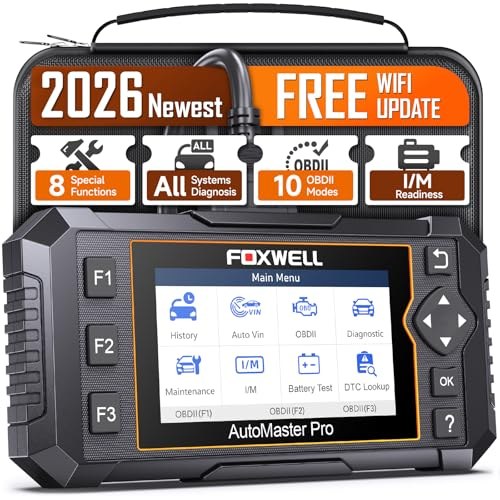
This is the pick that stops being a code reader and starts being a scan tool. Where the adapters above read engine and emissions, the NT624 Elite reaches every major module the car will talk to: engine, transmission, ABS, SRS, TPMS, suspension, HVAC, battery management, electronic park brake, steering angle sensor, headlamps. It reads and clears codes in each of them, pulls ECU information, runs the full OBDII set including I/M readiness, EVAP and on-board monitor tests, and shows live sensor data as text or a graph. One-click Auto VIN means you are not typing a chassis number in before you start. FOXWELL positions it as the model that replaces two older ones: the NT604 Elite saw four systems, the NT614 Elite had limited service functions, this one does both jobs.
The eight service functions are the other half of what you are paying for. ABS bleeding, oil reset, steering angle calibration, electronic park brake service, throttle matching, injector coding and battery registration are the jobs that otherwise mean booking the car in. Read the exclusions before you get excited, because the listing is specific about them: no SRS reset, no CPK relearning, no TPMS programming, no TCM reset, no active test, and function availability varies by vehicle. It has no internal battery and runs off the OBD port, which is the right call for a tool that sits in a boot for a year between uses, and updates arrive over Wi-Fi with no account to create and no annual fee. Lifetime free software updates, stated on the listing.
Coverage is quoted at 10,000-plus vehicles from 1996 to 2023: 1996-onward US-built cars, 2000-onward European and Asian cars, light trucks and SUVs, across all five OBD2 protocols including KWP2000 and CAN. It ships with a protective case and a one-year warranty. At $349.99 it is the outlier on this list and it should be, because it costs more than the other four picks together, and for someone who only wants to know why the lamp is on that is money in the wrong place. It earns its keep for the person doing their own brakes and services, where one ABS bleed or one park brake retract at home claws back a real slice of it. Check your exact model against the seller's compatibility list first, because every claim about modules past the engine is make-by-make and model-by-model.
Honest caveats: Function availability varies by vehicle, and the listing names what it will not do: SRS reset, CPK relearning, TPMS programming, TCM reset and active test. Enhanced coverage beyond generic OBD2 is model-specific, so check your car before buying. It is also the one pick here that costs more than the rest combined, and it is overkill for anyone who just wants the engine light explained.
Best for: Home mechanics and small workshops who need all-system codes plus reset functions, not just engine and emissions.
Price: $349.99 at time of writing • Type: Standalone handheld, powered by the OBD port, no internal battery • Systems: Engine, transmission, ABS, SRS, TPMS, suspension, HVAC, BMS, EPB, SAS, headlamp and more • Service functions: 8, incl. ABS bleeding, oil reset, SAS calibration, EPB service, throttle matching, injector coding, battery registration • Not supported: SRS reset, CPK relearning, TPMS programming, TCM reset, active test • Protocols: KWP2000, J1850 VPW, ISO9141, J1850 PWM, CAN • Coverage claim: 10,000+ vehicles, 1996 to 2023 models, per listing • Updates: Lifetime free over Wi-Fi, no account • Warranty: 1 year • Rank: #9 in Automotive Code Readers & Scan Tools (Amazon AU)
View on Amazon AU
FOXWELL NT301 OBD2 Scanner with Live Data Graphing
ASIN B00UJV3E12 • $129.99 • Sold by OBDZON-AU on Amazon AU
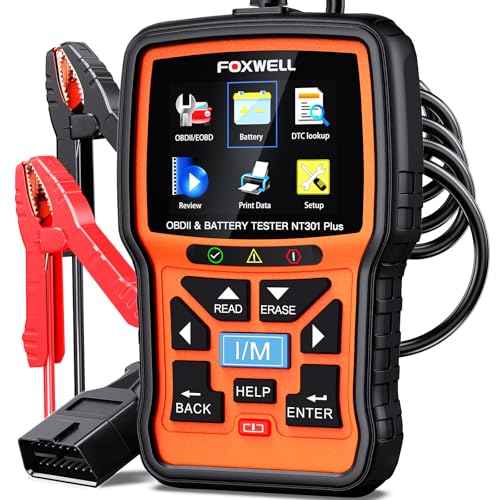
The NT301 is what the ANCEL grows into: still a self-contained handheld with no app dependency, but with a 2.8 inch colour screen, live data graphing on the device itself, and the extra test modes that generic dongles skip. The listing covers oxygen sensor tests and an EVAP system leak monitor, which lets you assess the evaporative emissions system without a workshop smoke machine, plus code reading and clearing, live data logging, and VIN retrieval. Protocol support is spelled out in full rather than waved at: KWP2000, J1850 VPW and PWM, ISO9141 and CAN. It held #4 in Amazon AU's code reader category on the day I checked, against products a third of its price, which says something about who keeps buying it.
The reason it earns the used-car badge is the readiness workflow. Dedicated I/M readiness hotkeys and a red, yellow and green LED indicator on the face of the unit mean the monitor-status check I described earlier is literally one button and a glance. No menus, no phone, no interpretation, no standing in a seller's driveway squinting at an app. Walk to the car, plug in, press, look at the light. For anyone shopping private sales this year, that thirty-second habit filters out recently-wiped cars before the test drive gets persuasive. The screen being readable in daylight, which the listing calls out specifically, matters more at noon in a stranger's driveway than it ever will in a spec table.
Like the ANCEL it draws power from the OBD port, so there is no battery to be flat when you finally need it and nothing to update or pair. Its limits are the format's limits: engine and emissions systems only, no ABS or SRS despite the price. The coverage line is written as 1996 onward US-based and 2000 onward EU-based and Asian cars, so very early 2000s Australian-market cars sit in a grey zone worth checking with the seller before you buy. For the used-car job it was picked for, anything on Australian roads from the mid 2000s onward is squarely inside its comfort zone.
Honest caveats: Engine and emissions only, no ABS or SRS coverage despite the price. The compatibility line targets 1996+ US and 2000+ EU and Asian vehicles, so confirm early-2000s Australian-market cars before buying. Read function requires ignition on and a lit check engine light for stored faults, as the listing notes. Sold by a third-party AU storefront, not Amazon directly.
Best for: Used-car shoppers and DIYers who want readiness checks and sensor testing in a phone-free handheld.
Price: $129.99 at time of writing • Type: Standalone handheld, 2.8 inch colour screen • Protocols: KWP2000, J1850 VPW, J1850 PWM, ISO9141, CAN • Functions: Read/clear codes, live data graphing, VIN retrieval • Test modes: O2 sensor test, EVAP system leak monitor • Readiness: I/M hotkeys with red-yellow-green LED indicator • Warranty: 1 year • Rank: #4 in Automotive Code Readers & Scan Tools (Amazon AU)
View on Amazon AUSide-by-side comparison
What we see fail at the bench: OBD2 scanners
OBD2 adapters cross an electronics bench more often than you would expect, usually inside a bag of things that stopped working at the same time. The failures cluster into three patterns, and two of the three are not the scanner's fault at all. Knowing which pattern you are looking at saves a pointless return, and in one case it saves a car battery.
Clone adapters that speak half a language
The market is flooded with adapters built on counterfeit protocol chips: copies of the original ELM interpreter with incomplete command sets baked into knock-off silicon. They pair fine, read a generic engine code fine, then fall over on the protocols and modes they never implemented, dropping the connection mid-session or returning garbage on one make of car. From outside the box a clone is invisible. The defence is boring: buy from established brands through AU storefronts, exactly the filter applied to this list, and treat any no-name adapter under $15 as a lottery ticket. When a scan tool behaves inconsistently across two cars, suspect the tool's silicon before either car.
The dead port that gets blamed on the scanner
A scanner that powers up on one car and stays dark on another has usually found a dead OBD port, not met its own end. The port's power pin is commonly fed by the same fuse as the cigarette lighter or another accessory circuit, and those fuses die from phone chargers and dash cams all the time. The owner plugs in a scanner, sees nothing, and returns a working unit. Check the accessory socket first: if it is dead too, you are one blade fuse away from both working. We see the same misdiagnosis pattern constantly with phones, where a dead charging accessory gets blamed on the port that killed it.
Dongles that flatten batteries
Pin 16 of the OBD port is wired to the battery and never switches off. A Bluetooth adapter left plugged in draws a small current around the clock, and while the good ones sip modestly in standby, small multiplied by three weeks at an airport car park can be the difference between a start and a jump start. The habit worth building is simple: the dongle lives in the glovebox, not the port, unless you are actively logging something. If you do come back to a flat battery, that is what the jump starter guide linked above is for, and the scanner then gets to explain any codes the low-voltage event left behind.
Decision tree: which one should you actually buy?
- Just want to know why the light is on, with zero setup? → ANCEL AD310, $40. Plug in the cable, read the code off its own screen, done. No phone, no app, no account, and it was #1 in its Amazon AU category for a reason.
- Mixed iPhone and Android household, one adapter for everyone? → Veepeak OBDCheck BLE, $46. Bluetooth LE covers iOS and Android, and the open app list means everyone uses the app they prefer with the same $46 dongle.
- Android-only, tightest possible spend? → Veepeak Mini, $27. Same brand, same Australian coverage window, classic Bluetooth for Android only. Skip it if any iPhone might ever need to connect.
- Doing your own repairs and want all-system codes plus reset functions? → FOXWELL NT624 Elite, $350, after checking your exact model against the seller's compatibility list. The eight service functions, ABS bleeding and park brake service among them, are what separate it from everything else here.
- Shopping for a used car this year? → FOXWELL NT301, $130. The one-button readiness check with its traffic-light LED catches recently-wiped cars in the seller's driveway, before the test drive gets persuasive.
- Scanner says the car is fine, but the dash cam, charger or phone that lived in the car is dead? → That is our side of the fence. Automotive 12V accessories that died in service, water-damaged electronics and charge-port failures are daily work at our Erina workshop. Bring the device in, not the car.
Frequently asked questions
Will clearing the code make the problem go away?
No. Clearing a code turns the lamp off and deletes the record, and the fault that logged it is still there. If the conditions repeat, the code returns, sometimes after a day, sometimes after a cold morning. Clearing also resets the readiness monitors your car completes as it drives, which inspectors and used-car buyers can see. The sensible order is read the code, note the freeze frame conditions, fix or diagnose the cause, then clear and confirm it stays gone over a week of normal driving.
Can plugging in an OBD2 scanner damage my car?
Reading codes and live data is a passive, low-risk operation the port was designed for, and every pick here is from an established brand through AU storefronts. The risks worth respecting are different ones: no-name clone adapters with poorly made power circuits, leaving any dongle plugged in for weeks and slowly draining the battery through the always-live pin, and using write functions like coding apps without understanding them. Read functions on a properly made adapter are as safe as charging a phone.
Do these work on every car in Australia?
The practical window quoted on the Veepeak listings is petrol cars from model year 2006 and diesels from 2007, which is when the standard became effectively universal for the Australian market. Older cars may have the connector without speaking the full protocol set. EVs and plug-in hybrids are a special case: generic engine-focused OBD2 tells you little about them, and both Veepeak listings flag that they may need special apps or may not be supported. For anything unusual, check the manufacturer's compatibility page before buying.
What is the real difference between a $27 dongle and a $130 handheld?
Not accuracy. The code stored in the computer is the same code whichever tool reads it. You are paying for interface, independence and extra test modes. The $27 dongle needs your Android phone and a third-party app. The $130 FOXWELL has its own daylight-readable screen, works with no phone at all, graphs live data on the device, and adds oxygen sensor and EVAP tests plus one-button readiness checks. In between, the $46 Veepeak BLE adds iPhone support and the widest app choice. Match the tool to the person using it, not the spec sheet.
Do I need a subscription for any of these?
No, and that was a selection filter for this list. The three handhelds have no app and no account between them, and the FOXWELL NT624 Elite states lifetime free software updates over Wi-Fi rather than the annual fee this category likes to charge. The two Veepeak adapters are hardware only, though the third-party apps they rely on are sold separately and the better ones are paid apps, typically a few dollars once rather than monthly. What I deliberately excluded is the growing category of scanners whose headline features sit behind a monthly plan. Your car's data should not be on a payment plan.
Can I use one of these to check a used car before buying?
Yes, and it might be the single best return on $130 in this guide. Plug in before agreeing to anything and check three things: stored codes, pending codes, and the readiness monitors. A car with no codes but multiple monitors showing not ready has been cleared recently, which is worth a direct question to the seller. Add a warm-engine glance at fuel trims on the test drive. None of this replaces a mechanical inspection, but it filters out the obvious hidden-fault cars before you pay for one.
Related buying guides
The scanner reads the car. We read everything else.
Dash cams that stopped recording, phones cooked by a car charger, tablets that met a water bottle in the console: the electronics that live in your car are our daily work. Sixteen years of board-level repair in Erina, component-level diagnosis rather than parts-swapping. Walk it in, or book ahead and skip the queue.
Visit our Erina workshop Book Online