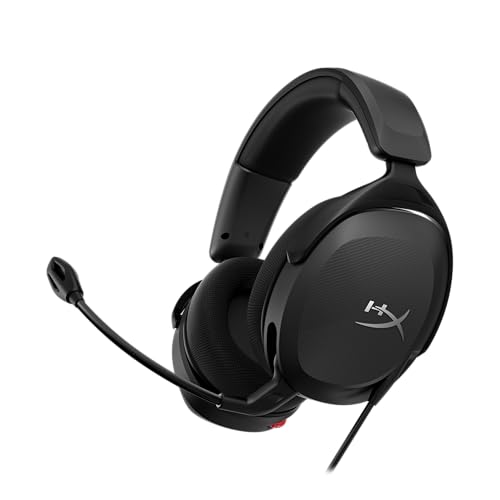
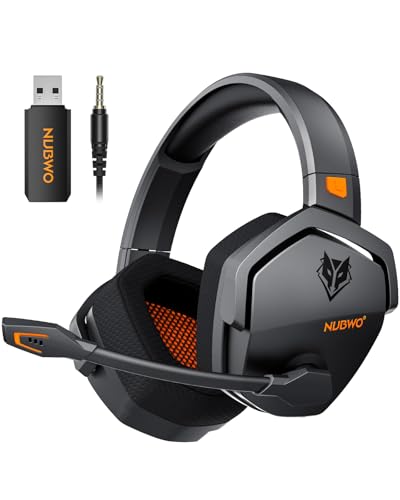
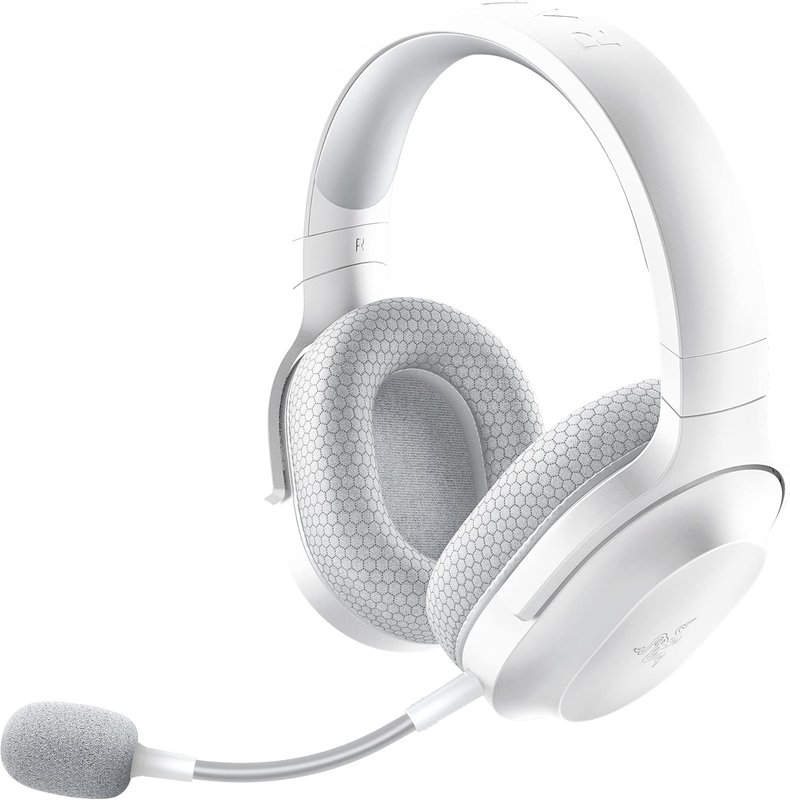
Prices from Amazon AU, updated daily. Swipe or use the arrows for more.
Disclosure: This article contains affiliate links to amazon.com.au. If you buy through one of these links iFix may earn a small commission at no extra cost to you. It doesn't change which products we recommend. We focus on what actually lasts based on 16 years of repair-shop experience.
Quick summary8 picks
- CheapestHyperX Cloud Stinger 2 Core Wired Gaming… about$47
- NUBWO G06 Dual Wireless Gaming Headset with… about$99.99
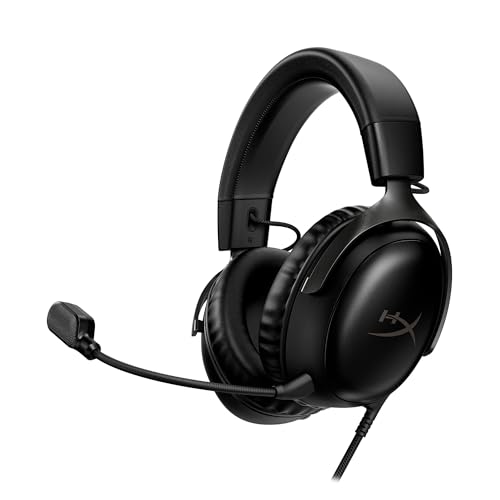
- HyperX Cloud III – Wired Gaming Headset about$115.99
- Razer Barracuda X Wireless Gaming & Mobile… about$128.00
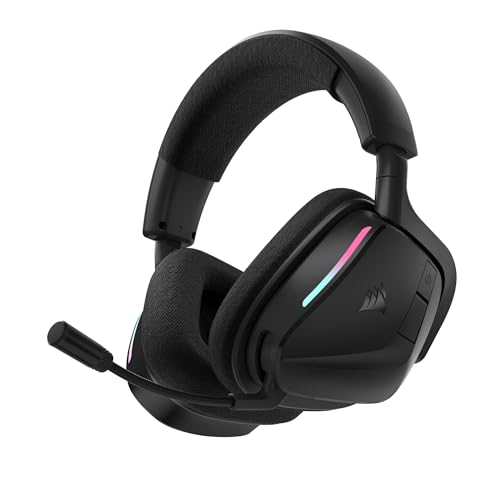
- CORSAIR Void v2 Wireless Gaming Headset… about$149.00
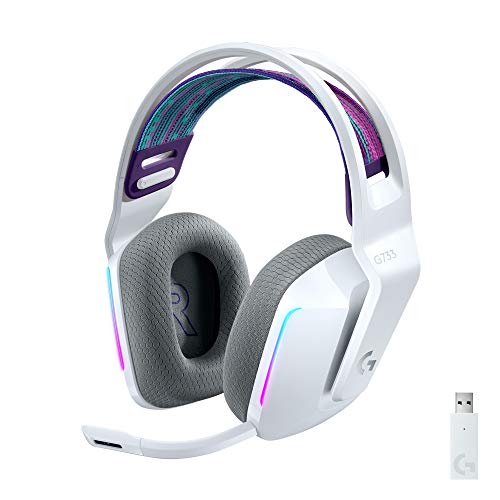
- Logitech G733 Lightspeed Wireless RGB… about$179.99
- CORSAIR HS80 MAX Wireless Multiplatform… about$159.00
- Most PremiumLogitech G Pro X 2 Lightspeed Wireless… about$277.07
The best-selling gaming headset in Australia has no battery in it
The number one seller in Amazon AU's PC Headsets category is a $119.90 wired headset with a detachable microphone and a 3.5mm plug. Not the flagship. Not the 65-hour wireless one. Sit with that for a second, because every piece of marketing in this category points the other way: dual wireless, Atmos, RGB, fifty hours untethered. Buyers went the other direction anyway, and from where I stand at the bench they got it right.
Dead headsets arrive here in a predictable order. The band has snapped at the slider, or the fork that holds one earcup has cracked. The boom mic has broken off at its root. The plug only works if you hold it at an angle. The drivers, the part everyone shops for, are nearly always fine. I have pulled apart plenty of headsets where the only genuinely worn-out component was a lithium cell the owner never chose and cannot replace.
One scope note before the picks. iFix already publishes a guide to over-ear noise cancelling headphones, and that article is for a different job: silence on a flight, an open-plan office, a house with a lawn mower going next door. It ranks quiet, comfort and travel folding. This guide is about the desk. Microphone quality, latency, clamp pressure over a four-hour session, and which parts you can still buy in year three.
What the wireless premium actually buys you
Here is the argument in one line. A wired headset has no battery, so it has no built-in death date.
A wireless headset has a lithium cell bonded into an earcup, glued down and wired in, and that cell ages on a fixed schedule whether you use it hard or not. Three to four years of daily use is roughly where its useful life ends: the 65-hour rating becomes twenty-something hours, then it wants charging every second night, then it stops holding a session. Nothing else has failed at that point. The drivers are fine. The headband is fine. The mic is fine. You are throwing away a working product because of one consumable part nobody sells you separately.
Put numbers on it. The CORSAIR at $199.00 is about $80 more than the HyperX. The Logitech at $277.07 is $157 more. That premium buys convenience with an expiry date on it, which is a very different purchase from buying better sound or a stronger frame.
Now the fair half, because wireless genuinely wins in three situations. If you share a room, a cable ties you to the chair in front of the PC. If you get up constantly, for the kettle, the door, a kid, then unplugging six times a night is exactly how plugs get bent. And if the console sits across a lounge room, wired means five metres of cable over the carpet, which is a trip hazard and a cable that will fail at the plug inside a year. In those cases, spend the money knowingly. You are buying four good years, not a decade.
The same bonded-cell arithmetic runs through our gaming handheld picks, which is why they weigh battery serviceability so heavily. And if you are still building the PC these plug into, spend in order: a $277 headset in front of a graphics card that cannot hold a frame rate is money in the wrong place, and the current graphics card picks cover that end of the build.
What matters on a headset, and what the box shouts about instead
A detachable boom mic is a repair part; a fixed one is a countdown
Boom mics live in the worst possible place: sticking out at face height, in the path of every chair rollback, every reach for a drink, every time the headset gets dumped on the desk mic-down. A fixed boom that snaps at its root takes the whole headset with it, because the break is inside the earcup housing and the wiring runs through the same hole. A detachable boom that snaps is a $20 part and a two-second swap. Two of the three picks here detach. That single design decision is worth more to the lifespan of a headset than any driver spec on the box.
Pads are consumables, and the material matters in an Australian summer
Ear pads wear out the way tyres wear out, and people treat them like a permanent part of the product. A pad set is $25 to $40. Replacing the headset is $199 or more. That maths is not close, and yet a flattened pad is one of the most common reasons someone tells me their headset is finished. Material matters too: pleather and leatherette flake and crack faster in Australian heat, especially on a desk that catches afternoon sun. Cloth-covered foam survives that better, at the cost of soaking up more sweat.
Connection type decides more than driver size
Driver diameter is the spec everyone quotes and the one that changes least in practice. 50mm versus 53mm is not what you are hearing; tuning and pad seal are. The connection is what changes the experience. A 2.4GHz dongle is low latency enough for competitive play and Bluetooth generally is not, which is why every wireless headset here ships a dongle and treats Bluetooth as the second link. A 3.5mm plug works on everything with a jack, including handhelds and controllers, and never needs a driver update. The Cloud III offers all three, which is why it lands on a PC now and a console later without a second thought.
On microphones: a boom sits at a fixed distance from your mouth, which is exactly why headset audio stays consistent while a desk mic gets loud and quiet as you lean. It is good enough for comms and work calls. It is not the right tool if people are listening on purpose, and for that our USB microphone picks published today cover proper mics on arms for streaming and recording.
The three picks, from $119.90 to $277.07
Prices are Amazon AU at time of writing (10 August 2026) and move week to week. Sales ranks are Amazon AU's PC Headsets subcategory, checked the same day.

HyperX Cloud III Wired Gaming Headset (PC, PS5, Xbox)
ASIN B0C3BSZ56D • $115.99 • Ships from Amazon AU
The #1 PC Headsets seller on Amazon AU, and the ranking is earned rather than bought. Angled 53mm drivers aimed slightly forward so the soundstage sits in front of you instead of inside your skull, memory foam in the pads and the headband, DTS Headphone:X spatial audio for the games that use it, and a 10mm boom mic with an LED that tells you at a glance whether you are muted. Connection is the quiet headline: USB-C, USB-A and 3.5mm all in the box, so it runs on a PC, a PS5, an Xbox Series X or S, a Switch, a handheld or a phone without buying anything extra.
The frame is the part I care about. HyperX kept the aluminium yoke that made the original Cloud a workshop favourite, so the load path from headband to earcup runs through metal rather than a moulded plastic fork, which is the exact spot where most headsets in this bracket eventually crack. The mic detaches, so a snapped boom is a cheap part rather than a dead headset. There is no battery, so there is nothing in it with a scheduled end date.
Honest caveats: the pads are leatherette, and leatherette flakes in our climate, so plan on a pad swap around year two. There is no wireless, obviously, and no active noise cancelling. If your gaming happens on a couch five metres from the TV, this is the wrong pick and the CORSAIR below is the right one.
Best for: Almost everyone. Desk gamers, students, anyone who wants a headset that outlives the console it was bought for.
Connection: Wired, USB-C, USB-A and 3.5mm • Battery: None • Drivers: Angled 53mm • Mic: Detachable 10mm boom, LED mute indicator • Pads: Memory foam, leatherette • Frame: Aluminium yoke • Rank: #1 in PC Headsets (Amazon AU)
View on Amazon AU
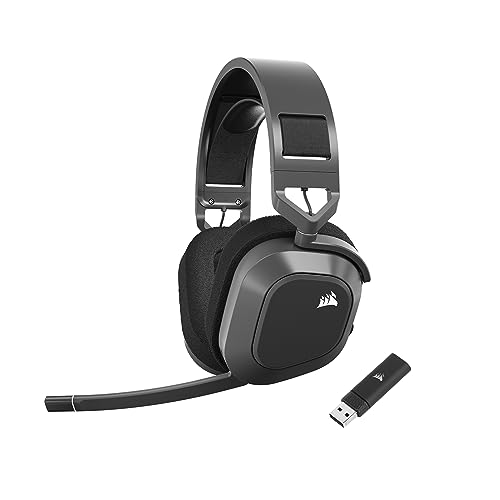
CORSAIR HS80 MAX Wireless Multiplatform Gaming Headset
ASIN B0D5Z1C5TB • $159.00 • Ships from Amazon AU
If you have read the section above and decided the cable genuinely does not suit your room, this is where I would spend. Sitting at #15 in PC Headsets, the HS80 MAX runs a low-latency 2.4GHz link with about 15 metres of range plus Bluetooth for phone audio at the same time, and it carries 24bit/96kHz audio over the dongle, which is twice the resolution most wireless headsets bother with. Battery is quoted at up to 65 hours with the RGB off and up to 130 hours over Bluetooth. Turn the lighting on and that 65 drops to 24, which tells you exactly what the RGB costs you.
Two things make it age better than most wireless headsets. The pads are memory foam under breathable cloth rather than pleather, so they will not flake through a Central Coast summer on a sunny desk. And the floating headband hangs from a lightweight aluminium frame, so clamping load runs through metal and fabric instead of a plastic slider that fatigues. Dolby Atmos and iCUE tuning are there if you want them.
Honest caveats: the microphone flips up to mute, which is a good system, but it does not detach, so a snapped boom is a serious repair rather than a spare part. Xbox is not supported natively, which rules it out for a lot of lounge rooms. And the battery is bonded in, which is the whole trade you are making at this price.
Best for: Shared rooms, PlayStation setups across a lounge, anyone who gets up ten times a session.
Connection: 2.4GHz wireless dongle plus Bluetooth • Battery: Up to 65h (RGB off), up to 130h Bluetooth, 24h with RGB on • Drivers: 50mm neodymium • Mic: Fixed flip-to-mute broadcast-grade boom • Pads: Memory foam, breathable cloth • Platforms: PC, Mac, PS5, PS4, mobile • Rank: #15 in PC Headsets (Amazon AU)
View on Amazon AU
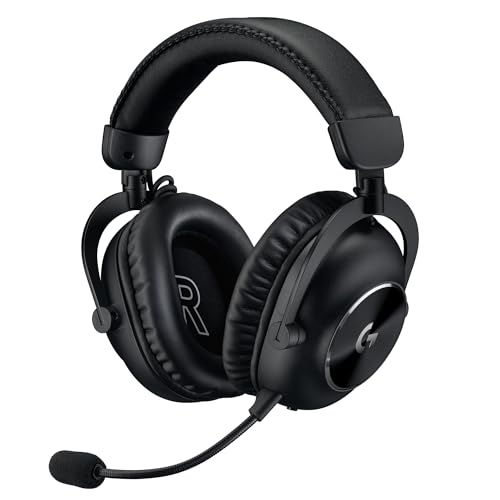
Logitech G Pro X 2 Lightspeed Wireless Gaming Headset
ASIN B0C6DCZTNZ • $277.07 • Ships from Amazon AU
At #5 in PC Headsets and $277.07, this is the one I would buy if the budget is genuinely open and I still wanted the thing to be serviceable. 50mm graphene drivers, an aluminium and steel frame with rotating hinges, up to 50 hours on a charge with five minutes of charging buying an hour of play, and a 30 metre Lightspeed range. It runs on PS5, PS4 and PC through the dongle, or on anything with a jack through the supplied 3.5mm cable, which is a genuinely important detail: when the battery finally ages out, this headset keeps working as a wired one.
The repairability story is the best of the three. The 6mm Blue VO!CE boom detaches, so a broken mic is a part order rather than a funeral. Two sets of pads ship in the box, so your first swap is free. The hinges rotate on metal rather than a moulded plastic pivot. For a headset that lives on a desk for years, those decisions matter more than the graphene.
Honest caveats: it is $157 more than the Cloud III and the sound difference will not justify that on its own. The battery is still bonded in, so the same clock applies here as on the CORSAIR, just with a nicer frame around it. And Xbox is not supported by the dongle, only through the analogue cable.
Best for: Long sessions, people who talk for a living, and anyone who wants wireless without giving up the wired fallback.
Connection: Lightspeed 2.4GHz dongle or 3.5mm cable • Battery: Up to 50h, fast charge 5 min for 1h • Drivers: 50mm graphene • Mic: Detachable 6mm Blue VO!CE boom • Pads: Memory foam, second set included • Platforms: PC, PS5, PS4, plus anything with a 3.5mm jack • Rank: #5 in PC Headsets (Amazon AU)
View on Amazon AUSide-by-side comparison
What we see fail at the bench: gaming headsets
Headsets come across the bench at our Central Coast computer repair workshop alongside the PCs they were plugged into, usually with the owner already convinced the sound card is at fault. After 16 years the order of failure is consistent enough to write down, and it is nothing like the order the marketing implies.
Headband and yoke fractures are failure number one
The single most common way a headset dies is a crack at the slider or at the fork that carries an earcup. It is a plastic fatigue problem. The same moulded section flexes through the same arc every time the headset goes on and comes off, micro cracks propagate from the thinnest point, and one ordinary Tuesday the arm lets go while you are picking it up. Two habits accelerate it. Hanging a headset by one earcup puts the entire weight through a single arm for hours a day, a load that part was never meant to hold statically. Stretching it over the corner of a monitor holds the band wider than its rest position for weeks, which is creep, and creep does not come back. A hook that supports the band across its top costs nothing and adds years. It is also why I look for a metal yoke before I look at anything else.
A detachable mic is the difference between a part and a write-off
Boom mics break more often than anything else that sticks out of a headset, and the break is nearly always at the root where the boom meets the cup. On a fixed boom the wiring passes through that same hole into the earcup, so a clean snap means opening the shell, finding four hair-thin wires torn at different lengths, and splicing them in a space designed by someone who assumed nobody would ever go in there. On a $200 headset that is an hour of labour and no guarantee. On a detachable design, the same accident costs about $20 and takes as long as plugging it back in. When you are choosing between two headsets that sound alike, this is the tiebreaker.
Cable strain kills the plug, not the cable
The 3.5mm plug and the USB-C charge port fail for the same reason: leverage. A cable that hangs under tension, gets rolled over by a chair castor, or gets yanked when you stand up loads the exact point where the connector meets the board. The symptoms are familiar: one channel drops out, audio returns if you wiggle the plug, or the headset charges only when the cable is propped at an angle. Detachable cables are the easy win, since the failed part is $15. On a fixed cable it is a solder job at the plug or inside the cup. Prevention is free: leave slack, do not wrap the cable tight around the headset, and unplug by the plug body rather than the cord.
Ear pads are consumables, and heat is the local enemy
A $25 to $40 pad swap regularly saves a $200 headset from the bin, and most people do not know the pads come off at all. Foam flattens in eighteen months to two years of daily use. The seal goes with it, bass disappears, and pressure that used to land on padding starts landing on the frame. In Australia there is a second failure mode on top: pleather cracks and flakes in heat, and a headset that lives on a sunny desk or spends summer afternoons in a car sheds pad surface everywhere. Replace pads at the first sign of flaking, because once the seal is gone you are listening to a worse headset than the one you bought.
Bonded batteries: the clock inside the wireless models
Both wireless picks here have a lithium cell glued and soldered into an earcup. It is not user-replaceable and it is not sold as a spare. Cells lose capacity by charge cycle and by calendar age, so a headset charged nightly is at the end of its useful life in roughly three to four years even if it has been treated perfectly. The tell is a rated 65 hours that suddenly cannot get through a weekend. You can slow it down by charging to full less often and keeping it out of hot cars, because heat and lithium are a bad combination in every device I open. You cannot stop it, and that is the whole reason a wired headset sits at the top of the sales chart.
Decision tree: which headset should you buy?
- You sit at a desk in front of the machine you play on? → HyperX Cloud III at $119.90. Wired, metal yoke, detachable mic, nothing inside it with an expiry date.
- You share a room, or the console is across the lounge? → CORSAIR HS80 MAX at $199.00. Low-latency 2.4GHz plus Bluetooth, cloth pads, up to 65 hours.
- You play on Xbox? → The Cloud III, on the 3.5mm cable into the controller. Neither wireless pick here supports Xbox natively.
- You talk for hours and want wireless without losing the wired fallback? → Logitech G Pro X 2 Lightspeed at $277.07. Detachable Blue VO!CE mic, spare pads in the box, 3.5mm cable included.
- Your day is meetings and your evening is quiet focus work? → Wrong guide. The noise cancelling over-ears linked in the intro are the tool for that job.
- People listen to your voice on purpose, on stream or in recordings? → Keep the headset for audio and add a proper microphone from the USB mic guide linked above.
- Your current headset is dead in one ear or only works held at an angle? → That is usually a plug or a wire, not the drivers. Bring it in to our Erina workshop before you replace it.
Frequently asked questions
Is a wired gaming headset actually better than wireless in 2026?
For most people at this price, yes, and the reason is mechanical rather than acoustic. A wired headset has no battery, so it has no built-in death date. Everything else on a headset can be maintained: pads unclip, a detachable mic is a part you can order, a cable is a part you can replace. A bonded lithium cell is none of those things, and after roughly three to four years of daily use it is at the end of its useful life while the drivers, the headband and the mic are all still perfectly good. Wireless still wins if you share a room, if you get up constantly, or if the couch sits five metres from the console. Those are real reasons to spend the extra. Convenience is just not the same thing as durability.
What actually breaks first on a gaming headset?
The headband, and specifically the yoke: the fork that carries each earcup, or the slider that adjusts the size. That is the number one headset death at our bench and it is a plastic fatigue problem, not an accident. The plastic sees the same bending load every time the headset goes on and comes off, micro cracks start where the moulding is thinnest, and one ordinary day it lets go. Two habits do most of the damage. Hanging a headset off a hook by one earcup loads the whole weight through a single arm for hours a day. Stretching it over the corner of a monitor holds the band wider than it was designed to sit, permanently. A headset hook that supports the band across its top, or the box it came in, costs nothing and adds years.
Is it worth repairing a headset with a snapped headband?
Usually not, and that is the honest answer rather than the one that sells a repair. The fracture is almost always in a moulded structural part that carries clamping load, so glue fails within weeks and epoxy plus a splint is a temporary patch on a part that is now brittle everywhere else too. If the model has a service part or a printable replacement, it can be worth doing on a premium headset. On a $120 set the labour costs more than the headset. What is worth fixing is everything else: a dead earcup that turns out to be a broken wire at the plug, a mute switch that has stopped switching, or pads that have flattened. Those are cheap and quick.
Are the ear pads on these headsets replaceable?
Yes on all three, and it is one of the best reasons to buy any of them. Pads are consumables in the same way tyres are. Foam compresses, the seal goes, the bass thins out and the headset starts pressing on the wrong part of your skull. A pad set is usually around $25 to $40 and takes about five minutes to swap, which is a rounding error against replacing a $199 or $277 headset. Logitech ships a second set of pads in the Pro X 2 box, so the first swap is free. One local note: pleather and leatherette flake faster in Australian heat, and a headset left in a hot car or on a north-facing desk will crack its pad surface inside a couple of summers. Cloth pads survive that better.
Do I need a separate microphone, or is the boom mic good enough?
For party chat, comms and work calls, a boom mic on any of these three is fine, and it beats a desk microphone for one specific reason: it sits at a fixed distance from your mouth no matter how you move. That is why headset audio sounds consistent while a desk mic gets loud and quiet as you lean. Where a boom mic falls short is anything anyone else listens to on purpose. If you stream, record, podcast or hand in audio for work, a dedicated USB microphone on a small arm is a bigger jump in quality than any headset upgrade at this price. Buying both is not wasteful. The headset handles the game, the microphone handles the audience.
Should I buy a gaming headset or noise cancelling headphones for working from home?
They are different tools and the split is clean. A gaming headset is built around the microphone and low latency: a boom that sits where your mouth is, a mute switch you can find without looking, and a 2.4GHz link or a cable so audio lands in time with the picture. Noise cancelling over-ears are built around silence and comfort in public, so they cancel a train or an open-plan office and they fold into a bag. If most of your day is meetings and focus work in a noisy house, buy the noise cancelling pair and read our separate guide to those. If most of your evening is games with friends, buy the headset. If you do both hard, own both. A boom mic in a video call still sounds better than any ANC headphone microphone at the same price.
Related buying guides
Headset dead in one ear, or only working held at an angle?
Do not bin it yet. A dropped channel is almost always a broken conductor at the plug or a tired socket, and both are a bench job rather than a shopping trip. Bring it in and we will tell you in minutes whether it is worth fixing or whether it is time to buy off the list above.
Visit our Erina workshop Book Online