Prices from Amazon AU, updated daily. Swipe or use the arrows for more.
Disclosure: This article contains affiliate links to amazon.com.au. If you buy through one of these links iFix may earn a small commission at no extra cost to you. It doesn't change which products we recommend. We focus on what actually lasts based on 16 years of repair-shop experience.
Quick summary8 picks
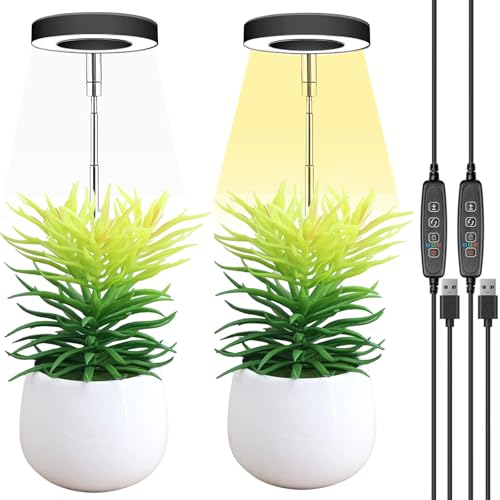
- CheapestPlant Grow Light 2Pack about$26.98
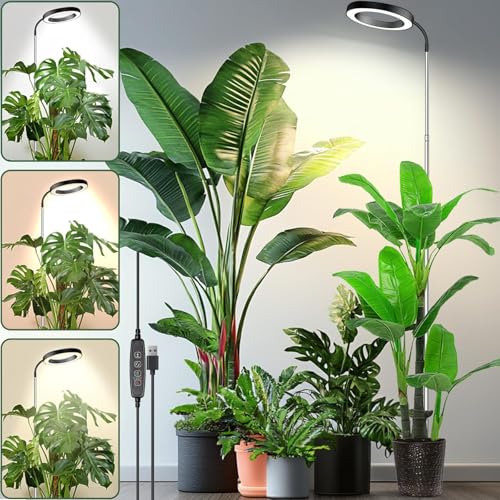
- Plant Grow Light 160mm Dia about$29.99
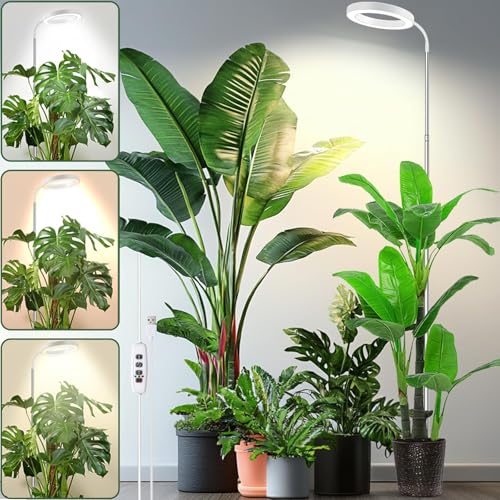
- Plant Grow Light 160mm Dia about$29.99
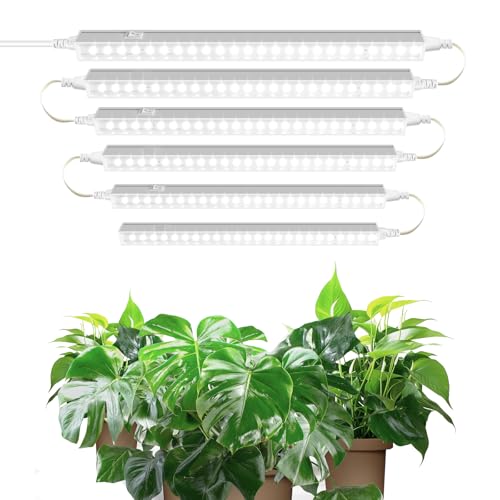
- Barrina T5 1FT Grow Light about$65.9930W.
- FECiDA 2026 Tabletop Grow Lights for Indoor… about$6924" screen, 25W.
- Barrina Orbgrow OG11A2 Clip On Grow Light about$52.9933W.
- QDX 48W Vertical Grow Light about$67.9948W.
- Most PremiumFECiDA Dimmable LED Grow Light 12000 Lumen about$119130W.
What actually fruits indoors (and what just grows leaves)
Every grow light listing shows the same photo: fat red tomatoes glowing under a purple lamp. Here's the honest version from someone who grows food rather than photographs it. Leafy greens, herbs and seedlings are easy under lights: rocket, spinach, basil and lettuce will grow happily under a modest LED strip on a bookshelf. Fruiting crops are a different sport. A tomato or chilli plant needs several times the light energy of a lettuce to flower, set and ripen fruit, plus hand pollination, because there are no bees in your lounge room. Most of the disappointment in this category comes from putting a fruiting plant under a lamp sized for herbs and wondering why it grew two metres of vine and no dinner.
So the first question isn't which light, it's which plants. A tray of seedlings for the spring garden needs gentle, even light close to the soil for a few weeks. A shelf of herbs wants a strip above each level running most of the day. A single struggling houseplant in a dark corner needs one aimed lamp that doesn't make the room look like a nightclub. And a serious attempt at indoor tomatoes or chillies wants the most photons you can sensibly power, usually inside a grow tent where the light isn't blasting across your living room at 6am. The five picks below run $53 to $119 and cover that whole spread, all from AU storefronts, all new stock.
One framing note before the specs: indoor growing is a running-cost hobby, not a one-off purchase. The purchase price is the smaller half of what you'll spend over a few years; the power bill is the rest, and I'll put real numbers on that below rather than waving at it.
PPFD, not lumens
Lumens measure how bright light looks to a human eye, which is weighted heavily toward green and yellow. Plants don't have human eyes. Photosynthesis runs on photon count across roughly 400 to 700 nanometres, and the measure that captures it is PPFD, photosynthetic photon flux density, in micromoles per square metre per second. Two lamps with identical lumen ratings can feed a plant very differently, which is why lumen-led listings tell you less than they appear to. Of the five picks, only the Barrina clip-on quotes a PPFD figure: 1,497 micromoles at 10 centimetres. That's a strong number with a catch built into it, because 10 centimetres is practically touching the plant.
That catch is distance. Light falls away with the square of distance from a small source, so a lamp delivering a generous PPFD at 10 centimetres delivers a quarter of it at 20 and a ninth at 30. This is why manufacturers all measure close in, and why the single most effective free upgrade for any grow light is lowering it, or raising the plant, until the two are as close as heat allows. It's also why a bigger board wins at the same wattage: spreading LEDs over more area keeps the light even at working distance, instead of a hot spot in the middle of the tray and dark corners at the edges.
For the listings that only quote lumens, use them the way I use lumen claims on torches: as rough relative numbers, not measurements. The FECiDA pair are rated 2,000 and 12,000 lumens, and the useful reading is simply that one is several times the light engine of the other, which matches their wattages. Watts in, spread over area, at a sensible distance: that's the honest mental model. A rule of thumb that has served me well is that seedlings and greens are happy around 100 to 300 micromoles, and fruiting plants want several hundred more, held for twelve hours or so a day.
What a grow light adds to the power bill
The arithmetic is short and worth doing before you buy. At the AU average tariff of roughly 33c/kWh, a light costs its wattage times its hours, so the 30W Barrina strip set running 14 hours a day uses 0.42kWh, which is about 14 cents a day or roughly $4.20 a month. The 25W FECiDA tabletop on its built-in timer comes in around the same. The QDX at 48W for 12 hours is about 19 cents a day, near $5.70 a month. The big FECiDA at its full 130W for 12 hours is 1.56kWh, about 51 cents a day, call it $15.70 a month. Dim any of them and the number drops roughly in step.
Those numbers decide what's sensible to grow. Fifteen dollars a month of electricity feeding a tent of chillies you'd otherwise buy at $4 a punnet can pencil out once the plants are established and producing; the same spend keeping one ornamental fig alive through winter is a choice you should at least make consciously. If you want your actual numbers rather than my assumptions, a metering smart plug will log a light's real draw and runtime for you, and we've covered the ones worth having in our smart plugs guide. Measured beats estimated, every time.
Two cost notes from the repair side. LEDs get less efficient as they heat up, so a lamp jammed in a hot cupboard is paying full watts for reduced photons. And dimming isn't free light, it's proportional: the FECiDA pair and the Barrina clip-on all dim steplessly, which is genuinely useful for seedlings, but a light dimmed to 30% is still a light you bought at 100% size. Buying the right size and running it at full output close to the plants beats buying big and strangling it.
Matching the light to the plants
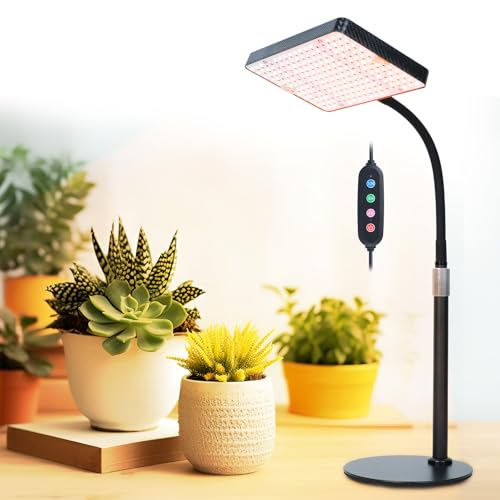
Seed starting is the easiest win in the whole category, and it's the job the FECiDA tabletop was built for: a small 25W panel on legs, height-adjustable from 16 to 24 inches, with a daily-repeat timer so the trays get consistent hours from germination onward. Seedlings under a fixed light come up stockier and greener than the leggy windowsill versions that spend their first month leaning sideways at the glass. If your spring garden starts in trays in August, one of these pays for itself in seedlings you no longer buy.
Shelf growing, herbs and greens, is strip territory: the Barrina T5 six-pack gives each shelf its own 5W strip with its own switch, linkable up to sixteen units off one plug. A strip 15 to 20 centimetres above the leaves, running long days, keeps rocket and lettuce compact and productive right through winter, and a salad cut from the shelf in July is the point of the whole exercise. If you preserve a summer glut as well, this pairs naturally with the gear in our food dehydrator guide: same instinct, eating from your own supply a little longer.
Tall and fruiting plants are where most setups fall short. The QDX takes the vertical route: a 195 centimetre pole of side-firing LEDs that lights a tomato or chilli plant along its full height instead of blasting the canopy and starving everything below it, and it stands on its own base or hangs. The big FECiDA is the conventional answer: a 130W panel hung over a tent, dimmed down while plants establish and opened up for flowering. Fruit indoors also means you're the bee. A soft brush or a gentle flick against the flower trusses every couple of days, or you'll get flowers and nothing else.
Spectrum: white, blurple and the extras
Old-school grow lights were the pink-purple 'blurple' panels: red and blue LEDs only, on the theory that chlorophyll absorbs mostly at those wavelengths. The theory wasn't wrong, but full-spectrum white has largely taken over, partly because plants use more of the middle spectrum than the early charts suggested, and partly because you can actually see your plants under it. Spotting pests, nutrient trouble or mould on the soil surface under purple light is hopeless; everything looks black. Four of the five picks here are white-led full spectrum, and the QDX hedges its bets with warm white, cool white, plus dedicated 660 nanometre red and 470 nanometre blue channels you can mix across three modes.
Colour temperature is a mild lever, not a magic one. Bluer light around 5000K, like the Barrina strips, suits compact leafy growth, which is what you want for greens and seedlings. Redder light helps flowering, which is why the big FECiDA mixes 3000K diodes in with its 5000K and 660 nanometre red, and why it also carries UV at 395 nanometres and infrared at 760. Those extras have real horticultural arguments behind them, but I'd treat them as a bonus rather than a buying reason at this level. What you can grow is set by total photons far more than by fine-tuning the recipe.
The spec that matters more than people expect is CRI, colour rendering, if the light lives anywhere you do. The Barrina clip-on quotes CRI 98 at 4000K, which is better colour rendering than most household downlights, and it means the plant in the lounge room looks like a plant rather than a lab specimen. That's the difference between a grow light the household tolerates and one that gets unplugged by popular vote within the week.
Timers, daisy chains and the electrical side
Plants want the same hours every single day, and you will forget, so a timer isn't optional. The FECiDA tabletop has the most flexible built-in set, five durations from 4 to 20 hours repeating daily; the QDX runs 4, 8 or 12 hour cycles and, usefully, remembers its program through a power cut, which is the feature that separates a real timer from an ornament. The Barrina clip-on carries three timer settings per bulb. For the strip lights with plain on/off switches, an external plug timer or a metering smart plug does the same job and logs the energy while it's at it.
Daisy chaining is the tidy way to run multiples: the Barrina strips link up to sixteen in series off one socket, and the FECiDA panels chain up to four. Respect those limits; they're set by the current the connectors and leads can carry, not by caution. The other place not to improvise is the power supply. These are low-voltage LED systems fed from mains adapters, and the adapter is where quality varies most. The difference between a proper supply and a no-name brick is the same story we've written up in the piece on bad chargers, and it applies to garden gear exactly as it does to phones.
Water and mains cords share a room in this hobby, so keep the powerboard off the floor and above splash height, loop cords so drips can't track down them into sockets, and look for the RCM mark on adapters, which is the Australian compliance tick. None of this is exotic, it's the same common sense as running an aquarium, but seedling trays get watered daily and spilled watering cans find powerboards more often than you'd think. If the growing space runs a heater as well, the heater gets a wall socket to itself, always, never a shared powerboard with the lights.
Heat, fans and how long these lights actually last
LEDs don't burn out like globes, they fade, and heat sets the pace. Run hot, an LED board loses brightness year on year until the light that raised great seedlings in 2026 quietly can't by 2029. That's why housings and cooling are worth reading about in the listings: the big FECiDA is the only pick here with a built-in fan, which 130W genuinely needs, and the listing pitches it as a quiet one. Fan-cooled also means a fan that can fail. It's a moving part in a warm, dusty, occasionally damp room, and a stalled fan cooks the board it was protecting.
Dust is the slow killer in grow spaces. Potting mix, vermiculite and dead leaves shed fine debris that settles on boards, blankets heatsinks and clogs fan blades, and a blanketed board runs hot even in a cool room. Wipe boards and clean fan intakes every month or two with the power off. Humidity does the rest of the damage: a growing area sits damper than the rest of the house, and over years that shows up as corrosion on connectors and plugpack pins. If a light starts flickering, cutting out once it warms up, or a chained set goes dark past a certain link, that's the driver or a connector far more often than the LEDs themselves, and it's usually a fixable fault: our Erina workshop sees the same failure pattern in everything from laptops to fish tank lights.
The buying takeaway on longevity: aluminium-bodied strips run cooler than plastic, bigger boards at the same wattage run cooler than small ones, and anything with a fan needs that fan checked now and then. Modest and cool beats maximal and hot for anything you want still working in five years. If you're monitoring the room anyway, the air quality monitors we've covered will also tell you the humidity your gear is living in, which is worth knowing for the electronics as much as for the plants.
The 5 picks, $53 to $119
Prices are Amazon AU at time of writing (25 September 2026) and move week to week. Ranks are Amazon AU category sales ranks, checked the same day.

Barrina T5 1ft Grow Lights, 5000K, 30W, 6 Pack
ASIN B0D9PZFVZZ • $65.99 • Sold by Barrina AU on Amazon AU
The top seller in Amazon AU's Plant Growing Lamps category, and the format explains it: six separate 1 foot strips, 5W each, that mount with the included tape, clips or cable ties and link together up to sixteen off a single plug. That modularity is the whole appeal. One strip lights a tray of seedlings, two handle a shelf of herbs, and the full six kit out a bookshelf garden with a strip above every level, each with its own switch so you only burn the watts you're using. At 5000K white it doubles as a bright, neutral working light, which matters more than it sounds when the shelf lives in the kitchen rather than a cupboard.
The listing rates the set at 30W total with 144 LEDs across the six strips and claims it replaces 180W of older plant lighting, with over 95% of the light energy usable by plants. Take those as manufacturer numbers, but the physics of the format is sound: many small emitters close to the plants beat one big emitter far away, because light falls off so quickly with distance. At 10 to 20 centimetres above a tray, strips like these deliver even coverage edge to edge in a way a single bulb simply can't, with no hot spot scorching the middle plants while the ones in the corners stretch sideways hunting for photons.
It's the pick for greens, herbs and seed starting, and the wrong pick for fruiting plants: 5W strips don't have the photon budget to flower a chilli no matter how close you hang them. There's no timer built in, just the per-strip switches, so add a plug timer or a metering smart plug and set the hours once. At $66 for six strips from an AU storefront, it's the obvious starting point for anyone whose growing ambitions fit on shelves, which in this hobby is most people, most of the time.
Honest caveats: No built-in timer, and the on/off switches sit on the housings, which gets awkward once strips are taped up high on a shelf. Lumen and PPFD figures aren't stated on the listing, and the 180W equivalence claim is the maker's own. Power supply details aren't spelled out either, so keep the plugpack ventilated and off the damp floor.
Best for: Shelf gardens of herbs, greens and seedlings, built up one strip at a time.
Colour temp: 5000K white, full spectrum • Power: 30W total (6 x 5W) • LEDs: 144 total • Claimed equivalent: Replaces 180W plant lights • Length: 1 ft per strip • Linkable: Up to 16 in series • Switches: On/off per strip • Mounting: Tape, clips, cable ties included • Rank: #2 in Plant Growing Lamps (Amazon AU)
View on Amazon AU
Barrina Orbgrow OG11A2 Clip On Grow Light, 4000K, 22W, E27
ASIN B0GTNVQ233 • $52.99 • Sold by Barrina AU on Amazon AU
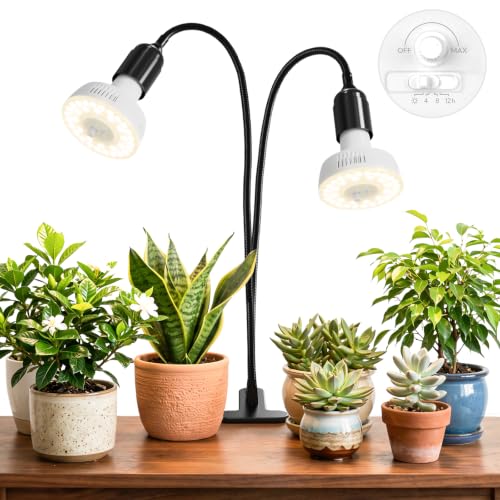
This is the one to buy when the plant lives with you rather than in a grow tent. It clamps to a shelf or table edge, aims on a flexible gooseneck, and runs standard E27 screw-in bulbs, which means that when a bulb eventually fades you replace a bulb, not the lamp. The light itself is 4000K at a claimed CRI of 98, and that colour rendering number is the sleeper spec: it's better than most household downlights manage, so the fiddle leaf in the lounge looks like furniture rather than a science experiment. Each bulb dims steplessly and carries its own timer settings (4, 8 or 12 hours), so the one clamp can treat different plants differently.
It's also the only pick that publishes a PPFD figure: 1,497 micromoles per square metre per second at 10 centimetres, from 36 chips on a 22W bulb, alongside a claimed 1,460 lumens. Quoting PPFD at all puts it ahead of most of the category on honesty, even if 10 centimetres is closer than most people will run it. Light falls away fast with distance, so at a comfortable 30 centimetres you're getting a fraction of that headline number. For a single houseplant, a bonsai bench or a pair of pots wintering indoors that's still plenty, and the gooseneck means the distance is genuinely under your control rather than set by wherever the hook happened to land.
The limits are the format's. A clamp lamp lights one or two plants well and a shelf badly, even though at $53 it is the cheapest of the five picks to buy. E27 bulbs also make the head a point source, so keep it aimed and close rather than expecting room-wide coverage. But as the light that lives in a shared space without an aesthetic fight, and the only one here you can re-bulb in two minutes, it earns its spot. Full spectrum with no purple tint, per the listing, and it looks it.
Honest caveats: The headline PPFD is measured at 10 centimetres, far closer than most real placements, and the listing itself advises keeping the light at least 20 centimetres above the canopy, so don't expect that number at the distance you'll actually run it. The listing doesn't clearly state how many bulbs or arms ship in the box, so check the current listing before ordering if that decides it for you.
Best for: One or two houseplants in living spaces, where looks and easy bulb swaps matter.
Colour temp: 4000K, full spectrum • Power: 22W • Claimed output: 1,460 lm • PPFD: 1,497 µmol/m²/s at 10 cm (claimed) • CRI: 98 • Bulbs: E27, replaceable • Dimming: Stepless, 3 timer settings • Mount: Clamp with gooseneck • Rank: #9 in Plant Growing Lamps (Amazon AU)
View on Amazon AU
FECiDA Tabletop Grow Light, 25W, Height Adjustable, Timer
ASIN B0CFVFTLVY • $69.00 • Sold by FECiDA-AU on Amazon AU
A freestanding light on legs, made for exactly one job: standing over a tray on a bench and starting seeds properly. Height adjusts from 16 to 24 inches, so it starts low over germinating trays and rises as the seedlings come up, and the built-in timer repeats daily at 4, 8, 12, 16 or 20 hours, which covers everything from gentle starts to long-day greens without a separate plug timer. The panel runs 208 LEDs at a rated 25W with a claimed 2,000 lumens, pitched by the maker as the equivalent of a 200W incandescent. It's the set-and-forget option: dial the height, set the hours once, and the trays get identical light every day until transplant.
Consistency is the real product here. Seedlings on a windowsill get whatever the weather and the glass deliver, which is why they come up leggy and pale, leaning at the light; a tray under a fixed panel on a daily timer comes up short, stocky and even, and transplants better for it. The daisy-chain function matters at scale, because you can run several of these off one socket via linked power cables if you're starting a serious spring garden, rather than hunting down a spare outlet for every light. The stable base and top-down spread also suit bonsai and other low, flat subjects the listing calls out, where a clamp lamp's side angle gets awkward.
Its ceiling is the same as the Barrina strips': 25W tops out at greens and seed starts, not fruit, and the 24 inch maximum height means genuinely tall plants outgrow it by design. The timer's odd button logic, pressing two durations together to get 16 or 20 hours, is the sort of thing you'll do once and then forget, so keep the manual. At $69 it overlaps the strip kit on spend, and the choice between the two comes down to layout: shelves want strips, while a bench full of trays wants this.
Honest caveats: PPFD isn't stated, and the 200W equivalence is measured against incandescent globes rather than other LEDs, which flatters it. The 24 inch maximum height rules out tall plants outright, and the longer timer settings need two buttons pressed together, so hang onto the instructions. Warranty terms aren't stated on the listing.
Best for: Seed starting and bench-top trays where daily consistency does the work.
Power: 25W rated • LEDs: 208 • Claimed output: 2,000 lm • Timer: 4/8/12/16/20 h, daily repeat • Height: Adjustable, 16 to 24 in • Daisy chain: Yes, via power cable • Style: Freestanding tabletop • Rank: #11 in Plant Growing Lamps (Amazon AU)
View on Amazon AU
QDX Vertical Grow Light, 48W, 195cm, Full Spectrum, Timer
ASIN B0GXZ2K12L • $67.99 • Sold by QDX-AU on Amazon AU
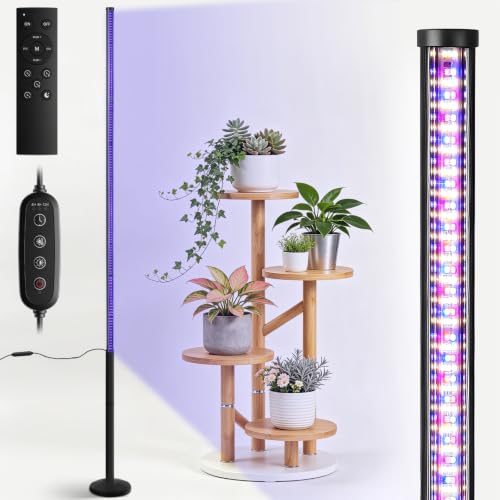
Every other light here shines down. This one stands beside the plant: a 195 centimetre pole built from four sections, with 560 LEDs firing sideways in a 120 degree arc along its whole height, on a weighted base or hung from above. For a tall tomato, a chilli bush or a climbing plant, that geometry fixes the standard indoor problem where the canopy hogs the light and everything below the top third stretches pale in its shadow. Lighting the plant along its flank feeds the lower trusses and side shoots too, which is where a decent share of the actual fruit sets. It draws a rated 48W and mixes four LED colours: warm white, cool white, 660 nanometre red and 470 nanometre blue.
Control is more complete than the spend suggests: three spectrum modes mixing those channels, dimming, and a 4, 8 or 12 hour cycle timer that remembers its program through a power cut, which matters because a timer that resets after every brownout quietly wrecks your light schedule. There's a wireless remote plus a wired controller as backup. The four-section pole assembles without tools and can be built shorter for smaller plants, then extended as they grow, and the same hardware hangs vertically in a tent corner if floor space is spoken for. For one serious fruiting plant outside a tent, this is the most practical light in the list, and the one I'd reach for first.
Its weak point is spread: side-firing light covers the plant it stands against, not a room or a second plant across the bench, so a pair of plants wants a pole each or a rethink toward a hung panel. And 48W is honest mid-power. It'll flower a chilli or a compact tomato with the light kept close against the foliage, but it isn't a substitute for the big FECiDA hung over a tent of plants. At $68 from an AU storefront it fills a slot nothing else here touches, and fills it well.
Honest caveats: No PPFD or lumen figure on the listing, so you're sizing by wattage and LED count. The 195 centimetre height includes the extension piers, side-firing coverage drops off quickly for anything not adjacent to the pole, and the power-failure memory covers the 24 hour cycle rather than a custom schedule.
Best for: One tall fruiting or climbing plant lit along its full height instead of just the canopy.
Power: 48W • Height: 195 cm pole, four sections • LEDs: 560 (warm white, cool white, 660nm red, 470nm blue) • Spectrum modes: 3 • Timer: 4/8/12 h cycle, power-failure memory • Control: Wireless remote + wired controller • Mount: Floor stand or hanging • Rank: #19 in Plant Growing Lamps (Amazon AU)
View on Amazon AU
FECiDA Dimmable LED Grow Light, 12000 Lumen, UV and IR
ASIN B08G7Y1STZ • $119.00 • Sold by FECiDA-AU on Amazon AU
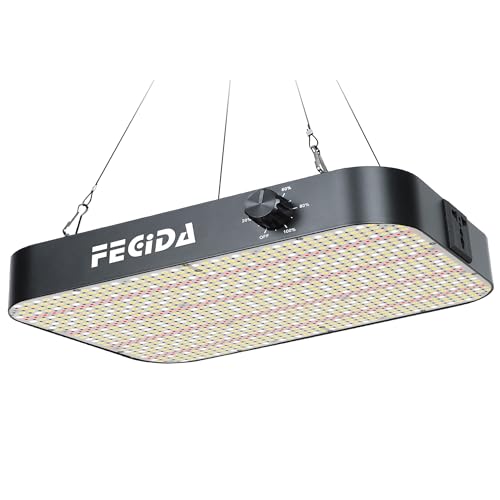
This is the one for people actually chasing fruit through winter. A hung panel of 588 LEDs drawing 130W at full brightness, with a claimed 12,000 lumens and the fullest spectrum recipe here: 3000K and 5000K whites, 660 nanometre red, plus UV at 395 nanometres and infrared at 760, the two additions serious growers argue for in flowering. It's built for a grow tent, where reflective walls throw the sideways spill back onto the plants and the household doesn't have to live with the glare. Dimmed down, it starts seedlings across a whole shelf of trays; opened up over established plants, it's the only pick with the photon budget to flower and ripen a real crop properly.
The engineering details are the tell that this sits a tier up: a stepless dimming knob, daisy chaining for up to four units off one feed, and a built-in fan behind vents in the LED board, which the listing pitches as quiet and which 130W genuinely needs. The maker quotes an efficiency of 2.2 micromoles per joule, the only efficiency figure anywhere in this list, and backs the unit with a stated two-year warranty, also the only one here to put a number that long in writing. Running cost is the honest counterweight: at 12 hours a day and full brightness it's roughly $15.70 a month at 33c/kWh, so it should be earning its keep on productive plants, not ornaments.
Treat the fan as a service item. It's the one moving part in this whole list, it lives in a warm and sometimes damp space, and a clogged or stalled fan shortens the board's life, so clean the intakes when you clean the tent floor. At $119 it's the most you'll spend here and the only pick I'd call a growing system rather than a lamp. If the goal is a winter supply of chillies, tomatoes or anything else that flowers, this is the light the rest of the list is stepping toward.
Honest caveats: It needs somewhere to hang and really wants a tent; run bare in a living room, 130W of full-spectrum light is antisocial. PPFD isn't stated despite the efficiency figure, the fan is a wear item, and the 12,000 lumen number is the maker's own. Price the monthly power cost before you order the light.
Best for: Grow tents and genuine fruiting harvests through winter, dimmed early and opened up for flowering.
Power: 130W at full brightness • LEDs: 588 • Claimed output: 12,000 lm • Spectrum: 3000K + 5000K white, 660nm red, UV 395nm, IR 760nm • Efficiency: 2.2 µmol/J (claimed) • Dimming: Stepless knob, daisy chain up to 4 • Cooling: Built-in fan • Warranty: 2 years (listed) • Rank: #55 in Plant Growing Lamps (Amazon AU)
View on Amazon AUSide-by-side comparison
| Product | Price | Best for |
|---|---|---|
| Plant Grow Light 2Pack | ~$26.98 | Cheapest way to try a grow light |
| Plant Grow Light 160mm Dia | ~$29.99 | Budget extra for a single plant |
| Plant Grow Light 160mm Dia | ~$29.99 | Budget extra for a single plant |
| Barrina T5 1FT Grow Light | ~$65.99 | Shelves of herbs and salad greens |
| FECiDA 2026 Tabletop Grow Lights for Indoor… | ~$69 | Starting seedling trays |
| Barrina Orbgrow OG11A2 Clip On Grow Light | ~$52.99 | One or two houseplants in living spaces |
| QDX 48W Vertical Grow Light | ~$67.99 | A tall tomato or chilli |
| FECiDA Dimmable LED Grow Light 12000 Lumen | ~$119 | A tent and serious winter production |
What we see fail at the bench: LED grow lights
Grow lights reach the bench less often than laptops, but they fail in patterns just as predictable, and the pattern is worth knowing because almost none of the failures are the LEDs themselves. The diodes are usually the longest-lived part of the whole system. What dies is the electronics feeding them and the mechanical bits around them, all of it accelerated by the warm, damp, dusty rooms this gear lives in.
Drivers and plugpacks go first
The driver, the electronics converting mains into the low-voltage DC the LEDs run on, fails long before the diodes fade. Heat is the killer: drivers are potted into the lamp body or a brick on the cord, they run warm by design, and in an enclosed grow space they run warmer. The classic symptoms are flicker at power-on, a light that cuts out once it warms up, or dead-on-arrival after a storm. On chained systems, one bad connector drops every light past it, which sends people hunting for six faults when there's one. A failed driver or plugpack is usually replaceable for a fraction of what the light cost.
Moisture and the slow green crust
Growing areas run damp, and mains-powered electronics disagree with damp on a schedule of years rather than days. We see the same corrosion creep on grow gear as on anything kept near water: green crust on connector pins, rusty screw terminals, plugpack pins that arc and blacken. It's gradual, so the symptoms wander: intermittent cutouts, dimming on one channel, a timer that loses its mind. Keep connections above splash height, loop cords so water can't track along them into sockets, and pull the plugs apart for a look each season. Corrosion caught early wipes off. Caught late, it's a new connector or a dead board.
Fans, dust and cooked boards
Anything with a fan has a consumable, and the big panel lights mostly have fans. Potting mix and dead leaves shed fine dust that mats over intakes and blades, the airflow drops, and a board designed around moving air starts cooking itself: LED output fades fast when boards run hot, and drivers fail faster still. A fan that's started ticking or droning is asking for a clean, and if cleaning doesn't fix it, replace it before it stops, because a stalled fan under a full-power board does damage in weeks. Passive aluminium strips dodge this whole failure class, which is a fair part of why they last so long.
Decision tree: which one should you actually buy?
- Starting trays of seedlings for the garden? → The FECiDA tabletop at $69. Set the height, set the daily timer, and the trays get identical hours every day until transplant.
- A shelf or two of herbs and salad greens? → The Barrina T5 six-pack at $66. A strip per shelf, a switch per strip, all linked off one plug, with a plug timer running the hours.
- One good-looking houseplant in the living room? → The Barrina clip-on at $53. CRI 98 means the plant and the room still look right, and the bulbs replace like any E27 globe.
- A tall tomato or chilli you want actual fruit from? → The QDX at $68, stood right beside it and lighting the full height. Keep it close, run 12 hour days and hand-pollinate the flowers.
- A tent and serious winter production? → The big FECiDA at $119. Dim it while plants establish, open it up for flowering, and clean the fan when you clean the tent.
- A light that flickers, cuts out warm, or died outright? → That's a driver or connector nine times out of ten, not the LEDs, and often worth fixing. Bring it into the workshop in Erina and we'll tell you straight whether repair beats replacement.
Frequently asked questions
Can I really grow tomatoes indoors under LED lights?
Yes, with the right light and honest expectations. A tomato needs several times the light a lettuce does, held for around twelve hours a day, which puts you in the territory of a hung panel in a tent or a vertical light kept close against the plant, not a shelf strip. You also inherit the bee's job: indoor flowers need hand pollination every couple of days, a soft brush or a gentle flick against the truss, or you'll get flowers and no fruit. Compact and dwarf varieties suit indoor growing far better than sprawling types. It's a project rather than a windowsill hobby, and it works if you feed it enough photons.
How much power does a grow light actually use?
Its wattage times its hours, and the wattage is small next to heating appliances. At roughly 33c/kWh, which is about the AU average tariff, a 30W strip set running 14 hours a day costs around 14 cents a day, call it $4.20 a month. A 130W panel at 12 hours is about 51 cents a day, roughly $15.70 a month at full brightness, and proportionally less when dimmed. The number to watch isn't the light so much as what creeps in around it, because heat mats, fans and heaters in the same space add up quickly. A metering smart plug will tell you the real total rather than the brochure figure.
Are purple grow lights better than white ones?
Not for most home growers. The red-and-blue 'blurple' panels came from the observation that chlorophyll absorbs strongly at those wavelengths, and they do grow plants. But full-spectrum white grows them just as well in practice, because plants use more of the middle spectrum than the early absorption charts suggested, and white light has a practical advantage that gets underrated: you can see your plants. Pests, nutrient deficiencies and mould on the soil surface are all spotted early under white light and are invisible under purple. Modern full-spectrum lights often add dedicated red channels anyway, which gets you the flowering-friendly red without living with a purple room.
How many hours a day should a grow light run?
Roughly 14 to 16 hours for seedlings and leafy greens, and around 12 for most fruiting plants, run at the same times every day. Consistency matters more than squeezing in an extra hour, because plants regulate themselves on light cycles, and a schedule that wanders sets growth back more than a slightly short day does. Don't run lights 24 hours; most plants want a genuine dark period. This is why a timer, built in or on the plug, is non-negotiable, and why power-failure memory like the QDX carries is a genuinely useful spec: a timer that resets after every blackout silently shifts your schedule until you notice the plants sulking.
What is PPFD and why does it matter more than lumens?
PPFD is photosynthetic photon flux density: how many photons in the plant-usable range land on a square metre every second, measured in micromoles. It's the number that predicts growth, where lumens measure brightness as a human eye sees it, weighted toward green and yellow that plants use less efficiently. Two lamps with the same lumen rating can differ a lot in PPFD. The catch is that PPFD depends on distance, and makers measure close to the lamp to get big numbers, so always note the distance printed beside the figure. When a listing gives only lumens, fall back on wattage, LED count and coverage area as the honest proxies.
Do LED grow lights wear out?
They fade rather than fail. LED output drops slowly over thousands of hours, and faster when the boards run hot, so a light in its fourth year is dimmer than the day it arrived even though it still switches on. The parts that fail outright are the driver electronics, the connectors and any cooling fan, all of which die long before the diodes in most units. Keep boards dust-free, give lamps airflow, and treat flickering or heat-related cutouts as a driver or connector fault worth diagnosing rather than proof the light is finished. A well-kept LED light is realistically a five to ten year tool; a hot, dusty, damp one can fade noticeably in two.
Related buying guides
Flickering grow light? It's the driver, not the diodes
LED boards rarely die; the drivers, connectors and fans feeding them do, and those are proper repairs rather than replacements. Before you order a new light, bring the old one into the shop at Erina and we'll open it, find the fault and tell you what fixing it costs against replacing it, before you spend a dollar. Bring the plugpack too, because half the time the fault is hanging off the end of the cord.
Visit our Erina workshop Book Online