Prices from Amazon AU, updated daily. Swipe or use the arrows for more.
Disclosure: This article contains affiliate links to amazon.com.au. If you buy through one of these links iFix may earn a small commission at no extra cost to you. It doesn't change which products we recommend. We focus on what actually lasts based on 16 years of repair-shop experience.
Quick summary8 picks
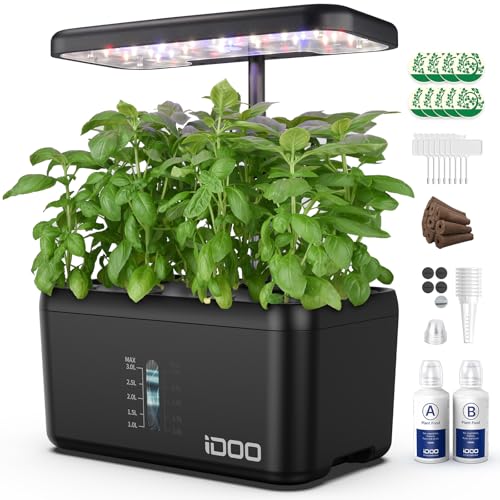
- CheapestiDOO 8 Pods Hydroponics Growing System about$79.998 pods, plants up to 15 inches.
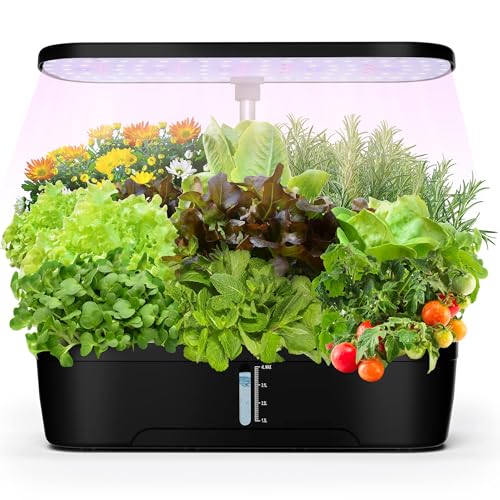
- LYCENXI 12-Pod Indoor Hydroponic Garden, 4L about$85.99
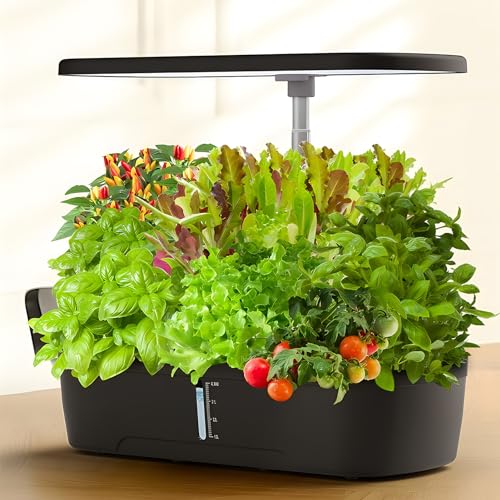
- Indoor Garden Hydroponics Growing System:… about$88.60
- GROZY Automatic Hydroponic Growing NFT… about$109.99
- GROZY Automatic Hydroponic Growing NFT… about$126.99
- LetPot LPH-Lite Hydroponics Growing System about$15924W.
- Mr Stacky Australia - Large 5 Tier Vertical… about$155
- Most PremiumGROZY Automatic Hydroponic Growing NFT… about$209.99
The pod trap: what these kits cost after the box
A countertop hydroponic kit gets sold the same way a cartridge inkjet does. The box price looks fair, and the money is in what it eats. Every kit here wants seed pods, grow sponges and nutrient solution on a rolling schedule, and if you buy those as branded refill packs you'll pay somewhere between $2 and $4 a pod by the time postage is in. Run 12 pods of lettuce that way and you've built a machine for producing the most expensive salad in your street. None of that is a reason to skip the category. It's a reason to check, before you order, whether the baskets take generic sponges and whether a plain two-part hydroponic nutrient from any AU grow shop will run in the tank. In most of these kits it will, and that one check changes the economics completely.
The listings tell you a fair bit if you read them the right way. The LetPot ships with A and B nutrients plus a full set of cups, sponges and baskets, which covers the whole first crop before you spend another dollar. The GROZY includes net pots, grow sponges and seedling cloth, all standard sizes you can replace from any hydro supplier for not much. The Oksoar listing doesn't say what consumables come in the box beyond the germination kit, or what refills cost, so price that out before you order rather than after. In my experience the kits that lock you in hardest are the ones that are quietest about it on the listing, and that rule has yet to let me down.
Yield honesty: what 12 pods actually feeds you
Twelve pods sounds like a market garden and it isn't. What a 12-pod countertop kit does well is herbs and loose-leaf greens: basil, coriander, mint, rocket and lettuce that you harvest a few leaves at a time. Run one properly and you'll be cutting fresh herbs most days and a decent bowl of salad leaves a couple of times a week, which is genuinely worth having when a bunch of basil costs $4 at the shops and half of it goes slimy in the crisper anyway. What it won't do is replace your veggie shopping. Anyone doing payback maths should count the herbs, not the tomatoes, because herbs are the crop these things deliver week after week without drama.
Fruiting crops are the disappointment generator in this category. A tomato, chilli or strawberry wants several times the light energy of a lettuce, plus hand pollination, because there are no bees in your kitchen. The built-in lamps on countertop kits are sized for leaves, and the 24W panel on the LetPot is honest about that even where the marketing photos aren't. If you're set on fruit indoors you'll want a proper panel hung over the plant, which is a different purchase we covered in our LED grow lights guide. A compact chilli in a countertop kit will grow and even set some fruit, mostly in summer with a sunny window helping. Just don't buy one expecting the picture on the box.
Pump noise is the spec nobody lists
Every kit here has a small water pump, and where you'll hear it is a bigger buying question than any wattage figure. On a kitchen bench nobody notices. On a bedroom shelf or in a studio apartment, a pump that hums plus a trickle of falling water at 2am gets a kit unplugged inside a fortnight, and an unplugged hydro kit is a dead garden within days in warm weather. Read any listing's noise claim and then discount it, because none of them is a measurement. The LYCENXI's describes the circulation pump as extremely low noise but gives no decibel figure, and it offers a light schedule anywhere from 0 to 24 hours, so the lamp can be off while you sleep. That schedule is the feature I'd look for in a bedroom kit, and it's why the LYCENXI gets the quiet-room pick.
The other noise problem is resonance, and it surprises people. A pump that's near silent in your hand will buzz like a shaver once its tank sits on a hollow benchtop or a timber shelf, because the cabinet underneath becomes a sounding board. A folded tea towel or a rubber mat under the kit kills most of it, and that's a fix worth knowing before you decide the pump is faulty. NFT systems like the GROZY are a different animal again: the pump lifts water to the top of the pipes and it runs back down through them the whole time it's on, so there's always some water sound. Outdoors on a balcony that's fine, and honestly a bit pleasant. In a quiet room it's a thing you want to know about in advance.
Countertop tanks and NFT pipes are different machines
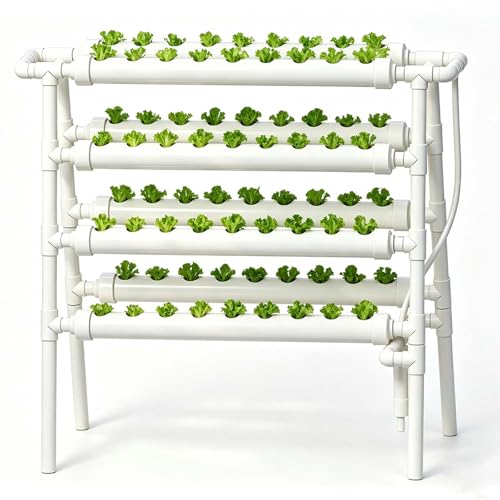
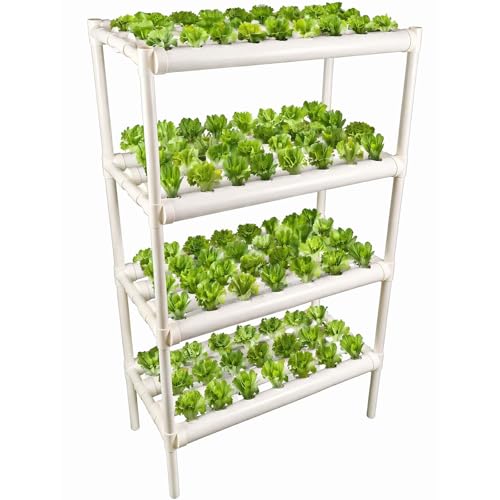
The Oksoar, LYCENXI and LetPot are one type of machine: a sealed tank, a light on a mast, and pods sitting in a deck above the water. Everything's integrated, they take up half a metre of bench, and the built-in light means they'll grow in a windowless corner of the house. The GROZY is the other type. It's an NFT rack, a frame of PVC pipes that nutrient water runs through on a timer, with plants sitting in net pots along each pipe. There's no light included, so indoors it needs a window with real sun or a separate panel hung over it, and it earns its keep on a balcony or patio instead. What you get for that trade is scale, with configurations running from 36 holes up to 144 across the range.
Which type you want falls straight out of the crop maths above. If the goal is herbs and a bit of salad inside the house, a 12-pod tank kit is the right size and the right shape, and the integrated light is the part you'd struggle to rig neatly yourself. If the goal is real salad volume, a 36-hole NFT rack in a sunny spot will out-produce three countertop kits for less money than three countertop kits would cost. The catch is that it looks like plumbing because it is plumbing: you'll be mixing nutrients in a tank, checking the pump inlet for root debris, and living with pipes on the balcony. Some people love that side of it. You already know which sort of person you are.
What one of these adds to the power bill
The running costs are small, but let's say the assumption out loud rather than hand-waving: the AU average tariff is roughly 33c/kWh. The LetPot's 24W light on a typical 14 to 16 hours a day draws about 0.34 to 0.38 kWh, call it 11c to 13c a day, or around $3.50 a month. The LYCENXI's listing doesn't state a wattage, so use the LetPot as the reference point and check the label on the plugpack when it arrives. The pumps are a few watts each and cycle on and off, so they're rounding error in the total. A hydro kit is not the appliance that moves your power bill, and if you want to see exactly what yours draws rather than take my arithmetic for it, a metering smart plug under it settles the argument for about $25.
The number that does matter is hours, because a grow light only earns its power if it runs long enough to feed the plants. Cutting the light back to 8 hours to save money mostly buys you leggy, pale seedlings and the same pump maintenance for less crop, and the saving works out around 6c a day. Set the timer for the plant, not for the bill. If a few dollars a month genuinely bothers you, the better place to claw it back is the standby load hiding elsewhere in the house, which we've already written up in our power savings rundown. One kit running properly beats two kits running dim, every single time.
Water, algae and keeping the tank honest
Tap water is fine for leafy greens in most Australian suburbs, with the two-part nutrient going in at the rate printed on the bottle. The maintenance that actually matters is the boring kind. Top the tank up before it runs low, because a pump sucking air is the number one killer of these kits, and the LetPot's 5.5L tank stretching to roughly three weeks between fills is a genuine advantage there. Every few weeks, or between crops at least, drain the tank, wipe it out and rinse the pump inlet under the tap. Roots shed debris constantly, nutrient residue builds up on every surface, and a pump inlet packed with root fuzz flows half of what it should long before it stops entirely.
Algae is the other tenant trying to move in. It needs light plus nutrient-rich water, and you're supplying both, so the whole game is keeping light off the water: keep unused pod holes covered with the blanking caps that ship with the kit, and don't run a kit in direct sun through a window if you can avoid it. A bit of green film on the deck is cosmetic. A neglected tank in a warm room turns into soup, smells like a pond, and takes the crop down with it. Ten minutes of cleaning a fortnight keeps the whole system sweet, which is a better trade than any feature on any listing here.
The first-crop mistakes that put people off
Most abandoned hydro kits fail in the first six weeks, and it's nearly always the same handful of mistakes. Planting all 12 pods at once is the big one: a dozen lettuces mature the same week, you eat salad for seven days straight, then stare at an empty deck for a month. Sow three or four pods every fortnight instead and the kit produces continuously. Mixing tall and short crops under one light is the next: basil shoots up, hogs the lamp, and shades the lettuce into sulking. Group plants by height, or give the tall ones their own kit. And raise the light as plants grow rather than letting leaves press against it, because leaf-on-lamp contact scorches the leaf and cooks dust onto the diodes.
Germination is slower than the listings imply, and that's normal rather than a fault. Keep the sponges damp, leave the little humidity domes on if your kit has them, and resist moving pods around to check on them, because every move tears the new roots that have started gripping the sponge. Some seeds simply don't strike, so drop two or three seeds in each sponge and thin to the strongest seedling instead of replanting a failed pod a week later. The people who get years out of these kits treat the first crop as calibration: basic seed, quick greens, learn the machine. The ones who start with a full deck of exotic everything usually list the kit on Marketplace by spring.
Water and a powerboard on the same bench
Every kit here is a tank of conductive nutrient water with mains-powered electronics standing over it, so set the bench up like you mean it. Put the powerboard above or beside the kit, never on the floor below the tank where a drip or an overflow lands on it first. Leave a drip loop in each cord, a sag below the socket, so water tracking down the cable falls off the bottom of the loop instead of walking straight into the plug. Check the plugpack carries an RCM compliance mark, which the reputable brands do, and if a kit turns up with a no-name brick that rattles when you shake it, replace that part first. We've opened enough dodgy power bricks to have firm opinions on rattles.
Nutrient spills are worse than plain water because the dissolved salts keep conducting and keep corroding long after the puddle looks dry. If a tank lets go near anything electronic, power things off at the wall before touching anything, dry what you can reach, and get whatever got wet looked at promptly instead of waiting for it to fail a month later, because corrosion compounds over weeks. It's the same advice we give phone owners at our Erina workshop: the gear that comes in the same week usually lives, and the gear that seemed fine for a month usually doesn't.
The 4 picks, $86 to $159
Prices are Amazon AU at time of writing (26 September 2026) and move week to week. Ranks are Amazon AU category sales ranks, checked the same day.

Oksoar 12-Pod Indoor Hydroponics Growing System
ASIN B0CQYMMD3T • $88.60 • Sold by Ekvinor-au on Amazon AU
This is the kit selling hardest in the category right now, sitting at #3 in Amazon AU's Plant Growing Lamps chart at time of writing, and the $89 price is clearly the reason. You get the full countertop formula: a 12-pod deck, a tank underneath, and an LED grow lamp on a mast over the top, in black. The listing pitches it at exactly what these machines are good at, lettuce, leafy greens and herbs, and doesn't pretend it's a tomato factory, which I'll take as a small mark of honesty in a category that loves a glowing tomato photo. It's sold through Ekvinor-au, an AU storefront seller on Amazon, with the usual Amazon returns window behind it if it arrives faulty.
The trade-off for the price is information. The listing doesn't state the LED wattage, the tank volume or the pump behaviour, and it doesn't say what consumables ship in the box beyond the germination kit. That's not unusual at this end of the market, but it means you should price a bag of generic grow sponges and a bottle of two-part nutrient into the purchase from day one rather than assuming the box covers your first crop and beyond. Standard sponges are cut-to-fit and generic nutrient works in any tank of this style, so nothing here locks you in permanently. You're just doing slightly more homework up front than the branded kits ask of you, and saving real money for the trouble.
As a first kit to find out whether you'll actually use one, this is the sensible experiment. Herbs in the workshop, a few salad pods, and if it turns out you love it you'll know exactly which features you're missing: a quieter night mode, a bigger tank, a taller light. If the novelty wears off by week six instead, you've learned that for $89 rather than $159. Either result is worth having. The resale market for barely used hydro kits is thin enough that buying the dear one first is the worse gamble, so start here unless you already know the habit sticks.
Honest caveats: The listing states no LED wattage, no tank size and no pump cycle details, and the brand has no track record I can point to. No app and no night mode are mentioned anywhere. Plan on generic sponges and nutrient immediately, and check the plugpack for an RCM mark when it lands.
Best for: First-timers who want to test the habit for very little money.
Pods: 12 • Style: Countertop tank with LED light mast • LED power: Not stated on the listing • Tank size: Not stated on the listing • Best crops: Lettuce, leafy greens, herbs • In the box: Germination kit, LED grow lamp • Colour: Black • Rank: #3 in Plant Growing Lamps (Amazon AU)
View on Amazon AU
LYCENXI 12-Pod Indoor Hydroponics Garden, 4L Tank and Schedulable LED Light
ASIN B0GS5GJCYX • $85.99 • Sold by HNSMART-Au on Amazon AU
This is the kit I'd shortlist for a bedroom or a studio, and it earns that on what the listing actually commits to. Twelve pods, a built-in automatic circulation pump that the listing calls extremely low noise, and an LED light you can schedule anywhere from 0 to 24 hours a day with dimmable intensity, so the lamp can be off while you sleep and turned down for seedlings. It sits at #203 in Amazon AU's Plant Growing Lamps chart at time of writing, sold through HNSMART-Au, an AU storefront on Amazon, at about $86.
The housekeeping figures are better than you'd expect at this price. The listing gives a 4L tank and says one filling lasts 18 days, which is the seller's claim rather than a measurement, so treat it as a ceiling and still look at the level weekly: a pump sucking air is what kills these kits. The light mast adjusts up to 12 inches, about 30cm, and the lamp is described as full-spectrum SMD LED. That is plenty for lettuce and herbs, and a happy basil plant will find the ceiling in a good run, where the LetPot's roughly 76cm gives more room.
What the listing leaves out is worth knowing before you order. There's no LED wattage, no model number, and no clear list of what consumables ship in the box, and the brand, LYCENXI, has no track record I can point to. Price a bag of generic grow sponges and a bottle of two-part nutrient in from day one, check that the baskets take standard sponges, and look for an RCM mark on the plugpack when it lands.
Honest caveats: No LED wattage or model number on the listing, and the 18-day tank figure and the low-noise pump are the seller's claims, with no decibel figure given. No app is mentioned. Sold by HNSMART-Au rather than Amazon directly, so glance over the returns terms before ordering.
Best for: A bedroom or studio kit with a 4L tank and a light you can schedule off overnight.
Pods: 12 • Brand: LYCENXI • Light: Full-spectrum SMD LED, 0-24h schedule, dimmable • Light height: Adjustable up to 12 inch (about 30cm) • Tank: 4L, listing claims 18 days per fill • Pump: Built-in automatic circulation, listed as low noise • LED power: Not stated on the listing • Rank: #203 in Plant Growing Lamps (Amazon AU)
View on Amazon AU
GROZY Automatic NFT Hydroponic Kit, Double-Sided Ladder
ASIN B0H364RD98 • $126.99 • Sold by TwinStarsAu on Amazon AU
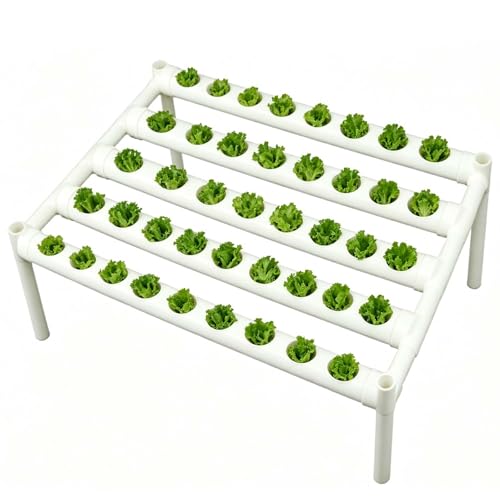
The GROZY is the odd one out here and the most interesting. It's an NFT system: a ladder-shaped frame of PVC-U pipes that a submersible pump cycles nutrient water through on a timer, with plants sitting in net pots along each pipe run. This is the architecture commercial lettuce farms use, shrunk to balcony size, and the double-sided ladder layout at $127 at time of writing packs a lot of growing holes into a small footprint. The kit is complete in the box: frame, pump, timer, net pots, grow sponges, seedling cloth, water tank and the manual. What it doesn't include is a light, because it was never meant to be a countertop appliance. It's an outdoor or sunny-window machine.
Scale is what you're buying. Where every countertop kit on this list tops out at 12 pods, the GROZY range runs from 36 holes up to 144 depending on the configuration you order, and even the smaller layouts will out-produce a tank kit several times over once they're dialled in. Salad for a household, every week through the warm half of the year, is a realistic target rather than a marketing line. The running is more hands-on: you mix nutrients in the tank yourself, keep the pump inlet clear of root debris, and adjust the timer with the seasons. Every part is a standard hydro-shop item, pump included, which matters on the day something eventually needs replacing. It's sold through TwinStarsAu, an AU storefront, ranked #296 in Hydroponics at time of writing.
Be realistic about where it lives. A frame of pipes full of moving water standing on a timber floor indoors is a plan with one very obvious failure mode, and the constant trickle while the pump runs makes it a poor housemate in a quiet room anyway. On a balcony, a patio or against a north-facing wall it's in its element, and a spot with real sun replaces the light a countertop kit would've needed. If you're renting, it moves out as easily as it moved in, which is more than you can say for a garden bed.
Honest caveats: No grow light included, so indoors it needs real sun through glass or a separate panel over it. The listing doesn't state pump wattage or tank volume, and the hole count changes with the configuration, so read the exact option you're ordering. Water noise is constant whenever the pump runs.
Best for: Balcony growers who want serious salad volume and don't mind visible plumbing.
Style: NFT pipe system, double-sided ladder • Pipe material: PVC-U water-supply pipe • Capacity: 36 to 144 holes across the range • In the box: Pump, timer, net pots, sponges, seedling cloth, tank • Grow light: Not included • Placement: Indoor or outdoor • Rank: #296 in Hydroponics (Amazon AU)
View on Amazon AU
LetPot LPH-Lite 12-Pod Smart Hydroponics Kit
ASIN B0DT3VVMW5 • $159.00 • Ships from Amazon AU
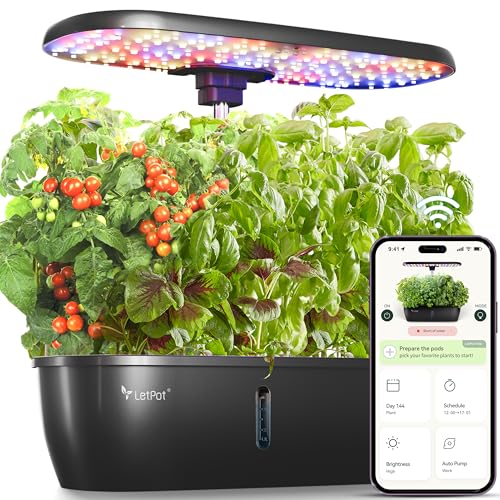
The LetPot LPH-Lite is the one Amazon AU sells directly, and at $159 at time of writing it tops this list on features rather than size. Twelve pods like the rest, but the housekeeping is better everywhere you look: a 24W full-spectrum panel, a light mast that extends to about 76cm so plants get headroom nothing else here offers, and a 5.5L tank the listing rates at up to three weeks between refills. The app is the headline, scheduling the light anywhere across 24 hours from your phone over Wi-Fi, with watering reminders so the pump never gets to run a dry tank. The first crop is covered out of the box too: cups, sponges, baskets and A and B nutrients all ship with it.
The app deserves a fair hearing, because I'm usually the one rolling my eyes at Wi-Fi kitchen gadgets. Here it earns its keep in two specific ways: the light schedule keeps running properly while you're away for a week, and the top-up reminder attacks the single most common way these kits die, a pump running dry while everyone's busy. The double-walled tank, resin inner and ABS outer per the listing, is also easier to clean between crops than the thin single-skin tanks on kits half its price. None of that changes what it grows. It's still a leaves-and-herbs machine, just the one with the tallest headroom here, which matters once a basil plant hits its stride in December.
The case against it is simple: it's $70 over the Oksoar for the same pod count, and if the kit lives somewhere you look at daily, the reminders solve a problem you don't have. The case for it is that it's the pick most likely to still be growing something in two years: Amazon AU retail behind it, standard sponge sizes fitting the baskets, a tank you can actually get a hand into for cleaning, and enough light headroom that one good summer won't outgrow it. If you already know the habit sticks, buy once and buy this one.
Honest caveats: App control means a cloud account and a 2.4GHz Wi-Fi network, and if LetPot's servers ever go dark the smart features go with them, though light and pump still run manually. Amazon files it under Artificial & Dried Flora, so its sales rank tells you nothing useful next to the others here.
Best for: The keeper kit: tallest light, biggest tank, and reminders that stop the pump running dry.
Pods: 12 • LED power: 24W full spectrum • Tank: 5.5L, up to 3 weeks between refills • Control: App + Wi-Fi, 0-24h light scheduling • Light height: Adjustable to about 76cm (30 in) • In the box: Cups, sponges, baskets, A&B nutrients • Construction: Double-walled tank, resin inner, ABS outer • Rank: #2590 in Artificial & Dried Flora (Amazon AU)
View on Amazon AUSide-by-side comparison
| Product | Price | Best for |
|---|---|---|
| iDOO 8 Pods Hydroponics Growing System | ~$79.99 | Smallest and cheapest tank kit: 8 pods, plants up to 15 inches |
| LYCENXI 12-Pod Indoor Hydroponic Garden, 4L | ~$85.99 | A quiet-room kit with a 4L tank and a schedulable light |
| Indoor Garden Hydroponics Growing System:… | ~$88.60 | First-timers testing the habit for very little money |
| GROZY Automatic Hydroponic Growing NFT… | ~$109.99 | A balcony NFT rack at a lower price than the ladder |
| GROZY Automatic Hydroponic Growing NFT… | ~$126.99 | Balcony growers who want serious salad volume |
| LetPot LPH-Lite Hydroponics Growing System | ~$159 | The keeper: app control, tallest light, 5.5L tank |
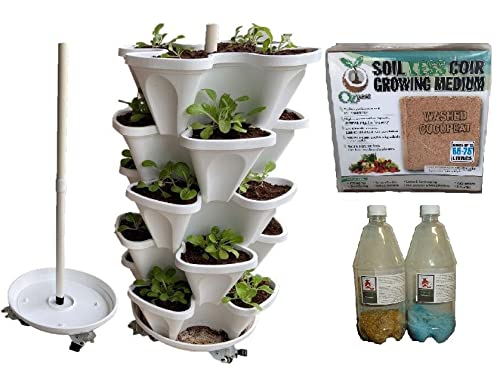
| Mr Stacky Australia - Large 5 Tier Vertical… | ~$155 | A 5-tier vertical planter with a coco coir and perlite pack |
| GROZY Automatic Hydroponic Growing NFT… | ~$209.99 | The dearest GROZY configuration for balcony or patio growing |
What we see fail at the bench: hydro kits
A hydroponic kit is a pump, a plugpack, an LED array and a timer standing over a tank of salty, conductive water, which is to say it's four of the five things we repair most often, arranged directly above the thing that kills them. The kits themselves rarely land on our bench. The electronics that shared a powerboard with one do, and the failure patterns are predictable enough to be worth writing down.
The plugpack dies before the pump
The submersible pumps in these kits are simple, sealed and surprisingly durable, and the wall plugpack feeding them is usually the weakest part in the box. No-name 12V bricks running warm around the clock dry out their capacitors inside a couple of years, and the first symptom is often a pump that hums but won't push water, which gets the pump blamed and replaced for nothing. Before you bin a pump, try a known-good supply of the same voltage and polarity. And check the brick that shipped with your kit for an RCM mark: if it doesn't carry one, replace it on principle before it takes out something dearer than a herb garden.
Nutrient water doesn't dry clean
Plain water evaporates and mostly leaves. Nutrient solution evaporates and leaves its salts behind, and those salts keep pulling moisture out of the air and keep conducting across whatever they landed on. A splash across a powerboard or down the back of a bench doesn't fail anything that day. It corrodes quietly for weeks, then something stops making sense: a USB port drops out, a charger runs hot, a board throws faults in humid weather. If nutrient water gets into anything with a plug on it, power it off at the wall, don't just wipe the outside, and have it opened and cleaned while the damage is still surface-level.
LED masts flicker before they fail
The grow light on a countertop kit is an LED array on a thin mast with its driver squeezed somewhere warm, and warm drivers are the whole story of LED failure. The pattern is nearly always the same: a flicker at switch-on that settles, then a flicker that doesn't, then whole sections of the array out. The diodes are usually fine; a driver or a connector let go. On a $90 kit that's a replacement, on dearer gear it's often a fix worth doing, and it's the same fault family as the panel lights and monitors we board-repair every week. Don't run a flickering light and hope. It doesn't heal.
Decision tree: which one should you actually buy?
- First kit, herbs on the kitchen bench, not much money down? → The Oksoar at $89. It's the honest experiment: if the habit sticks you'll know exactly what to upgrade to, and if it doesn't, you're not staring at $159 of guilt in the workshop.
- It's going in a bedroom, a studio or a very quiet house? → The LYCENXI at $86. The listing describes a low-noise circulation pump and a light you can schedule from 0 to 24 hours, so the lamp can be off overnight. Stand it on a rubber mat, because no listing guarantees silence.
- You travel, or you know you'll forget to top up the tank? → The LetPot at $159. The 5.5L tank runs up to three weeks between refills and the app nags you before the pump runs dry, which is the failure that kills more of these kits than anything else.
- Balcony, real sun, and you want actual salad volume? → The GROZY NFT ladder at $127. From 36 holes up it out-produces every countertop kit here. Just accept that it looks like plumbing and wants a weekly once-over.
- Tall basil jungle ambitions? → The LetPot again, for its roughly 76cm of light headroom. The 12 inch (about 30cm) ceiling on the LYCENXI is the first thing a happy basil plant finds.
- A pump that hums but won't pump, or a light that's started flickering? → Try a known-good plugpack before you blame the pump, and don't keep running a flickering light. If it's dearer gear, or the same spill caught something else in the workshop, bring it into the workshop in Erina and we'll tell you whether a fix beats replacement before you spend anything.
Frequently asked questions
Do hydroponic garden kits actually save money on herbs?
On herbs, yes, eventually, and on everything else, mostly no. A supermarket basil bunch runs a few dollars and half of it often goes to waste, so a kit cutting fresh basil, mint and coriander most of the year claws back its box price within a season or two, provided you run generic sponges and nutrient rather than branded refill pods. Count the power at roughly 11c to 13c a day for a 24W light on long hours at a 33c/kWh tariff, and consumables at a few dollars a month done sensibly. If the plan is lettuce only, payback is slower, and if the plan is tomatoes, treat the kit as a hobby rather than a saving.
Can I grow tomatoes or chillies in one of these kits?
You can start them, and a compact chilli will limp along and set some fruit in a bright spot, but the built-in lights on 12-pod kits are sized for leafy crops, not fruiting ones. Fruit needs several times the light energy of lettuce, plus hand pollination indoors, because nothing flies around your kitchen moving pollen for you. The realistic path is using a countertop kit to raise seedlings, then potting on under a proper grow light panel or outside in spring. Buy a 12-pod kit for herbs and salad and you'll be happy with it. Buy it for the tomato photo on the box and you won't.
Do I have to keep buying the branded pods?
Usually not, and it's the first thing to check before you order. Most 12-pod kits take a standard grow sponge that any hydroponics supplier sells in bags of 50, and the plastic baskets are reusable indefinitely. Branded refills bundle a sponge, seed and a nutrient dose at $2 to $4 a pod, which is convenient and poor value in roughly equal measure. A bag of generic sponges, a packet of seed and a bottle of two-part nutrient does the same job for a fraction of the cost. The kits to be wary of are the ones with odd proprietary baskets, so study the consumables on the listing as hard as you study the kit.
How loud are these kits at night?
The pumps themselves are quiet, a low hum plus some water trickle, but two things change that. Resonance is the first: a tank sitting directly on a hollow benchtop or timber shelf turns a hum into a buzz you'll hear from the next room, and a rubber mat under the kit mostly fixes it. Duty cycle is the second: a kit that rests the pump, or lets you schedule the light and pump, is far easier to live with in a bedroom than anything running constantly, so read the listing for a timer or cycle before you order. NFT pipe systems always make falling-water sound while running, which is why they belong on a balcony rather than in a studio flat.
How much power does a hydroponic kit use?
Less than the worriers think and more than zero. Work it from the tariff: at roughly 33c/kWh, about the AU average, a 24W light running 14 to 16 hours a day draws around 0.34 to 0.38 kWh, which is 11c to 13c a day or roughly $3.50 a month. The pump adds a few watts on a part-time cycle, small enough to ignore. Resist shortening the light hours to save money: the plants stretch and pale, the crop shrinks, and the saving is about 6c a day. If you want the real number for your kit rather than arithmetic, a metering smart plug will log it for you over a week.
Can I use normal tap water?
For herbs and leafy greens in most Australian suburbs, yes, straight from the tap with nutrient mixed in at the rate on the bottle. Some growers let a jug stand overnight before it goes in the tank, which does no harm if it makes you feel better. The water jobs that matter are mechanical: never let the level drop far enough for the pump to suck air, top up with plain water between full nutrient changes so the salts don't concentrate as water evaporates, and drain and wipe the tank between crops. Very hard water areas will see white scale on the deck sooner, which is cosmetic on the plastics but worth rinsing off the pump inlet.
Related buying guides
Hydro kit pump dead, or a light gone flickery?
Nine times out of ten it's the plugpack or the LED driver at fault, not the pump or the diodes, and both are small parts on gear people assume is dead. Before you replace the whole kit, bring it into the shop at Erina and we'll test the supply, open the light and tell you what a fix costs against a new unit, before you spend anything. Same goes for anything else in the workshop that caught a splash from the tank.
Visit our Erina workshop Book Online