Prices from Amazon AU, updated daily. Swipe or use the arrows for more.
Disclosure: This article contains affiliate links to amazon.com.au. If you buy through one of these links iFix may earn a small commission at no extra cost to you. It doesn't change which products we recommend. We focus on what actually lasts based on 16 years of repair-shop experience.
Quick summary8 picks
- Tapo P110 Energy Monitoring Smart about$22.00
- CheapestTapo P100 Smart about$20.00
- meross Mini Smart Plug with Energy Monitor… about$25.24
- meross Mini Smart Plug with Energy Monitor… about$36.99
- Tapo TP-Link Smart Plugs P100 & P110 –… about$42.00
- meross Matter Smart Plug Mini 2 Pack about$49.99
- Eve Energy about$69
- Most Premiummeross Mini Smart Plug with Energy Monitor… about$69.99
The overnight number most houses have never looked at
Turn everything in the house off tonight and the meter keeps ticking over anyway. That's the standby load: the modem, a couple of TVs, the console that's off but still listening for a controller, the soundbar, the printer, and whatever's been plugged in out in the garage since 2019. None of it looks like much on its own. Together, plenty of homes idle at a constant 40 to 80 watts, day and night, all year. At the average tariff of roughly 33c per kilowatt hour, a constant 60W draw works out to about 526kWh a year, which is roughly $173. That's the assumption stated up front, and you can rerun the sums against whatever rate is on your own bill.
The problem isn't that people don't care, it's that nobody actually knows which device is the culprit. Households blame the beer fridge, and half the time it turns out to be a fifteen-year-old set-top box or a pool controller nobody has touched in years. Guessing leads to the wrong fixes: I've watched people replace a fridge that was fine while the real offender kept drawing quietly two rooms away. A metering smart plug ends the argument. You plug the suspect into it, leave it for a day or a week, and read the number in the app. Every pick below has energy monitoring built in, ships new from an AU seller on Amazon, and costs less than the mistake it's there to find.
Why the metering matters more than the switching
A smart plug without a meter is a remote-controlled timer. Useful, but it only automates what you already believe about the house. The metering version is a diagnostic tool, and that's a different class of purchase. It tells you the TV bench draws 22W doing nothing, that the second fridge costs more per year than its contents, or that the dryer everyone blames is actually innocent. Once you have the numbers, the fixes are usually boring and free: a switch gets turned off at the wall, a schedule gets set, one appliance gets retired.
There's a second layer to this. A plug meters one appliance at a time, which is exactly what you want for hunting a specific suspect. If you'd rather see the whole switchboard at once, that's a different device, and I've already covered the clamp-style units in the guide to whole-house energy monitors. The two work well together: the switchboard monitor tells you the house idles high, the plug tells you which socket is responsible. Starting with a single $23 metering plug and moving it around the house each week is the lowest-cost version of that audit, and for most homes it's enough.
The switching still earns its keep once the measuring is done. A plug that's shown you the entertainment unit draws 30W overnight can then be scheduled to kill that circuit at midnight and bring it back before anyone's up. That's the pattern I'd push you toward: measure first, automate second. Doing it in the other order is how people end up with a drawer of smart gear and a power bill that hasn't moved.
What to look for on the listing
The spec sheet on a smart plug is short, so the few numbers that exist matter. The load rating is the big one. A standard Australian socket is 10A, which at 240V is 2,400W, and every plug in this list is rated to that same 10A ceiling. That means the plug isn't the weak link on paper, but it also means there's no headroom: a 2,400W heater through a smart plug has the relay working at its limit every time it switches. I'll come back to that.
- Metering with history. Real-time watts is a party trick. The useful data is the daily and monthly history, because standby waste only shows up over time. All five picks log history in their apps.
- 2.4GHz Wi-Fi. These plugs join 2.4GHz networks, not 5GHz. If your router merges both bands under one name, some plugs sulk during setup. A separate 2.4GHz SSID fixes it.
- RCM compliance. Mains gear sold here should carry the Australian RCM mark. Established brands like Meross, TP-Link and Eve do the paperwork. The no-name marketplace plugs are where that gets murky, and it's mains voltage in your wall, so I don't gamble on it.
- Local control. Ask what happens when the internet drops or the maker's cloud dies. The Meross units run offline routines locally, and the Eve doesn't use a cloud at all.
Build material gets a mention because the listings raise it: the Meross plugs are moulded in V0 flame-retardant plastic, which is the self-extinguishing grade. That's not a licence to run them hard, it's just the right material for a device that lives on mains power behind a couch. While you're reading listings, note who's actually selling. Everything here ships either from Amazon AU itself or from the brand's own AU storefront, and I'd hold any smart plug purchase to that standard, because grey imports with foreign pin adaptors have no place in an Australian wall.
Matter, Thread and whether you need a hub
The plain Wi-Fi plugs here, the standard Meross units and the Tapo pair, need nothing but your router and their own app. Setup is a few minutes over Bluetooth and 2.4GHz Wi-Fi, and voice control through Alexa or Google works once the accounts are linked. For a standby audit, that's the whole requirement, and it's why the $23 Meross is where I'd point most people first.
Matter is the newer path, and it changes the shape of the purchase. The Matter versions of these plugs, the Meross Matter twin pack and the Eve Energy, don't talk to your phone directly in day-to-day use. They join your home through a Matter hub: an Echo, a Google Nest hub or an Apple TV class device, per both listings. The payoff is that the plug stops caring which ecosystem you run. Buy it for an Apple house, move it to a Google house later, it comes along. The Eve goes a step further with Thread, a low-power mesh radio, and per its listing there's no Eve cloud and no account registration at all, which is the most future-proof arrangement on this page.
My honest read: if you don't already own a hub, don't buy one just to run a smart plug. Get the Wi-Fi version, do the audit, and let the ecosystem question wait, because a hub bought for one plug is the tail wagging the dog. If you're already building out a mixed smart home on a plan, and I've written about doing that without wasting money in the smart home on a budget guide, then the Matter units are the ones that won't need replacing when you change platforms, and that's where the extra spend starts making sense.
What a smart plug shouldn't be asked to do
The relay inside a smart plug is a mechanical switch, and switching is when it wears. Small loads barely register. Big resistive loads, which mostly means heaters, arc the contacts a little every cycle, and an automation that flicks a 2,400W heater on and off all winter is a relay endurance test. Metering a heater is fine and genuinely useful. Scheduling one through a smart plug every day for years is where I'd expect the plug to fail first, and a heater circuit is the worst place for a welded-shut relay. If winter heating automation is the actual goal, a hard-wired solution installed by an electrician is the version of that idea I'd put my name to.
The other rule costs nothing: the plug goes into the wall socket, not into a powerboard, and especially not with a heater behind it. Powerboards and their protection circuits are their own subject, and I've been through the joule ratings and failure behaviour in the surge powerboard guide, but daisy-chaining high-draw appliances is how boards cook regardless of brand. Fridges are a softer case. Metering a fridge is one of the best uses of these plugs, because an old chest freezer with a tired door seal shows up instantly in the daily kWh figure. Just think twice before automating the switching on anything that keeps food cold, since one failed reconnect costs you the contents.
How to run a standby audit over a weekend
Here's the method I give customers, and it takes ten minutes of effort spread over a week. Day one, the plug goes on the entertainment unit's socket, everything in its normal off state, and you note the overnight draw the next morning. Day two, the modem and network shelf. Then the garage, the second fridge, the office desk, the washing machine. You're not watching live watts, you're reading the accumulated kWh each morning, because a device that pulses (a fridge compressor, a printer waking to check ink) lies to a live reading and can't lie to the daily total.
Then you do the arithmetic, with the assumption stated: at roughly 33c per kilowatt hour, every constant watt of standby is about $2.90 a year. A TV bench idling at 25W is roughly $72 a year. A forgotten desktop PC sleeping badly at 40W is about $115. Those numbers are what turn the audit into action, because 'the soundbar draws a bit' moves nobody, and 'the soundbar corner costs $70 a year switched off' gets the powerboard switched at the wall every night. I've written up which whole-of-house changes actually shift an Australian bill, and which are gimmicks, in the smart home power savings breakdown, and the plug audit is step one of that.
One warning from experience: expect an anticlimax somewhere. At least one device you were sure about will measure at 2W and be fine. That's a good result. The audit's job is to aim your effort at the two or three sockets that matter, not to justify a purchase you already made. Write the readings down as you go, because in six months, when the next bill argument starts, the notebook settles it in thirty seconds.
Where the plugs themselves die
Smart plugs are simple boards: a switch-mode power supply dropping mains to a few volts, a Wi-Fi module, a relay, and a metering IC watching a shunt. When the branded ones fail, it's usually the relay after years of switching a hard load, or the little power supply drying out after a life spent warm. The no-name versions fail in less polite ways, which is a pattern familiar from the counterfeit chargers I've pulled apart in the bad chargers write-up: creepage distances that don't exist, solder bridges near the mains side, heat-stressed capacitors doming inside a case with no vents. The purchase price difference between those two classes of hardware is about the cost of a takeaway lunch, and the difference in what they're doing inside your wall is not.
The other way these products die has nothing to do with electronics. The maker shuts its cloud down, the app gets abandoned, and a working plug turns into a paperweight because it can't be set up on a new phone. That's why local control sits in my checklist above, and it's a genuine argument for the Matter and Thread units: their control path belongs to the standard, not to one company's server staying up. If a plug of yours has already dropped off the network and re-pairing hasn't fixed it, it's rarely worth bench time on a $23 device, but if it took something valuable with it when it failed, that's a different conversation and you can bring the casualty into the workshop in Erina for a proper look.
The 5 picks, $23 to $70
Prices are Amazon AU at time of writing (7 September 2026) and move week to week. Ranks are Amazon AU category sales ranks, checked the same day.

Meross Mini Smart Plug with Energy Monitor (single)
ASIN B0DPMV7FLN • $23.13 • Ships from Amazon AU
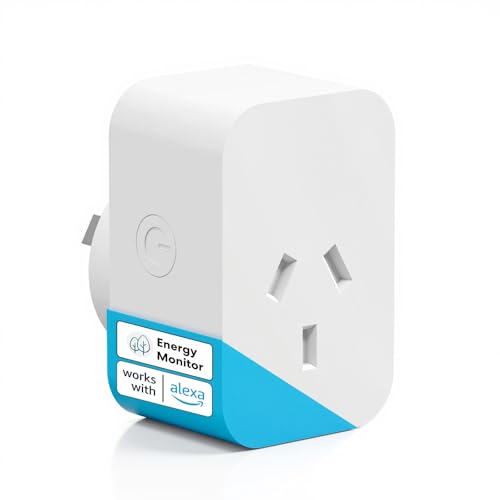
This is the $23 answer to most of the questions in this guide. It's a compact 10A plug with real-time energy monitoring and, more usefully, consumption history, so you can park it on a suspect appliance for a week and read the damage in the Meross app. The app will also turn the kWh into an estimated cost figure once you feed it your tariff, which makes the household argument shorter. As the lowest-priced way onto this page, it's the one I'd hand to someone who isn't sure they care about smart plugs at all yet, because the audit it enables pays for the hardware quickly in most houses, and if it doesn't, you've spent $23 learning your house was fine.
Setup runs over Bluetooth onto your 2.4GHz Wi-Fi with no hub involved, and with Meross gear that's minutes rather than an evening in my experience. The listing makes two claims I rate. First, the body is V0 fire-resistant material, the self-extinguishing plastic grade you want wrapped around anything living on mains power behind furniture. Second, the mini form factor genuinely doesn't block the neighbouring outlet on a standard double GPO, which sounds trivial until you've owned a smart plug shaped like a house brick. Schedules, countdown timers and scenes all live in the app, voice control works through Alexa, Google Home and SmartThings once the accounts are linked, and the consumption history sits two taps from the front screen.
The detail that separates Meross from much of the category is offline behaviour: per the listing, schedules and routines keep running locally when the internet is down, and control still works from the app on the same network. That matters for a device you might leave switching a fridge or a fish tank. It also happens to be the top seller in its lane, sitting at number 1 in Amazon AU's Electrical Connectors category at time of checking, and popularity has a practical upside: app updates keep coming, and the quirks are already documented before you meet them.
Honest caveats: One plug means a serial audit, one appliance at a time, so the whole-house picture takes weeks. It's 2.4GHz only, and routers that merge bands under one SSID can make setup fussy. No Matter on this version, and metering accuracy isn't stated on the listing.
Best for: Anyone starting a standby audit who wants the simplest credible meter to move from socket to socket.
Max load: 10A (2,400W on a 240V socket) • Energy monitoring: Real-time + history, Meross app • Wi-Fi: 2.4GHz, Bluetooth setup • Hub required: No • Voice: Alexa, Google Home, SmartThings • Local control: Offline schedules and routines • Material: V0 flame-retardant body • Price: $23.13 at time of writing • Rank: #1 in Electrical Connectors (Amazon AU)
View on Amazon AU
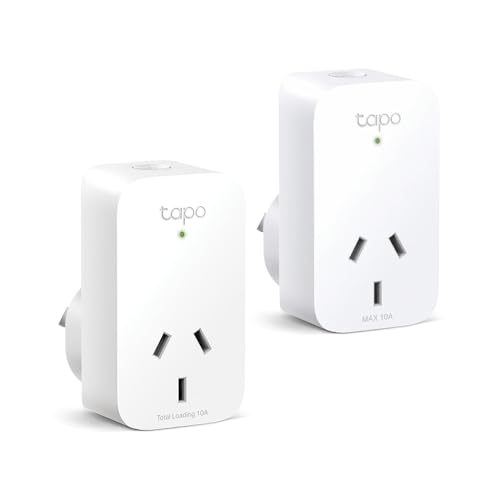
Tapo TP-Link Smart Plug Twin Pack (P110 + P100)
ASIN B0FR6LGBQ8 • $37.90 • Ships from Amazon AU
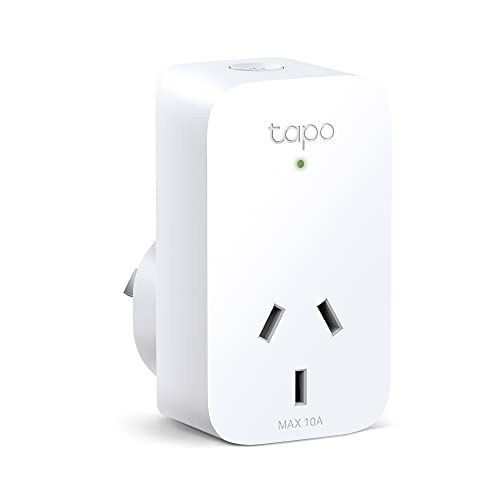
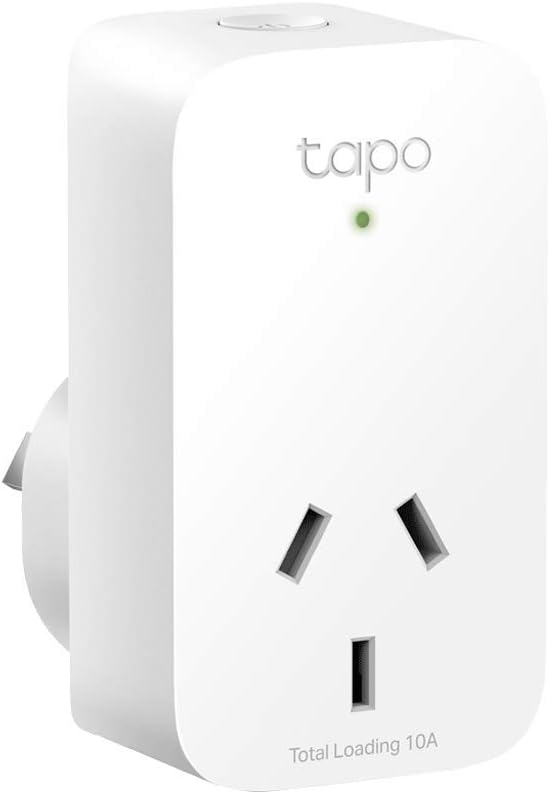
TP-Link's Tapo range is the volume seller in Australian smart homes, and this box is a clever split: one P110 with full energy monitoring, one P100 that's a plain smart switch. That mirrors how these actually get used once the novelty wears off. The metered P110 goes on the appliance you're investigating, the P100 goes on the lamp or the pedestal fan you just want on a schedule, and you haven't paid metering money twice for one metering job. The P110's tracking covers consumption history and cost estimates for whatever's plugged into it, which is the same audit capability as the Meross single, with a second workhorse plug thrown in for roughly $15 more than the Meross costs on its own.
Both plugs run without a hub over 2.4GHz Wi-Fi, controlled through the Tapo app or by voice via Alexa and Google Assistant. The listing's Away Mode is a feature I'd actually use: it varies switch-on times so a lamp doesn't snap on at exactly 7pm every night, which makes an empty house look lived in without any extra hardware. The compact shape keeps the second socket on a double outlet usable, and if you already run Tapo cameras, a Tapo doorbell or one of their Wi-Fi extenders, everything lands in the app you've already got. That consolidation is worth more than people expect once a smart home passes about five devices and the phone starts filling with single-purpose apps.
The pair sells steadily rather than spectacularly on Amazon AU, sitting at number 384 in the Electrical Equipment category at time of checking, which I'd put down to the twin-pack format rather than the hardware, since the P110 on its own is one of the most recommended metering plugs going. Tapo's pricing is aggressive for what's in the box, and the app is among the more polished in the category. At $37.90 for the two, the per-plug cost undercuts most single metered plugs, and both units ship from Amazon AU directly.
Honest caveats: Only the P110 meters; the P100 is switch-only, and the two look near identical once they're in the wall, so label them. Energy history rides on a TP-Link cloud account, and the listing doesn't describe offline behaviour, so assume schedules want the internet up. 2.4GHz only.
Best for: Households that want one meter for diagnosis plus a plain smart switch for daily automation, in one box.
In the box: P110 (metering) + P100 (switch only) • Energy tracking: P110 only, consumption + cost estimates • Hub required: No • Wi-Fi: 2.4GHz • Voice: Alexa, Google Assistant • Extras: Away Mode occupancy simulation • Price: $37.90 for two at time of writing • Rank: #384 in Electrical Equipment (Amazon AU)
View on Amazon AU
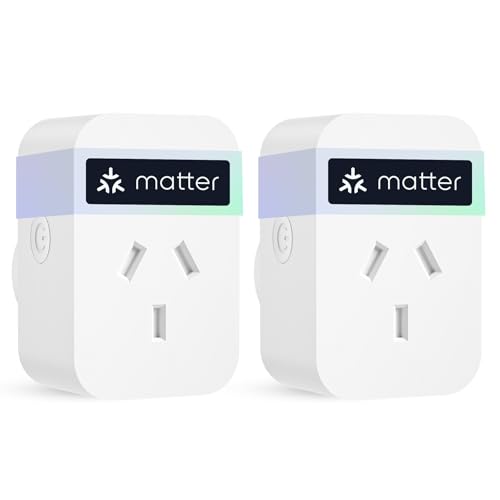
Meross Matter Smart Plug Mini, 2 Pack
ASIN B0DPMR35HW • $55.99 • Sold by Meross AU Direct on Amazon AU
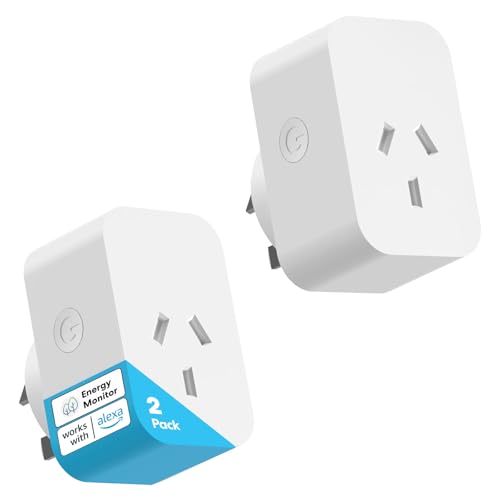
This is the same Meross hardware philosophy pointed at the future: a two pack of compact metered plugs that speak Matter, the cross-platform standard the big ecosystems finally settled on. In practice that means the plugs join your home through a Matter hub (the listing names Echo, Google Nest and Apple TV class devices) and after that they stop caring whose ecosystem you run. Control works across Alexa, Google Assistant and Siri, and if you swap platforms in three years the plugs move with you. For anyone deliberately building a smart home rather than accumulating one, that's the argument in one sentence, and it's also insurance against the app-abandonment failure mode covered further up, since Matter control keeps working through your hub regardless of any one vendor's app.
Energy monitoring stays on board, with real-time and historical data in the Meross app, so these still do audit duty. That's worth underlining, because plenty of Matter plugs skip the meter entirely, and the history is what a standby audit actually needs. The listing leans on two more points worth repeating: the ultra-compact 4.3 x 6.2 x 6.5cm body lets two sit side by side on a double outlet, which anyone with chunky first-generation smart plugs will appreciate, and Matter's local processing with end-to-end encryption means day-to-day control isn't detouring through an offshore cloud. Same V0 flame-retardant material as the standard Meross plugs, same mini footprint on the wall, just a different radio brain inside.
These sell well for a Matter product locally, at number 51 in Amazon AU's Electrical Equipment category at time of checking, sold through the Meross AU Direct storefront on Amazon AU, which is the manufacturer's own channel rather than a third-party reseller. At $55.99 the pair, you're paying about $28 per plug for the metering plus the platform independence, a modest premium over the plain Wi-Fi version of the same idea, and less per socket than the Eve while covering two of them. If the house is heading toward Matter anyway, buying the standard version now and replacing it later is the more expensive route.
Honest caveats: You need a Matter hub already in the house; without an Echo, Nest hub or Apple TV class device these don't reach their point. The listing doesn't state whether energy data surfaces inside every Matter dashboard or only in the Meross app, so check that against your setup before buying.
Best for: Smart homes being built on Matter deliberately, where the plugs should outlive any single ecosystem choice.
Standard: Matter over Wi-Fi • Hub: Required: Echo, Google Nest or Apple TV class • Energy monitoring: Real-time + history, Meross app • Voice: Alexa, Google Assistant, Siri • Size: 4.3 x 6.2 x 6.5cm, two fit side by side • Material: V0 flame-retardant body • Seller: Meross AU Direct on Amazon AU • Price: $55.99 for two at time of writing • Rank: #51 in Electrical Equipment (Amazon AU)
View on Amazon AU
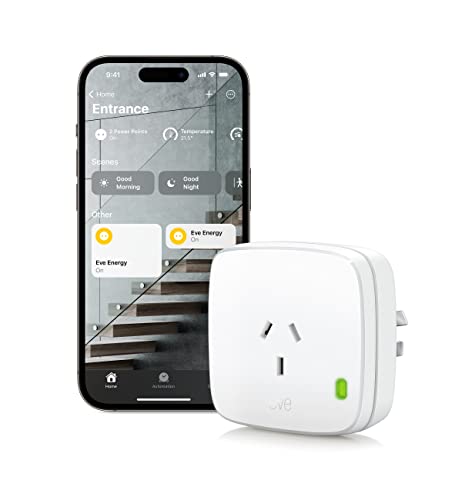
Eve Energy Smart Plug & Power Meter (AU, Matter)
ASIN B0C2HQMFPR • $69.00 • Ships from Amazon AU
Eve has been the privacy-first name in this category for years, and the AU Matter version of Eve Energy is the most grown-up plug on this page. The listing states it plainly: no Eve cloud, no registration, no tracking, with communication kept local. Your appliance's consumption data stays in your house, which I think matters more on a power meter than on almost any other smart device, because metering data is a diary of when you're home, when you cook and when you sleep. It's also TUV-certified, and Eve's hardware has a long-standing reputation for build quality that the price reflects; this is the plug you buy once, screw the automation down properly, and stop thinking about.
The radio side is the other differentiator: alongside Matter, Eve Energy runs Thread, the low-power mesh protocol, and per the listing it strengthens the reach and stability of an existing Thread network while it's at it. Every Thread device you add makes the mesh better, so in a house collecting Eve or other Thread sensors, each plug quietly does network duty too. The hub requirement is real, though: the listing specifies an Apple TV 4K, HomePod, SmartThings v3 hub, 4th-gen Echo, Nest Hub class device or similar before any of this works. If that list reads like a wall, that's rather the point of this pick: it assumes a household that has already committed to a platform.
Scheduling, scenes, presence-based switching and voice control all come through whichever platform your hub belongs to, so the day-to-day experience is native to your ecosystem rather than another vendor app. At $69 it costs three Meross singles, and it sits further down the sales charts at number 255 in Electrical Equipment on Amazon AU, which says more about the hub prerequisite than the product. It's the one plug here I'd expect to still be supported, local and working in a decade, because with no cloud in the loop there's no server shutdown that can strand it.
Honest caveats: Useless without a hub from the listing's supported list, so this is not the entry point for a first smart device. The premium buys privacy and Thread, not extra switching or metering ability, and Thread's benefits only show once other Thread devices exist in the house.
Best for: Apple Home and Thread households, and anyone who wants consumption data that never leaves the building.
Standard: Matter with Thread • Metering: Built-in power meter • Cloud: None: no registration, no Eve cloud, local communication • Hub: Required: Apple TV 4K, HomePod, SmartThings v3, Echo 4th gen or Nest Hub class • Certification: TUV-certified • Price: $69.00 at time of writing • Rank: #255 in Electrical Equipment (Amazon AU)
View on Amazon AU
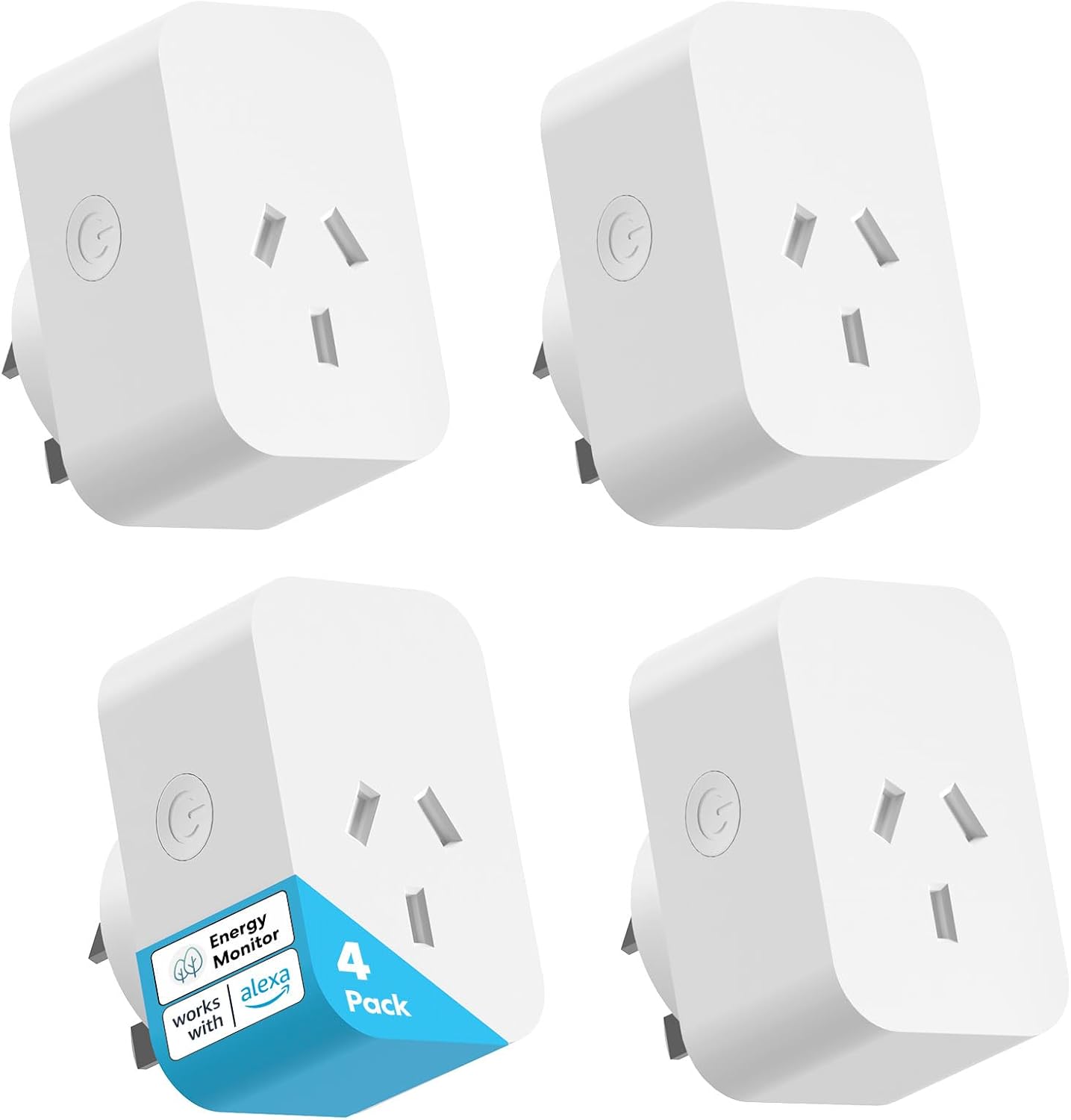
Meross Mini Smart Plug with Energy Monitor, 4 Pack
ASIN B0DPMWHJRB • $69.99 • Sold by Meross AU Direct on Amazon AU
Same plug as the single pick, four of them, and the arithmetic is most of the review: $69.99 divided by four is about $17.50 per metered plug, the lowest per-unit cost on this page by a distance. This is the pack for skipping the serial audit entirely. One plug lives on the entertainment unit, one on the network shelf, one on the second fridge, one on the office desk, and instead of moving a single meter around for a month you're reading four consumption histories on the same app screen by next weekend. The audit changes character with four meters running in parallel: you're ranking the whole household's background draw inside a week, and the surprises surface much faster.
Everything said about the single applies here: 10A rating, 2.4GHz Wi-Fi with Bluetooth setup and no hub, V0 flame-retardant bodies, and the offline behaviour that keeps schedules and routines running locally when the internet drops. The four pack adds practical weight to the app's scene and grouping features, since with plugs spread across the house you can group the whole standby population and kill it with one tap or one voice command at bedtime. Grouping matters more than it sounds, because in my experience the difference between a power bill that moves and one that doesn't is usually whether switching everything off takes one action or six separate trips around the house.
It shares the number 1 sales rank in Amazon AU's Electrical Connectors category with its single-pack sibling, and ships via the Meross AU Direct storefront on Amazon AU, which is Meross's own channel. For a household that's already decided standby waste is worth chasing, this is the better buy, and the per-plug price is the lowest going. The single remains the right first step for finding out whether you care; the four pack is what you order once the first week of readings has made the case for going wider.
Honest caveats: Same limits as the single: 2.4GHz only, no Matter on this version, and accuracy figures aren't stated on the listing. Four extra Wi-Fi clients is nothing for a decent router but can crowd an ISP-default unit already juggling dozens of IoT devices.
Best for: Committed households instrumenting four problem corners at once instead of rotating one meter for a month.
Count: 4 metered plugs, about $17.50 each • Max load: 10A per plug • Energy monitoring: Real-time + history, Meross app • Wi-Fi: 2.4GHz, no hub required • Voice: Alexa, Google Home, SmartThings • Local control: Offline schedules, scenes and grouping • Seller: Meross AU Direct on Amazon AU • Price: $69.99 for four at time of writing • Rank: #1 in Electrical Connectors (Amazon AU)
View on Amazon AUSide-by-side comparison
| Product | Price | Best for |
|---|---|---|
| Tapo P110 Energy Monitoring Smart | ~$22.00 | |
| Tapo P100 Smart | ~$20.00 | |
| meross Mini Smart Plug with Energy Monitor… | ~$25.24 | |
| meross Mini Smart Plug with Energy Monitor… | ~$36.99 | |
| Tapo TP-Link Smart Plugs P100 & P110 –… | ~$42.00 | |
| meross Matter Smart Plug Mini 2 Pack | ~$49.99 | |
| Eve Energy | ~$69 | |
| meross Mini Smart Plug with Energy Monitor… | ~$69.99 |
What we see fail at the bench: smart plugs
Smart plugs are simple boards, which is why the failures are so consistent. Inside the case there's a small switch-mode power supply, a Wi-Fi module, a metering IC reading a shunt resistor, and one mechanical relay doing the actual work. Three failure patterns cover nearly everything that goes wrong with them, and only one of those patterns is really about electronics wearing out.
Relay contacts that arc and stick
The relay is a mechanical switch, and every on-off cycle under load arcs the contacts a little. Small electronic loads barely mark them. Heaters and other big resistive loads are the killer, because switching 2,400W draws a proper arc each time, and after a few thousand cycles the contact faces pit and can weld. A stuck-closed relay on a lamp is an annoyance. On a heater circuit it means the automation you trusted to switch the thing off isn't switching anything, which is exactly why I'd meter a heater happily but think hard before scheduling one through a plug long-term.
No-name boards with mains where it shouldn't be
Open a branded plug and the mains side is separated from the low-voltage side with proper spacing and slots in the board. Open some of the marketplace specials and that separation is millimetres of hope. We've seen scorched boards, doming capacitors, and supplies that drifted until the Wi-Fi module browned out and the plug just rebooted in a loop all day. The RCM mark and an established brand don't guarantee perfection, but the teardown difference between a $23 Meross and a $9 mystery plug is not subtle, and it's your wall socket it lives in.
Clouds that die before the hardware
The most common way a smart plug becomes junk isn't electrical. The maker gets bought or gives up, the cloud goes dark, and a plug whose hardware is perfectly fine can't be paired to a new phone or added to a new router. There's no bench fix for a dead server. It's why local control is on my checklist, and it's the strongest practical argument for the Matter and Thread picks: their control path belongs to an industry standard rather than one company's hosting bill, so the hardware's lifespan is set by the relay, not the vendor.
Decision tree: which one should you actually buy?
- Just want to find out what's chewing power overnight? → The Meross single at $23. Move it socket to socket for a fortnight and you'll know exactly where the house stands.
- Want one meter for diagnosis and one everyday smart switch? → The Tapo twin pack at $37.90: the P110 does the metering, the P100 handles the lamp schedule.
- Instrumenting several problem corners of the house at once? → The Meross 4 pack at $69.99, which works out around $17.50 per metered plug and reads all four in one app screen.
- Building the smart home on Matter so nothing's locked to one ecosystem? → The Meross Matter 2 pack at $55.99, provided a Matter hub already lives in the house.
- Apple Home or Thread household, or just don't want consumption data leaving the building? → Eve Energy at $69: Matter plus Thread, no cloud, no account, per the listing.
- A device died at the same moment a plug, board or charger let go? → Stop plugging it into things and bring it in to our Erina workshop. We'll tell you what actually failed, and whether it's worth fixing, before you spend anything.
Frequently asked questions
How much standby power does a typical house actually waste?
More than most people guess, less than the scariest headlines. A constant 60W of standby, which is an ordinary figure for a home with a modem, two TVs, a console and a few chargers, comes to about 526kWh a year. At an assumed average tariff of 33c per kilowatt hour that's roughly $173 annually. The honest answer for your house needs measurement though, which is the whole point of a metering plug: every constant watt costs about $2.90 a year at that tariff, so a week of readings turns straight into dollar figures.
Can I run a heater through a smart plug?
Metering one, yes, and it's a genuinely useful thing to measure. Scheduling one every day, I'd avoid. A 2,400W heater sits at the full 10A rating of both the plug and a standard Australian socket, so the relay inside is switching at its design limit each cycle, and relay contacts pit and can eventually stick under that kind of arcing. A heater circuit is the worst place for a switch that might weld closed. And never run a heater through a powerboard, smart plug or not; wall socket only.
Do smart plugs keep working when the internet drops out?
It depends on the model, and it's worth checking before you buy. The Meross plugs in this guide state on their listings that schedules and routines keep running locally during an outage, with control still available from the app on the same network. The Tapo listing doesn't describe offline behaviour, so assume its schedules want the cloud reachable. The Matter and Thread units, the Meross Matter pack and Eve Energy, handle day-to-day control locally through your hub, and the Eve doesn't use a manufacturer cloud at all.
What's the difference between a smart plug and an energy monitor?
Scope. A metering smart plug measures one appliance at whatever socket it's plugged into, which makes it the right tool for finding a specific culprit. A whole-house energy monitor clamps around the mains in your switchboard and shows the entire property's draw in real time, which is better for spotting that the house idles high in the first place. They complement each other: the switchboard number tells you there's a problem, the plug tells you which socket owns it. If you only buy one, the $23 plug is the smaller experiment.
Do I need a hub for a smart plug?
Not for the plain Wi-Fi models. The standard Meross plugs and the Tapo pair connect straight to your 2.4GHz Wi-Fi and work from their apps with no other hardware. The Matter models are different: the Meross Matter pack and Eve Energy join your home through a Matter hub, which their listings specify as an Echo, Google Nest hub or Apple TV class device, and the Eve also uses Thread. My rule is simple: if you don't already own a hub, buy a Wi-Fi plug and let the ecosystem decision wait.
Will a smart plug actually pay for itself?
In most houses, yes, but through what it finds rather than what it switches. The plug itself draws a watt or so, and its scheduling might trim a few dollars a month. The real return is diagnostic: finding the second fridge that costs $150 a year, the always-on desktop, or the entertainment corner idling at 25W around the clock. One good find repays a $23 plug many times over. If a week of measuring turns up nothing, that's still worth knowing, because it stops you spending money fixing a problem the house doesn't have.
Related buying guides
Something died when the power blinked?
Surges and brownouts kill chargers, power supplies and the devices hanging off them, and the damage isn't always where it looks. Bring the casualty in to the Erina workshop and we'll diagnose what actually failed, whether it's worth repairing, and what it should cost, before you spend a dollar on parts or replacements.
Visit our Erina workshop Book Online