Prices from Amazon AU, updated daily. Swipe or use the arrows for more.
Disclosure: This article contains affiliate links to amazon.com.au. If you buy through one of these links iFix may earn a small commission at no extra cost to you. It doesn't change which products we recommend. We focus on what actually lasts based on 16 years of repair-shop experience.
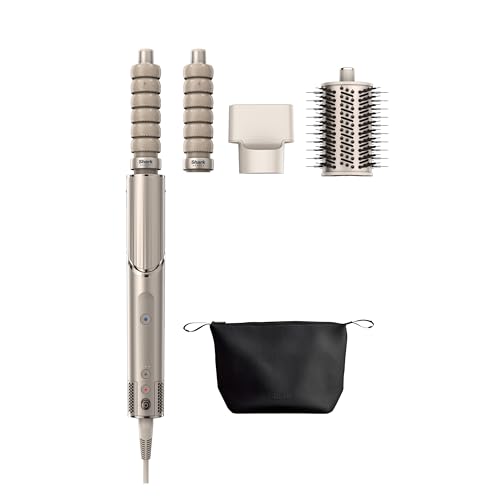
Quick summary5 picks
- CheapestShark FlexStyle 2-in-1 Professional Hair… about$372
- ghd Duet Style about$416
- Dyson Supersonic Nural™ Intelligent hair dryer about$533
- Shark Glam 5-in-1 Styling System about$649
- Most PremiumDyson Airwrap i.d.™ multi-styler and dryer about$695
What you're actually paying for at this price
A $40 hair dryer and a $530 Dyson both push hot air out of a nozzle, and if you only look at the job they do, the gap seems hard to justify. The difference is in how the air is made and how carefully the heat is controlled. Most budget dryers use a small brushed motor spinning a fan behind a coiled heating element, with a bimetal thermal cut-out and a one-shot thermal fuse as the only protection against overheating. They work, but the temperature at the nozzle swings around a lot, and they're loud because the fan has to spin fast to move enough air.
Premium dryers and stylers put more of the money into sensing and control. The Dyson Supersonic Nural's listing describes it adjusting its heat to hold the air at around 55°C near the scalp, and the Airwrap i.d. listing says it measures air temperature over 40 times a second and regulates the heater to match. That's a feedback loop, where a sensor reads the temperature and a control board adjusts the element, rather than a heater that's simply on or off. In practice it means more consistent heat, less chance of the scorching blast you sometimes get from a basic dryer, and a machine that's usually quieter for the airflow it delivers.
The other half of the price is build quality. Premium tools tend to use better cord strain reliefs, tighter-fitting attachments and housings that don't crack the first time they hit the tiles. That doesn't make them indestructible, and I see plenty of expensive tools come in with the same cord and filter faults as budget ones. It does mean they're usually worth repairing when something fails, which is rarely true of a $40 dryer, and that changes the real cost over the years you own one.
Dryer, multi-styler or 2-in-1
The four picks fall into three kinds of tool, and choosing the type first makes the brand decision much easier. A dedicated dryer like the Supersonic Nural is the fastest way to get hair from wet to dry, and its attachments are for shaping and smoothing as you go. A multi-styler like the Airwrap i.d. or the Shark Glam uses airflow through barrels and brushes to dry and curl or shape in one routine, which is slower than a dryer but replaces several tools on the vanity.
The ghd Duet Style sits in between as a 2-in-1 that dries hair like a dryer and then switches to a straightener at the push of a button. If your routine is dry and then straighten, it saves a step and a second appliance. If you mostly air-dry and only want a quick blow-dry on busy mornings, a plain dryer is the simpler buy. In my experience people who buy a multi-styler hoping to replace a dryer are sometimes disappointed by how long a full dry takes, so I'd buy for the finish you want most days rather than the most flexible box.
Hair length and type matter here too. Very long or thick hair takes much longer to dry on a multi-styler, because the barrels move less air than an open dryer nozzle. Short or fine hair dries quickly on any of them. If you have a lot of hair and want curls, a common approach is a rough dry with a dryer first and then a few minutes of styling, which is easier on the styler and quicker overall. That's worth thinking about before spending $650 on a tool you'll then use alongside another one.
Motors and why they decide the lifespan
The motor is the part that decides how long a dryer lasts, and it's the biggest technical gap between price brackets. Budget dryers mostly use small brushed DC motors running off a rectifier, or AC motors, and brushed motors wear their carbon brushes down over time. Once they're worn, the dryer starts to stutter, slows down or stops altogether. That's often the first thing to go on a dryer that gets used twice a day in a busy household.
Dyson's dryers and stylers use small electronically driven motors, run from a control board rather than through brushes, and that's a big reason they're expensive. Without brushes there's less to wear, and the motor can spin much faster, which is how a small fan can move a lot of air quietly. The trade-off is that the motor now depends on electronics, so a fault in the control board or a power surge can take out a machine that was mechanically fine. Shark and ghd don't state the motor type on these listings, so I can't tell you how theirs are built, only that they're designed to compete at the same level.
A good test of any dryer's motor is how it sounds on the first day compared with a year later. A healthy motor holds a steady, even note across every speed. A brushed motor that's wearing starts to sound rough or uneven, and if it changes speed by itself or needs a knock to start, the brushes or the switch are usually on the way out. On an electronically driven motor the warning signs are different: random cut-outs, error lights or a tool that won't power on at all after a surge.
Heat control and the numbers that matter
Heat is the setting people fiddle with most and understand least. Higher heat dries faster, but it also means more energy going into your hair and a hotter nozzle, which is why most premium tools cap their temperatures and lean on airflow to do the drying. The ghd Duet Style's listing gives a straightening temperature of 185°C, which is the plate-style heat it switches to for the straightening step. The Dyson listings describe the heat as regulated rather than giving a single top temperature.
The useful question to ask of any dryer is whether the heat is measured and controlled or simply switched on. A regulated tool should feel the same temperature at the start and end of a session, rather than getting hotter as the body warms up. The Supersonic Nural also pauses itself when you put it down, turning off the heater and dropping the airflow, which is good for safety as well as noise. Whichever you choose, use the lowest heat that gets the job done and let the airflow do more of the work. You'll usually get a similar result, and the heating element will thank you for it.
It's also worth knowing that the heat at the nozzle and the heat in your hair aren't the same thing. Distance makes a big difference, so holding a dryer a hand's width from your head rather than right against it lowers the temperature that actually reaches your hair, and that's true for any brand. A concentrator nozzle focuses the airflow and the heat into a narrower stream, so it's worth keeping the dryer moving when one is fitted rather than holding it in one spot.
Filters, lint and the overheating loop
Every hair dryer pulls air in through a grille or filter at the back, and every one of them slowly clogs with lint, dust and hair. This is the number one cause of dryers coming into the shop, because a clogged intake starves the fan, the element runs hotter with less air across it and the thermal cut-out starts tripping. On a basic dryer, enough of those cycles eventually blows the one-shot thermal fuse and the dryer just stops working.
Dyson uses a removable filter cage on the Supersonic and Airwrap, and cleaning it every week or two with a dry brush keeps the airflow where it should be. The Shark and ghd listings don't describe their filter arrangements, so check the manual when it arrives and make cleaning part of the routine. The same idea applies to a stick vacuum's filters and motor, where a blocked filter quietly shortens the life of an expensive motor. If your dryer is cutting out mid-session, smells hot or sounds like it's straining, a blocked intake is the first thing I'd check before assuming the dryer has failed.
Hair products make the problem worse. Hairspray and styling products in the air get pulled into the intake and leave a sticky film that catches lint faster than dust alone. If you use a lot of product, clean the filter more often and try to style after the product has settled rather than spraying with the dryer running. A soft dry brush is all you need on most filters, and I'd avoid water unless the maker says the filter is washable, because a damp filter pulled straight back onto a hot dryer isn't a good idea.
Cords, bathrooms and electrical safety
The cord is where most dryers actually die. The cable flexes at the point it leaves the handle every time you twist and turn, and after enough months the copper strands inside break one by one. You'll notice it first as a dryer that cuts in and out when you move the cord, and if it's ignored the broken strands can heat up and scorch the cable sleeve. Never wrap the cord tightly around the handle for storage, because that's the single biggest cause of this fault, and stop using any dryer with a damaged or scorched cord straight away.
Bathrooms add water to the mix, so a few basics are worth repeating. Keep the dryer well away from a filled basin or bath, plug it into a socket protected by an RCD safety switch and never use a powerboard on a wet vanity. A full-size dryer typically draws in the region of 1,600 to 2,000W, which is fine on a standard 10A Australian socket that can supply 2,400W, but don't share that socket with a heater. Check for the RCM compliance mark and an Australian plug, and our guide to unsafe power supplies and chargers covers why uncertified electrical gear is worth avoiding.
Running costs and the hidden ones
Running a hair dryer costs less than most people expect. At the Australian average tariff of roughly 33c per kWh, a 1,600W dryer on full heat for ten minutes uses about 0.27kWh, which comes to around 9c a session. Every day for a year that's roughly $32, and dropping the heat setting brings it down further, since the heater is where most of the power goes. Multi-stylers that take longer to dry hair can end up using a bit more per session than a fast dryer, even if their power draw is similar.
The hidden costs are the consumables and accessories. Dyson's filter cage is part of the machine, but replacement attachments and barrels cost real money if you lose or crack one, and the same goes for the Shark's curlers and brushes. A hard case like the one in the Shark box is worth more than it looks, because dropped attachments are one of the more common ways these tools get damaged. If you travel a lot, check the voltage on the rating plate before taking one overseas, because many premium tools aren't dual voltage and won't survive a 110V socket with the wrong adaptor.
Power surges are another hidden cost, especially for electronically controlled tools. A storm surge that a simple brushed dryer would shrug off can damage the control board in a premium tool, and that's a far more expensive repair than a cord. A surge-protected powerboard in a dry spot outside the bathroom is a sensible place to charge or store tools between uses, though for using them in the bathroom itself, an RCD-protected wall socket is still the safer choice.
Before you buy: what to check on arrival
When the tool arrives, run it through every heat and speed setting for a minute or two and listen for rattles or a change in pitch, which can mean freight damage to the fan. Check the cord is undamaged along its length and that the plug is an Australian three-pin or two-pin with the RCM mark on the rating plate. Fit each attachment and make sure it clicks on firmly, since a loose attachment can fly off when the airflow is high.
Register the warranty with the maker, because premium hair tools have more repair and replacement support than budget ones and you'll want the paperwork if something goes wrong. Make a habit of cleaning the intake filter, store the tool loosely coiled rather than wrapped and hang it somewhere dry rather than in a drawer by the shower. If you're building a small routine for looking after household appliances, our notes on garment steamers and scale build-up cover a similar heat-and-airflow appliance. And if a dryer cuts out, smells hot or stops altogether, our Erina workshop can check the cord, fuse and element before you replace it.
The 4 picks, $416 to $695
Prices are Amazon AU at time of writing (16 October 2026) and move week to week. Ranks are Amazon AU category sales ranks, checked the same day.

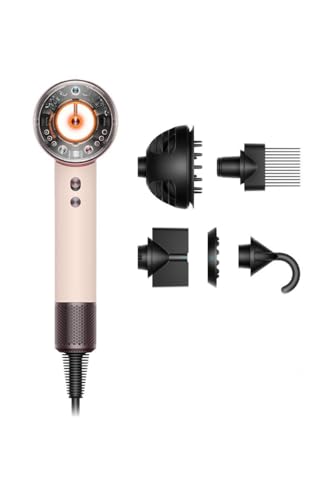
Dyson Supersonic Nural Hair Dryer, Ceramic Pink and Rose Gold
ASIN B07MR26P6C • $532.63 • Ships from Amazon AU
If you want a hair dryer rather than a multi-styler, the Supersonic Nural is the one I'd buy, and it's currently number 29 in Amazon AU's hair dryer category, sold by Amazon AU. It's Dyson's latest Supersonic, and the headline change is smarter heat control. According to the listing it adjusts its heat automatically to keep the air at around 55°C near the scalp, so the temperature doesn't creep up as the dryer warms during a long session. It also senses when you put it down while sectioning hair and drops the heat, airflow and noise until you pick it up again. That's a small thing, but it's one less hot tool blasting away on the vanity while your hands are busy.
It comes with five styling attachments that the listing says are preset with recommended airflow and heat settings, which you can change to suit yourself. A Hall sensor in the dryer recognises which attachment is fitted and switches to your last-used settings for it, so you're not fiddling with buttons every morning. The listing also highlights a new Wave and Curl diffuser with two modes, one for defining natural waves and curls and one for adding volume at the roots. The motor sits in the handle rather than the head, which is what gives the Supersonic its odd shape and its balance in the hand. That layout also keeps the weight closer to your wrist.
From a repair point of view, the Supersonic's weak points are the same as any dryer: the cord at the handle and a clogged filter cage. Clean the filter every week or two with a dry brush, store it with the cord loosely coiled and it should last well. Because the motor is electronically driven, a power surge or a board fault is the more serious failure, so it's worth plugging it into a protected socket. The listing doesn't state the wattage, so check the rating plate. Dyson's own support is usually the first stop for a fault in warranty.
Honest caveats: The listing doesn't state wattage, top temperature or warranty length, so check the rating plate and Dyson's terms. Some of the listing copy makes claims about hair and scalp benefits that I'd treat as marketing. Replacement attachments are costly if lost, and it's a dryer, not a curling tool.
Best for: Anyone who wants a fast, quiet dryer with regulated heat and doesn't need a curling multi-styler.
Type: Hair dryer • Heat control: Auto, holds about 55°C at scalp (per listing) • Attachments: 5 incl. Wave and Curl diffuser • Attachment sensing: Hall sensor, remembers settings • Pause mode: Heater off when set down • Wattage: Not stated on the listing • Seller: Amazon AU • Rank: #29 in Hair Dryers (Amazon AU)
View on Amazon AU
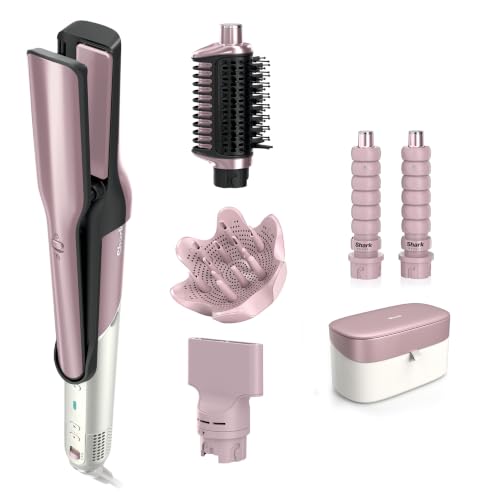
Shark Glam 5-in-1 Styling System, Soft Pink
ASIN B0GF795W9L • $649.00 • Ships from Amazon AU
The Shark Glam is the most complete alternative to an Airwrap in this guide, and it's number 31 in Amazon AU's hot air styler category, sold by Amazon AU. It's a 5-in-1 system that the listing says can dry, curl, straighten and volumise from one tool, designed for wet-to-dry styling. The box is the main selling point. According to the listing it includes a straightener, a gloss styler, two auto-wrap curlers, a concentrator, a diffuser and a hard case. That's a lot of attachments, and having a straightener in the kit is something the Airwrap i.d. in this guide doesn't offer. If your routine changes from day to day, that range is useful.
Shark describes the Glam as using ceramic and high-speed airflow to give smooth, shiny results, and it has a feature called Scalp Shield that's meant to keep the heat away from the roots while you style close to the head. The two auto-wrap curlers are designed to wrap hair around the barrel using airflow, which is the trick the Airwrap made popular. The hard case matters more than it sounds. Most of the damage I see on multi-stylers is from attachments being dropped on tiles or knocked off a bench into the sink, and a case that holds everything together cuts that risk right down. It also makes the whole kit easier to pack for travel.
The listing doesn't state the motor type, wattage, heat settings or warranty, so I can't compare its internals directly with the Dyson. That's the trade-off with a newer product line: you're relying more on the brand's support than on a long track record. The same care rules apply as for any styler. Clean the intake regularly, keep the cord loosely coiled and keep it away from water. Check the voltage before taking it overseas. Before you buy, I'd also look at how much replacement curlers and brushes cost from Shark, because with five attachments in the kit, the odds of losing or cracking one over a few years are fairly high. Keep the box and the receipt, since warranty claims on styling tools usually need proof of purchase.
Honest caveats: The listing doesn't state wattage, temperatures, motor type or warranty length, so check Shark's spec sheet and terms. Several listing claims about hair health are marketing and I'd treat them that way. Five attachments mean more parts to store and potentially lose, so use the case.
Best for: Anyone who wants an Airwrap-style curling tool plus a straightener and diffuser in one kit with a hard case.
Type: 5-in-1 multi-styler • Functions: Dry, curl, straighten, volumise • In the box: Straightener, gloss styler, 2 auto-wrap curlers, concentrator, diffuser • Case: Hard case included • Heat feature: Scalp Shield • Wattage: Not stated on the listing • Seller: Amazon AU • Rank: #31 in Hot Air Stylers (Amazon AU)
View on Amazon AU
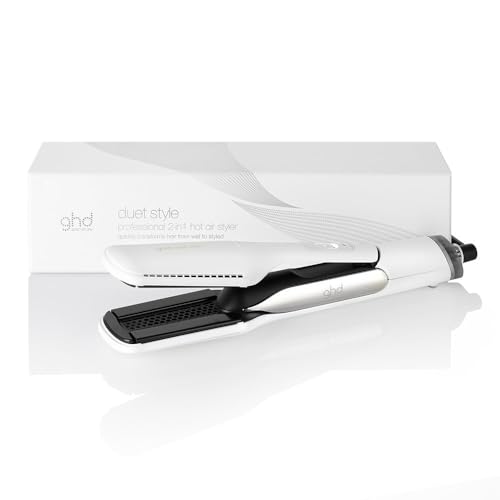
ghd Duet Style 2-in-1 Hair Dryer and Straightener, White (AU Plug)
ASIN B0BZHZ2Y6L • $416.50 • Ships from Amazon AU
The ghd Duet Style is the pick for people whose routine is dry and then straighten, and it's number 34 in Amazon AU's hot air styler category, sold by Amazon AU. It's a 2-in-1 that dries hair with airflow and then switches to straightening at the push of a button, so the same tool does both jobs. The listing gives the straightening temperature as 185°C. Having a stated temperature is useful, because it's one of the few hard numbers on any of these listings. The listing title also says AU Plug, which is exactly what I want to see on a hair tool bought online, because it rules out a grey import built for another market.
ghd calls its system Air-fusion, describing it as drying and styling at the same time, and the listing claims up to 48 hours of softness and up to 42 percent more humidity resistance. Those are marketing figures rather than anything I can test, so I'd buy it for the convenience of one tool rather than those numbers. ghd also suggests pairing it with the Sleek Talker product for a smoother finish, which is sold separately. The design suits straight and wavy hair best. If you want curls, a multi-styler like the Shark or the Airwrap is a better fit. It's the lowest-priced tool in this guide, which makes it a sensible way into premium hair tools.
From a repair point of view, a 2-in-1 packs a dryer's motor and element and a straightener's heated plates into one body, which means more heat in a smaller space. Clean the intake regularly so the airflow keeps everything cool, and let it cool down before you put it away. The cord is the usual weak point. The listing doesn't state the wattage, motor type or warranty length, so check the box and ghd's terms when it arrives. Wipe the plates clean of product build-up when they're cool, since residue on hot plates can bake on and drag on the hair.
Honest caveats: It doesn't curl, so it's not an Airwrap substitute. The listing's 48-hour and 42 percent figures are maker claims, not measured specs. Wattage, motor type and warranty aren't stated on the listing. It's a newer type of tool, so long-term repair history is thin.
Best for: People who blow-dry and straighten most days and want one tool with an AU plug and a stated 185°C plate temperature.
Type: 2-in-1 dryer and straightener • Straightening temp: 185°C • Plug: AU plug (per listing) • Colour: White • Technology: Air-fusion (ghd) • Wattage: Not stated on the listing • Seller: Amazon AU • Rank: #34 in Hot Air Stylers (Amazon AU)
View on Amazon AU
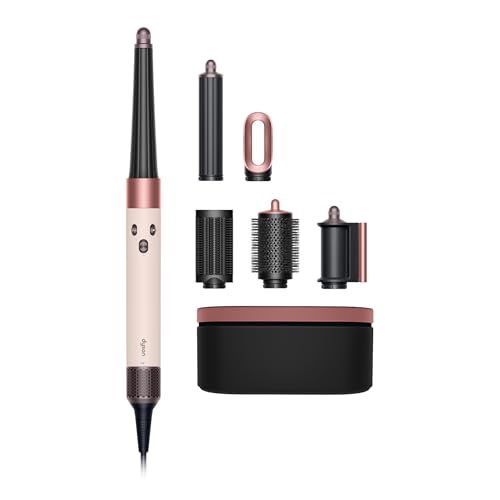
Dyson Airwrap i.d. Multi-Styler and Dryer, Ceramic Pink and Rose Gold
ASIN B0FJL2WD2K • $695.00 • Ships from Amazon AU
The Airwrap i.d. is the best-selling tool in this guide, sitting at number 7 in Amazon AU's hot air styler category, sold by Amazon AU. It's Dyson's connected multi-styler, and the listing describes it as adapting heat, airflow and timings to your hair type. The main feature is a curling routine you set up in the My Dyson app, called i.d. curl, which recommends and then automates the steps for your hair and styling profile. Once it's set, the listing says you can wrap, style and set curls at the push of a button. That makes it easier to get the same result each time, which is the main thing people struggle with on a first multi-styler.
In the box, the listing highlights a new conical barrel for curls that start at the root and a large round volumising brush, along with other attachments for drying and shaping. Dyson says the heat control measures air temperature more than 40 times a second and regulates the heater to match, which is the same feedback approach as the Supersonic. Like the other Airwraps it uses airflow to wrap hair around the barrel, so it isn't clamping hair against a hot plate the way a curling iron does. It's a dryer as well, but it's slower at a full dry than the Supersonic, so most people use it for styling after a rough dry.
The app connection is the part I'd think about longest. It's useful for setting up routines, but the more a tool depends on an app and a control board, the more it relies on the maker supporting it over the years. The mechanical care is the same as any Dyson: clean the filter cage regularly and look after the cord. If it's not curling evenly, check the filter before anything else. The listing doesn't state wattage or warranty, so check Dyson's terms. Keep the barrels clean of product so the airflow stays even.
Honest caveats: The i.d. curl features need the My Dyson app and a phone, so it relies on ongoing app support. It's slower at a full dry than a dedicated dryer. Wattage, temperatures and warranty aren't stated on the listing, and it has no straightener in the box.
Best for: Anyone who wants consistent, repeatable curls from one connected tool and is happy setting it up in an app.
Type: Multi-styler and dryer • Heat control: Measures air temp 40+ times a second • App: My Dyson, i.d. curl routines • Attachments: Incl. conical barrel, large round volumising brush • Straightener: Not included • Wattage: Not stated on the listing • Seller: Amazon AU • Rank: #7 in Hot Air Stylers (Amazon AU)
View on Amazon AUSide-by-side comparison
| Product | Price | Best for |
|---|---|---|
| Shark FlexStyle 2-in-1 Professional Hair… | ~$372 | |
| ghd Duet Style | ~$416 | |
| Dyson Supersonic Nural™ Intelligent hair dryer | ~$533 | |
| Shark Glam 5-in-1 Styling System | ~$649 | |
| Dyson Airwrap i.d.™ multi-styler and dryer | ~$695 |
What we see fail in the workshop: hair dryers and stylers
Hair tools have a hard life. They're used daily, moved around constantly, run hot and live in the dampest room in the house, so it's no surprise they're among the most common small appliances to fail. Nearly all of the faults I see come back to three causes, and each of them is easier to prevent than to repair. Here's what they are.
Broken cords at the handle
The cord fails at the point where it leaves the handle, because that's where it flexes every time you turn the dryer. The copper strands inside break one at a time, and the first symptom is a dryer that cuts out when you move the cord a certain way. Left alone, the remaining strands carry all the current, heat up and can scorch the cable sleeve. Wrapping the cord tightly around the handle for storage speeds this up more than anything else. If you see scorching or the dryer flickers on and off, stop using it, because a damaged cord on a 2,000W appliance isn't something to keep working with.
Blown thermal fuses from blocked intakes
A clogged intake filter means the fan moves less air across the heating element, so the element runs hotter than it should. The thermal cut-out trips and resets, and after enough cycles the one-shot thermal fuse blows and the dryer goes dead. People often think the motor has died, but it's usually the fuse doing its job. Replacing the fuse without cleaning the intake just means it'll blow again. Cleaning the filter regularly is the fix, and on Dysons that means the removable filter cage. A dryer that's been cutting out for weeks before it stopped is almost always this fault.
Worn motors and failed control boards
Budget dryers with brushed motors eventually wear their brushes down, which shows up as a dryer that stutters, slows or runs at one speed only. Premium tools with electronically driven motors don't have brushes to wear, but they rely on a control board instead. Those boards don't like moisture, and steam from a hot shower settling inside the tool is a common cause of failure. A power surge can damage them too. Store tools somewhere dry rather than beside the shower, and let them cool and dry before putting them in a drawer or case.
Decision tree: which one should you actually buy?
- Just want a fast, quiet dryer? → The Dyson Supersonic Nural at $533 has regulated heat, five smart attachments and pauses itself when you put it down.
- Want an Airwrap-style curler plus a straightener? → The Shark Glam 5-in-1 at $649 includes two auto-wrap curlers, a straightener, a diffuser and a hard case.
- Dry and straighten most days? → The ghd Duet Style at $416 does both in one tool with a stated 185°C straightening temperature and an AU plug.
- Want repeatable curls set up for your hair? → The Dyson Airwrap i.d. at $695 uses app-based curl routines and a conical barrel for root-to-tip curls.
- Travel overseas often? → Check the voltage on the rating plate before you go, because many premium hair tools aren't dual voltage.
- Dryer cutting out, smelling hot or dead? → Bring it to our Erina workshop and we'll check the cord, thermal fuse and element and tell you what it needs before you spend anything.
Frequently asked questions
Is a Dyson hair dryer worth the money?
For a lot of people, yes, though not because it dries hair dramatically faster than a good conventional dryer. You're paying for regulated heat, a quieter motor without brushes to wear out, smart attachments and good build quality. If you dry your hair every day, those things add up over years of use. If you only use a dryer occasionally, a well-made conventional dryer will do the job for much less. Whichever you buy, cleaning the intake filter and looking after the cord matter more to its lifespan than the brand.
What's the best alternative to a Dyson Airwrap?
In this guide, the Shark Glam 5-in-1 is the most complete alternative. It uses airflow to wrap hair around auto-wrap curlers like the Airwrap, and adds a straightener, a gloss styler, a concentrator and a diffuser, all in a hard case. The ghd Duet Style is a different kind of tool, combining a dryer and straightener, so it suits straight styles rather than curls. If curls are what you're after and you'd like the Dyson approach without the app, the Shark is the closest match from the Amazon AU listings I checked.
Why does my hair dryer keep cutting out?
Most of the time it's a blocked intake filter or grille. When lint and hair clog the intake, the fan moves less air, the heating element runs hot and the thermal cut-out trips to protect it. The dryer comes back after it cools down, then trips again. Clean the filter thoroughly with a dry brush and see if it stops. If it cuts out when you move the cord, that's a broken wire at the handle instead, and you should stop using it until it's been checked, because a damaged cord can overheat.
How long should a premium hair dryer last?
A well-looked-after premium dryer should last many years of daily use. The motors in Dyson tools don't have brushes to wear, so the usual lifespan limits are the cord, the heating element and the control electronics. Cleaning the filter regularly keeps the element from running hot, and storing the dryer with the cord loosely coiled stops it breaking at the handle. Keeping it out of the steam of the shower protects the control board. Register the warranty when you buy, because premium brands generally offer better repair support than budget ones.
Is it safe to use a hair dryer in the bathroom?
Yes, with some sensible care. Keep the dryer well away from a filled basin or bath, never use it with wet hands on the plug and make sure the bathroom socket is protected by an RCD safety switch, which most modern Australian homes have. Avoid powerboards on wet vanities. Check the cord regularly for damage, because a damaged cord near water is the real risk. If you're not sure whether your bathroom socket is RCD protected, a licensed electrician can check your switchboard quickly.
Can I take my hair dryer overseas?
Only if it's rated for the voltage where you're going. Australia runs on 230 to 240V, and many countries, including the USA and Japan, use 100 to 120V. A tool that isn't dual voltage won't work properly on lower voltage, and a travel adaptor only changes the plug shape, not the voltage. Check the rating plate on the tool for a range like 100 to 240V before you pack it. If it only lists 220 to 240V, leave it at home or buy a dual-voltage travel dryer for the trip.
Related buying guides
Hair dryer cutting out or dead?
Most hair dryers and stylers that come into the shop have a broken cord at the handle, a blown thermal fuse from a blocked filter or a tired control board, and plenty of those are fixable. Bring it into our Erina workshop and we'll find the fault and tell you what it needs and what it'll cost before you spend anything.
Visit our Erina workshop Book Online