



Prices from Amazon AU, updated daily. Swipe or use the arrows for more.
Disclosure: This article contains affiliate links to amazon.com.au. If you buy through one of these links iFix may earn a small commission at no extra cost to you. It doesn't change which products we recommend. We focus on what actually lasts based on 16 years of repair-shop experience.
Quick summary8 picks
- Entry PickPhilips 3000 Series Handheld Steamer about$47.00
- Philips Handheld Steamer 3000 Series about$50.001000W.
- Sunbeam SG1000 Power Steam Handheld Garment… about$69.00
- Sunbeam Power Boost Handheld Garment… about$93.002100W.
- Russell Hobbs Supreme VacuSteam Handheld… about$119.001500W.
- Philips 7000 Series Handheld Garment… about$127.00
- Philips 1000 Series Stand Steamer - 1800W about$169.151800W.
- Most PremiumPhilips Garment Steamer about$189.002000W.
The pressed-shirt arithmetic
Services inflation is quieter than grocery inflation but it's been running harder, and garment care is a clean example. Around here a dry cleaner will press a business shirt for something like $4 to $6, call it $5 for the maths, and a laundered-and-pressed suit runs a lot more. Someone wearing pressed shirts four days a week is spending roughly $1,000 a year keeping them presentable, and that's the spend this category quietly intercepts. Every steamer in this guide costs between $42 and $199 once, and the running cost is close to nothing: even the 2,000W stand unit at the AU average tariff of roughly 33c/kWh costs about 66c an hour flat out, so a ten-minute session is around 11c.
The honest boundary needs stating up front. A steamer relaxes wrinkles out of hanging fabric; it doesn't press a crisp crease into a sleeve or a trouser leg, and it doesn't do what the dry cleaner's solvent process does for a stained or structured garment. What it replaces is the routine trips: the shirt that's clean but crumpled, the dress that's been folded in a drawer, the jacket that needs to look right in an hour. In my experience that's most of the trips, which is why the payback on a $71 Sunbeam is measured in weeks for anyone currently paying per shirt, and why this category has been climbing Amazon AU's small appliance ranks all year.
There's a durability argument hiding in there too. Fabric that gets steamed instead of run through hot wash cycles and dryer tumbles keeps its shape and colour longer, mostly because it's being handled less violently, and the between-wash refresh means some garments simply get washed less often. I won't dress that up as a precise number because it isn't one, but fewer wash cycles is fewer wash cycles. The machines themselves are simple enough, an element, a pump and a tank, that the main thing deciding whether yours lasts five years or eighteen months is the water you feed it, and that gets its own section further down, because it deserves one.
Grams per minute is millilitres per minute
The one spec that actually predicts how a steamer behaves is the steam rate in grams per minute, and the trick to reading it is remembering that a gram of steam is a millilitre of water leaving the tank. Divide the tank by the rate and you get the ceiling on run time, no marketing survives that division. The $42 Philips carries a 100ml tank and states up to 20g/min, so call it five minutes of full steam, which is exactly what its listing's whole-outfit claim implies and about right for a touch-up tool. The Sunbeam SG1000's 300ml tank and stated 18 minutes on the low setting agree with each other the same way.
Now run the division on the big number in this guide. The Sunbeam Power Boost states a 90g/min steam shot from a 240ml tank, and 240 divided by 90 is under three minutes, so that 90g figure is a burst you dip into for stubborn creases, not a rate you hold. Sunbeam's own 16-minute continuous figure for the same machine tells you the sustained rate is a fraction of the headline one. That's not a scandal, every brand quotes the shot rate, but it's why two machines with the same headline number can feel completely different in the hand, and why the tank size deserves as much attention as the wattage on the box.
The stand steamer changes the category of the question. Two litres at the Philips stand unit's stated 40g/min is around 50 minutes of genuinely continuous steam, which stops being a touch-up tool and starts being a way to do the week's shirts in one hanging session, or the curtains without refilling at the halfway mark. Big tank, big footprint, and a heat-up that feeds a hose and hanger pole rather than a palm-sized head, so it earns a permanent corner of a room rather than a shelf in the wardrobe. If your steaming happens in daily thirty-second bursts, the handhelds win on grab-and-go. If it happens in one weekly batch, the tank is the spec to buy.
What steam fixes, and the fabrics that refuse it
Steam works by getting moisture and heat into fibres so they relax and drop their creases under the garment's own weight, which is why steaming happens on a hanger and why heavy fabrics need more of it than a silk blouse. Cotton and linen respond but take patience, wool responds well and springs back, and most synthetics relax quickly at lower steam. The fabrics that refuse are the ones the care label already warned you about: waxed jackets lose their finish, leather and suede have no business near steam, and anything with glued construction or a fused interfacing can bubble if you park hot steam on one spot. When the label says dry clean only and the garment has structure, believe it.
Delicates sit in the middle. Silk and satin usually steam well, but they can water-spot if the machine spits, which worn or scaled-up steamers do, and that's half the reason the fabric-guard attachments exist: they keep the plate off the fabric and spread the steam. The Sunbeam SG1000 ships with a steam guard, fabric brush, lint pad and creaser in the box, and the Philips machines lean on plate technology instead, with the 7000 series' no-burn temperature control stated to be safe resting against fabric. Test an inside seam first on anything you'd be upset about. It's a thirty-second habit that has saved a lot of dresses.
The other thing steam won't do is sharpen. A steamer takes wrinkles out; it doesn't put a press line in, and the crisp-collar, creased-trouser finish still belongs to an iron and a board, which is why the Philips 7000's party trick of doubling as a light flat presser with its adjustable head is worth what it costs, and why the Sunbeam's creaser attachment exists at all. Households that already own a decent iron should think of the steamer as the speed tool for the 90 per cent of garments that just need the crumple gone, with the iron kept for the formal finish.
Scale is what kills them
A garment steamer is a kettle with a pump, and it dies like one. Every litre of tap water carries dissolved minerals, the boiler and steam path collect them as scale, and the failure sequence is predictable: the fine steam holes fur up and the jet weakens, the machine starts spitting mineral-flecked water that marks fabric, the pump strains against a narrowing path, and eventually a thermal cutout or a blocked boiler ends it. The harder your water, the faster the clock runs, and it's the same clock I bang on about in the espresso machine guide, because a thermoblock doesn't care whether it's making coffee or steaming a collar.
The defences are the same too. Descale on a schedule rather than on symptoms, because by the time the jet visibly weakens the buildup is established. Only the stand steamer here says much about it, with a stated Easy Rinse descaling process, and that's typical: handheld listings mostly go quiet on maintenance, so assume vinegar-or-descaler flushes per the manual and check what the manual actually permits before you pour anything in. Feed water matters as much as the flush. Demineralised water sidesteps the problem almost entirely where the manual allows it, and softer feed water from a filter jug slows it, an angle I covered properly in the water filter guide.
Empty the tank between sessions instead of letting water sit for a fortnight, and store the machine dry. Water left standing in a warm plastic tank gets stale, and the first burst of a neglected steamer onto a white shirt is a lesson people only need once. None of this is complicated, and it's the difference between the $90 Sunbeam being a five-year tool or an eighteen-month one. If a steamer you own has already gone weak and spitty, a few patient descale cycles will often bring the jet back before you spend money replacing it.
Watts, sockets and the powerboard rule
Three of these five machines draw between 1,000W and 2,100W, and the big ones belong in the same electrical safety conversation as heaters. A standard Australian socket is good for 10A, about 2,400W, so the 2,100W Sunbeam is most of a circuit's headroom on its own: run it from the wall, never from a daisy-chained powerboard already feeding half the bedroom, and the same goes for the 2,000W stand unit. I went through what powerboards can and can't absorb in the surge powerboard guide, and high-draw heat appliances were the villains there too. Check for the RCM mark on anything you buy from a marketplace listing, all five here are mainstream brands so it's a given, and retire any steamer with a cord that's gone stiff or nicked near the handle, because a flexed cord on a two-kilowatt appliance is not a fault you get warnings about twice.
The subtler hazard is where the steam goes. A handheld steamer in a bedroom is fine; the same steamer used weekly in front of a mirror with a powerboard at skirting level, or next to the TV cabinet, is pumping warm saturated air at things that hate it. Steam finds cold electronics the way it finds cold windows, and we've had devices on the bench in Erina whose corrosion story turned out to be a steaming or drying habit two metres away, the same slow damp-room damage I describe in the drying rack context. Steam where the electronics aren't, give the room ten minutes with a window open after a long session, and if the only mirror is in the room where the gear lives, at least put distance and airflow between them.
How I picked the five
Same screen as every guide in this series. Condition New, price inside the $40 to $250 band from the queue, sold by Amazon AU, and holding a real Amazon AU category sales rank on the day I checked. All five are Amazon AU direct this time, which is unusual for this series and takes the storefront-seller caveats off the table. The spread fell out cleanly: Philips at the entry and premium ends, Sunbeam holding the middle, and the ranks are strong across the board, with the stand steamer at number one in Electric Steamers and the $42 handheld at number two in the broader Ironing and Steamers category. The five also land at usefully different answers, a travel tool, two household handhelds with different priorities, a hybrid presser and a batch machine, rather than five shades of the same product.
One listing-quality note, because it affects what I can state. The $42 Philips listing reads like it was machine translated, it calls the steamer a defroster half a dozen times, and the Sunbeam Power Boost listing spells ceramic wrong in its own title. I've quoted the numbers and ignored the copy. Specs come off the listings and nowhere else: where a tank size or a wattage isn't stated, the specs table says not stated rather than borrowing a figure from the manufacturer's site, because listings drift and this page should only ever promise what the listing promised on the day. Prices are the day-of snapshot, all five being Amazon-sold makes them steadier than storefront pricing usually is, but they'll still move week to week, and the ranks were checked the same day as the prices.
The 5 picks, $42 to $199
Prices are Amazon AU at time of writing (11 September 2026) and move week to week. Ranks are Amazon AU category sales ranks, checked the same day.

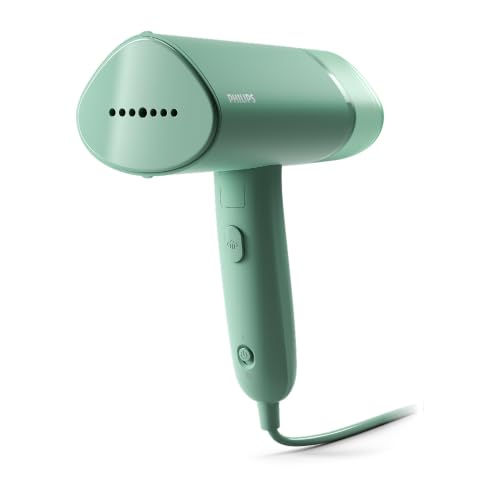
Philips Handheld Steamer 3000 Series, 1000W
ASIN B09BNXKMQB • $42.30 • Ships from Amazon AU
The 3000 Series is the least money Amazon AU will take for a steamer from a brand with a real appliance division behind it, and at $42 it sits at number two in the whole Ironing and Steamers category, which tells you how many wardrobes it's servicing. It's a 1000W handheld with a stated steam rate of up to 20g/min and a removable 100ml tank, and the useful way to read those numbers together is about five minutes of steam per fill: a shirt, a dress, a couple of touch-ups, then a refill. The listing states it steams horizontally as well as vertically, and the whole thing folds down small enough to live in a suitcase, which is where a lot of them end up.
The plate is the interesting part at this price. Philips's SmartFlow plate is stated safe on all fabrics with no risk of burning, so this is a machine you can rest against a garment rather than hover nervously above it, and that turns steaming from a skill into a chore anyone in the house can do. Heat-up is quick at this tank size, and the 100ml fill is genuinely a feature in a travel context: it empties fast, so there's nothing to tip out and it flies light. The listing also claims garment refreshing between washes, which in practice means odours air out with the steam, and that's the feature that quietly halves how often some clothes get washed.
The honest frame is that this is a touch-up tool, and priced like one. Five minutes a fill won't do the family's week of shirts, the 1000W element is the slowest here against heavy cotton, and there's no accessory kit. But as the machine that lives in a suitcase or a wardrobe for the shirt that needs to look right in ten minutes, it's the least money the category takes seriously, and the one I'd hand to anyone testing whether steaming fits their routine before spending Sunbeam or stand-steamer money.
Honest caveats: The 100ml tank means about five minutes of steam per fill, so batch sessions mean batch refills. At 1000W it's the slowest here on heavy cotton and linen. The AU listing reads like machine translation, it repeatedly calls the unit a defroster, so read the numbers and ignore the prose.
Best for: Travellers and first-timers who want one shirt looking right in ten minutes, not the week's washing done.
Type: Handheld, foldable • Power: 1000 W • Steam rate: Up to 20 g/min continuous • Tank: 100 ml, removable • Plate: SmartFlow, stated safe on all fabrics • Angles: Vertical and horizontal steaming • Seller: Amazon AU, condition New • Price: $42 at time of writing • Rank: #2 in Ironing & Steamers (Amazon AU)
View on Amazon AU
Sunbeam SG1000 Power Steam Handheld Garment Steamer
ASIN B07ZTG2RKK • $71.00 • Ships from Amazon AU
The SG1000 is the pick whose stated numbers all agree with each other, which sounds like faint praise and isn't. A 300ml tank feeding a stated 18 minutes of continuous steam on the low setting is arithmetic that checks out, the 23g/min steam shot covers the stubborn patches, and heat-up is stated under 40 seconds, so the machine is fully working before the hanger you've just loaded has stopped swinging. That 18-minute figure is the practical difference between this and the $42 Philips: this is a whole-load machine, four or five garments per fill instead of one shirt and a refill, and at $71 it holds rank two in Handheld Steamers for exactly that reason.
It's also the only pick that ships as a kit. In the box are a steam guard for delicates, a fabric brush for coats and heavier weaves, a lint pad, and a creaser, which is the accessory that partially answers the steamer-can't-press problem by giving trousers something to form an edge against. Two steam settings, low and high, cover the delicate-to-denim range the listing describes without a menu to think about, and the maroon housing is at least honest about being an appliance rather than pretending to be a gadget. Nothing about the SG1000 is novel, it's the category done properly at the category's fair price, and for most households that's precisely the recommendation being made here.
The caveats are scale and simplicity. Sunbeam states nothing about descaling on the listing, so the vinegar-flush-per-manual routine from the scale section applies, and with a 300ml tank being refilled often in a hard-water suburb, the clock runs. There's no fancy plate technology either, so the steam guard is the delicates answer rather than a no-burn plate. For a household buying its first serious steamer and not sure yet how deep the habit will go, this is the default I'd point at, and the one I'd expect to still be in the cupboard in five years.
Honest caveats: The listing states nothing about descaling, so maintenance is the generic flush routine per the manual, and frequent 300ml refills in a hard-water area keep the scale clock ticking. No temperature-controlled plate: delicates rely on the steam guard attachment and a careful hand.
Best for: First serious steamer for a household: whole-load tank, fast heat-up and the full accessory kit for $71.
Type: Handheld • Heat-up: Stated under 40 seconds • Steam: 23 g/min shot, 2 settings • Tank: 300 ml, stated 18 min continuous on low • Accessories: Steam guard, fabric brush, lint pad, creaser • Seller: Amazon AU, condition New • Price: $71 at time of writing • Rank: #2 in Handheld Steamers (Amazon AU)
View on Amazon AU
Sunbeam Power Boost Handheld Garment Steamer 2100W SCG2000
ASIN B0DFZ2XMNQ • $90.00 • Ships from Amazon AU
The Power Boost is the handheld for households whose wardrobe runs to denim, linen and heavy cotton, the fabrics that make 1000W machines feel like breathing on the crease hopefully. It's a 2100W unit with a stated 90g/min steam shot, and the honest translation from the steam-rate section applies: 240ml of tank at 90g/min is under three minutes, so the 90 is a burst for stubborn patches while the stated 16 minutes of continuous steam describes the sustained rate you'll actually cruise at. Heat-up is stated at 35 seconds flat, there are three continuous steam modes to pick a cruising rate from, and at $90 it shares rank two in Handheld Steamers with its SG1000 sibling.
The plate is doing real work on this one. Sunbeam's CeraFlow ceramic plate heats to a stated 177 degrees and presses against the fabric while it steams, so you're combining heat, moisture and light pressure the way an iron does, just vertically, and the ceramic surface is claimed at seven times the scratch resistance of stainless against the buttons, zips and sequins that chew softer plates. A three-metre cord sounds like a throwaway spec and isn't: it's the difference between steaming curtains and cushions where they hang and dragging everything to a power point. Auto shut-off after idle is stated too, which matters on a 2100W appliance more than on most.
The trades are electrical and arithmetical. At 2100W it's most of a socket's 2,400W budget, so it runs from the wall, not a loaded powerboard, and the shot rate drains the 240ml tank fast when you lean on it, so heavy sessions mean refills. Against the $71 SG1000 the extra $19 buys roughly double the wattage, the hot ceramic plate and the longer cord, and loses the accessory kit. For stubborn-fabric wardrobes that's a good trade, and I'd make it without much hesitation; for delicates-heavy wardrobes it's the wrong direction entirely and the SG1000 or the Philips 7000 fits better.
Honest caveats: Lean on the 90g/min shot and the 240ml tank empties in a couple of minutes, so budget refills for big sessions. At 2100W it wants a wall socket, not a shared powerboard. No accessory kit, and the 177-degree plate demands more fabric awareness than the no-burn Philips approach. The listing's own title misspells ceramic.
Best for: Denim, linen and heavy-cotton wardrobes that need wattage and a hot plate more than attachments.
Type: Handheld • Power: 2100 W • Steam: 90 g/min shot, 3 continuous modes • Tank: 240 ml, stated 16 min continuous • Plate: CeraFlow ceramic, heats to stated 177 °C • Heat-up: Stated 35 seconds, auto shut-off • Cord: 3 m • Price: $90 at time of writing, Amazon AU, New • Rank: #2 in Handheld Steamers (Amazon AU)
View on Amazon AU
Philips 7000 Series Handheld Garment Steamer STH7060/80
ASIN B0BCHXDSTN • $116.10 • Ships from Amazon AU
The 7000 Series is Philips solving the two complaints people have after a year with a basic handheld: that some jobs really want a flat press, and that hovering a hot plate near good fabric never stops being nervous. The answer to both is an adjustable head that pivots so you can steam vertically on the hanger or fold it flat and run it across a garment on any surface like a light iron, paired with OptimalTEMP temperature control that the listing states cannot burn any ironable fabric, even resting directly on it. That's the feature that changes behaviour: you stop hovering and start pressing. At $116 it holds rank five in Handheld Steamers, and number two in Amazon's Heating subcategory for whatever that's worth.
Steam output is a stated 28g/min continuous with ECO and MAX settings, which puts it usefully above the entry Philips without chasing the Sunbeam's burst numbers, and the pointed tip of the plate is shaped for the fiddly geography, collars, plackets, between buttons, where a broad plate skates over the crease it's meant to be fixing. The listing doesn't state the tank size or the wattage, which is a strange omission on a machine at this price, so both sit as not stated in the specs table rather than borrowed from elsewhere. What the listing does state is the deodorising between-washes claim the whole category makes, and the same horizontal-use flexibility as the smaller Philips.
This is the pick for the person who was about to buy both a travel steamer and a small iron. It won't out-blast the 2100W Sunbeam on heavy denim and it won't out-tank the stand unit, but as the one machine that does hanging steam and flat light pressing without a board, safely, it replaces two purchases at once. Delicates-heavy wardrobes, daily work shirts, and anyone who has ruined a good garment with an iron before: this is the machine aimed squarely at you, and the missing tank spec is the only thing keeping it from being the easy default at this price.
Honest caveats: The listing states neither tank size nor wattage, so run-time planning is guesswork until it arrives, and I won't guess for you. It's a light presser, not an iron: sharp trouser creases still need a board and a real iron. Rank five in its category is solid rather than dominant, and the price is Sunbeam-plus-$26.
Best for: One machine covering both hanging steam and safe flat pressing, especially around delicate fabrics.
Type: Handheld with adjustable pivoting head • Steam rate: Up to 28 g/min continuous • Modes: ECO and MAX • Plate: OptimalTEMP, stated no-burn on ironable fabrics • Tank: Not stated on the listing • Power: Not stated on the listing • Seller: Amazon AU, condition New • Price: $116 at time of writing • Rank: #5 in Handheld Steamers (Amazon AU)
View on Amazon AU
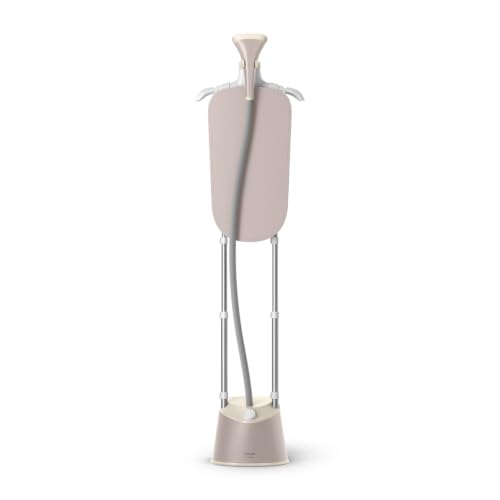
Philips Garment Steamer, 2000W with 2L Tank
ASIN B0C1J51G7S • $199.00 • Ships from Amazon AU
The stand steamer is a different tool wearing the same name, and the tank is the reason. Two litres feeding a stated 40g/min of continuous steam is around 50 minutes of work per fill, which moves the job from steaming a garment to steaming a wardrobe: the week's shirts in one hanging session, the curtains without a refill, the doona cover that never fits on an ironing board. It's a 2000W unit with three steam levels for different fabric weights and a large steam plate that covers panel fabric quickly, and it sits at number one in Amazon AU's Electric Steamers category at $199, which is the whole premium tier of this guide in one machine.
It's also the only listing here that takes the scale problem seriously, with a stated Easy Rinse descaling function built for exactly the maintenance routine the scale section describes. That matters more on a stand unit than a handheld, because a 2L-tank machine in regular service moves serious water through its boiler in a year, and a stated descaling path is the difference between maintenance being a procedure and being an argument with a machine that was never designed to be flushed. The transparent tank is removable with a wide filling opening, small things that decide whether the fill-flush-empty routine actually happens, and the listing states suitability for all types of clothing across its three levels.
The trades are the obvious physical ones. It's furniture, not a gadget: it needs a corner to live in, it takes longer to set up than a handheld takes to finish one shirt, and nobody is packing it in a suitcase. At 2000W it follows the wall-socket rule like the big Sunbeam. But for a household where pressed clothes are a daily uniform rather than an occasional event, the per-fill capacity and the stated descaling story make it the one machine in this guide actually built around being used hard, on a schedule, for years.
Honest caveats: It's a floor-standing appliance that needs a permanent corner, and overkill for touch-ups or travel. At 2000W it belongs on a wall socket, not a loaded powerboard. Fifty minutes per fill is my division of stated tank by stated rate, not a listing claim, so treat it as a ceiling rather than a promise.
Best for: Households steaming in weekly batches: shirts by the rail, curtains, and anything too big for a board.
Type: Stand steamer with hanger • Power: 2000 W • Steam rate: Stated 40 g/min continuous • Tank: 2 L, removable, transparent • Levels: 3 steam settings • Descaling: Stated Easy Rinse function • Seller: Amazon AU, condition New • Price: $199 at time of writing • Rank: #1 in Electric Steamers (Amazon AU)
View on Amazon AUSide-by-side comparison
| Product | Price | Best for |
|---|---|---|
| Philips 3000 Series Handheld Steamer | ~$47.00 | |
| Philips Handheld Steamer 3000 Series | ~$50.00 | |
| Sunbeam SG1000 Power Steam Handheld Garment… | ~$69.00 | |
| Sunbeam Power Boost Handheld Garment… | ~$93.00 | |
| Russell Hobbs Supreme VacuSteam Handheld… | ~$119.00 | |
| Philips 7000 Series Handheld Garment… | ~$127.00 | |
| Philips 1000 Series Stand Steamer - 1800W | ~$169.15 | |
| Philips Garment Steamer | ~$189.00 |
What we see fail at the bench: garment steamers
Steamers don't get booked into a phone repair shop, but they fail in ways this bench recognises immediately, because a steamer is a boiler, a pump and a cord, and we spend our lives around the consequences of heat, water and minerals. Three patterns cover almost every dead steamer I've been asked about, and all three are preventable or at least postponable.
Scale chokes the steam path
The steam holes in the plate are fine drillings, the boiler is a small chamber, and both collect mineral scale from day one on tap water. The symptom sequence is a gradually weaker jet, then spitting, then flecks of white grit on dark fabric, then a machine that heats but barely steams. By the spitting stage the buildup is established, so descale on the calendar, not the symptom, use demineralised water where the manual allows it, and don't let water stand in the tank between weekly sessions. A weak old steamer will often come most of the way back after two or three patient descale cycles.
Cords, strain relief and 2,000 watts
A handheld steamer's cord gets flexed at the handle constantly, near heat, while carrying more current than almost anything else its size in the house. The failure point is the strain relief where cord meets body: conductors fatigue, insulation stiffens from heat, and a 2,000W appliance with a compromised cord is a genuine hazard rather than an annoyance. Check the cord where it enters the handle every few months, retire the machine if the outer sheath is nicked or the cord has gone stiff and shiny near the entry, and keep the big units on wall sockets. An RCM mark and a mainstream brand are the baseline, not the ceiling.
Steam finds your electronics
The habit version of liquid damage: steaming in front of the wardrobe mirror with a powerboard at ankle height, or next to the desk where the laptop lives, pumps saturated air at cold electronics twice a week for years. Condensation forms on the cold boards and connectors, dries, forms again, and the corrosion compounds exactly like a damp drying room, just more locally. Keep a metre or two between steam and anything with a circuit board, let the room air out after a session, and if a device that lives near your steaming spot starts glitching, treat corrosion as the first suspect rather than the last.
Decision tree: which one should you actually buy?
- Travel, touch-ups, or just testing whether steaming suits you? → The Philips 3000 Series at $42. Folds into a suitcase, safe on everything, five minutes of steam per 100ml fill and no regrets at the price.
- First proper steamer for the household? → The Sunbeam SG1000 at $71: a real 300ml tank, stated 18 minutes of steam, under-40-second heat-up and the full accessory kit in the box.
- Wardrobe full of denim, linen and heavy cotton? → The Sunbeam Power Boost at $90. A 2100W element, a 90g/min shot for the stubborn patches and a hot ceramic plate that presses while it steams.
- Want steaming and safe light pressing from one machine? → The Philips 7000 Series at $116. The adjustable head folds flat to press, and the no-burn plate takes the fear out of delicates.
- Daily pressed shirts, curtains, batch sessions? → The Philips stand steamer at $199: a 2L tank, stated 40g/min, three levels and the only stated descaling routine in the guide.
- Laptop or console near the steaming spot acting strangely? → Steam and electronics keep bad company, and corrosion compounds quietly. Power the device down and bring it in to our Erina workshop: we'll open it, check the boards and tell you what's happening before you spend anything on a replacement.
Frequently asked questions
Is a garment steamer better than an iron?
They're different tools that overlap in the middle. A steamer is faster and safer for getting wrinkles out of hanging garments, delicates and anything with structure, and it handles curtains and doona covers an ironing board never will. An iron with a board still wins for crisp collars, pressed creases and flat precision on business shirts. Most households that own both end up steaming for the everyday crumple and ironing for the formal finish. If you only want one machine, the Philips 7000's adjustable head splits the difference by doing hanging steam and light flat pressing, but it still won't put a knife edge on a trouser leg.
Can I use normal tap water in a garment steamer?
You can, and it's what sets the machine's lifespan. Tap water carries dissolved minerals that build up as scale in the boiler and steam holes, and the harder your water, the faster the jet weakens and the spitting starts. Check the manual first, because manufacturers differ on whether they want pure demineralised water, a mix, or tap water with regular descaling. As a general rule, demineralised or low-mineral water slows the clock dramatically, descaling on a schedule handles what still builds up, and emptying the tank between sessions stops water going stale in the plastic. In a hard-water area this single habit decides whether the machine lasts eighteen months or five years.
How long does a steamer actually run per tank?
Divide the tank size by the steam rate, because a gram of steam per minute is a millilitre of water per minute. The $42 Philips runs about five minutes from its 100ml tank at 20g/min. The Sunbeam SG1000 states 18 minutes from 300ml on its low setting, which checks out. The Power Boost's 90g/min shot would drain its 240ml tank in under three minutes, which is why that's a burst figure and its continuous rating is 16 minutes. The stand Philips runs around 50 minutes from two litres at 40g/min. Any listing whose stated run time and tank size fail that division is quoting different settings for each number.
What fabrics should never be steamed?
Leather, suede and waxed finishes are the hard nos: steam damages the surface treatment and the material underneath. Be careful with anything glued or heavily fused, some bag construction, stiffened hats, garments with bonded interfacing, because concentrated heat and moisture can bubble the layers. Sequins, plastic embellishments and screen prints want steam from a distance rather than plate contact. Silk and satin usually steam beautifully but can water-spot from a spitting machine, so use the guard attachment and test an inside seam first. When a care label says dry clean only on a structured garment, take it seriously; on a simple unstructured one, gentle steaming is usually the least risky refresh available.
Will a steamer actually cut my dry cleaning bill?
It cuts the routine half of it. The trips a steamer replaces are the ones where the garment was clean but crumpled: shirts, dresses, jackets that needed a refresh and a dewrinkle rather than actual cleaning. At a few dollars per pressed shirt, someone in daily business wear can cover the cost of a mid-range handheld inside a couple of months. What it doesn't replace is solvent cleaning for stains, tailored pressing on structured suits, or anything the care label routes to a professional. Think of it as intercepting the maintenance visits, not ending the relationship with the dry cleaner entirely.
Why does my steamer spit water instead of steaming?
Three usual causes, in order of likelihood. Scale: mineral buildup narrows the steam path, steam condenses before it exits cleanly, and the machine spits mineral-flecked water, which is fixed or improved by proper descale cycles. Technique: holding a handheld at extreme angles or overfilling the tank sends liquid water into the steam path on many designs, so check the fill line and keep the head roughly upright unless the machine states horizontal use. Cold start: steaming before the element is fully up to temperature condenses the first burst, so give it the full stated heat-up time and fire the first shot at a towel, not the good shirt.
Related buying guides
Steam near the desk is still liquid damage
The corrosion we open up in Erina doesn't always start with a spill. Sometimes it's a steamer or a drying habit putting warm damp air onto cold electronics twice a week for a year. If a laptop, console or amp that lives near your steaming spot is glitching, power it off and bring it in. We'll open it, check the boards for corrosion and tell you what's worth doing before you spend anything.
Visit our Erina workshop Book Online