![ORORO [Upgraded Battery] Men's Heated…](/images/affiliate-products/B0GMHPJ9DS.jpg)
Prices from Amazon AU, updated daily. Swipe or use the arrows for more.
Disclosure: This article contains affiliate links to amazon.com.au. If you buy through one of these links iFix may earn a small commission at no extra cost to you. It doesn't change which products we recommend. We focus on what actually lasts based on 16 years of repair-shop experience.
Quick summary10 picks
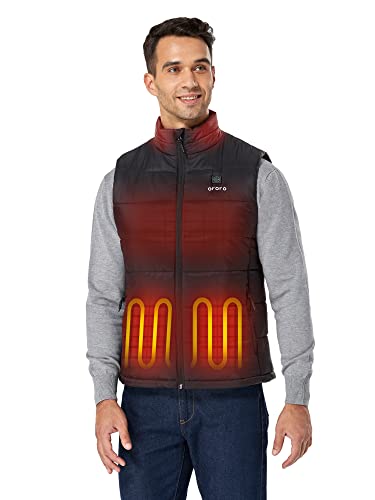
- Entry PickORORO Men's Lightweight Heated Vest about$179.994800mAh.
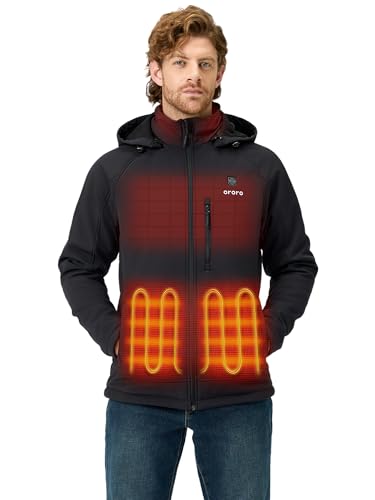
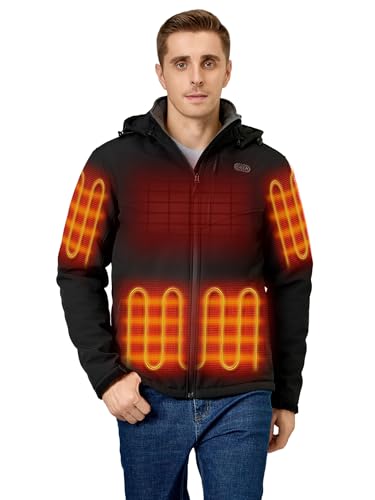
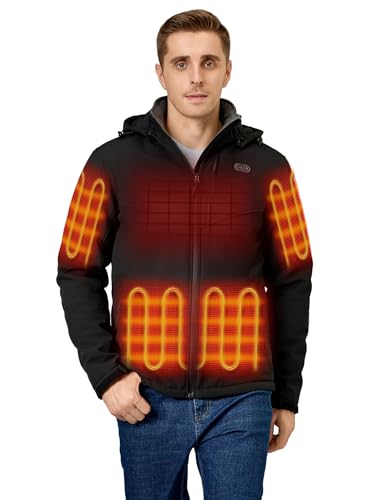
- ORORO Men's 4 Heat-Zone Heated Jacket with… about$199.994800mAh.
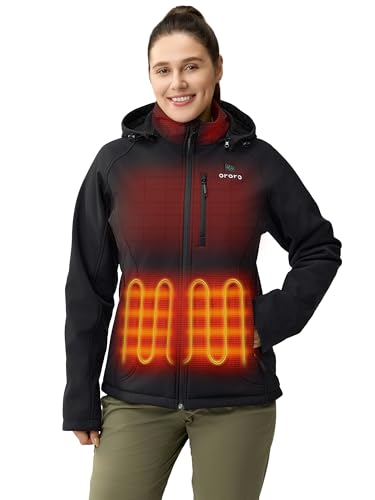
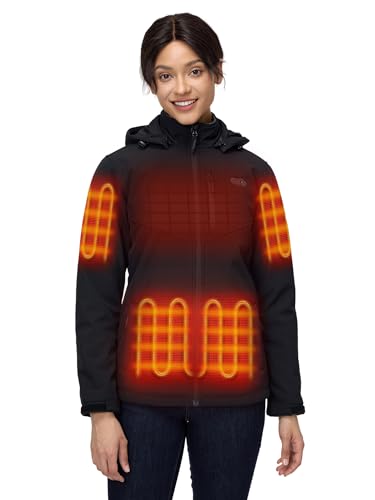
- ORORO Women's Heated Jacket about$199.994800mAh.
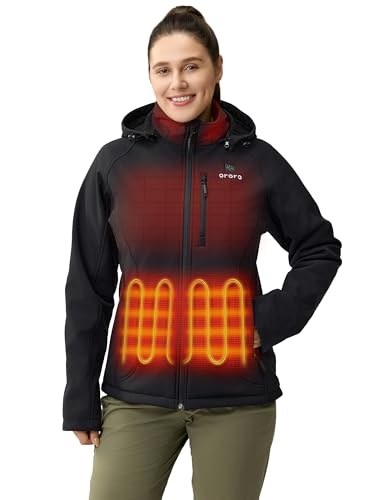
- ORORO Women's Heated Jacket about$199.994800mAh.
- C: The Best-Documented PackORORO Men's Upgraded 5-Zone Heated Vest about$199.994800mAh.
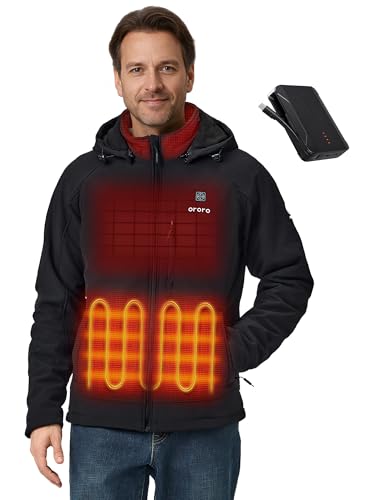
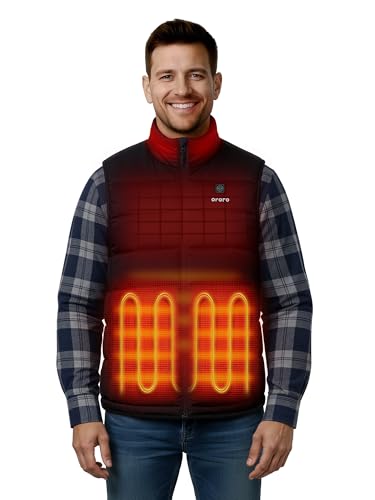
- ORORO [Upgraded Battery] Men's Heated… about$219.997000mAh, 30W.
- A: Best Overall Pack, USB-C PDORORO Men's Heated Jacket with Heated Collar about$219.997000mAh, 30W.
- ororo Men's 5-Zone Dual-Control Heated… about$229.99
- ororo Men's 5-Zone Dual-Control Heated… about$229.99
- Most Premiumororo Women's 5-Zone Dual-Control Heated… about$229.99
Judge it like a power bank, because that is what it is
Strip the fabric away and a heated jacket is three things: a lithium-ion pack, a lead, and a few grams of carbon fibre tape stitched into the lining. The pack is the expensive part. The pack is also the part that ages, the part that gets dropped, and the part that ends up in my Erina workshop when the jacket stops warming up. So judge it the way you would judge a power bank, because in every electrical sense it is one. Most of the packs on these four listings literally are: the ORORO men's jacket pack has a built-in USB-C cable for charging your phone, the ORORO vest packs carry a USB port for the same job.
That reframing changes the questions you ask. Not how warm does it get (they all get warm, the elements are resistive tape and physics is not negotiable) but: how many watt-hours are in the pack, what voltage does it run at, what connector joins the pack to the jacket, and can I replace the pack in three years when the cells have faded? The listing will answer some of those. Where it does not, I say so.
After 16 years in the workshop I have a simple test for wearable electronics. Find the part that moves. Then find the part that gets wet. The part that does both is the one that fails. On a heated jacket that is the lead between the pocket and the pack, and I will come back to it more than once, because it matters more than the heat-zone count on the box.
Capacity: mAh is only half the number
Every listing shouts a milliamp-hour figure. 7000mAh. 4800mAh. On its own that number tells you almost nothing about runtime, because energy is capacity multiplied by voltage, and the voltage differs between packs. A 5V power bank, a 7.4V two-cell jacket pack and a 12V tool battery are not comparable by mAh. You need watt-hours.
ORORO's women's jacket prints its voltage: 7.38V and 4800mAh, which works out to about 35 Wh. That is the honest number. The men's ORORO lists 7000mAh with no voltage stated; if that is quoted at the usual 3.7V cell nominal (an assumption on my part, not a listing figure) you get roughly 26 Wh, and if it is quoted at 7.4V you get about 52 Wh. Big difference, same headline. Both ORORO vests print the same 7.38V and 4800mAh as the women's jacket, so that is three honest 35 Wh packs on the page.
Why the arithmetic matters: the heating elements draw what they draw. A 35 Wh pack on high will empty sooner than a 52 Wh pack on the same setting, regardless of what the mAh sticker says. Runtime claims (13.5 hours, 10.5 hours, 10 hours) are always on the lowest setting, with the pack new, at room temperature. Cold air pulls more heat out of the fabric, so you run it higher, so the pack drains faster, and lithium cells also deliver less usable capacity below about 10 °C. Halve the headline runtime for a winter morning on a job site and you will be closer to what you get.
One more thing the mAh number hides: cycle life. A pack that is 80 percent of new after 300 to 500 charges is normal for consumer lithium-ion. A jacket charged every workday will be noticeably weaker by its third winter. That is chemistry, not a fault, and it is why a replaceable pack, or one with a printed cycle count, is worth more to me than a bigger number on the first day.
The lead and the connector: what actually fails
Three parts fail, in this order. The lead, the connector, the pack. The elements themselves almost never do. Carbon fibre heating tape is a resistor with no moving parts and no single wire to snap; it is tough stuff, which is why ORORO can rate the men's system for 50-plus wash cycles. But the tape has to be fed, and the feed is a thin flexible cable that runs from a junction behind the lining into the battery pocket, ending in a barrel plug or a USB connector. That cable gets flexed every time you sit down, reach overhead, or pull the pack out to charge it. Flex fatigue cracks the copper strands inside the insulation, usually right where the cable enters the plug moulding, because that is where the bend radius is tightest. The symptom is a jacket that heats when you hold the plug at an angle and cuts out when you let go. Then it cuts out for good.
The connector is next. Barrel jacks wear. The spring contact inside loosens, the plating rubs off, resistance climbs. At 2 to 3 amps a few tenths of an ohm of contact resistance is a warm plug, then a brown plug, then a melted one. USB-C connectors are better here because the contacts are rated for ten thousand insertions and the standard forces a proper grip, but they are also finer, and pocket lint packs into them. Pick the lint out with a wooden toothpick, not metal.
The pack fails last, and slowly. Capacity fades, then one day a cell group sags under load and the protection circuit trips the moment you press high. People tell me the jacket only works on low now. That is a tired pack, not a broken jacket. Laptop packs in the Central Coast repair workshop do the same: fine at a trickle, collapse under a real load.
Before you buy, look at the photos for the plug type and ask yourself: can I buy that pack again in three years? A proprietary two-pin barrel on an unbranded pack is a dead jacket when the pack dies. A USB-C pack from the brand that made the jacket, or a plain USB bank, is not.
Why every pick here has a purpose-built pack
All four garments here ship a lithium-ion battery made for the job, and that is the arrangement I would choose.
The men's jacket pack is the interesting one because it speaks USB Power Delivery, 30W out and 24W in according to the listing, with a 3-hour full recharge and a built-in USB-C cable. One charger for phone, laptop and jacket, and the pack is a genuine power bank when the jacket is in the cupboard. The women's jacket pack prints its voltage, 7.38V and 4800mAh, and carries a USB port for phone charging; the listing does not mention USB-C PD for that one. The men's vest pack prints the same voltage and capacity and adds the figure none of the others state: 800-plus recharge cycles. The lightweight vest pack matches the women's jacket on voltage and capacity and carries a USB port, but the listing does not state a charging standard or a recharge time.
The alternative is a garment built to run off a generic 5V USB power bank. That is the most replaceable arrangement: you are not tied to the pack in the box, and when it tires you buy another one rather than hunting a discontinued proprietary pack. The trade is that a generic bank tells you nothing about its cells, its protection circuit or its cycle life, and the lead ends in a standard USB plug, which is the connector most likely to work loose in a pocket. None of the four picks here is built that way, so check the listing before you buy a cheaper vest that is.
The principle underneath both approaches is the same: whatever powers the garment has to be something you can buy again. A proprietary two-pin barrel plug on an unbranded listing is a dead garment the day the pack dies, however good the elements are. A USB-C pack from the brand that sells the jacket, or a plain USB bank you can replace at any electronics counter, both pass that test. A no-name pack with a connector you cannot identify from the listing photos does not.
If you want to top a pack up away from a wall socket, a small portable power station with a USB-C PD port will recharge the ORORO pack many times over. And if you are curious what a charge costs, a plug-in energy monitor will show you: roughly 35 Wh drawn from the wall, allowing for charger losses, at the AU average of about 33c per kWh is a little over one cent. Running a heated jacket is close to free. Buying the pack is the cost.
Washing it without killing the heating elements
Every heated jacket I have seen with dead elements died in the laundry, not on the job. Not because water reached the carbon fibre (it is sealed in the lining and tolerates a wash) but because the pack went through with it, or the lead wrapped around the agitator, or the dryer softened the adhesive holding the tape to the lining.
The rules are short. Unplug the lead from the pack and take the pack out; check the pocket twice, because a pack through a wash cycle is a dead pack and often a swollen one. Tuck the lead and plug back into the pocket and zip it so nothing flails. Cold, gentle cycle, or hand wash. ORORO explicitly rates the men's jacket and the men's vest for 50-plus machine washes. No dryer, no wringing, no ironing over the element zones: resistive tape does not care about water, but it does care about being creased hard and about adhesives softening. Hang it and dry it fully, and I mean fully, before you plug the pack back in. Moisture at the connector pins plus a few volts equals electrolytic corrosion, the green fuzz that eats plating, and that connector is the part you least want to lose. The same chemistry that kills a phone in a puddle kills a jacket plug in a damp pocket, only slower; our water damage explainer covers it.
The lightweight ORORO vest listing says machine washable without giving a cycle rating, and the women's ORORO states nothing, so treat those two as hand-wash items unless the care label inside says otherwise. Read the manual's conditions once and the jacket will outlast the pack.
One more thing: salt. Coastal air on the Central Coast, sweat on a site, a morning on the rocks fishing. Salt wicks into the connector and sits there. Wipe the plug and socket with a barely damp cloth after a salty day and let them dry open. It takes ten seconds and it is the single best thing you can do for the lead.
Charging and electrical safety: the bit people skip
The jacket itself runs at a handful of volts from a pack in your pocket. Nothing on you is at mains voltage, which is the correct way to build a wearable heater. The risk sits at the charger, and that is where the workshop stories come from.
The men's ORORO jacket listing tells you outright what is and is not in the box, and its pack wants 24W of USB-C PD input. Use a charger from a maker you have heard of, with an RCM mark on it, rated for at least that wattage. The no-name bricks that come free with other gadgets are the ones we open up to find a single-sided board, no proper isolation gap and a capacitor that has already bulged. A pack on a bad charger gets overvoltage, overheats, or simply never fills because the brick cannot hold its rated current. We pulled a few apart in our piece on dodgy USB power bricks. Do not charge the pack inside the jacket on the bed. Charge it on a hard surface where air moves, and unplug it once full.
Lithium cells expand as they age; a pack whose case has gone domed or whose seams have opened is finished. Do not puncture it, do not charge it again, and take it to a council battery drop-off rather than the red bin. Protection circuitry catches most faults, but a swollen cell is past what a protection board is for.
On both vests the pack fills over USB, so use a charger rated for the current the pack actually draws rather than the nearest spare brick, and never leave a bank charging under a pillow or a pile of jackets. And the obvious one: if the jacket or the pack ever gets properly wet, pull the pack, dry everything for a day, and inspect the connector before powering up. The Erina workshop sees the aftermath of the other approach most weeks of winter, usually as a pack that charged itself warm in a damp pocket.
How I judged these four
Four products, one per listing, in the order Amazon AU supplied them. I weighed the pack first: stated capacity, stated voltage if any, charging standard, and whether the pack can be replaced or shared with something else you own. Then the lead and connector, as far as the listing and photos show them. Then the shell, because a heated jacket that is not wind-resistant wastes battery heating the breeze, and the ORORO jackets and both vests are all described as water- or wind-resistant. Then the wash rating. Last, the price, and only last.
Specs are only what each listing states. Where a listing is silent, the spec table says not stated or the line is missing. Ranks are Amazon AU category sales ranks on the day, and rank is a popularity signal, not a quality one: the lightweight vest sits at #23 in Men's Outerwear Vests because it is the entry price, not because it has the best pack. Prices are Amazon AU at time of writing and move week to week. I have no relationship with any of these sellers. If you are after warm hands rather than a warm core, the rechargeable hand warmers guide covers the same pack-and-connector questions at a smaller scale.
The 4 picks, $180 to $220
Prices are Amazon AU at time of writing (9 October 2026) and move week to week. Ranks are Amazon AU category sales ranks, checked the same day.

ORORO Men's Heated Jacket with Heated Collar (7000mAh, USB-C PD)
ASIN B0GMJ2XHR2 • $219.99 • Sold by ororo AU on Amazon AU
This is the pack I would pick for a jacket built around USB-C. The listing states 7000mAh, 30W PD output, 24W PD input, and a 3-hour full recharge, with the USB-C cable built into the pack so there is no separate charging lead to lose. Voltage is not stated, so I cannot hand you a watt-hour figure, but 24W of input for three hours is up to 72 Wh delivered to the pack before charge losses and tapering, which makes this plainly a larger pack than the women's model's 35 Wh. Treat that as my arithmetic, not a listing number. Four carbon fibre zones: collar, mid-back and both pockets, with three levels on a single press. The heated collar is the feature people underrate. Warmth at the neck is what stops you hunching into the wind.
The built-in cable is a double-edged choice. In the workshop, a captive cable is the one part you cannot swap when the strain relief cracks, and strain relief is where USB-C cables die. In its favour, a captive cable means there is one fewer plug to work loose in a pocket, and because the pack follows USB PD, any decent PD charger fills it and any PD laptop brick in the ute will too. The shell is softshell, water- and wind-resistant, with a detachable hood and a breathable lining. It is machine washable with the heating system rated for 50-plus wash cycles, which is the only explicit wash rating of the four and the reason I would wear this one daily rather than keeping it for weekends.
Who it suits: someone who wants one jacket and one charger. It is the most expensive of the four at $219.99 at time of writing, and you add a PD charger on top, since none is included. Sold by ororo AU, which matters for a warranty claim on the pack; the pack is the part that will eventually need it. At #38 in Amazon AU's Men's Jackets category it is selling well against ordinary unheated jackets, which says something about how many people have decided the pack is the point.
Honest caveats: Charger not included, and the pack's voltage and weight are not stated on the listing, so the watt-hour comparison above is inferred. The built-in USB-C cable cannot be replaced if its strain relief fails; fold it into the pocket rather than leaving it dangling. Runtime of 13.5 hours is a lowest-setting figure. Listed in XL, so check the size chart before ordering.
Best for: Anyone who wants a heated jacket on USB-C PD with the largest stated pack of the four and an explicit 50-wash rating.
Pack: 7000mAh (voltage not stated) • Charging: USB-C PD, 24W in / 30W out, 3-hour full recharge • Heat zones: 4: collar, mid-back, both pockets • Heat levels: 3, single press • Runtime: Up to 13.5 hours (lowest setting) • Shell: Softshell, water- and wind-resistant, detachable hood • Washing: Machine washable, system rated 50+ cycles • In the box: Jacket and battery with built-in USB-C cable; charger not included • Rank: #38 in Men's Jackets (Amazon AU)
View on Amazon AU
ORORO Women's Heated Jacket, 4 Heat Zones (7.38V 4800mAh)
ASIN B0DTDT83BZ • $199.99 • Sold by ororo AU on Amazon AU
The honest pack. This is the only listing of the four that prints a voltage: 7.38V and 4800mAh, which is about 35 Wh, and I would rather have a true 35 than a mystery 7000. The listing calls it a certified battery, it carries a USB port for charging a phone, and it is rated for up to 10 working hours, again on the lowest setting. Four carbon fibre elements in the same layout as the men's jacket: collar, left pocket, right pocket and mid-back. The shell is water- and wind-resistant with a soft lining, a YKK zipper (zip failure retires more jackets than element failure does) and a chest pocket. Slim fit per the listing, which on a heated garment is a functional point rather than a fashion one: elements work by contact, and a loose jacket spends its battery heating air that escapes at the hem.
What the listing does not say is as important as what it does. There is no mention of USB-C PD for charging the pack, no stated recharge time, no heat-level count and no wash-cycle rating, so I would hand wash this one until the care label says otherwise. At 7.38V the pack is a two-cell design, and two-cell packs are the common format for heated clothing, which makes a replacement easier to source than an odd voltage would be. Check that the connector on any replacement matches before you order, and ask ororo AU directly; they sell the jacket on Amazon AU themselves, so the seller and the brand are the same people, which is the arrangement you want when a pack needs a warranty conversation in year two.
Price is $199.99 at time of writing, and it ranks #149 in Amazon AU's Women's Jackets category, an enormous category to sit that high in. Relative to the men's model you give up the PD fast charge, the bigger stated capacity and the printed wash rating for $20 less, and you gain the slim cut and the honest voltage on the label. If you will charge it overnight anyway, the slower charge costs you nothing. For the commute and a Saturday on the sideline rather than a ten-hour shift, 35 Wh is plenty, and the pack will still run a phone top-up on the way home.
Honest caveats: No charging standard, recharge time, heat-level count or wash rating is stated on the listing, so assume a slow charge and hand washing until the manual tells you otherwise. 10 hours is the lowest-setting figure. Listed in size S with a slim fit, so size up if you want a mid layer beneath it. The box contents are not listed, so do not assume a charger.
Best for: A commuter or weekend wearer who wants a slim-cut heated jacket with a pack whose voltage is printed rather than implied.
Pack: 7.38V / 4800mAh certified battery (about 35 Wh) • Runtime: Up to 10 working hours • Heat zones: 4: collar, left and right pocket, mid-back • Phone charging: USB port on the pack • Shell: Water- and wind-resistant, soft lining, YKK zipper, chest pocket • Fit: Slim • Washing: Not stated on the listing • Rank: #149 in Women's Jackets (Amazon AU)
View on Amazon AU
ORORO Men's Upgraded 5-Zone Heated Vest (7.38V 4800mAh, 800+ Cycles)
ASIN B0GMH7QCZ6 • $199.99 • Sold by ororo AU on Amazon AU
This is the only pack on the page with a cycle count printed on the listing. A UL-certified 7.38V and 4800mAh battery, which is about 35 Wh, rated for 800-plus recharges and up to 10.5 hours of warmth. Five heating zones, and their placement is the argument for a vest rather than a jacket: left and right pockets, mid-back, lower back and collar. Lower back is the zone both jackets here skip, and it is where people notice the cold after a couple of hours standing still. The shell is water-resistant with elastic cuffs and hem, which matters more than it sounds: a loose heated garment spends its battery warming air that leaves at the waist.
Eight hundred cycles is the number I would pay for. Consumer lithium-ion is usually good for 300 to 500 charges before it settles at about 80 percent of new, so a pack rated to 800 is either better cells or a more conservative charge window, and either way the vest is still useful in its third winter rather than tired in it. The pack carries a USB port for charging a phone, and the listing title calls it USB-C rechargeable, so the lead that fills it is the one already in your bag rather than a proprietary barrel plug you cannot source again. Replaceability is the whole game with heated clothing. A garment whose pack you can still order in three years is a garment you still own in three years.
It is $199.99 at time of writing, sold by ororo AU, which is the brand selling its own stock on Amazon AU, so a warranty conversation about the pack starts with the people who made it. It sits #90 in Amazon AU's Men's Outerwear Vests. Against the lightweight vest below it you pay about $20 more and you get a fifth zone at the lower back, a certified pack with a printed cycle count, and a stated machine-wash rating. Against the two jackets you give up sleeves, and that is often the right trade: sleeves add weight, the elements never heat them, and a vest layers under a work shell or a riding jacket without bunching at the shoulder.
Honest caveats: Listed in XL under a redesigned size chart, so measure rather than assume your usual size carries across. Runtime of 10.5 hours is the lowest-setting figure. Water-resistant is not waterproof, so it goes under a shell in real rain. No sleeve heating, by design. Stock on ORORO's size-specific listings moves quickly, so check the size you want is the one showing.
Best for: Anyone who wants the battery specified properly in writing, cycle life included, and is happy wearing a vest under an outer layer instead of a heated jacket.
Pack: UL-certified 7.38V / 4800mAh (about 35 Wh) • Cycle life: 800+ recharge cycles (stated) • Runtime: Up to 10.5 hours • Heat zones: 5: left and right pockets, mid-back, lower back, collar • Shell: Water-resistant lightweight puffer, elastic cuffs and hem • Phone charging: USB port on the pack • Washing: Machine washable, built to endure 50+ wash cycles • Rank: #90 in Men's Outerwear Vests (Amazon AU)
View on Amazon AU
ORORO Men's Lightweight Heated Vest with USB-C Rechargeable Battery
ASIN B0BVRHW7Z4 • $179.99 • Sold by ororo AU on Amazon AU
The vest that sits #23 in Amazon AU's Men's Outerwear Vests category, and at $179.99 at time of writing it is the entry point of the four. What you get is four carbon fibre heating elements across the collar, upper back and both pockets, three heat settings on a single button, and a lightweight insulated shell that the listing describes as water and wind resistant. The pack is a 7.38V, 4800mAh battery, which works out at about 35 Wh. That is my arithmetic from the printed figures, not a listing number. The listing says up to 10 working hours, which I read as the lowest-setting figure, and the pack has a USB port that will charge a phone. A lightweight vest suits a work shell or a riding jacket over the top, because the elements sit against your core and the outer layer keeps the wind off them.
The listing title calls it USB-C rechargeable, but it does not state a charging standard, a recharge time or the connector between pack and vest, and a charger is not included. So the questions to ask before you buy are the usual ones: can I still order this pack in three years, and what plugs into it. The pack and the garment come from the same people, ororo AU, selling their own stock on Amazon AU, which is the arrangement you want when a pack needs a warranty conversation in year two. Two-cell packs at this voltage are the common format for heated clothing, so a replacement is easier to source than an odd voltage would be. Check the lead and plug in the listing photos before you order, and expect the plug to be the first thing to wear loose in a pocket.
The listing I looked at is the medium, so measure and check the size chart rather than assume your usual size carries across. The listing says easy care and machine washable but gives no wash-cycle rating, so take the pack out, tuck the lead away and wash it cold and gentle. For the money it is the lowest outlay of the four and a sensible way to find out whether a heated garment suits you at all, with a pack that is the same format as the dearer ORORO women's jacket.
Honest caveats: No charger is included, and the listing does not state a charging standard, recharge time or wash-cycle rating. Up to 10 hours is the lowest-setting figure. It has four zones where the dearer ORORO vest has five, so there is no lower-back heat. Water and wind resistant is not waterproof, so it goes under a shell in real rain.
Best for: <strong>Best for:</strong> A first heated garment, or a layer under a riding or hi-vis jacket, from the brand that sells and supports its own pack.
Pack: 7.38V 4800mAh (about 35 Wh, my arithmetic), charger not included • Runtime: Up to 10 hours (lowest setting) • Heat elements: 4 carbon fibre: collar, upper back, two pockets • Controls: 3 heat settings, single button • Phone charging: Yes, USB port on the pack • Shell: Lightweight insulated, water and wind resistant • Washing: Machine washable, no cycle rating stated • Rank: #23 in Men's Outerwear Vests (Amazon AU)
View on Amazon AUSide-by-side comparison
| Product | Price | Best for |
|---|---|---|
| ORORO Men's Lightweight Heated Vest | ~$179.99 | |
| ORORO Men's 4 Heat-Zone Heated Jacket with… | ~$199.99 | |
| ORORO Women's Heated Jacket | ~$199.99 | |
| ORORO Women's Heated Jacket | ~$199.99 | |
| ororo Men's 5-Zone Dual-Control Heated… | ~$229.99 | |
| ororo Men's 5-Zone Dual-Control Heated… | ~$229.99 | |
| ORORO [Upgraded Battery] Men's Heated… | ~$219.99 | |
| ororo Women's 5-Zone Dual-Control Heated… | ~$229.99 | |
| ORORO Men's Heated Jacket with Heated Collar | ~$219.99 | A: Best Overall Pack, USB-C PD |
| ORORO Men's Upgraded 5-Zone Heated Vest | ~$199.99 | C: The Best-Documented Pack |
What we see fail in the workshop: heated jackets and vests
A heated jacket arrives at the workshop for one of three reasons, and none of them is the heating element. The carbon fibre tape is the toughest part of the garment. What gives up is the copper and the chemistry around it: the flexible lead, the plug it ends in, and the lithium cells feeding it. Knowing which one you have saves you binning a jacket that needs a $20 part.
The lead, at the plug moulding
The cable between the lining and the pack bends every time you move, and the tightest bend is right where it enters the plug. Fine copper strands fatigue there and break one at a time, so resistance climbs before the circuit opens. The first symptom is intermittent heat that comes back when you wiggle the plug, then a jacket that only heats with the plug held at an angle, then nothing. In the workshop we cut back to clean copper and fit a new plug, or replace the whole lead if the jacket uses a standard USB cable. Prevention is dull but works: unplug by the plug body, never the cable, and coil the lead into the pocket rather than letting it hang.
The connector and contact resistance
A barrel jack or USB socket that has been plugged and unplugged a few hundred times loses spring tension and plating. The contact still touches, but through a few tenths of an ohm, and at the 2 to 3 amps a heated garment draws that turns into heat at the plug instead of in the jacket. A warm plug is the warning. A discoloured or softened plug is the fault. Salt and damp speed this up enormously, because the green corrosion between pin and sleeve is a poor conductor. We clean light corrosion with isopropyl and a fibreglass pen; anything pitted gets a new socket. If the plug is warm to touch, stop using it until someone has looked at it.
The pack: fade, sag and swelling
Capacity fade is gradual and normal; a pack charged daily is noticeably shorter-lived by its third winter. The sharper failure is voltage sag: an aged cell group holds up at a trickle but collapses under the load of the high setting, the protection board sees undervoltage and cuts out, and the owner reports that the jacket only works on low. That is a pack replacement, not a jacket repair. Swelling is the one to act on immediately. Lithium cells outgas as they degrade, the pouch domes, the case splits. Stop charging it, keep it away from the jacket lining, and take it to a battery drop-off. A swollen pack is not repairable and we will not try.
Decision tree: which one should you actually buy?
- Want the pack specified in writing, cycle count and all? → The ORORO men's heated vest at $199.99. A UL-certified 7.38V 4800mAh pack rated for 800-plus recharges, five zones including the lower back, and a machine-wash rating.
- Want one jacket and one USB-C charger for everything, with the longest stated runtime? → The ORORO men's jacket at $219.99. 7000mAh, USB-C PD in and out, 3-hour recharge, and the longest stated runtime of the four. Bring your own PD charger.
- Slim cut for the commute and the weekend, and you would rather know the pack's real voltage? → The ORORO women's jacket at $199.99. A stated 7.38V 4800mAh pack (about 35 Wh), up to 10 hours, sold by ororo AU directly.
- Not sure you will use a heated garment at all, or wearing it under a riding or hi-vis jacket? → The ORORO lightweight vest at $179.99. Four zones, a 7.38V 4800mAh pack, machine washable, and the lowest outlay to find out whether the idea suits you.
- Cold hands more than a cold core? → Skip the jacket and read the the hand warmers guide; the pack and connector questions are the same, the price is not.
- Jacket only heats when you hold the plug at an angle, or the pack has stopped taking charge? → That is a lead, a connector or a tired pack, and all three are diagnosable in minutes. Bring the jacket and the pack to our Erina workshop before you bin either.
Frequently asked questions
How long does a heated jacket really run on one charge?
Less than the headline. The 13.5, 10.5 and 10 hour figures on these listings are lowest-setting numbers with a new pack at room temperature. Step up to medium or high and the elements draw two or three times the current, so runtime drops in proportion. Cold weather compounds it: you run the jacket higher because more heat is being pulled out of the fabric, and lithium cells deliver less usable capacity when they are cold themselves. A fair planning figure for a winter morning on site is about half the headline on medium, and a few hours on high. After two or three winters of daily charging, take another 20 percent off for cell ageing.
Can I run a heated jacket off any USB power bank?
Sometimes, and it depends on the connector and the voltage the jacket expects. A garment built for a 5V USB supply, which is what a generic bank provides, will run off any bank that can sustain the current, usually 2 amps or more. A jacket built around a 7.4V two-cell pack with a barrel plug will not take a USB bank without an adaptor, and I would not improvise one. The ORORO men's pack is a USB-C PD device, so a PD bank or a PD charger will recharge it. Check the listing photos for the plug type before you assume anything, and never splice a cable to make an unrelated bank fit.
Can I put a heated jacket through the washing machine?
Only if the listing or the care label says so, and only with the pack removed and the lead tucked into its pocket. ORORO rates the men's jacket and the men's vest for 50-plus machine washes; the other two listings here do not state a wash rating, so hand wash those until the manual says otherwise. Use a cold gentle cycle, no dryer, no wringing and no ironing over the element zones. Dry it completely, and I mean overnight at least, before plugging the pack back in. A damp connector with a few volts across it corrodes quickly, and a corroded plug is the most common reason a washed jacket stops heating, not the wash itself.
What does it cost to charge a heated jacket?
Almost nothing. Take the women's ORORO pack at a stated 7.38V and 4800mAh, which is about 35 Wh. Allow for charger losses and call it 40 Wh drawn from the wall per full charge. At the Australian average tariff of roughly 33 cents per kilowatt-hour, that is about 1.3 cents. Charge it every workday for a 20-week winter and you have spent around $1.30 on electricity. The cost of a heated jacket is the pack and its eventual replacement, not the power. Compare that with a 2,000W fan heater at the same tariff, which costs about 66 cents for every hour it runs flat out.
Why does my heated jacket only work on low now?
Almost always a tired pack. As lithium cells age they can still supply a small current, which is what the low setting draws, but their voltage sags under the larger load of medium or high. The protection board inside the pack sees that sag as an undervoltage fault and cuts the output, so the jacket shuts off the moment you step up. The elements are fine and the controller is fine. The fix is a replacement pack, which is easy on a USB-C garment or one that runs off a plain USB bank, and harder on a proprietary barrel-plug pack from an unbranded seller. If the pack is also swollen or warm when idle, stop using it and dispose of it properly.
What should I check before buying a heated jacket?
Five things, in order. First, the pack's watt-hours, or at least its voltage and mAh, because mAh alone hides the real capacity. Second, the connector between pack and jacket, and if a replacement pack with that connector will still be purchasable in three years. Third, whether a charger is in the box and what standard it uses; USB-C PD is the one that shares with your phone and laptop. Fourth, a stated wash rating, because a heated garment you cannot clean gets retired early. Fifth, who the seller is, because the pack is the part most likely to need a warranty conversation, and a brand selling directly is easier to reach than a marketplace reseller.
Related guides
Heated jacket gone cold? Bring the pack and the plug in.
Nine times out of ten it is a cracked lead at the plug, a worn connector or a pack that sags under load, and all three are diagnosable in the workshop in minutes. We have done 16 years of board-level work at our Erina workshop on the Central Coast, and a heated jacket pack is just a power bank with a different job. Book it in before you throw out a jacket that needs a $20 part.
Book Online