
Prices from Amazon AU, updated daily. Swipe or use the arrows for more.
Disclosure: This article contains affiliate links to amazon.com.au. If you buy through one of these links iFix may earn a small commission at no extra cost to you. It doesn't change which products we recommend. We focus on what actually lasts based on 16 years of repair-shop experience.
Quick summary10 picks
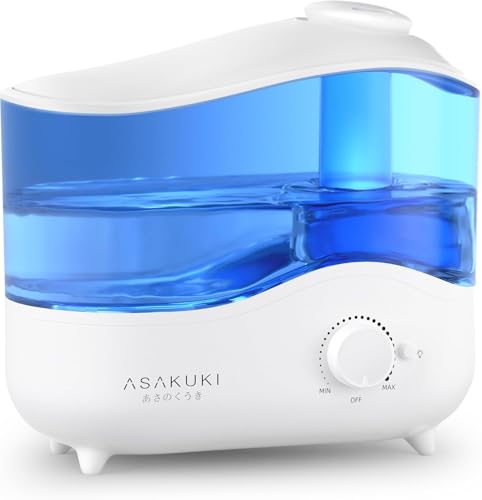
- CheapestASAKUKI Air Humidifier for Bedroom about$25.49
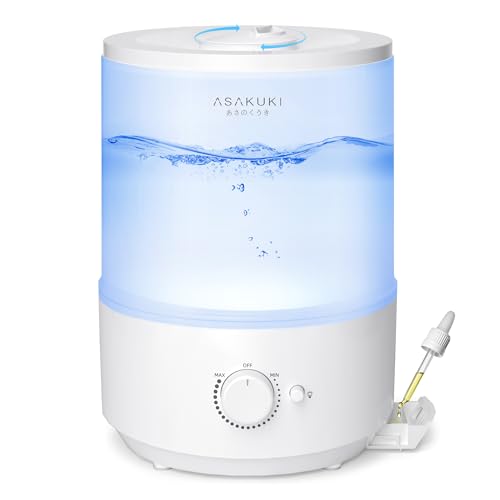
- ASAKUKI Humidifier 3L Air Humidifiers for… about$42.99
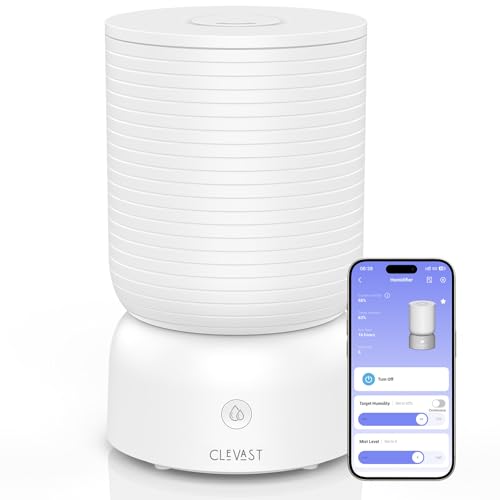
- CLEVAST Smart Humidifier for Home with Oil… about$55.99
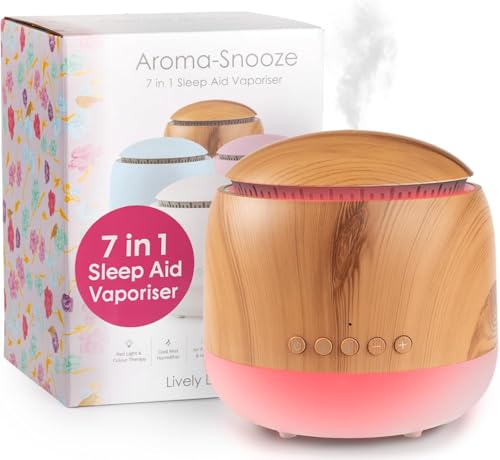
- Aroma-Snooze Essential Oil Diffuser… about$99.00
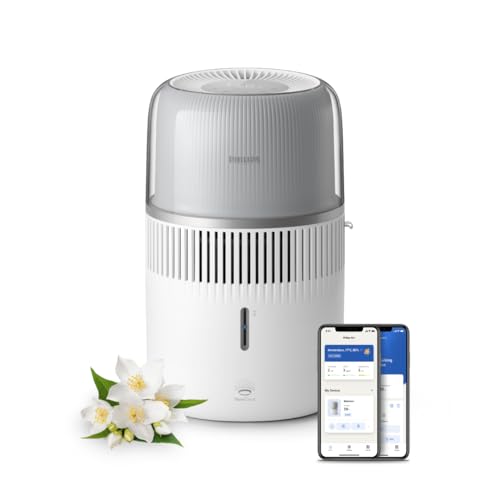
- Philips Smart Humidifier about$104
- Snotty Noses HUSH Ultrasonic Cool Mist… about$115.00
- A: Best Overall for Most RoomsCareMax 4L Mist-Free Evaporative Humidifier… about$159
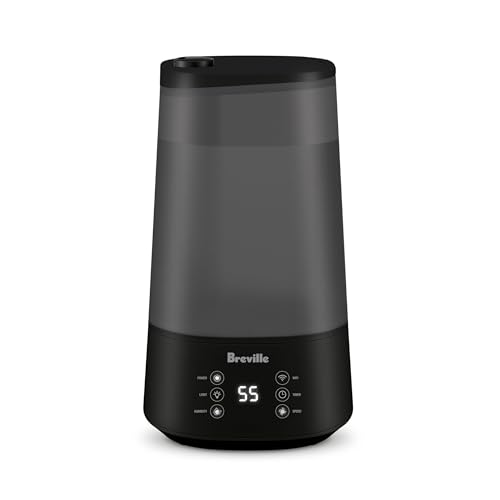
- Breville about$199
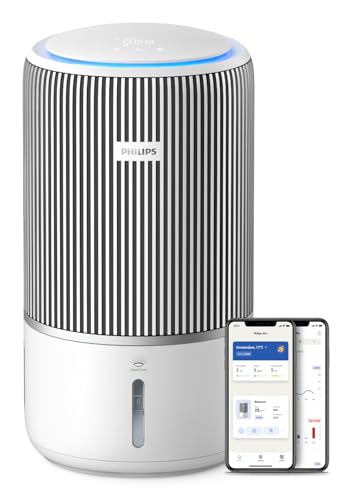
- Philips Air Humidifier 5000 Series about$249
- Most PremiumPhilips 2-in-1 Air Purifier & Humidifier 3400 about$417.00
Why a humidifier ends up on a repair bench
A humidifier is not complicated. A tank, a way of turning water into vapour, maybe a fan, maybe a sensor. Yet every winter one or two of them come across the counter at the Erina workshop, and more often the humidifier is not the patient at all. The patient is the laptop, the games console or the soundbar that lived next to it.
Here is the pattern. Someone runs a reverse-cycle or a column heater through June and July, the air in the lounge drops to 30 percent relative humidity or lower, and the timber floorboards start ticking at night. They buy a humidifier, put it on the TV unit because that is where the spare powerpoint is, and run it flat out. Three months later the TV bezel has a fine white bloom and the PC under the desk is throttling because its heatsink fins are furred up with something like talcum powder.
That crust is mineral. Calcium, magnesium, whatever your tap water carries, aerosolised and deposited on every surface in reach. It is hygroscopic, so it pulls moisture out of the air on the next damp morning and sits on the PCB as a slightly conductive film. Sometimes a sensing line drifts and a device starts misbehaving in ways nobody connects to the little white box in the corner. I have written up what moisture does to boards in our guide to water damage and corrosion, and a humidifier in the wrong spot is the slow-motion version of the same chemistry.
So this guide covers which humidifier to buy, and how to run it so it humidifies the room rather than the inside of your electronics. Sixteen years in Erina says the second part matters more.
Ultrasonic versus evaporative: what the white dust actually is
There are two ways to get water into the air with a plug-in appliance, and they behave completely differently. Ultrasonic units sit a piezo disc under the water and vibrate it at a frequency above hearing. The surface breaks into microscopic droplets and a small fan pushes the fog out of a nozzle. That visible plume is the selling point. It looks like it is working. It is also the problem, because those droplets are whole water, minerals included. The water evaporates in the air and the dissolved solids fall out as dust. More minerals, more dust.
Evaporative units do not make droplets at all. Water soaks up into a wick or a rotating filter and a fan blows room air across the wet surface. Only water molecules leave. The minerals stay behind in the wick, which is why the wick goes stiff and chalky over a season and has to be rinsed or replaced. Philips calls its version NanoCloud, and the 5000 Series in this guide uses it. The CareMax 4L runs the same fan-and-wick principle without the brand name. The listing for each states no white dust and no wet stains, and that is physics rather than marketing: there is no mechanism for mineral carry-over if nothing leaves the wick except vapour.
Philips claims the 5000 Series releases up to 99.9 percent fewer bacteria than ultrasonic models, and CareMax makes a 99 percent claim for its evaporative unit on the same basis. I am quoting the listing, not verifying it, and not turning it into a health statement. The hardware logic is sound though: a disc throws out whatever is in the tank, a wick holds most of it back.
The third unit here, the Philips Smart Humidifier with the 3L top-fill tank, is the odd one out. The listing describes a visible mist rising over 80 cm, which tells you it is a mist-type unit rather than an evaporative one. That is not a reason to rule it out. It is a reason to use it with demineralised water, in the right place, and to wipe it down more often.
Tank size against runtime: do the division
Tank litres is the number on the box. Runtime hours is the number that matters, and the two are linked by output rate, which is the figure most people never look at. A 2L tank sounds small next to 4.5L, but the question is how fast it empties at the output you will actually use.
The CareMax 4L lists up to 300 ml per hour and a 4L tank, and quotes more than 12 hours of continuous running. Four litres divided by 300 ml is about thirteen hours at full tilt, so for once the listed runtime and the arithmetic agree. The 5000 Series lists a 4.5L tank and up to 37 hours, which works out to roughly 120 ml per hour averaged over the run (that is my arithmetic from the two listed figures, not a listed output rate). The Smart 3L unit lists up to 32 hours from its 3L tank, so about 95 ml per hour on the same maths. The two Philips units sit in Amazon AU's Single Room Humidifiers category; the CareMax is listed under Air Purifiers because of its filter stage.
Room coverage is the other listed figure: up to 30 square metres for the CareMax 4L, up to 41 for the Smart 3L and up to 56 for the 5000 Series. Treat those as ceilings. A 30 square metre open-plan area with a reverse-cycle unit running all evening is a much harder job than a closed 12 square metre bedroom. If you are running a heater hard, size up the humidifier. And if there is a dehumidifier running elsewhere in the house in the same season, which happens on the coast, read the dehumidifier guide and decide which problem you actually have first.
The Smart 3L is listed as top-fill, so you pour from a jug instead of carrying a wet tank through the house. The other two listings do not state a fill method.
Hygrostat control: you want a number, not a mood
A humidifier with no humidity sensor is a kettle with no thermostat. It will keep going until the tank is empty, and in a small closed room that means condensation on the inside of the window by 3am and a damp patch on the sill by morning. The invisible cost is the moisture load on anything electronic in the room; I have had laptops across the bench with corrosion on the keyboard flex that traced back to a bedroom kept foggy all winter.
None of the three listings here spells out a humidity setpoint in the data I have, which is the main thing I would want a manufacturer to publish and the main reason I keep telling people to buy a separate hygrometer. The CareMax gives you a variable fan speed and a noise figure, not a target percentage. The 5000 Series listing does not spell out setpoints either, so check the current listing. The Smart 3L listing does not state a humidity sensor or setpoints in the detail supplied to me, so treat it as a unit you control by hand or by whatever app function the listing currently describes.
Where should the number sit? For possessions and electronics, somewhere in the 40 to 50 percent band is the sensible target. Below about 35 percent you get static and shrinking timber. Above 60 percent in a cold room you get condensation on any surface cooler than the air: the windows, the external wall, the metal chassis of a desktop PC switched off overnight. A $15 standalone hygrometer placed across the room from the humidifier is a better reference than the sensor on the unit itself, because the onboard sensor sits inside the plume and reads high.
Sensors also drift. Two winters in a dusty airstream and a capacitive humidity sensor no longer reads what it did on day one. Cross-check it against the standalone hygrometer every few weeks.
Where to put it, and where not to
Placement is most of the battle and it costs nothing. The rules I give customers are short.
- Not on the TV unit, not beside the PC tower, not under the desk with the laptop. Anything with a fan pulling room air through it concentrates whatever is in that air on its heatsinks and board.
- Not on carpet or timber directly. A tray under it. Even evaporative units can weep from a seal.
- At least a metre off the floor and clear of walls, so the output mixes into the room rather than wetting one surface. Mist falls.
- Away from the heater inlet and away from the heater outlet. Next to the inlet and the heater dries the output straight back out; next to the outlet and you are blowing fog at a hot element.
- Not inside a cupboard or alcove. A closed space saturates fast and the hygrostat, if it has one, cannot see the rest of the room.
The evaporative units are more forgiving because they are not throwing droplets, but the same airflow logic applies. The Smart 3L with its 80 cm plume needs the most care. If the only powerpoint is behind the TV, run one properly rated extension lead to a better position rather than compromising on the spot.
Noise is the last placement factor. Evaporative units have a fan by definition, and the CareMax 4L is the only one here with a published noise figure, quoted at 25 dB in the listing title and under 28 dB in the detail. Neither Philips listing gives a decibel figure, so I will not invent one for them. A unit that reaches setpoint and idles is quieter than one that runs flat out all night anyway.
Cleaning the wick, the tank and the sensor
Every humidifier is a maintenance item and the maintenance is what decides whether it is still working in three years. An evaporative wick accumulates the minerals the ultrasonic unit would have thrown into the room. That is the whole point, but it means the wick clogs, stiffens and eventually stops drawing water up. Output drops off quietly and people assume the air is just drier this year.
The fix is boring. Rinse the wick under a tap every week or two during the season, soak it in a weak white vinegar solution monthly to dissolve the scale, let it dry fully before it goes back in, and replace it when it stays stiff after soaking. Keep a spare. The 5000 Series has a QuickDry mode where the fan runs to dry the filter and a sensor switches the unit off once it is dry. For longevity that is the most useful thing on any of these listings, because a wick left wet in a closed housing is where the slime starts. On the CareMax 4L, pull the wick and let it dry at the end of each week.
Tanks: empty and dry them if the unit sits idle for more than a day or two. Wipe the base, especially the float or level switch, because a stuck float is the most common fault I see on bases that come in. Not a board failure. A bit of scale under a magnet or a lever.
Mist units get a different routine. The piezo disc in an ultrasonic base scales up, and as it scales the output drops and the disc runs hotter. Wipe it gently with a soft cloth and vinegar, never scrape it. A scratched disc is a dead disc. Demineralised water from the supermarket is the difference between wiping dust off a shelf once a winter and wiping it off weekly.
Electrical safety and what it costs to run
Humidifiers are low-draw appliances, so the electrical worry is not the socket, it is the water. Water and a mains-powered base in the same housing is fine when the seals are intact and the unit sits level. It is not fine when a tank is slopped over the base during a refill or the plug sits in the damp ring under a mist unit on carpet. Fill the tank away from the base. Dry the base before you click it back together. Plug into a wall socket, never into the same powerboard as a heater, and look for the RCM compliance mark on the plug pack or base before buying from an unfamiliar brand.
Running cost is small and I would rather you measured it than took my word. The listings for all three do not state a power figure, so I will not invent one. For scale, if a fan-and-wick unit drew 20 watts, then at roughly 33 cents per kilowatt-hour (the AU average tariff I use for all these guides) it would cost under a cent an hour, or around 15 cents for a full overnight run. A plug-in meter from our smart energy monitor guide will give you the real number for your unit in a day and also tell you whether the thing is actually idling at setpoint or running flat out.
The indirect cost is the one to watch: a room held at 60 percent with the heater on is a room with wet glass every morning. Keep a hygrometer across the room and keep the number honest.
How I picked these three
All three are Philips, and that is not me being paid by Philips. It is that the evaporative end of the Amazon AU market is thin, and Philips is the brand putting NanoCloud units in front of Australian buyers at a price below the imported evaporative gear that costs more than a decent air purifier. The CareMax 4L at $159 is the sensible one for most rooms. The 5000 Series at $229 suits a larger open-plan space, mainly for the tank and QuickDry. The Smart 3L at $119 is here because people will buy a mist unit anyway, and a Philips one with a top-fill tank beats the anonymous one with the colour-changing LED ring and no brand on the base.
I have also kept the picks to ones with a brand behind them because the base units are what fail, and a base with no parts supply is a base in the bin. If your humidifier base has died, or the laptop that sat next to it has started playing up, bring either to the Central Coast repair bench and we will tell you which one is the patient.
The 3 picks, $119 to $229
Prices are Amazon AU at time of writing (15 August 2026) and move week to week. Ranks are Amazon AU category sales ranks, checked the same day.

CareMax 4L Mist-Free Evaporative Humidifier and Ionic Purifier, up to 30 m2
ASIN B0CVGY5K69 • $159.00 • Sold by CareMaxAU on Amazon AU
This is the one I would put in most bedrooms and smaller living rooms, and it is what I would hand to anybody who has had a mist unit dust their electronics before. It works by natural evaporation: dry air is drawn in, nano-sized water molecules are added to it, and a 360 degree design with a built-in fan spreads the moist air across the room rather than firing it out as a jet. The listing states mist-free operation and no wet spots, which is exactly what the physics delivers on an evaporative design. Output is listed at up to 300 ml per hour, and the listing says that lifts a room's humidity noticeably within about ten minutes.
The tank is the part that matters day to day. Four litres, top-fill, removable, with a visible water level, and the listing quotes more than 12 hours of uninterrupted running for a room up to 30 square metres. That is a fill you do in the evening rather than one you do at 2am. The filtration side is a real second function rather than a sticker: a three-stage sterilisation and purification circuit, a UV light and an antimicrobial filter, with ionic purification on top. Noise is quoted at 25 dB on variable speed in the listing title and under 28 dB in the detail, and the indicator lights switch off so the unit is not glowing at you all night.
The bacteria claim is the one worth understanding properly. The listing says nano-sized water droplets spread 99 percent less bacteria than ultrasonic humidifiers. I am quoting that from the listing rather than from my own testing, but the mechanism is sound: an evaporative unit leaves dissolved solids behind in the wick instead of atomising them into the room with everything else the tank contains. Rinse the wick fortnightly, give it a tray and a spot a metre off the floor away from the TV, and it should see out several winters.
Honest caveats: The listing does not state a humidity setpoint or a hygrostat, so this is a speed control rather than a set-and-forget humidity number. If you want a target percentage held for you, this is not that unit. It also does not state power draw, wick or filter life, or replacement part numbers, so price the consumables on the current listing before you order. It is sold by CareMaxAU rather than dispatched by Amazon directly, and the two noise figures on the listing do not agree with each other.
Best for: A bedroom or a lounge up to about 30 square metres where you want moisture and filtration without mineral dust on anything.
Type: Evaporative, mist-free (fan and wick) • Output: Up to 300 ml/h • Coverage: Rooms up to 30 m2 • Tank: 4L, top-fill, removable • Runtime: Over 12 hours per fill • Purification: 3-stage sterilisation, UV light, antimicrobial filter, ionic • Noise: Under 28 dB, variable speed • Price: $159 at time of writing • Seller: CareMaxAU
View on Amazon AU
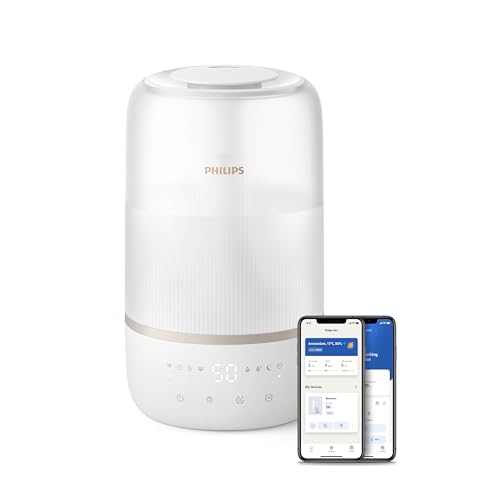
Philips Smart Humidifier, 3L Top-Fill Tank, up to 41 m2
ASIN B0F18Y46SW • $119.00 • Ships from Amazon AU
Be clear about what this is. The listing describes a visible mist rising over 80 cm, which makes it a mist-type unit, not an evaporative one, so everything I said earlier about mineral carry-over applies. It will put whatever is dissolved in the tank into the air as droplets. That is not a reason to dismiss it. Plenty of people want the visible plume and the night light, and if you are going to buy a mist unit, a Philips one with a top-fill tank and a known brand behind the base is a better bet than an anonymous one. The 3L tank is listed at up to 32 hours continuous, which on my arithmetic is around 95 ml per hour averaged, and coverage is listed at up to 41 square metres.
The top-fill design is the practical win. You pour from a jug into the top of the unit instead of inverting a wet tank and carrying it back across the room, which is how most mist units end up with a wet base and a damp patch on the carpet. It has an aroma add-on, which I would leave empty (oils in a mist unit gum up the disc and the nozzle), and a night light with ambient lighting. The listing calls it Smart; the detail supplied to me does not spell out what app control is included, and it does not state a humidity sensor or setpoints, so read the current listing for that before you rely on it. The listing also makes comfort claims I am not going to repeat; this guide is about hardware.
At $119 at time of writing and ranked #10 in Amazon AU's Single Room Humidifiers category, it is the entry point here. The rules for running it well are the ones from the placement section: tray underneath, waist-high table, far side of the room from the PC and TV, and demineralised water if your tap water is hard. Wipe the disc weekly with a soft cloth. Do that and it behaves. Run it on tap water next to the TV unit and you will be wiping white dust off the bezel by August.
Honest caveats: It is a mist unit, so mineral dust is a real cost unless you run demineralised water. The supplied listing detail does not state a humidity sensor, setpoints, power draw, noise or what the Smart label covers, so check the current listing. Aroma trays and essential oils shorten the life of ultrasonic discs; leave it empty.
Best for: Someone who specifically wants a visible mist and a night light in a room with no sensitive electronics, and is prepared to use demineralised water.
Type: Mist unit (visible mist over 80 cm) • Tank: 3L, top-fill • Runtime: Up to 32 hours continuous • Coverage: Rooms up to 41 m2 • Extras: Aroma add-on, night light, ambient light • Humidity control: Not stated in supplied listing detail • Price: $119 at time of writing • Rank: #10 in Single Room Humidifiers (Amazon AU)
View on Amazon AU
Philips Air Humidifier 5000 Series, NanoCloud, 4.5L, up to 56 m2
ASIN B0DZJ27MQG • $229.00 • Ships from Amazon AU
The 5000 Series is the big-room evaporative option, with one feature I would genuinely pay the extra for. Same NanoCloud evaporative approach, same listing claim of no white dust or wet stains, and a 4.5L tank listed at up to 37 hours, which works out to roughly 120 ml per hour averaged across the run on my maths. Coverage is listed at up to 56 square metres, which puts it in open-plan living territory where a 2L tank would be empty before midnight. Philips lists a claim of up to 99.9 percent fewer bacteria released than standard ultrasonic units; again, that is a listing claim quoted as such, and the wick-holds-it-back mechanism is what makes it believable.
The feature is QuickDry. When you switch it off, a fan runs to dry the filter and a sensor switches the unit off once the filter is dry. That solves the thing that kills evaporative humidifiers slowly: a wet wick sitting in a closed housing between uses, where the scale goes soft, the smell starts and the wick clogs weeks earlier than it should. In the workshop this is what a wick that has been left damp looks like: grey, limp, and stinking. QuickDry is not a gimmick. It is the manufacturer admitting what the failure mode is and building the fix in. There is also an aroma add-on, which on an evaporative unit is less of a problem than on a disc-type mist unit but which I would still leave empty.
At $229 at time of writing and #11 in Amazon AU's Single Room Humidifiers category, it costs $70 more than the CareMax 4L. Pay it if the room is over about 30 square metres, if you want to fill it every second day rather than every day, or if you know you will not remember to pull the wick out to dry it. The listing detail I have does not state humidity setpoints, so check the current listing before you assume it will hold a humidity number for you. Same rules on placement: tray, height, away from the electronics.
Honest caveats: Supplied listing detail does not state setpoints, output rate per hour, power draw, noise or wick part number; confirm those on the current listing. It is the largest unit here and needs the most shelf space. 4.5L full is a weight to carry if the fill method is lift-off, which the listing does not state.
Best for: An open-plan living area or large bedroom where you want the longest runtime and a wick that dries itself between uses.
Type: NanoCloud evaporative (wick and fan) • Tank: 4.5L • Runtime: Up to 37 hours • Coverage: Rooms up to 56 m2 • Filter care: QuickDry mode: fan dries filter, sensor switches off when dry • Extras: Aroma add-on • Dust: No white dust or wet stains (listing) • Price: $229 at time of writing • Rank: #11 in Single Room Humidifiers (Amazon AU)
View on Amazon AUSide-by-side comparison
| Product | Price | Best for |
|---|---|---|
| ASAKUKI Air Humidifier for Bedroom | ~$25.49 | |
| ASAKUKI Humidifier 3L Air Humidifiers for… | ~$42.99 | |
| CLEVAST Smart Humidifier for Home with Oil… | ~$55.99 | |
| Aroma-Snooze Essential Oil Diffuser… | ~$99.00 | |
| Snotty Noses HUSH Ultrasonic Cool Mist… | ~$115.00 | |
| Breville | ~$199 | |
| Philips Air Humidifier 5000 Series | ~$249 | |
| Philips 2-in-1 Air Purifier & Humidifier 3400 | ~$417.00 | |
| CareMax 4L Mist-Free Evaporative Humidifier… | ~$159 | A: Best Overall for Most Rooms |
| Philips Smart Humidifier | ~$104 | B: The Mist Unit, If You Must Have the Plume |
What we see fail at the bench: humidifiers
Humidifiers themselves are simple, and the ones that come in with a dead base usually have a stuck float, a scaled disc or a corroded connector. The bigger volume of work is the collateral: electronics that lived next to a mist unit on tap water. Here is what those look like when the covers come off, and what you can do about it before it gets that far.
Mineral film on boards and heatsinks
A desktop PC or console draws room air through its fans and across its heatsinks. Put a mist unit in that room on tap water and within a season the fins are coated in a pale powder and the board around the intake carries a grey crust on the solder joints. The crust is hygroscopic, so it draws moisture on damp mornings and becomes faintly conductive. Symptoms are thermal throttling, random resets and sensing lines that drift. The fix is a strip, ultrasonic clean of the board in the right solution, fresh thermal paste and a new location for the humidifier. Prevention is an evaporative unit or demineralised water and a spot across the room.
Stuck floats and scaled level switches
The most common humidifier base fault is not electronic at all. A small float or a lever riding on a magnet tells the board whether the tank is feeding the base. Scale builds on the float, it sticks down and the unit refuses to run with a full tank, or sticks up and runs dry. People assume the board has died. A soak in vinegar and a clean with a soft brush usually brings it back. If the unit has been run dry repeatedly on a mist base, the piezo disc may have cooked, which is a parts job if the disc is available and a bin job if it is not.
Corroded connectors from a wet base
Tanks get slopped during refills, bases sit in damp rings on carpet, and water finds its way to the low-voltage connector between the control board and the fan or disc. Copper goes green, contact resistance rises, the fan stutters or the disc output fades. On a sealed Philips base it is rarer, but it happens on any unit where the seal has been disturbed or the tank is filled in place. Dry the base before reassembly, fill away from the unit, and if a fan has started stuttering, stop using it and bring it in before the control board follows.
Decision tree: which one should you actually buy?
- A bedroom or small lounge, and I want moisture without dust on the electronics? → The CareMax 4L at $159. Evaporative and mist-free, 4L top-fill tank, over 12 hours a fill, with a UV and antimicrobial filter stage on top. Put a hygrometer across the room and set the speed to suit.
- Open-plan living area over about 30 square metres, heater running most evenings? → The Philips 5000 Series at $229. Listed for rooms up to 56 square metres, 4.5L tank for up to 37 hours, and QuickDry so the wick does not sit wet between uses.
- I want the visible mist and a night light, and the room has no PC or TV in it? → The Philips Smart Humidifier 3L at $119. Top-fill tank, up to 32 hours listed. Run it on demineralised water, on a tray, waist high, and wipe the disc weekly.
- The room already has a PC tower or a TV and I cannot move it? → Then do not buy a mist unit for that room. Either of the evaporative units, the CareMax 4L at $159 or the Philips 5000 Series at $229, placed on the far side of the room from the electronics with a hygrometer across from it.
- I am not sure whether the room is too dry or too damp? → Buy a $15 hygrometer first and read it for a week before spending $119 or more. Below about 35 percent in winter, a humidifier. Above 60 percent, you want the dehumidifier guide, not this one.
- The humidifier has stopped running, or the laptop that sat next to it has started misbehaving? → Bring either one into our Erina workshop. Stuck floats and scaled discs are quick. Mineral film on a laptop or console board is a strip and clean job, and the sooner it comes in the less has corroded.
Frequently asked questions
Does an evaporative humidifier really make no white dust?
Yes, and it is physics rather than a marketing line. In an evaporative unit water soaks into a wick and a fan blows air across it, so only water vapour leaves. Dissolved minerals stay in the wick, which is why the wick goes chalky over a season and needs rinsing or replacing. An ultrasonic unit throws whole droplets, minerals included, and the dust falls out when the droplets evaporate. Both evaporative units here, the CareMax 4L and the Philips 5000 Series, state no white dust on their listings. The Philips Smart 3L is a mist unit and will produce dust on hard tap water.
Can I use tap water in a humidifier?
In an evaporative unit, yes, because the minerals stay in the wick; you just rinse and replace the wick more often on hard water. In a mist or ultrasonic unit I would not on Central Coast tap water long term, because every litre of tap water you mist is a measurable amount of mineral dust landing on your shelves and in your electronics. Use demineralised water from the supermarket, or a demineralisation cartridge if one is available for the model. Do not use essential oils in the tank of any unit; they attack plastics and gum up discs and wicks.
What humidity should I set the room to?
For the sake of your possessions and electronics, 40 to 50 percent relative humidity is the sensible band. Below about 35 percent timber shrinks and static builds. Above 60 percent in a cold room you get condensation on windows, external walls and the metal chassis of anything switched off overnight, and that condensation is how corrosion starts on boards. Neither evaporative unit here states a humidity setpoint on its listing, so you are setting a fan speed and checking the room yourself. Whichever unit you have, put a separate hygrometer across the room from it, because the onboard sensor sits in the output and reads high.
How often do I need to clean the wick or filter?
Rinse an evaporative wick under the tap every week or two during the season, soak it monthly in a weak white vinegar solution to dissolve scale, let it dry fully, and replace it when it stays stiff after soaking. Never store it wet. The Philips 5000 Series has a QuickDry mode that runs the fan to dry the filter and switches off when it is dry, which handles that automatically. On the CareMax 4L, pull the wick and let it dry fully between idle spells. Neither listing states a wick life or part number, so price replacements on the current listing before you buy.
Is it safe to run a humidifier next to my TV or computer?
No, and it is the number one thing I would change about how people run them. A TV, PC, console or NAS pulls room air through itself, and a mist unit in that airstream deposits minerals on the heatsinks and boards. Even an evaporative unit adds moisture to air that is being pulled across a circuit board. Put the humidifier on the far side of the room, at least a metre off the floor, on a tray, and keep the room in the 40 to 50 percent band with a hygrometer across from it. If the only socket is behind the TV, run a single rated extension lead to a better spot.
How much does a humidifier cost to run?
Very little in electricity, and none of the three listings state a power figure so I will not guess one for them. For scale, a fan-and-wick unit drawing 20 watts at the roughly 33 cents per kilowatt-hour average AU tariff would cost under a cent an hour, or about 15 cents overnight. The real running costs are replacement wicks on the evaporative units and demineralised water on the mist unit, plus the indirect cost of a heater working harder in a room kept too damp. A plug-in energy monitor will give you the exact draw of your unit in a day.
Related buying guides
Humidifier dead, or the laptop next to it playing up?
Stuck floats, scaled discs and corroded fan connectors are quick fixes. Mineral film on a laptop, console or desktop board from a mist unit run on tap water is a strip-and-clean job, and it gets harder the longer it sits. Walk either one into our Erina workshop. Sixteen years of board-level work on the Central Coast, and we will tell you straight which one is the patient.
Visit our Erina workshop Book Online