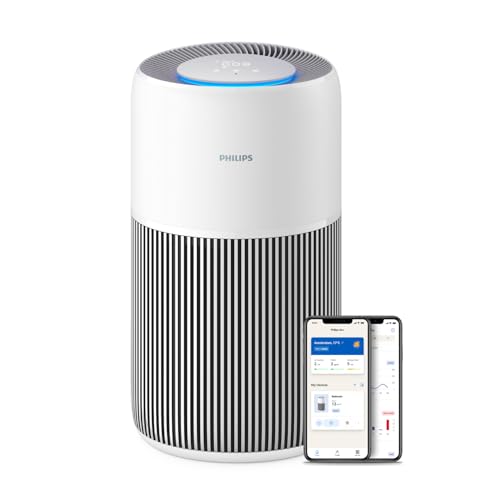
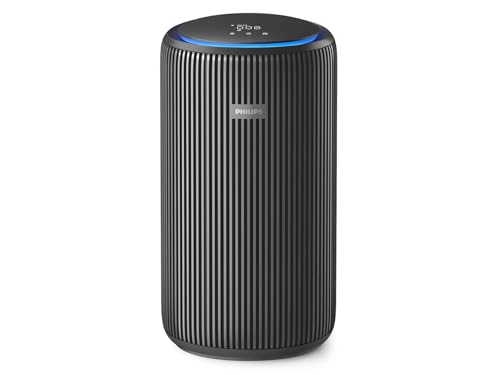
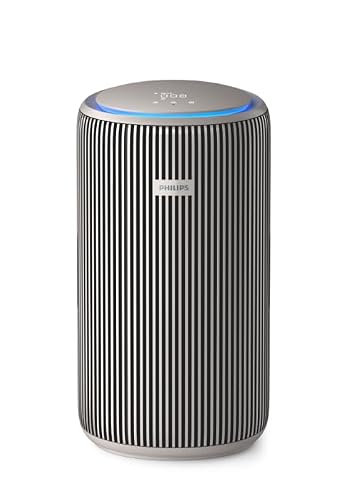
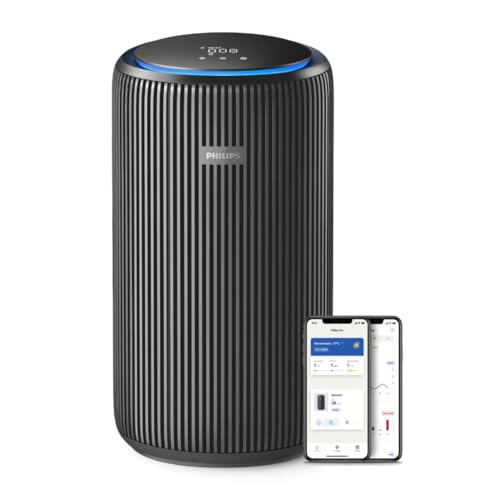
Prices from Amazon AU, updated daily. Swipe or use the arrows for more.
Disclosure: This article contains affiliate links to amazon.com.au. If you buy through one of these links iFix may earn a small commission at no extra cost to you. It doesn't change which products we recommend. We focus on what actually lasts based on 16 years of repair-shop experience.
Quick summary8 picks
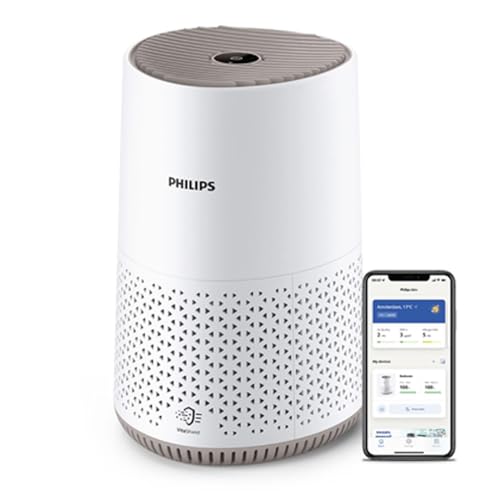
- CheapestPhilips Air Purifier 600i Series about$129.0012W.
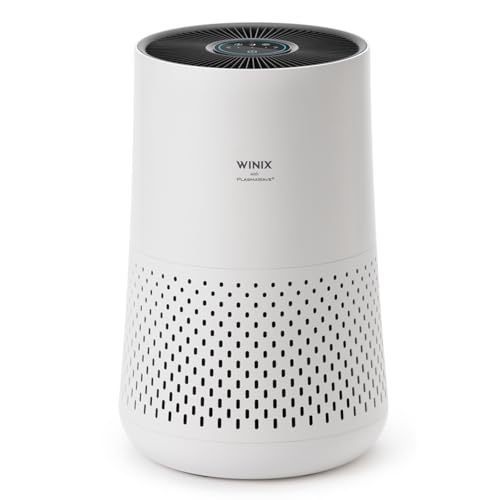
- Winix Compact 4-Stage Hospital Grade True… about$218
- Philips Air Purifier 1000i Series about$399.0027W.
- Philips Air Purifier 1000i Series about$278.8327W.
- Philips Air Purifier 2200 Series about$312
- Philips Air Purifier 3200 Series about$382.0036W.
- Most PremiumPhilips Air Purifier 4200 Series about$47954W.
- Philips Air Purifier 4200 Series about$49854W.
The $125 purifier and the $79 printer are the same trap
A cartridge inkjet is sold below cost because the money is in the ink. An air purifier is sold on a room-size number because the money is in the filter. Same business model, different consumable, and the second one catches people who saw straight through the first. I set that arithmetic out in the home office printer guide, where a $79 printer quietly billed its owner around $700 in cartridges over three years. Run the same sum on a purifier and the shape of the answer is identical. The box price is the deposit. The filter is the repayment schedule.
August is when these start moving in Australia. Pollen season runs roughly September to November across the south-east, and bushfire smoke is a recurring air-quality event that puts fine particulates into suburban air with no notice. That explains the shopping pattern and it is as far as I am taking it. This guide is about hardware, filters and running costs. Particulates and fans, not people.
Filter cost over three years, not the price on the box
One of these is a fan, a sealed housing and a filter. The first two are bought once; the filter is bought again and again, and it is the only part the manufacturer gets paid for twice. Three numbers decide the purchase and only one is on the price tag: the filter part number, the stated life, and what that part costs at an Australian retailer today. Of my three picks, only the 2200 Series states a filter life on its listing, up to three years from the FY2200, with the unit calculating what is left and telling you when it is done. The 600i and 1000i listings in front of me do not, so check the current listing before you commit.
Here is the arithmetic, and read the framing carefully because I am estimating. At the time of writing, replacement HEPA filter modules for Philips purifiers in this band sit roughly in the $60 to $100 range at Australian retail depending on part number. That is an estimate, not a quote. Take the middle of it, call it $70. A $125 unit fed one $70 filter a year is $335 over three years. A $295 unit whose listing states a three-year filter is $295 across the same period, assuming the change indicator agrees with the calendar. The unit that looked $170 dearer on day one is the cheaper one by year three, and nothing on either box tells you that.
Two caveats. Filter life is duty-cycle dependent, so a fortnight of heavy smoke haze eats months off any rating, and a three-year filter only helps while the part stays available here at a sane price. Look both up before you order, not after. The smart home budget breakdown puts consumables in the same table as hardware, which is the only way this adds up honestly.
What the HEPA claim does and does not tell you
All three picks quote the same headline: 99.97 percent capture at 0.003 microns. Real test result, and nearly useless on its own, because it describes the media rather than the appliance in your lounge. The classic grades, H13 and H14, are measured at the most penetrating particle size, around 0.3 microns, the hardest size to catch. Both larger and smaller particles are easier, which is why marketing enjoys quoting an impressively small micron figure. Technically true. Chosen to flatter.
What decides how fast a room clears is how much air passes through that media per hour, and whether any of it slips past the seal instead. A filter seated crooked, or a gasket gone hard, hands the airflow an easy path around the expensive part. Philips calls its media NanoProtect and states an electrostatic charge; that charge weakens as the media loads, which is an argument for respecting the change interval.
CADR against stated room size, and why the room size is optimistic
CADR is the honest number: the volume of filtered air the unit delivers per hour. The 600i states 170 m³/h across 44 square metres, the 1000i 300 across 78, the 2200 400 across 104. Divide one by the other and you get 3.9, 3.85, 3.85. Three products, one ratio. Those room figures are not measurements. They are a formula applied to CADR, and every manufacturer in the category does the same.
Work the volume instead. A 44 square metre room with a 2.4 metre ceiling holds about 106 cubic metres of air, so 170 cubic metres an hour is roughly 1.6 complete air changes an hour with the fan on maximum, in a sealed box with the doors shut. Your lounge is not a sealed box. It has a couch, a rug, a hallway and a gap under the door. My rule from watching customers buy the wrong size: take the stated area, halve it, and shop for that.
Sized for the room and left on low beats big and bursty
A purifier is not a microwave. Nothing you clean stays cleaned, because particulates get reintroduced by the front door, the kitchen and the carpet, so twenty minutes on turbo buys a good reading and then a slow drift back. Sized generously and left on its lowest useful speed, the same unit holds a steadier state while staying quiet enough to ignore and gentle on its own bearings. Electricity is a footnote: the 600i states 12W maximum, about 105 kWh if you held it flat out for a year, and the 1000i up to 27W. Against one filter change that is rounding error. The energy monitor picks in the sister guide show what an always-on appliance really draws at the wall.
Noise at each fan speed is the spec that decides everything
An air purifier switched off does nothing, and that is the most common reason these end up as expensive shelf ornaments. Somebody puts one in a bedroom, discovers it whines on speed three, and never turns it on again. The quoted numbers are all sleep-mode numbers: 13 dB(A) at its quietest on the 2200, 15 dB on the 1000i, 19 dB on the 600i. Each is the gentlest setting the machine has, and none of the three listings state noise at the top of the fan range, so check the current listing before one goes into a bedroom.
Decibels are logarithmic, so a 10 dB rise is roughly a doubling of perceived loudness; the gap between sleep and turbo is wider than it reads. The other half is character, not volume. Broad airflow whoosh vanishes into the background in a night or two. A tonal whine or a low rumble does not, and neither appears on any spec sheet. That is what happens after a couple of years, which brings us to the bench.
The pre-filter is the job that protects the expensive part
Every one of these has a coarse mesh layer at the front, ahead of the HEPA media, catching hair, lint and the grey felt that builds on any intake grille. Vacuumable, one minute, and hardly anyone touches it. Skip it and three things follow. Airflow drops, so real delivery falls below the CADR on the box. The fan labours against the restriction, so it gets louder and the bearings wear faster. And the media behind the blockage loads early, so the $60 to $100 part gets replaced ahead of schedule.
What you must not do is wash the HEPA layer. Water collapses the fibre matrix and strips the electrostatic charge, and it does not come back when it dries. Give the unit 30 centimetres of clearance on the intake side, too. Jammed into a corner or against a curtain, a well specified purifier is recirculating its own outflow.
Why all three picks are Philips, and why that is worth knowing
I did not set out to write a single-brand guide and I am not dressing this up as a diverse shortlist. Philips holds three of the top sixteen sellers in Amazon AU's Air Purifiers category, at number two, number four and number sixteen: the three units below. The reason is supply, and it is a finding rather than an apology. Australian retail in the $125 to $295 band is thin on alternatives that state a CADR figure, a noise figure, a filter part number and a filter you can still buy locally in two years. Buying a purifier is buying into a filter supply chain, and a brand with a shallow Australian parts channel leaves you holding a good fan with nothing to put in it. Same cartridge trap, different jacket.
The three picks, $125 to $295
Prices are Amazon AU at time of writing (10 August 2026) and move week to week. Ranks are Amazon AU's Air Purifiers category, checked the same day. Where a listing is silent on a spec, I have said so rather than filling the gap in.

Philips Air Purifier 600i Series, HEPA Filter, up to 44m²
ASIN B0CLBVLL9J • $129.00 • Ships from Amazon AU
The #2 best seller in Amazon AU's Air Purifiers category, and for most Australian rooms it is simply the right amount of machine. Philips states 44 square metres of coverage from a CADR of 170 cubic metres an hour, which after the halving rule above puts it comfortably in charge of a bedroom, a study or a small lounge. NanoProtect HEPA media, quoted at 99.97 percent capture down to 0.003 microns with an electrostatic assist. Sleep mode is stated at 19 dB and the digital display dims with it, which is exactly why this is the one I would put next to a bed.
The specification that makes it genuinely interesting is 12W. That is the stated maximum draw, flat out, and it means electricity is not what this unit costs you. The filter is. The Philips Air+ app covers power, fan speed and filter status, and filter status is the readout worth having, because it is the one that tells you when the real bill is coming.
Honest caveats: there is no particle sensor and no air-quality display on this model, so there is no meaningful auto mode. You choose a speed and leave it, which suits the run-it-continuously approach in this guide but will frustrate anyone who wanted the machine to notice a smoky evening by itself. The listing does not state a filter life or filter part number, so look both up on the current listing and price the replacement before you order. And 44 square metres is the optimistic figure, not the working one.
Best for: A bedroom, a study or a small lounge, run continuously on a low speed.
Coverage: 44 m² stated • CADR: 170 m³/h • Filter: NanoProtect HEPA, 99.97% at 0.003 microns • Filter life: Not stated on listing, check the current listing • Noise: 19 dB in sleep mode • Power: 12W maximum • Smart: Philips Air+ app, filter status • Rank: #2 in Air Purifiers (Amazon AU)
View on Amazon AU
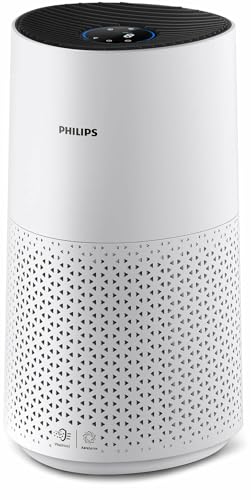
Philips Air Purifier 2200 Series, HEPA NanoProtect, 104m²
ASIN B0FTMKDWTZ • $295.00 • Ships from Amazon AU
#4 in Air Purifiers on Amazon AU, and the only one of the three that puts a number on the thing this whole article is about. Philips states up to three years of life from the FY2200 filter, with the purifier calculating what is left and alerting you when it is time. Read that against the $295 sticker and the arithmetic from the top of this page turns over: a dearer unit on a three-year consumable can land cheaper by year three than a $125 unit fed a new filter every twelve months. Price the FY2200 at an Australian retailer and confirm the interval on the listing before you take my word for it.
The rest of the specification is the large-room case, made properly. CADR of 400 cubic metres an hour, a stated 104 square metres of coverage, and a claim of 20 square metres cleared in under eight minutes. Three-layer HEPA filtration to the same 99.97 percent at 0.003 microns media figure. Philips quotes 13 dB(A) at its quietest, on a fan blade design it calls SilentWings, which is the lowest number of the three picks.
Honest caveats: three years is a best-case rating and your duty cycle sets the real interval, so trust the change indicator over the calendar. There is no app and no particle sensor stated on this listing, so it is a set-and-forget appliance rather than a connected one, and if you want a live reading this is the wrong pick. Top-speed noise is not stated either, so check the current listing if it is going anywhere near a bedroom door.
Best for: Open-plan living, a big lounge, or one unit asked to cover a whole floor.
Coverage: 104 m² stated • CADR: 400 m³/h • Filter: 3-layer NanoProtect HEPA, 99.97% at 0.003 microns • Filter life: Up to 3 years stated, filter FY2200 • Noise: 13 dB(A) at quietest • Power: Not stated on listing • Smart: Filter change indicator, no app stated • Rank: #4 in Air Purifiers (Amazon AU)
View on Amazon AU
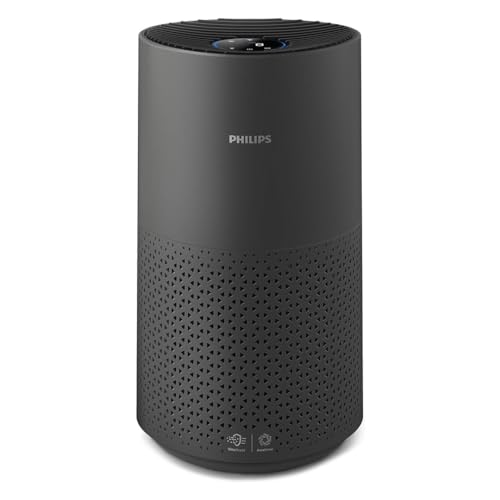
Philips Air Purifier 1000i Series, Smart Sensor, HEPA Filter, 78m²
ASIN B0CLCCVCDQ • $284.98 • Ships from Amazon AU
#16 in Air Purifiers on Amazon AU, and the pick if you want the appliance making its own decisions. The 1000i carries what Philips calls a professional particle sensor: it scans continuously, chooses a fan speed to match, and shows the reading in real time both on the unit and in the Air+ app. That is the difference between owning a fan with a filter in it and owning something that reacts to a forgotten pan at 7pm before you have finished swearing at it.
Coverage is stated at 78 square metres from a CADR of 300 cubic metres an hour, with 20 square metres cleared in under ten minutes. Three-layer HEPA filtration, same media claim as its siblings. Sleep mode runs at a stated 15 dB. Draw is up to 27W, more than double the 600i's maximum and, as the listing fairly points out, still less than an old-style light bulb.
Honest caveats: at $284.98 it sits $10.02 under the 2200 while covering 26 fewer square metres, so what you are buying with that money is the sensor and the app, not air movement. Be honest with yourself about how often you will look at the number. The sensor is also the component I see foul and start lying over time, covered in the bench section below, and that is a maintenance job rather than a defect. Filter life is not stated on this listing, so price the replacement and note the interval before ordering.
Best for: A main living area where auto mode has to earn its keep, and where somebody will actually do the sensor cleaning.
Coverage: 78 m² stated • CADR: 300 m³/h • Filter: 3-layer HEPA, 99.97% at 0.003 microns • Filter life: Not stated on listing, check the current listing • Noise: 15 dB in sleep mode • Power: Up to 27W • Smart: Particle sensor, real-time display, Air+ app • Rank: #16 in Air Purifiers (Amazon AU)
View on Amazon AUSide-by-side comparison
| Product | Price | Best for |
|---|---|---|
| Philips Air Purifier 600i Series | ~$129.00 | |
| Winix Compact 4-Stage Hospital Grade True… | ~$218 | |
| Philips Air Purifier 1000i Series | ~$399.00 | |
| Philips Air Purifier 1000i Series | ~$278.83 | |
| Philips Air Purifier 2200 Series | ~$312 | |
| Philips Air Purifier 3200 Series | ~$382.00 | |
| Philips Air Purifier 4200 Series | ~$479 | |
| Philips Air Purifier 4200 Series | ~$498 |
What we see fail at the bench: air purifiers and small appliances
Purifiers and their power supplies come across our Central Coast repair bench every spring, usually described as "it stopped working" when they have actually stopped being trusted. After 16 years the pattern list is short.
The particle sensor is the part that fouls and starts lying
The sensor is optical: a light source, a lens, and a detector counting how much light gets scattered by particles drifting through a chamber. Over months dust settles on that lens like it settles on everything else in the room, and the reading drifts. Sometimes it pins high and the fan roars in a spotless room. Sometimes it pins low and the unit dozes on sleep speed with a haze in the kitchen. Auto mode is not broken either way. It is faithfully chasing a number that is not real. Most manuals show a sensor access cover and ask for a dry cotton bud through the lens every couple of months. Two minutes, and almost nobody does it.
Fan bearing noise is the wear item
Nothing else in the box has moving parts, so the fan is where the clock runs. What we hear first is a change in character rather than volume: a rumble on start-up that clears after a minute, a tick once per revolution, a whine on one speed and not the others. That is bearing wear, accelerated by running the unit hard in bursts and by starving it of airflow with a clogged pre-filter. A noisy bearing is rarely worth repairing on a $125 appliance, which is why the maintenance above matters more than any number on the box.
The filter is locked to the brand, just like a cartridge
The physical fit, the change indicator and in some cases an authentication chip tie the machine to its manufacturer's filter. Printer cartridge model exactly: sell the hardware keenly, own the consumable. Third-party filters exist for popular models and quality varies enormously; a frame that will not seal against the housing lets air bypass the media, which turns a purifier into a noisy fan. Judge a purifier partly on whether its filter part number is easy to buy in Australia today.
Decision tree: which one should you actually buy?
- One bedroom, a study or a small lounge, running most of the time? → Philips 600i at $125.00. Quiet enough at 19 dB to forget.
- Open-plan living, or one unit covering a whole floor? → Philips 2200 at $295.00. CADR 400 m³/h and the only stated filter life in the group.
- Want it to react on its own, and prepared to clean the sensor? → Philips 1000i at $284.98. The sensor and live reading are what the extra $159.98 buys.
- Deciding purely on three-year cost? → Price the replacement filter for each and note the stated interval. That check outweighs every other number here.
- Two rooms at opposite ends of the house? → Two 600i units at $250.00 total beats one large unit stuck in one room.
- Gone loud, or the auto mode has stopped making sense? → Vacuum the pre-filter and clean the sensor first. Still wrong? Walk it in to our Erina workshop before you replace it.
Frequently asked questions
How much do replacement filters cost for an air purifier?
Budget for the filter before you budget for the unit. At the time of writing, replacement HEPA filter modules for Philips purifiers in this $125 to $295 band sit roughly in the $60 to $100 range at Australian retail depending on the part number, and that is an estimate rather than a quote. Get the exact figure yourself: find the filter part number on the product listing, search that part number at an Australian retailer, and note the stated life. The Philips 2200 Series listing states up to three years on the FY2200 filter. The 600i and 1000i listings in front of me do not state a filter life, so check the current listing before you buy. Multiply the filter price by how many you will buy in three years, then add it to the sticker price. That total is the real price.
Is HEPA H13 better than a standard HEPA filter?
Not in the way the marketing implies. HEPA grades like H13 and H14 describe how much of the most penetrating particle size the filter media stops in a laboratory test, measured on the media itself rather than on the finished appliance. A higher grade media in a unit that moves less air through it, or that lets air slip past a badly seated seal, will clear a room more slowly than a lower grade media in a well sealed unit with a strong fan. All three Philips picks here quote 99.97 percent capture at 0.003 microns. Treat that as a statement about the media, then look at CADR, at how well the housing seals, and at what the filter costs to replace. Those three decide what actually happens in your room.
Can I wash and reuse a HEPA filter?
No. Washing a HEPA layer wrecks it. Water collapses the fibre matrix, and on media that relies on an electrostatic charge, which includes the NanoProtect layers in all three picks, it strips the charge that does part of the capture work. The filter comes out looking clean and performs worse than it did dirty. Drying it out completely does not bring the charge back either. What you can and should clean is the pre-filter, the coarse mesh or fabric layer at the front that catches hair, lint and dust bunnies. Vacuum that monthly. Keeping the pre-filter clear is the single most effective thing you can do to stretch the life of the expensive layer behind it.
Why has my air purifier's auto mode stopped making sense?
Because the particle sensor is dirty. Most of these units use an optical sensor: a small light source, a lens and a detector that counts how much light gets scattered by particles passing through a chamber. Dust settles on that lens over months and the reading drifts. Sometimes it reads permanently high and the fan roars in a clean room. Sometimes it reads permanently low and the unit sits on sleep speed while the kitchen is full of smoke from a forgotten pan. Either way, auto mode is chasing a number that is not real. The fix is in the manual: most models have an access cover over the sensor and want a dry cotton bud through the lens and the inlet and outlet slots every couple of months. It is a two minute job that almost nobody does.
What size air purifier do I need for my room?
Take the room area the listing claims and halve it. The stated coverage figures are derived from CADR by a fixed formula and assume the best possible case: an empty sealed room, the fan on maximum, doors shut, nothing soaking up airflow. Your lounge has a couch, a hallway, a gap under the door and people walking through it. Run the numbers yourself instead. The 600i states 44 square metres at CADR 170 cubic metres an hour, the 1000i states 78 at CADR 300, and the 2200 states 104 at CADR 400. Notice that all three land on almost exactly the same ratio, which tells you the room figures come from arithmetic rather than from measurement. Buying one size up and running it on a low speed is the better trade.
Is it cheaper to run one big purifier or two small ones?
Over three years, usually one bigger unit, and the deciding factor is filters rather than electricity. Two units means two filter intervals, two part numbers to keep track of and two chances to order the wrong one. Electricity barely enters the argument: the 600i states a maximum draw of 12W and the 1000i up to 27W, so even running flat out around the clock the power cost is small next to a single filter change. The case for two units is a floor plan, not a budget. If you want the air handled in a bedroom at one end of the house and a lounge at the other, one purifier cannot be in both places, and carrying it around every night is how it ends up switched off in a hallway.
Related buying guides
Gone loud, or stopped making sense on auto?
A purifier that whines, or whose readings no longer match the room, is usually a clogged pre-filter and a dirty sensor rather than a dead appliance. Small appliances and their power supplies cross our bench in Erina every week, and In my experience, the diagnosis takes minutes.
Visit our Erina workshop Book Online